Xuesi Zhou
Project Description
This site is located at the former site of the KL Plaszow Concentration Camp in Krakow, Poland. It is a multi-layered historical landscape shaped by a Jewish cemetery, wartime facilities, and post-war natural succession. Today, the surface of the site appears as an open green area, with historical traces dispersed and gradually covered by vegetation.
The core issue of the site lies in the continuous disappearance of history. As the natural succession progresses, the vegetation gradually covers the original spatial structure and boundaries, causing history to gradually fade into an imperceptible background. Therefore, the focus of the design is not only on protecting the remnants, but also on how to re-present history in the constantly changing landscape.
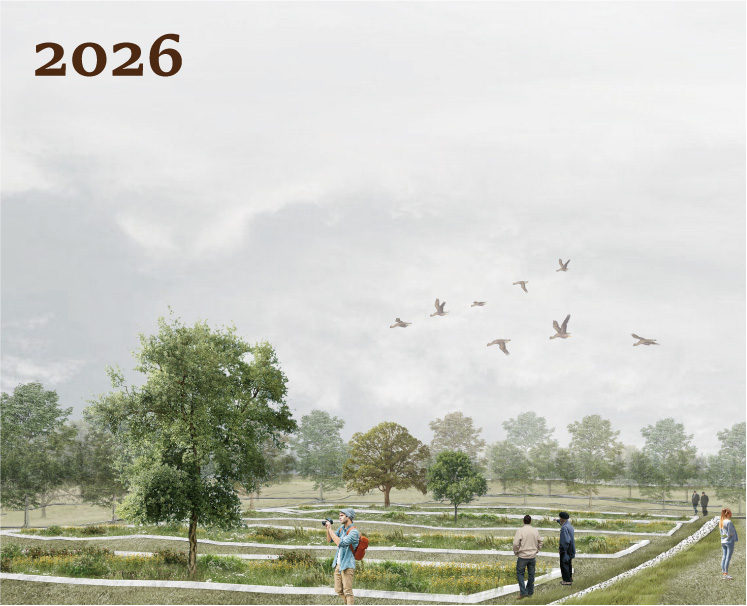
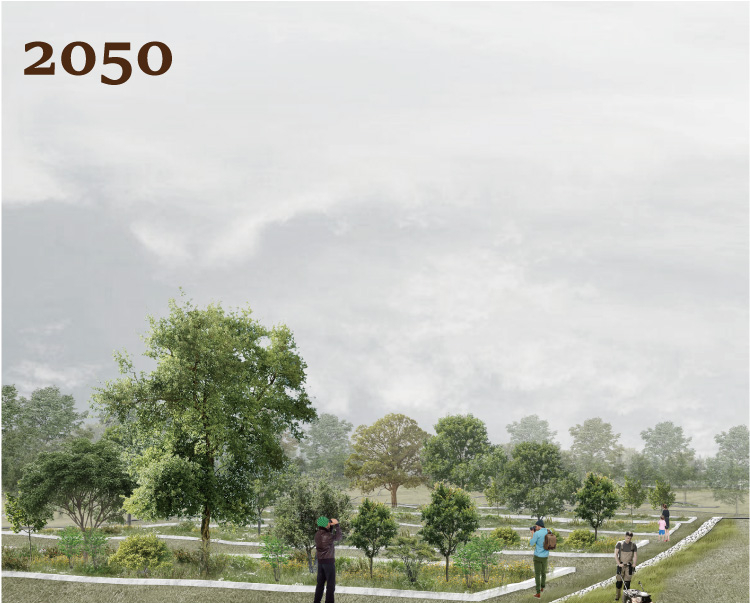
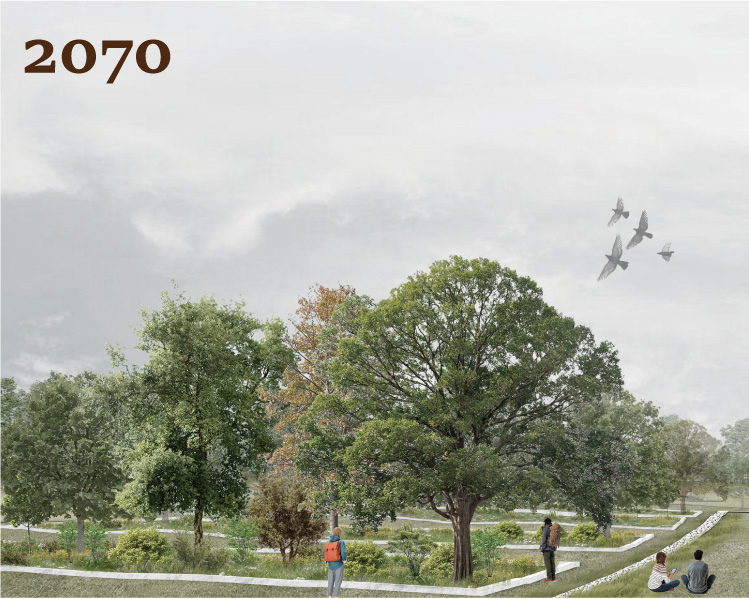
This project adopts "differentiated succession" as its core strategy. By applying varying degrees of intervention in different areas, the site is able to develop distinct spatial states over time. Through this difference, the hidden historical structures and boundaries gradually emerge in the process of vegetation changes.
Ultimately, the site was designed as a dynamic system, so that history no longer existed in a static form, but was continuously perceived and manifested over time and growth.
DESIGN CONCEPT-----Differential Succession
The succession of vegetation in a site is both a reason for the gradual fading of history and a potential mechanism for revealing history again.
Consequently, this design employs a dual-pronged approach to vegetation succession—inhibition and promotion—to establish a varied landscape within the site, thereby revealing the historical structures that had previously been obscured.
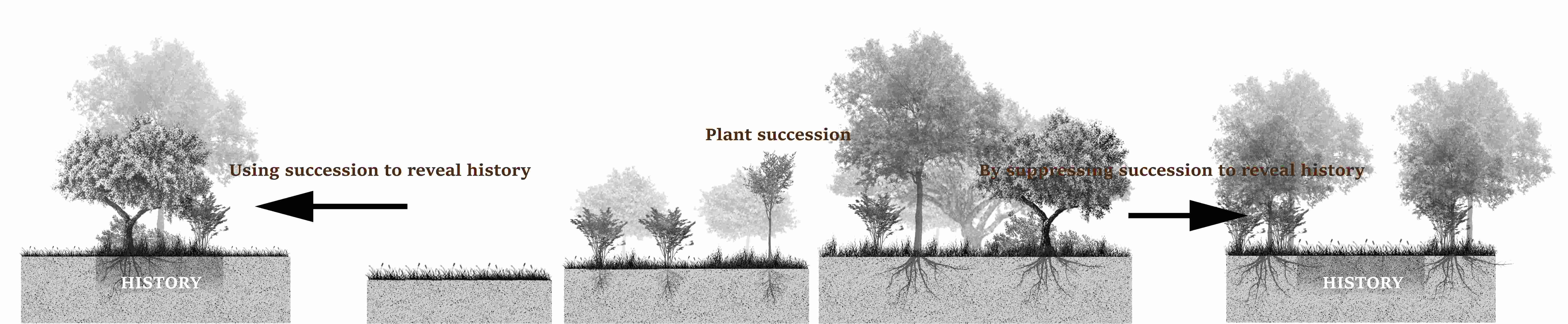
Dynamical System-----Spatial Relationships between History, Topography and Vegetation
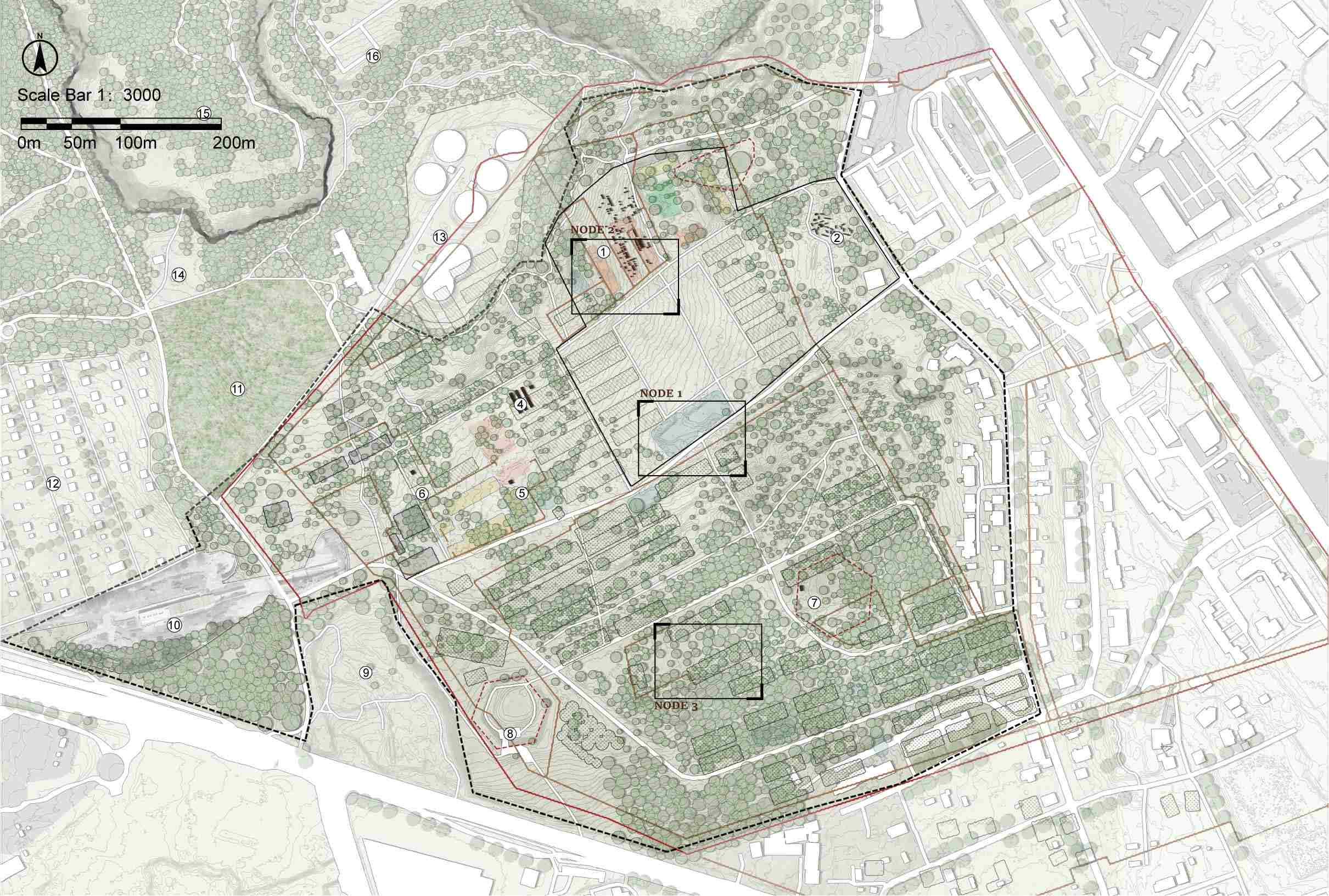
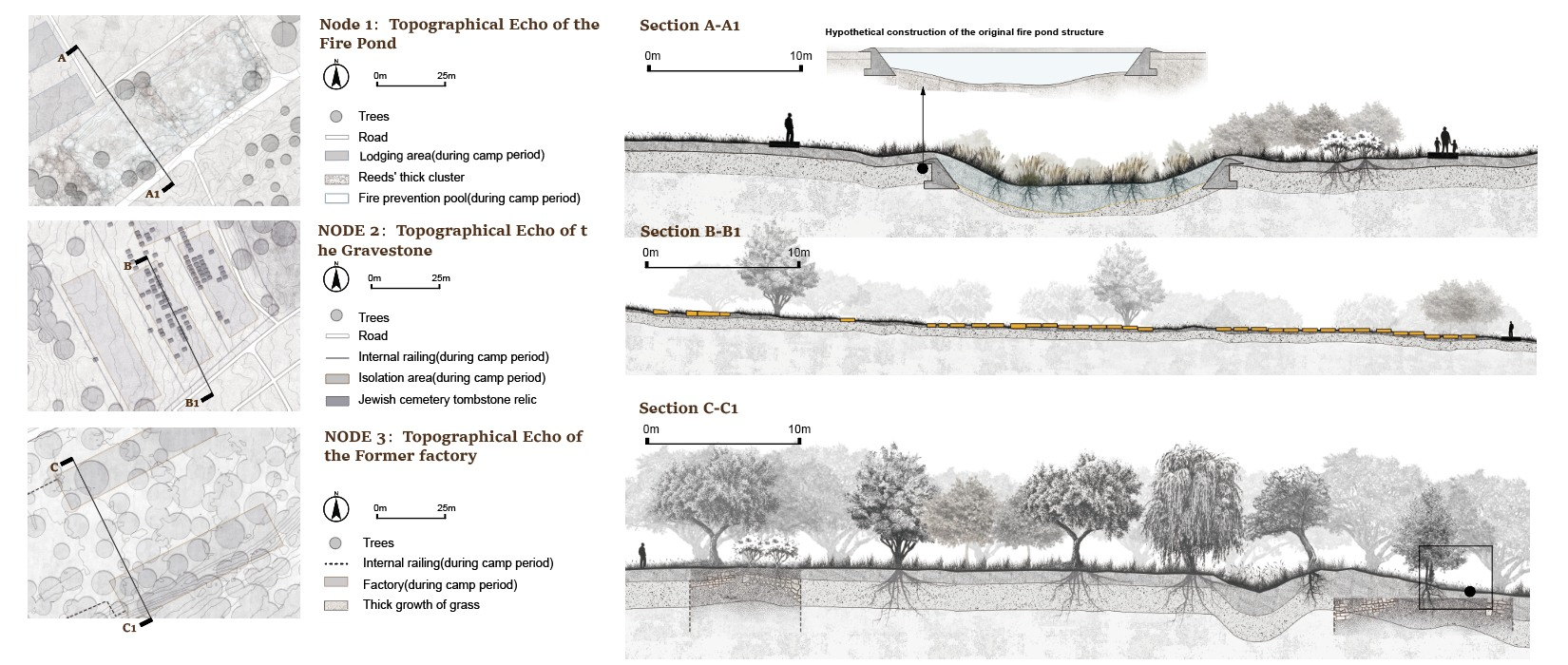
Dynamic system design
Through implementing differentiated vegetation succession management in different areas, the site forms distinct spatial contrasts over time: the succession areas gradually become dense, while the managed areas remain relatively open. At the same time, through boundary marking and local interventions, the original cemetery area gradually emerges in the continuous landscape, allowing history not to be naturally concealed but to be continuously perceived within the differences of the overall terrain and vegetation succession.

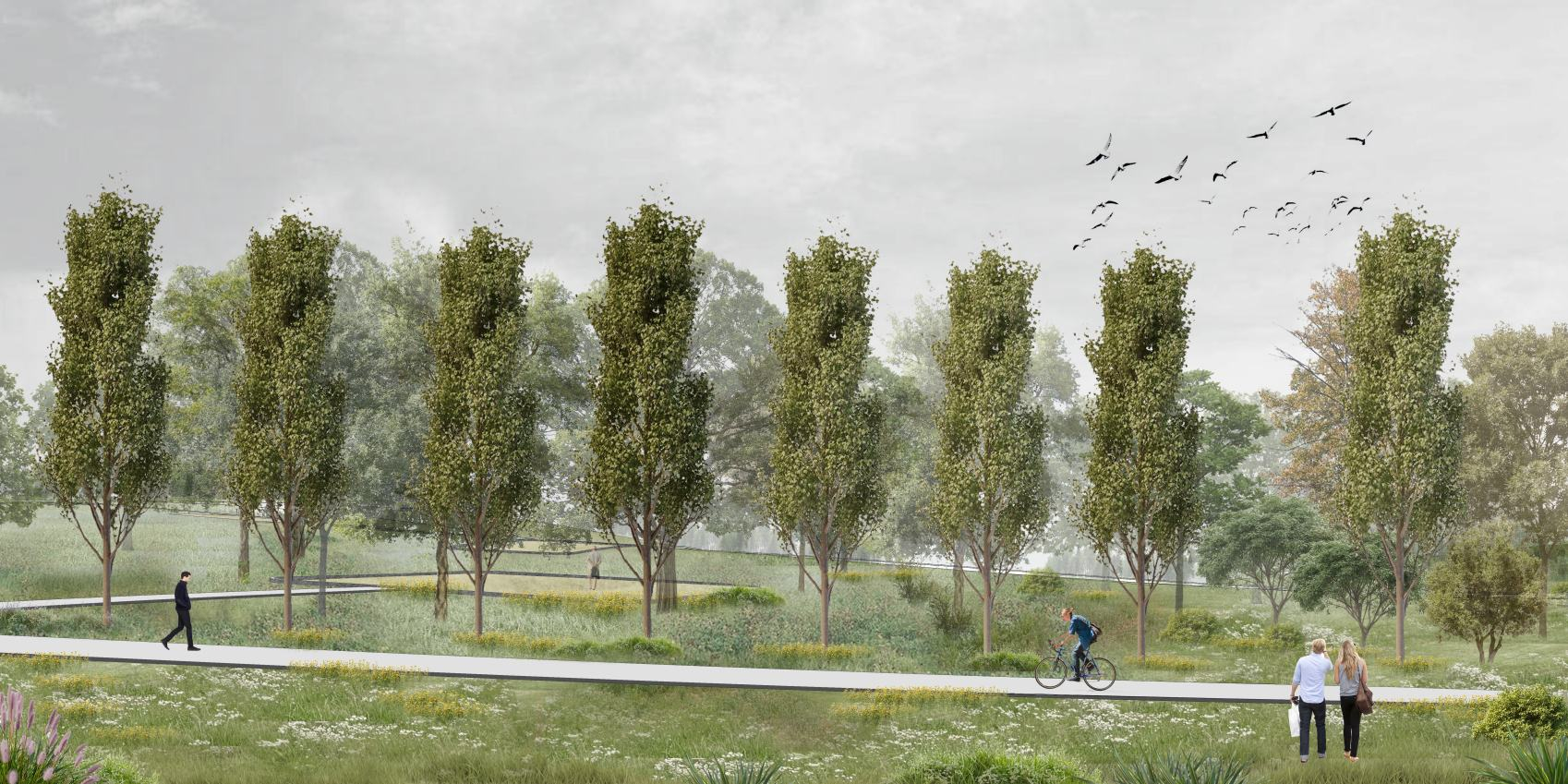
Partial display
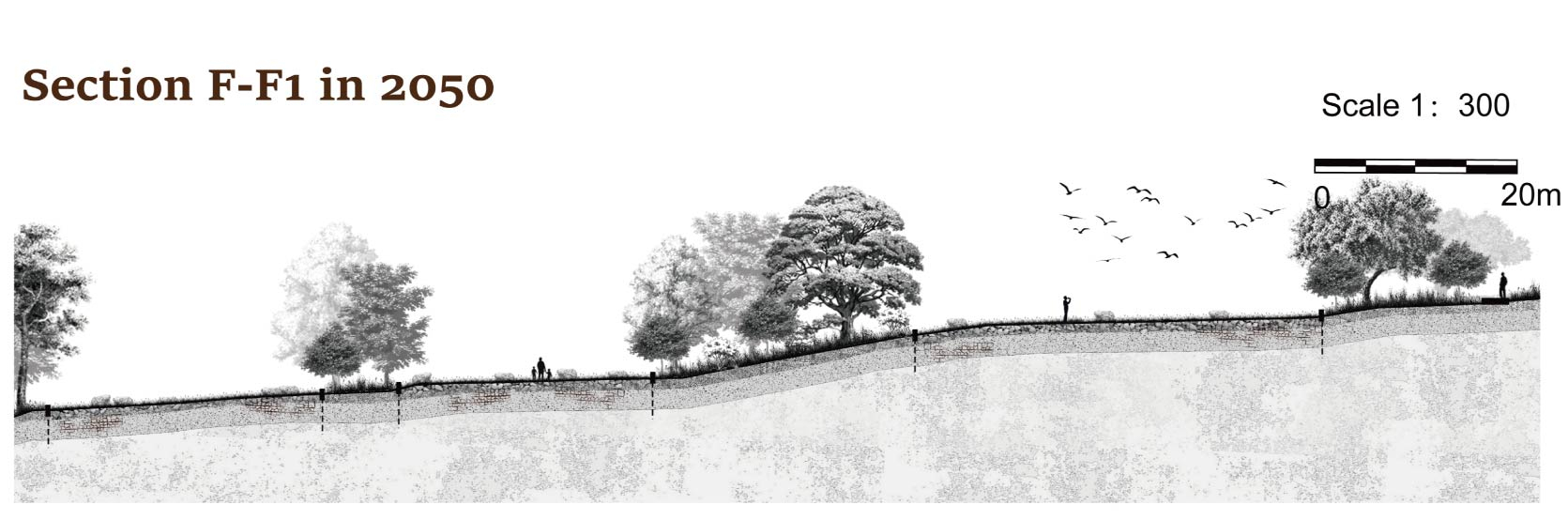

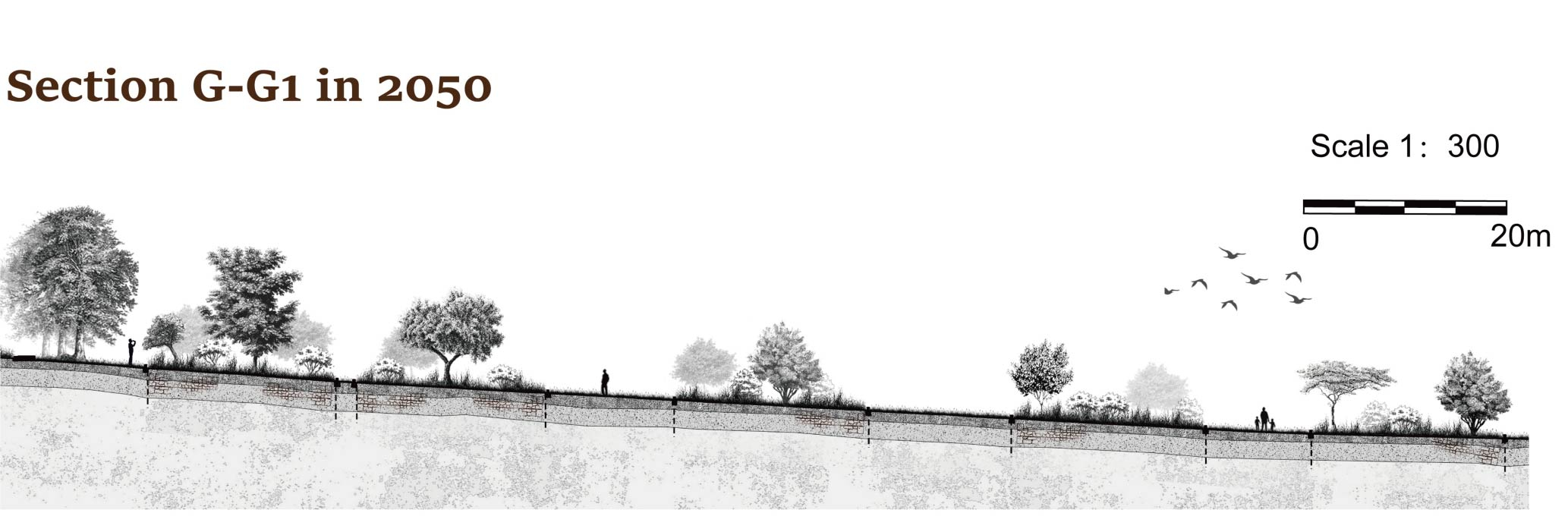
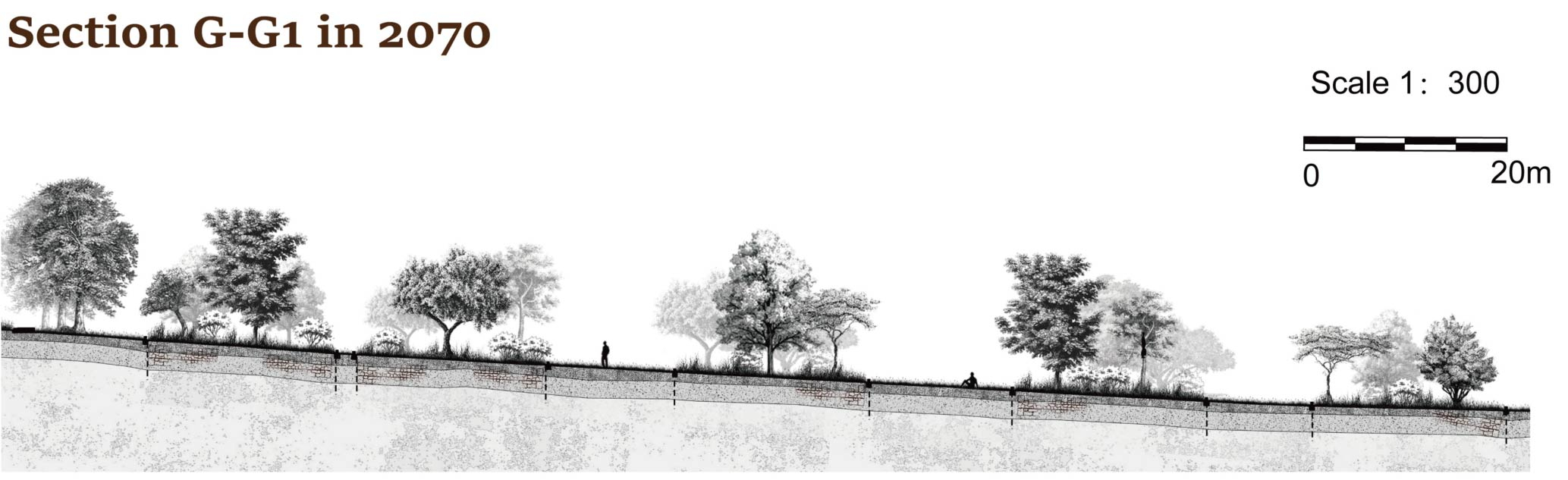
Managed Ground within Succession
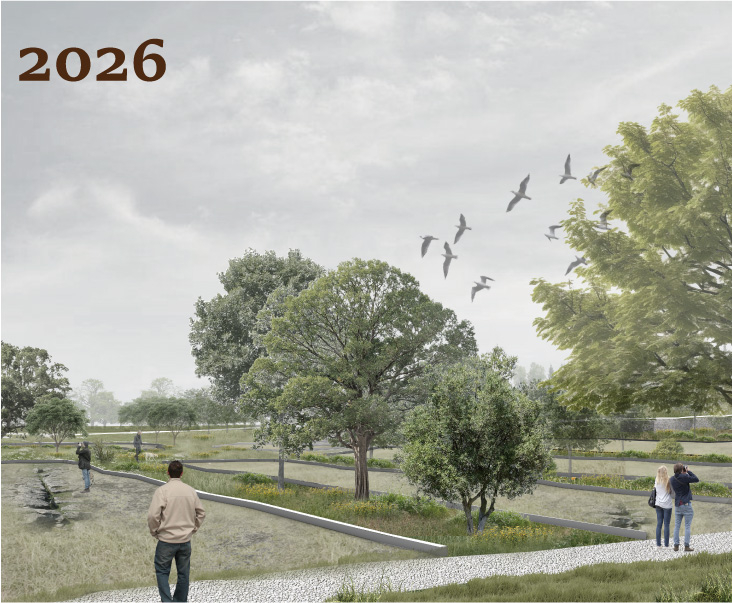
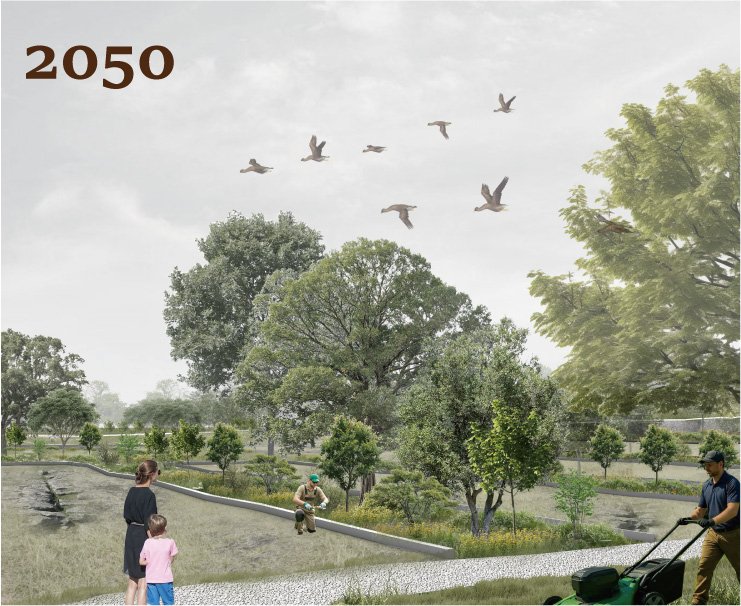
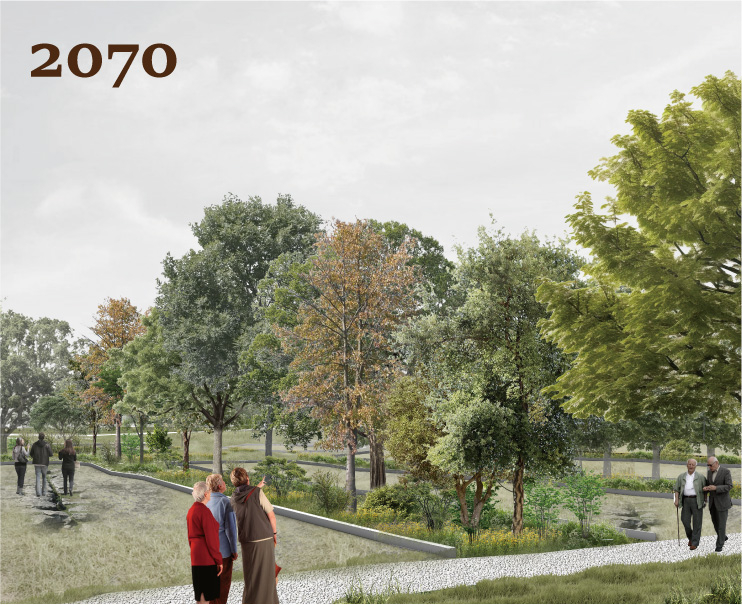
Succession Patches within Managed Ground