
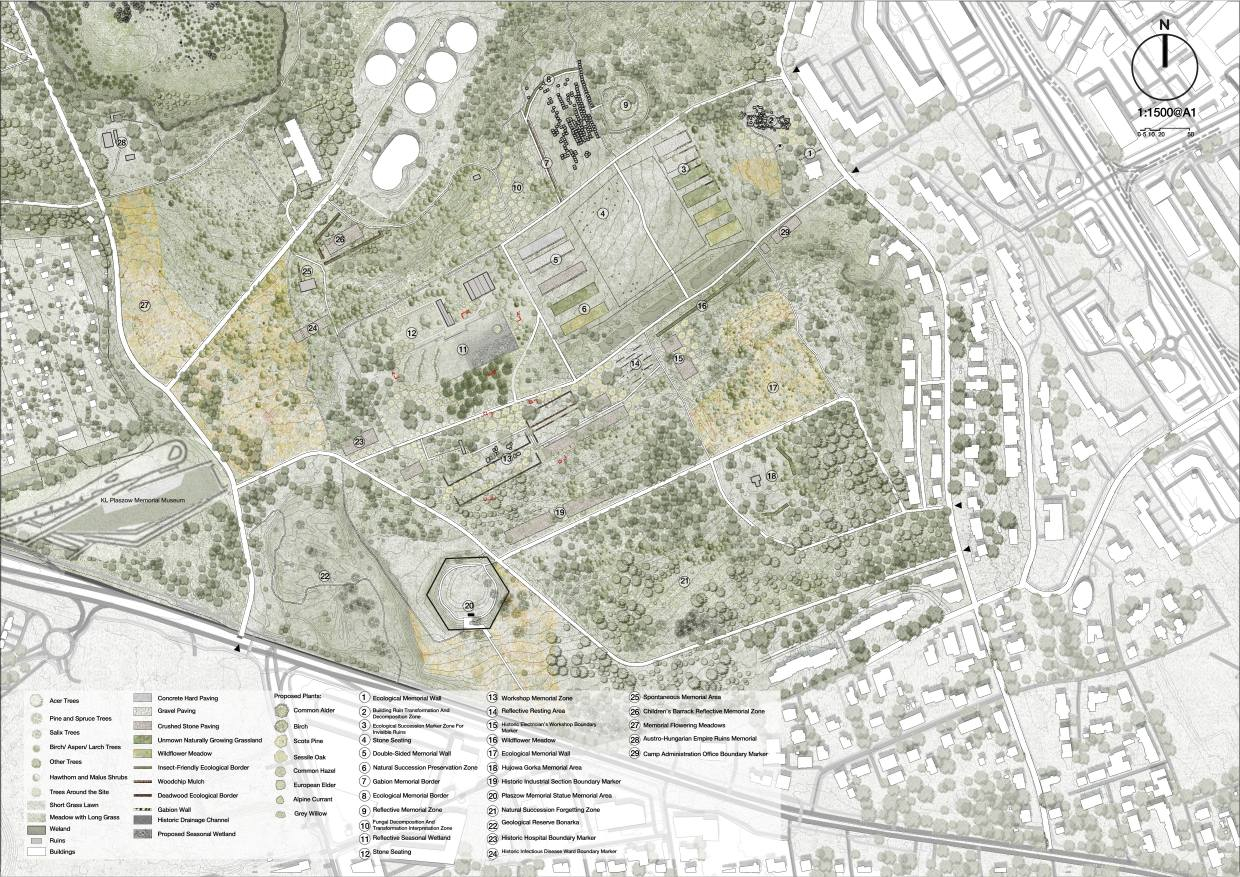
The design centers on human experience and narrative, using opographical design and fungal-related ecological succession strategies, to explore the multiple connotations of the site as an overlapping layer of landscape. Based on the previous research framework, the design integrates different types of memorial spaces within the site to construct a narrative framework where commemoration, regeneration, and forgetting coexist. Ultimately, the goal is to transform the concentration camp site into a memorial urban park that possesses both historical and ecological value and evolves over time.


Jia Zhuang
Coexistence of Regeneration and Human Traces
Project description
Dynamic System Analysis
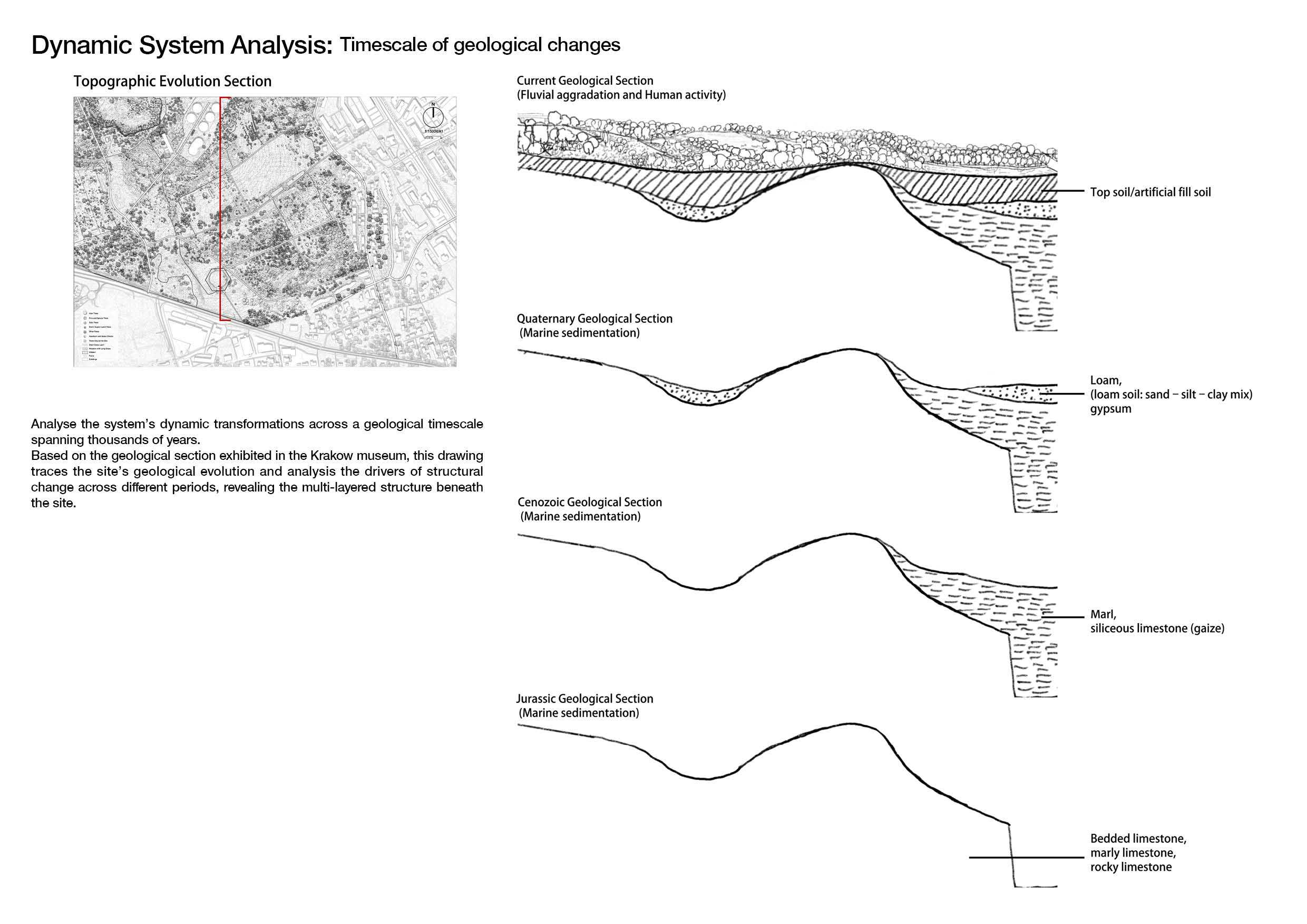
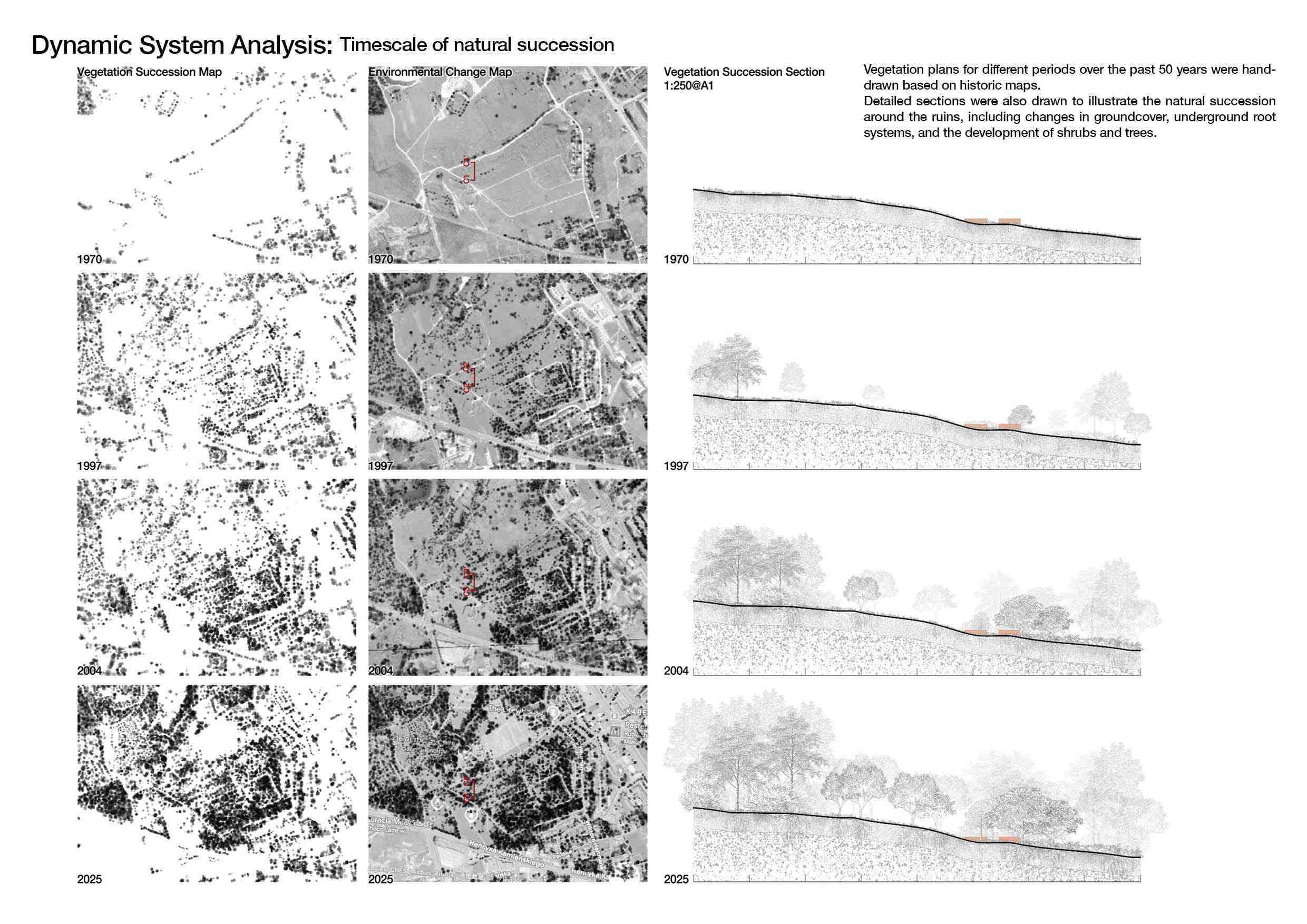
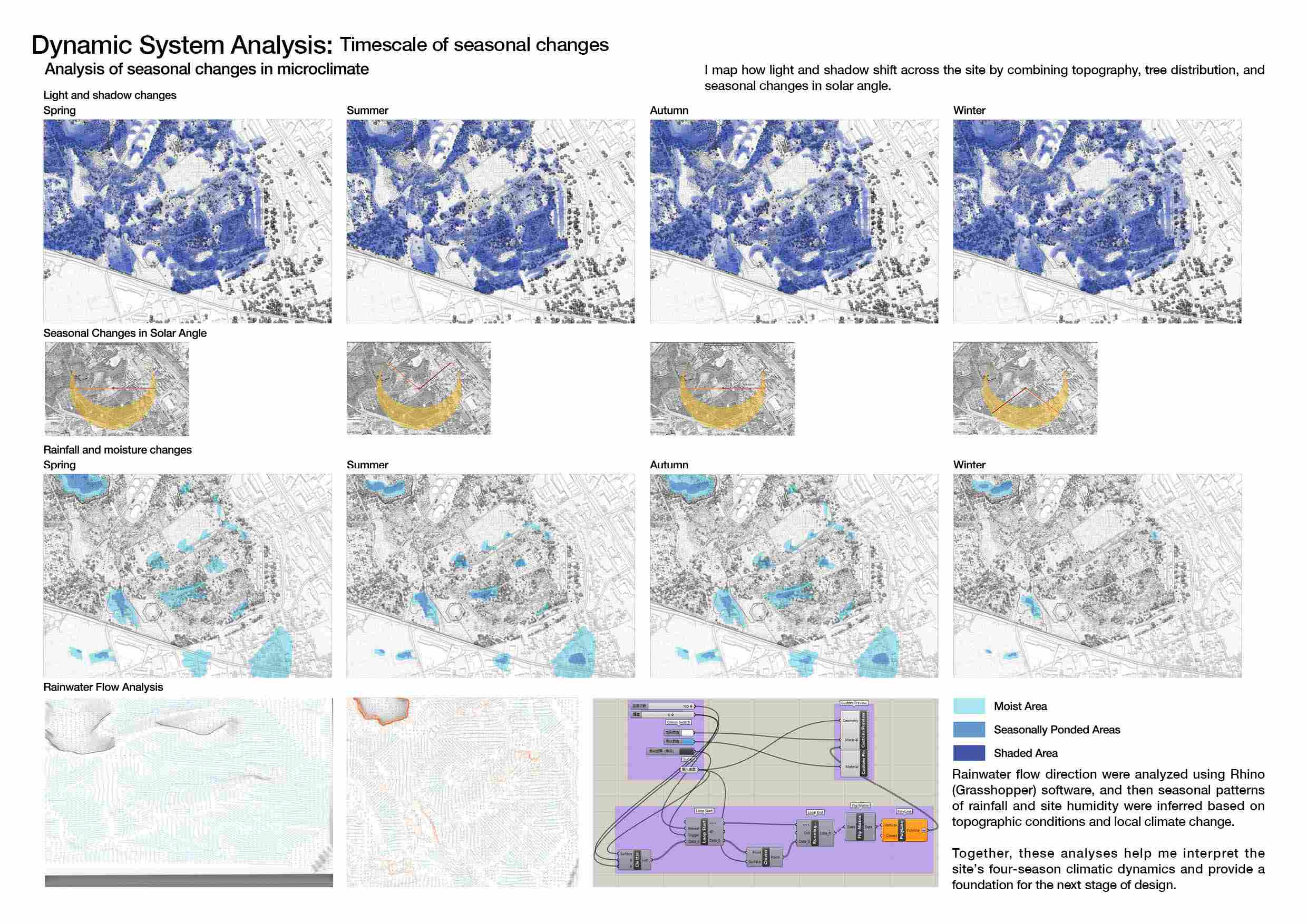
The analysis phase adopted a dynamic systems perspective, studying the site's historical changes across three different timescales: Geological Timescale: Dynamic Changes in Soil Structure, 50-Year Timescale: Vegetation Change, and Annual Timescale: Seasonal Changes in Light and Moisture. Through these multi-timescale analyses, I was able to gain a more comprehensive understanding of the site's current state and its historical context.
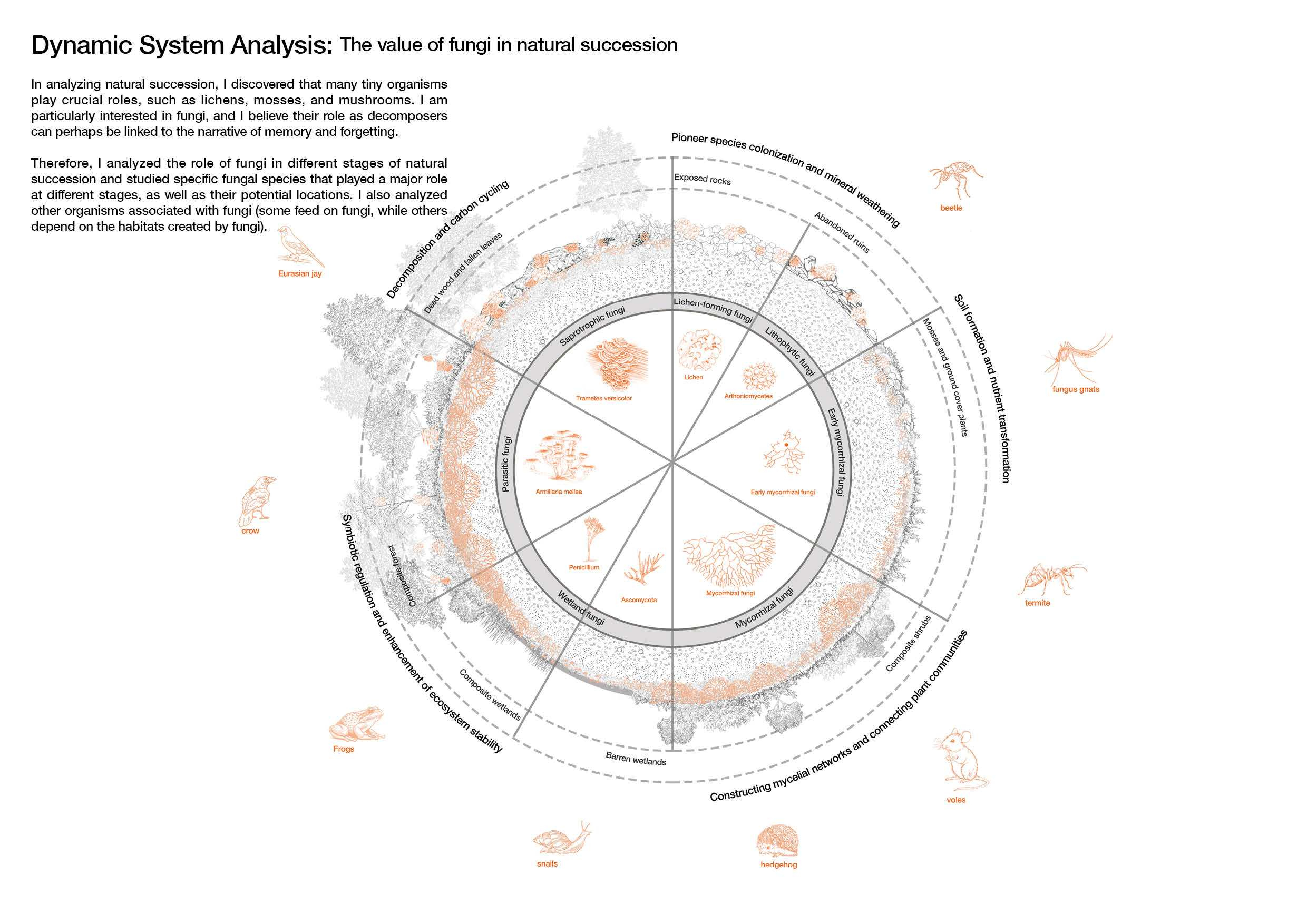
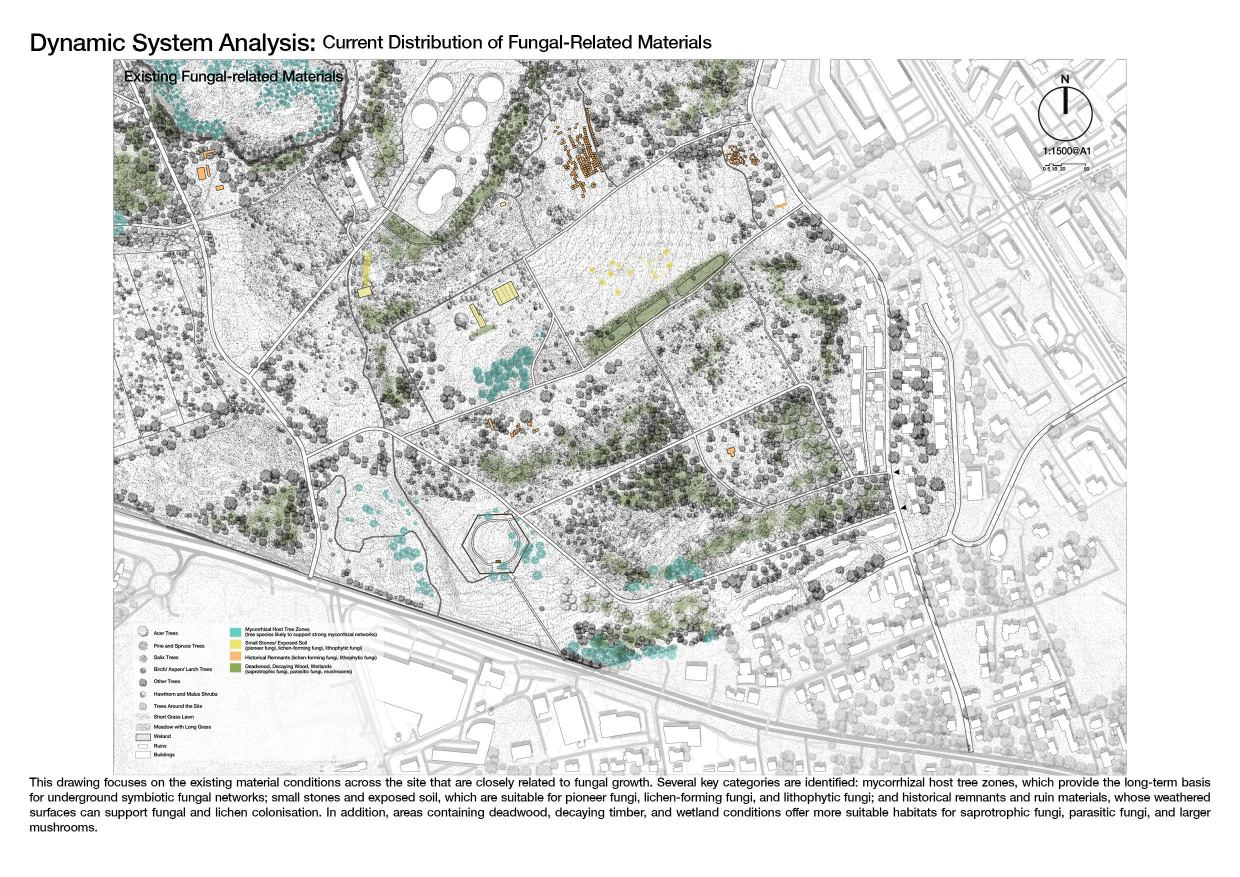
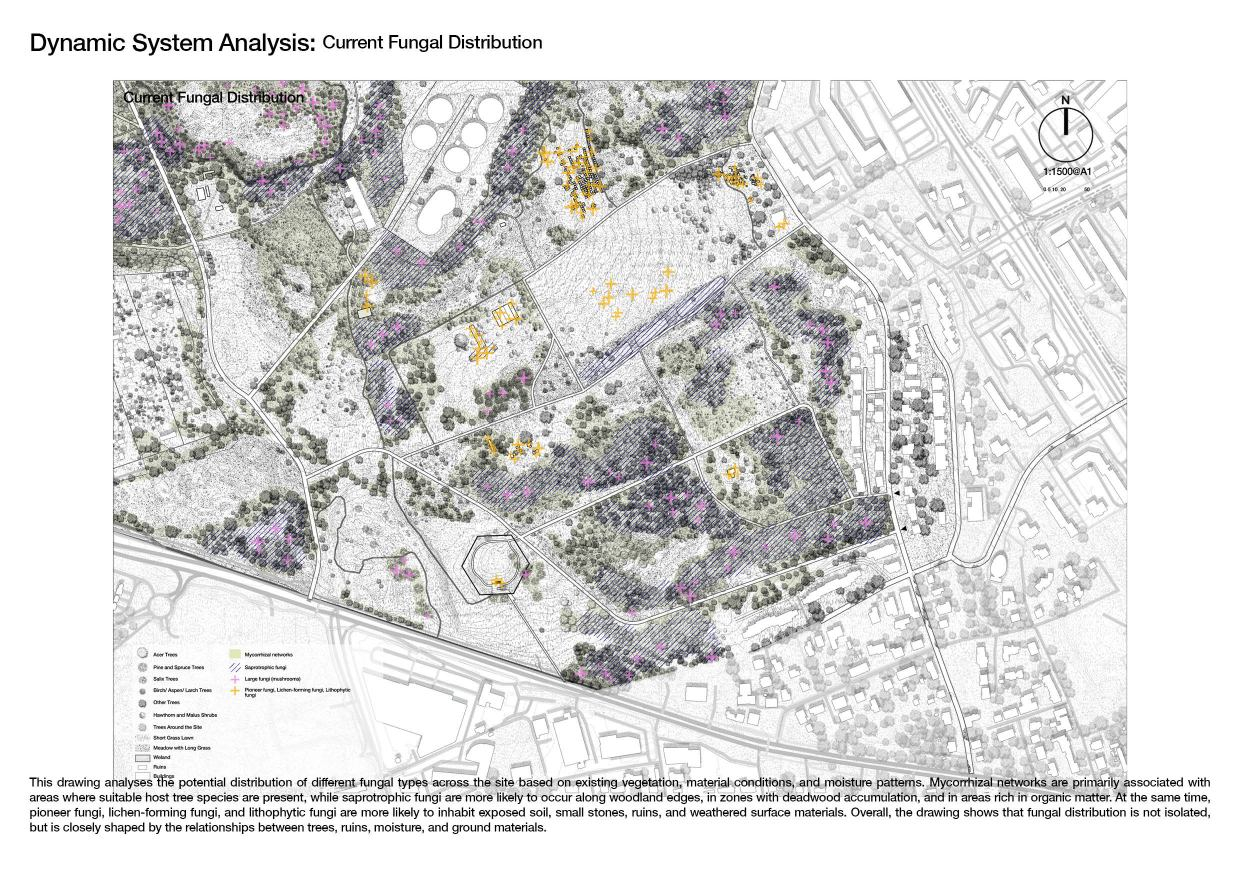
In studying the site's ecological changes, I further discovered that fungi play a crucial role in ecological succession. Therefore, I supplemented the analysis with fungi-related content, including the Current Distribution of Mycorrhizal Host Trees, the Current Distribution of Fungal-Related Materials, and the Current Fungal Distribution, to reveal more deeply the potential ecological connections and transformation processes within the site. In addition, the analysis of light conditions and rainwater dynamics was also highly relevant to fungal habitats, as moisture, shading, and seasonal changes in water availability directly influence the conditions for fungal growth and distribution.
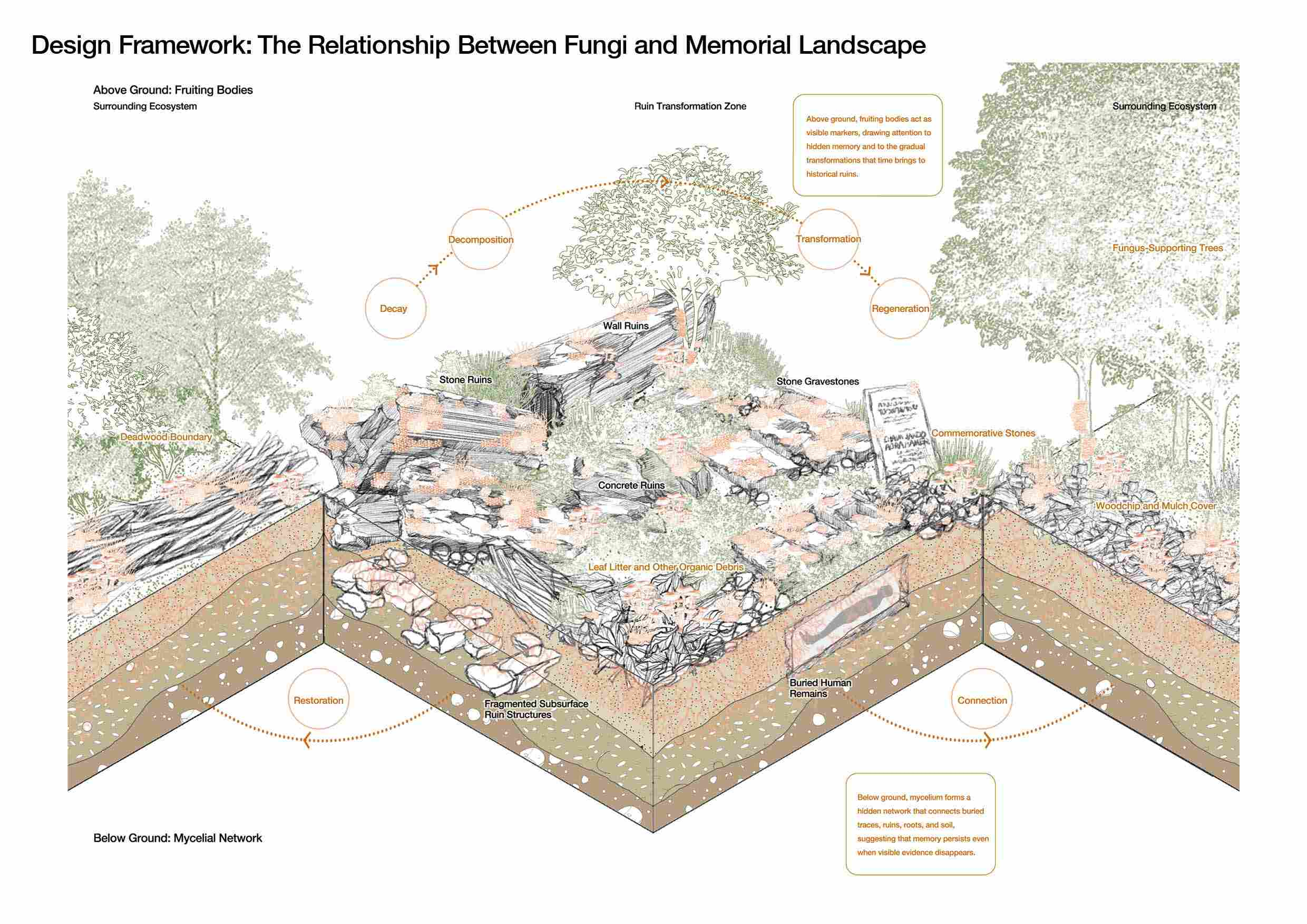
Design Framework and Strategy
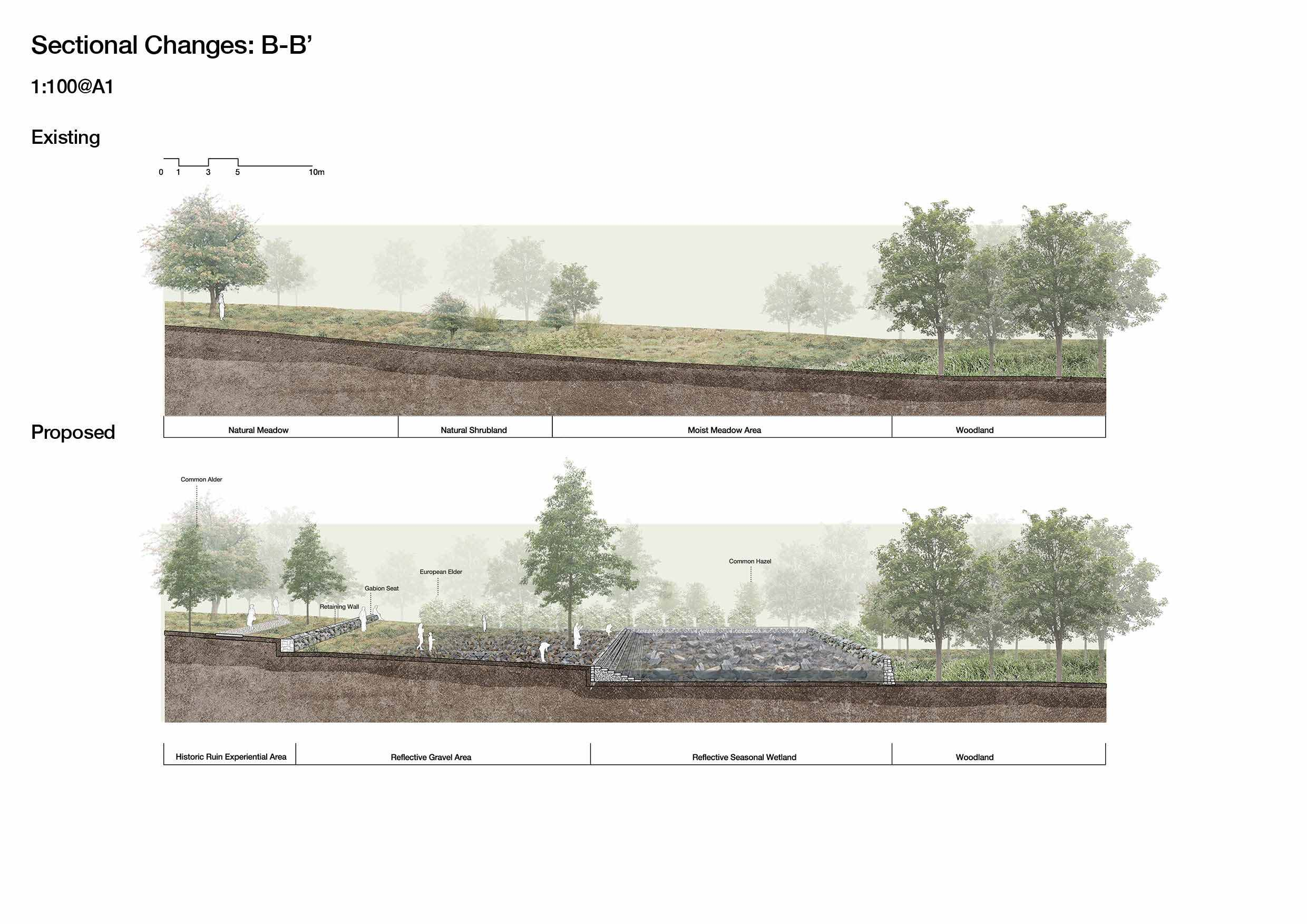
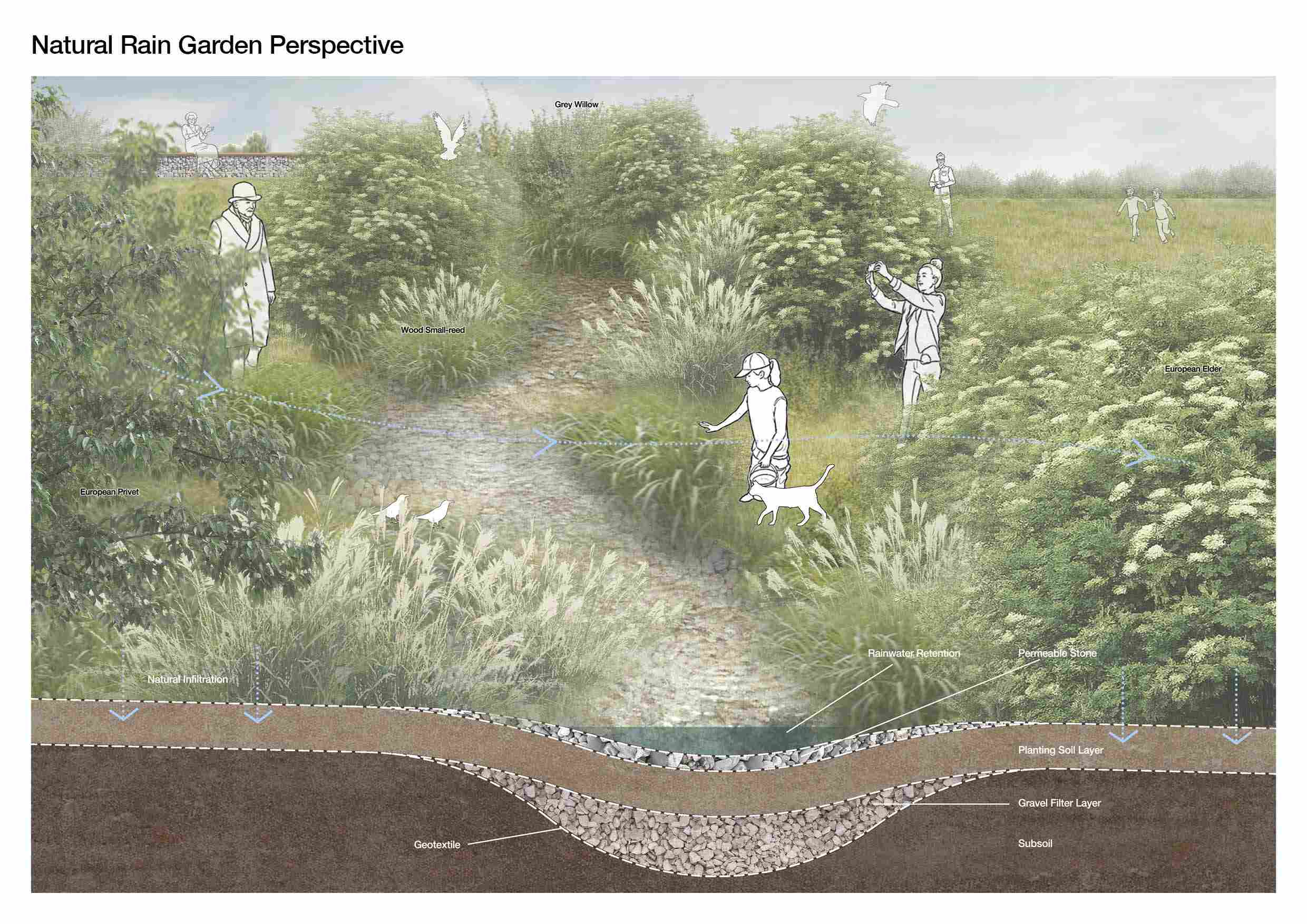
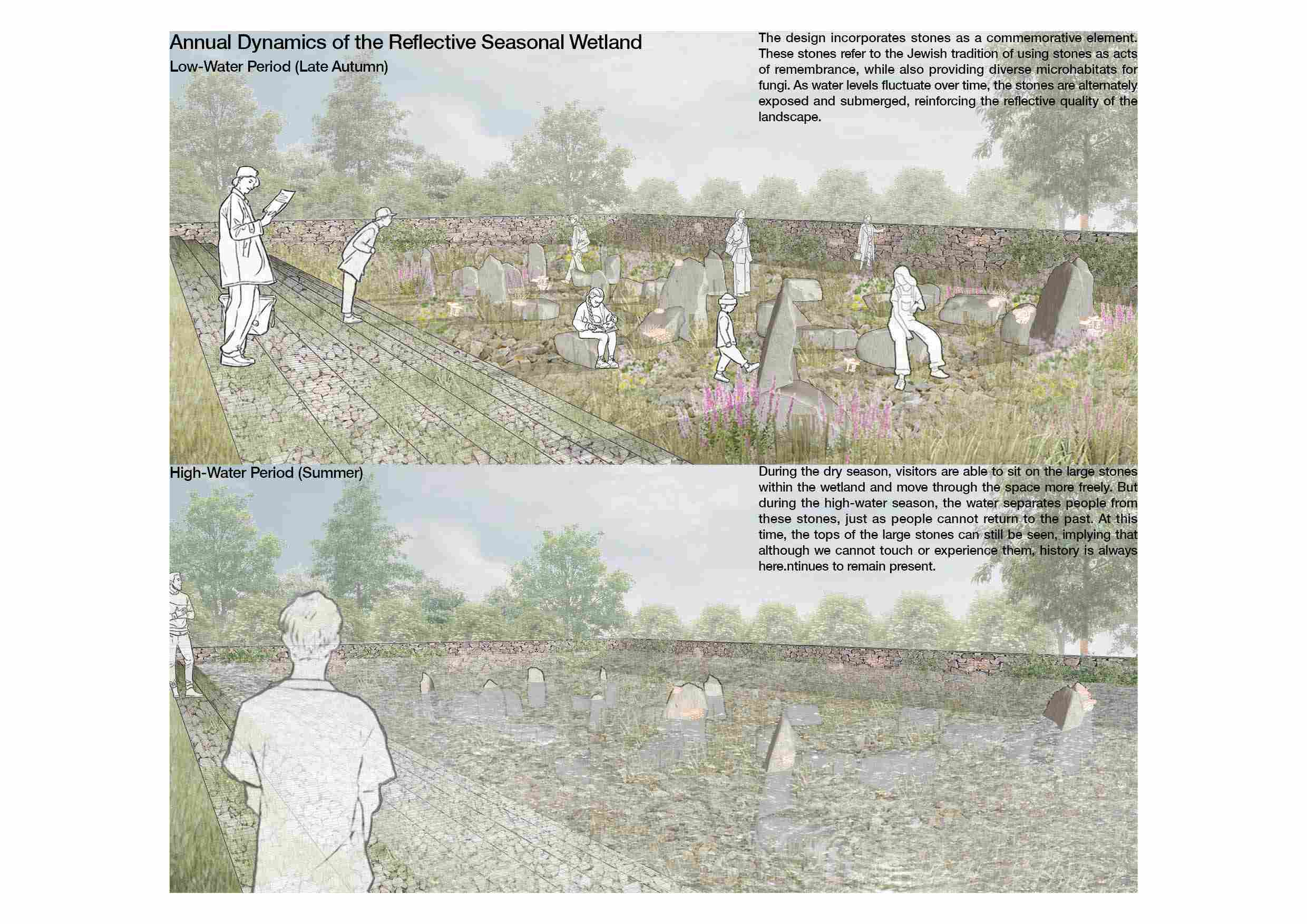
Detailed Design of the Reflective Seasonal Wetland
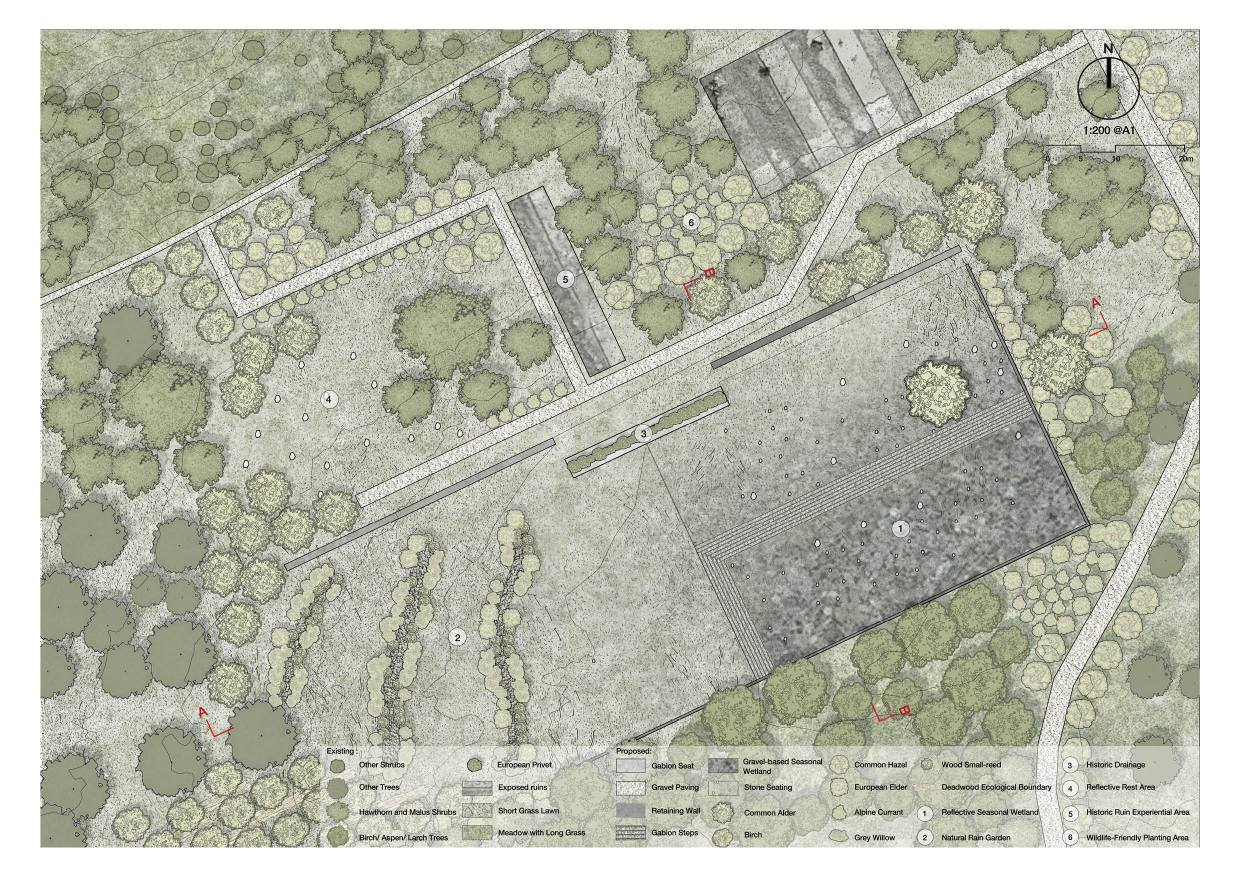
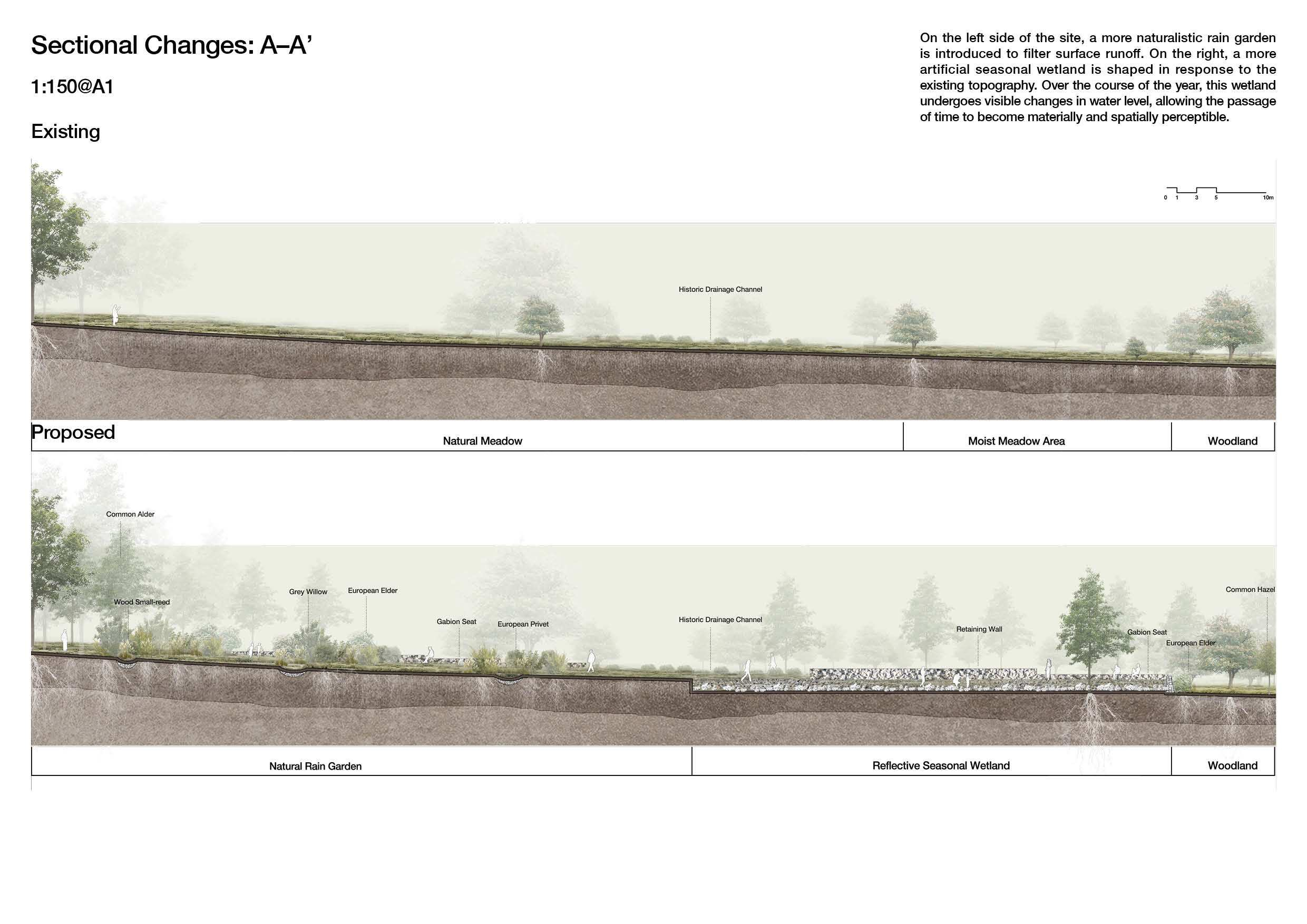
The design of the Reflective Seasonal Wetland aims to draw attention to the often-overlooked remains of the former laundry building and the old drainage pipes located beside the former roll-call square.
Through the creation of a new seasonal wetland, the site is divided into two contrasting parts natural and artificial in order to provoke reflection on the different ways time acts upon nature and human-made structures. The design encourages visitors to consider how time acts upon ruins, memory, and the traces of past events.
Detailed Design of the Workshop Zone
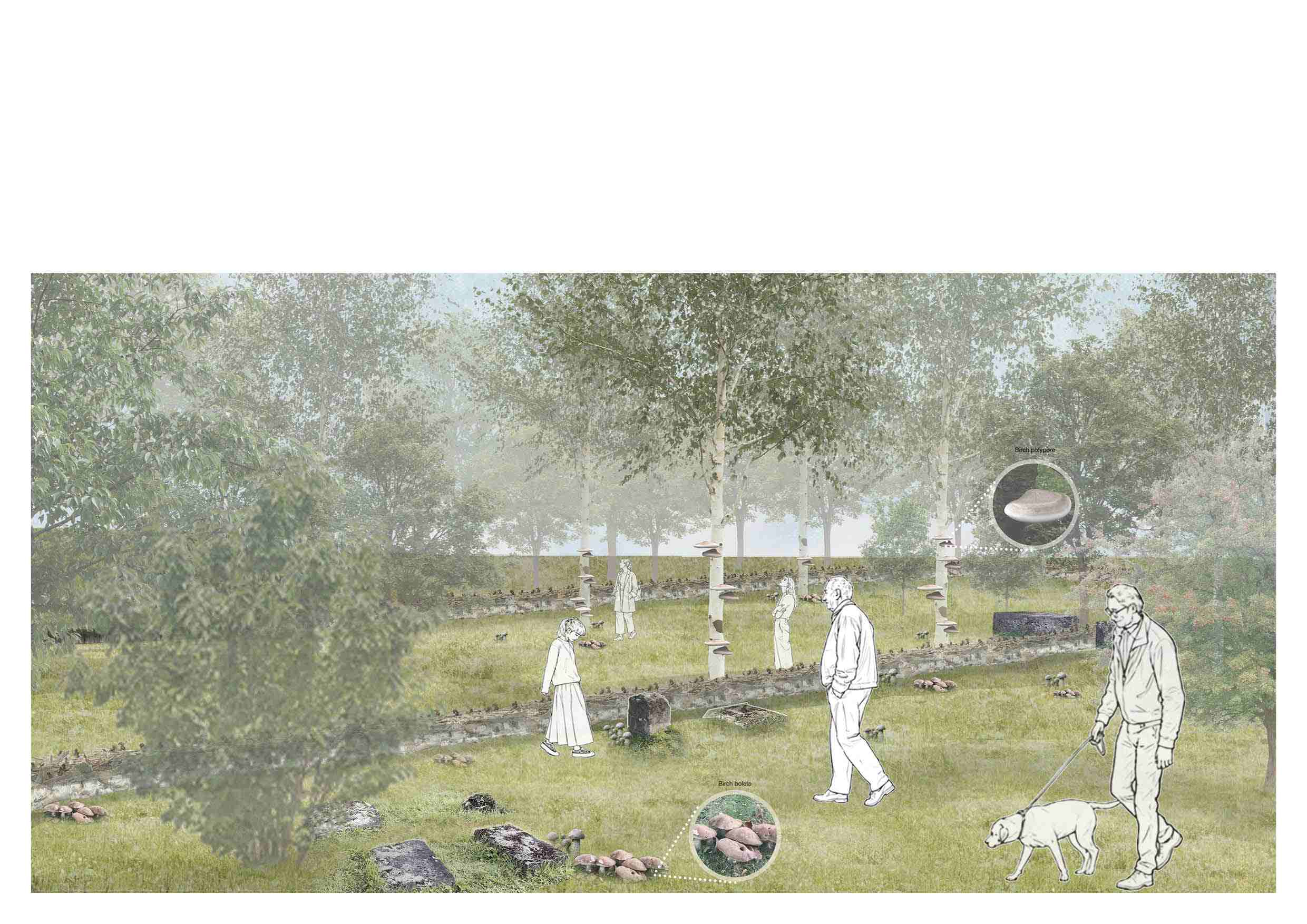
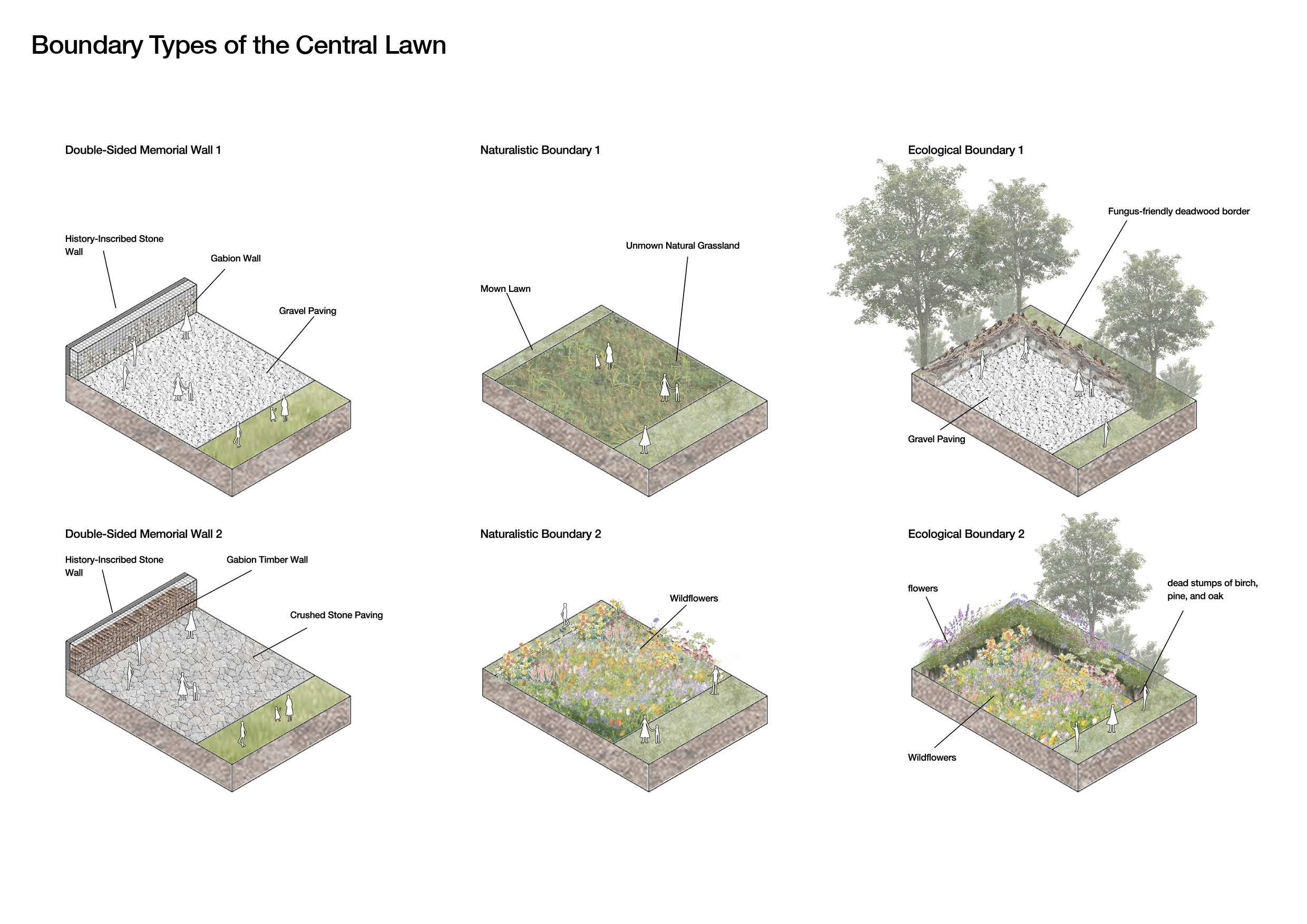
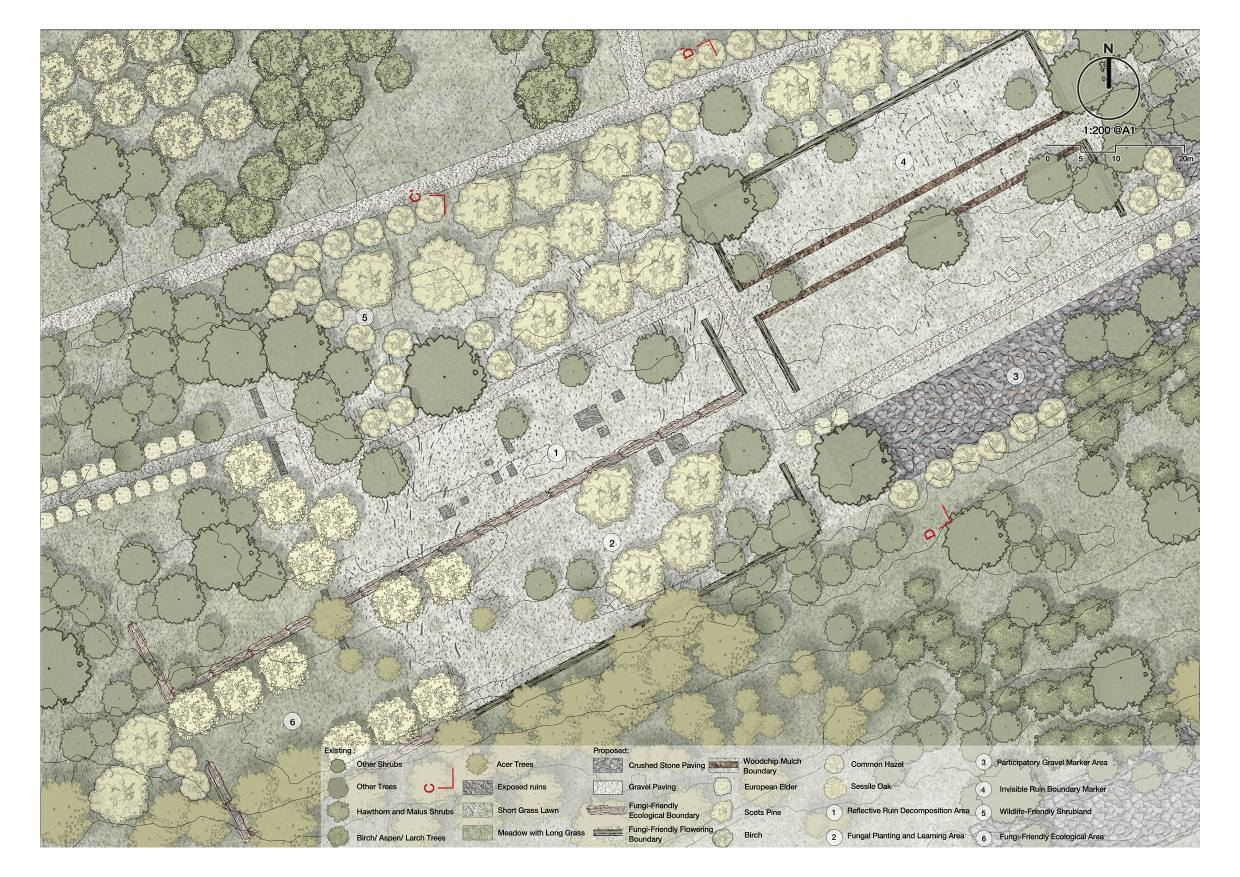
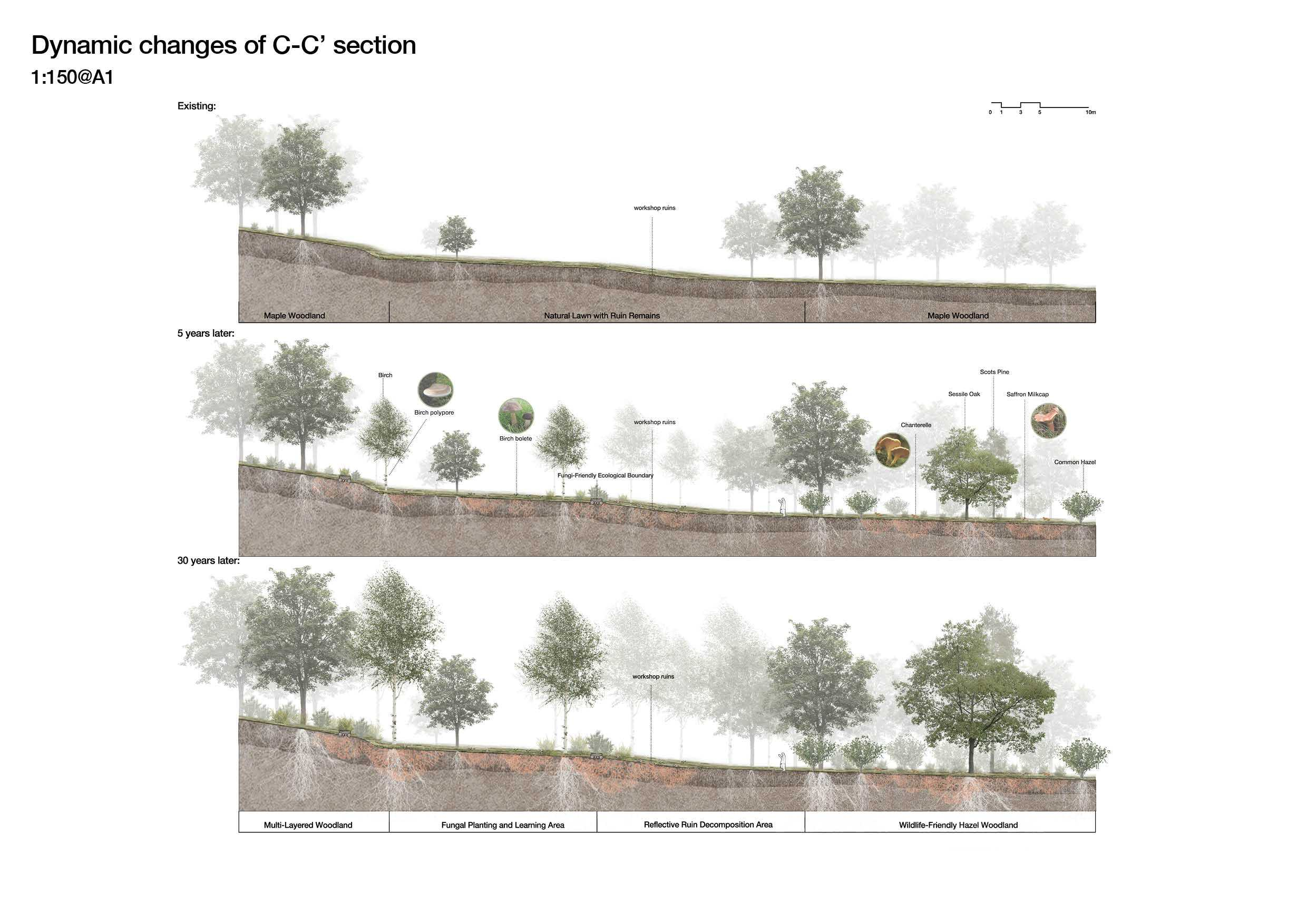
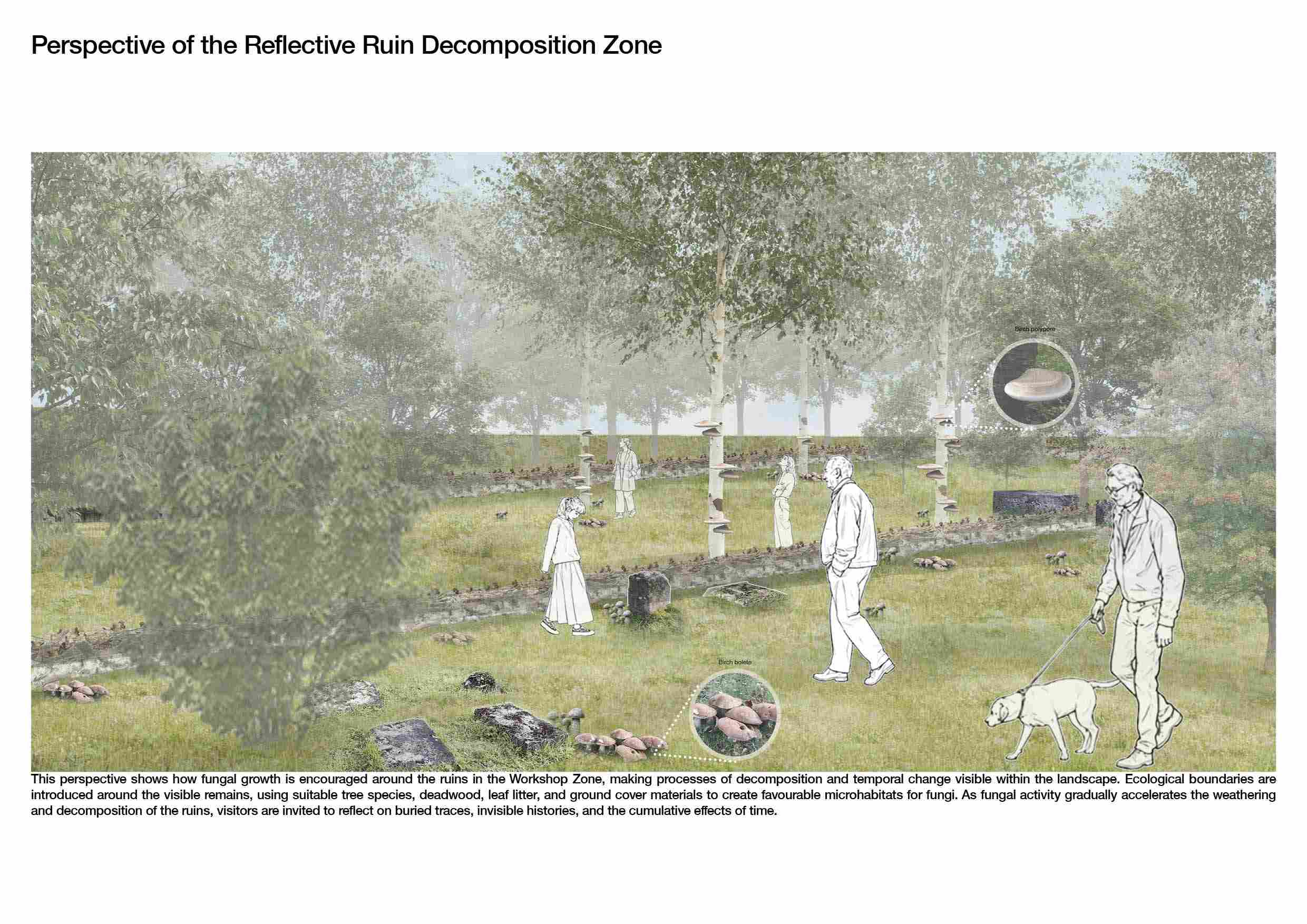
The design of the Workshop Area aims to mark invisible ruins through the construction of different boundary types. Around the visible remains, fungus-supporting tree species such as birch, oak, and pine are introduced, together with ecological boundaries, to create more favourable conditions for fungal growth.
By incorporating large fruiting bodies, the design seeks to prompt reflection on natural processes of decomposition and the effects of time, while also drawing attention to the hidden underground connections between ruins and nature. In addition, fungi can accelerate the decomposition of ruins, this creates a contrast with other remains on the site that are less affected by fungal activity, further encouraging reflection on the passage of time and processes of material transformation.
Share: