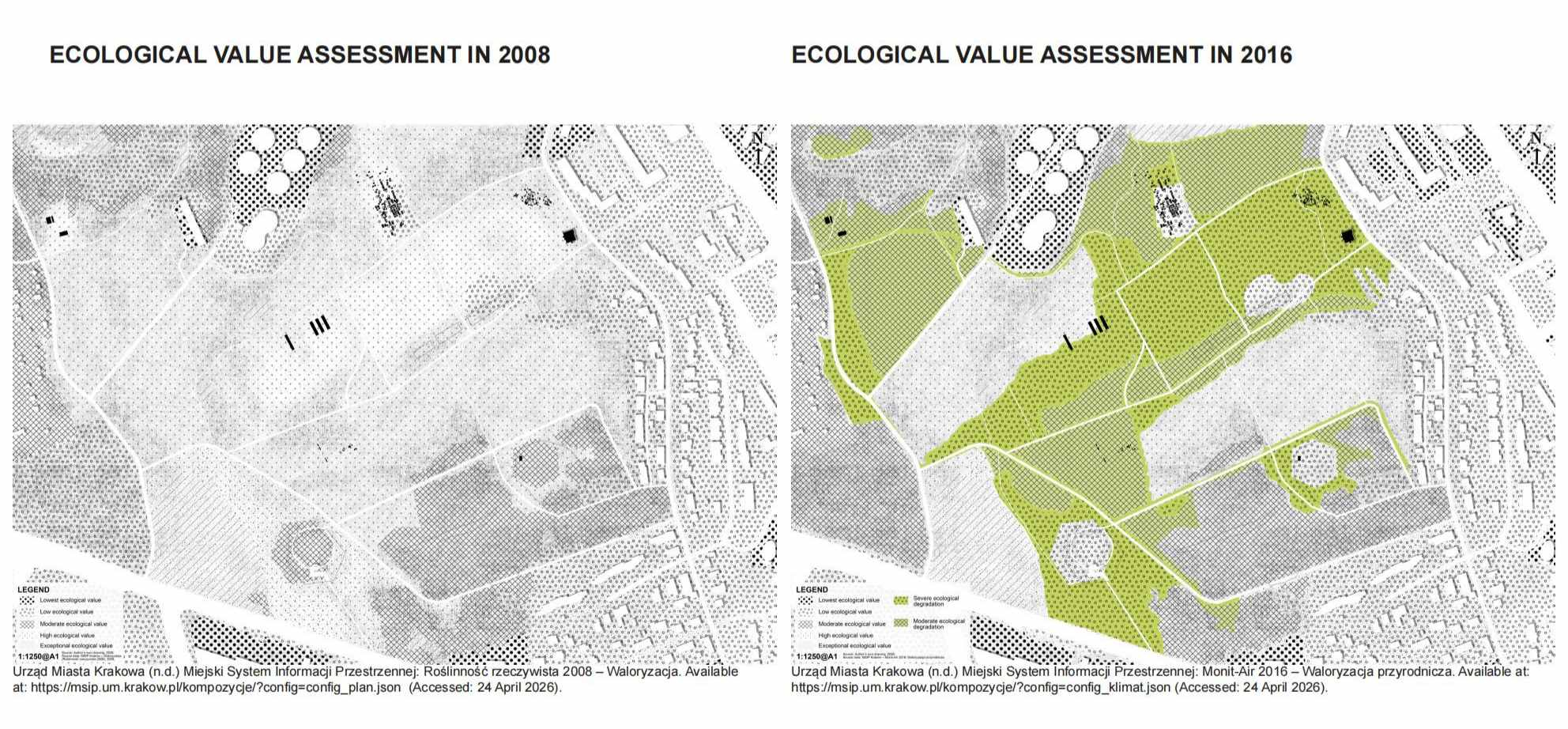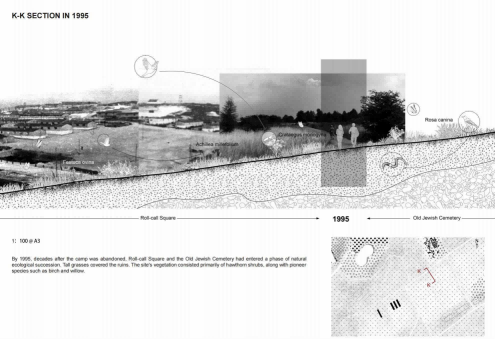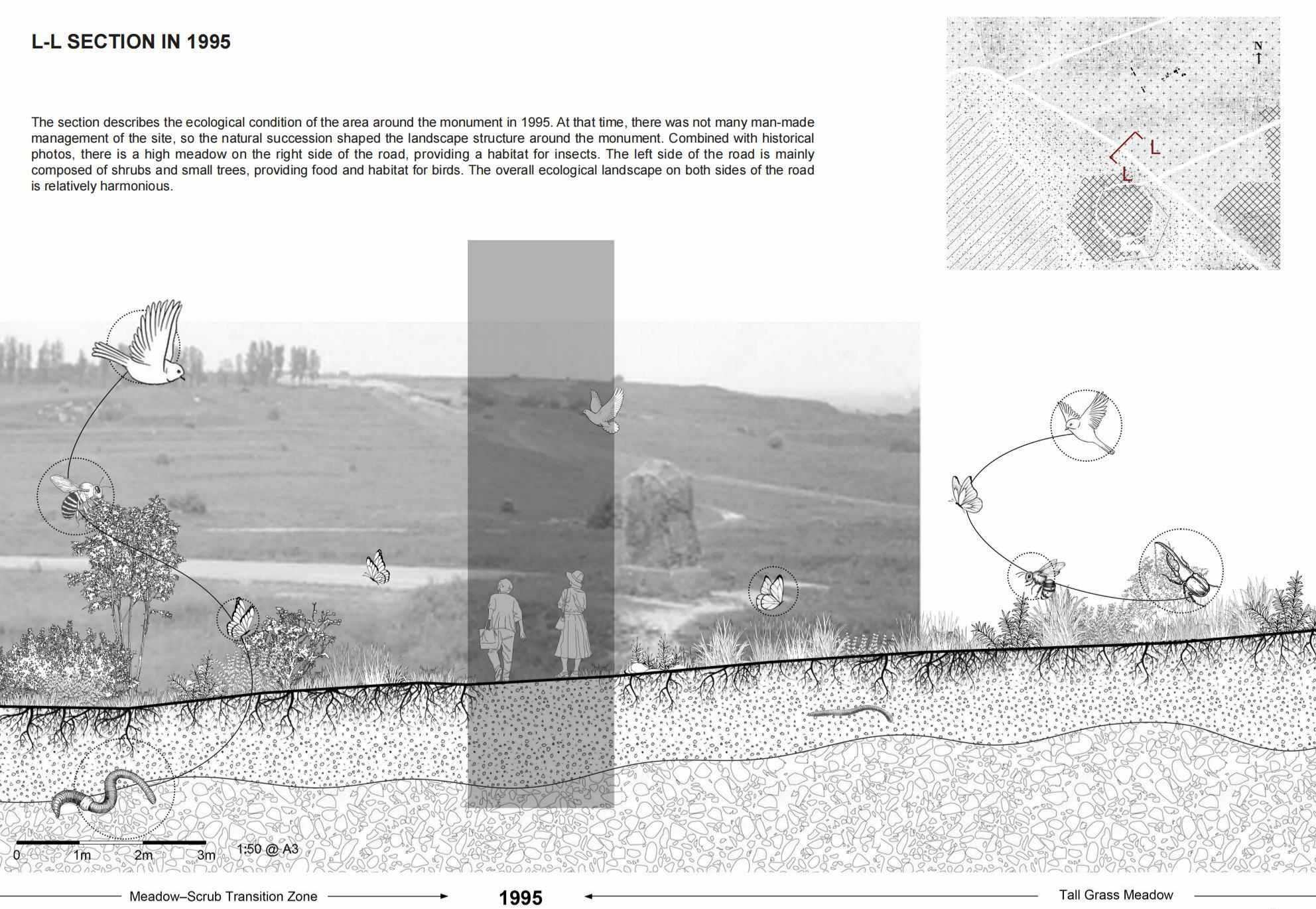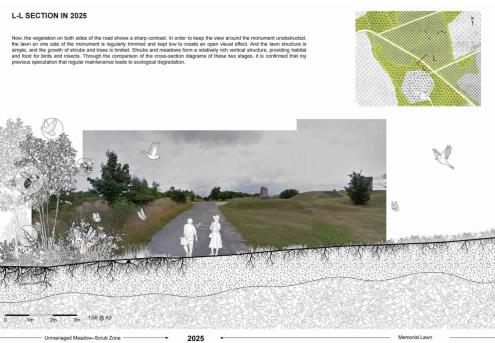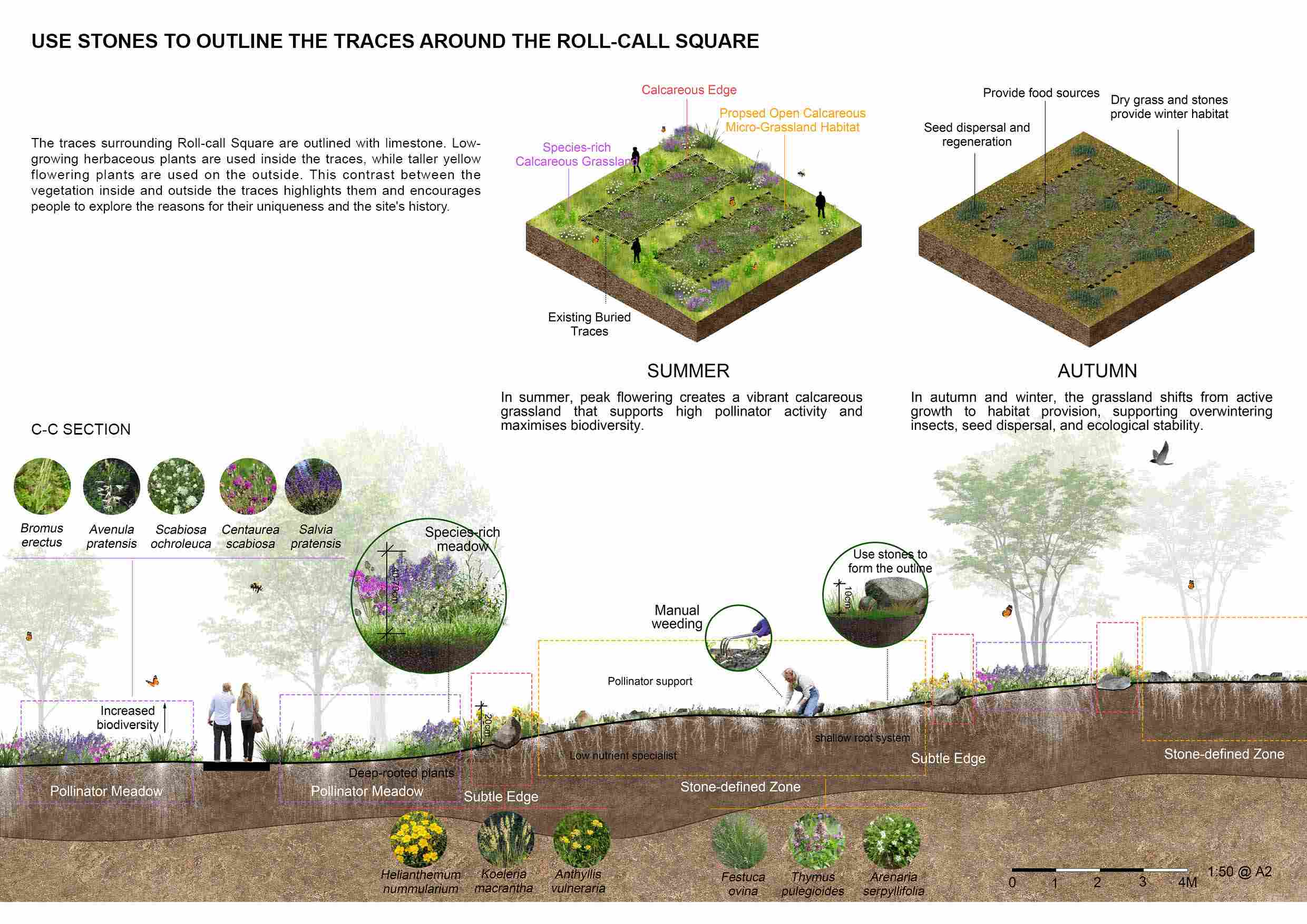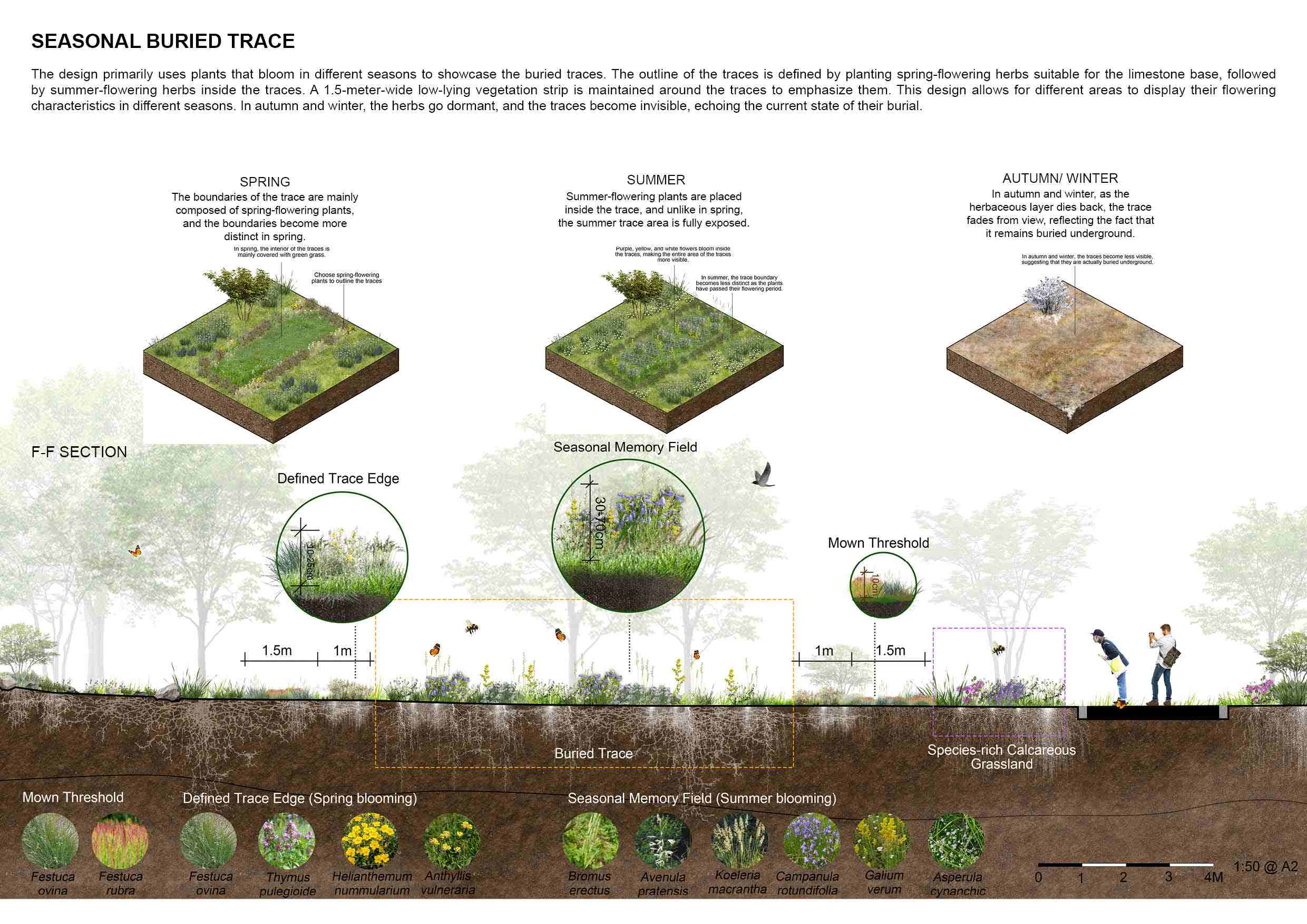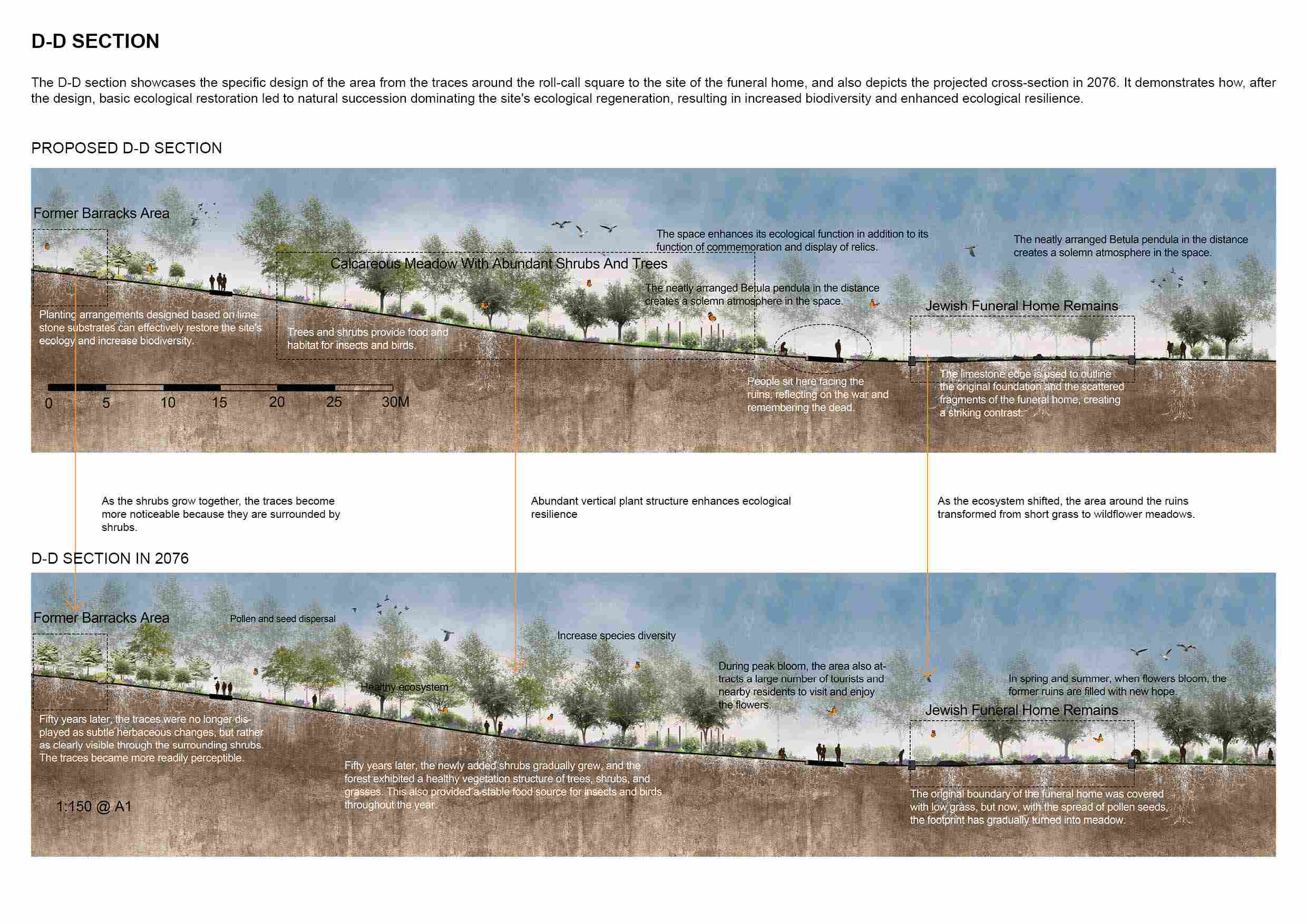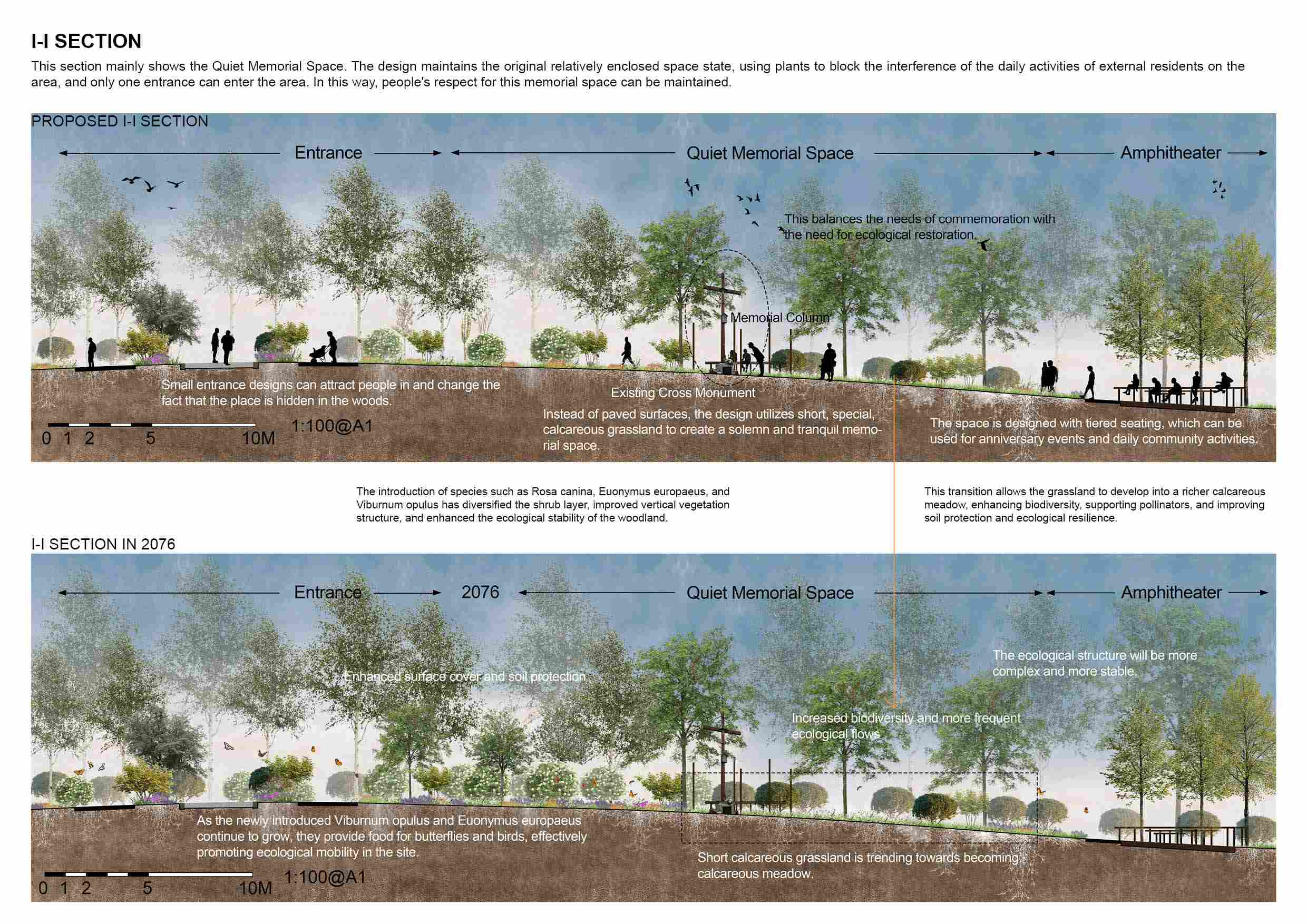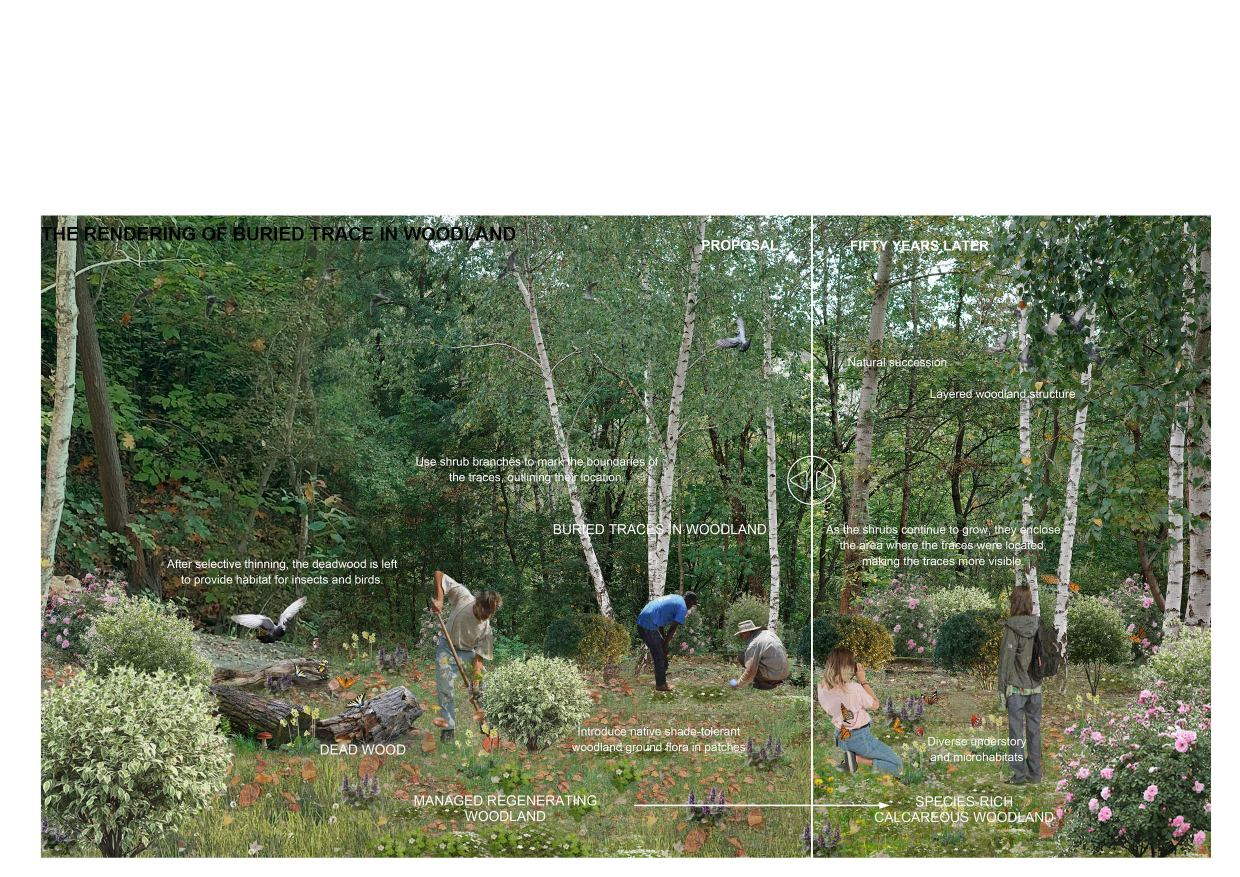
This project reveals a key contradiction between trace visibility and ecological degradation. By studying vegetation distribution and status at different stages, I found that the current strict and direct vegetation management to fully showcase site remains has led to habitat simplification, reduced biodiversity, and diminished ecological value. At the same time, the vegetation cover of pre-management make traces invisible and also serve a protective function. This conflict makes vegetation a vibrant medium through which we can rethink the relationship between memory, conservation, and ecological regeneration.
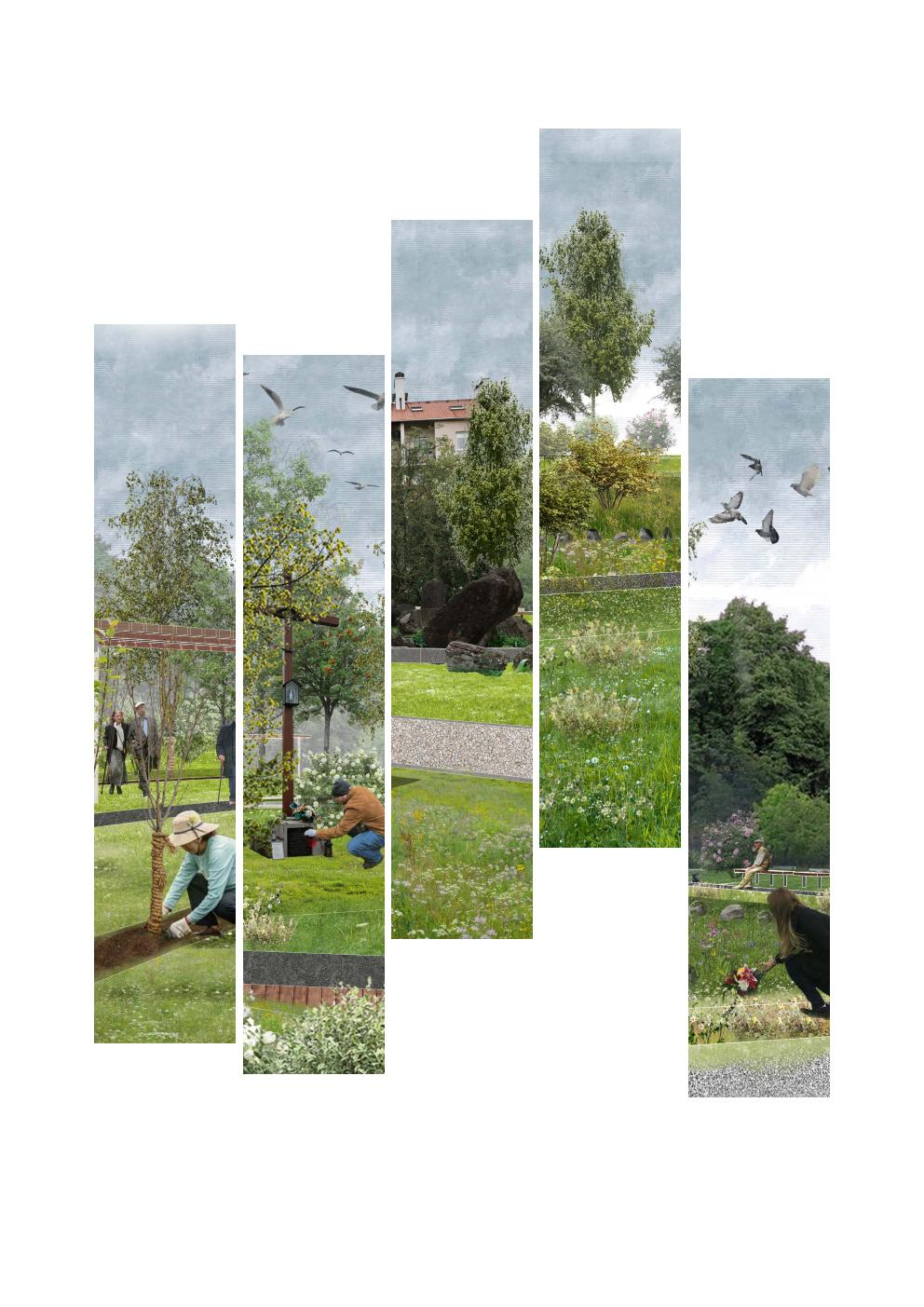
The project takes the degradation of the ecological value of KL Plaszow as a starting point to explore how to balance the needs of trace display with habitat restoration through design. To this end, this design proposes an Ecological Enhancement-Oriented Traces Renewal Strategy Framework. The design framework consists of three interrelated strategies. The Trace Visiblity Strategy introduces a method that is context-specific and ecologically sensitive to showcasing, marking, and interpreting relics. The Vegetation Management Intensity Strategy adjusts the maintenance levels across the site to support diverse habitat types, thereby promoting ecological restoration. The Eco-friendly Space Use and Experience Strategy designs different activity spaces based on the site's current heat map and activity types, meeting both commemorative needs and residents' daily activities. These strategies collectively aim to create a vibrant memorial landscape that integrates historical traces, commemorative needs, ecological restoration, and contemporary public life.