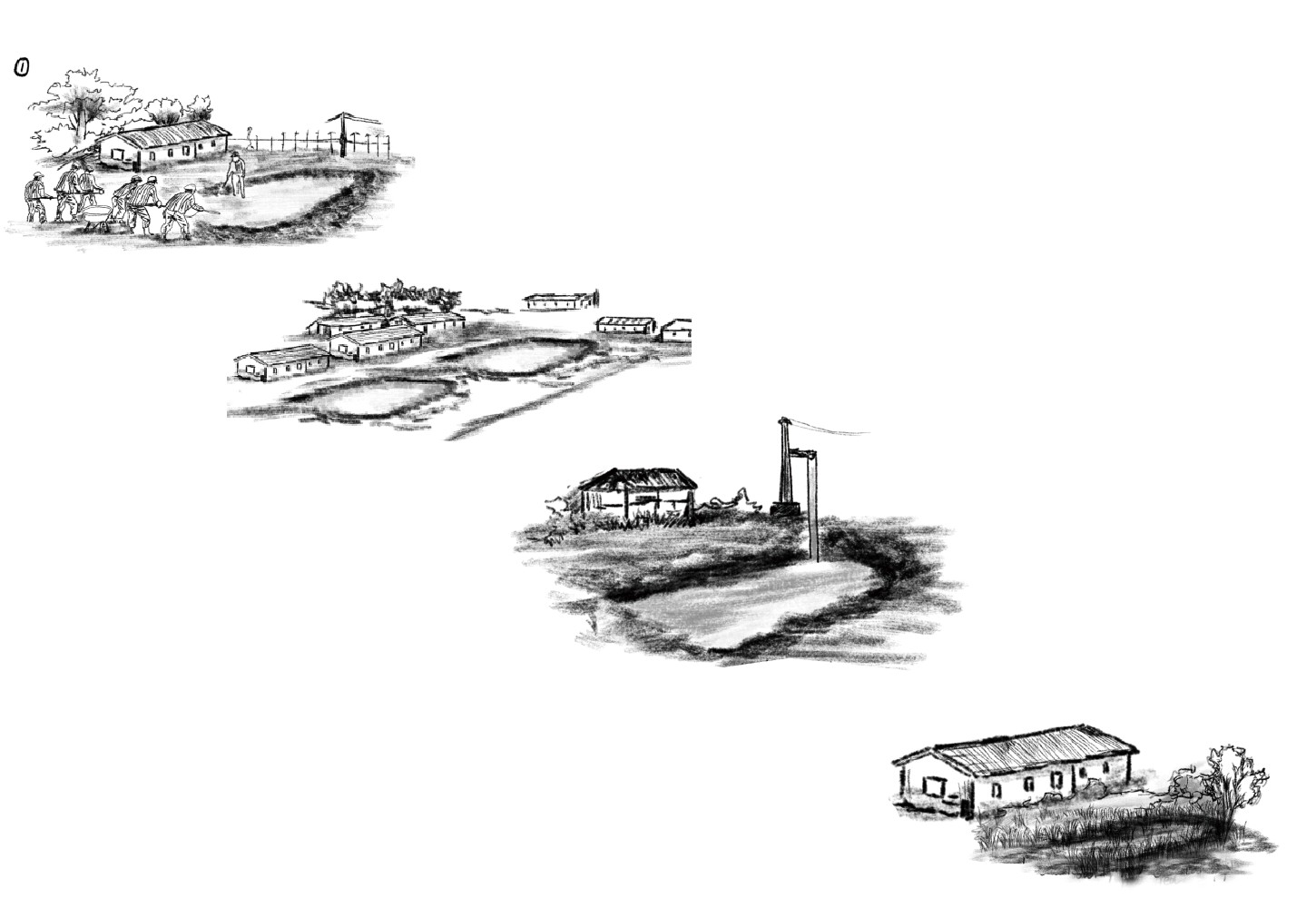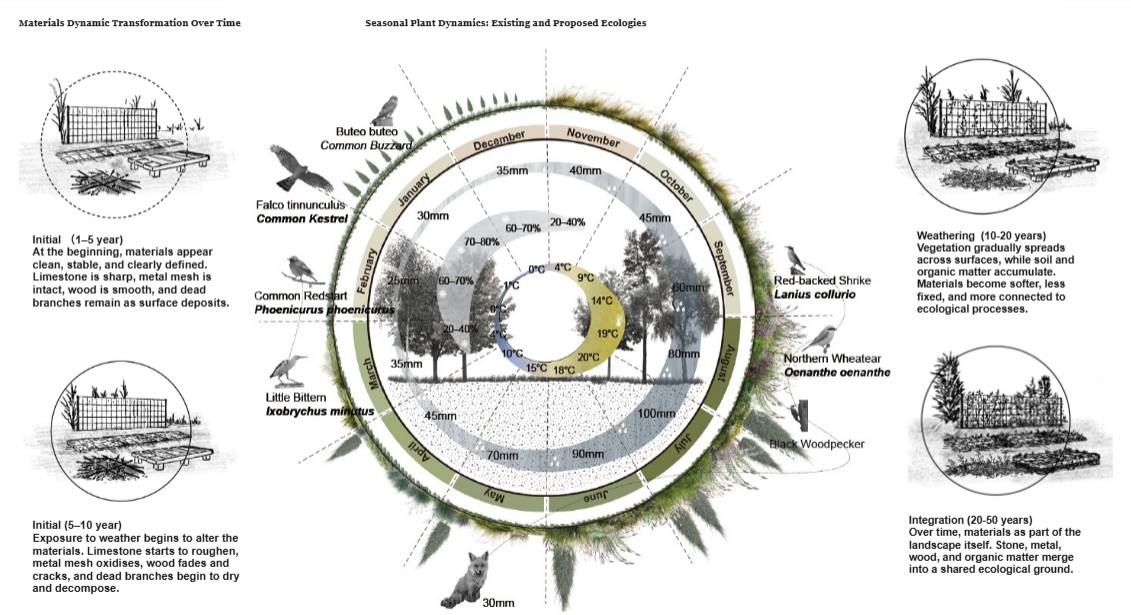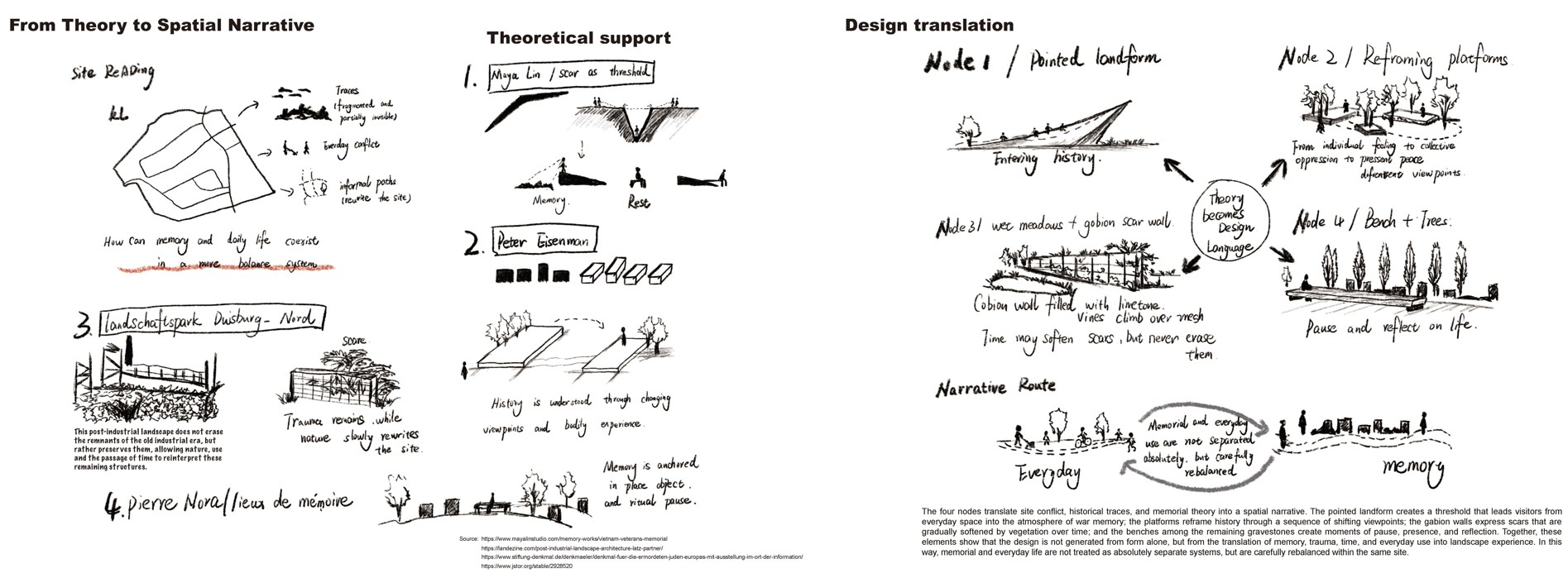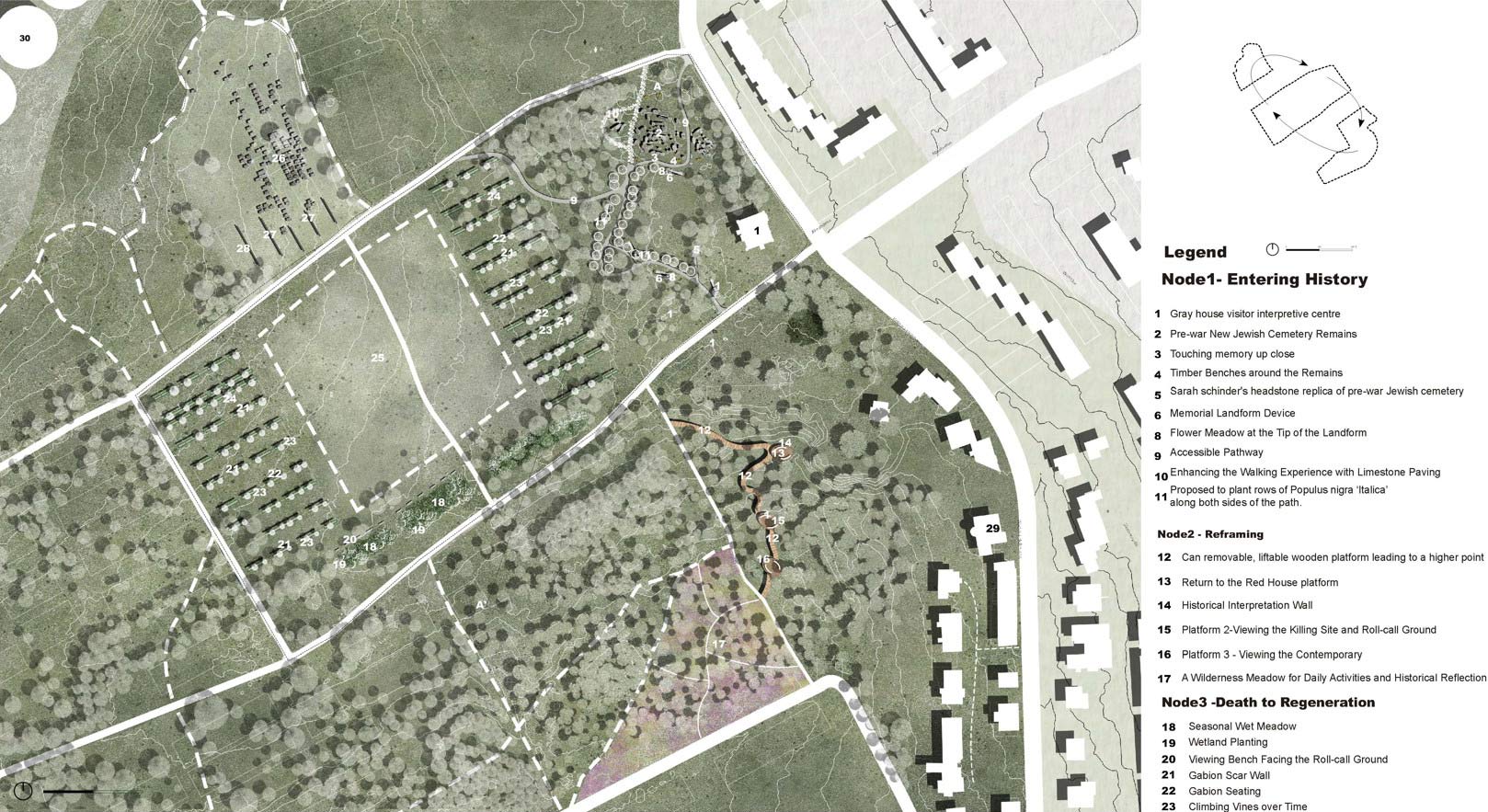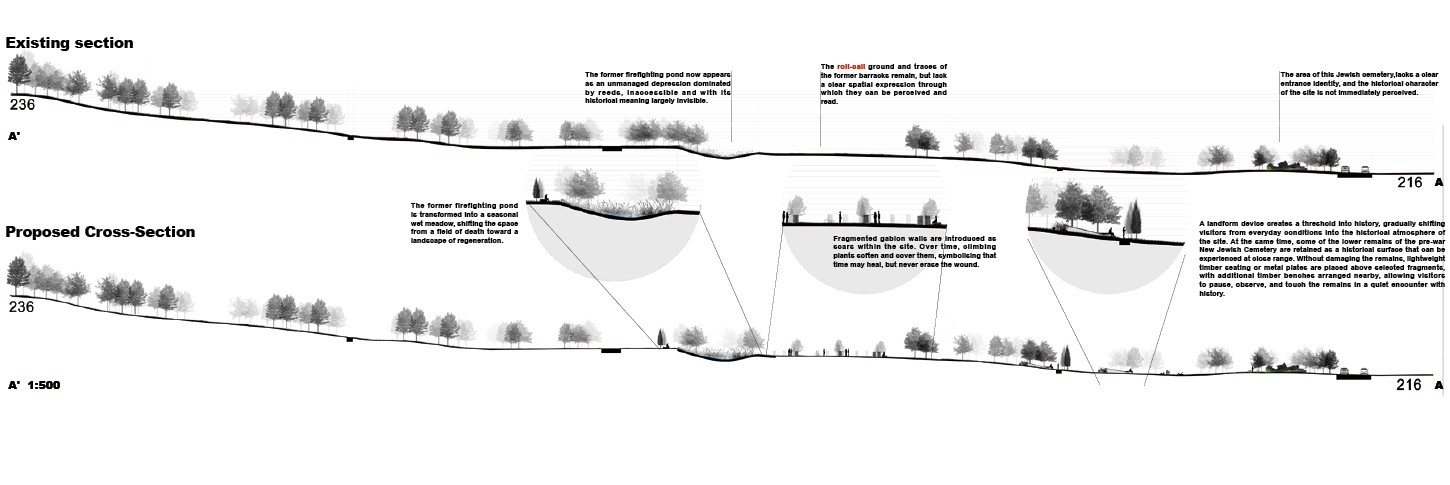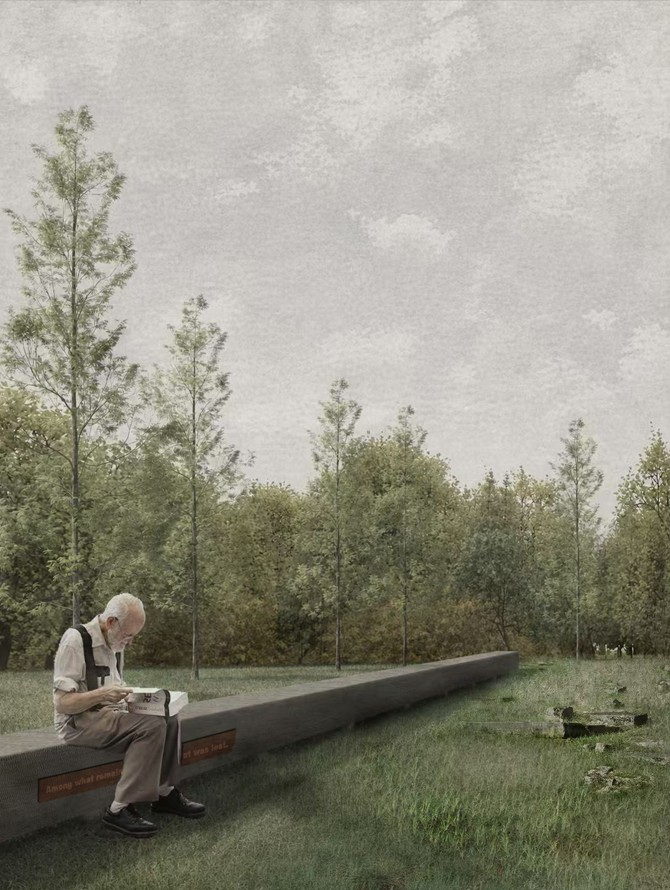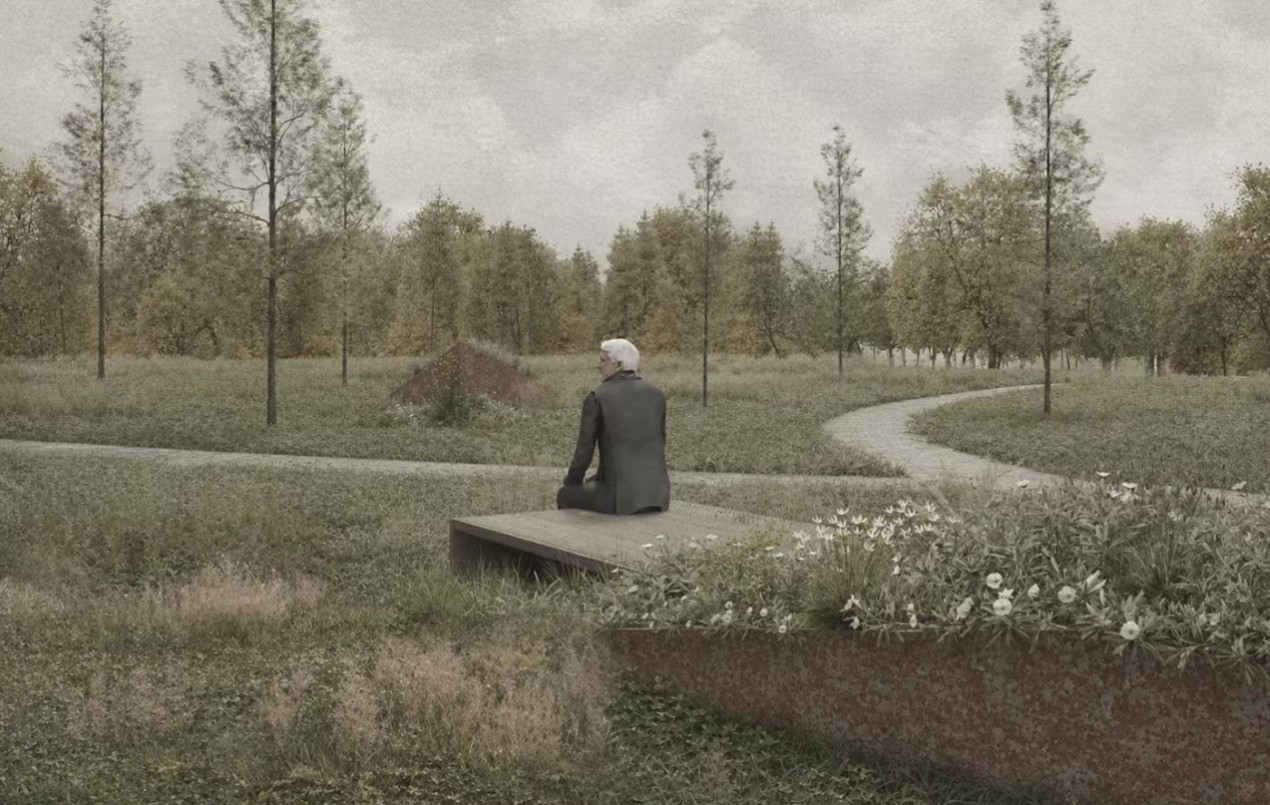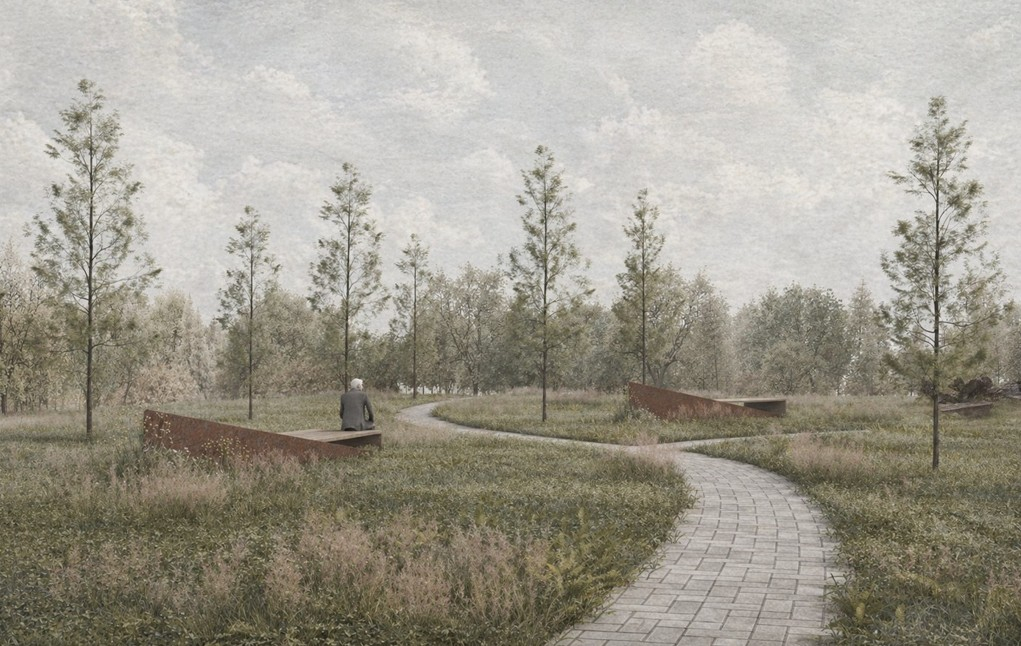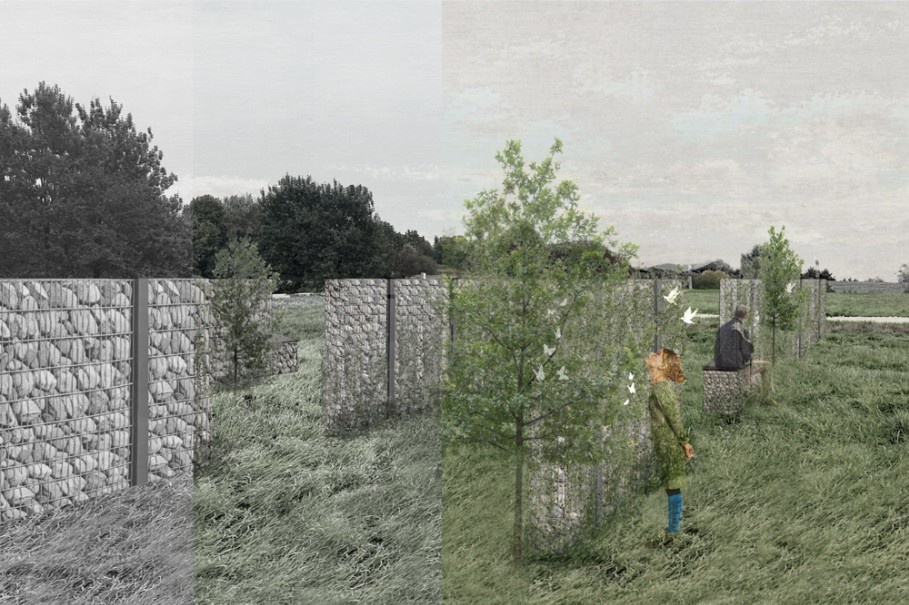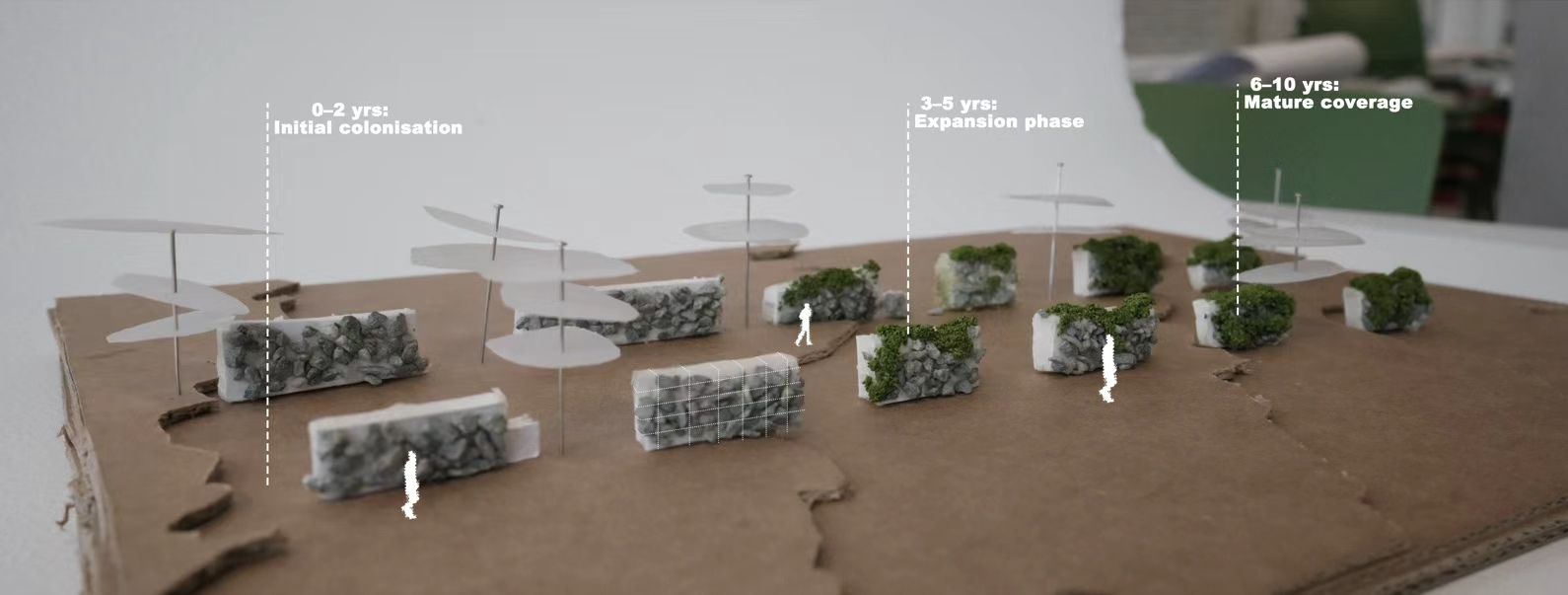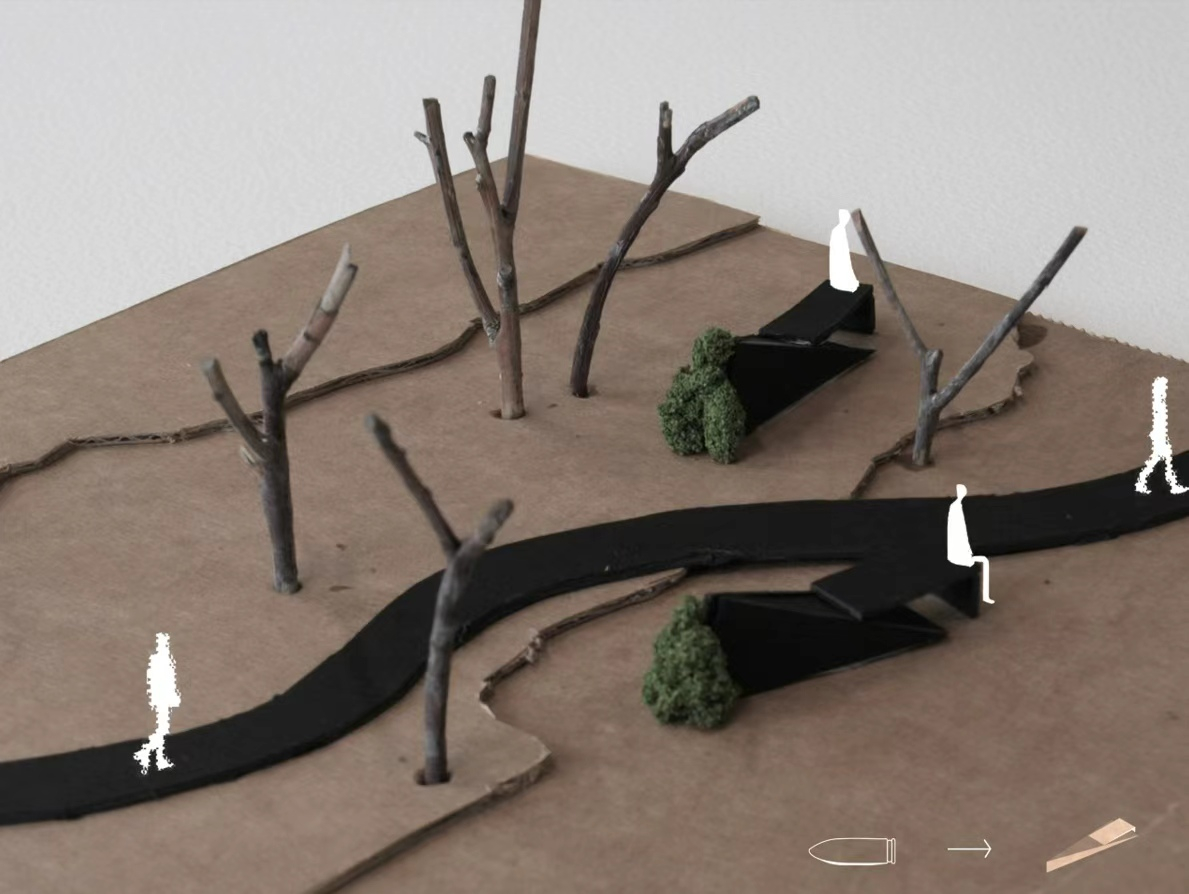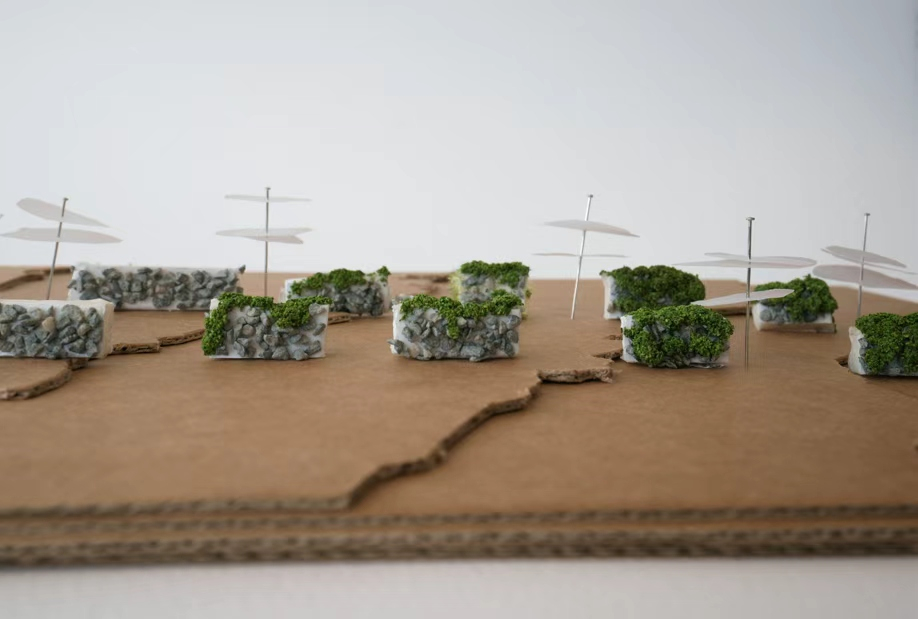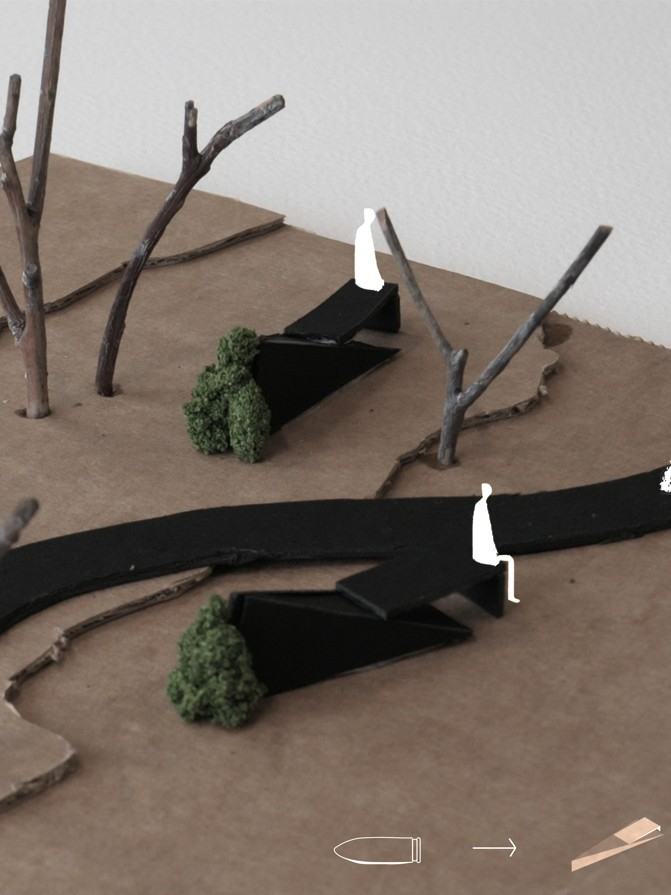
This project is located within the former KL Płaszów concentration camp site in Kraków, Poland. The site carries historical memory, natural succession, and contemporary everyday use at the same time. It is neither a purely memorial landscape nor an ordinary urban park, but a complex landscape where historical traces and present-day life continuously overlap.
The site’s former firefighting pond reveals the central conflict of the project. Over time, its once-clear physical form has gradually faded. Natural succession and everyday use have absorbed it back into the landscape, making it appear today more like an ordinary depression than a recognisable historical trace.
However, history has not truly disappeared. What has weakened is people’s awareness of it, the memory attached to it, and the original spirit of the site. When a historical trace becomes invisible, everyday life can easily overwrite it, and history gradually recedes into the background.The project therefore begins with this question: if history has been covered by nature and everyday use, can design reactivate the weakened memory embedded in the site?I do not aim to protect the memorial landscape by excluding daily life, nor to turn it into a purely recreational space. Instead, the project uses landscape design to rewrite the site, allowing history to be sensed again while everyday activities are accommodated more appropriately. Building on the previous research into conflict, transition, and undefined space, the project takes a clearer position: not to remove conflict, but to make it visible and spatially negotiable.