

Temple Walkway becomes The Temple Playway.
This project is driven by the hypothesis that by cultivating a typology of defined yet adaptable play spaces within the city, it is possible to foster inclusive, imaginative, and socially resilient forms of play, creating spaces that are structured enough to feel safe, yet open enough to allow for agency, encounter, and change over time. These environments are framed but not prescribed, enabling multiple forms of play and occupation across ages.
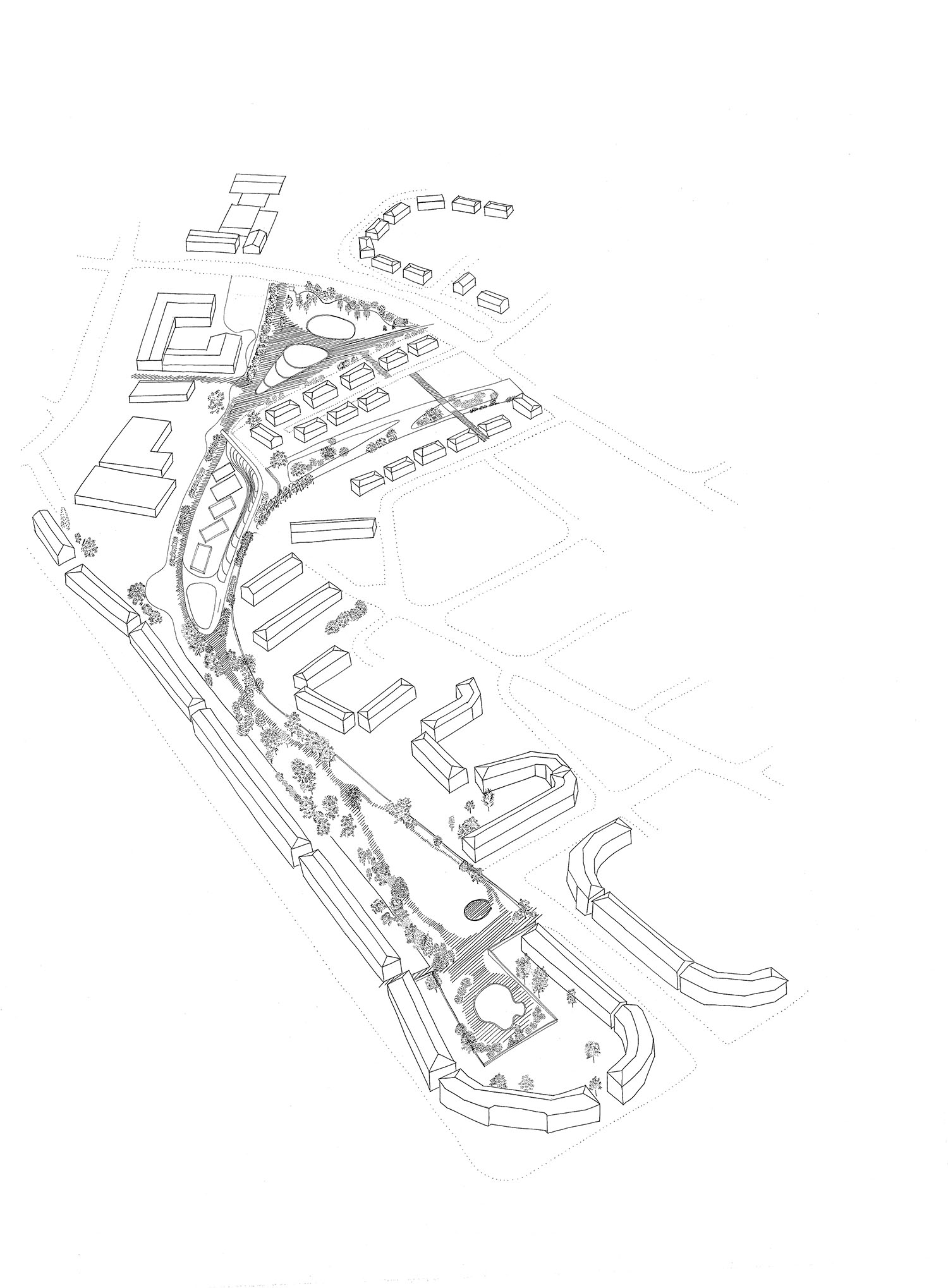
Working within Glasgow’s Liveable Neighbourhood scheme, the project tests the three play typologies developed in Design Exploration Part 1, through one pilot site. Putting into practice the strategy developed in Design Exploration Part 1, this project seeks to incorporate play and risk into everyday landscapes creating a swathe of play opportunities that transect the community. Thus, incorporating play widely and informally into the lives of a whole neighbourhood. Temple walkway is a brilliant but underused community asset positioned in the heart of Temple (Anniesland), bringing together a community by connecting housing to schools, train links, transport and provides a much-needed green space for play and activity. Both Temple Park and Temple walkway boast potential for play beyond the dissatisfying, existing children’s play space. Harnessing the potential within this site, this project seeks to address social barriers to play.
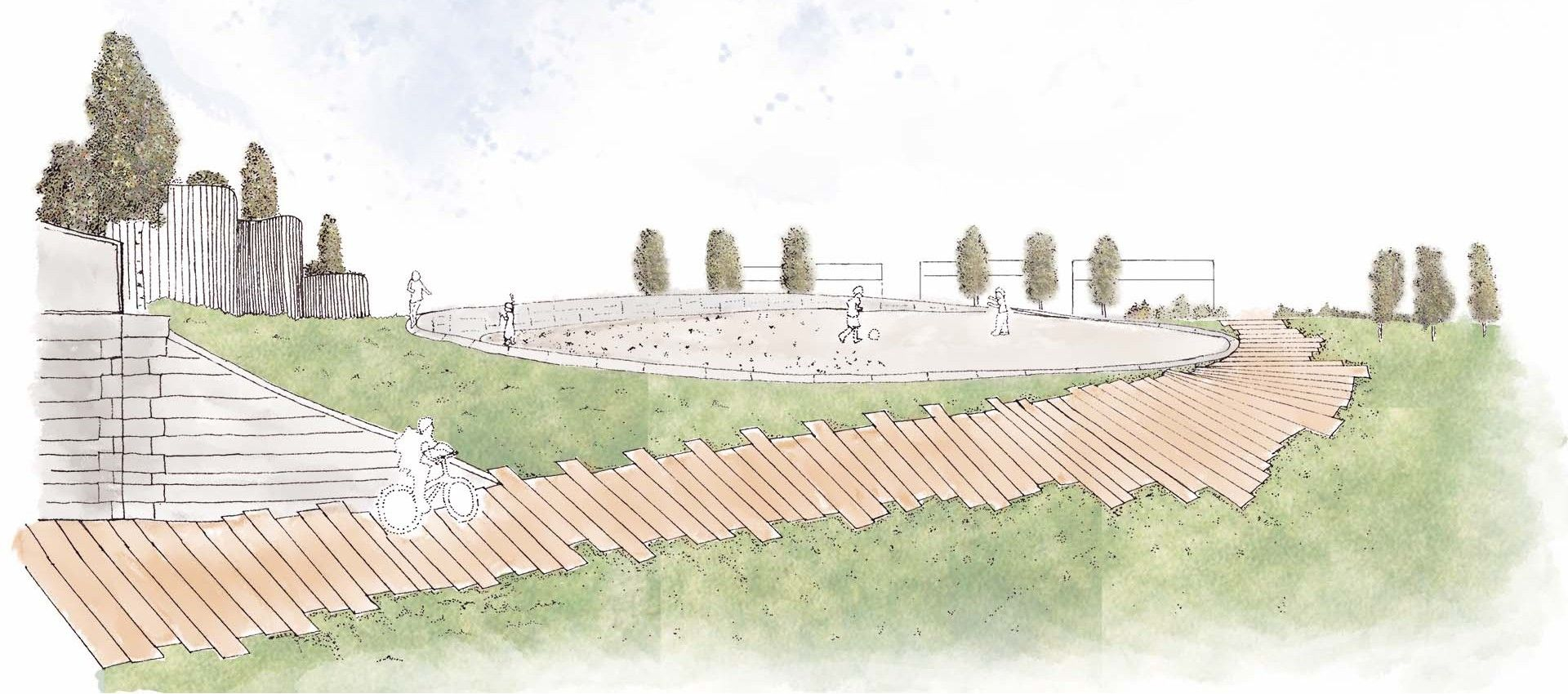
Asking, how play and everyday life can interconnect seamlessly, this design response rejects play apparatus in favour of playful landforms which become the apparatus. Understanding that play is not bounded and occurs in unexpected spaces, much of the site is open to user interpretation, excepting the sports play area which is the only form of formal play found in the site. As users walk through the site they move from the Risky Play Zone, to the Formal Play Zone, to the Risky Play Zone.
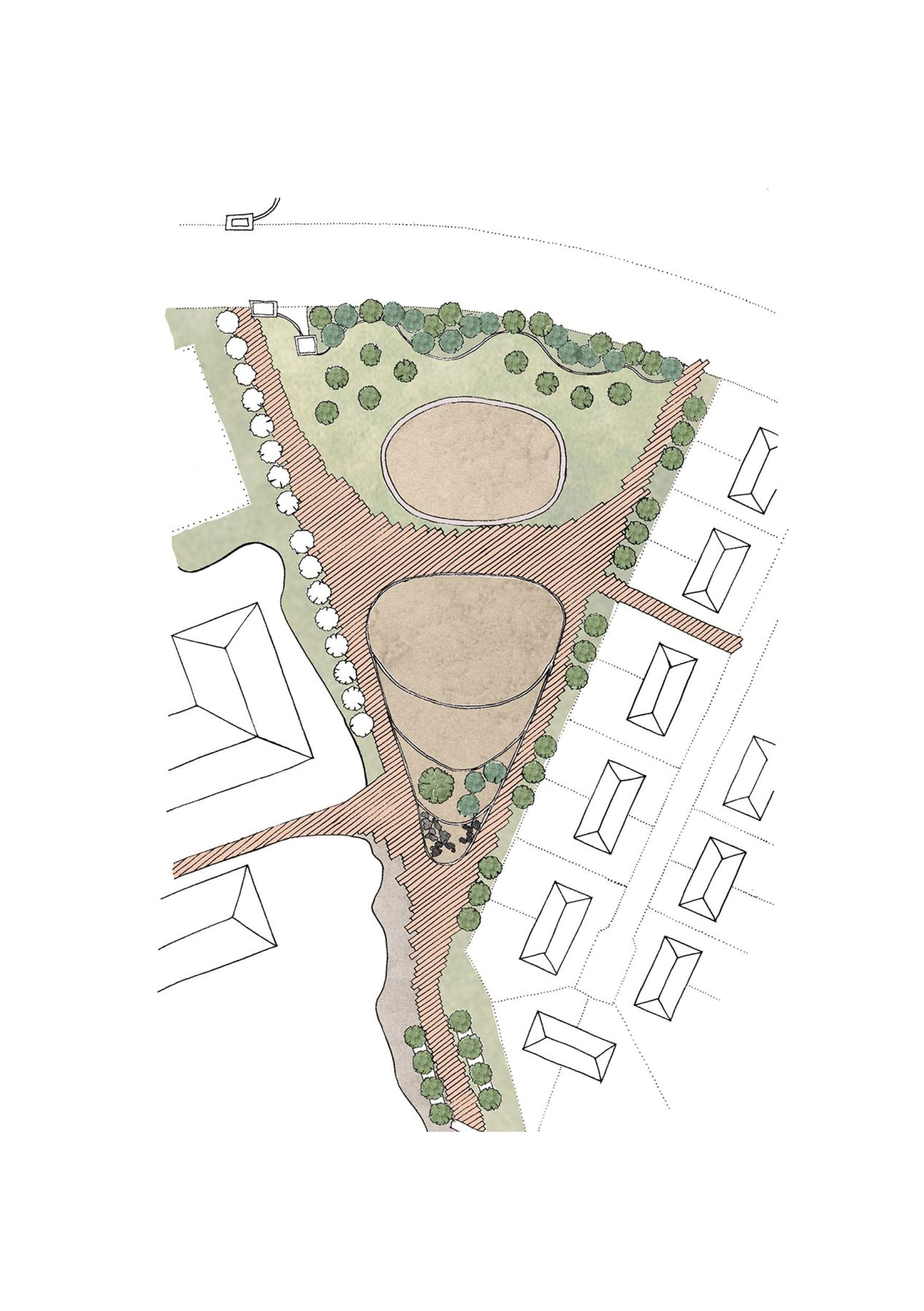

The Risky play zone encourages open-ended, imaginative and risky play. Traditional play equipment is rejected, instead topography and planting are used to provide grounds that prompt playful interactions.
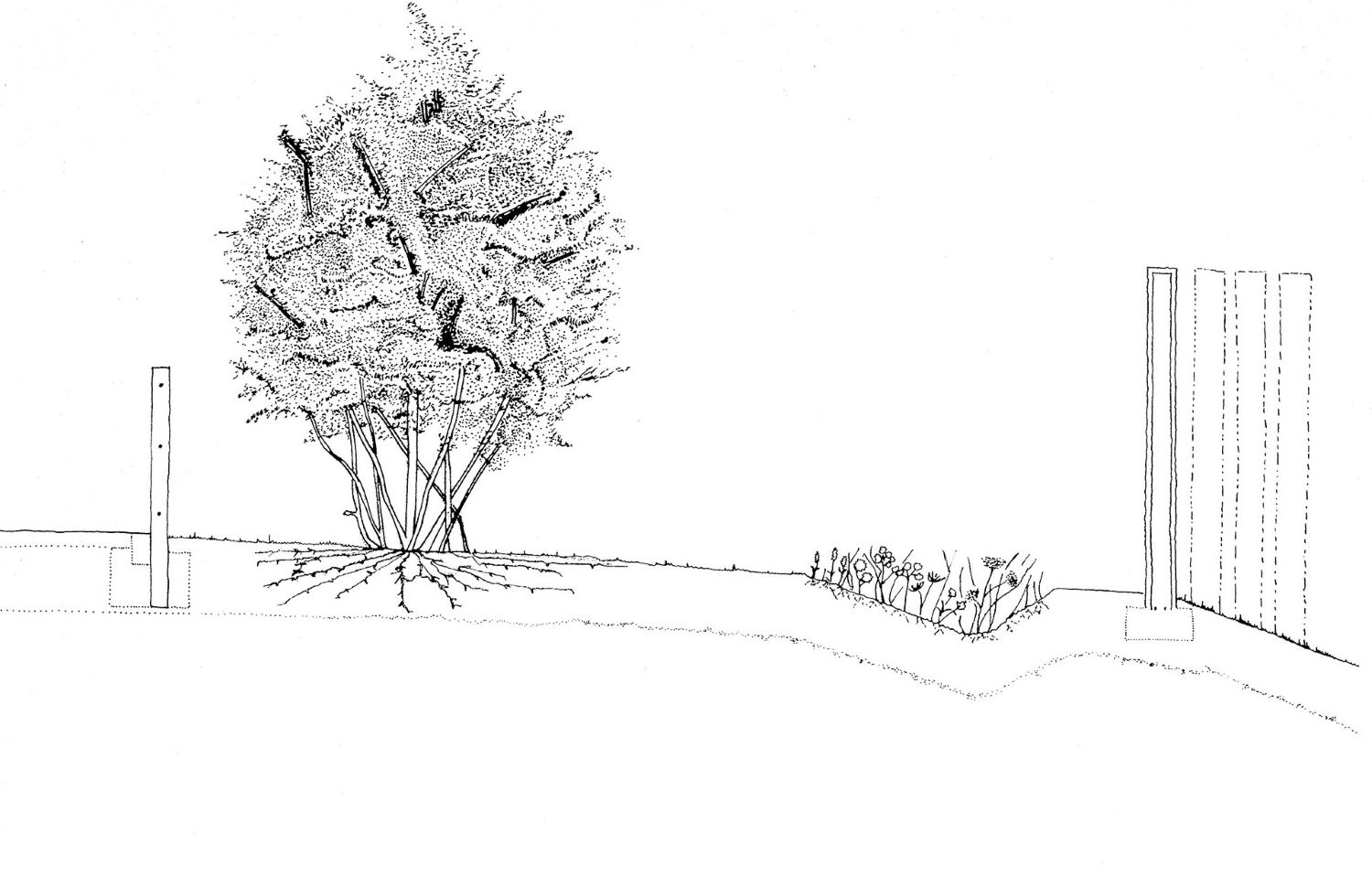
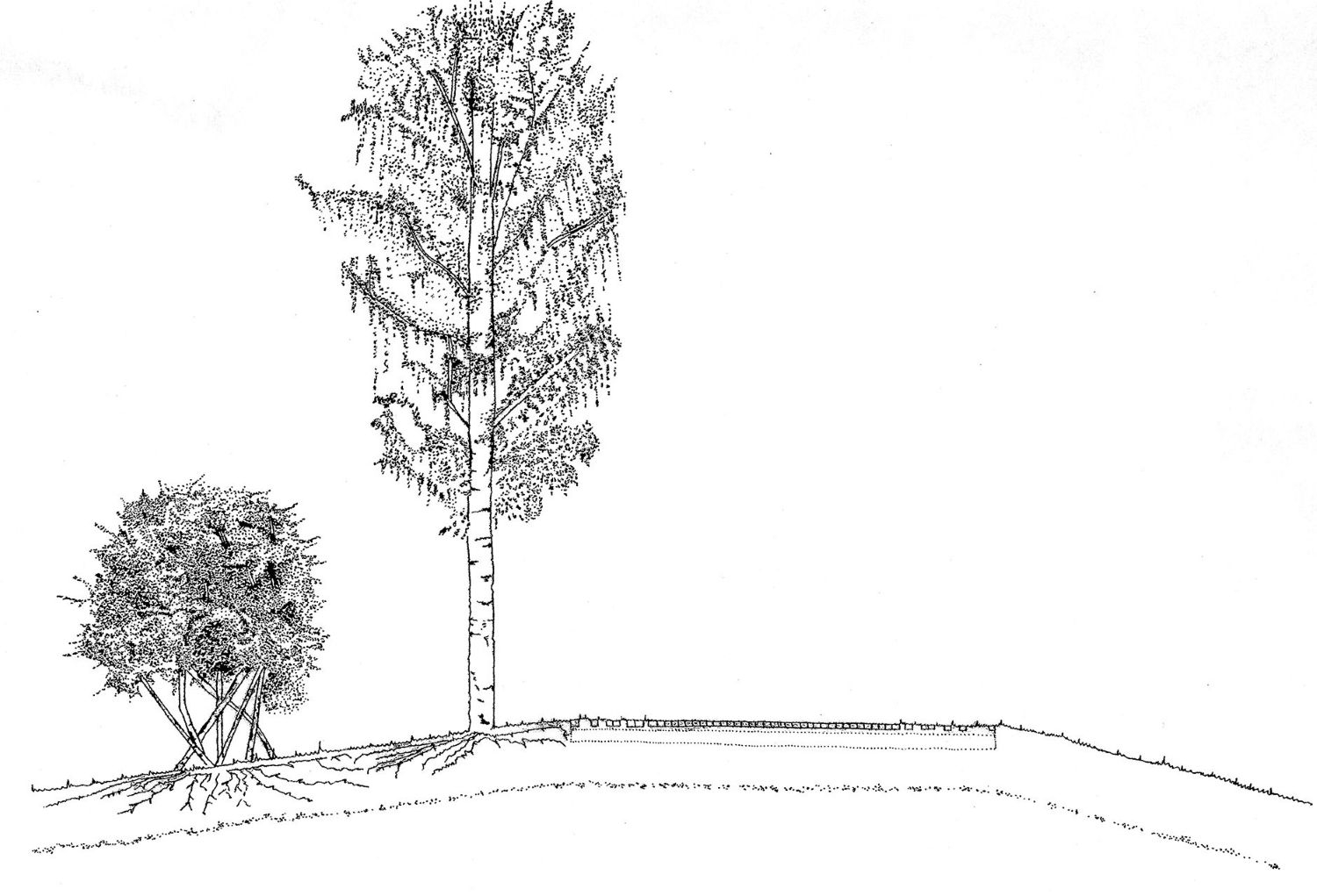
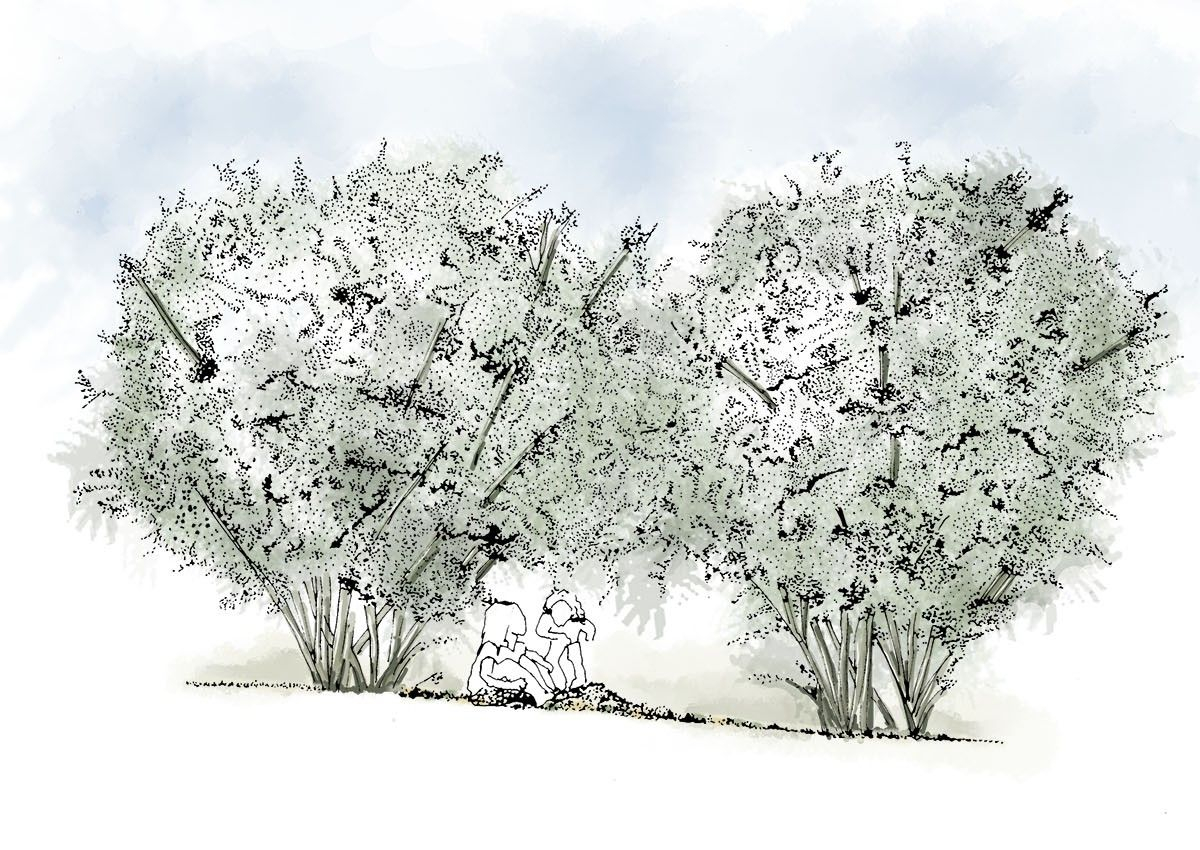
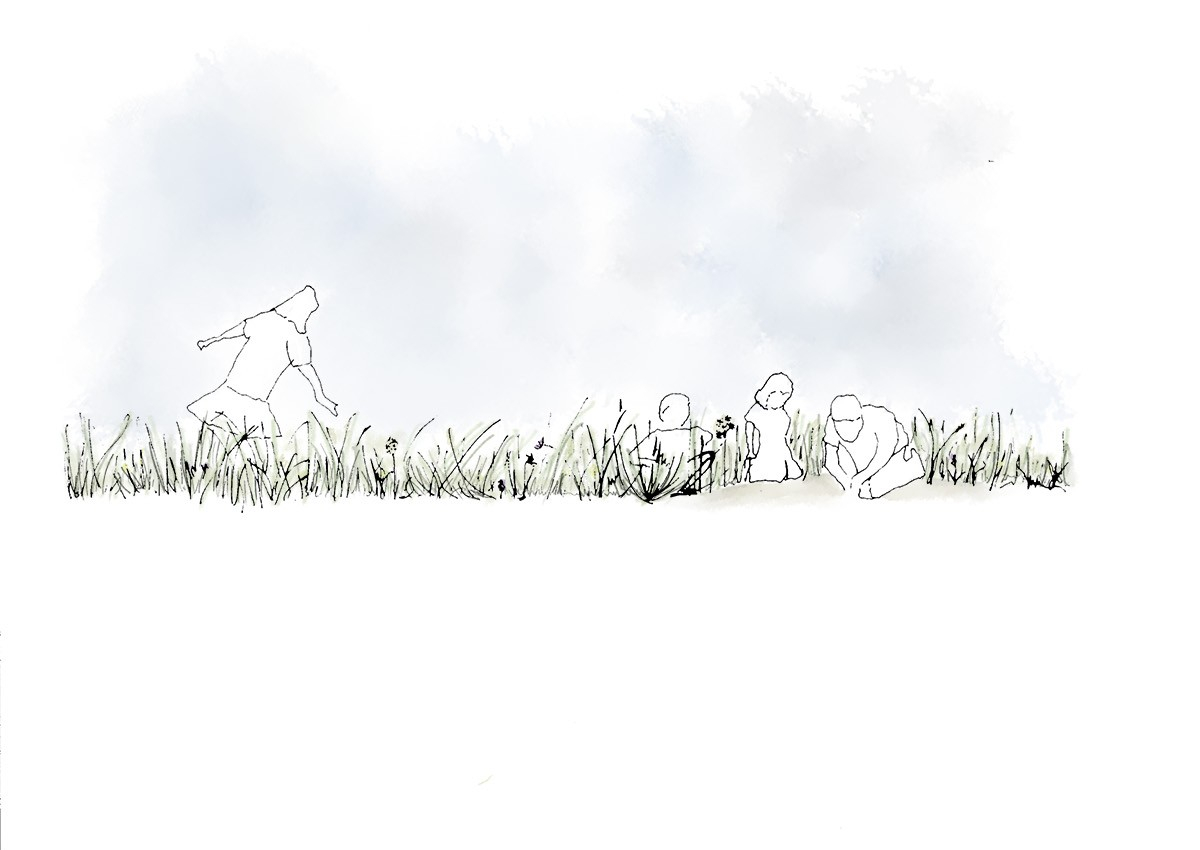
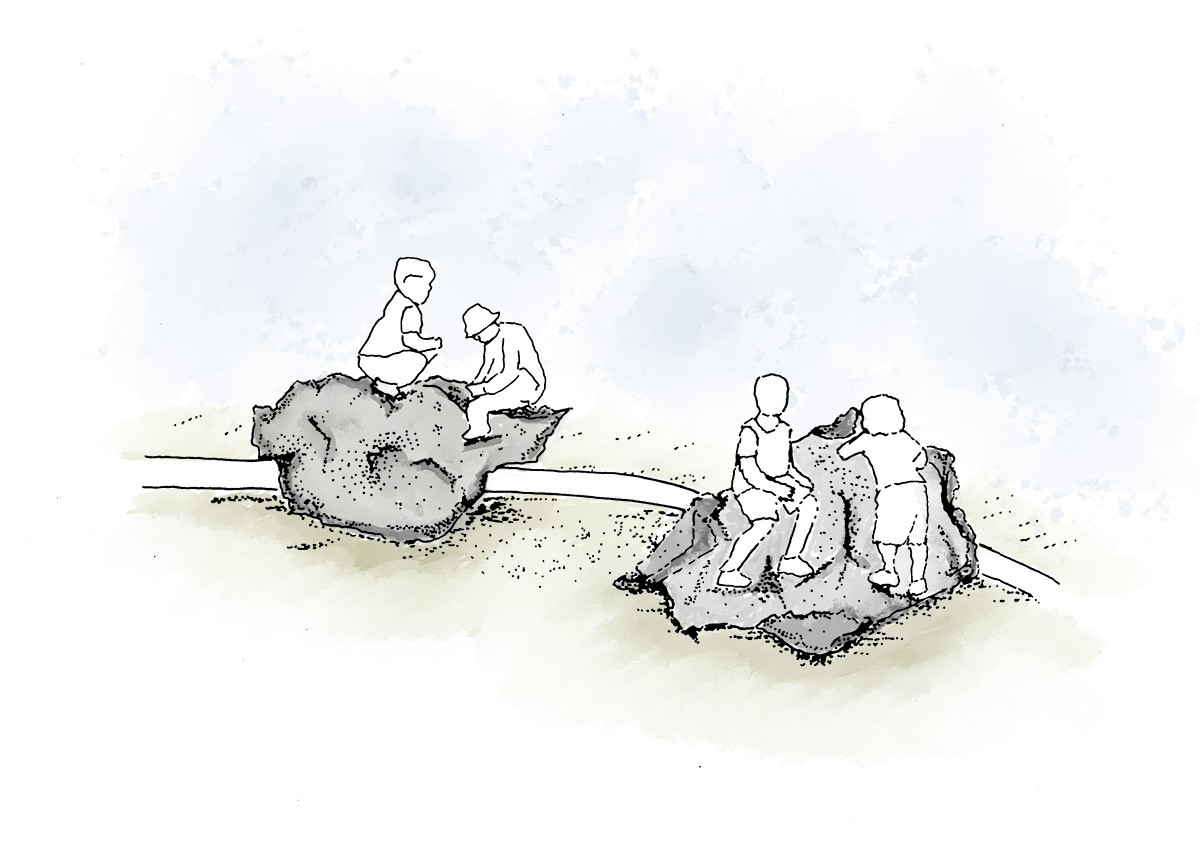
A series of play basins are formed with individual atmospheres to create small worlds of play. There is a meadow basin with broad swathes of grasses and flowers. The woodland basin features a grove of Corylus Avellana encouraging play such as den making, hidden play etc, while the boulder basin encourages climbing, clambering and informal gathering space.

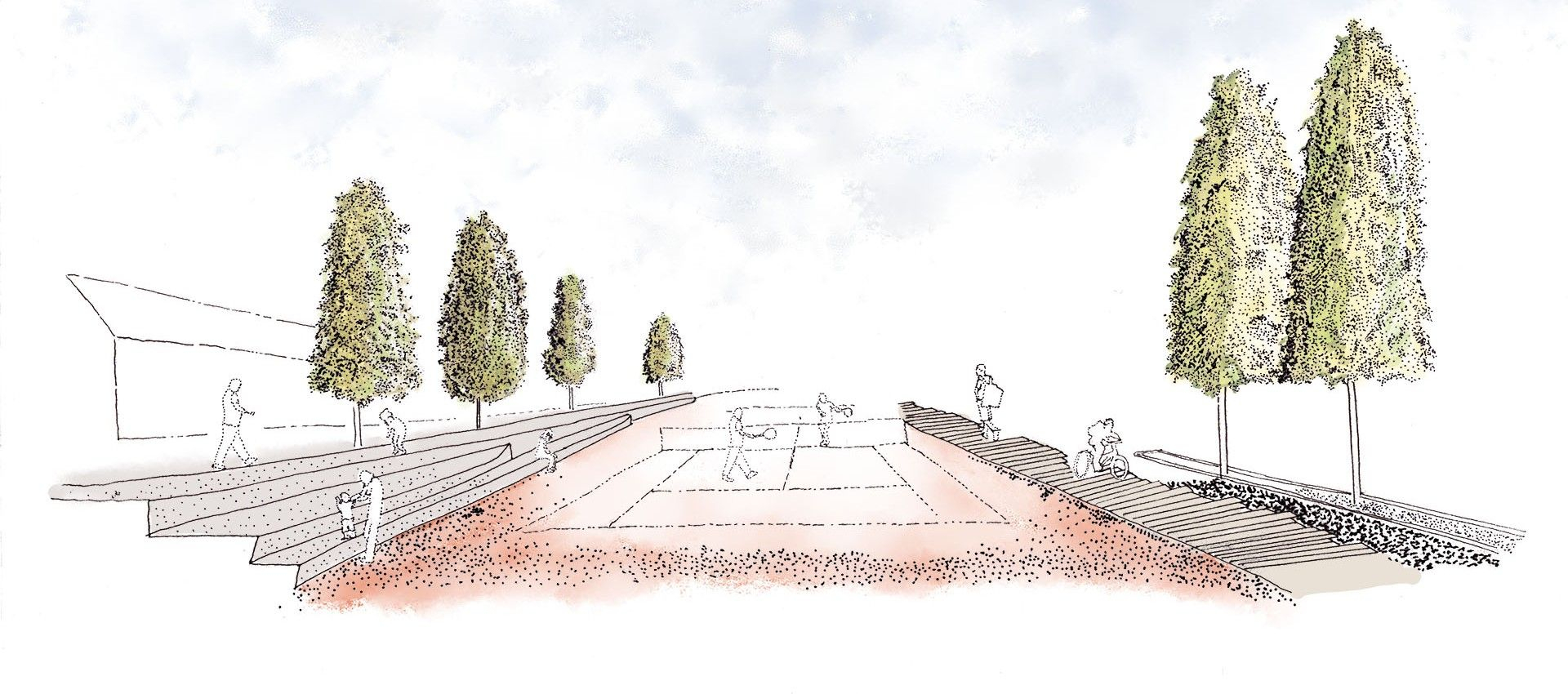
The formal play zone offers a more organised sense of leisure suitable for the immediate surroundings, as residents of the tenement flats might commute through the space on their way to the supermarket, families might gather before or after shopping and the local housing lacks green spaces.
Organised play in this zone includes sports pitches, a skate bowl, and a large section of formal seating offering a space to observe play, wait, gather and socialise.
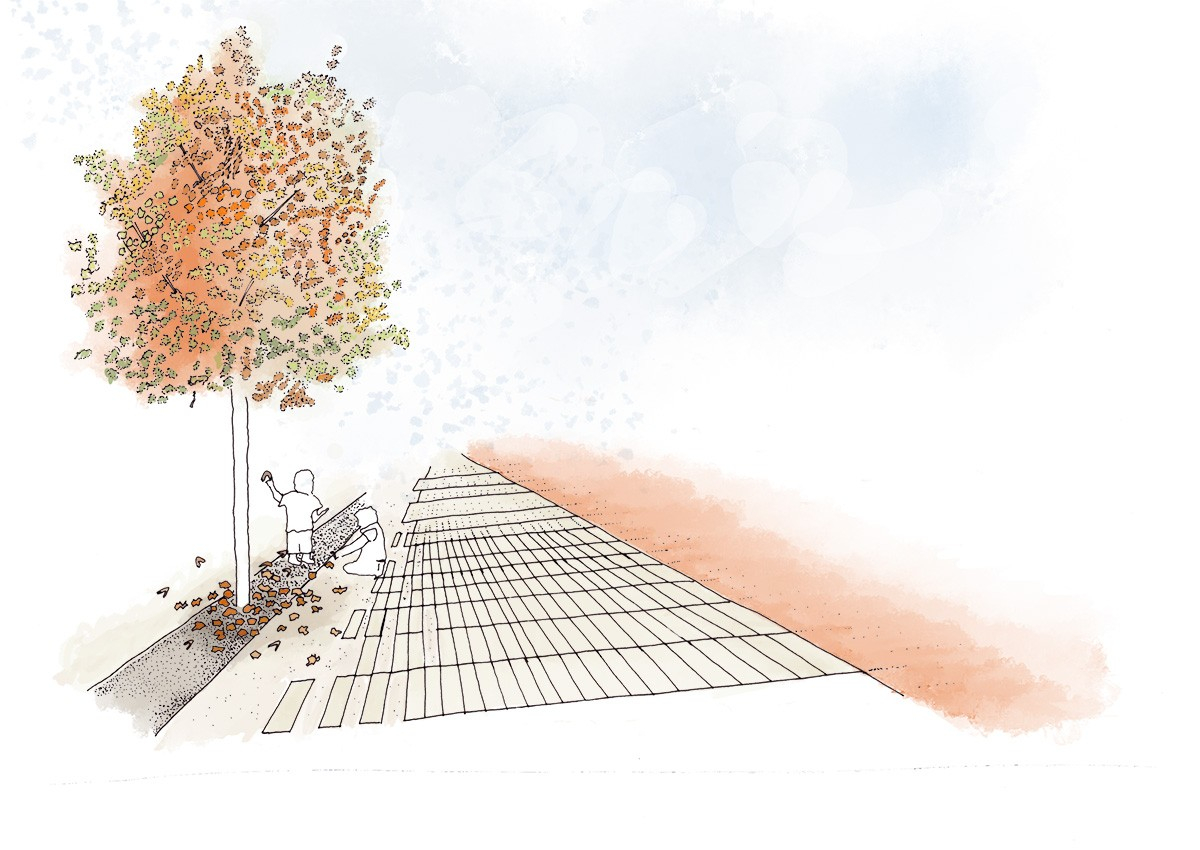
The planting is formalised into blocks of trees lined along the pathway. The Acer Campestre and Betula Pendula cast fruits that encourage playful interactions and their orange and red autumn colour playfully mirrors the colour of the sports courts.

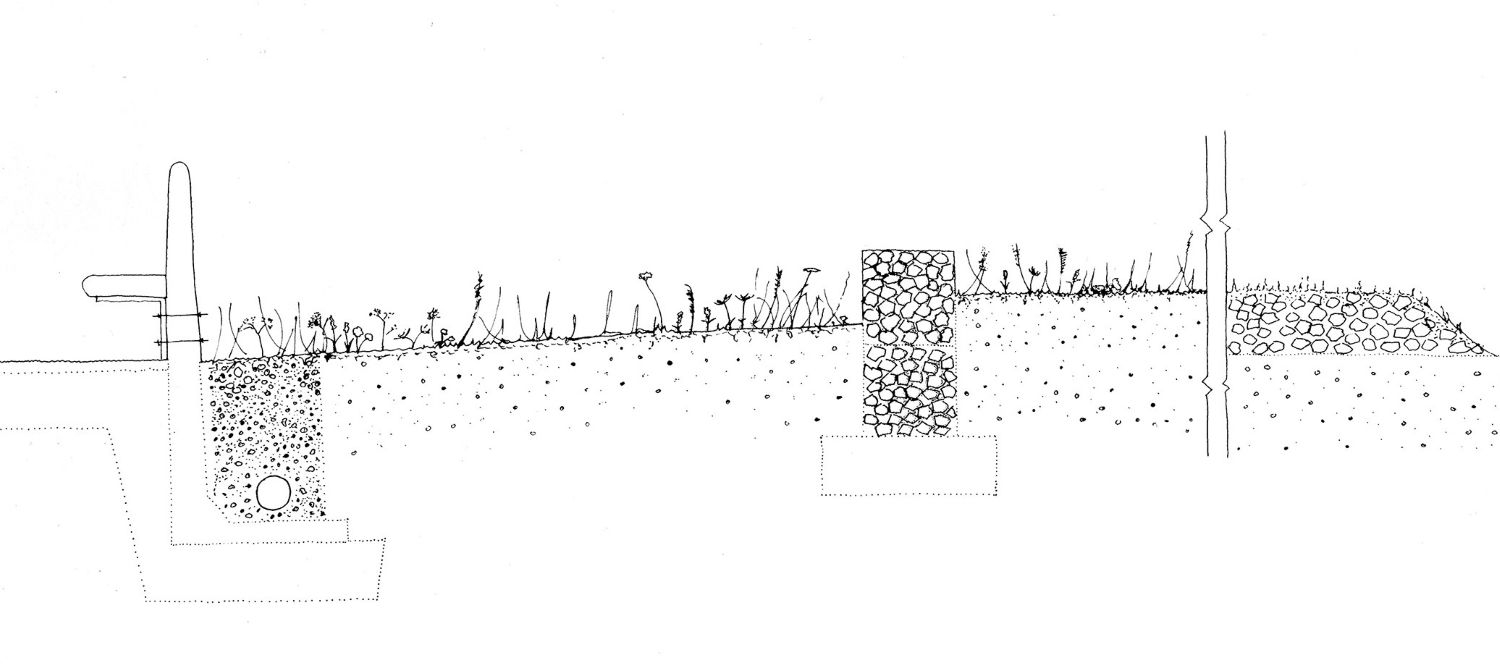
A secondary method of zoning exists. The user and their behaviour in the site can be guided by considering water and its behaviour across the site. Human play zones, Shared play zones (Human and non-human) and Non-human play zones have been created by considering where water is welcomed, where it is shed and where it can be slowed using SUDS schemes, grading and careful planting.