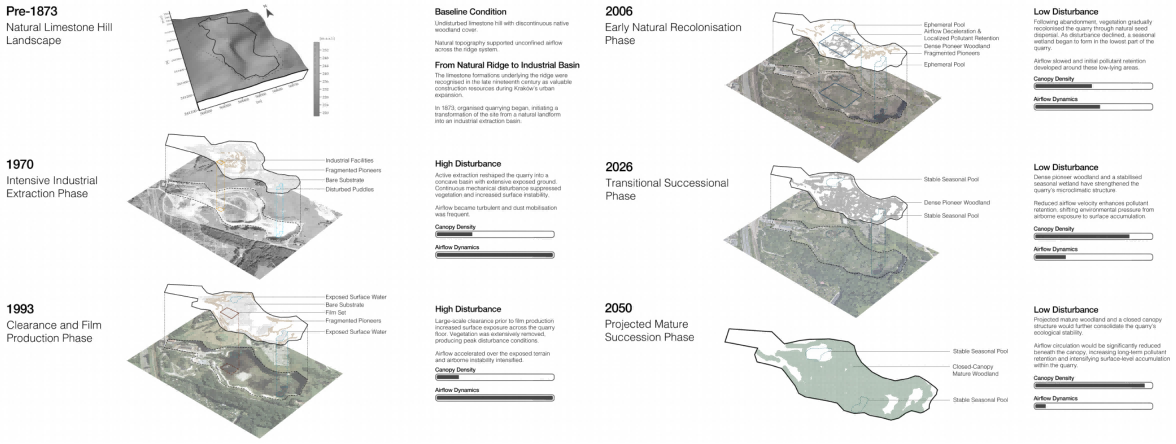
Located in the Krzemionki area of Kraków, Poland, Liban Quarry is a post-industrial quarry basin where topography, dense spontaneous vegetation, and surrounding infrastructure together contribute to air stagnation and the accumulation of airborne pollutants.
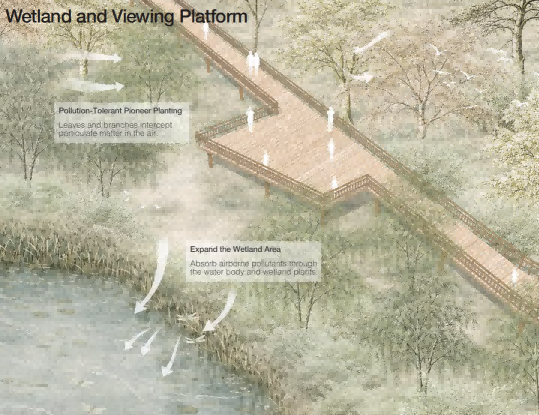
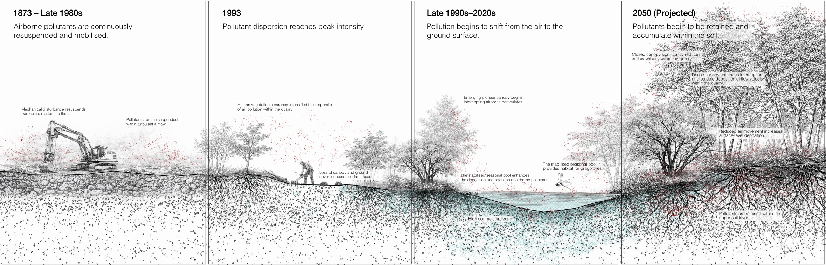
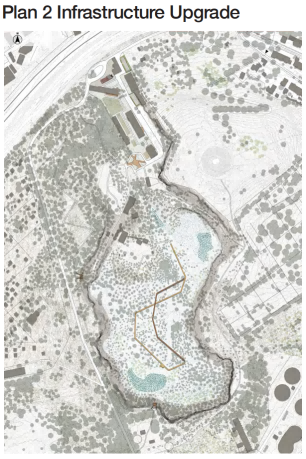
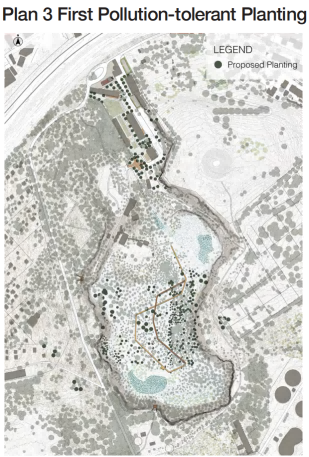
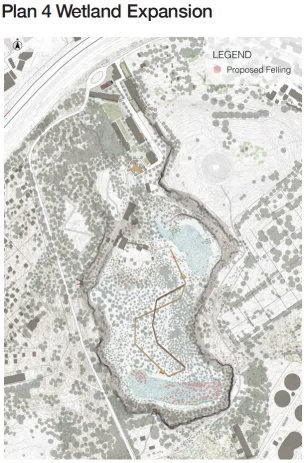
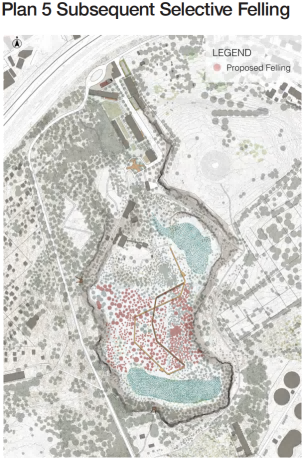
This project reimagines the quarry as a landscape system capable of actively regulating local air quality. Through cyclical selective thinning, pollution-tolerant planting, wetland expansion, controlled routes, the design guides polluted air through the site, allowing pollutants to be captured by vegetation, deposited, and gradually removed from the system over time.
The project proposes a long-term process of assessment, renewal, and material cycling, enabling the quarry to continuously support local air improvement, vegetation succession, and public environmental education over time.


Jinzhuo Gu
Project description
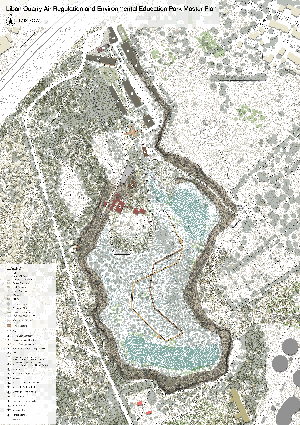
Liban Quarry Air Regulation and Environmental Education Park Master Plan
The design divides the site into three connected zones: an Air Pollution Education and Research Zone at the northern entrance, a Leisure Zone along the western woodland edge, and a Quarry Exploration Zone within the basin.
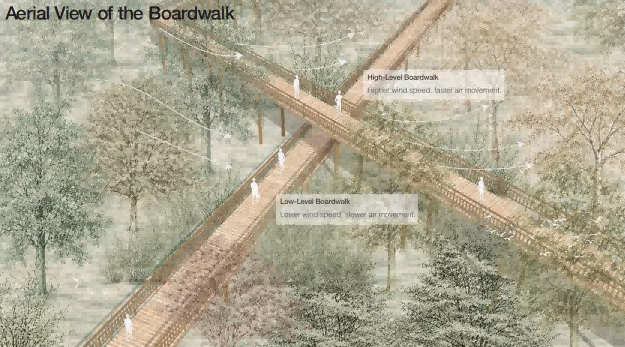
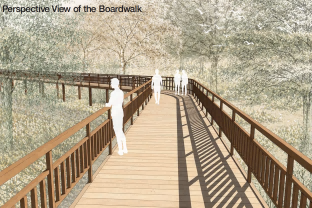
A controlled circulation system links these zones through main paths, secondary trails, hiking routes, and an elevated timber boardwalk. Together, the spatial layout balances environmental restoration, public access, and quarry-specific experience while maintaining the site’s long-term capacity for airflow regulation and vegetation renewal.
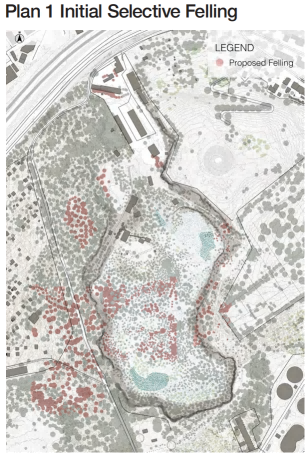
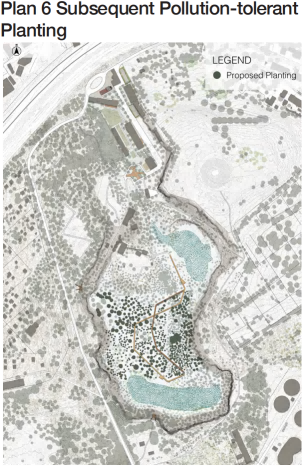
Phased Plan of Vegetation Renewal
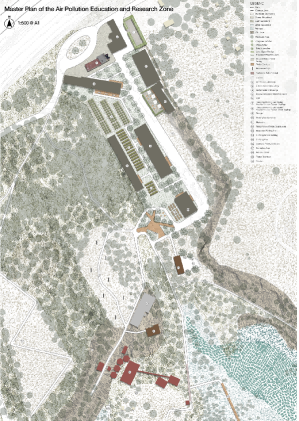
Master Plan of the Air Pollution Education and Research Zone
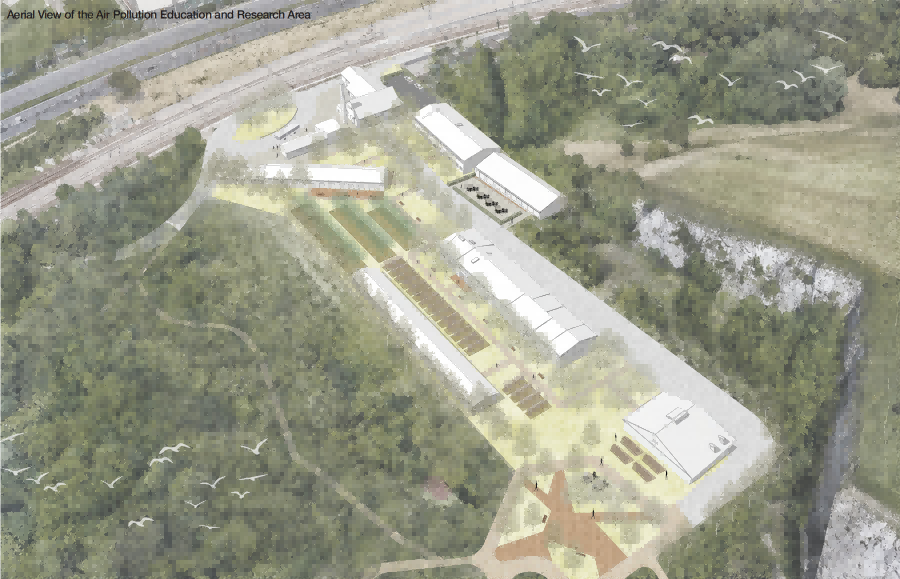
This detailed plan focuses on the Air Pollution Education and Research Zone at the northern edge of Liban Quarry.
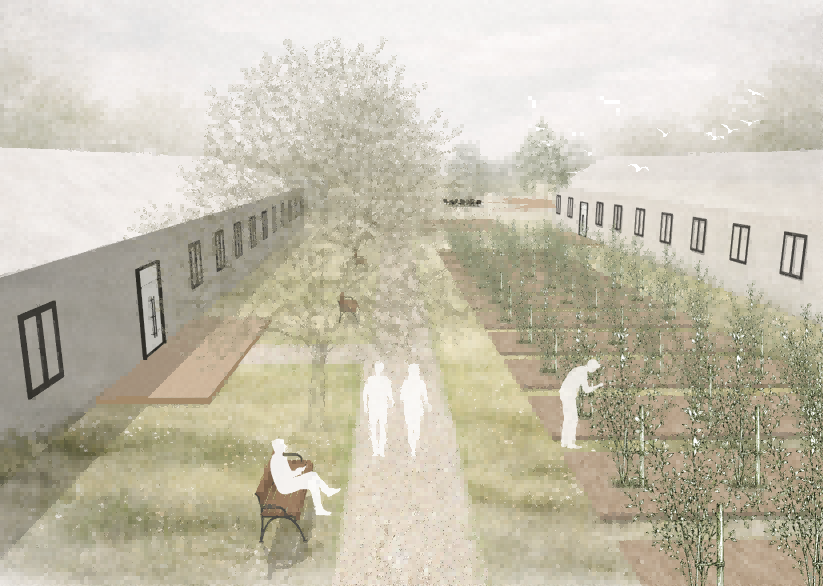
Existing buildings are reused as a laboratory, visitor center, museum, café, and workshop, creating a public interface between environmental research and everyday use.
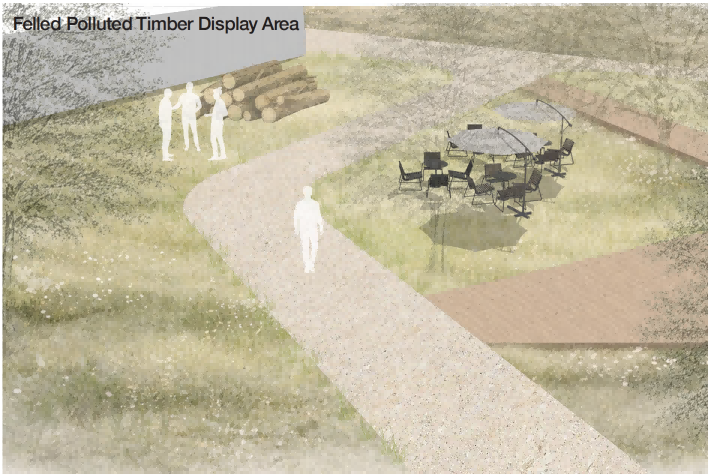
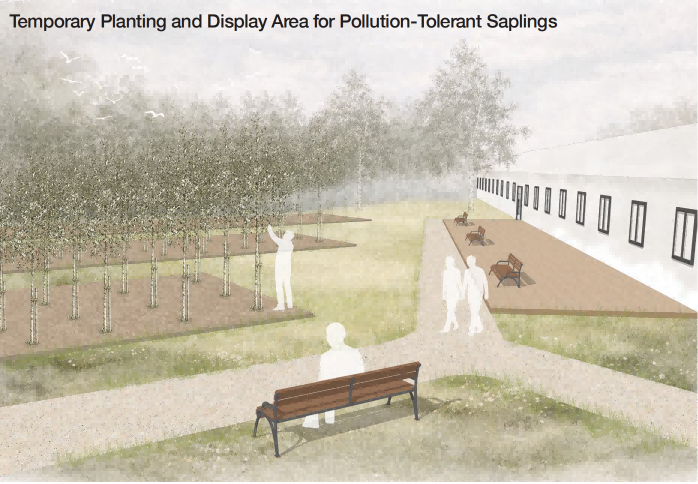
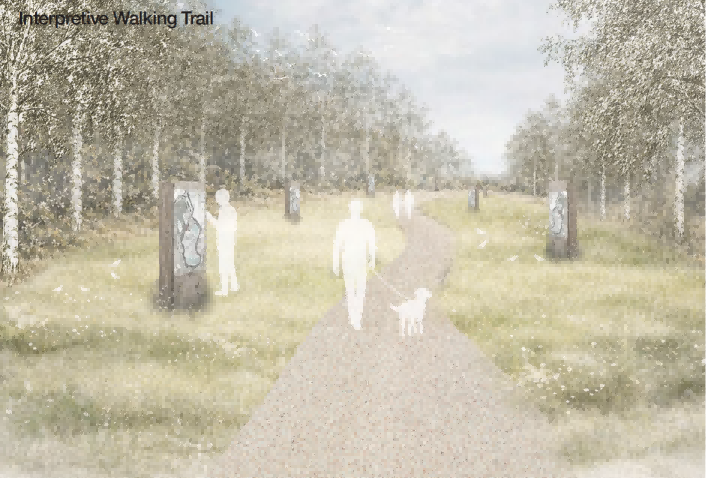
The surrounding landscape combines pollution-tolerant planting, temporary sapling display areas, felled timber exhibition, interpretive walking trails, and controlled access routes.
Together, these elements make the process of air restoration, vegetation renewal, and material reuse visible to visitors.
Renderings