

Living Echoes of Liban transforms Liban Quarry into a soundscape ecological park within Kraków’s Krzemionki green wedge. Beside the formal memorial landscape of KL Plaszow, the quarry is a forgotten but living site, shaped by limestone cliffs, seasonal water, spontaneous vegetation, wildlife and informal paths.
The project uses listening as its main concept. It works with echo, rain, footsteps, wind, insects, birds and frogs to guide people through different atmospheres of movement, pause and reflection.
Design strategies include restoring wetland gradients, supporting amphibian and insect habitats, using planting for pollination and seasonal sound, and creating acoustic thresholds through paving, reused materials and sound devices.
Overall, the project turns Liban Quarry into a living archive where ecological recovery, everyday public use and quiet remembrance can coexist.
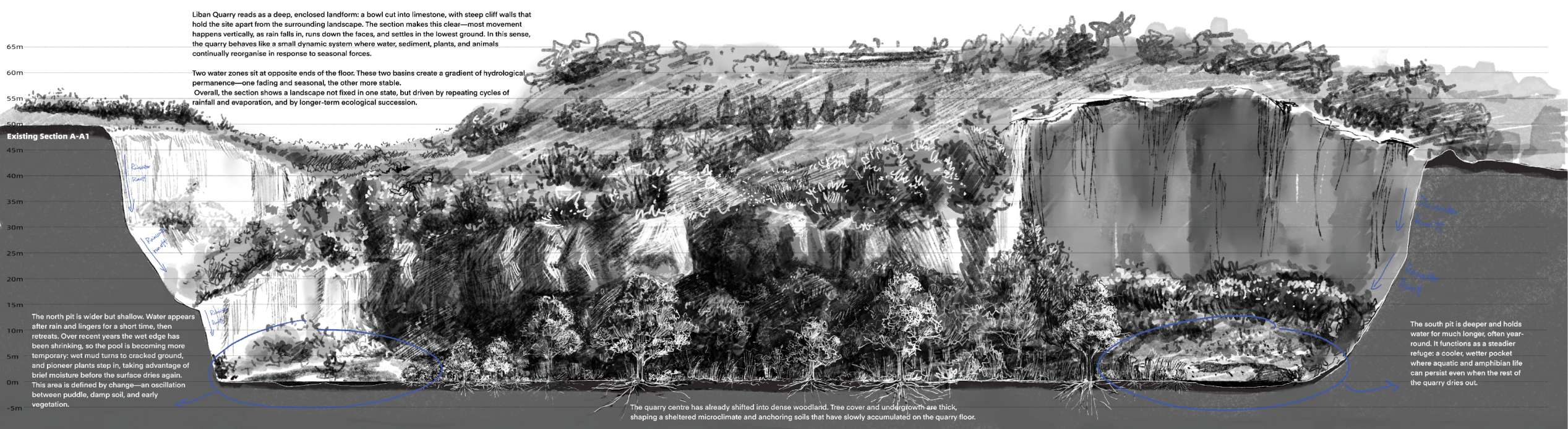
Liban Quarry is a deep, enclosed limestone landscape shaped by extraction, water and spontaneous ecological recovery. The site plan shows the quarry as a hidden basin within the wider Krzemionki landscape, surrounded by woodland, cliffs, paths and urban edges.
In section, its steep limestone walls hold the space apart from the city, creating a strong sense of enclosure and a distinct acoustic condition. Movement is limited and mostly shaped by the quarry’s edges, while the floor is occupied by dense vegetation, wet hollows and two contrasting water zones. The northern wet area is shallow and seasonal, while the southern pond remains more stable.
Together, these conditions make Liban Quarry both fragile and rich: a quiet landscape where geology, water, vegetation and sound continually reshape one another.


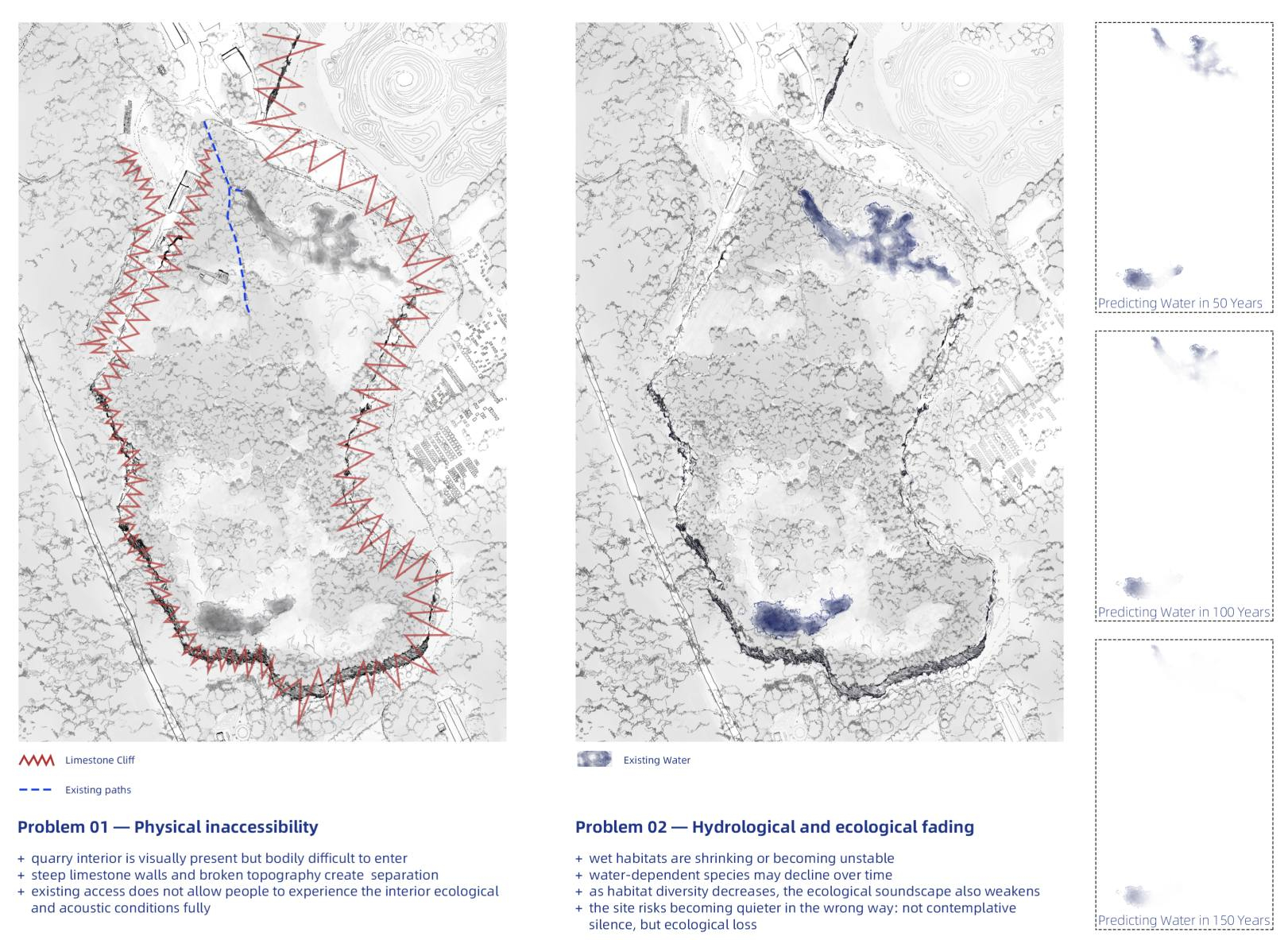
These drawings explain why Liban Quarry is treated as a soundscape ecological park rather than a conventional public park.
The quarry’s limestone cliffs create a strong acoustic enclosure, but they also make the interior difficult to enter and experience.
At the same time, existing wetlands are shrinking, threatening amphibians, insects, birds and the ecological sounds they produce.
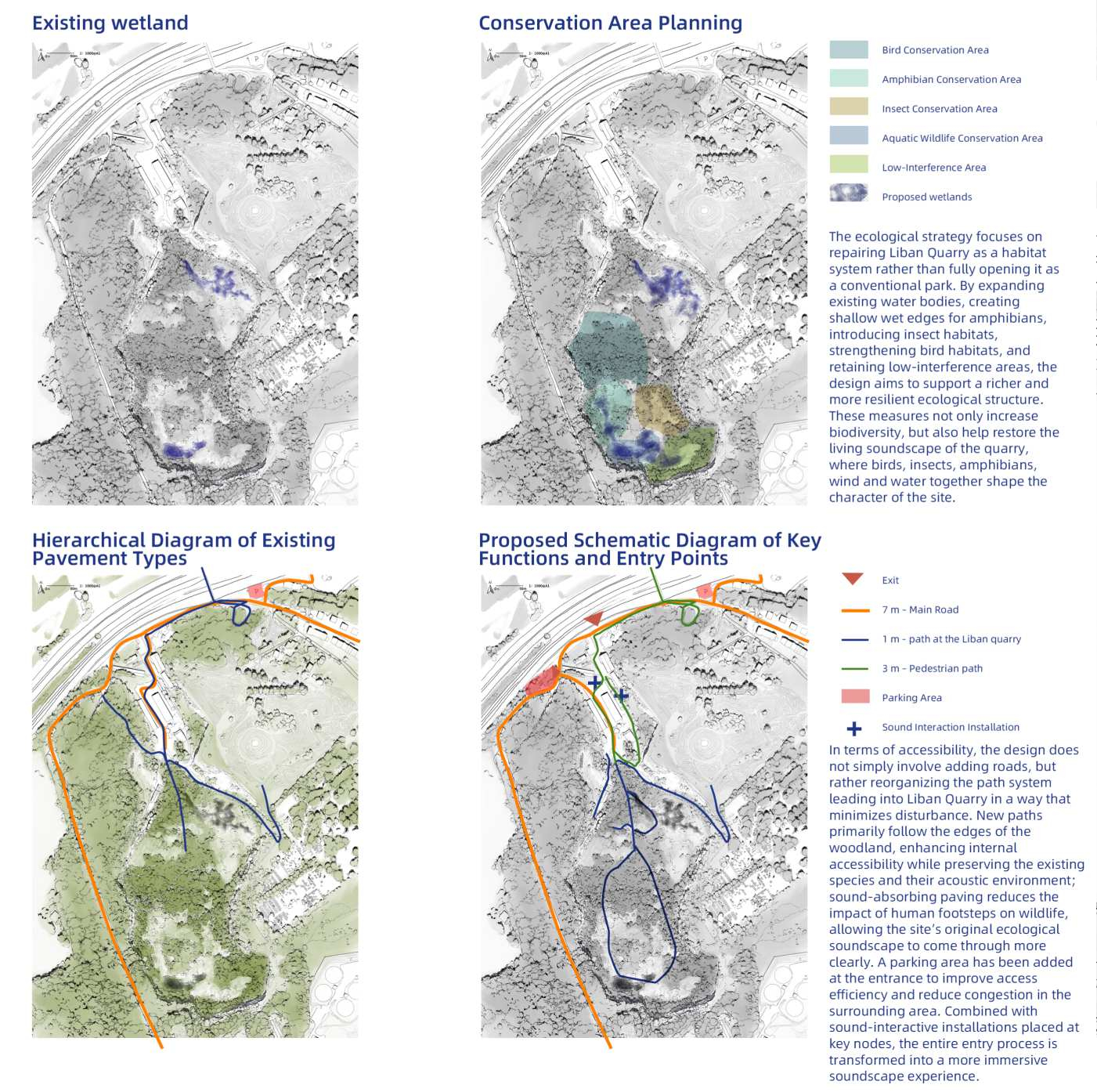
The proposal responds by restoring wetland areas, defining conservation zones, and reorganising access so people can move through the site with less disturbance.
Together, these strategies turn Liban Quarry into a more accessible, biodiverse and listening-focused landscape.

This catalogue records the main plants, animals and insects found around Liban Quarry.
It links each species to habitat needs, seasonal activity, flowering time and ecological role.
The timeline shows how the site changes through the year, from spring breeding and flowering to quieter winter conditions.
The drawing uses species as the basis for habitat design and soundscape planning.
Together, birds, frogs, insects, reeds and trees become the living voices that shape the future character of the quarry.

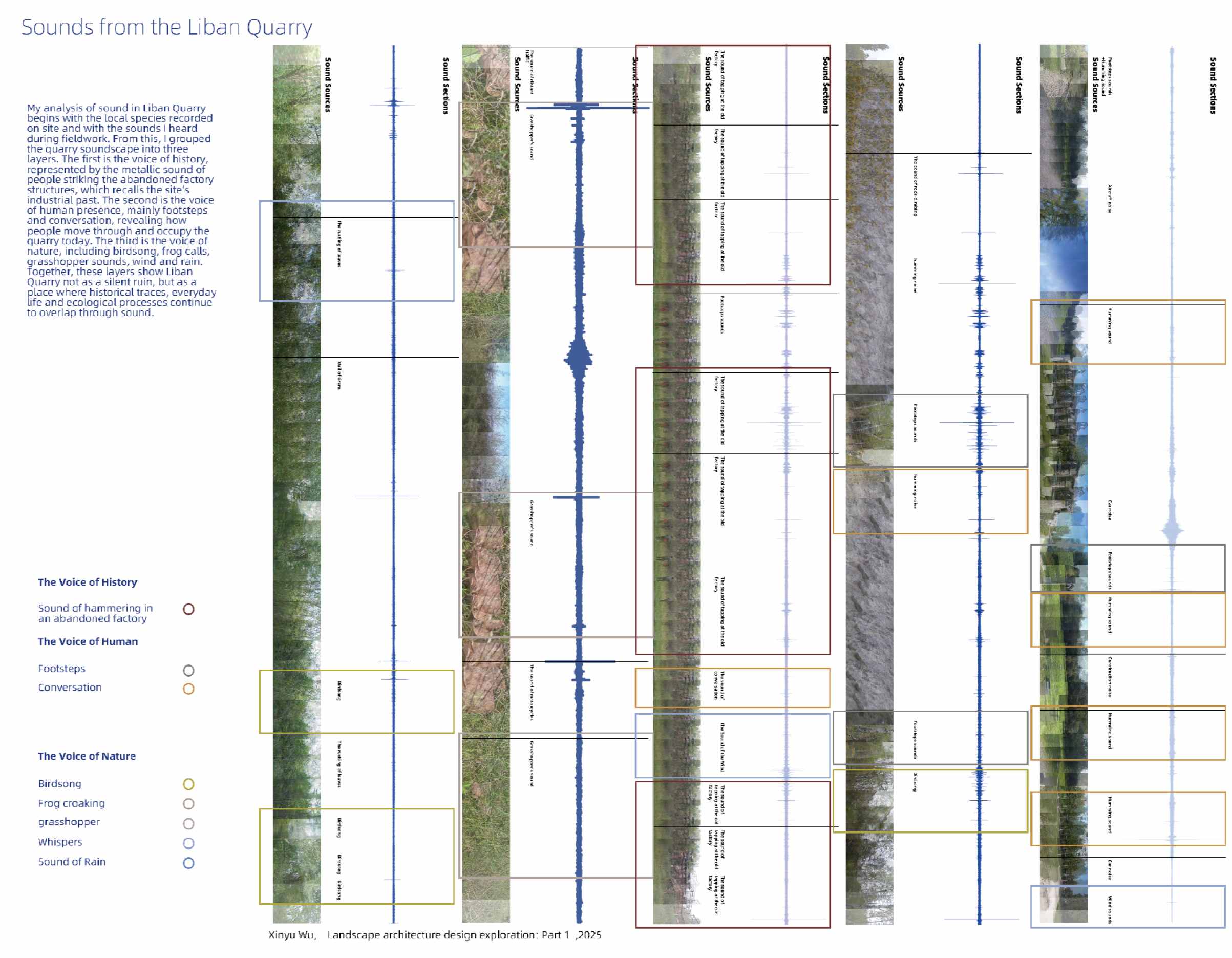
This drawing analyses the soundscape of Liban Quarry through field recordings, waveforms and site photographs.
The recordings are organised into three layers: the voice of history, the voice of human activity and the voice of nature.
Industrial echoes, footsteps, conversations, birdsong, frog calls, insects, wind and rain all appear as part of the quarry’s acoustic character.
The diagram shows that Liban is not silent, but full of overlapping traces from past and present life.
These sound layers become the basis for designing a landscape guided by listening.
These drawings translate the quarry’s soundscape into a series of ecological design strategies.
The proposal works with three main voices: human movement, industrial memory and non-human life.
Each voice is connected to specific spatial actions, from limestone gravel paths and reused sound devices to bird, amphibian, wetland and insect habitats.
Planting and habitat design are used to support the species that already shape the quarry’s living soundscape.
Together, the strategies turn sound into a practical design tool for access, memory and ecological recovery.


The proposal restores wetlands, strengthens habitat zones and connects the quarry through a light network of paths.
Each path material responds to a different ecological condition: limestone gravel for bird areas, timber boardwalks for amphibian and wetland zones, and wood chips for insect habitats.
The paths do more than guide movement; they also change the sound of footsteps and reduce disturbance to wildlife.
Together, the masterplan and paving strategy create a landscape where access, habitat protection and listening are designed as one system.


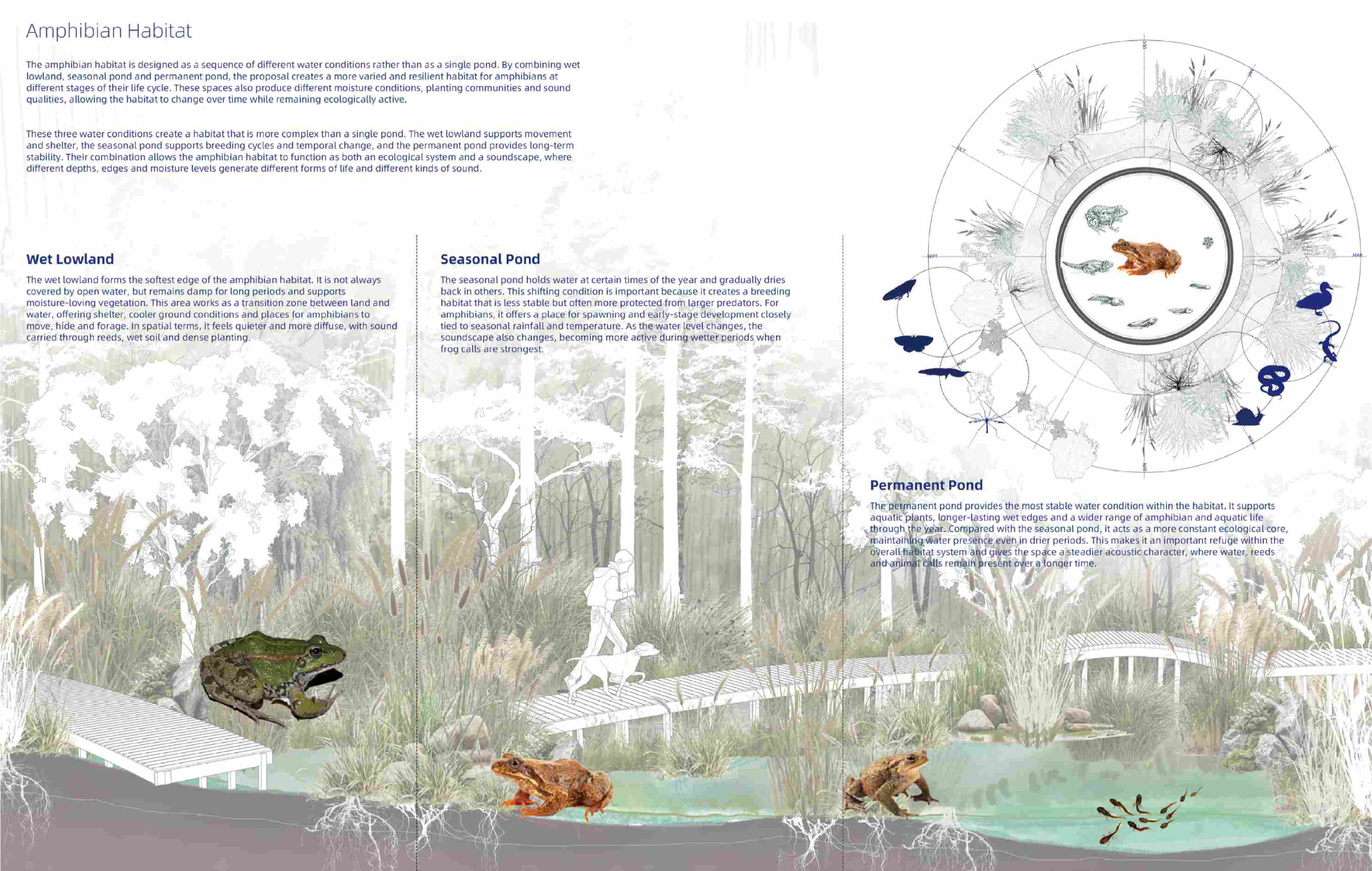
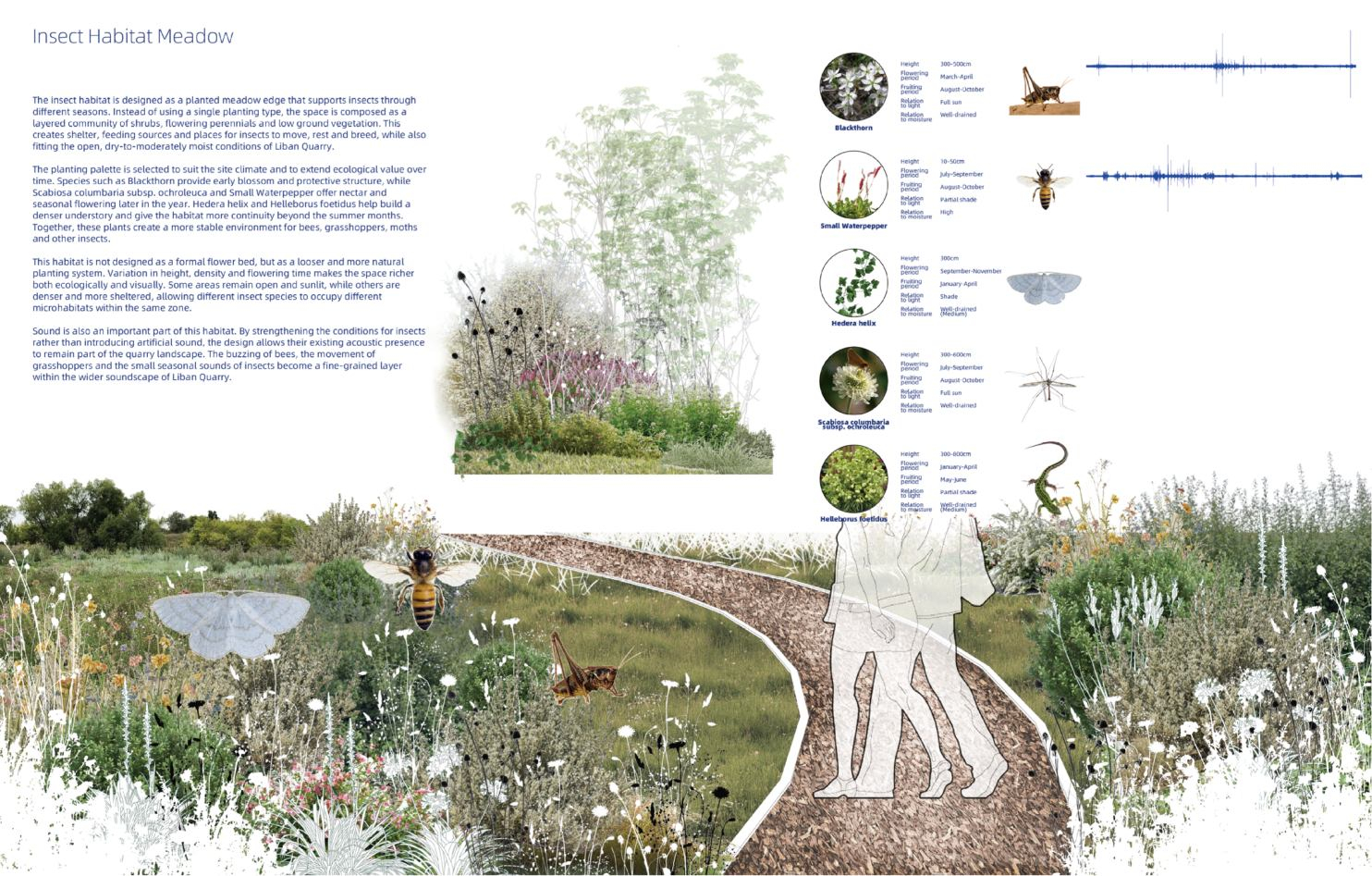
These drawings show how the project builds habitats for amphibians and insects as part of the quarry’s living soundscape.
The amphibian habitat is organised through three water conditions: wet lowland, seasonal pond and permanent pond.
Together, they support movement, breeding, shelter and long-term ecological stability for frogs, toads and other wetland species.
The insect meadow uses layered planting, flowering periods and softer path materials to provide food, cover and quieter conditions for bees, grasshoppers and moths.
Across seasons and over time, these habitats change in water, colour, sound and ecological activity, making the quarry a dynamic landscape rather than a fixed design.


This proposed section shows Liban Quarry as a living soundscape shaped by water, vegetation and limestone.
Expanded wetlands and habitat zones support birds, insects, amphibians and aquatic life across the quarry floor.
A path guides visitors through the woodland and open wet edges.
The limestone cliffs remain as acoustic walls, reflecting voices, echoes and environmental sounds.
Over time, the quarry becomes a gradual landscape of recovery, where ecological life and quiet listening define the experience.

This detail plan focuses on the northern entrance of Liban Quarry, where the city edge, former industrial structures and quarry landscape meet.
The design keeps existing buildings and reuses site materials to create paths, planting areas, community spaces and sound installations.
Rather than acting as a simple entrance, this area becomes a gradual threshold that slows visitors down before they enter the quarry.
Limestone paving, reused steel and layered planting make movement, footsteps, rain and memory part of the arrival experience.
Together, these elements turn the north entrance into a place where public access, material reuse and sound-based remembrance begin.

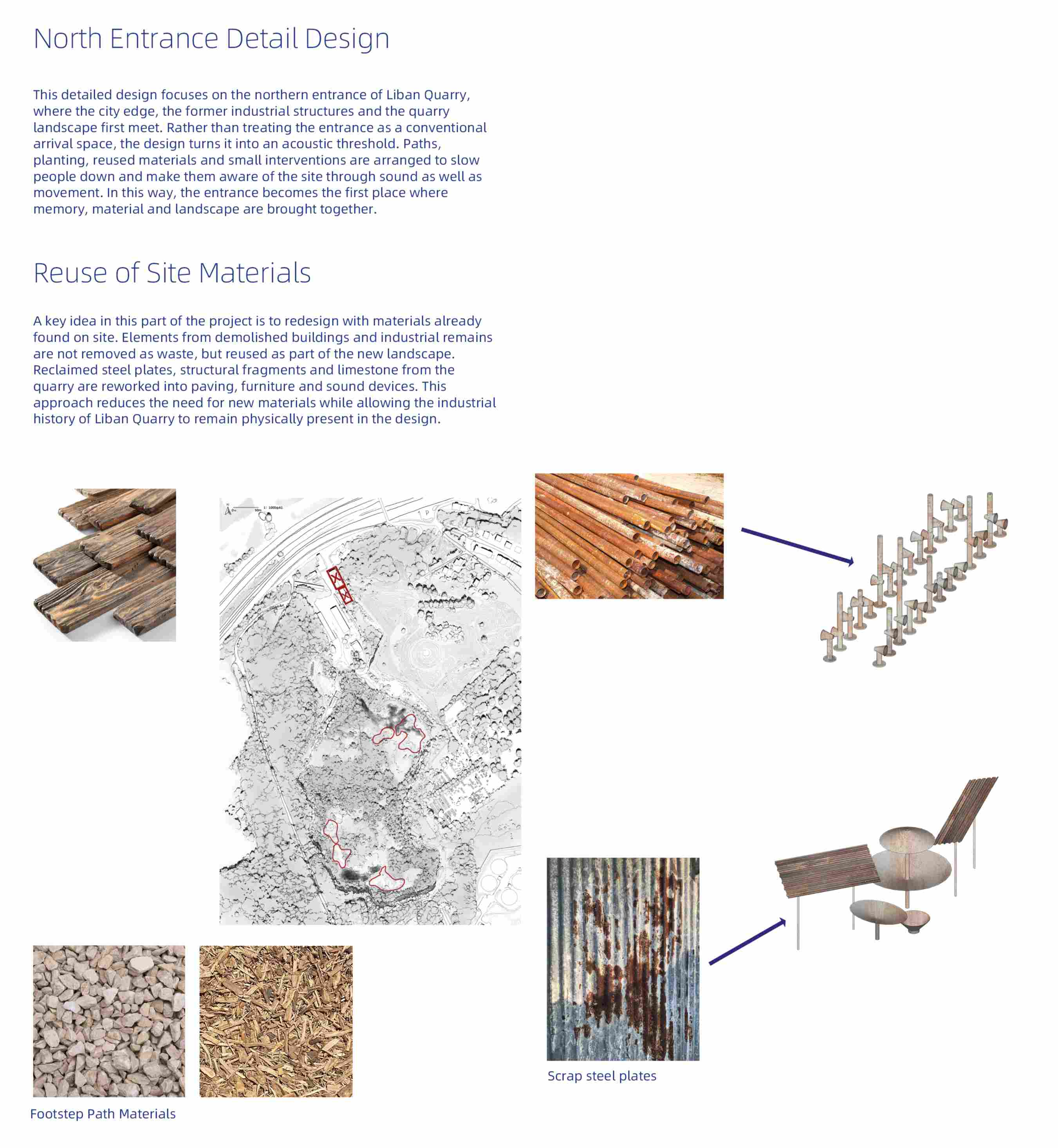
These drawings show how the north entrance uses existing site materials rather than introducing a completely new language.
Timber, limestone gravel, wood chips and scrap steel are reused as paving and small acoustic structures.
The sound memorial columns allow visitors to listen toward the quarry or speak toward the cliff, turning sound into a quiet act of remembrance.
The rain and steel installation responds to weather, creating soft tapping and resonance when rain hits the metal surfaces.
Together, these details make the industrial memory of Liban Quarry physically present through material, sound and movement.