
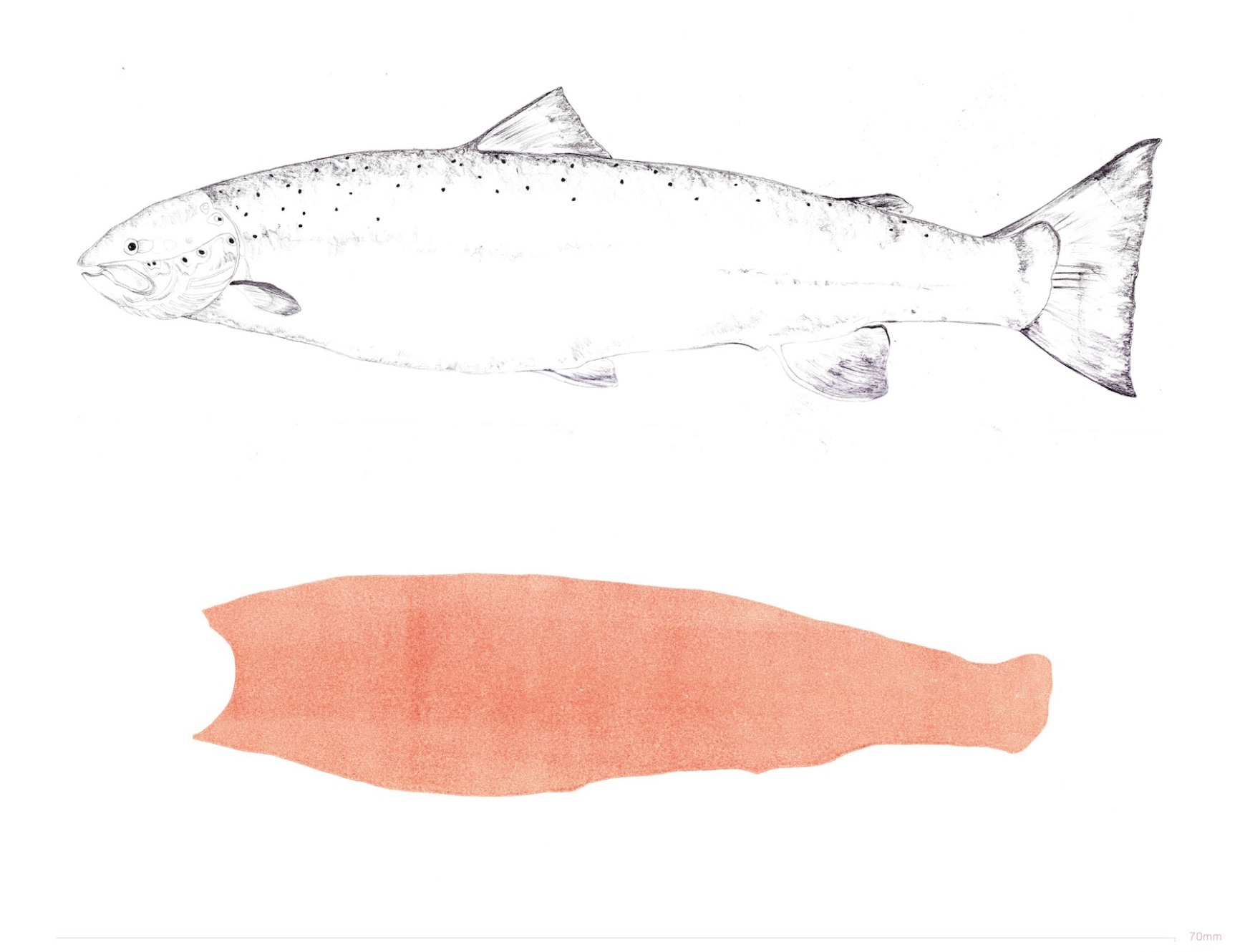


‘Salmon colour is the pathway-metabolic and geographic-of being; it is the atmosphere in which salmon are born and what they advertise when they spawn and die. Colour in this cosmos, then, is more than cosmetic-it is a biological influence as strong as memory’.
Cooking Sections, 2024, Salmon: A Red Herring. Isolarii, pp26-27.
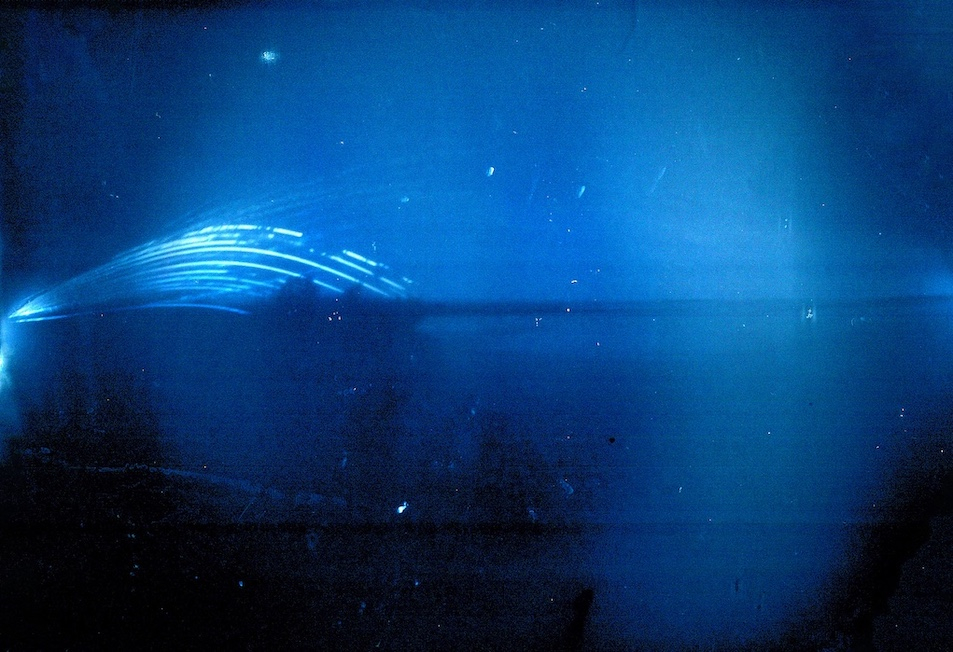
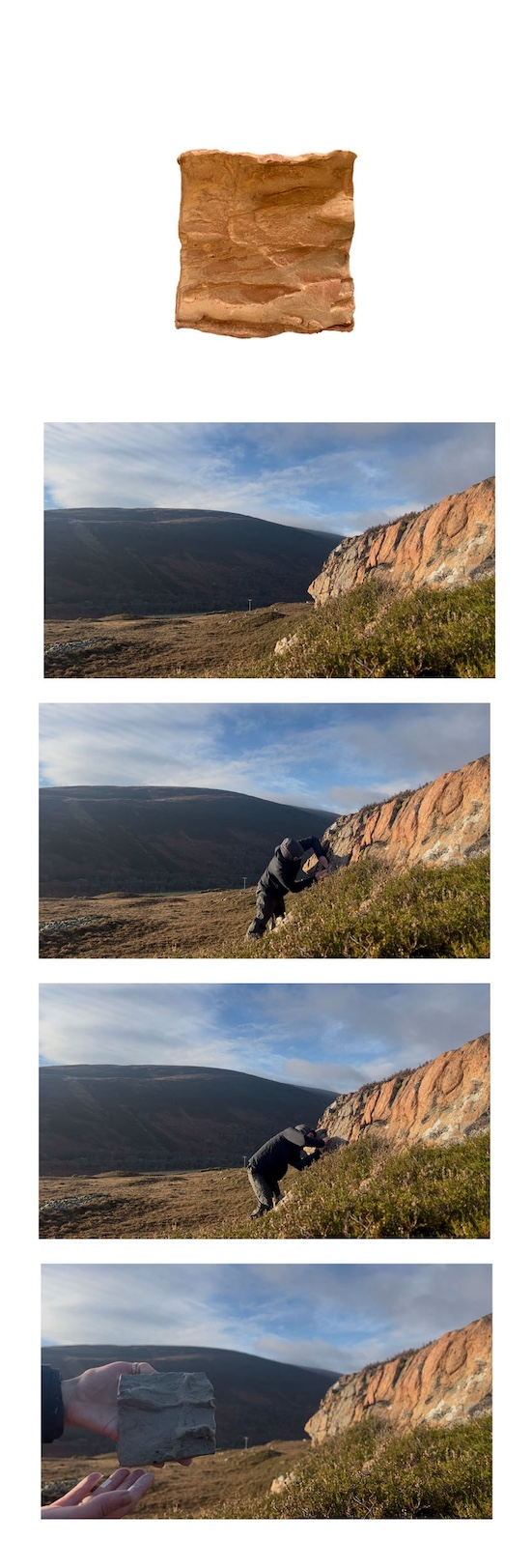
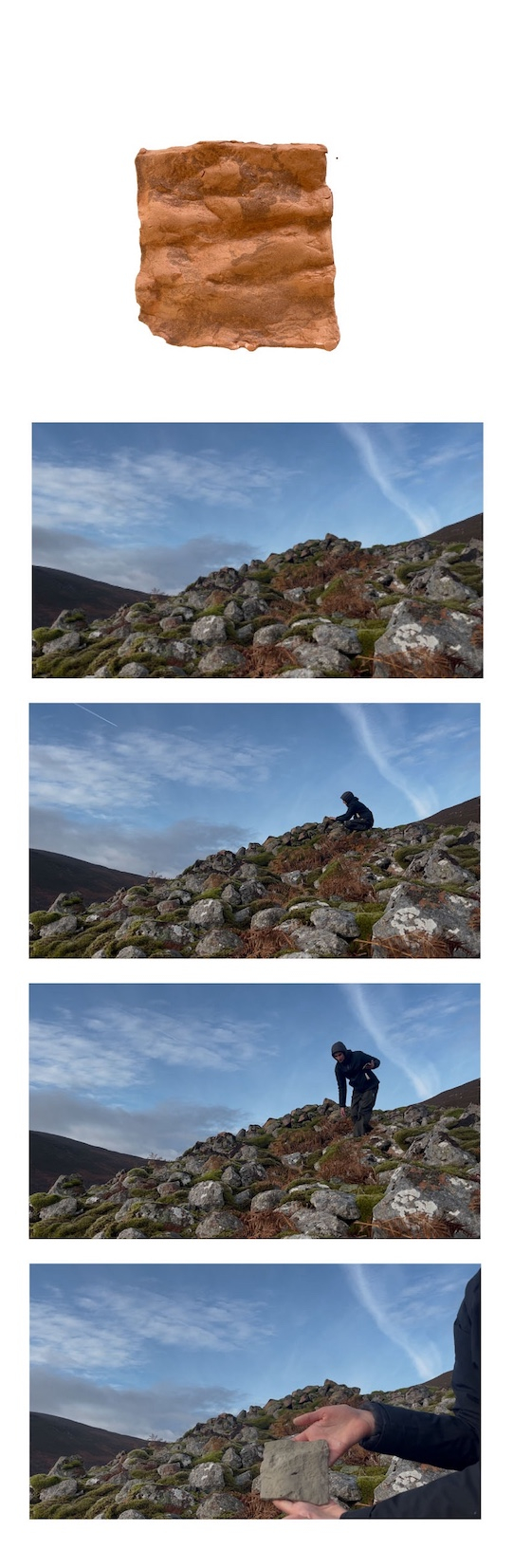
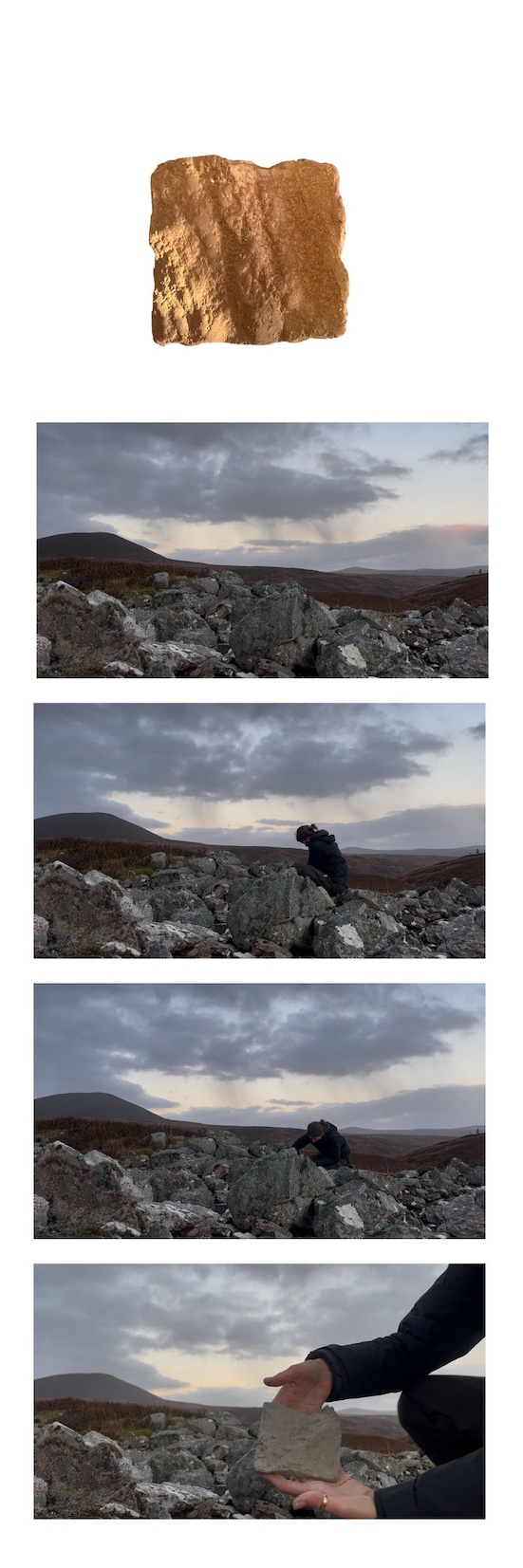
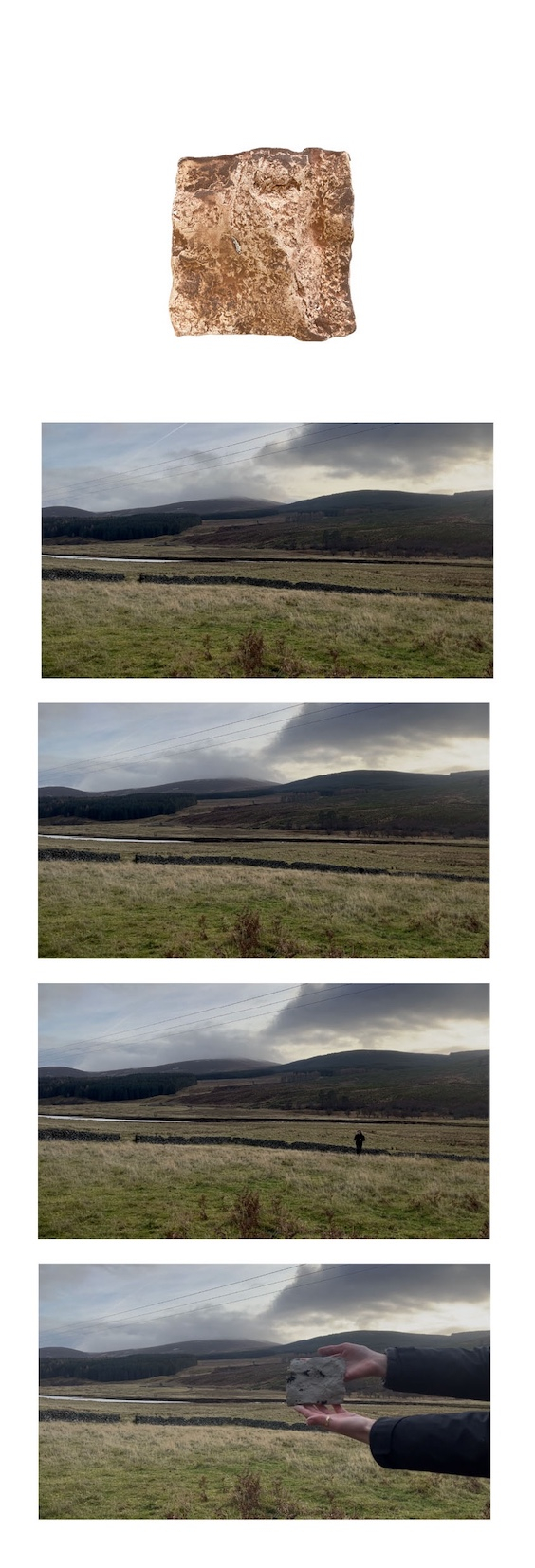
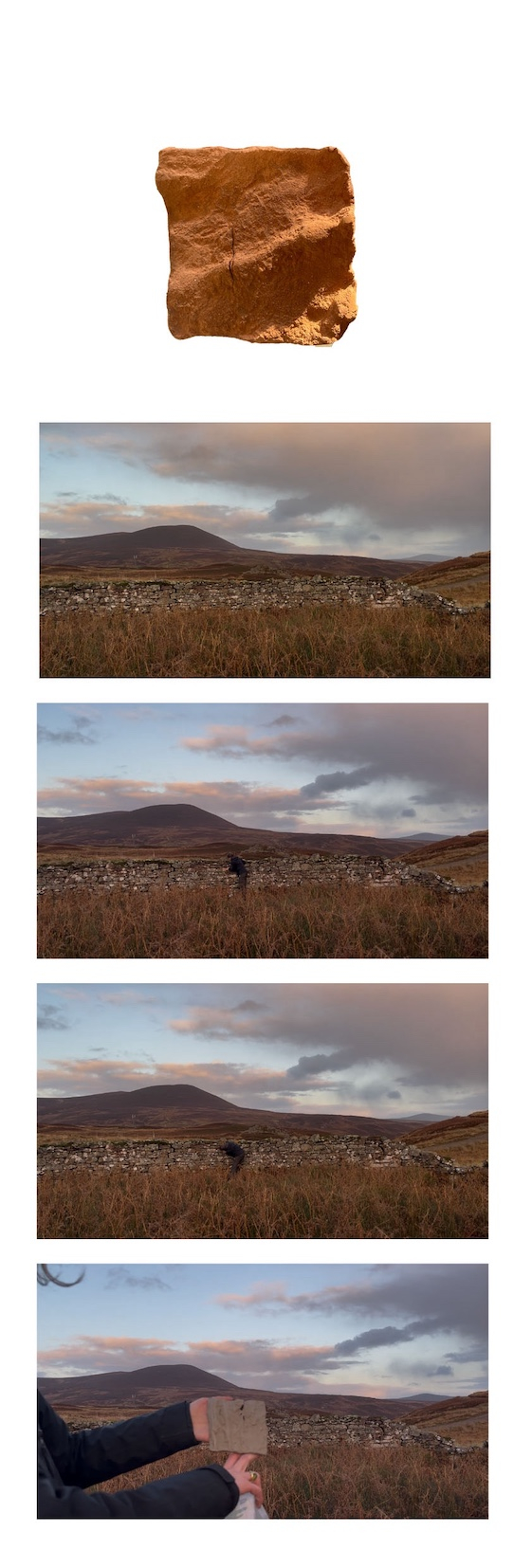
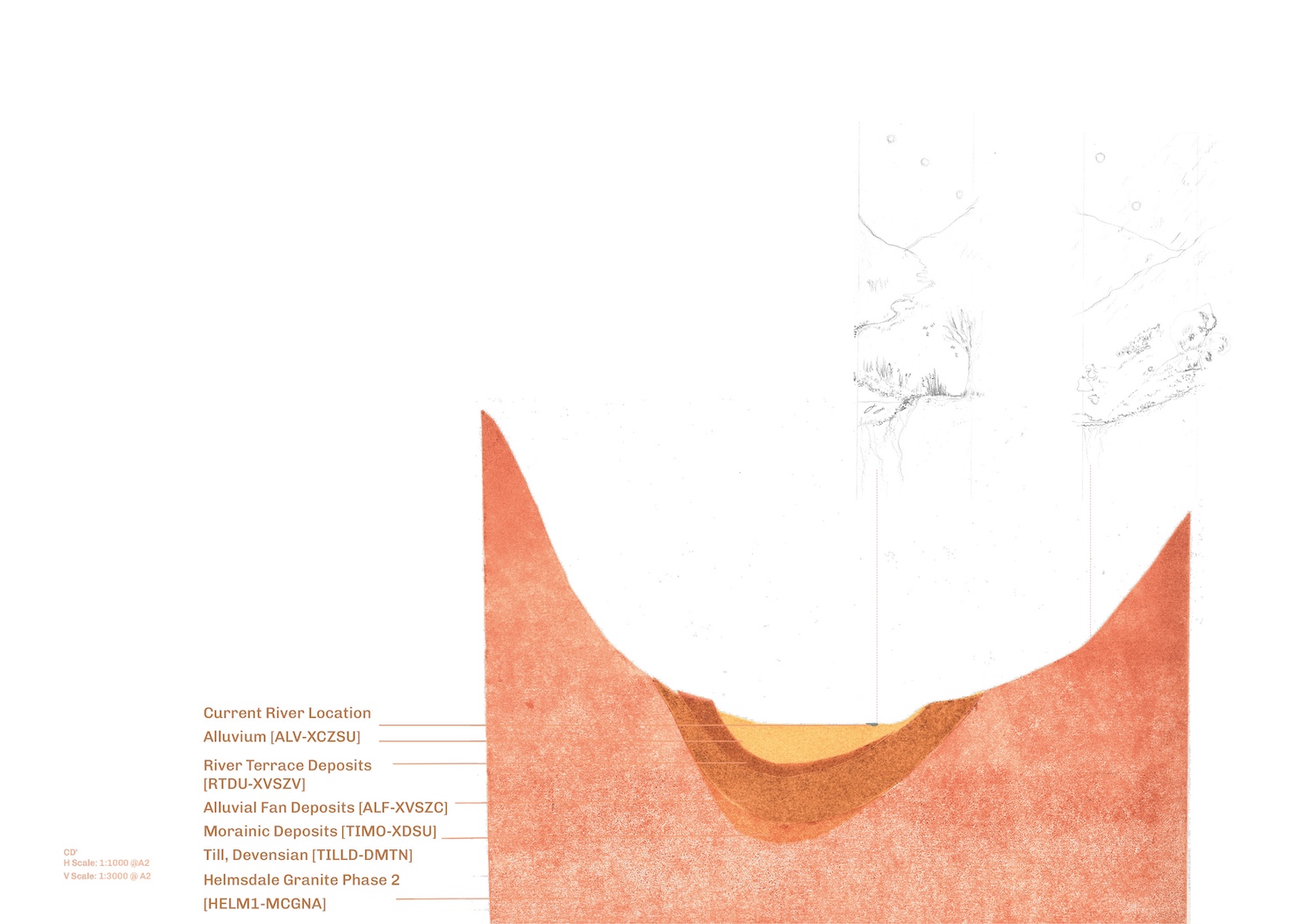
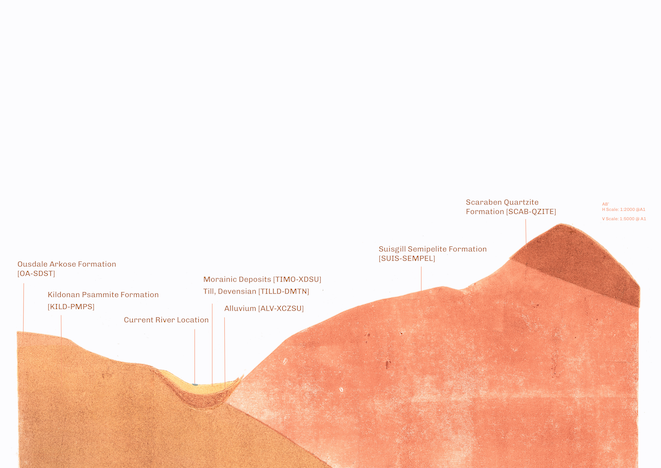
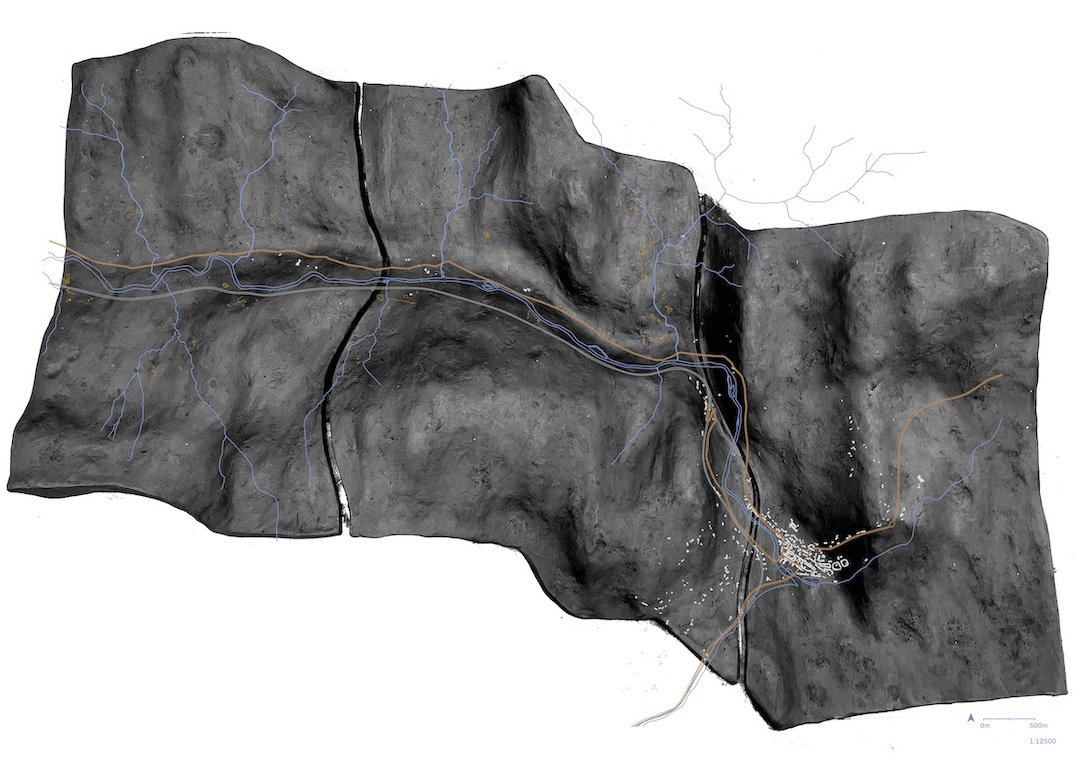
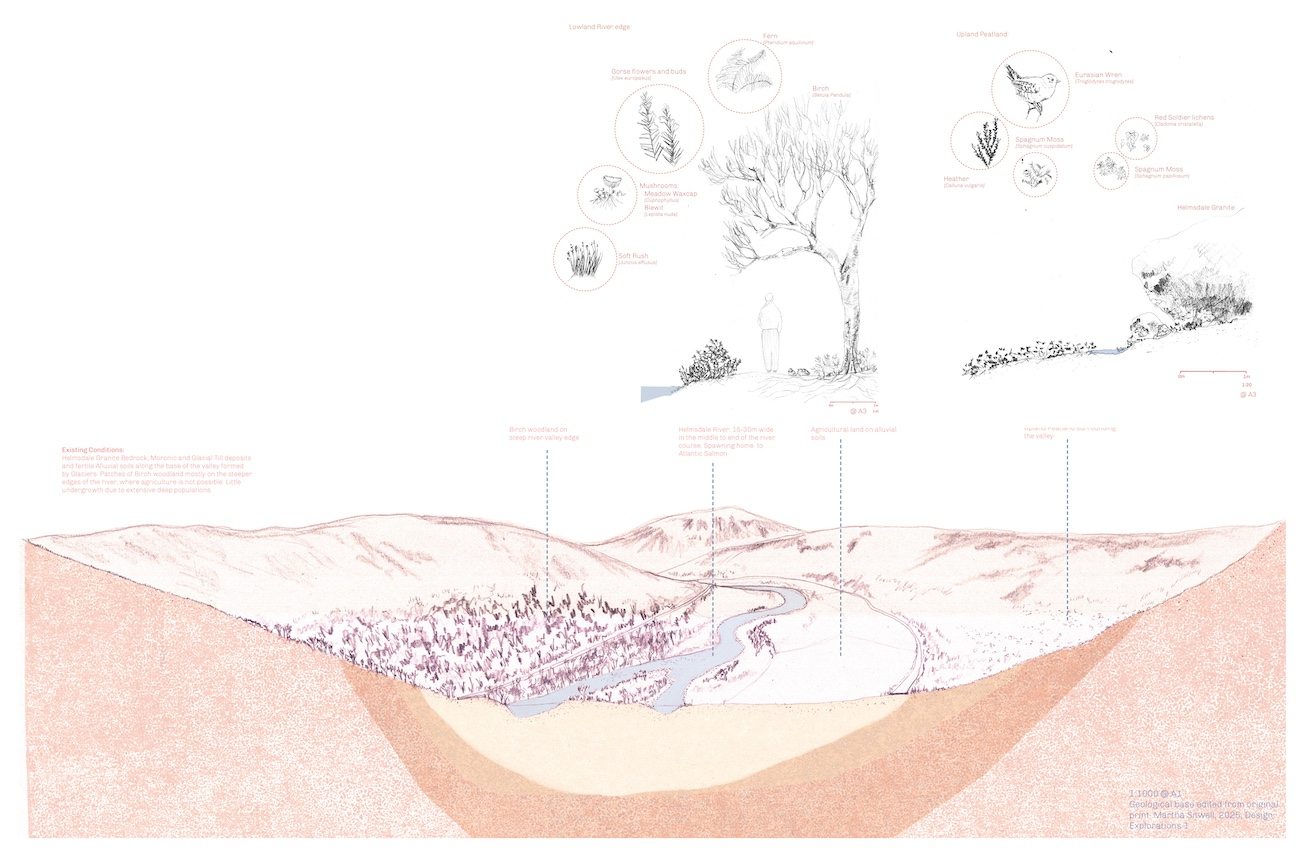
This is a design proposal for the re-imagination of Timespan Museum in Helmsdale East Coast of Scotland.
Looking at feminist ontological theory this proposal deconstructs what a museum is, rather than a fixed static collection of stones making a museum building but as a dynamic, relational, moving, adapting, reflecting, journey for both humans and non humans.
With sea level and river flooding inevitable with climate change, this proposal looks forward to not only protect local histories and habitat but also the economy.
This reimagination is centred on the Salmon, a keystone species of the river and a central character in one’s understanding of the site’s history. The bright pink prize of the salmon’s flesh that predators and fishermen are in pursuit of but also the pinker the flesh the healthier the river, so changing the pursuit to be for her rather than for us.
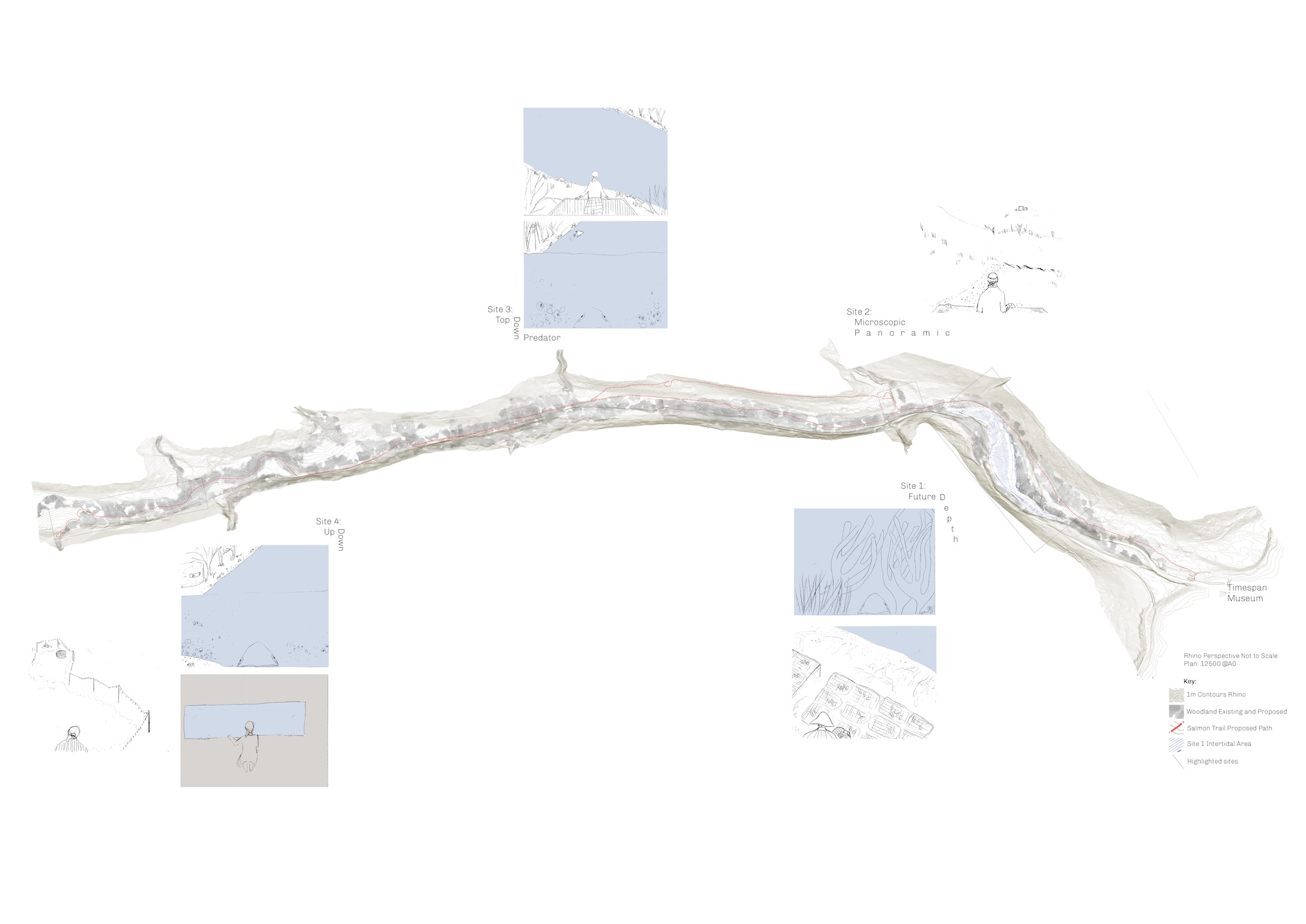
This proposal aims to reinstate and protect the salmon habitat, at the same time look at the journey of the Salmon and create a ‘Salmon Trail’ along the Helmsdale River connecting to sites of local history and creating moments of reflection by playing with perspective. A trail that aims to separate itself from the omnipresent observer, and anthropocentric perspective, dissolve boundaries (Hein 2007) and get closer with the landscape and the species that inhabit it.
This project is about bodies, about protecting, learning from indicators and learning with and through our own.
‘As sites for more-than-human dramas, landscapes are radical tools for decentering human hubris’.
Tsing , 2015, The Mushroom at the End of the World: On the Possibility of Life in Capitalist Ruins, Princeton University Press, p.21.
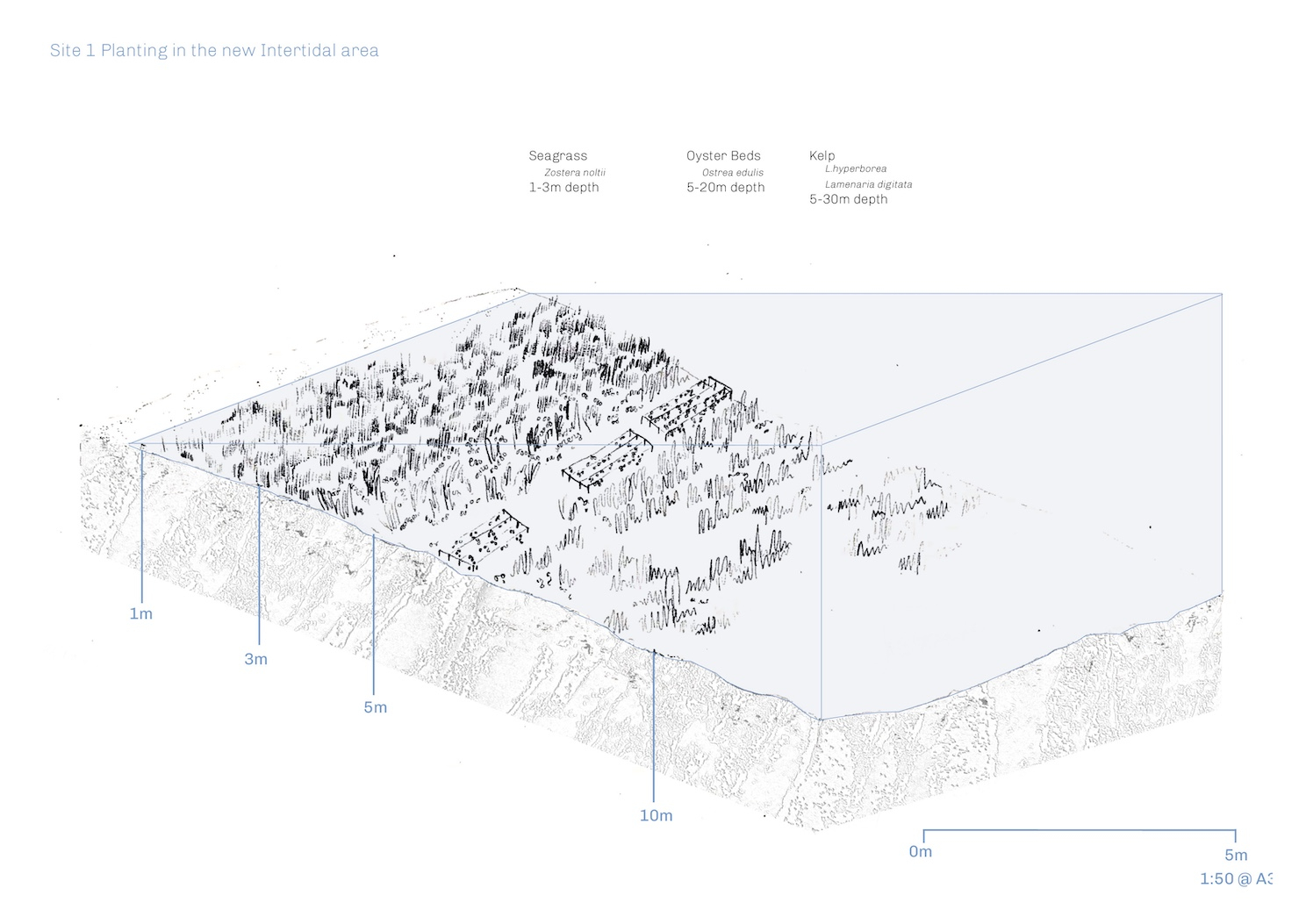
Site 1: Future Depth
Community owned land is at risk of flooding due to sea level rise. Currently used as Agricultural land, this site looks to the future aiming to preserve the productivity of this land as it becomes intertidal. Forming a landscape that is both ecologically and economically abundant.
This first stop of the museums ‘Salmon Trail’ serves the community, creating an industry while protecting the sites history of the Herring Fishing industry connected to the ocean.
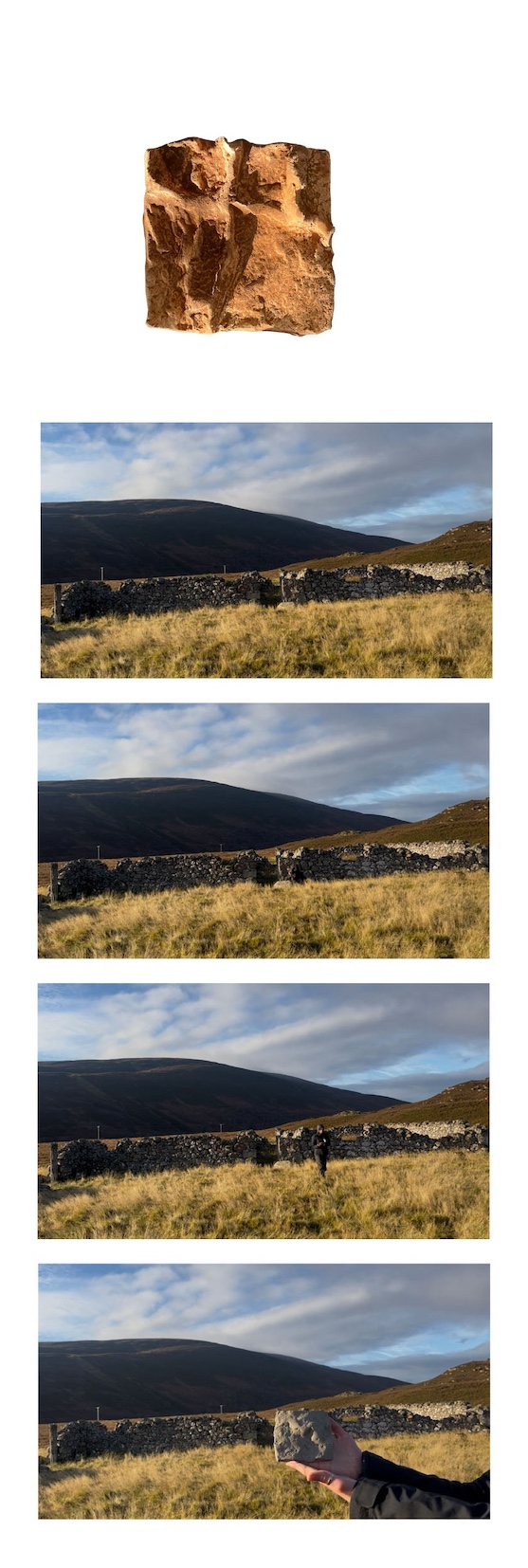
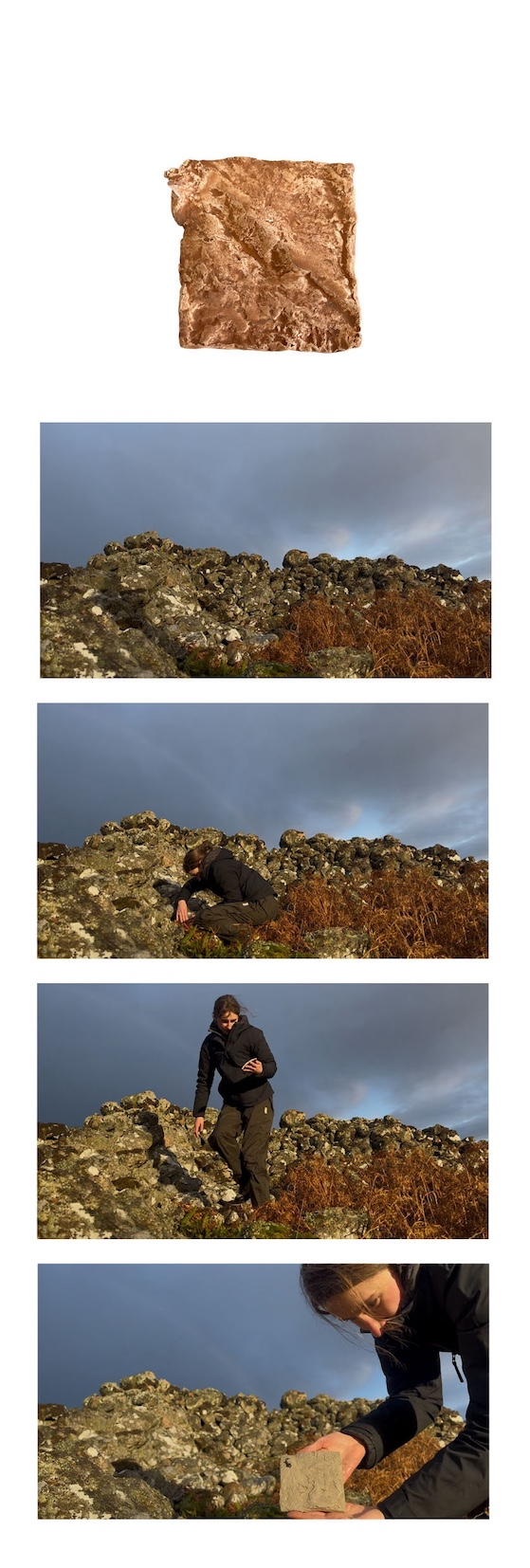
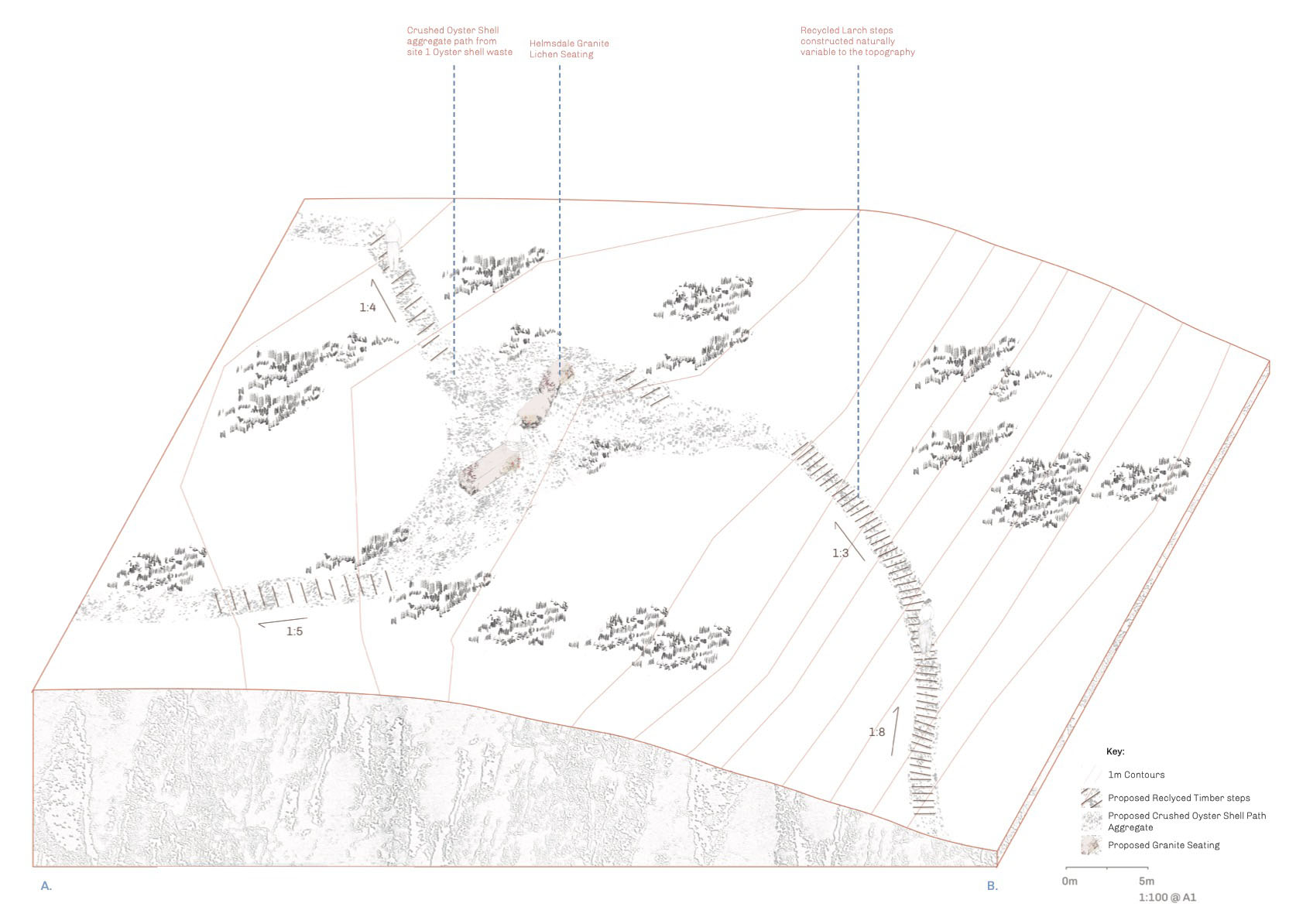
Site 2: Microscopic Panoramic
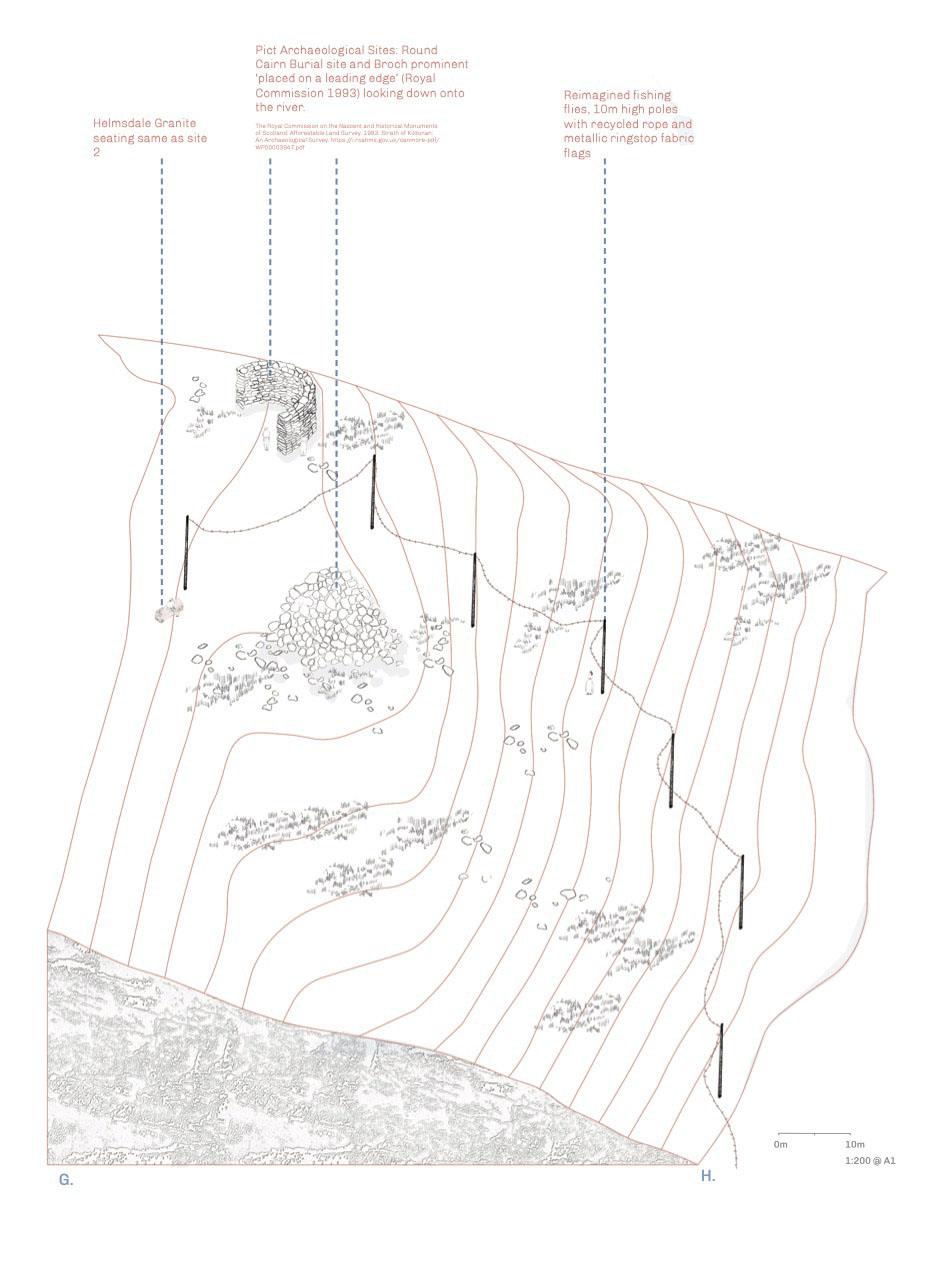
A 47 metre Pict Long Cairn, and abandoned in the Highland clearances Sheepfold ruin looks out onto the Helmsdale River. The steep incline to these sites creates an opportunity for a moment of rest.
The lichen species Red Soldier lichens (Cladonia cristatella) and Bloodspot lichens (Lecanora sanguinea) that are pioneer species of the granite habitat over time will colonise the granite seating as it has done on the granite constructed archaeological sites throughout the valley. To look out but also look down.
Site 3: Top Down Predator
There are many barriers faced by the Salmon on her journey up the river to Spawn, including environmental ones such as water flow, temperature, sediment blockages, ph levels and predatory ones such as human fishing, birds and other fish all in pursuit for their survival through the pink flesh of the salmon.
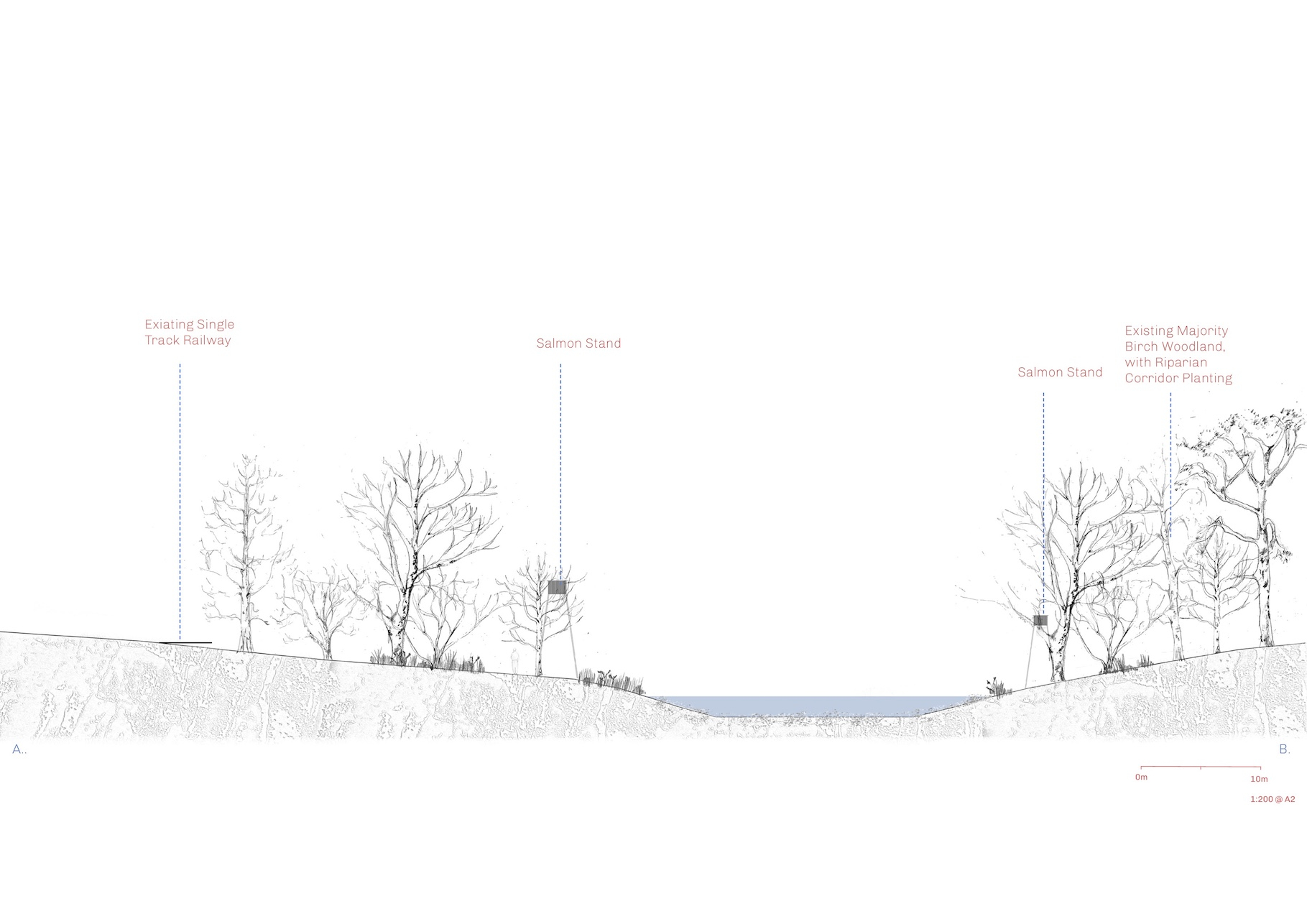
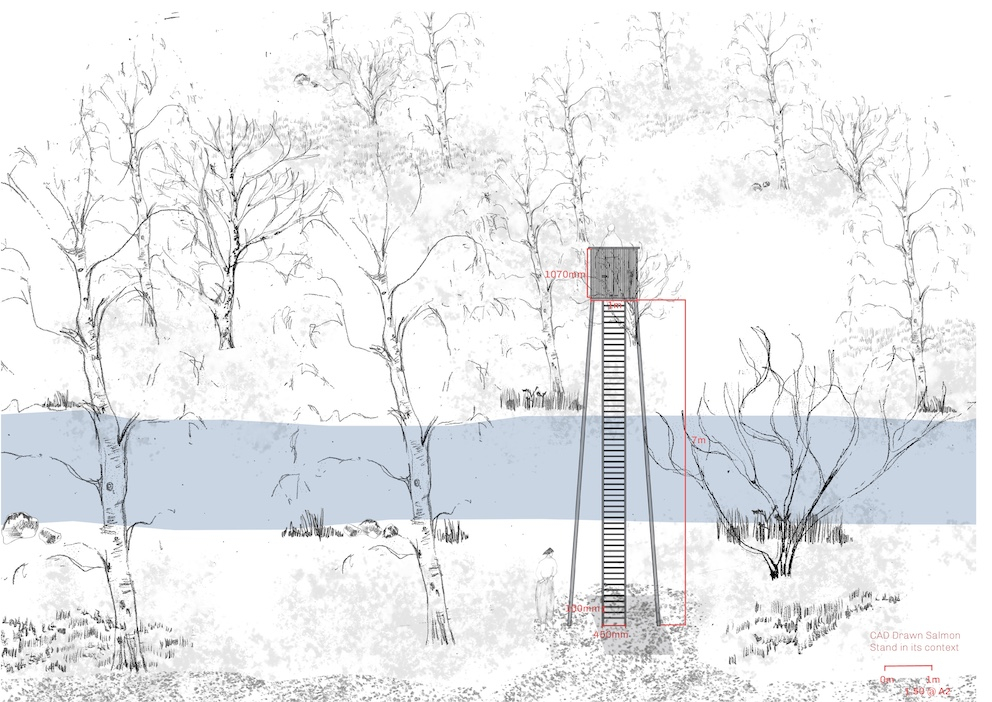
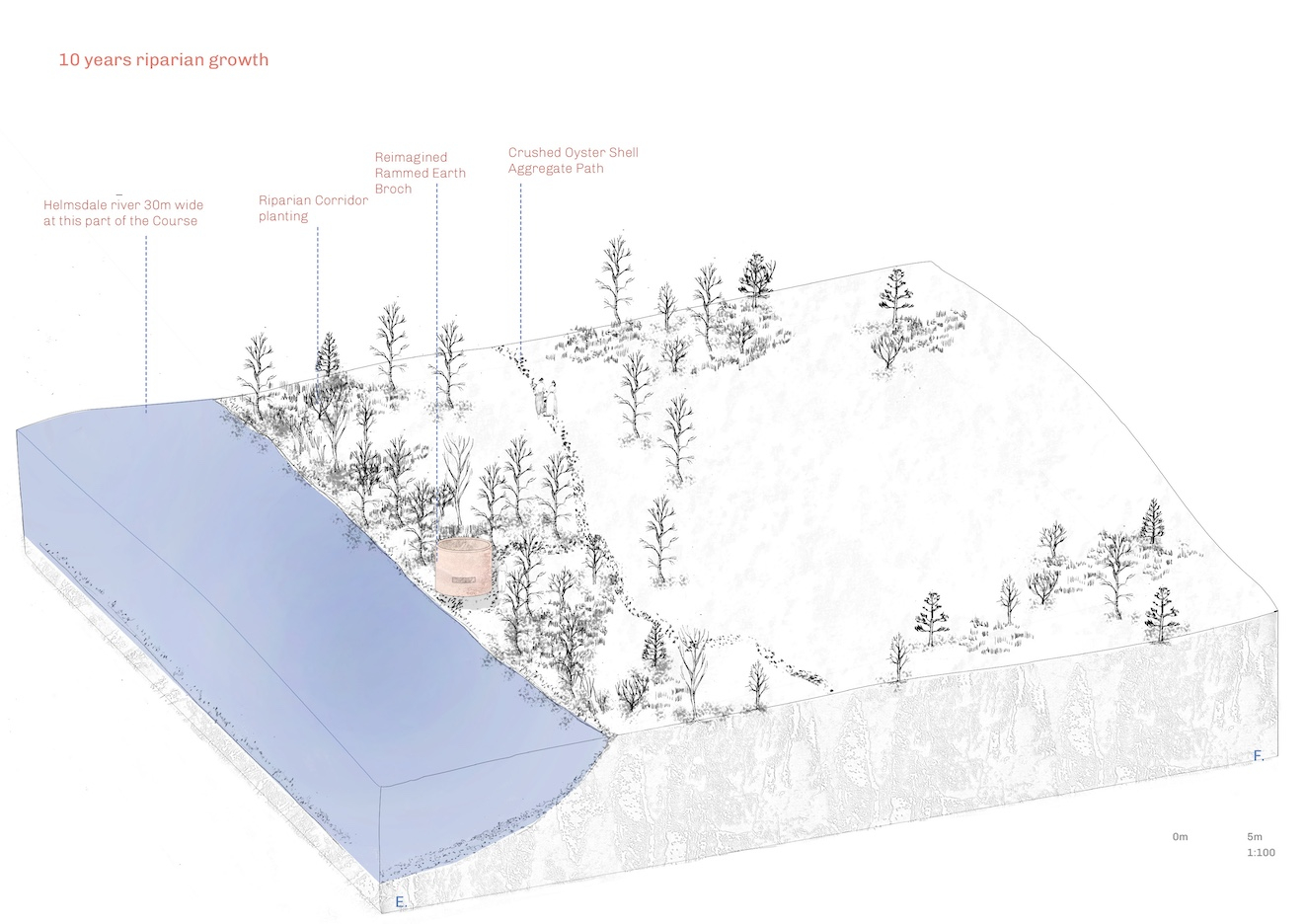
Humans and birds following the rhythms of the seasons and the movements of the salmon will look down upon the surface of the river. Therefore this site aims to highlight and deconstruct this idea of the omnipresent observer, placing two reimagined ‘Deer Stalking Stands’ to be ‘Salmon Stands’. While also protecting and making it harder to be a predator by protecting the Salmon by reinstating the Riparian Corridor along the whole valley.
Site 4: Up Down
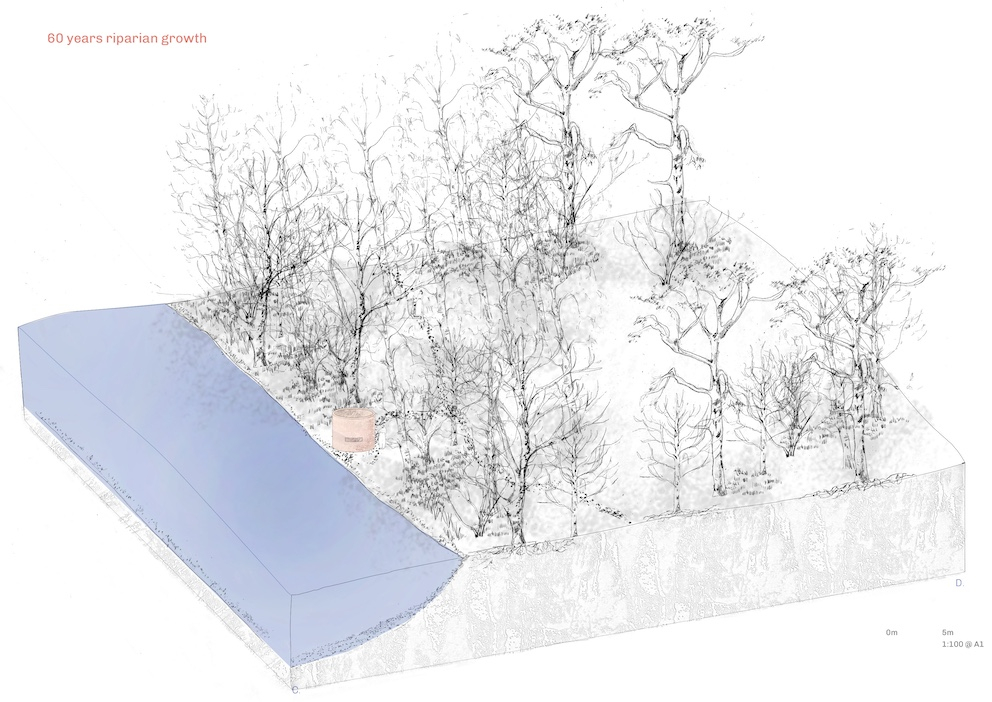
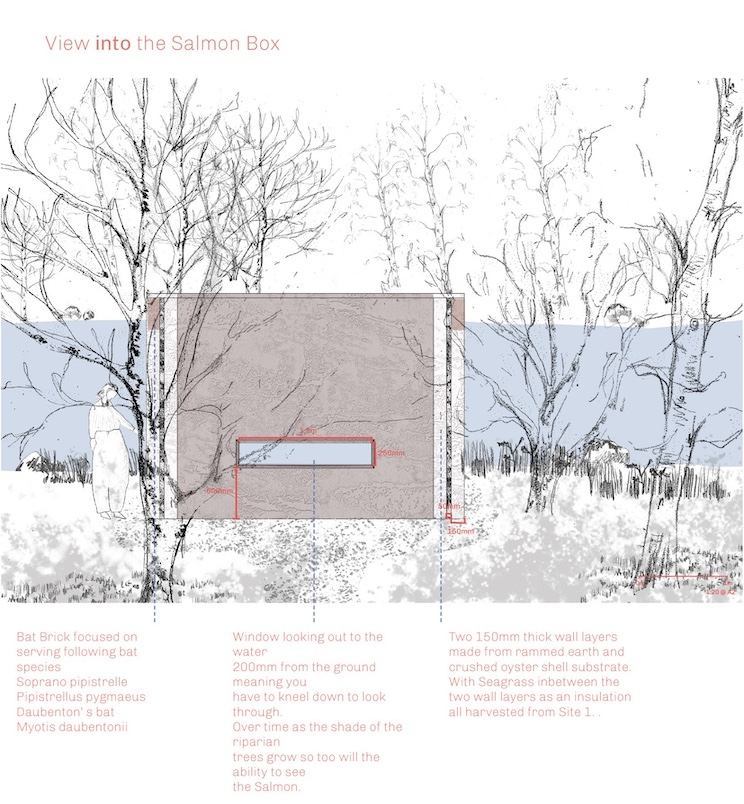
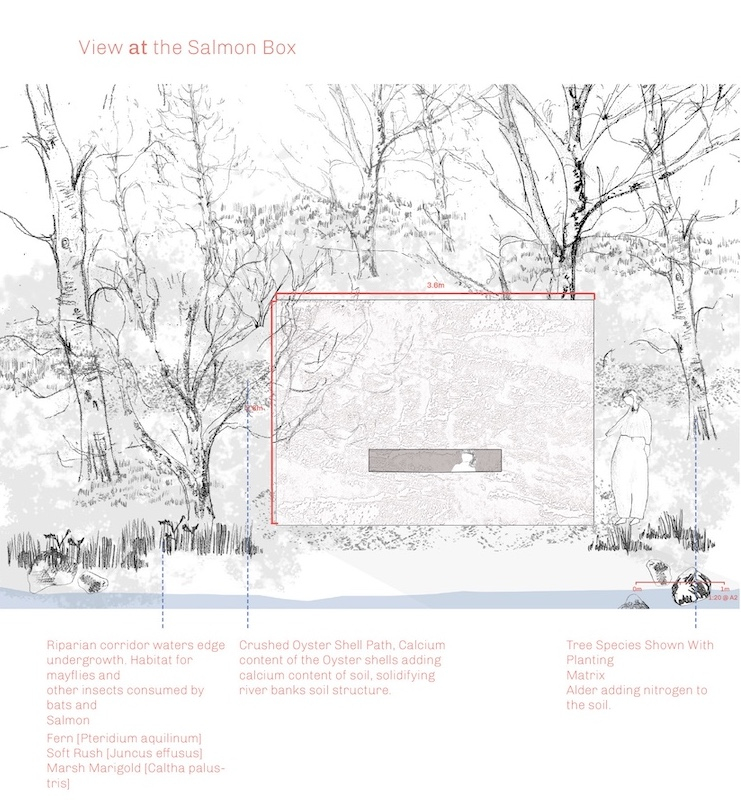
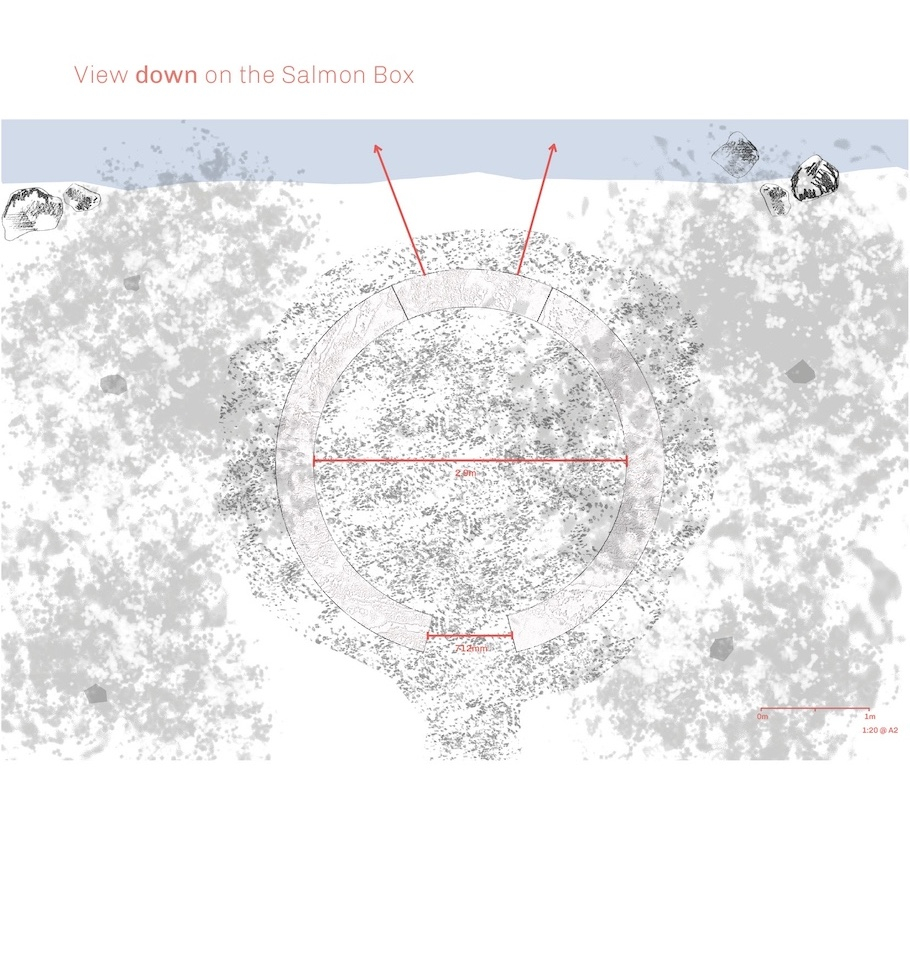
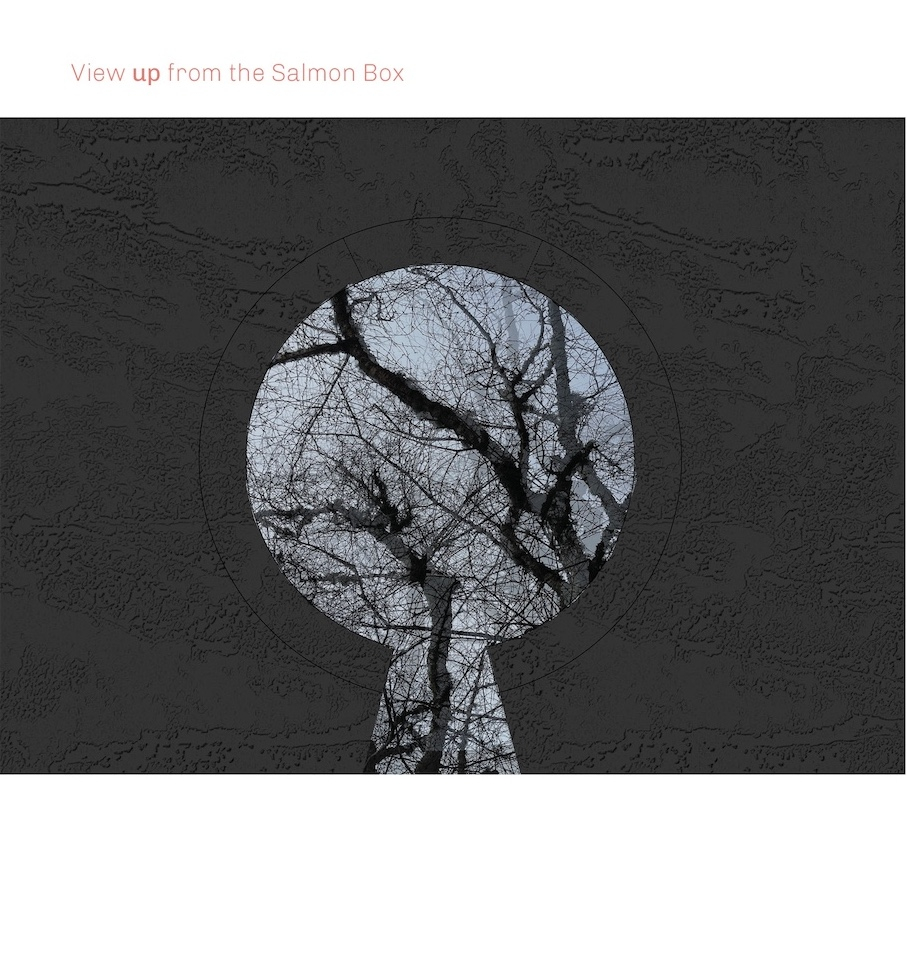
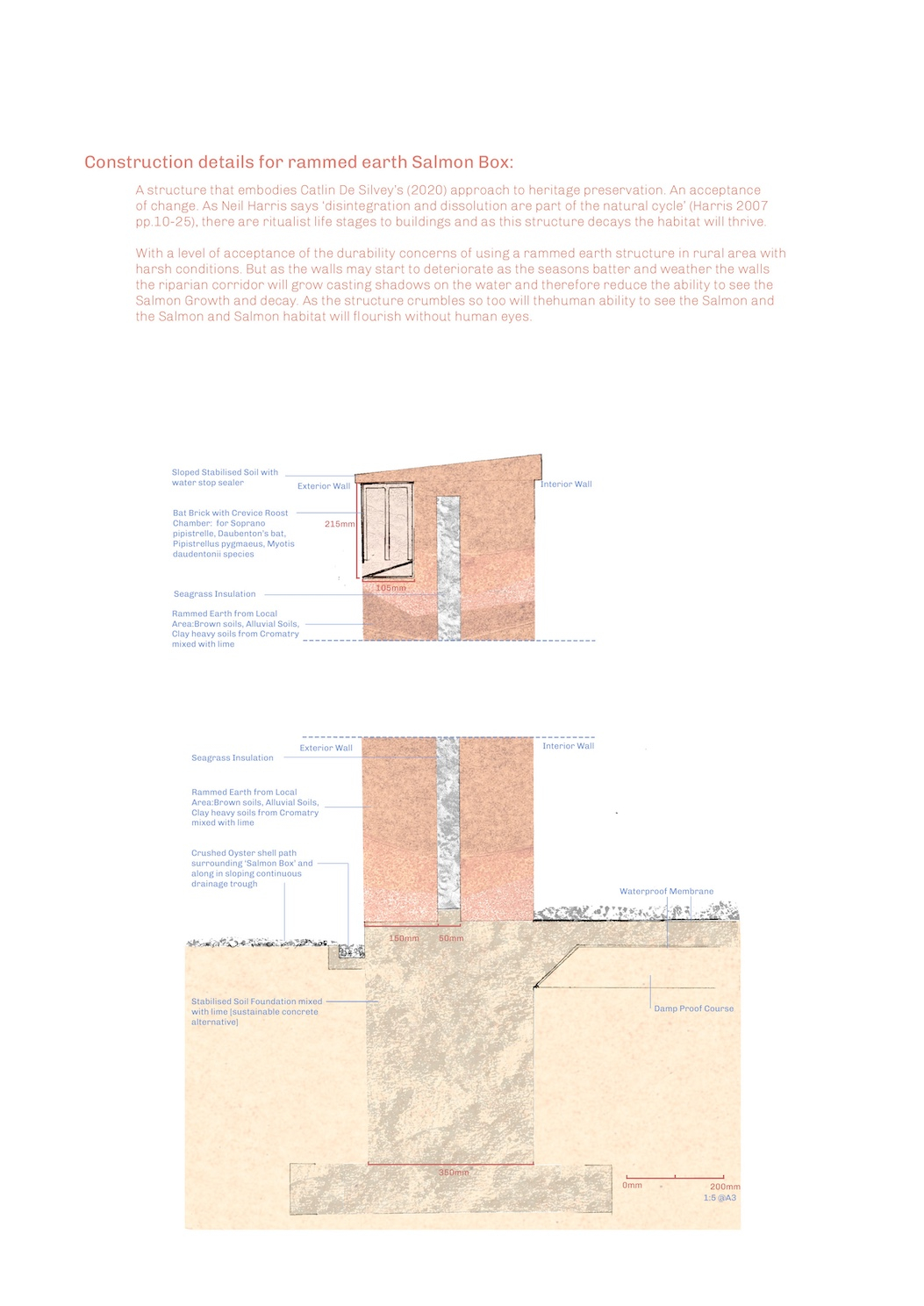
In this new riparian habitat will sit rather than a ‘Bird box’ for watching birds, a ‘Salmon box’ for watching salmon, a reimagined Broch structure. A space that allows different perspectives down to the river and up to the sky. As the riparian habitat grows so too will the shade and therefore less likely to see the Salmon, protected from our eyes and therefore eyes of other predators.
With Strings of metallic flags attached to poles leading you away from the river to the Broch and Pict Burial ruins that lie above. These flags reimagined fishing flys, rather than used to catch the eye of the Salmon and kill her but to use the wind to catch your human eye or ear and lead you away from the river to the sites of local human history.
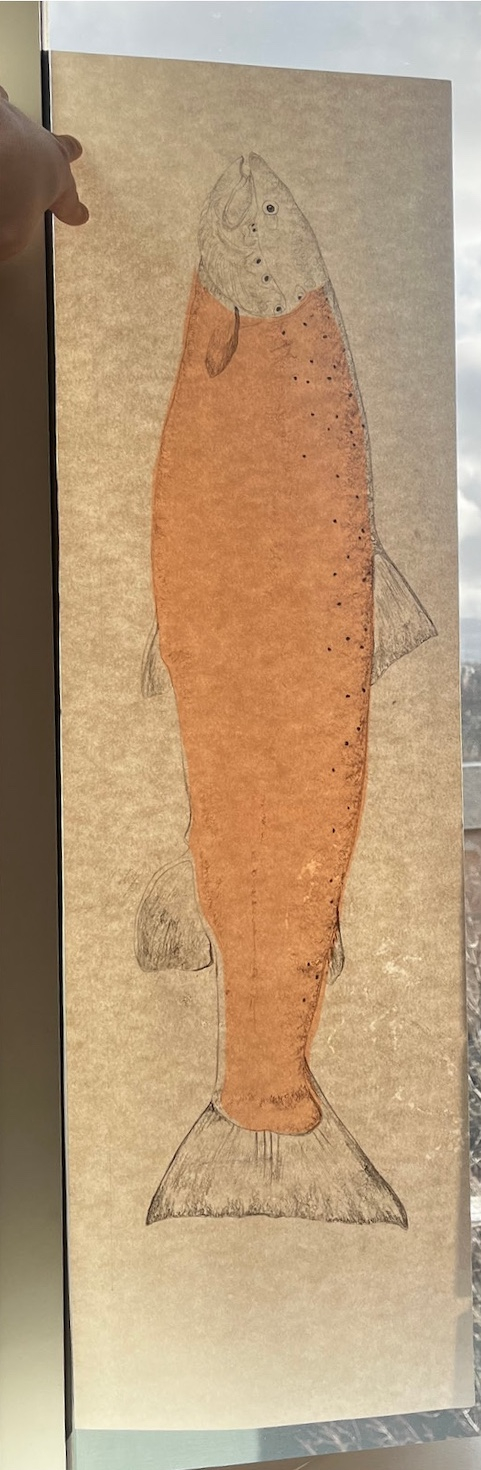
‘...the field of battle is before me…. In spite of the roar of the foss in my ears, I am under the impression of perfect stillness and silence in the objects that surround me, so wild and solitary, and secluded in the spot, no habitation or trace of man. My eyes are fixed with a sort of fascination on the water, whose swift but calmly flowing surface remains unruffled, unbroken as yet. It is the unknown! …trepidation seizes me-a feeling difficult to define-of anticipated pleasure mingled with respect for the power and the strength of the unseen and unknown antagonist'.
Davenport, 1885, Salmon Fishing, Chapman and Hall, p.8