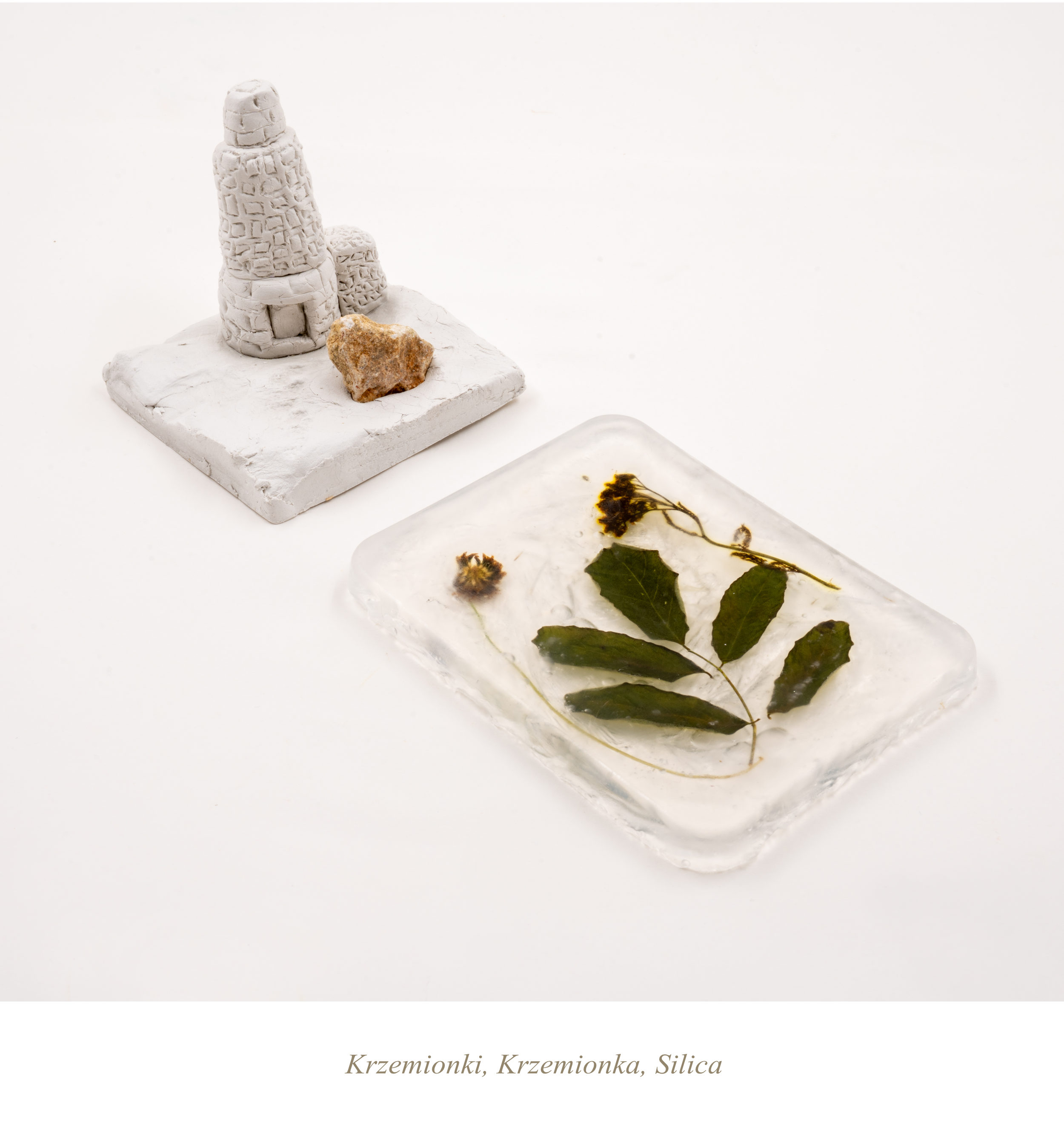
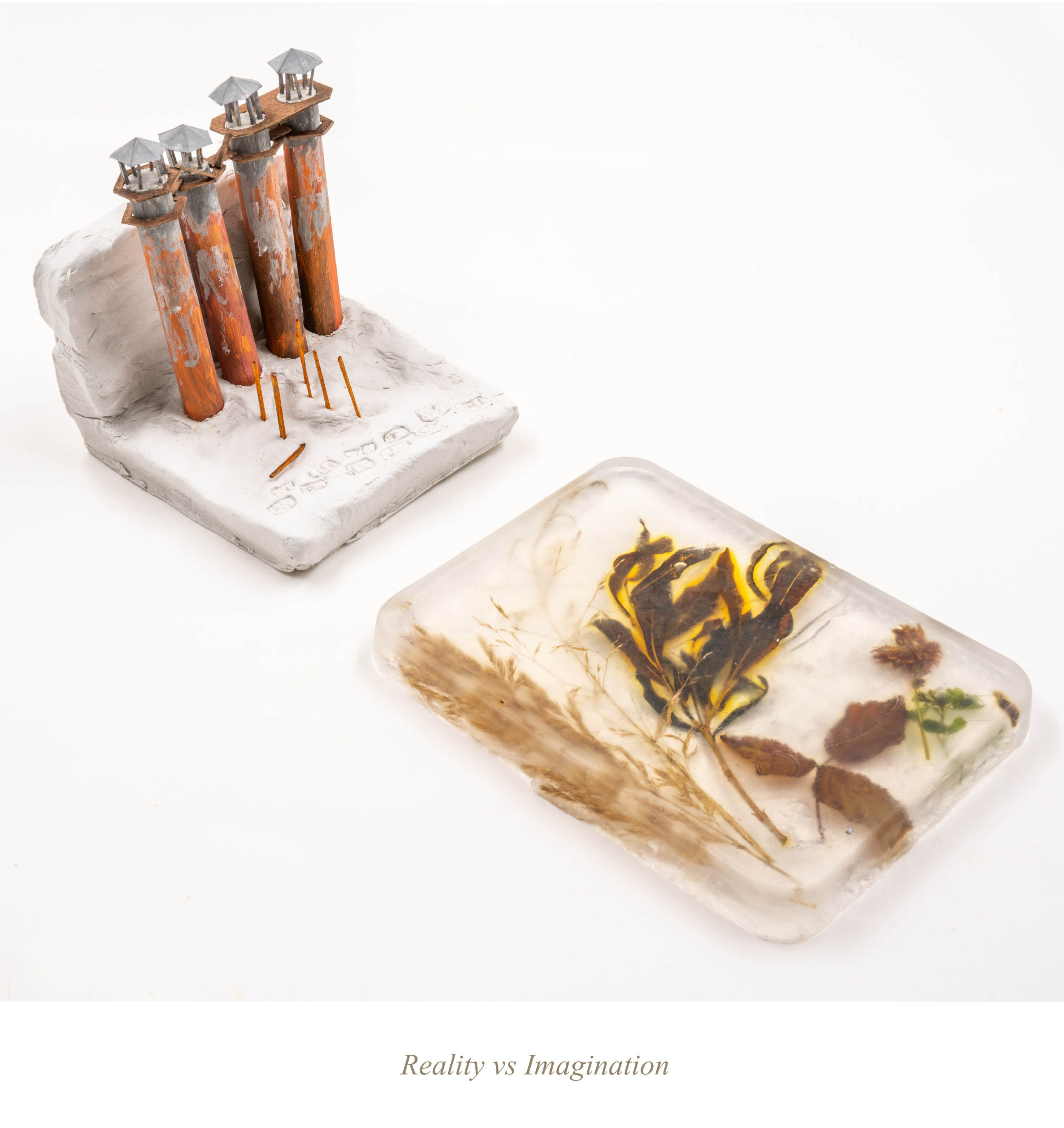
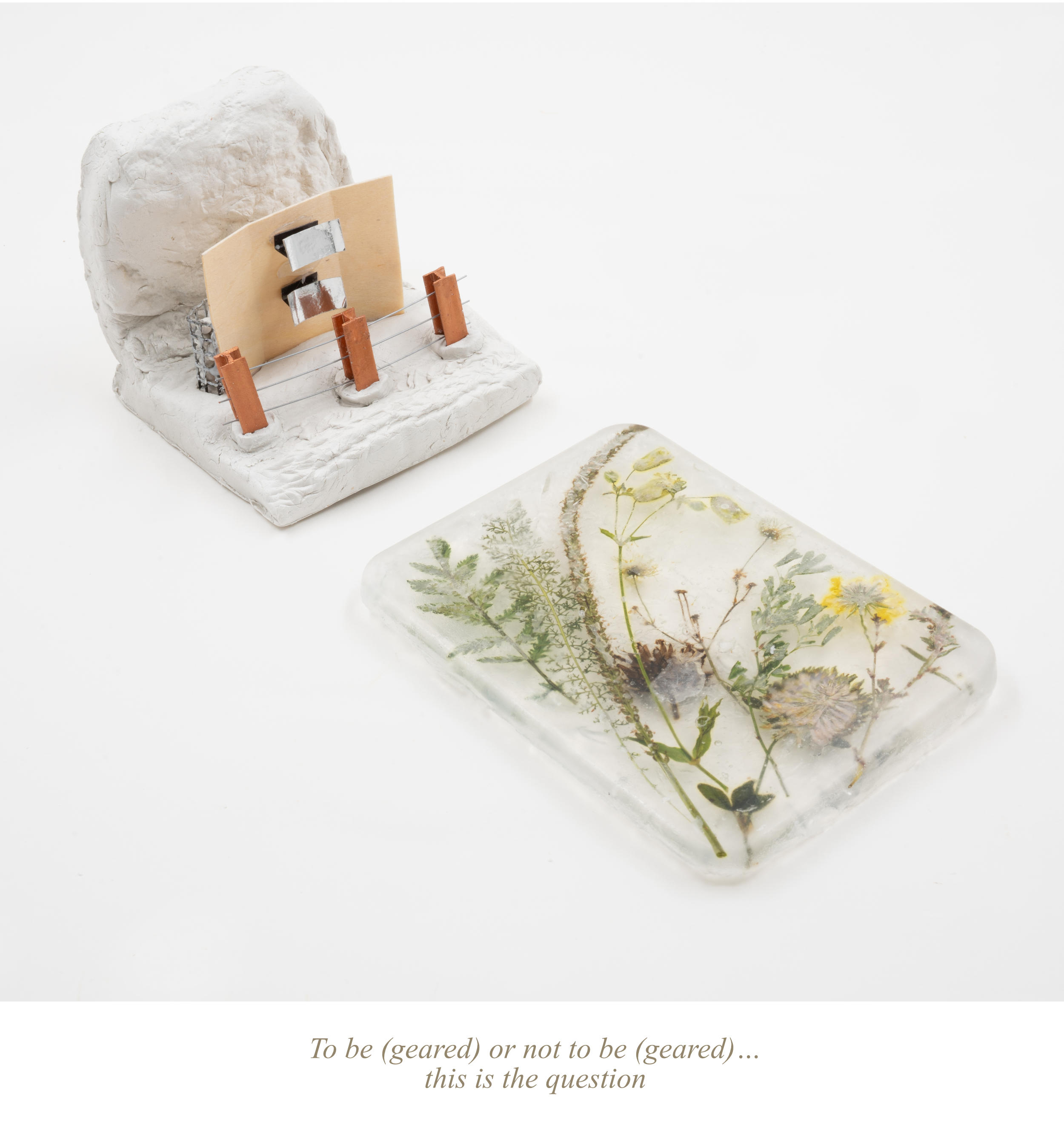
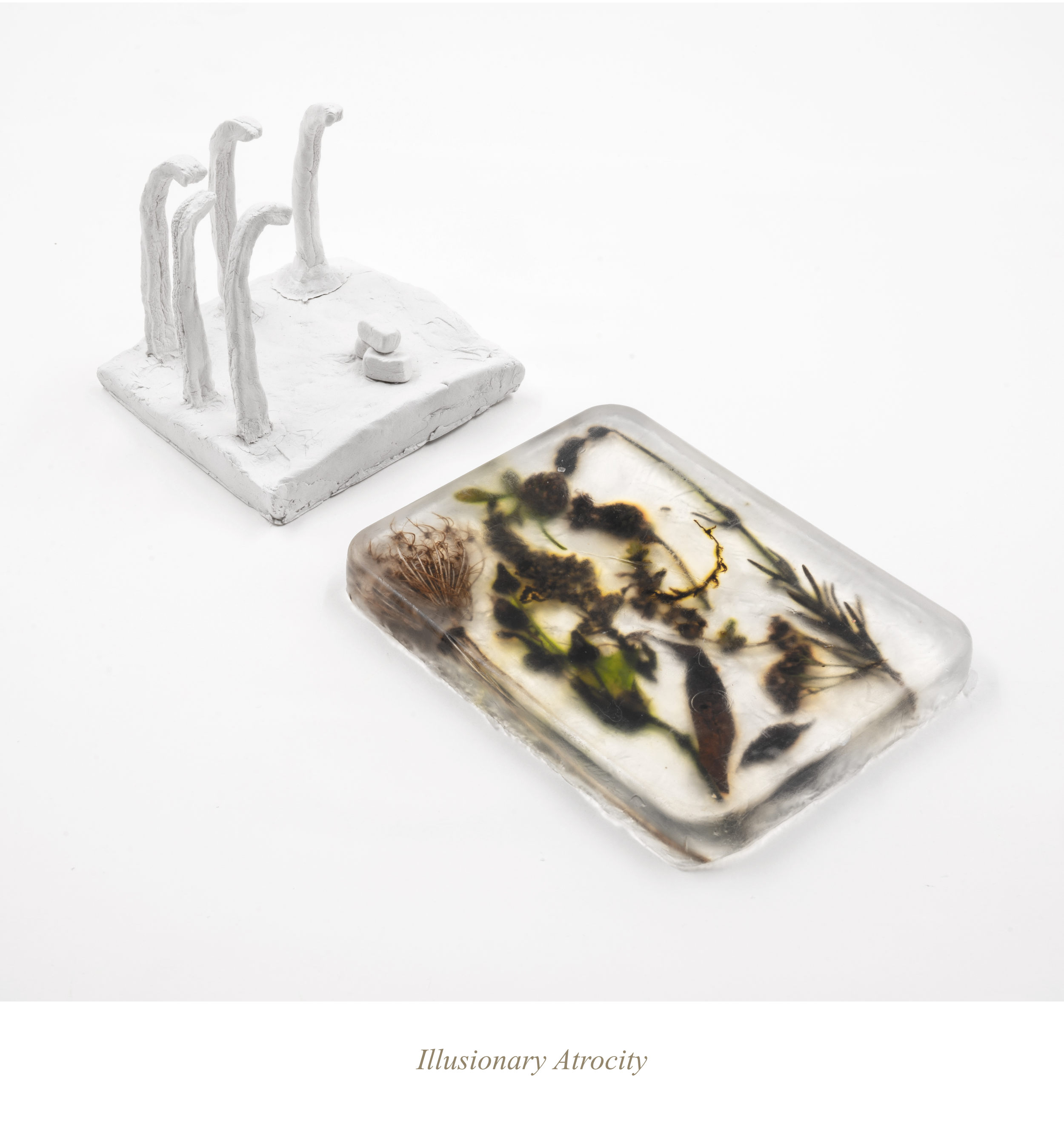
Detailed Design
Walking Dry Stone Wall
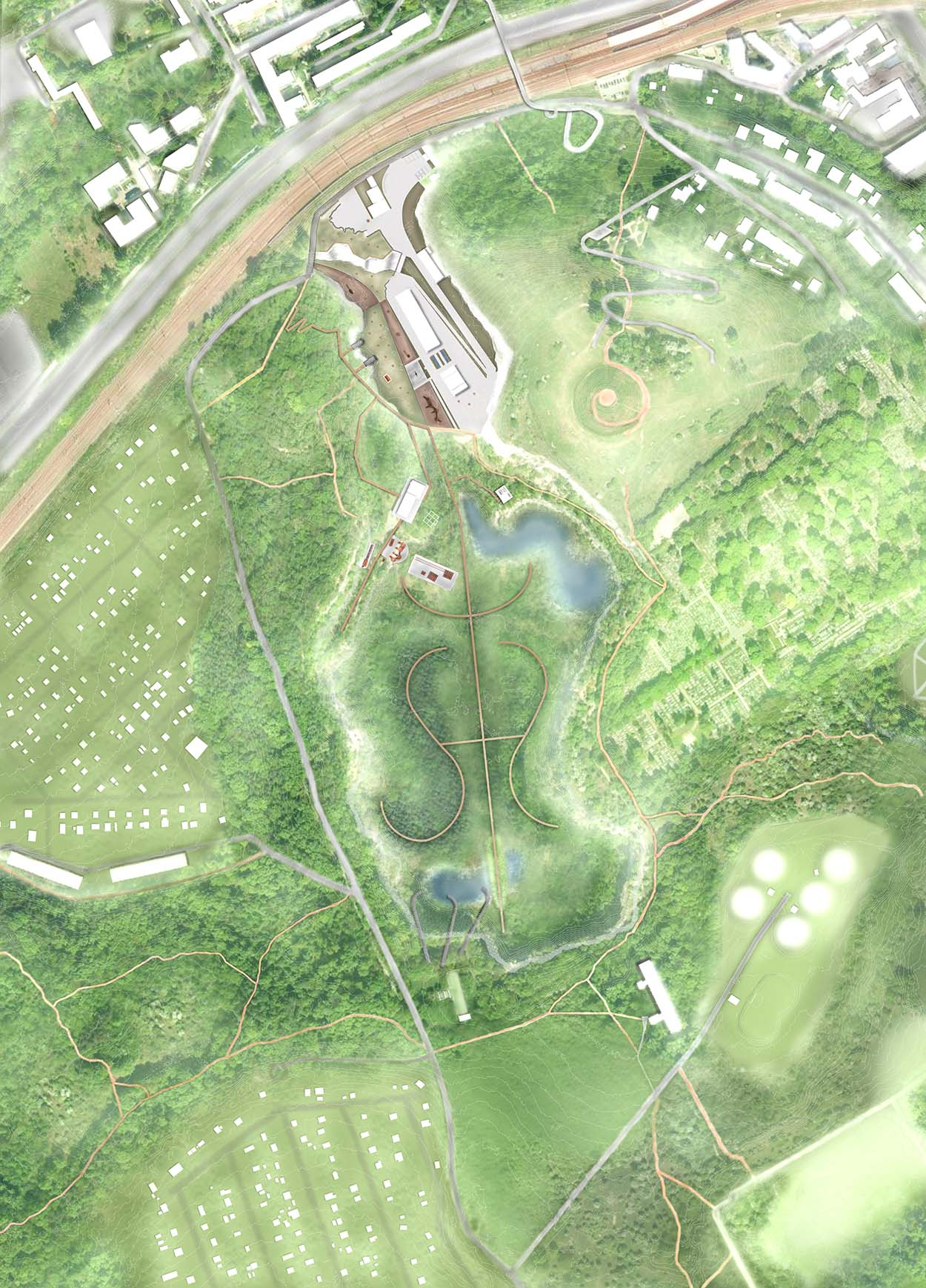
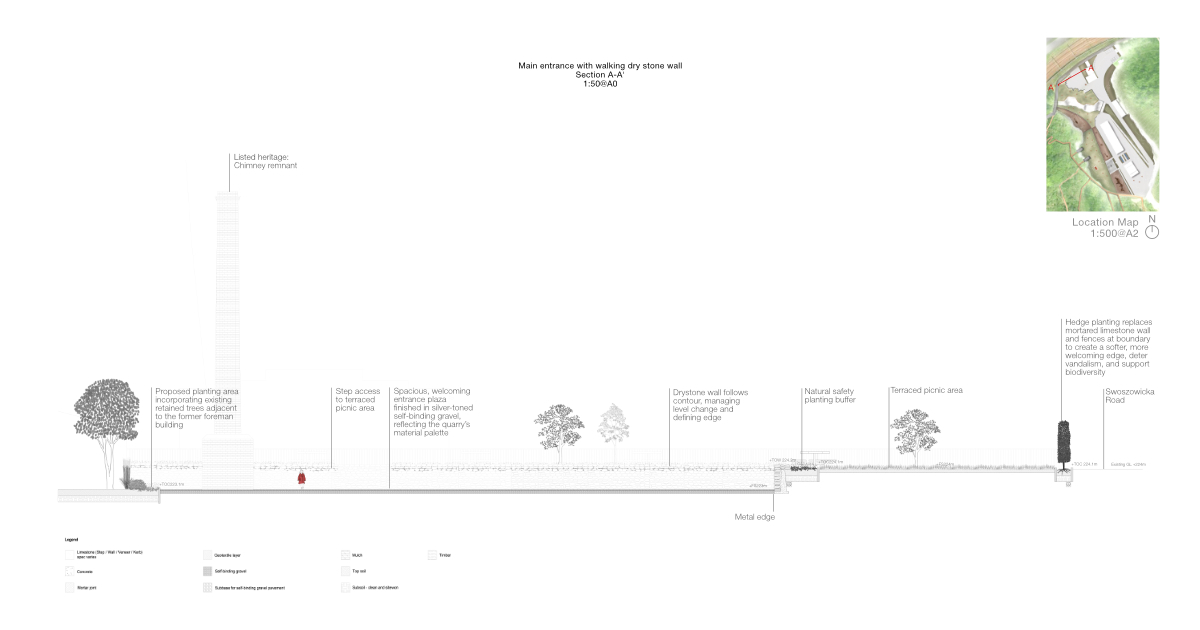
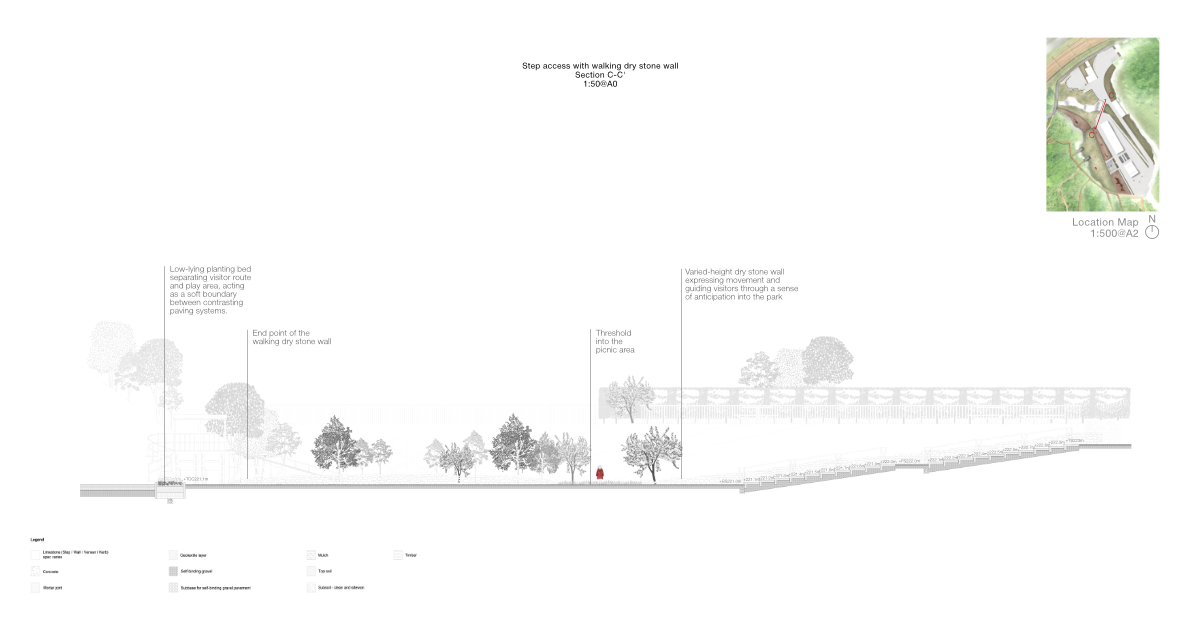
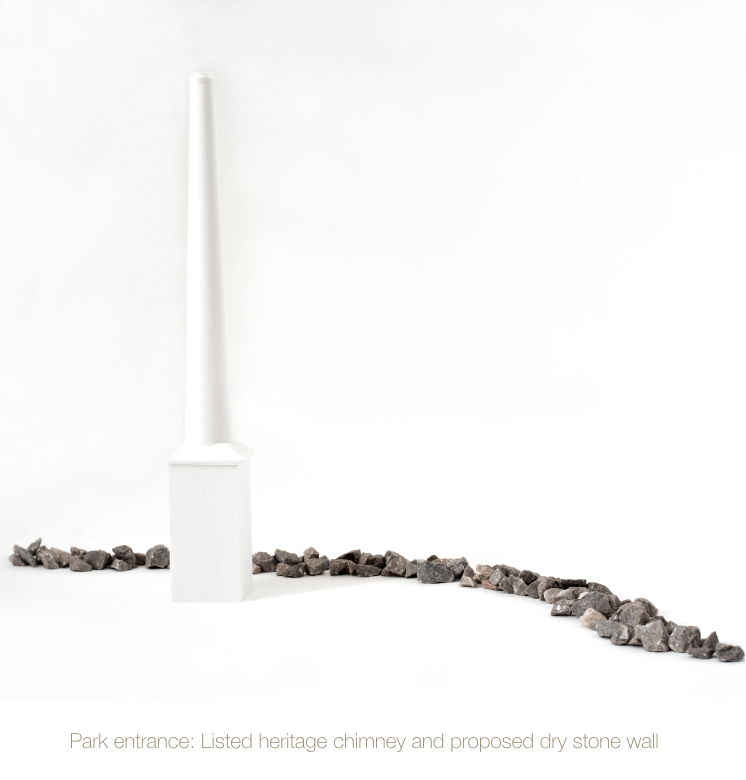
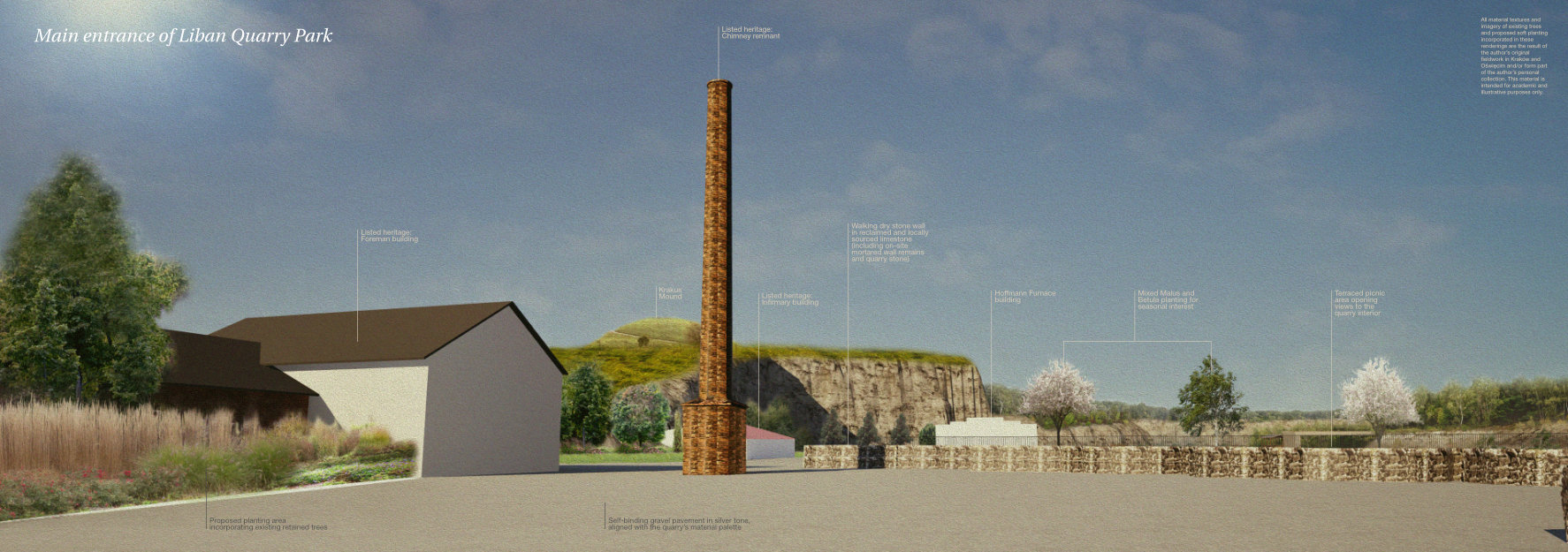
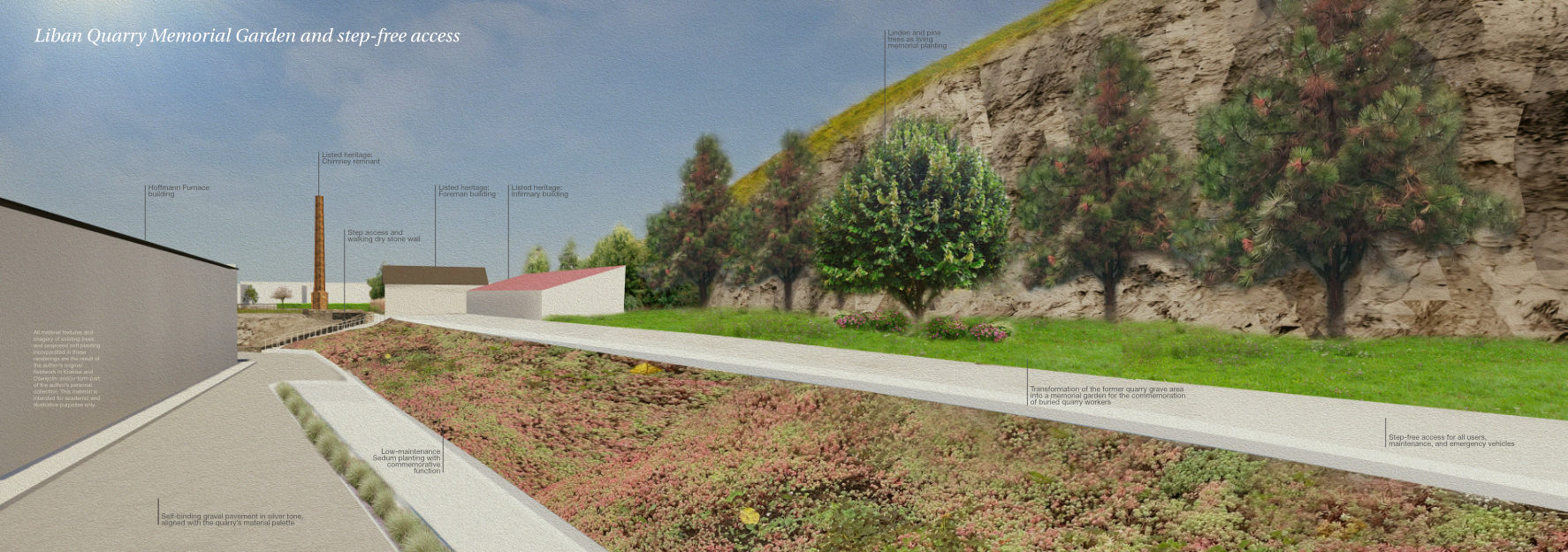
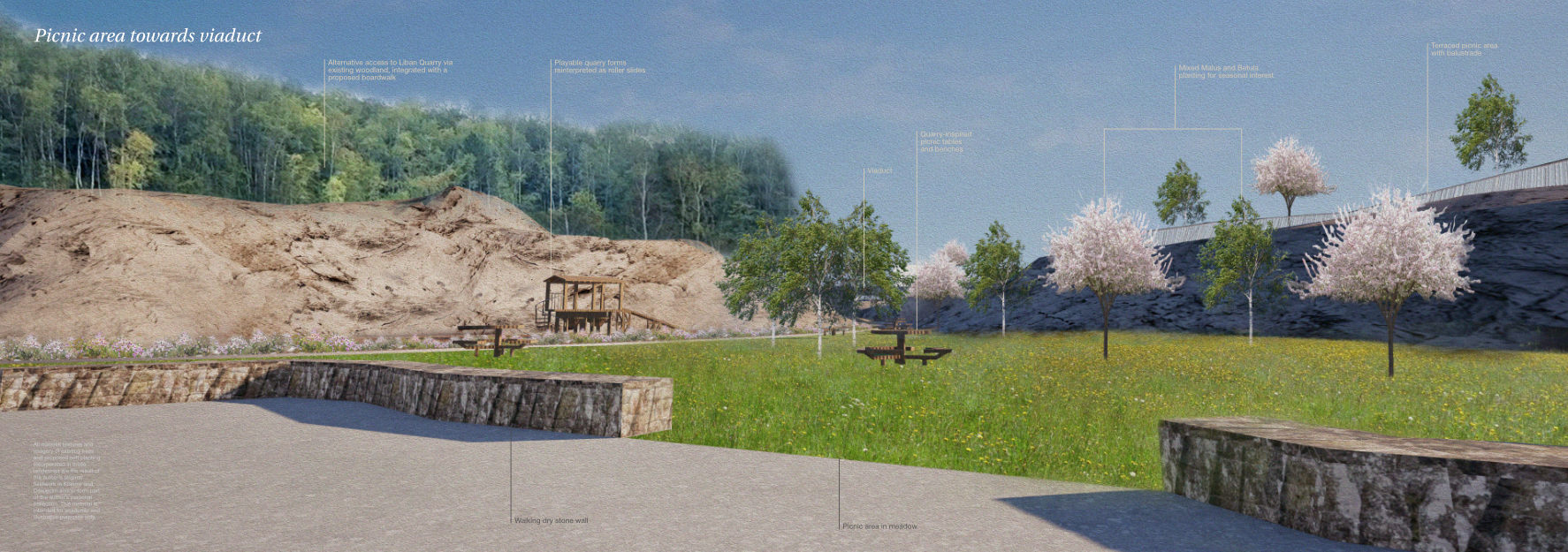
Inspired by Andy Goldsworthy’s Taking a Wall for a Walk and Walking Wall, the dry stone wall reinterprets limestone as a dynamic landscape element. Extending from the main entrance into the park alongside step access, it guides visitors through the first sequence of the post-industrial landscape and towards further exploration of the quarry.
By transforming an existing mortared wall into a dry stone structure, the intervention symbolically liberates limestone from fixed industrial form and reconnects it with natural processes. Set against the vertical brick chimney and former foreman’s building, the flowing wall highlights the contrast between stone and industry, while suggesting a metaphorical return of extracted material to the quarry landscape.
Placeful and Climate-Responsive Interventions
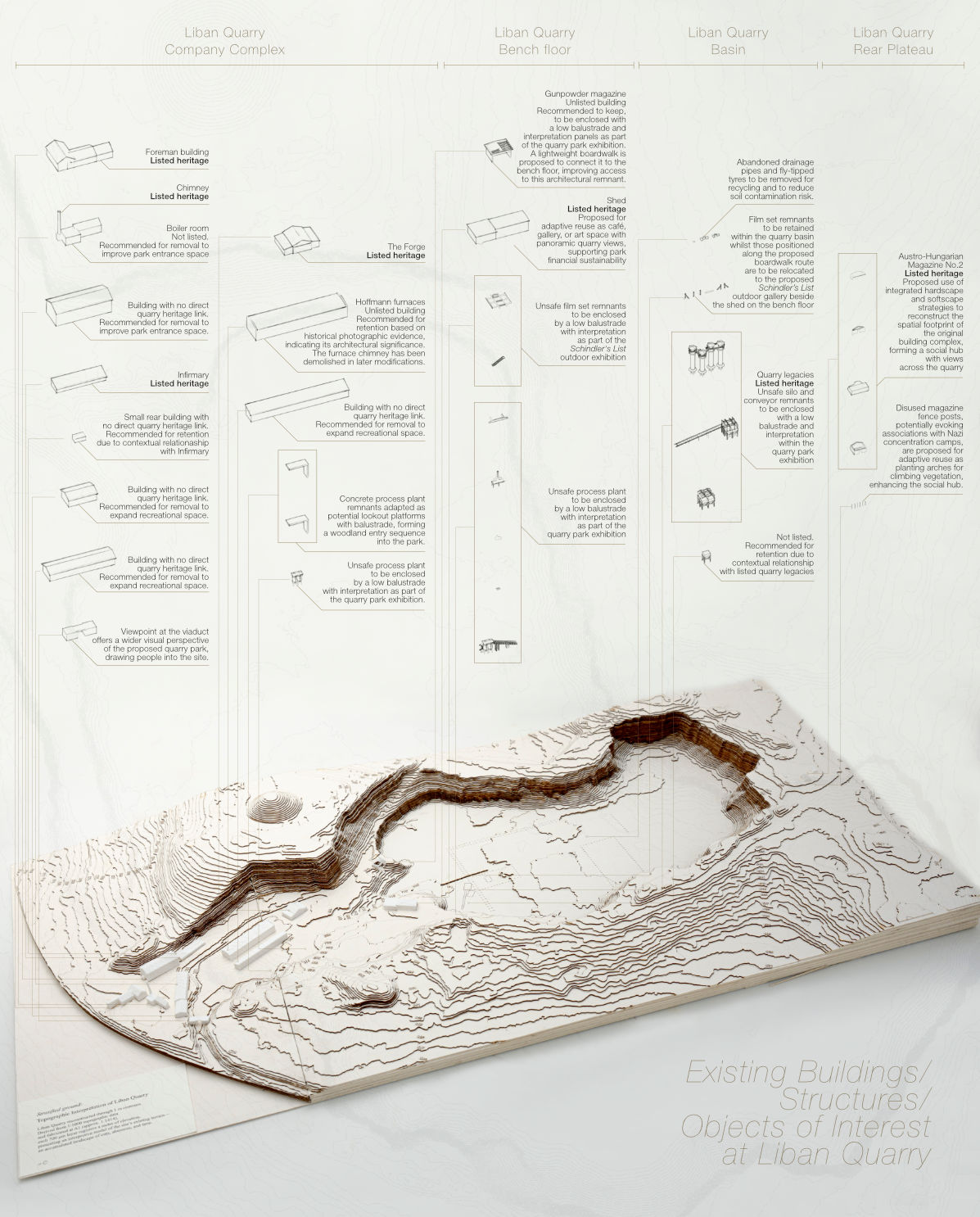
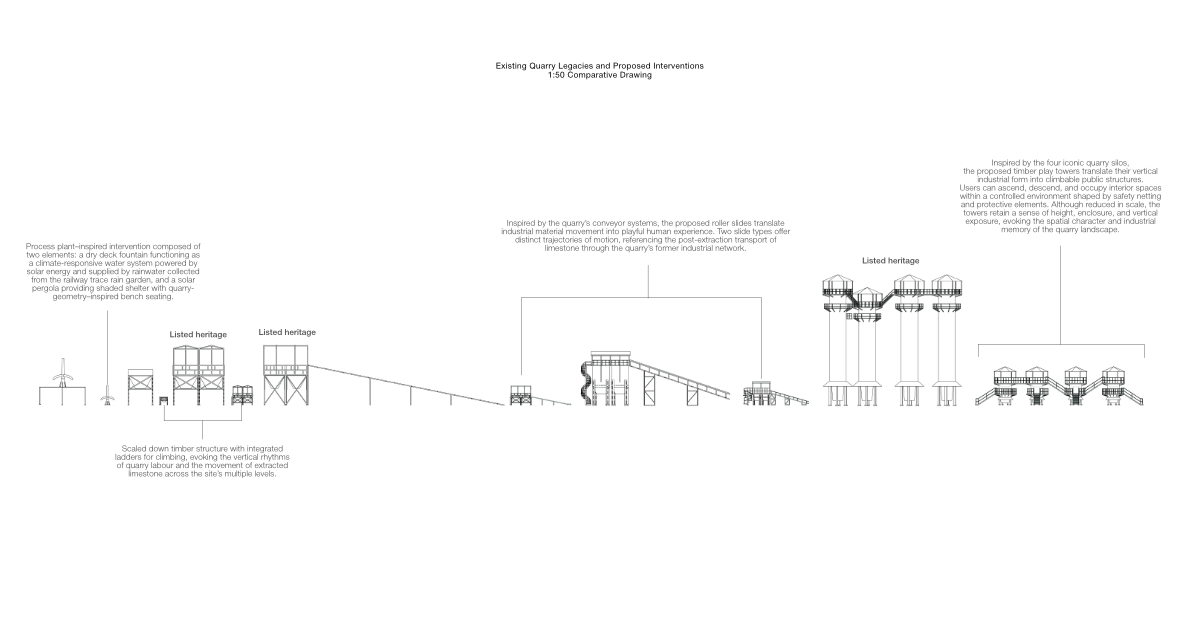
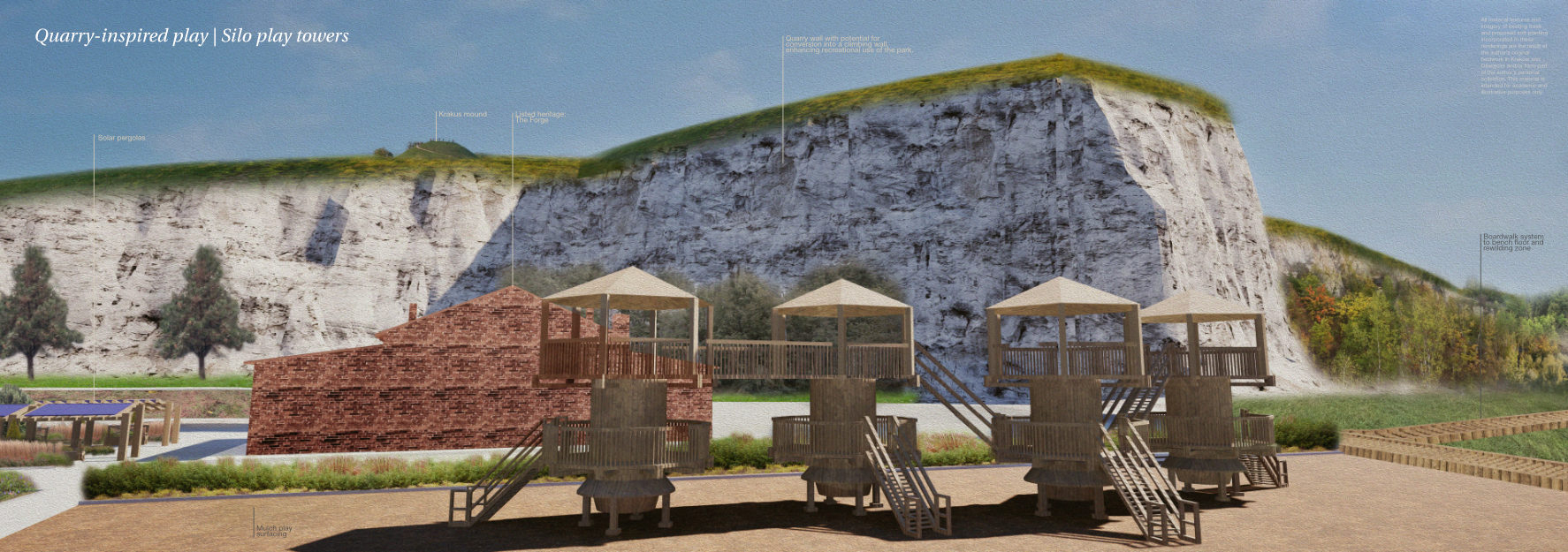
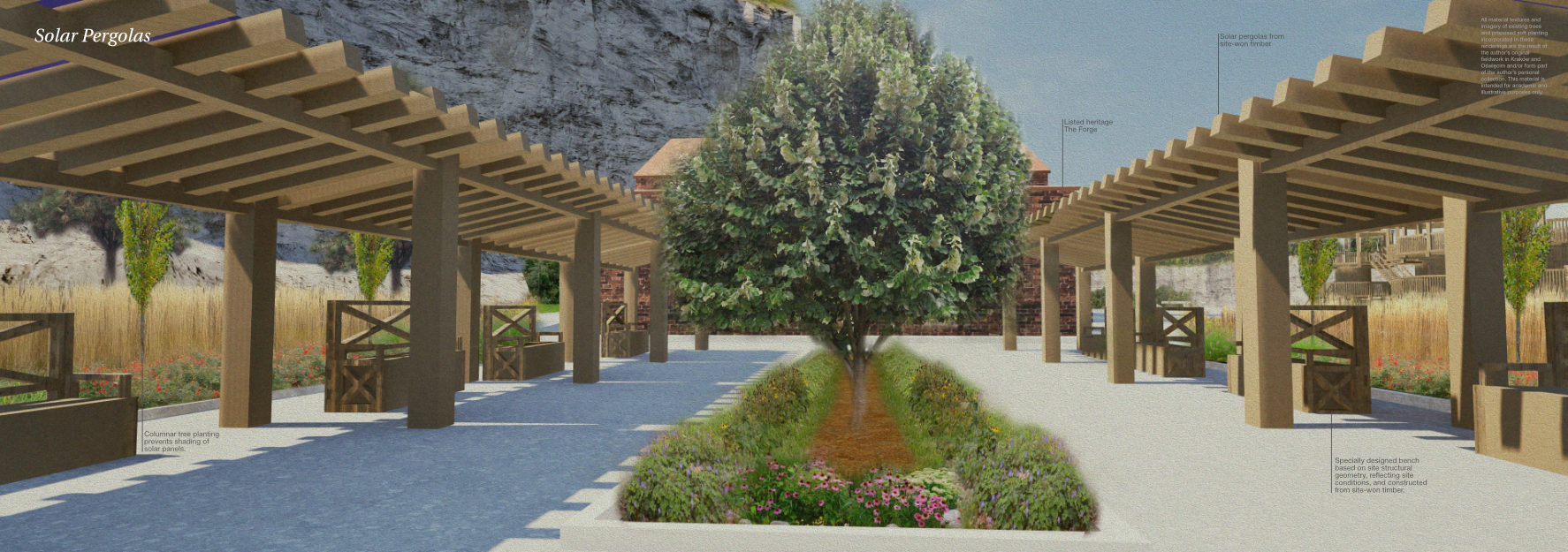
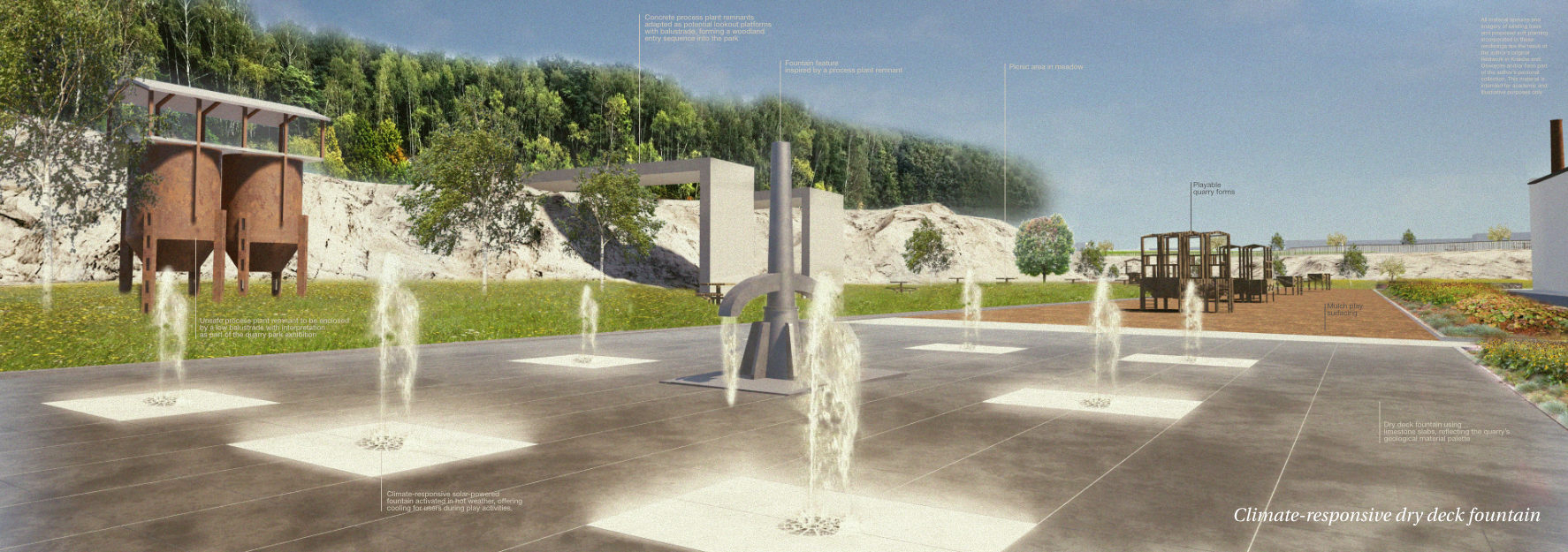
Drawing on the industrial heritage and spatial character of Liban Quarry, a series of interventions support comfort, social interaction, play, and environmental performance within the post-industrial park.
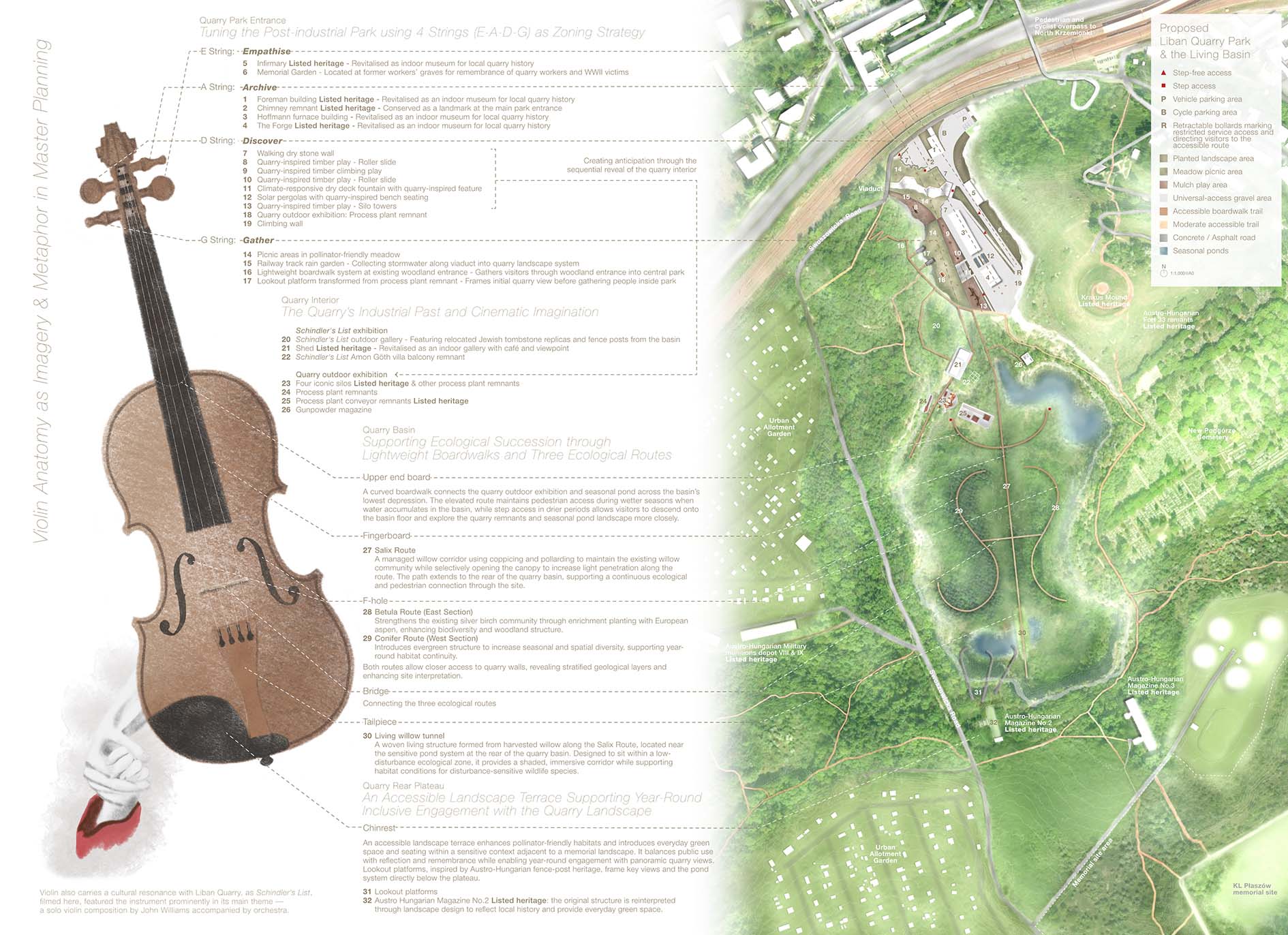
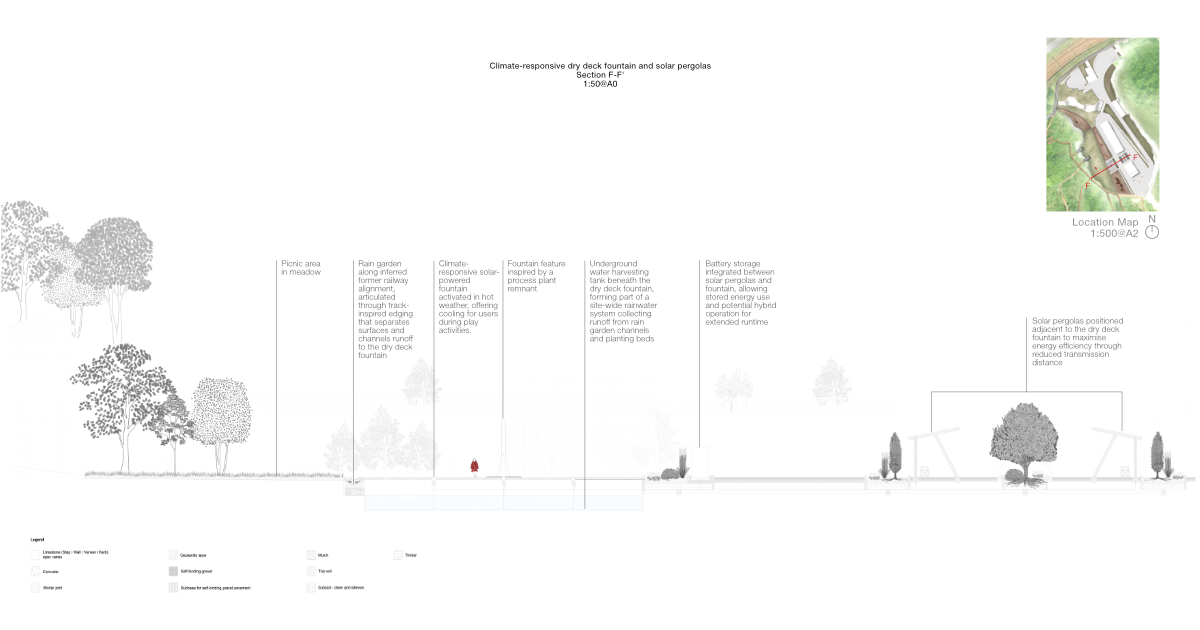
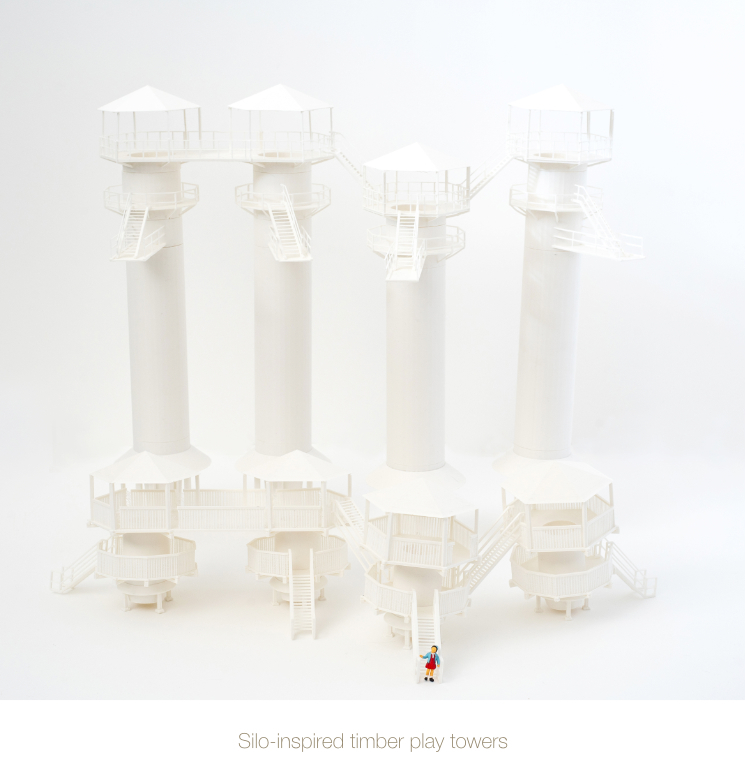
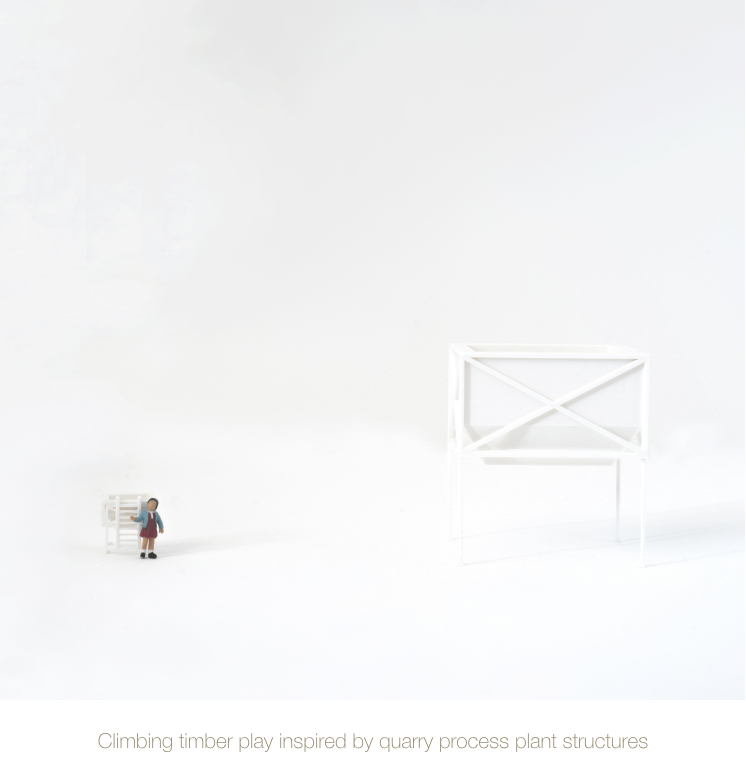
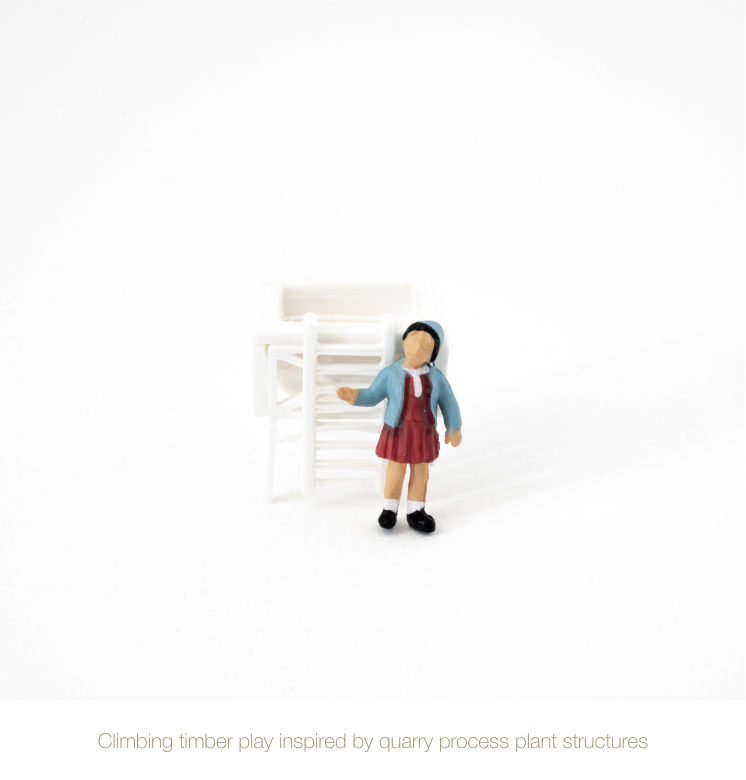
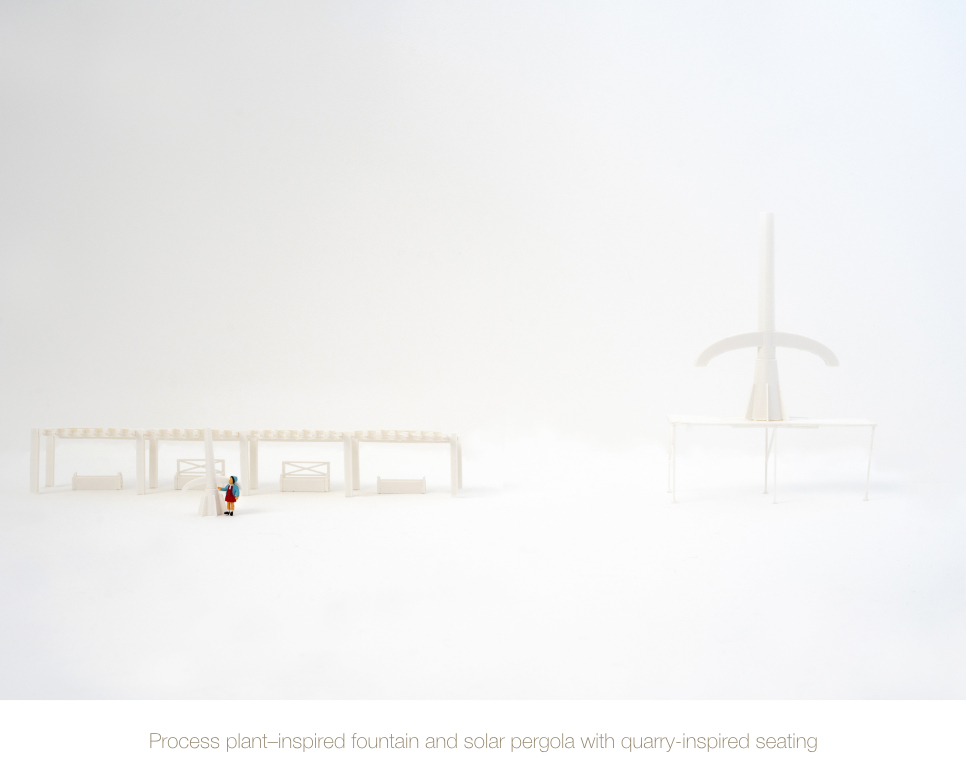
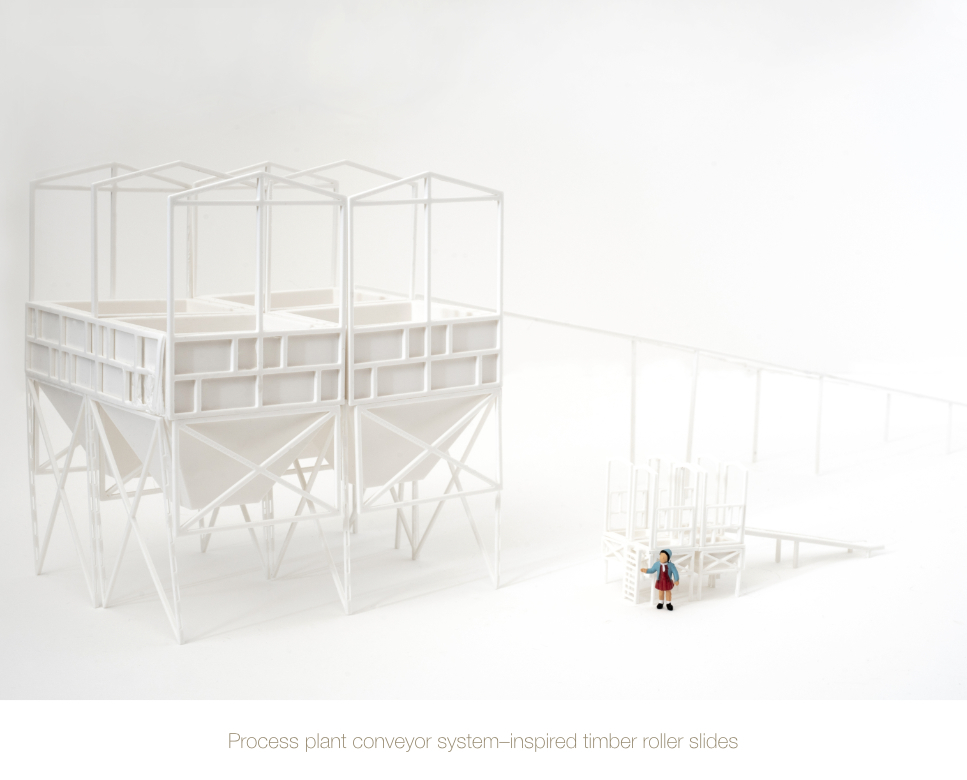
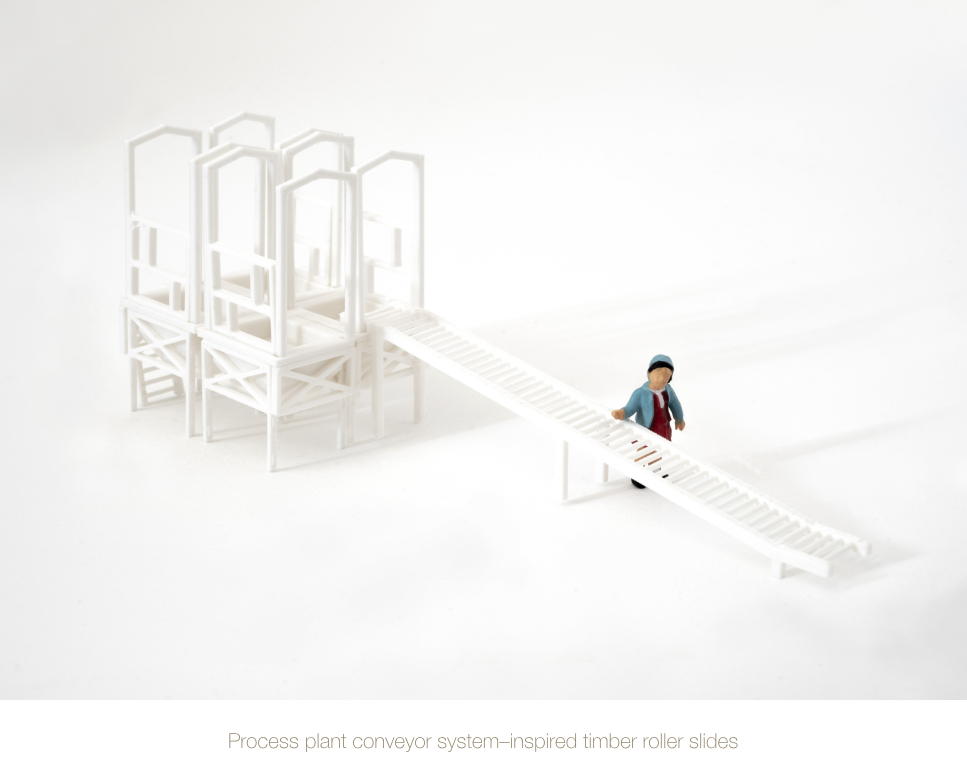
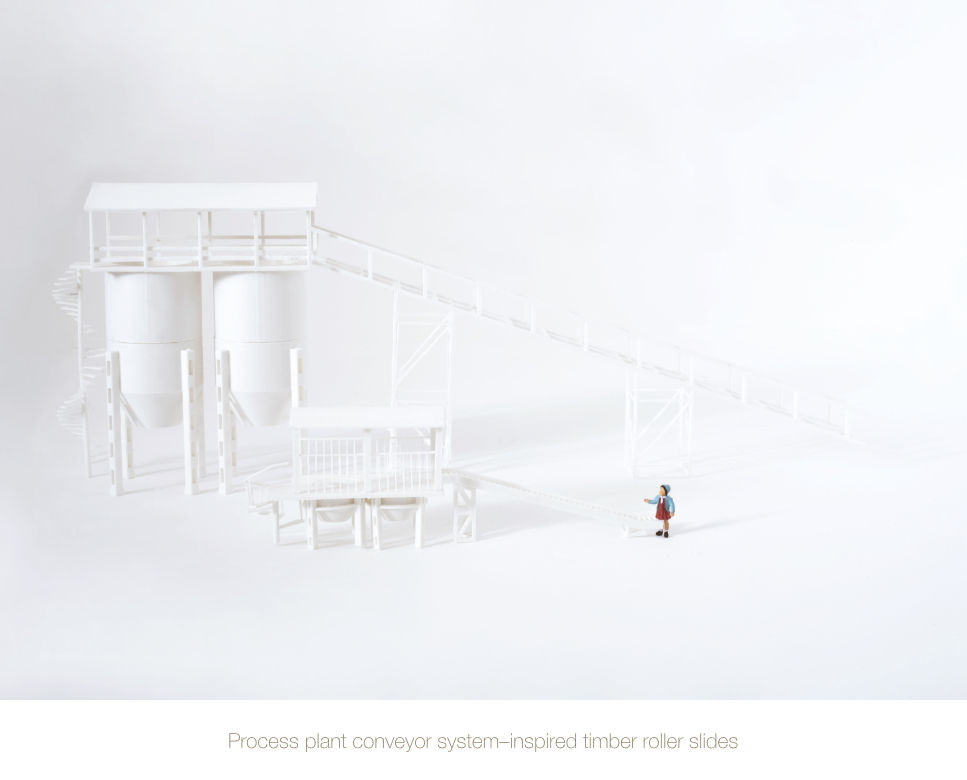
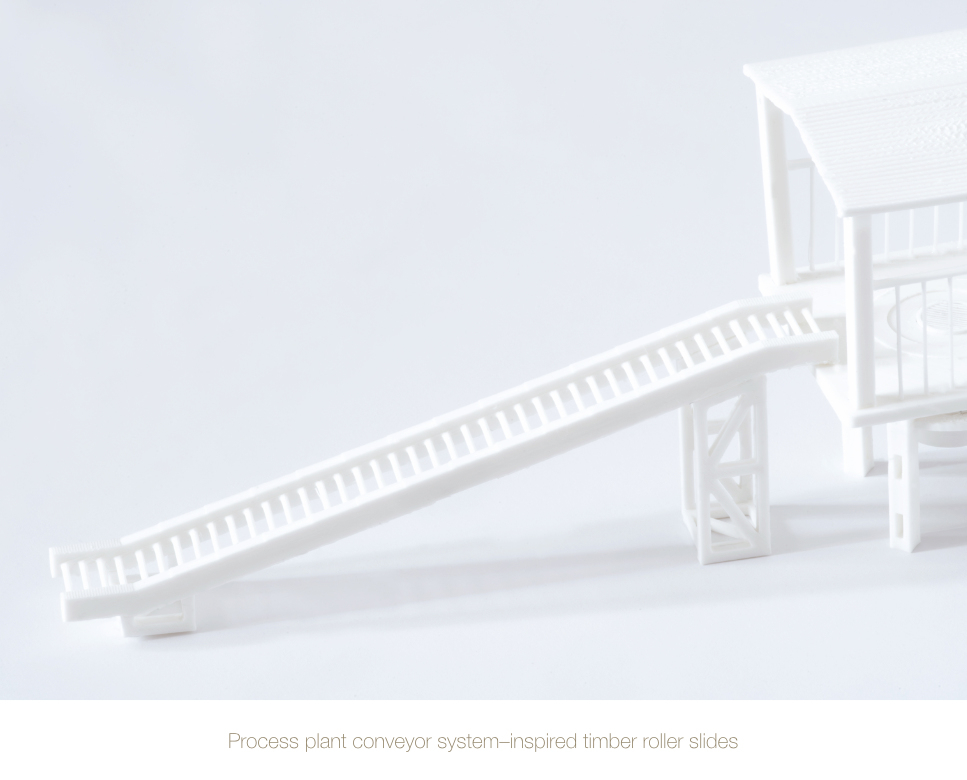
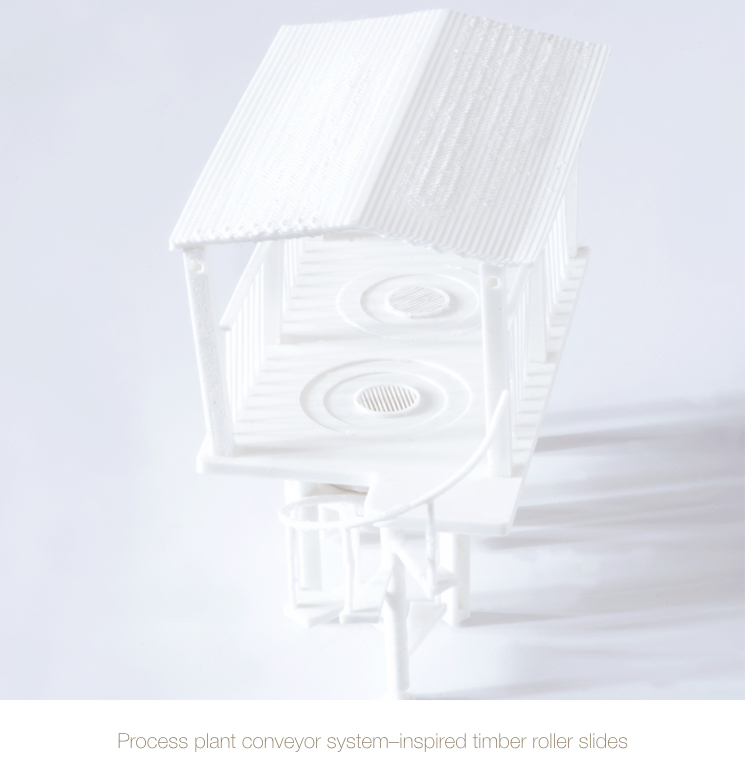
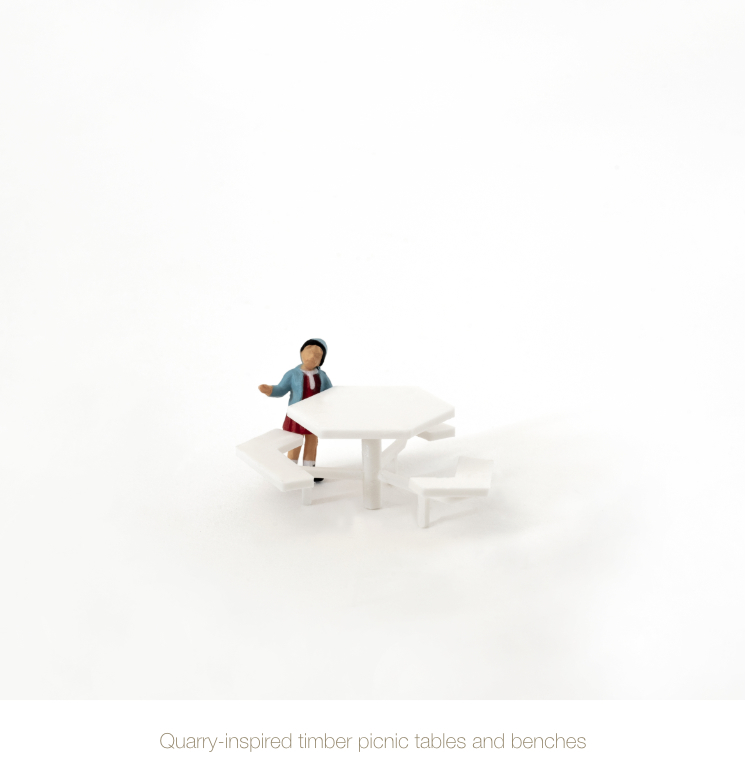
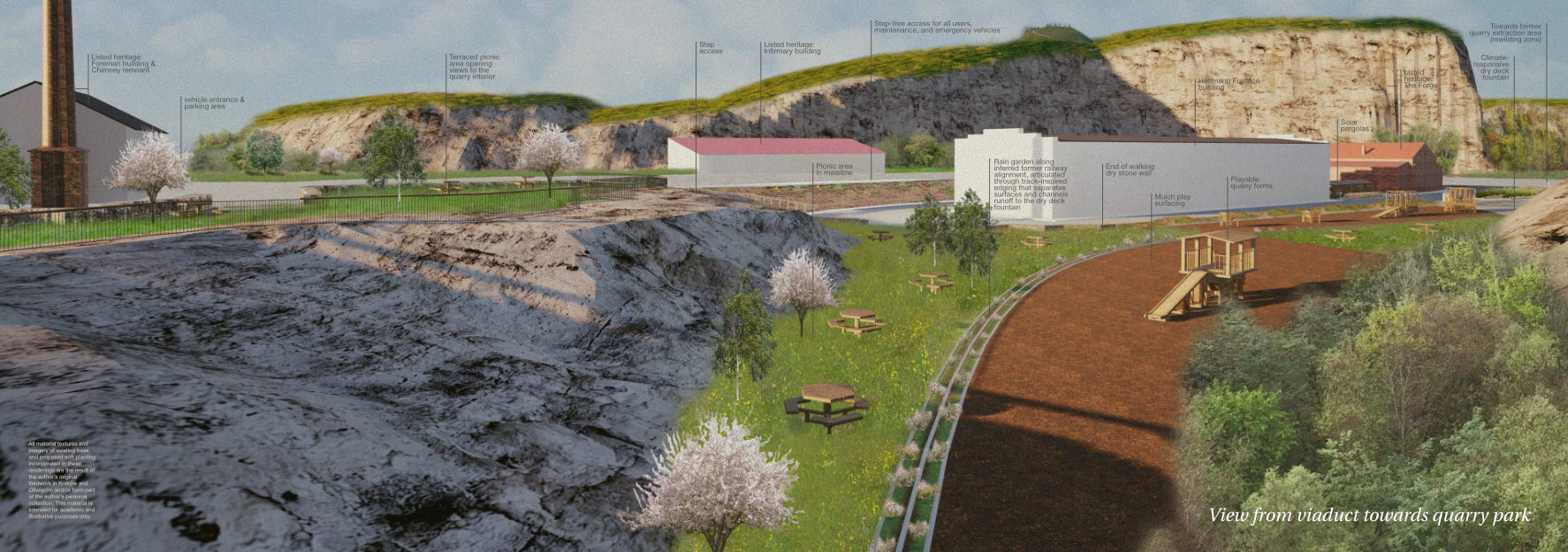
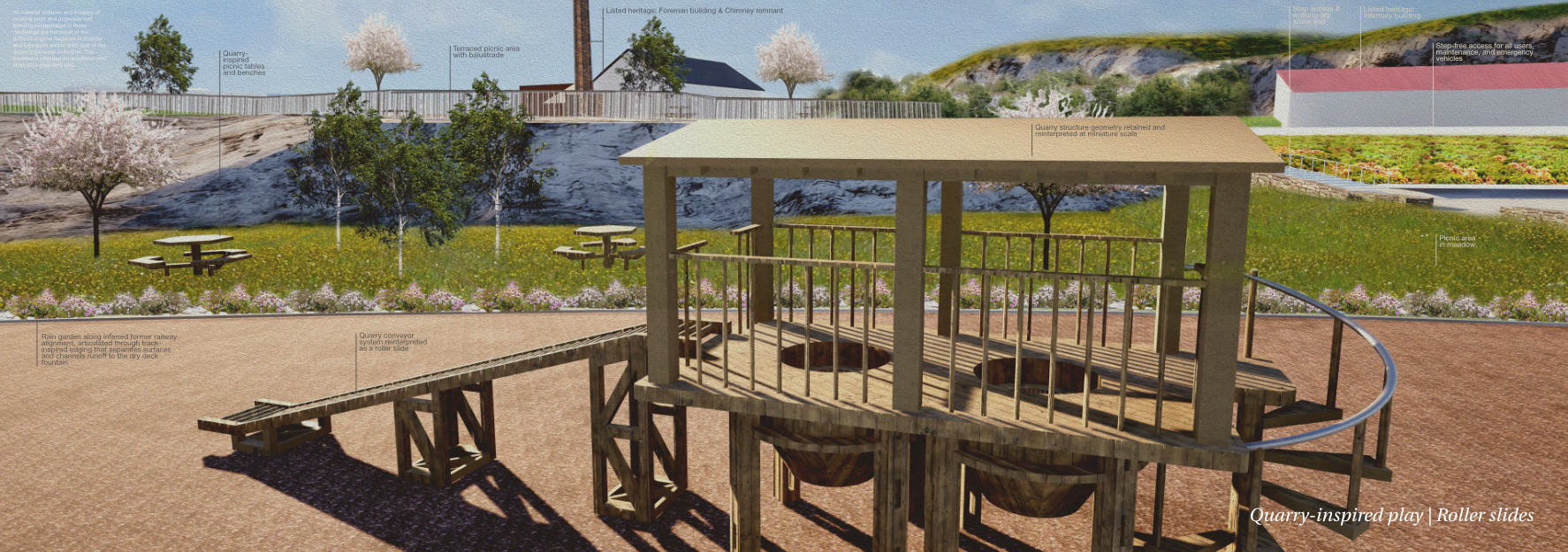
Solar pergolas provide shaded resting spaces and passive thermal comfort, while a solar-powered dry deck fountain offers evaporative cooling and interactive engagement during periods of hot weather. Quarry-inspired seating, timber play elements, and picnic furniture encourage everyday occupation and social gathering, extending the site's industrial language into contemporary landscape experiences.
The rain garden follows the presumed alignment of former quarry railway tracks, recalling the site's industrial history while functioning as part of the sustainable drainage strategy. Surface runoff is filtered and directed towards an underground storage tank beneath the fountain, enabling seasonal water reuse and supporting the park's climate adaptation objectives.
Resonant Trio: Three Ecological Routes in the Living Basin
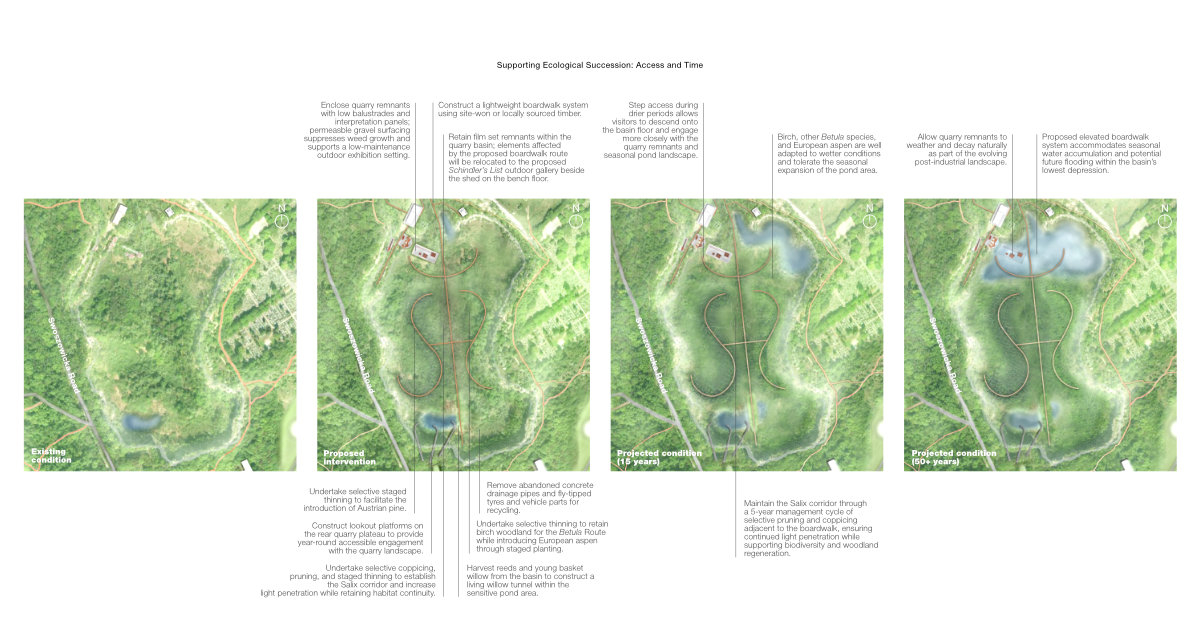
The violin metaphor is extended into the living basin through three ecological routes that guide movement while responding to the site's evolving successional landscape.
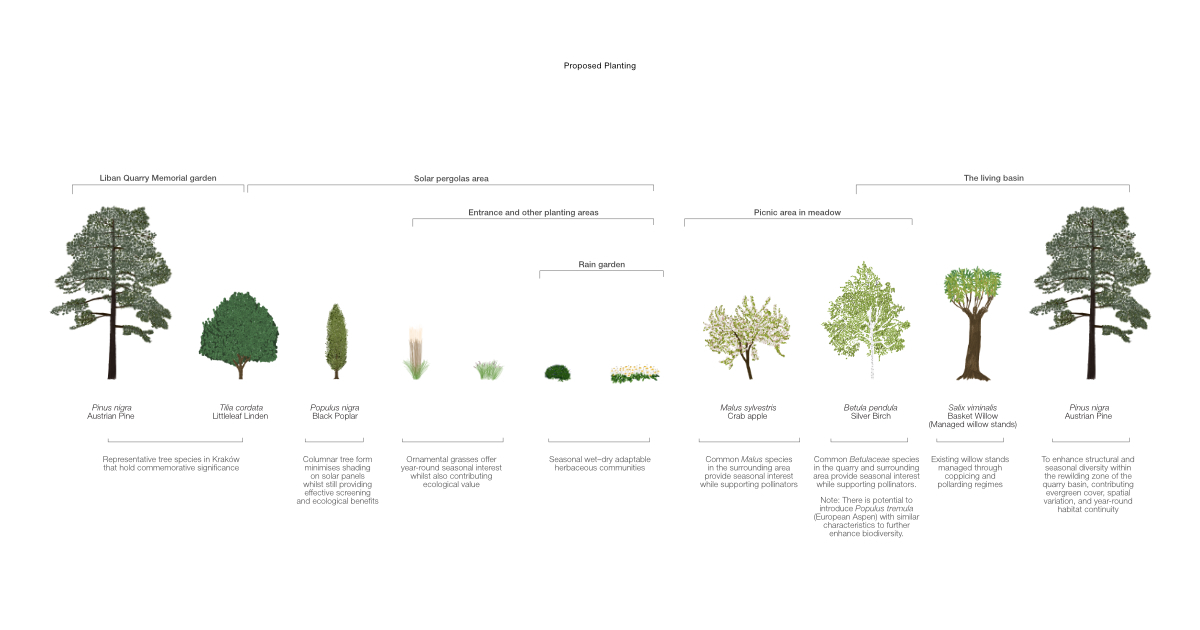
The Salix Route follows the wetter areas of the quarry basin, reinforcing existing willow-dominated habitats. Existing Salix stands are retained and managed through coppicing and pollarding to enhance habitat diversity and ecological resilience. A living willow tunnel provides a low-disturbance structure for visitors to experience sensitive pond habitats, allowing closer engagement with wildlife while minimising impacts on amphibians, odonata, and other species associated with these habitats.
The Birch Route follows areas of the quarry basin where Betula species have established through natural succession. Strengthening these existing woodland conditions, the route supports the continued development of pioneer woodland communities while responding to periodically wet ground influenced by nearby pond habitats. Movement through the birch landscape reveals the evolving relationship between woodland succession, water, and ecological change within the basin.
The Conifer Route introduces structured evergreen planting within selected areas of the basin, complementing existing successional habitats while adding a distinct woodland character. Providing year-round structure, shelter, and seasonal continuity, the route supports habitat diversity and strengthens the spatial identity of the living basin.
Instead of prescribing a fixed ecological end state, the three routes work with existing processes of succession and natural regeneration. Each offers a distinct encounter with the quarry landscape while contributing to its long-term ecological development and environmental learning.