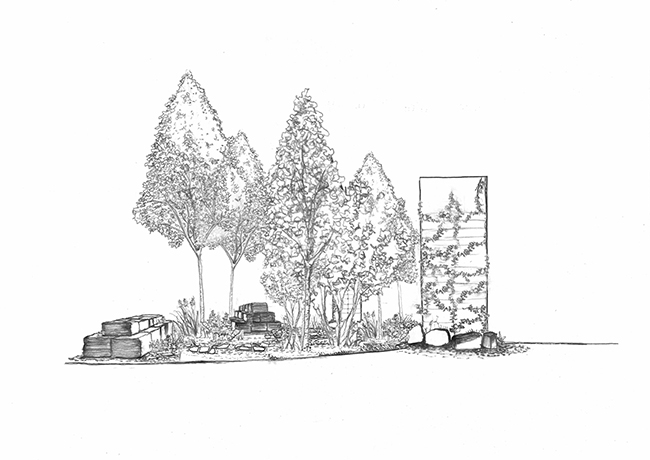
Project description

The urban collective is a community-led experimental urban garden that aims to rebuild social cohesion in the community of Anderston in Central Glasgow through the facilitation of more-than-human agency and adaptation of obsolete infrastructure.


The project proposes a central function of 'processing' as means to repurpose decaying processed materials, as well as management for adapting to increased surface water flooding in built urban areas as time-sensitive features. Said features are enabled by test plots that embraces urban plants as part of exploring the potential of urban niches as active agents of landscape management, the community of Anderston play an important role in stewarding the development of these plots through local educational programmes which also seeks to reorient the perception of urban ecology towards positive change.
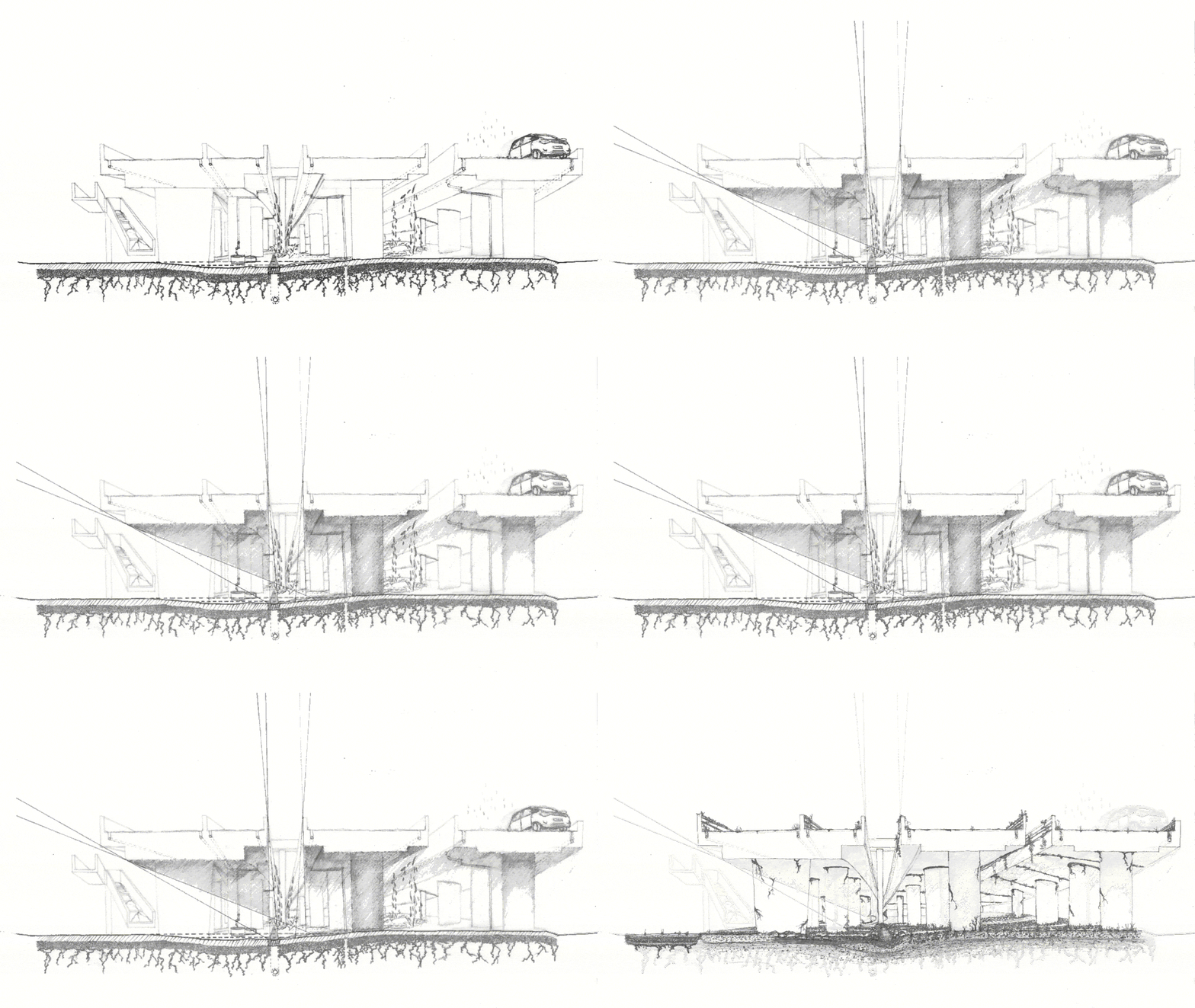
speculative emergence

The sources of drainage and run-off were identified from five locations in the underpass that contributes to accelerrated rates of flow leading to localised flooding. The main contribution comes from the increased impermeable surfaces especially elevated footbridges and flyovers that cause localised flooding.

Sun exposure in this localised depression was layered against run-off sources to identify possibility of evaporation in the flood risk area which is situated between motorway structures currently where the drainage channel is located. Sun exposure was found to be too minimal during noon when the sun is the closest and generating the most heat to trigger evaporation, whilst the evening sun hits the localised area as well but does not generate enough heat. 

The sun exposure study led to the speculation that semi-permanent flooding will occur in the concerned lowest level on site. It can be seen that impermeable paving has contributed most to increased run-off in addition to deposits from vehicles that cause further blockage in drains. With this assumption, the re-imagination of the site with decaying material and structures were painted to speculate its future with spontaneous emerging urban plants that take over impermeable structures. 

Site emergence through localised drainage flow and sunlight analysis expand
Site emergence
tearing and patching through local reclamation

Material reclamation begins from the wider decommissioning of the M8 motorway structure, using de-constructed materials to form the fabric in which defines the material language of the project. 

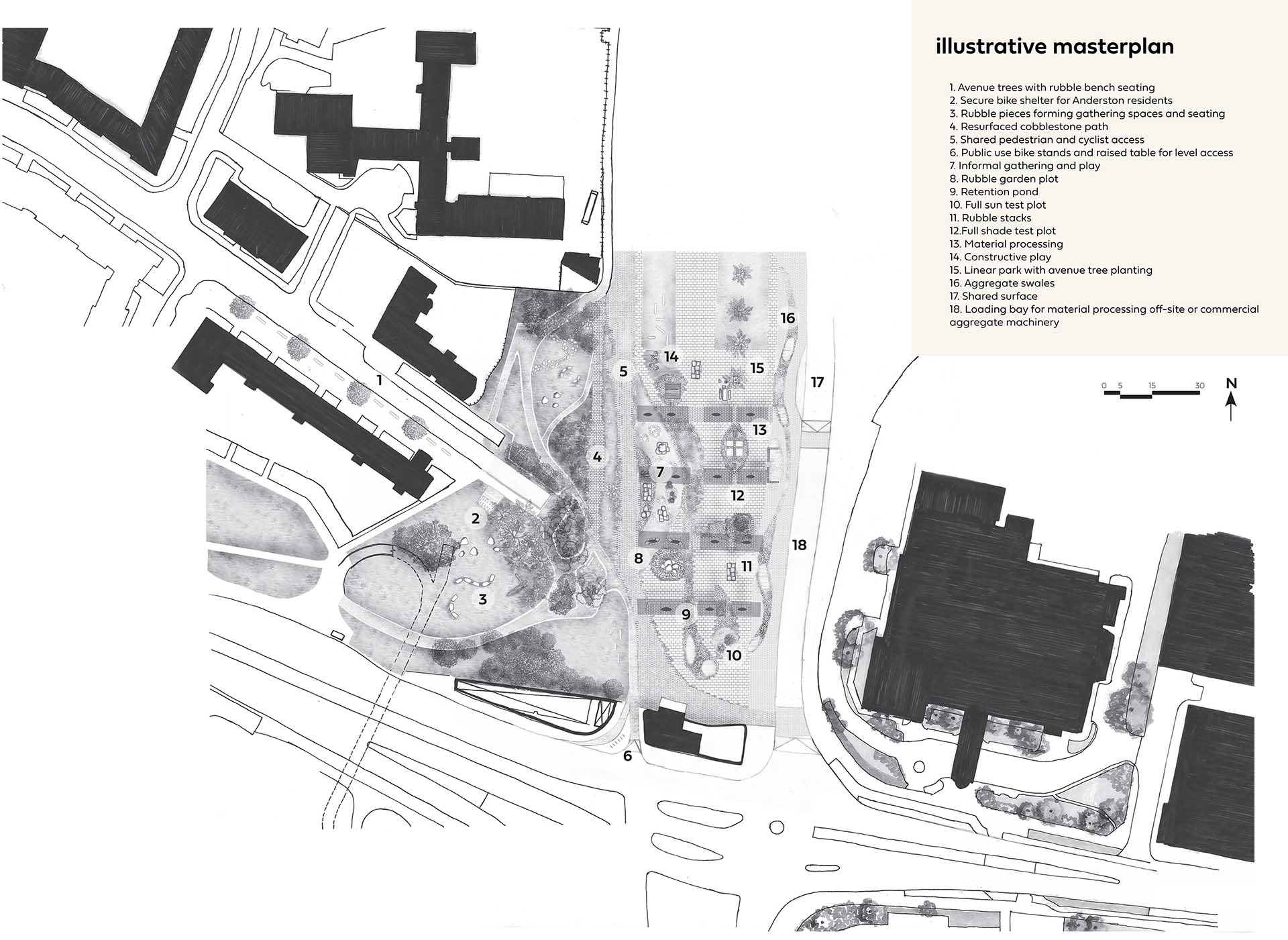
Processing is an active engagement in where the local community is invited to process crushed concrete to provide for various project uses such as planting mulch, topsoil, paving, and street furniture. 

Material intervention and emergence through redistribution of local reclaimed materials
Material intervention and emergence
 Illustrative Masterplan with legend showing programmes and key features expand
Illustrative Masterplan
urban ecology as material agency

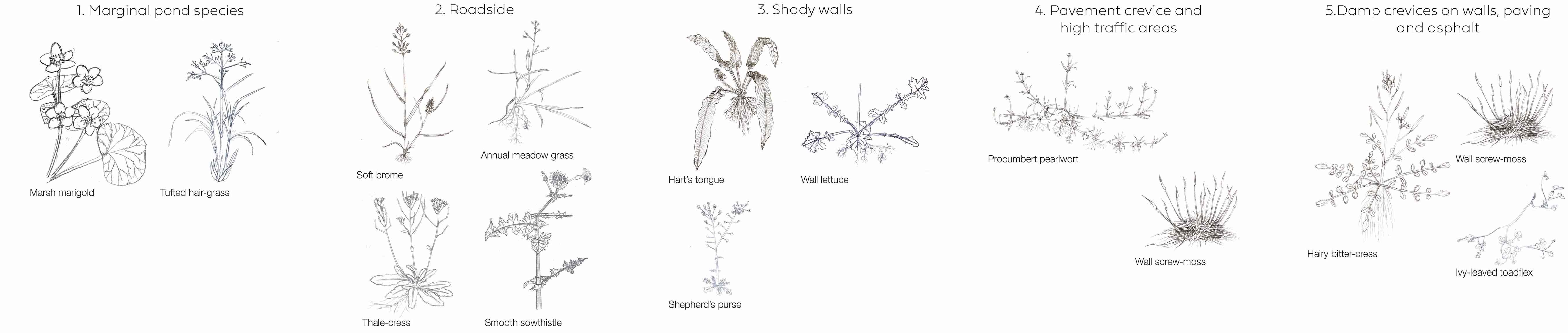
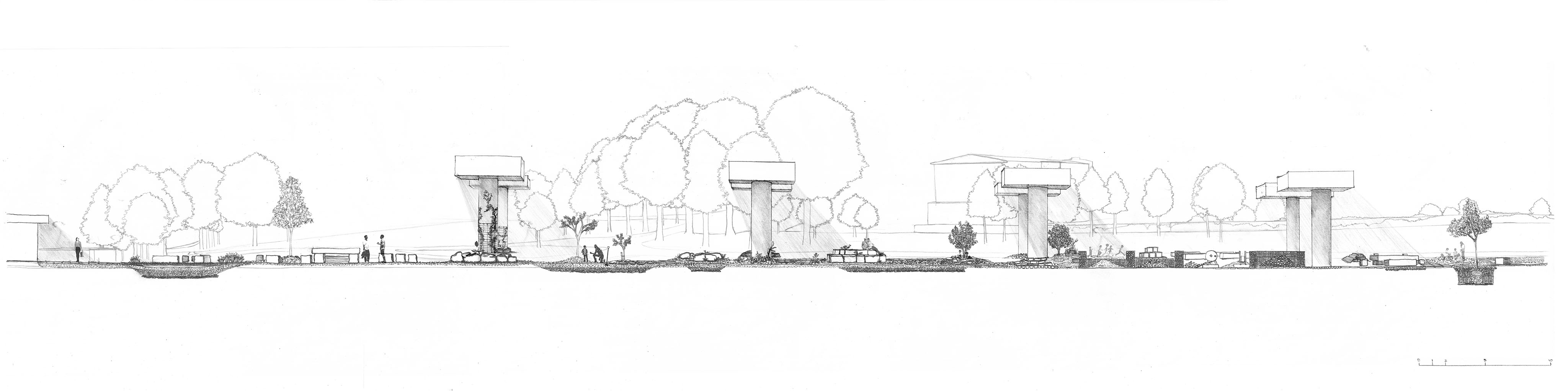
The highway infrastrucuture and reclaimed materials create unique niches which allow the flourishing of urban habitats that differ depending on soil type, mulching, sun exposure and drainage. Proposed test plots become cultivation grounds for various typologies that were speculated through the arrangement of reclaimed materials such as recycled crushed aggregates, rubble pieces, as well as retained highway structures that reshape the experience of the underpass space and encourage ecological succession in tandem with their slow deconstruction.

Urban plants habitats expand
Urban Plants Habitats
urban collective underpass section expand
urban collective underpass section
Phased interventions through multidisciplinary collaboration
collaborative interventions to spatial manifestation
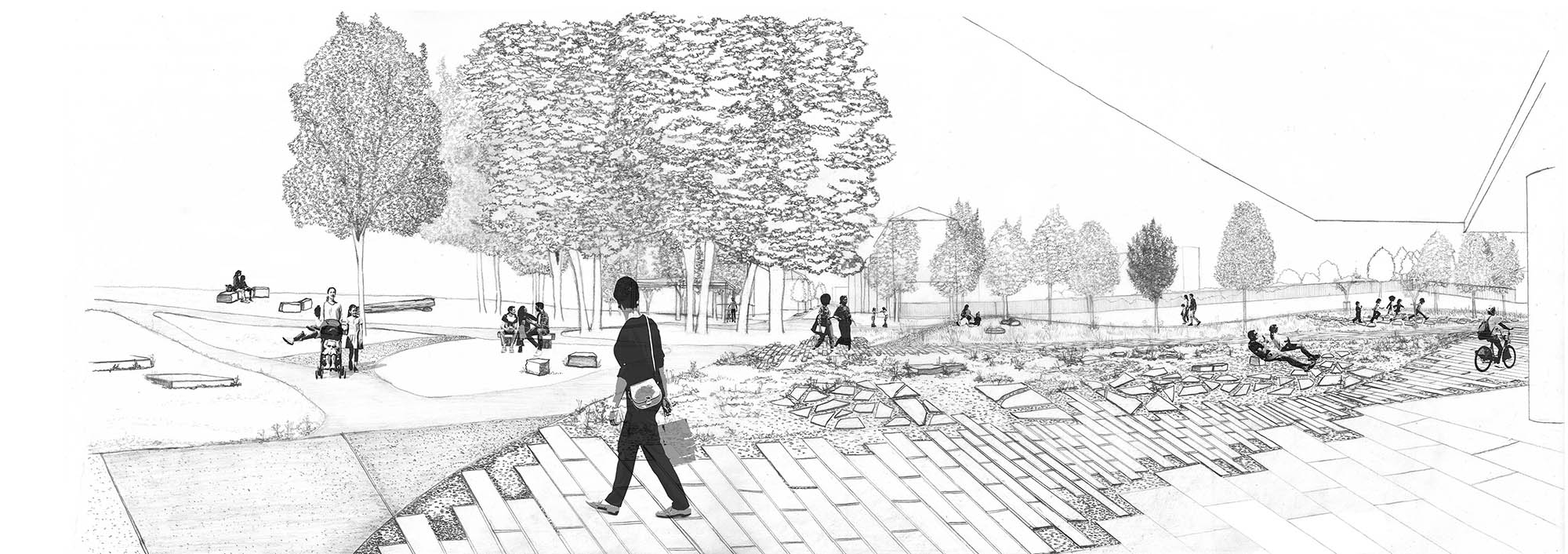
Anderston park perspective showing improved greenspace with repaved surfaces
Anderston park perspective