Project description

The mechanisation of food production (agroindustry) has led to the loss of food production as a cultural act (agriculture). This has distanced people both physically and cognitively from our food. While large-scale agriculture remains necessary to feed the world’s population, its globalisation has pushed food systems toward efficiency and uniformity, producing homogenised landscapes and increasingly tenuous supply chains. This project does not seek to replace industrial agriculture entirely, but to lessen its demand by introducing local complexity through the reimagining of agricultural components as urban infrastructure to be experienced and inhabited in everyday life. 

Reimagined in this way, food holds the capacity to do more than feed us: it can expand equitable access, reintroduce nature into our towns, and cultivate a deeper awareness of its production. Edible plants can provide habitats and social spaces for humans and more-than-humans alike, strengthen ecological resilience, and reconnect people to cyclical time through seasonal rhythms of growth and decay. In doing so, food becomes not merely sustenance, but a lens through which we might reorient ourselves toward more reciprocal ways of living.

Prestonpans, a town with a past history of market gardening, becomes a site of speculation through an imagined initiative, Fruitful Futures, which transforms the town into an edible landscape through the planting of food-producing trees across gardens, public greens, and streets. Enclosed gardens offer refuge; public greens invite collective engagement; and roadside verges form connective ecological networks. Through these layers, productive trees are reimagined not as passive landscape elements or as extractive resources, but as citizens of equal importance within the urban environment.
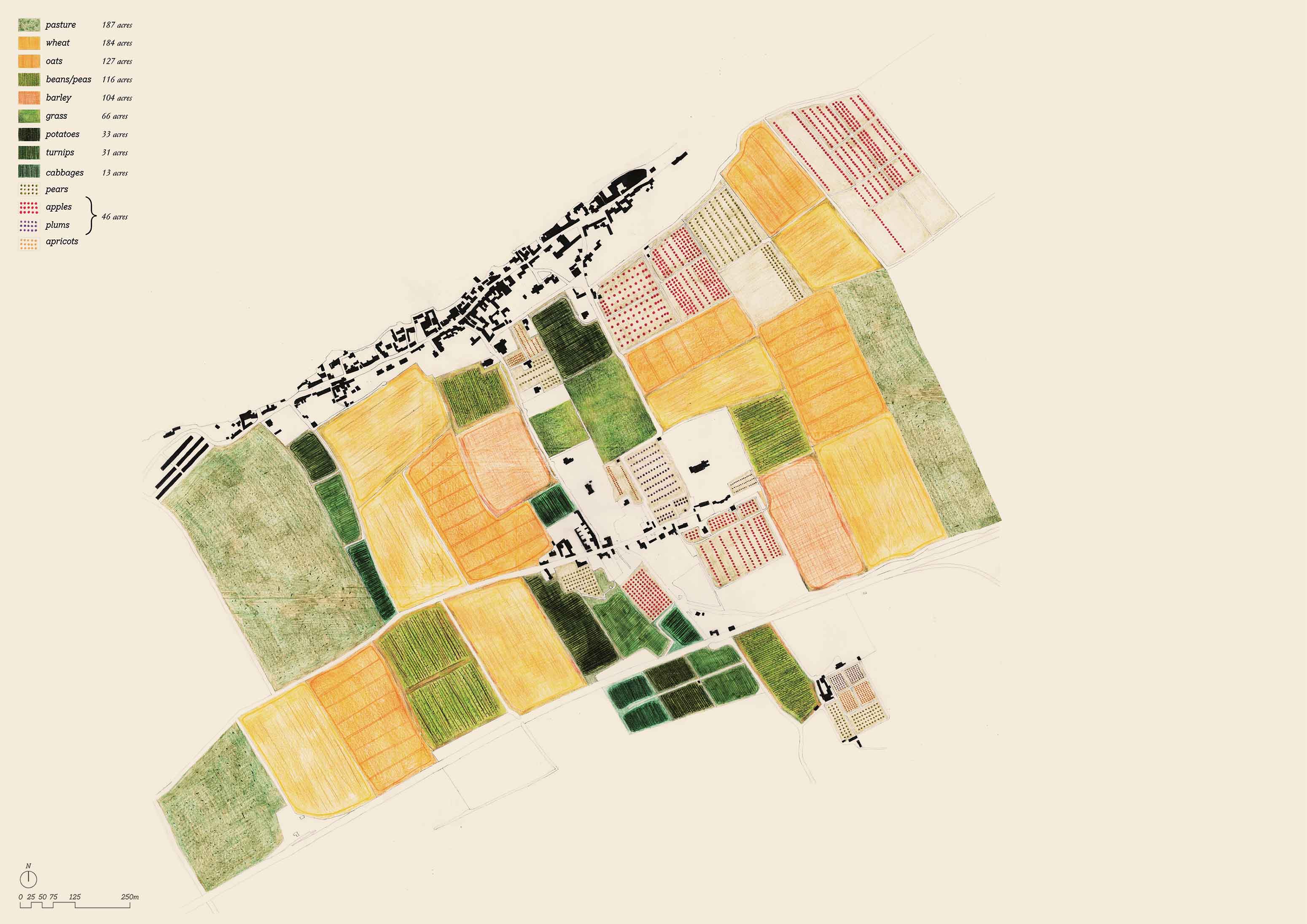
map of Prestonpans in 1894 expand
'A Prolific Past' - map of Prestonpans in 1894
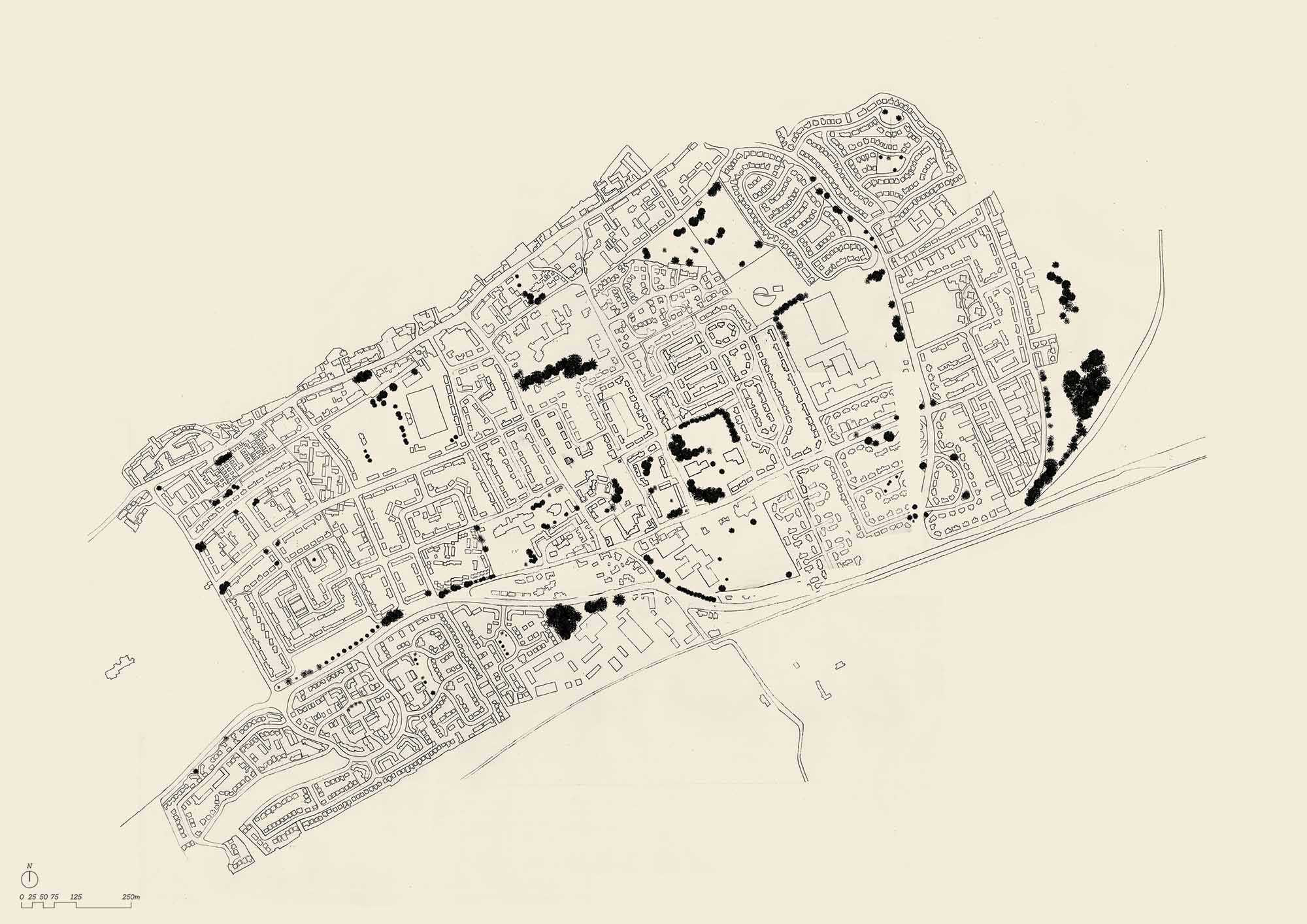
map of Prestonpans in 2025 expand
'A Sparse Present' - map of Prestonpans in 2025
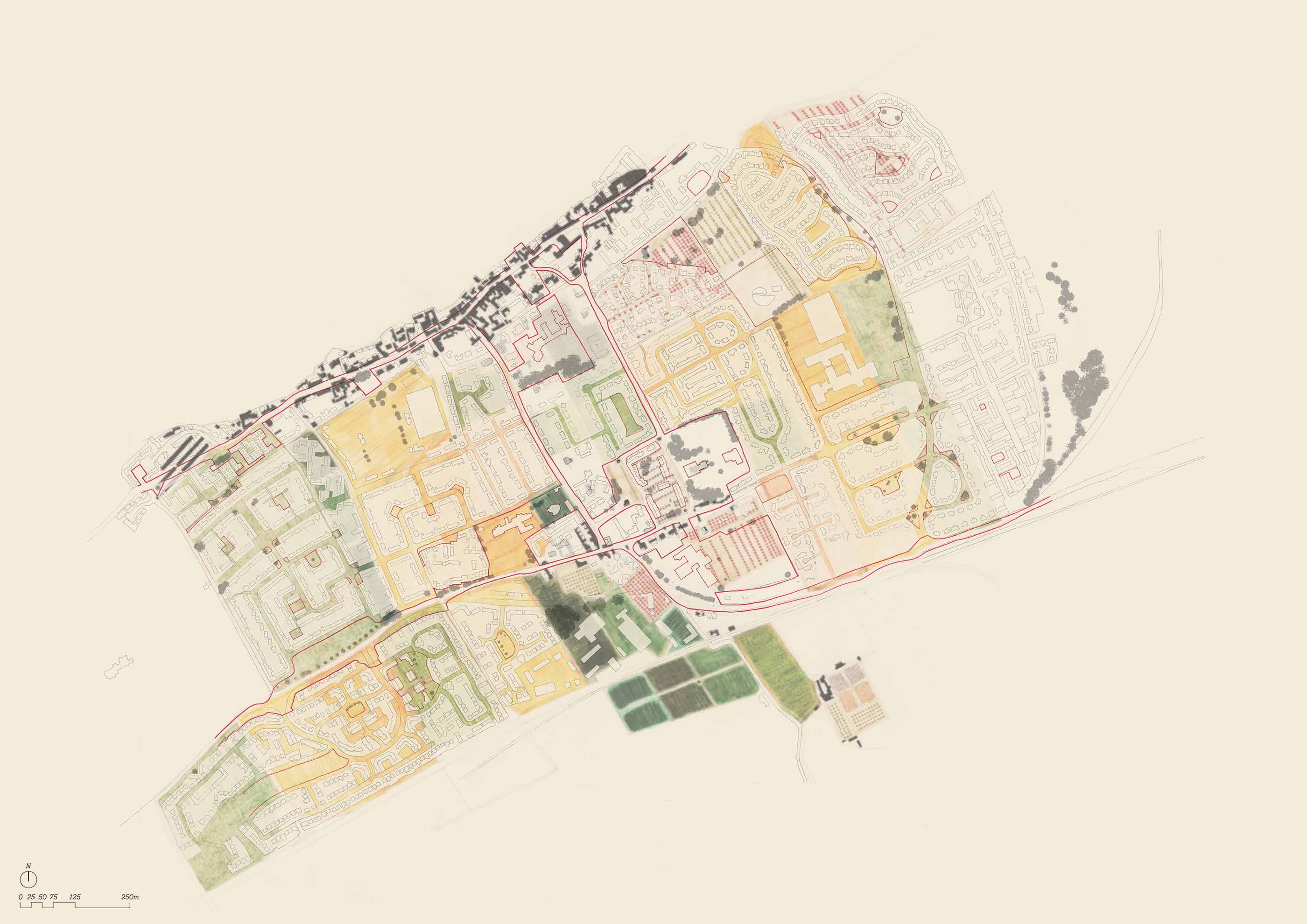
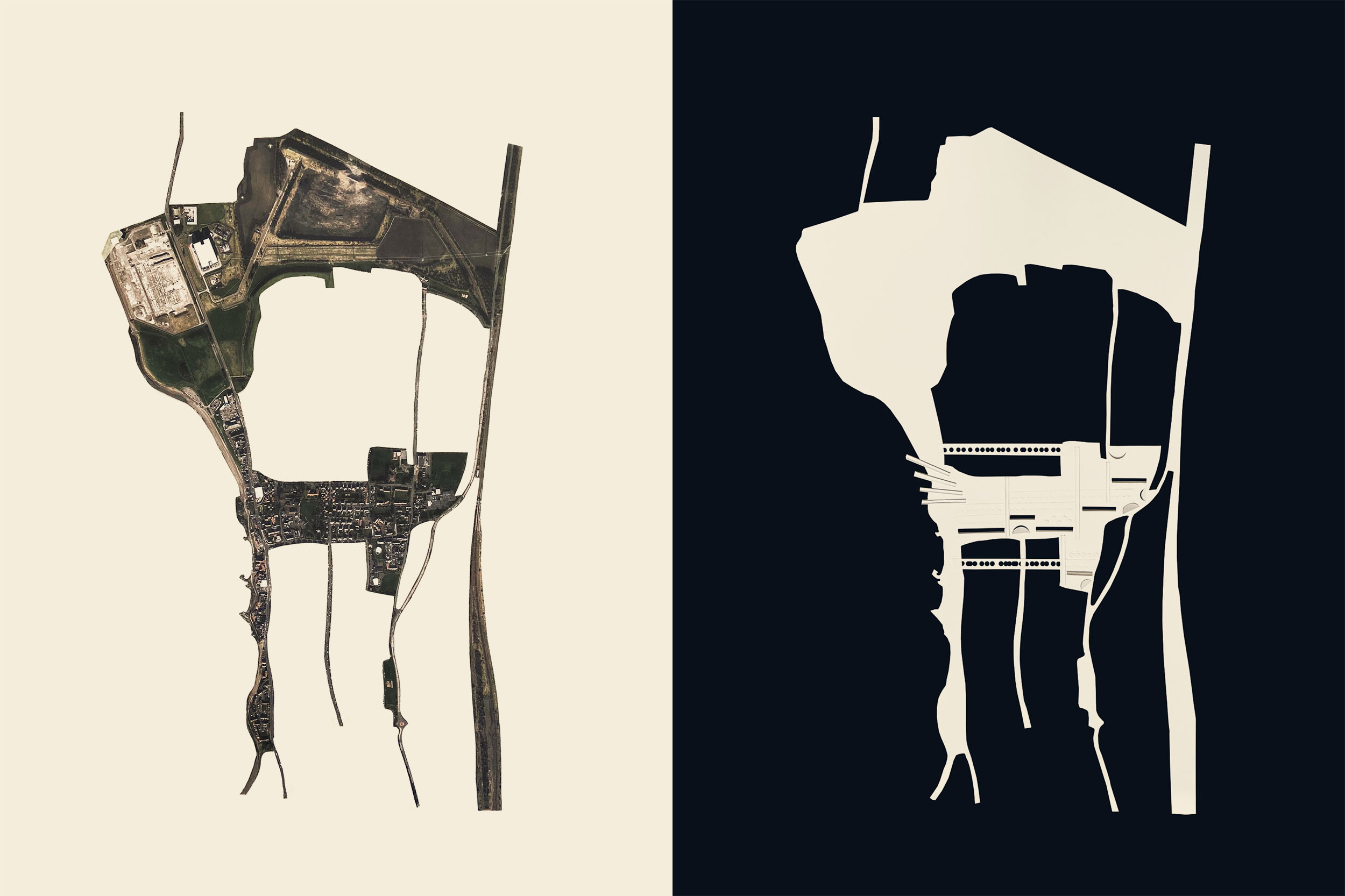
map of 1894 and 2025 superimposed expand
'From Self-Sufficient Borough to Globalised Suburb'
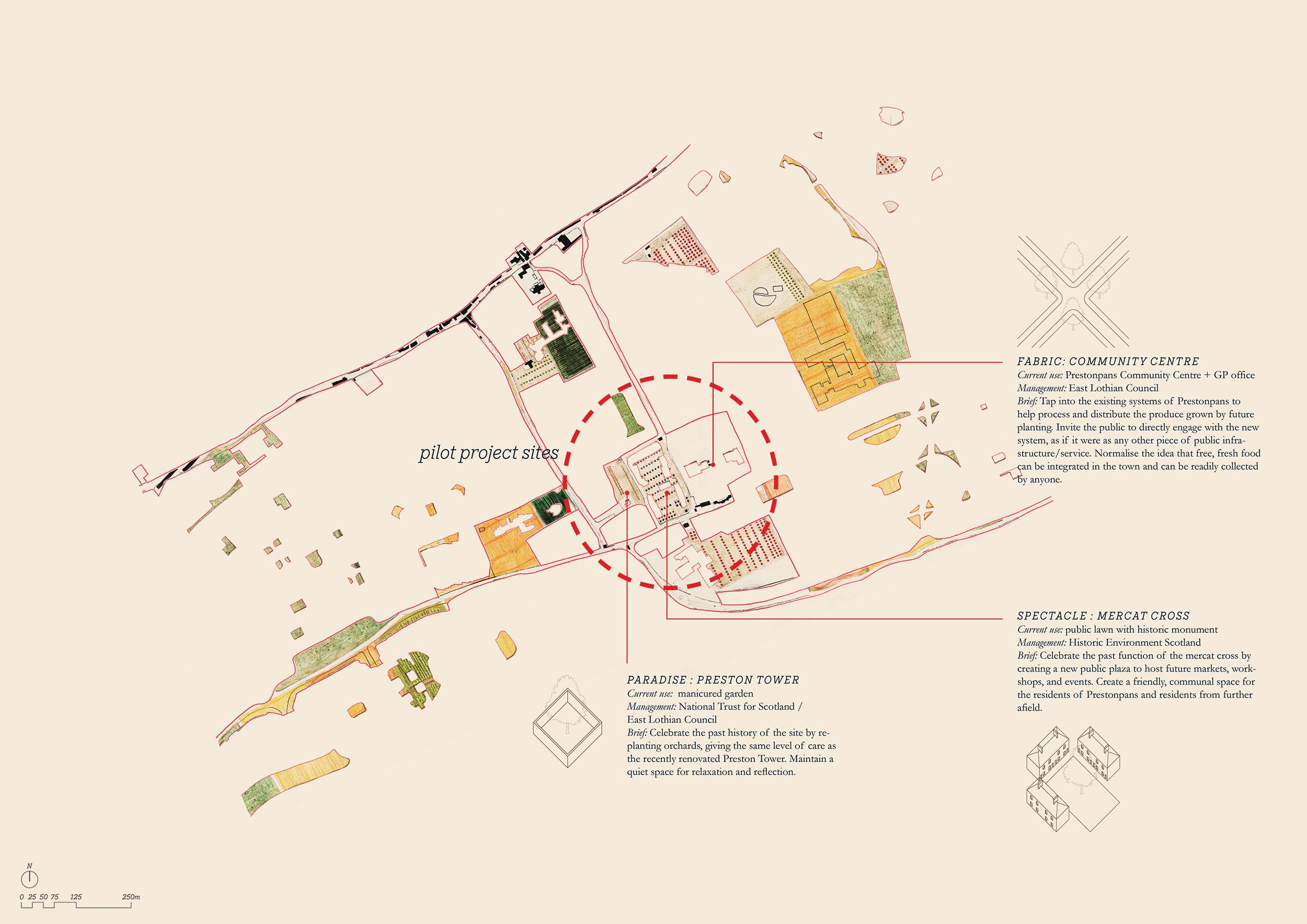
framework for Fruitful Futures, using Paradise, Spectacle, Fabric typologies expand
'Finding Potential Through Superimposition'
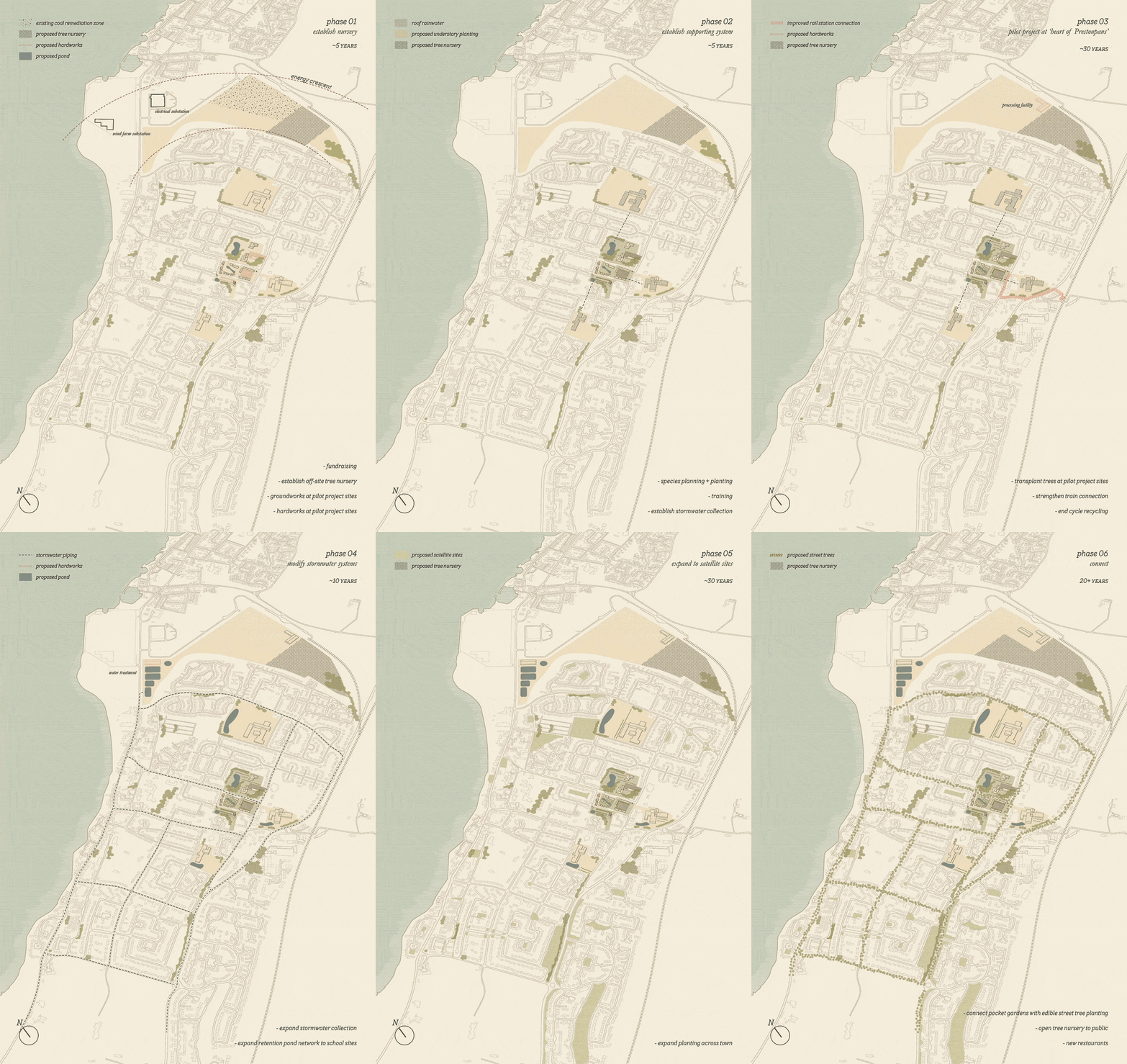
phasing diagrams
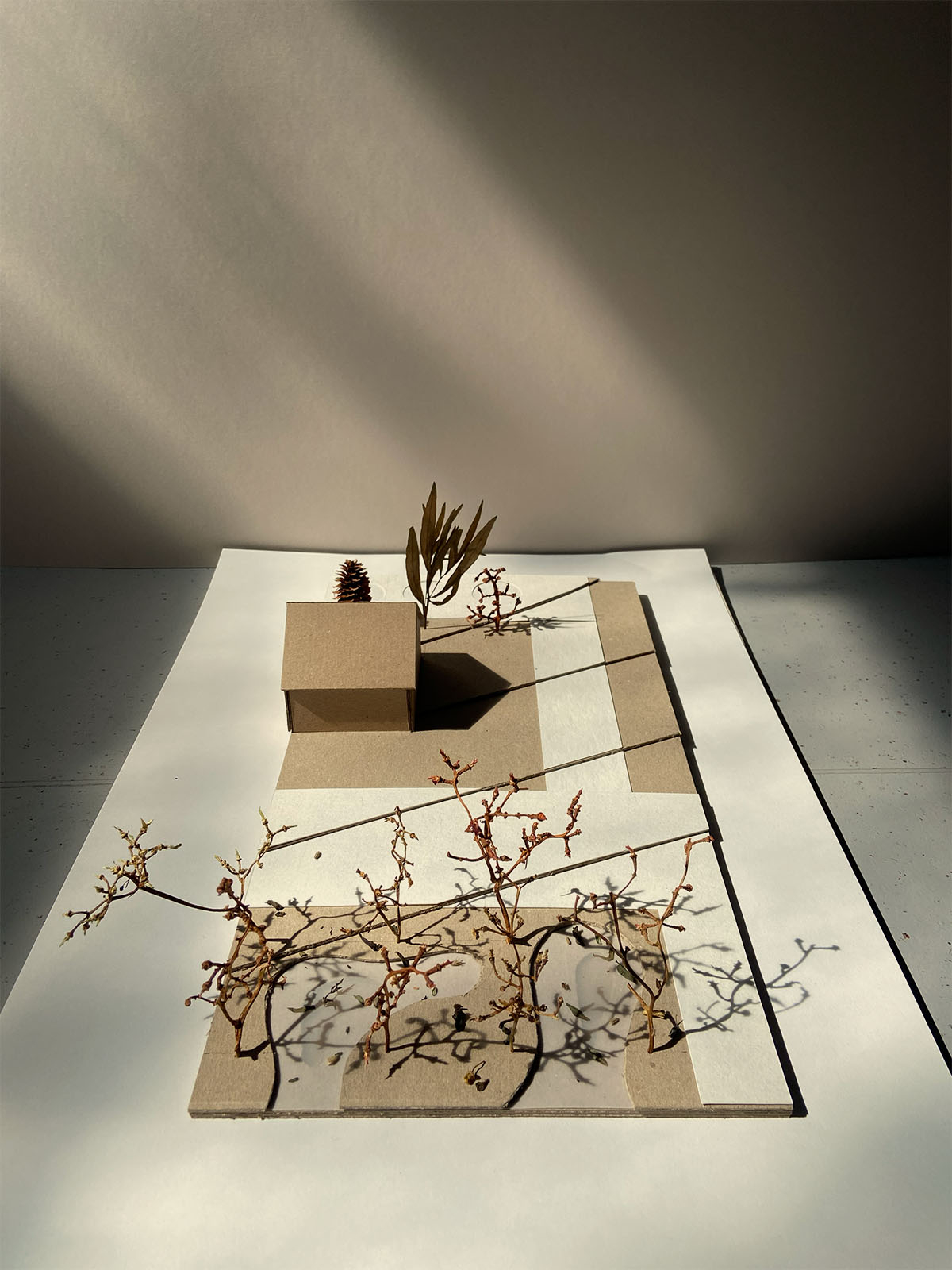
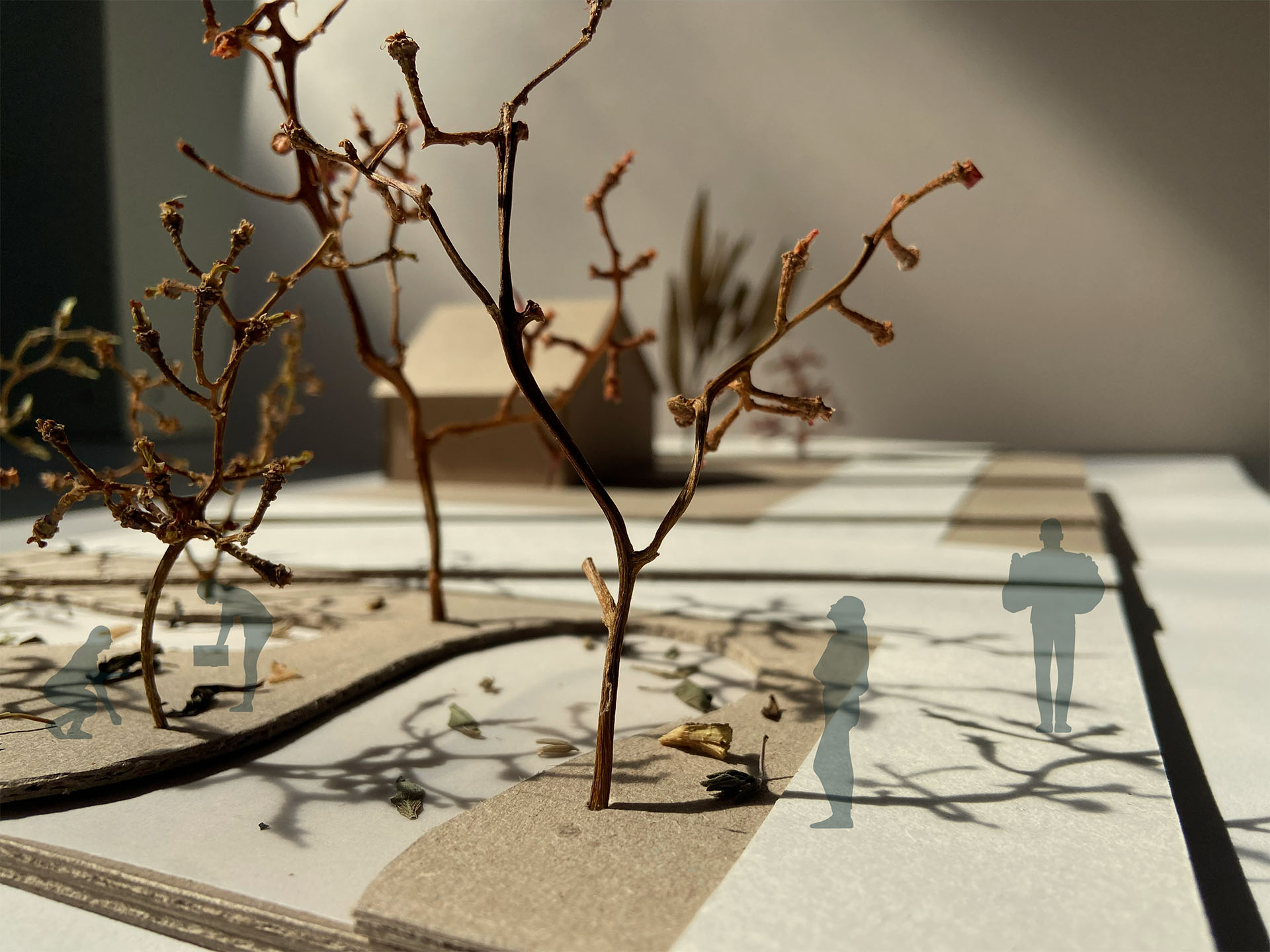
concept model demonstrating main design strategies
'Protecting, Redirecting, Collecting' - conceptual model demonstrating main design strategies
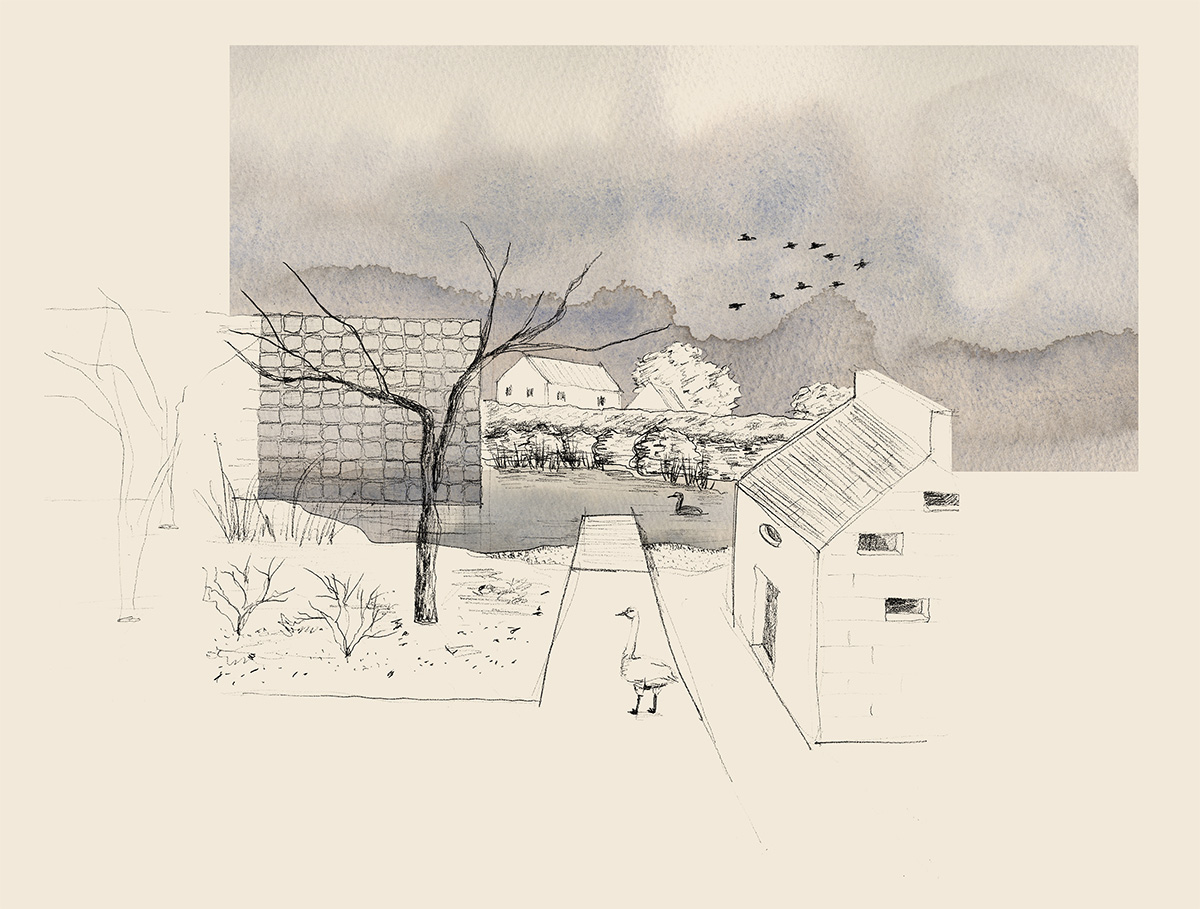
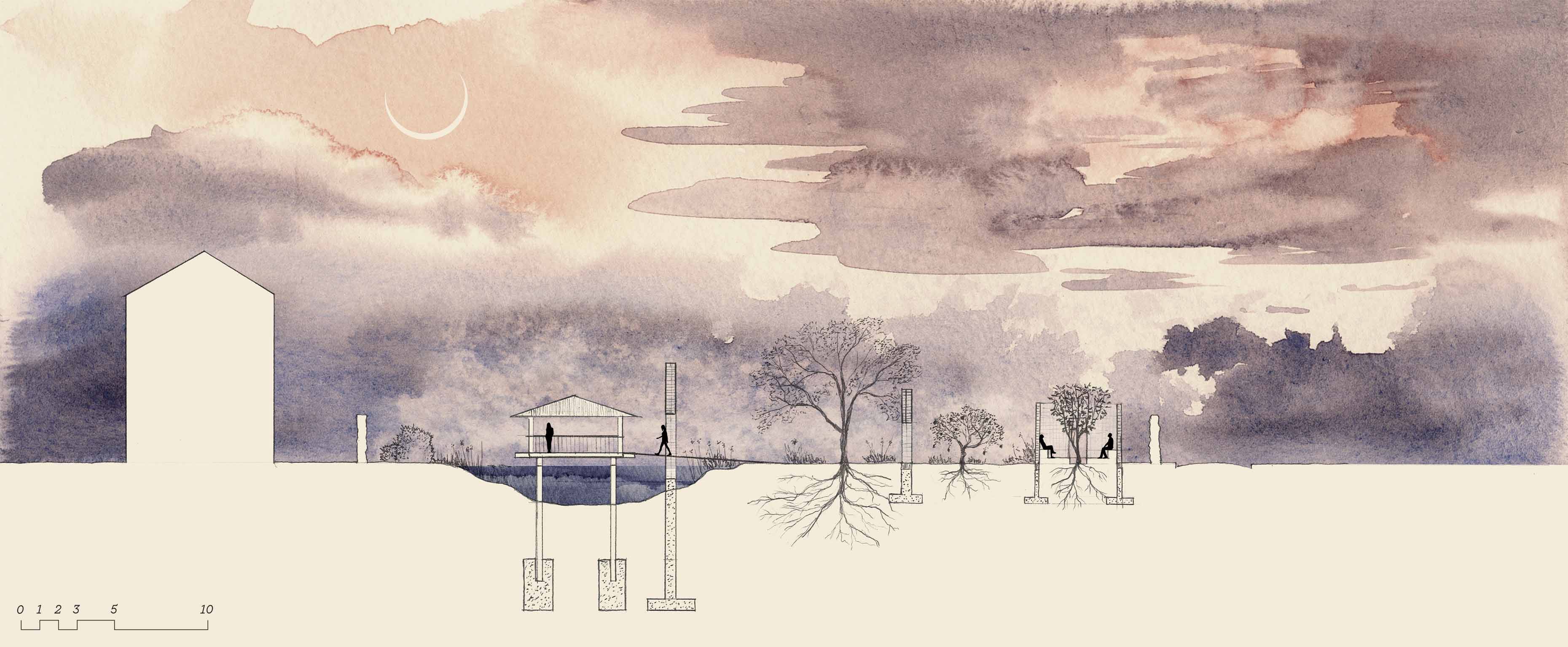
section through Paradise garden expand
Section through 'Paradise' garden
One-to-One

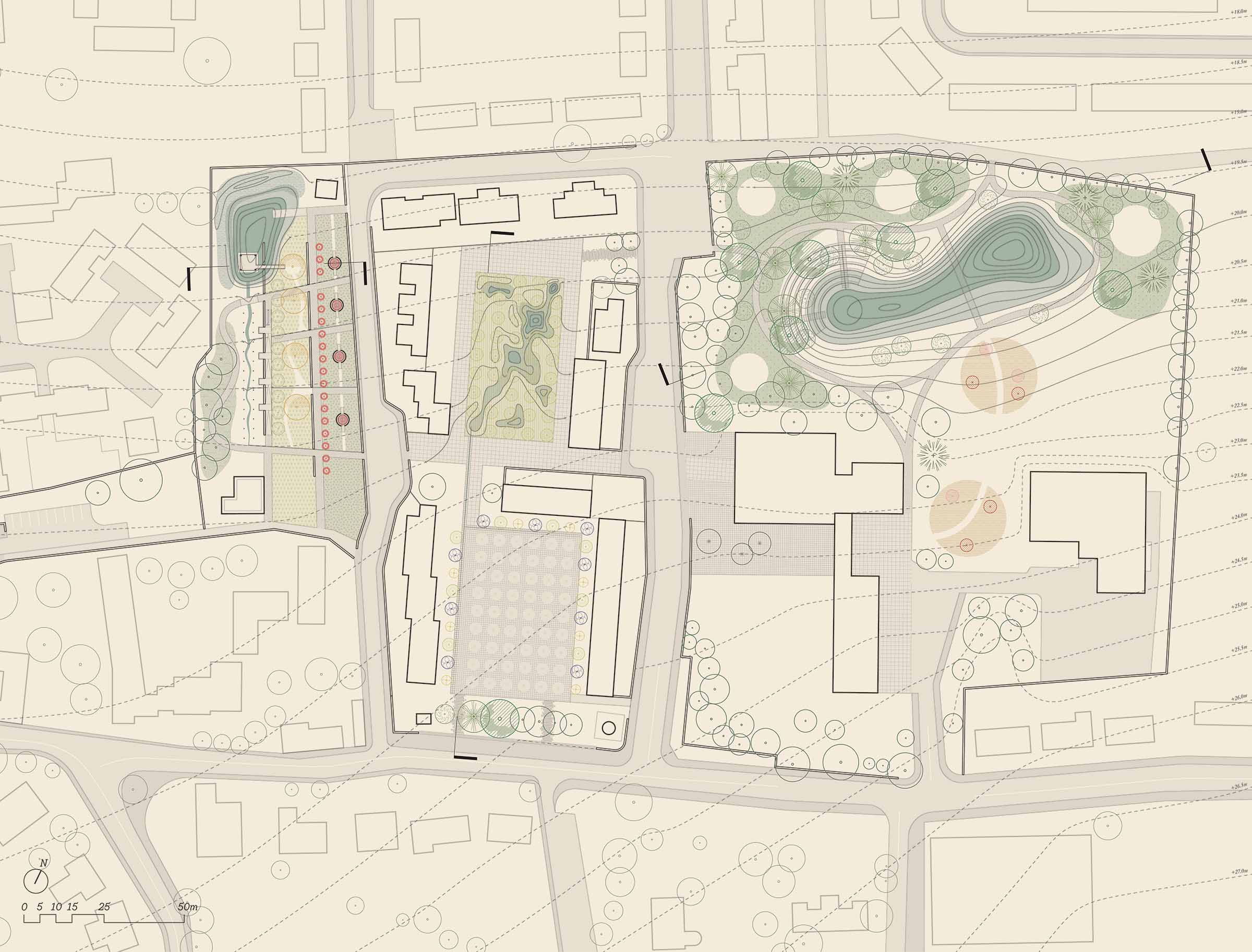
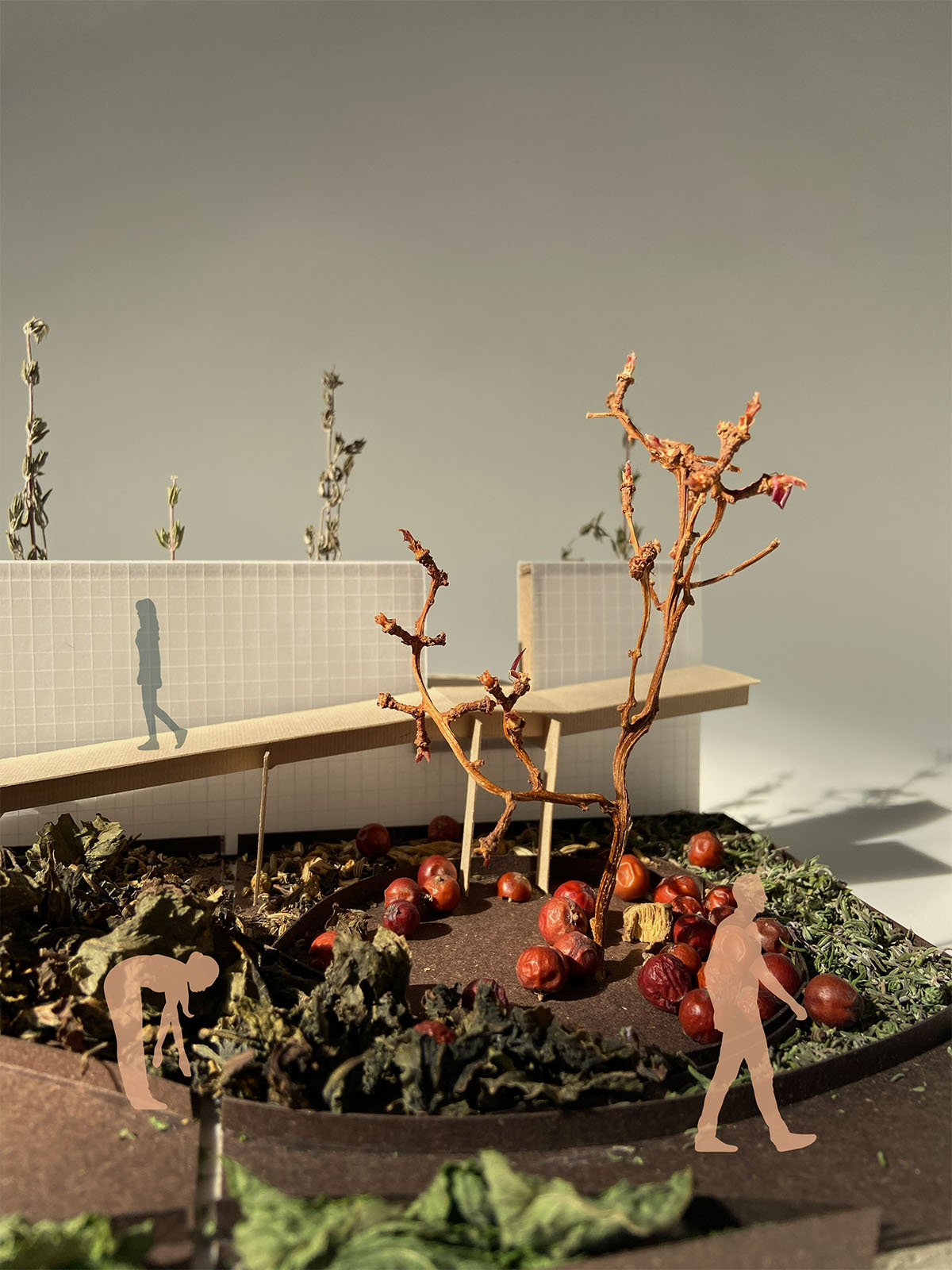
Small rills, following the natural topography of the site, collect rainwater in a pond in the lower corner. Not only does collecting and storing rainwater on site improve the local air moisture content, but the pond acts as a heat sink, absorbing heat during the day and releasing it after temperatures drop at night.

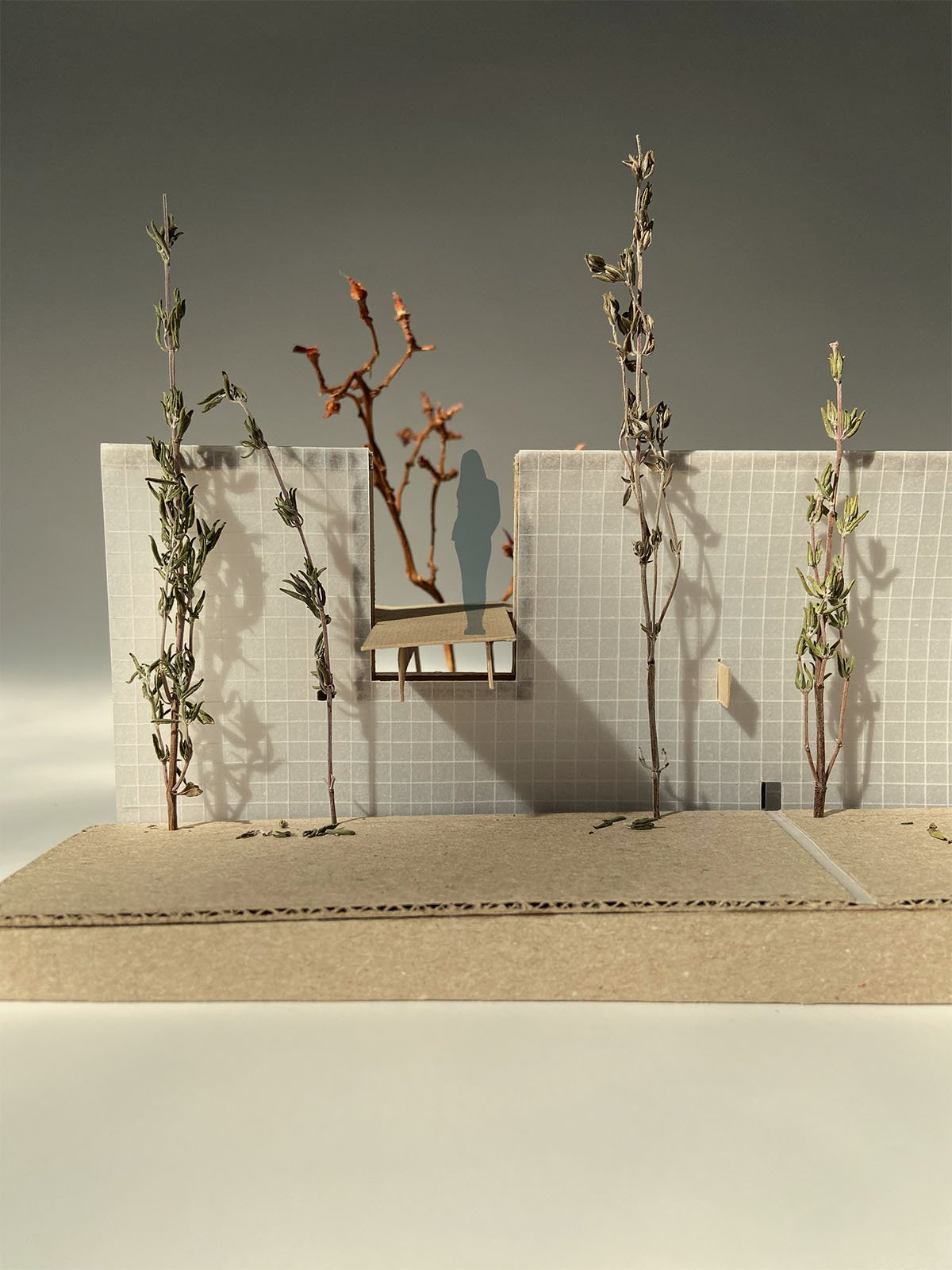
Proposed glass block walls protect trees from wind while still allowing light to pass. When the sun hits directly, they also provide some heat retention. These microclimatic changes help support more delicate trees that may not normally survive Scottish climates.

In addition to serving a climatic use, the proposed wall structures invite people to get closer to these productive trees. An elevated walkway against the wall allows people to walk alongside trees at the canopy level to gain a new perspective, also assisting in accessing fruit during harvesting. Smaller enclosures act similar to greenhouses, focusing the heat within to support more exotic fruit trees, like Ficus carica. Benches within the perimeter allow for people to linger inside the ‘greenhouse,’ having a one-on-one experience with the tree.

site plan of pilot project expand
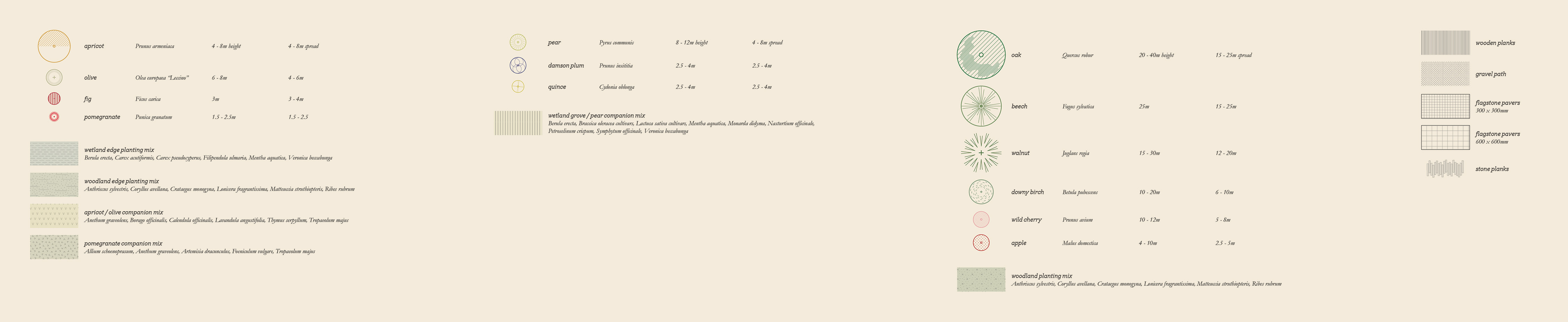
legend for site plan expand
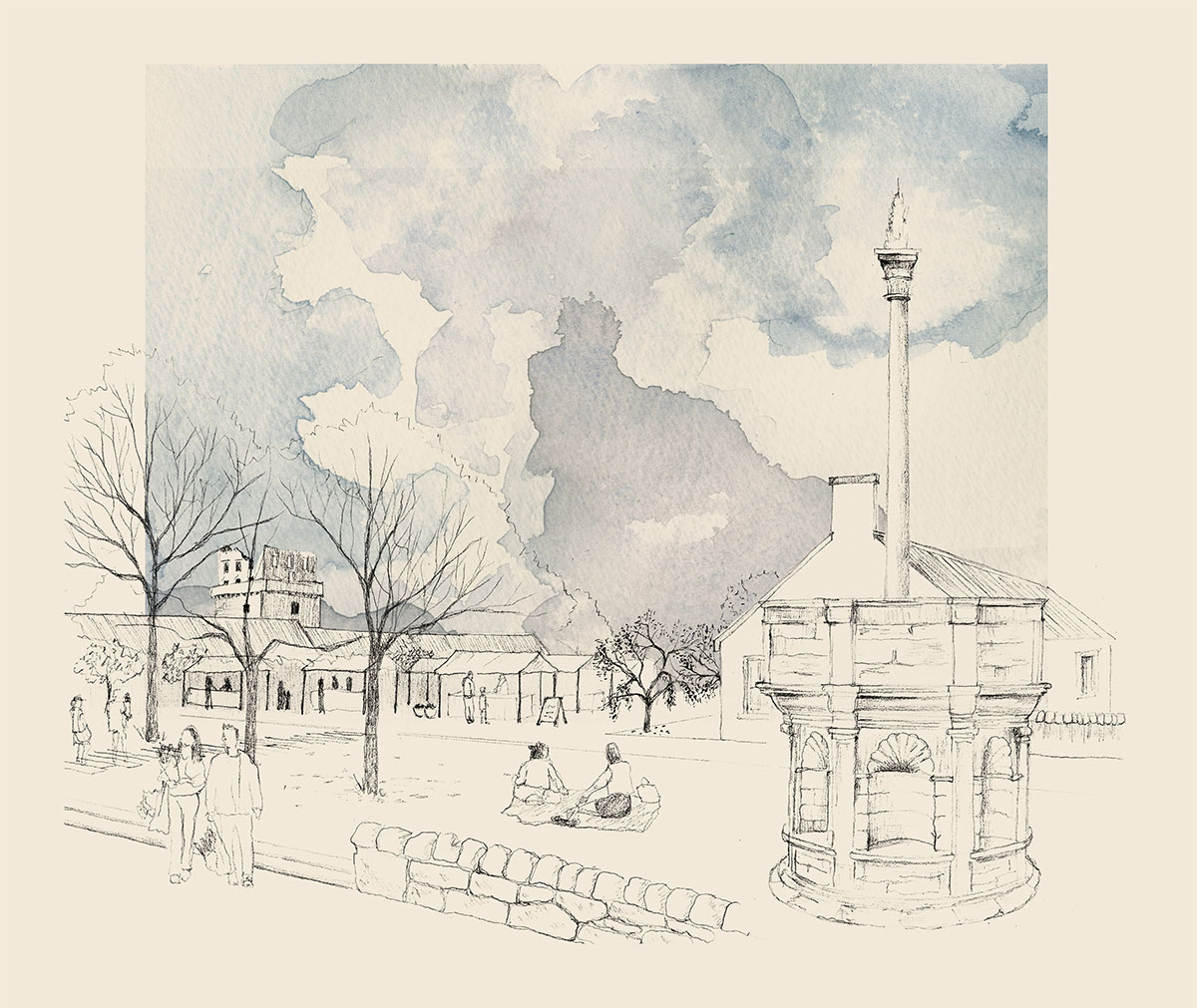
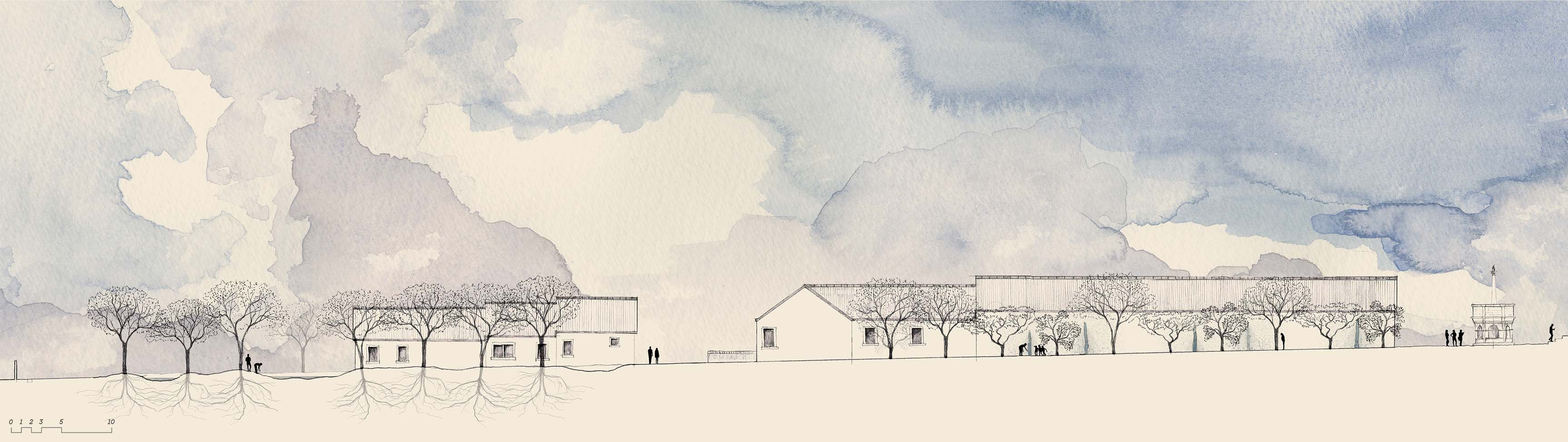
section through Spectacle garden expand
Section through 'Spectacle' garden
Honouring the Past + Testing for the Future

Nestled between two historic monuments, this underutilised public lawn has great potential to serve as an edible commons, while paying homage to its past. The southern lawn, closest to the Mercat cross, becomes an open plaza, flanked on all sides by fruit trees. Here, a local produce market is reinstated where goods were once traded centuries ago. Because this market would be seasonal, the plaza can be used for other various events.

In contrast, the northern lawn becomes the inverse of the plaza typology. Instead of a centre for people with trees at the edges, the northern lawn becomes a grove of trees at the centre with circulation around the perimeter. Here, the focus is on the trees as a testing ground involving both professional and educational research.

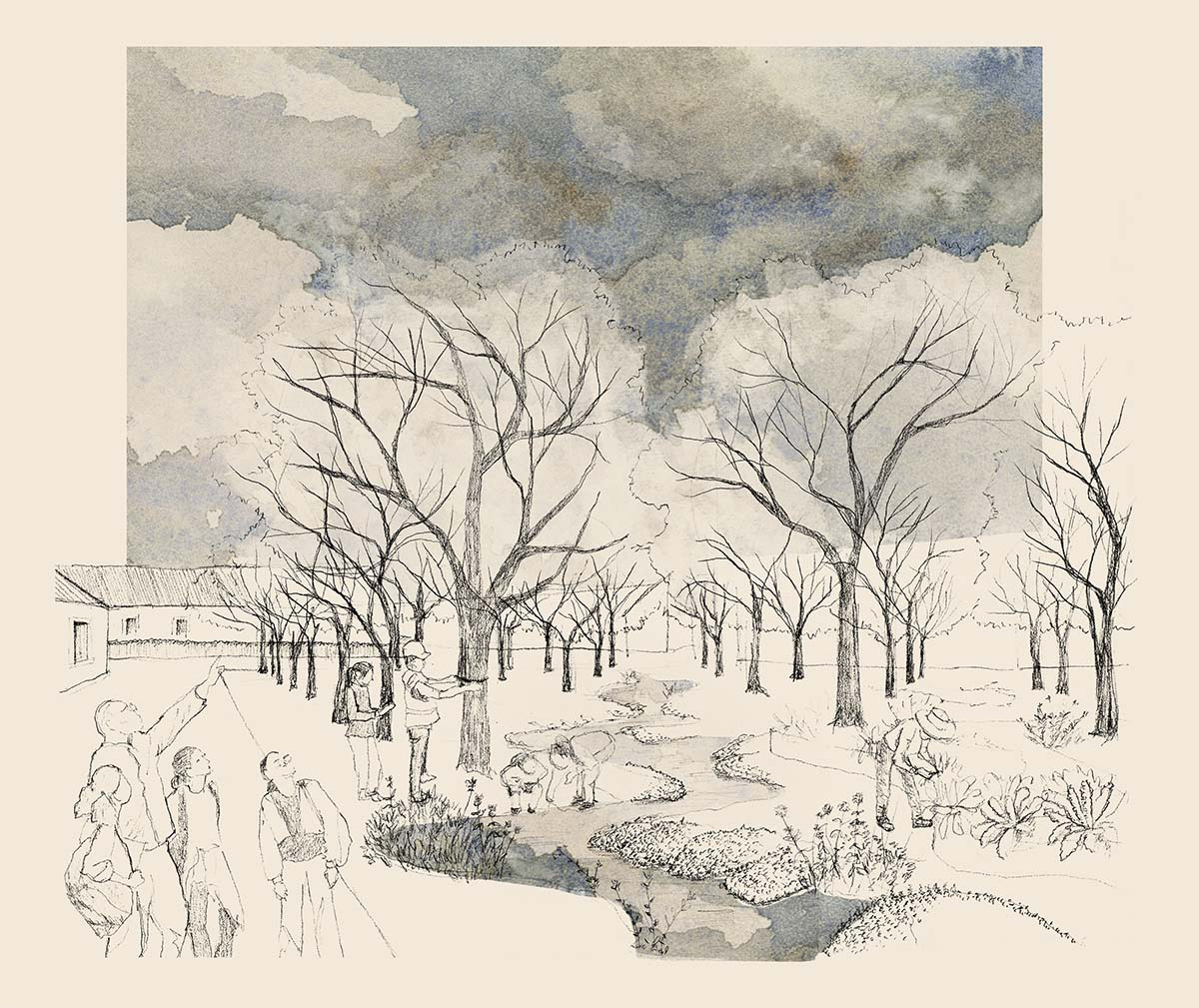
section of Fabric garden expand
Section through 'Fabric' garden
Wooded Classroom

The pond north of the community centre primarily acts as a reserve, but also a backdrop for an outdoor amphitheatre. On the western edge, seating is integrated into the slope of the pond, with a ‘floating’ stage sitting atop the water. Oak (Quercus robur) and beech (Fagus sylvatica) trees provide canopy cover overhead. Closer to the water, smaller downy birches (Betula pubescens) are mixed in. Not only do these trees act as an outdoor ‘ceiling,’ but almost as participants, equally involved in the events of the amphitheatre. Smaller clearings are maintained around the pond’s circuit path to act as outdoor classrooms for the existing community centre, hosting yoga sessions, tae kwon do lessons, book clubs, or knitting circles.