Project description

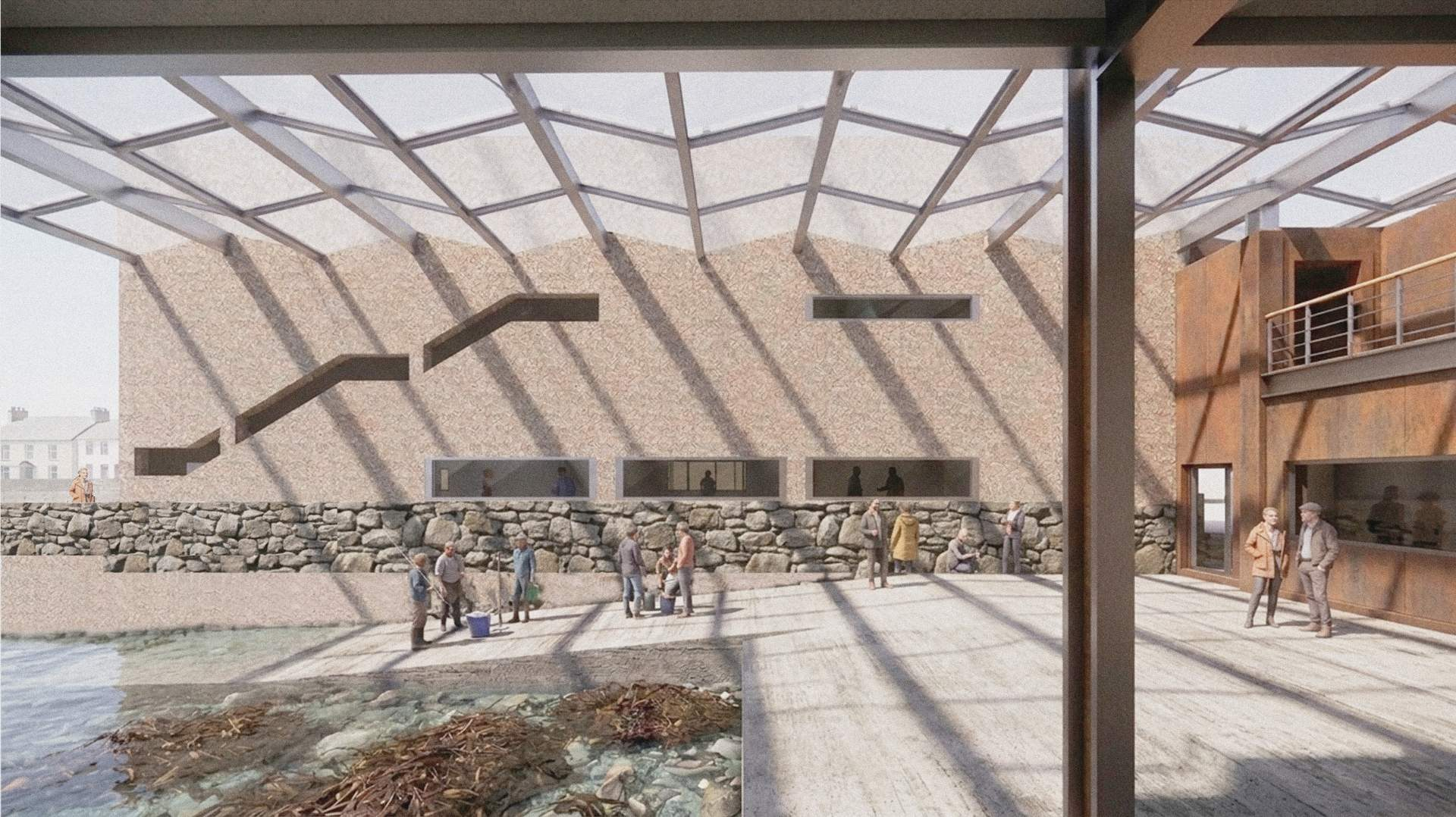
Situated on the working harbour edge of Greencastle, Shellitory reimagines the coastal boundary as a shared territory between production, community, and tidal ecology. 

Shellitory combines Shell and Territory, reflecting the project’s exploration of shellfish ecologies and the context of the harbour edge. Rather than treating the shoreline as a fixed line between land and sea, the project understands it as a dynamic environment shaped by harbour activities, seasonal rhythms, and ecological processes.

The proposal emerges from research into local shellfish ecologies, particularly the binding capacity of byssus fibres produced by mussels. This principle of Binding informs the project at multiple scales, acting as a material, spatial, and organisational strategy. Programmes for shellfish cultivation, exploring, learning, and gathering are interconnected through a porous architectural framework that supports both human and non-human occupation.
Mapping Coastal Rythms expand
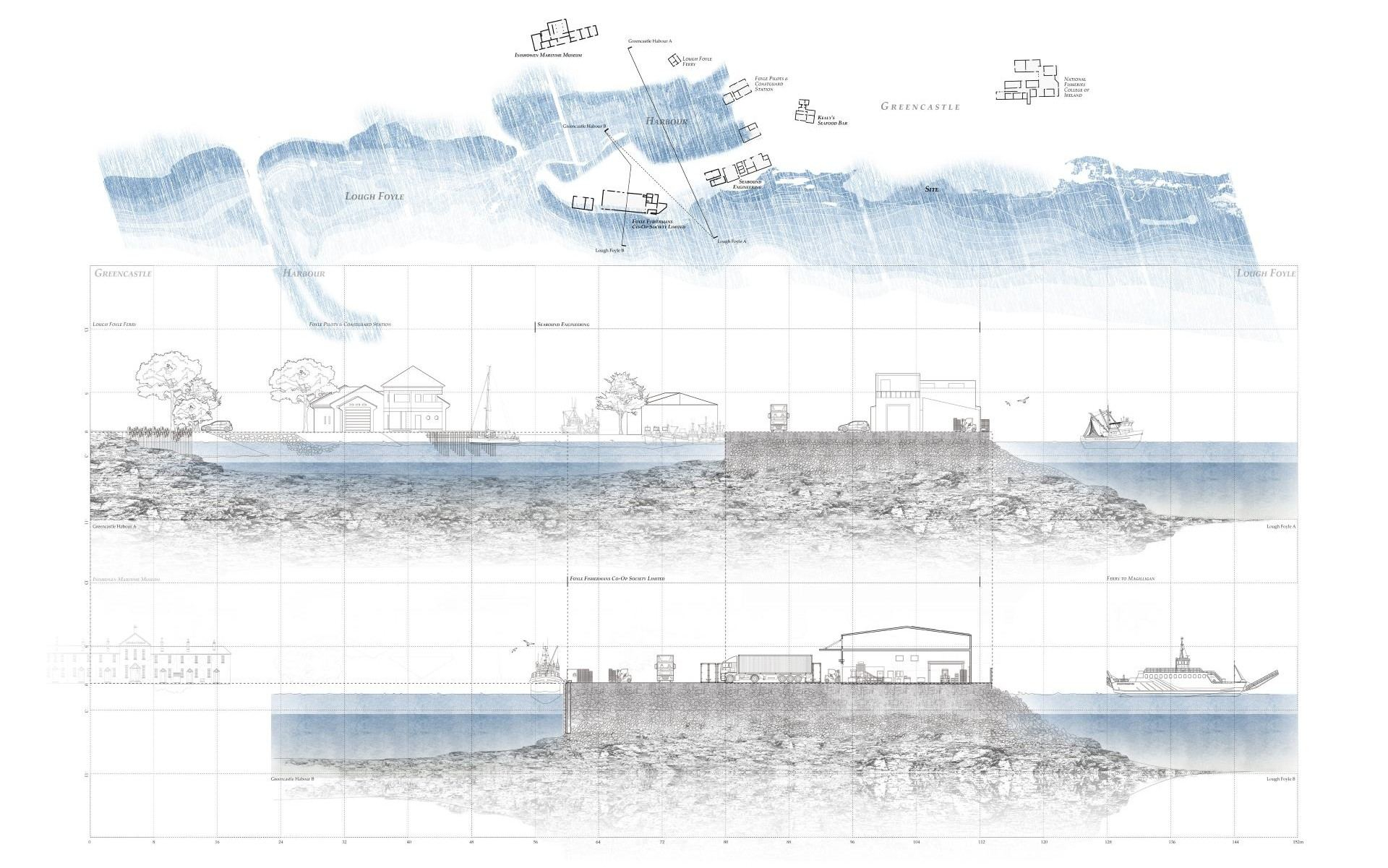
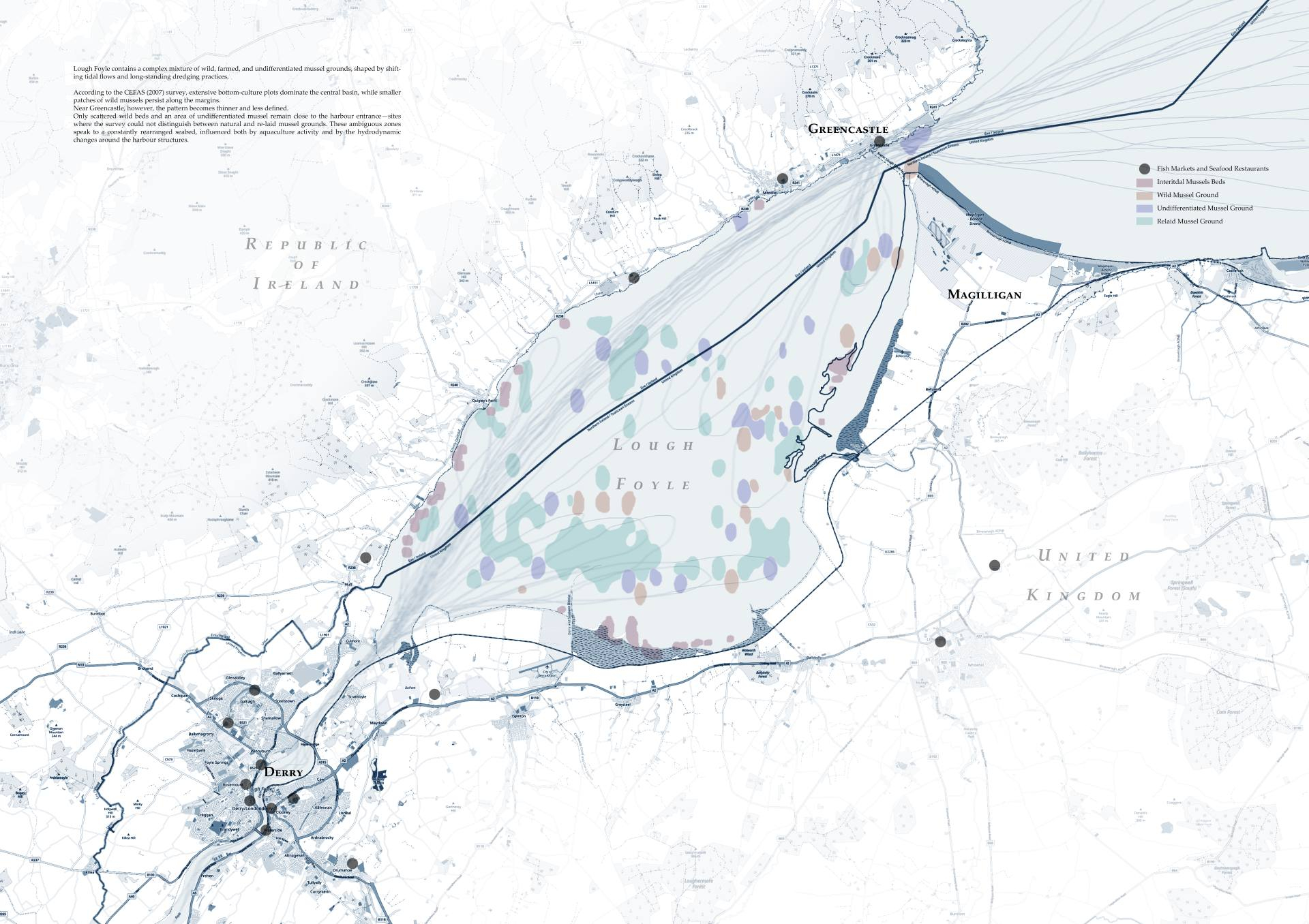
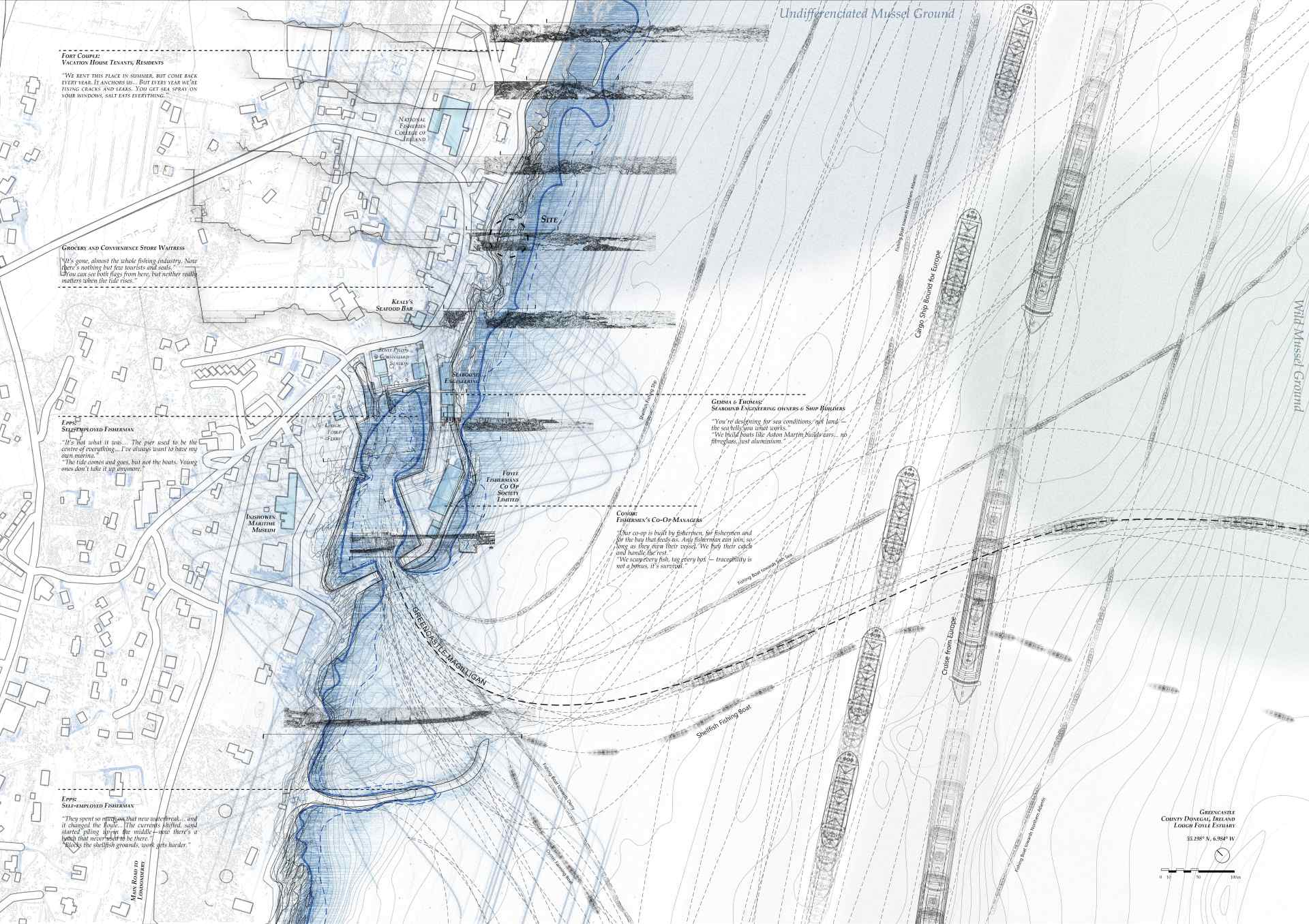
Mapping Coastal Rythms - Context Study
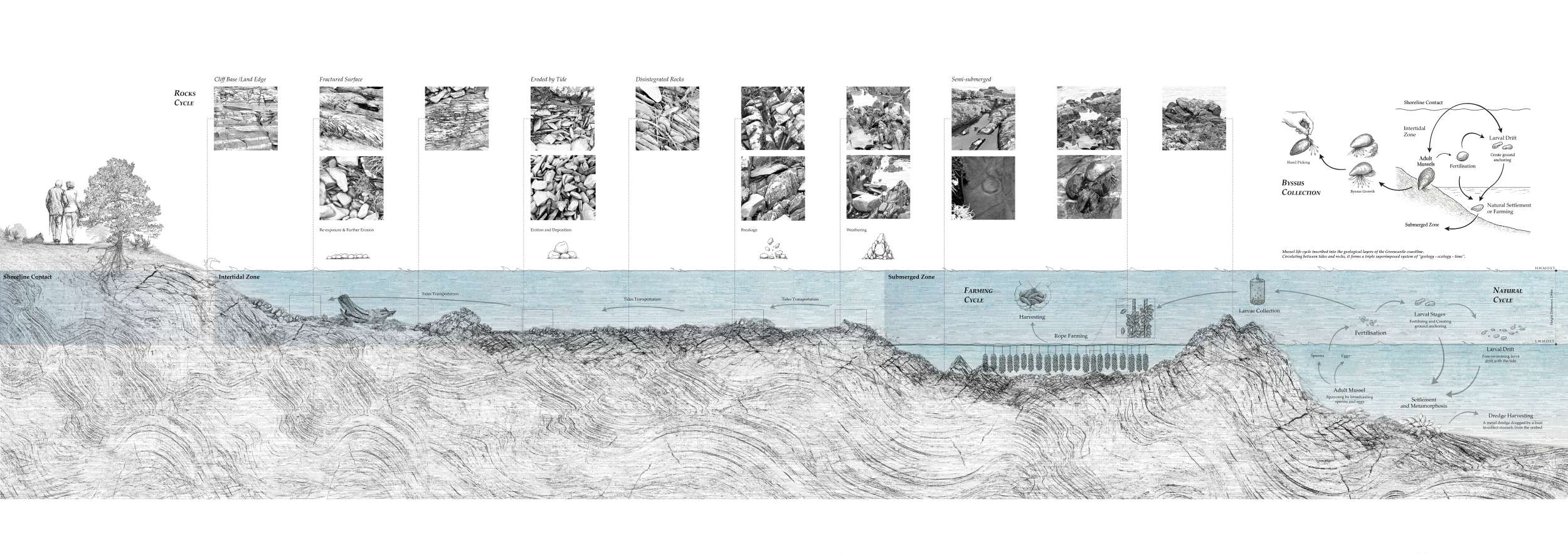
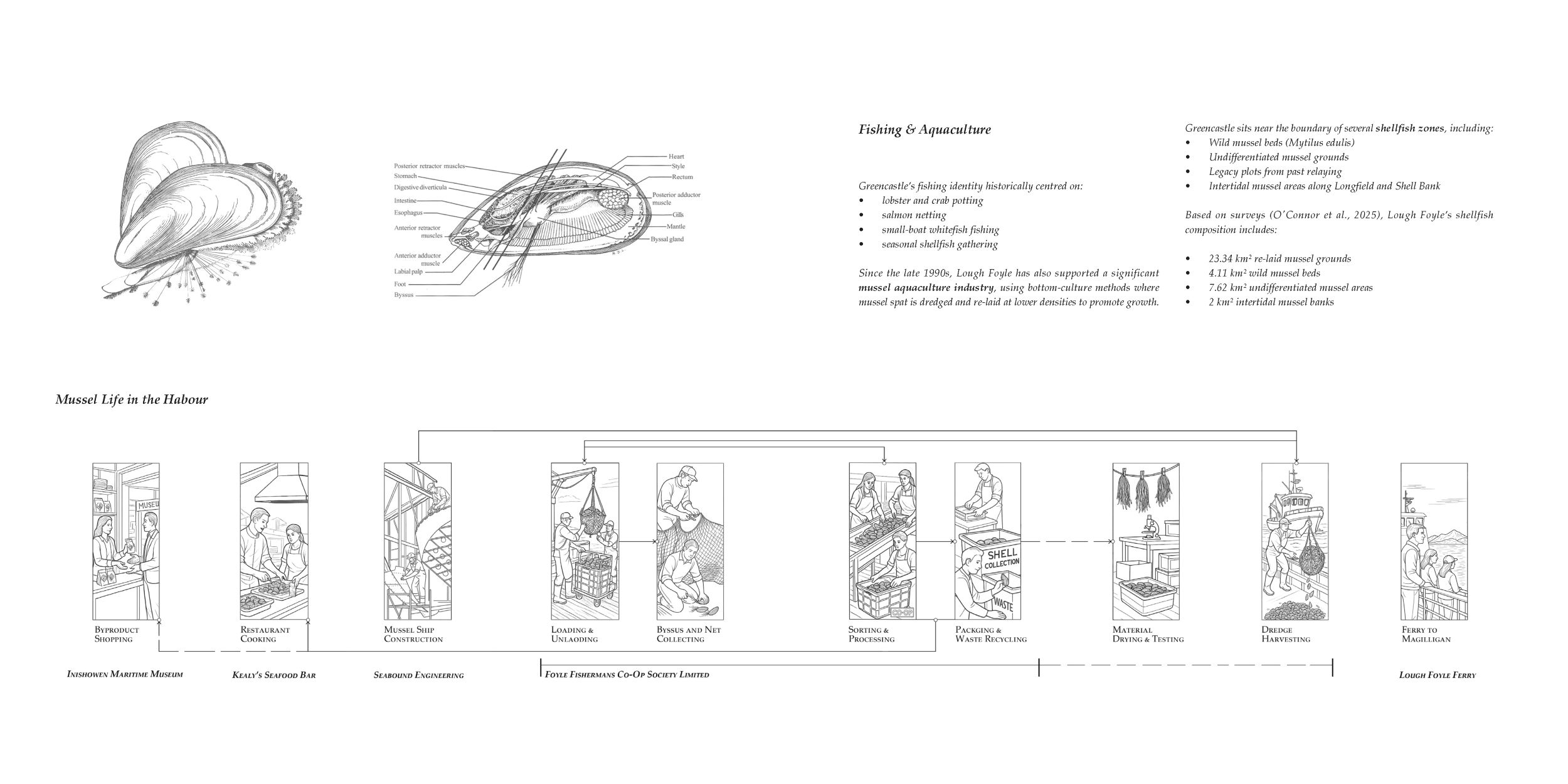
Mapping - Ecologies of Binding

The project begins with an expanded reading of Greencastle Harbour, where tidal rhythms, working infrastructures, ecological systems, and everyday activities overlap. Rather than understanding the shoreline as a fixed boundary, the project reads it as a dynamic territory shaped by continuous exchanges between land, sea, and community.

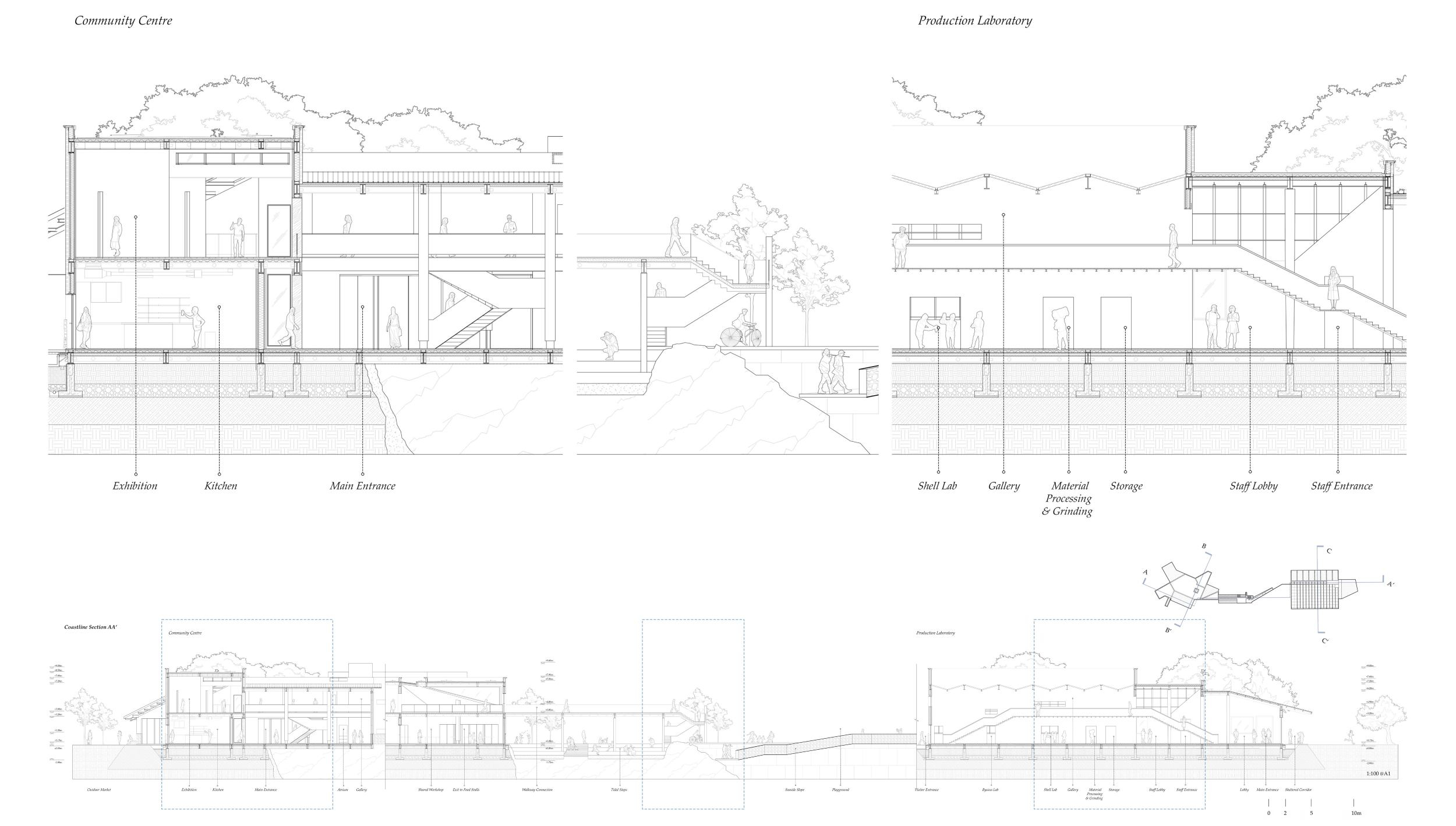
Through a series of mappings and sectional studies, shellfish ecologies emerged as a key spatial driver. Particular attention was given to mussel habitats and the binding capacity of byssus fibres, revealing relationships between environmental processes, material systems, and harbour activities. 

These investigations established the conceptual foundation for Shellitory and informed the project's understanding of binding as both an ecological condition and an architectural strategy.

ByssLab - Prototype of Binding

ByssLab explored the ecological and material behaviour of mussels through the study of byssus fibres. Their capacity to bind, anchor, and aggregate became the conceptual foundation for the project, informing a spatial strategy based on connection, adaptation, and collective occupation.
Shellitory - Binding as Architecture

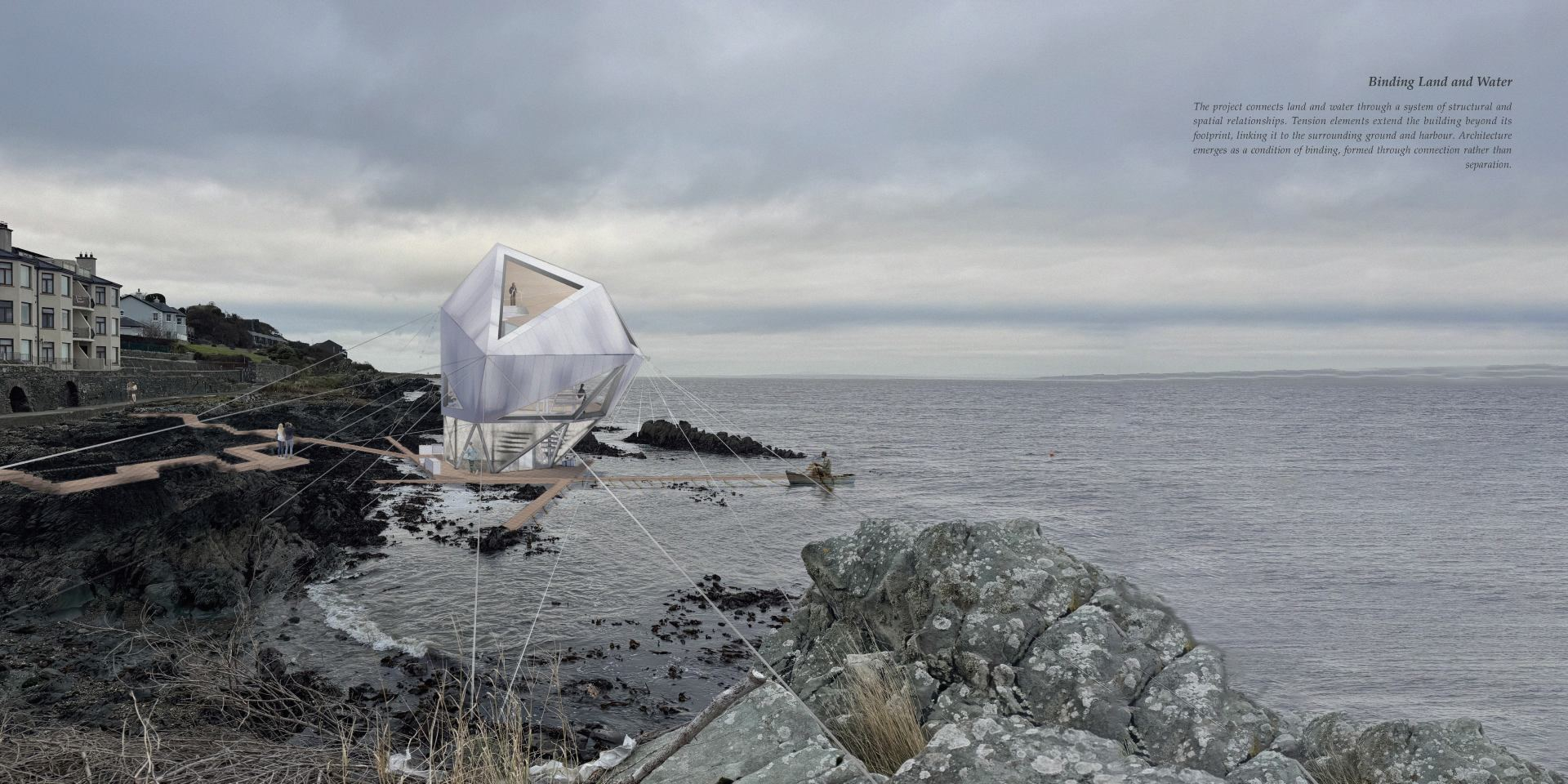
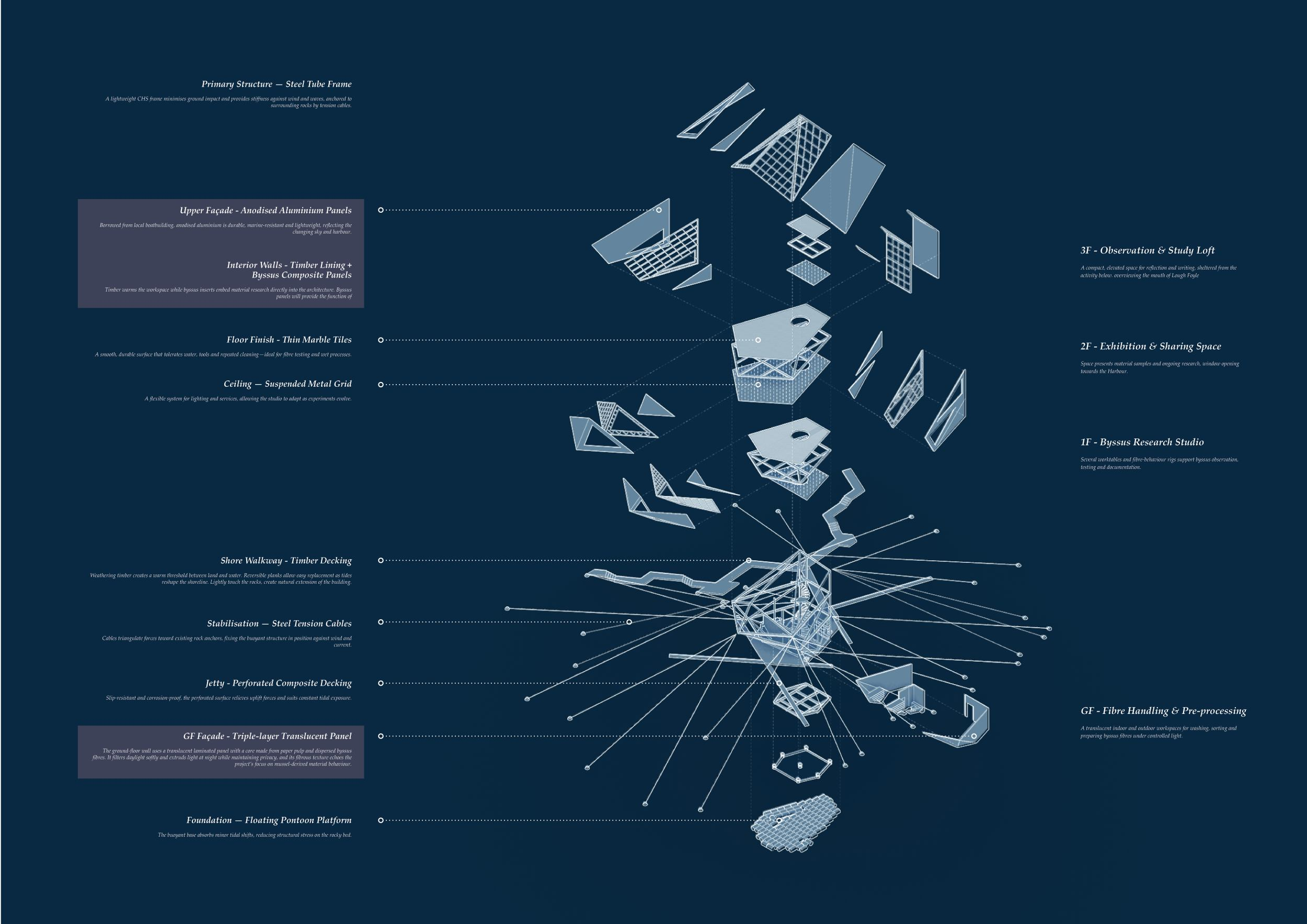
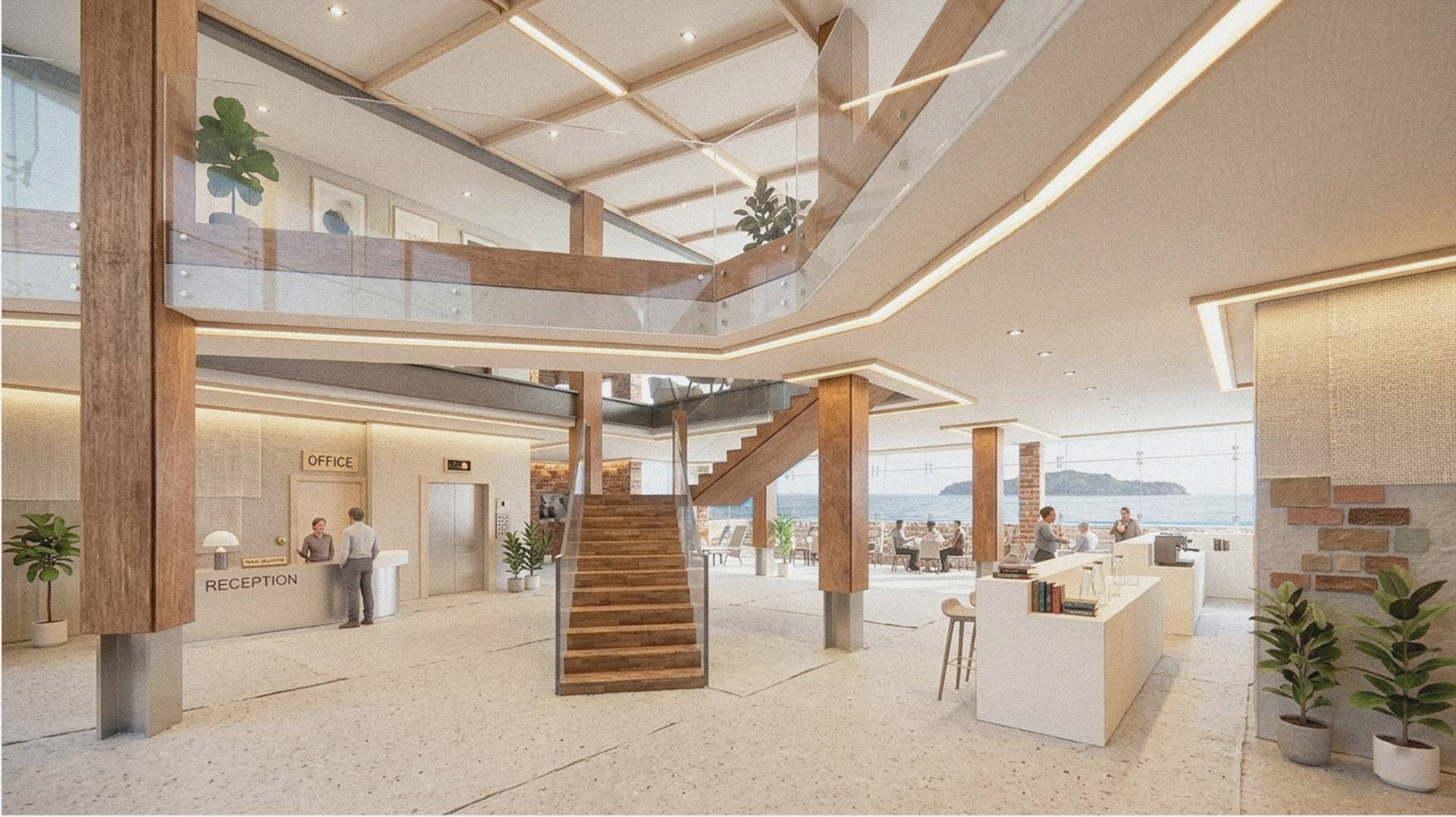
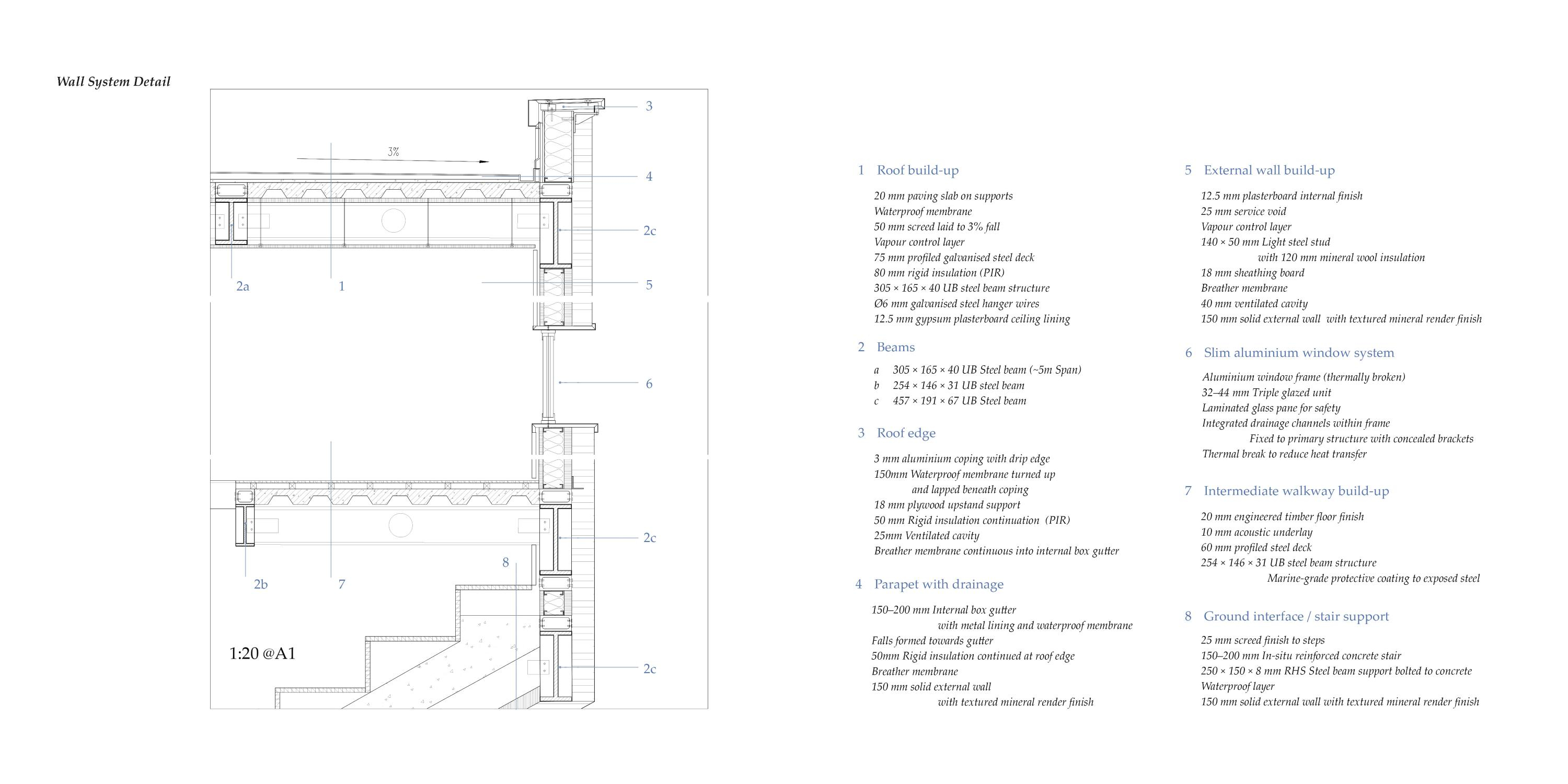
Drawing from the binding capacity of byssus fibres, the project develops an architectural framework where production, repair, learning, and gathering are interwoven rather than separated. 

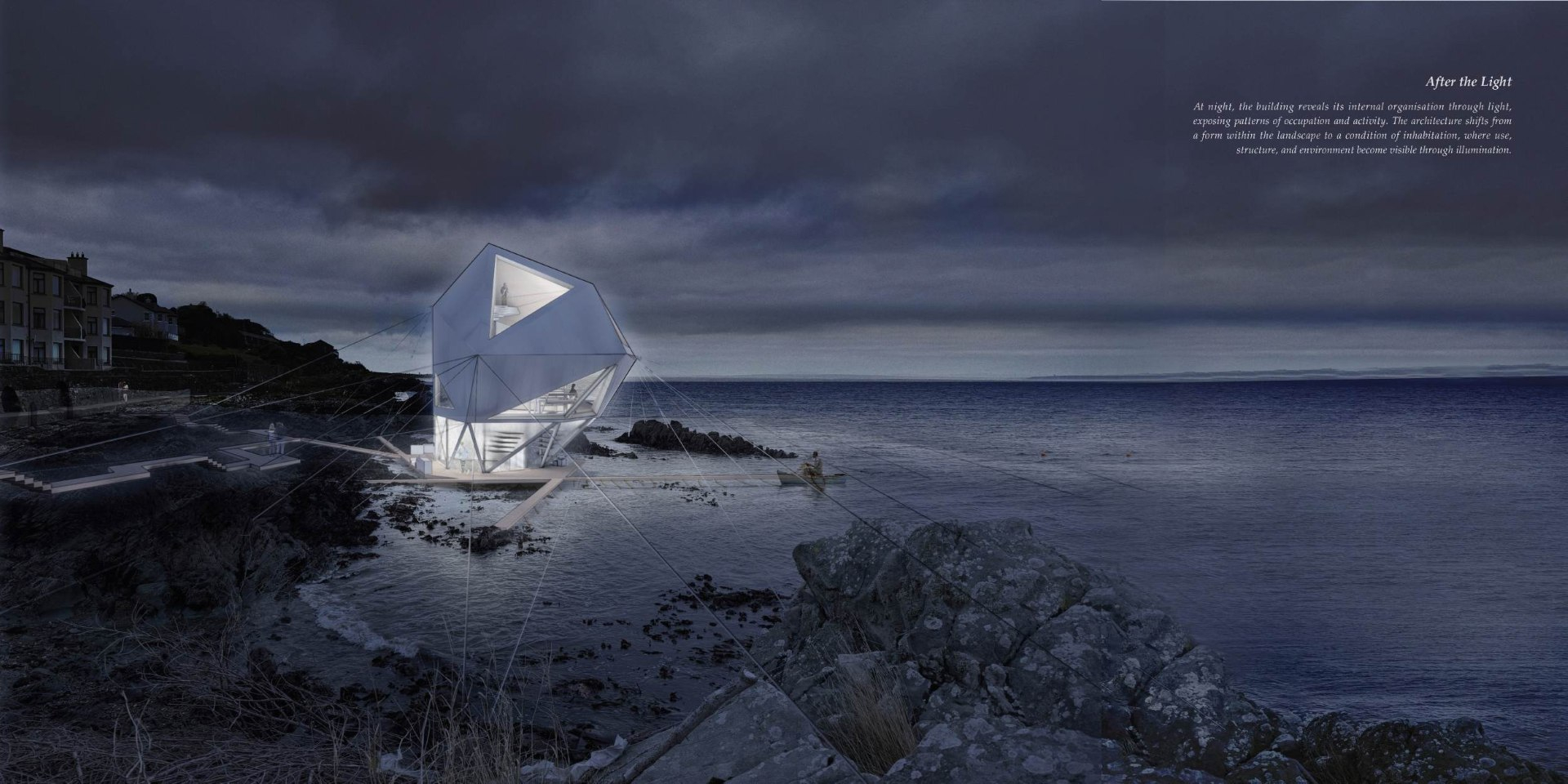
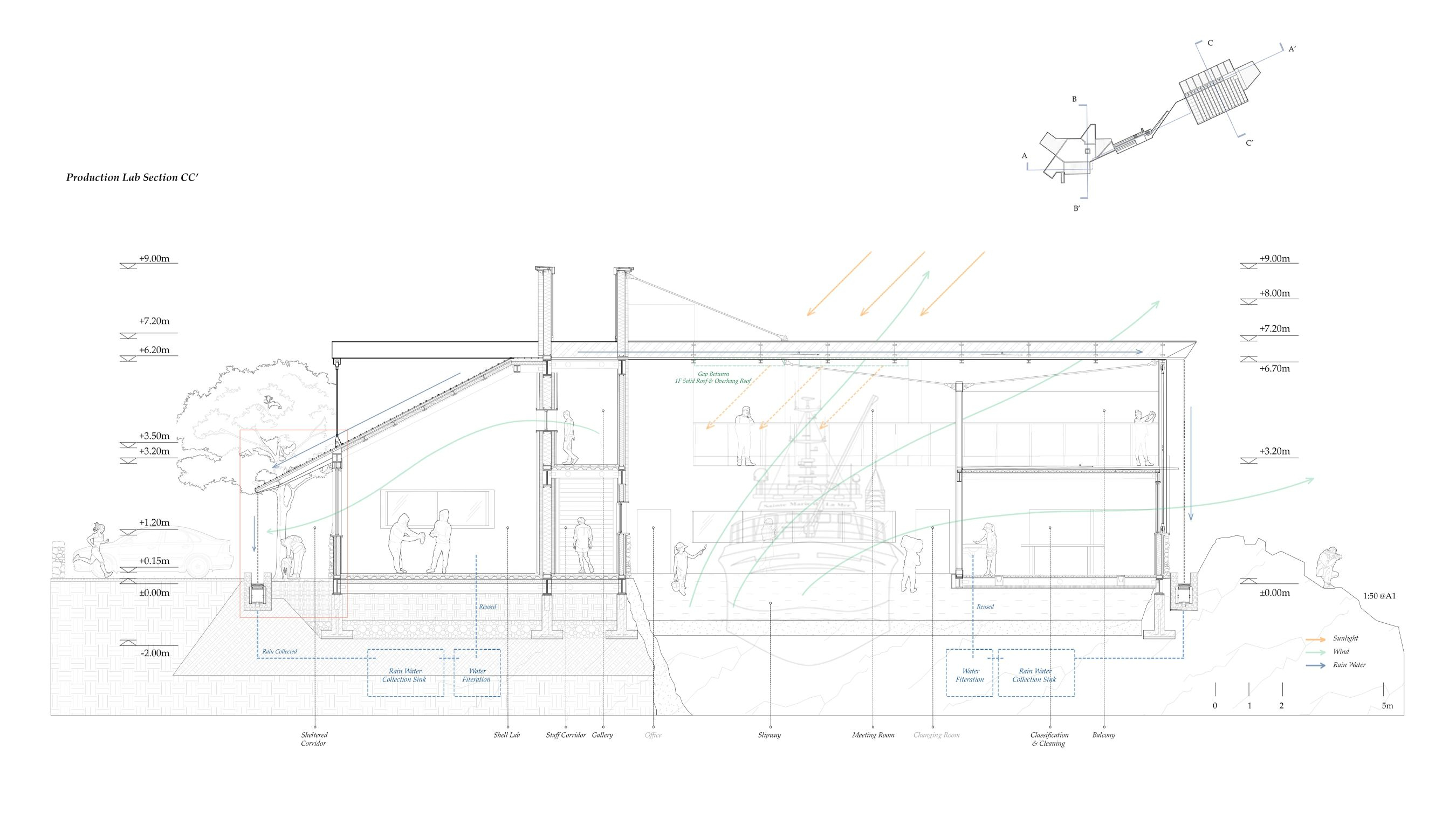
Binding operates simultaneously as a material principle, a spatial strategy, and a mode of organisation, allowing architecture to respond to changing environmental and social conditions along the harbour edge.

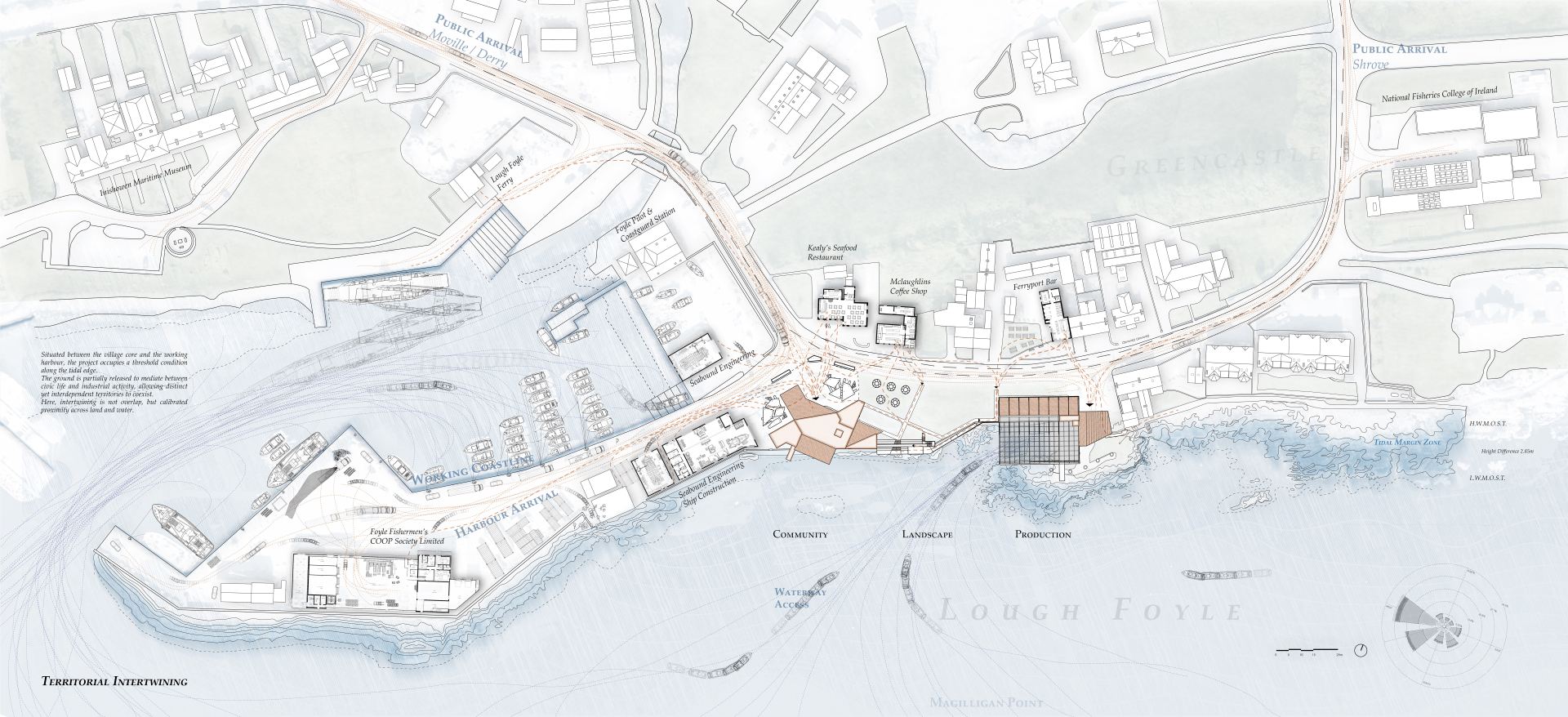
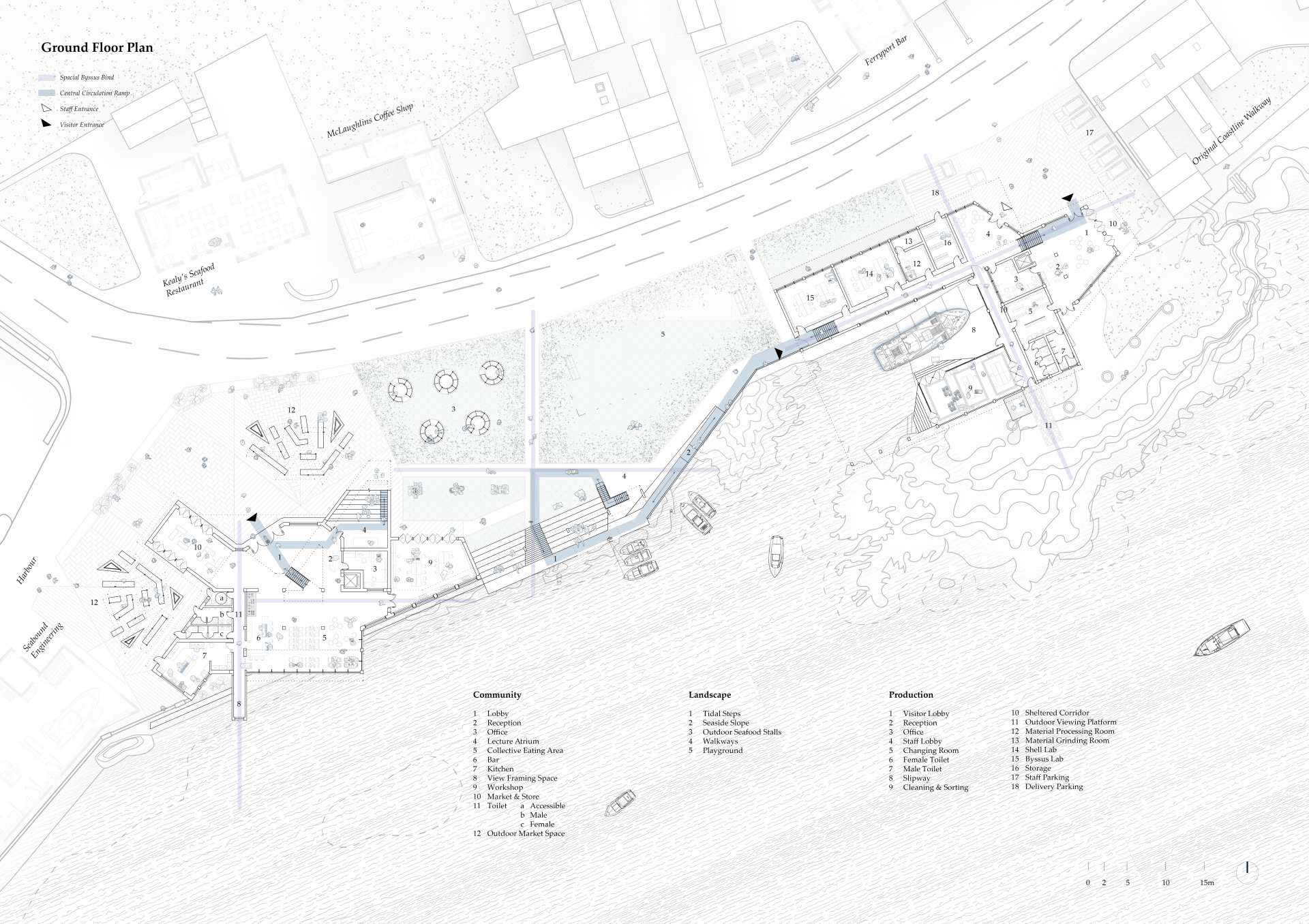
Shellitory Masterplan expand
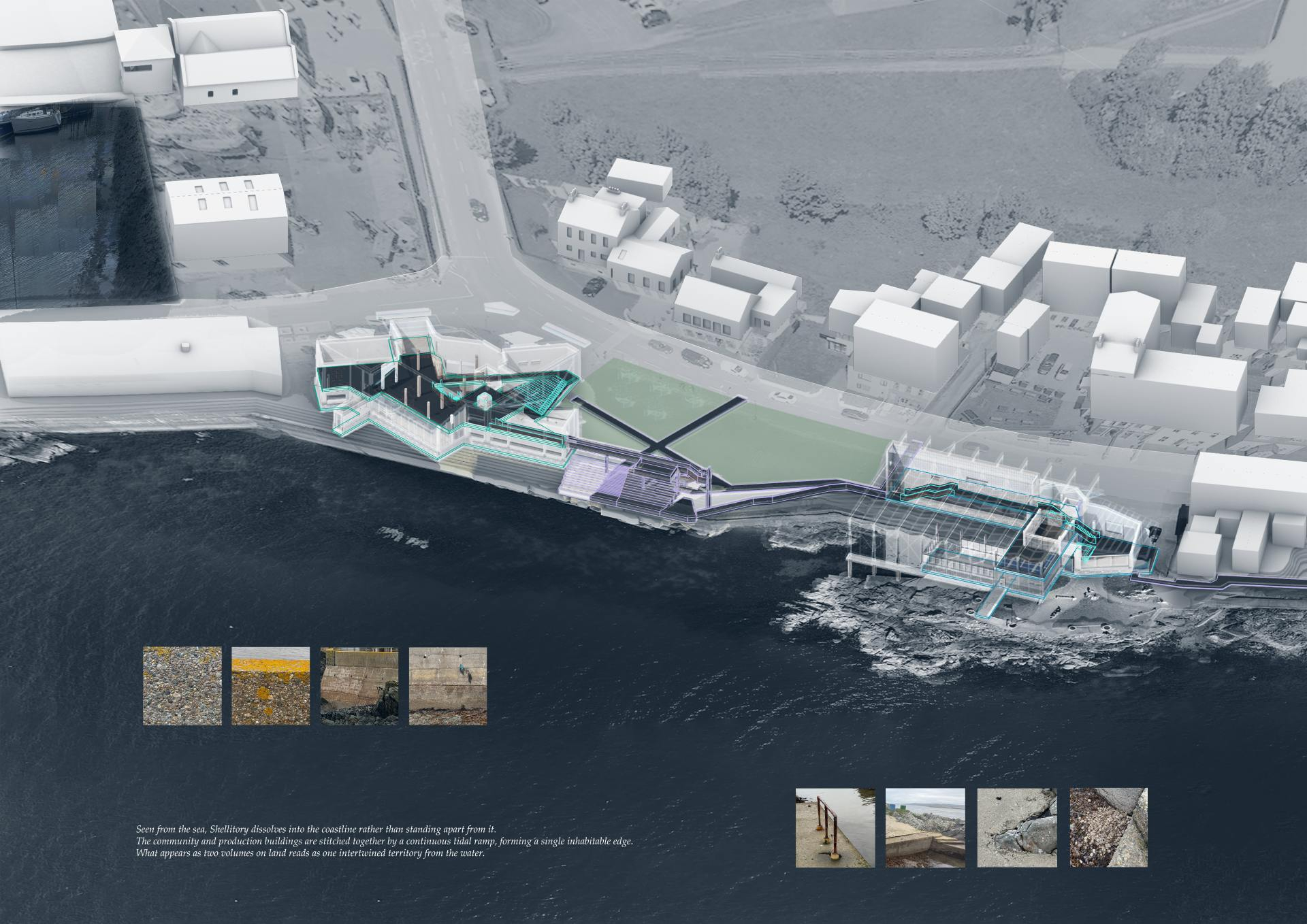
Shellitory Masterplan - The harbour edge is reconfigured as a continuous inhabited system, where community, landscape, and production are interwoven along the coastline.
Binding Materialised

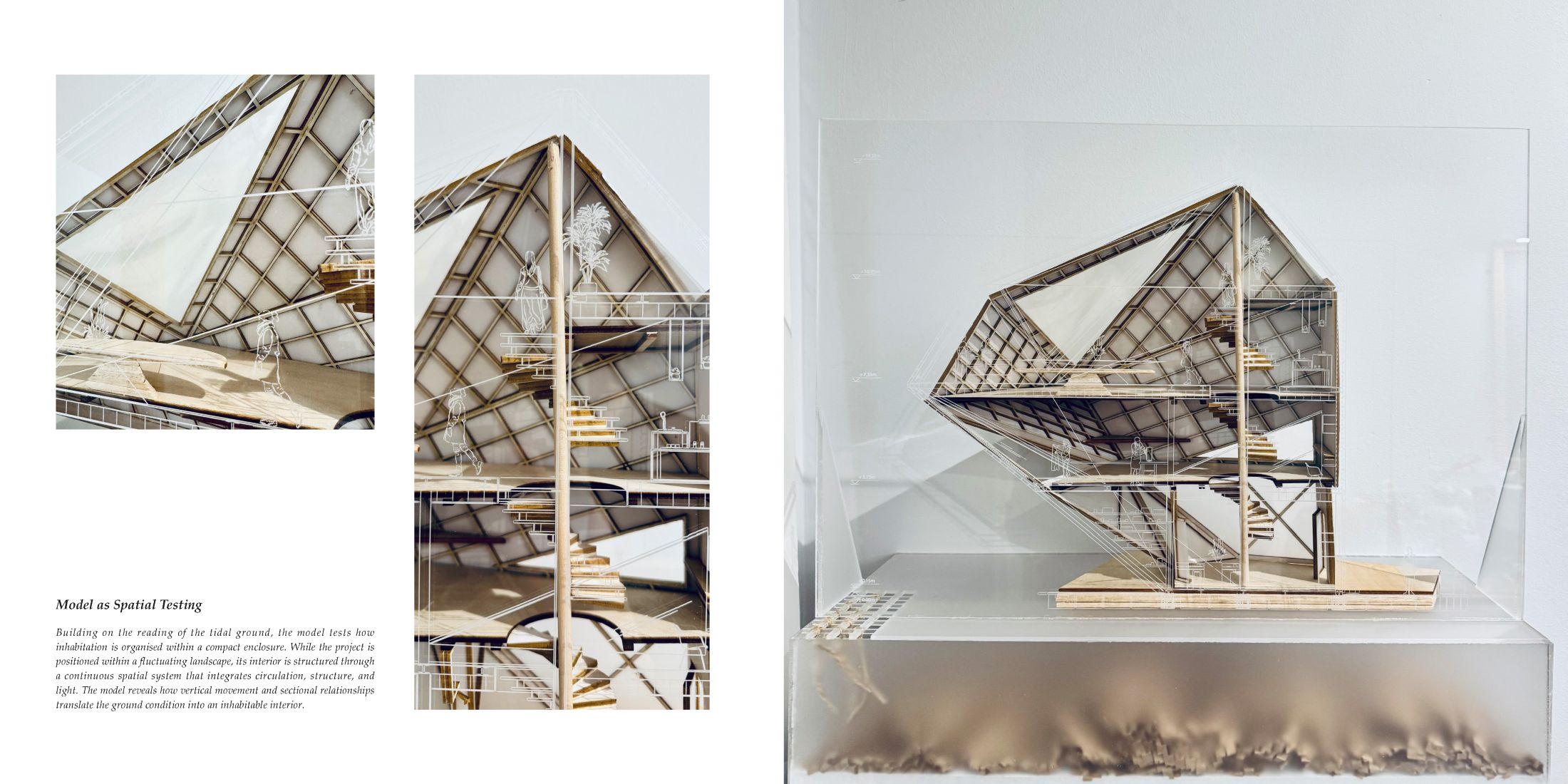
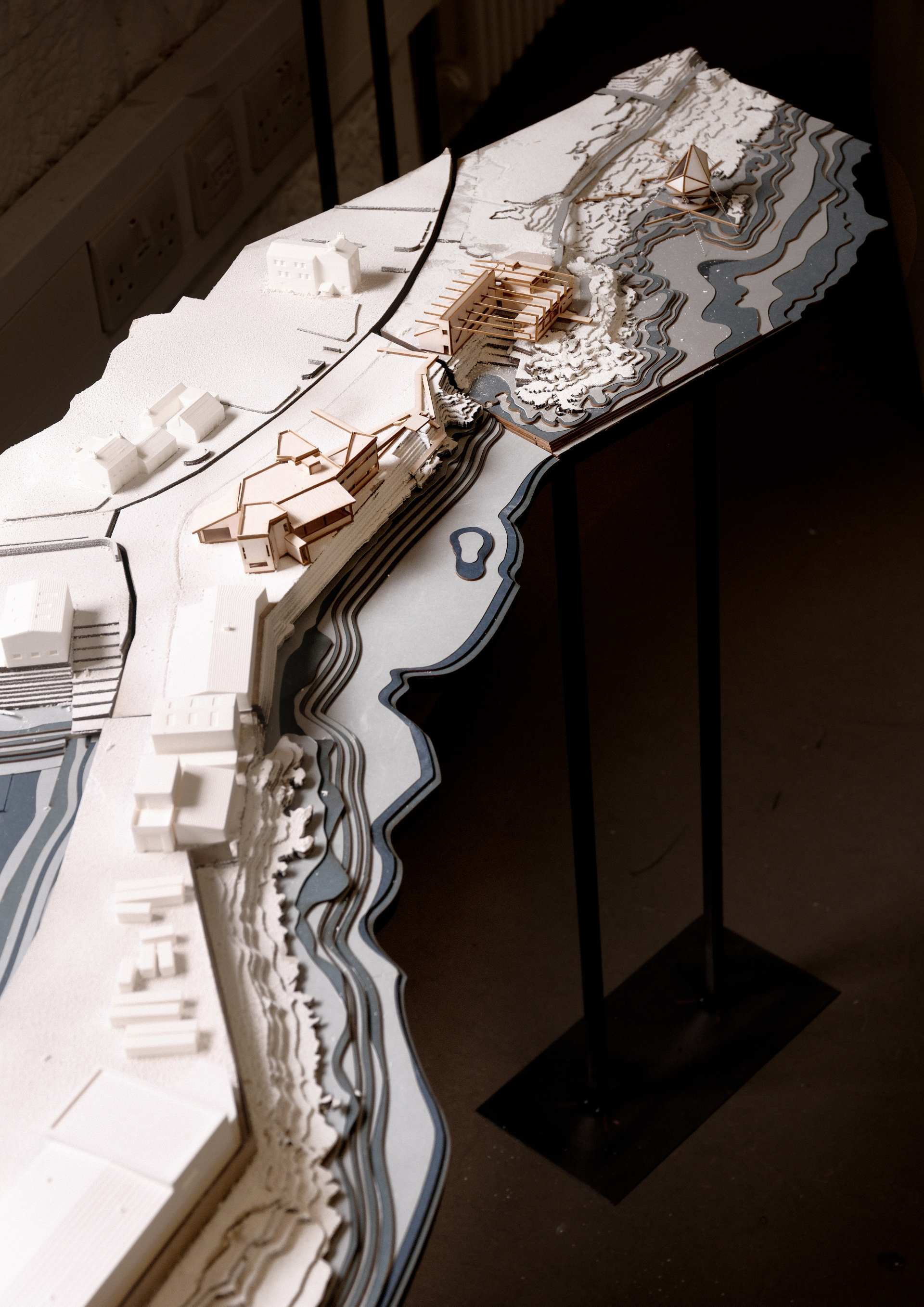
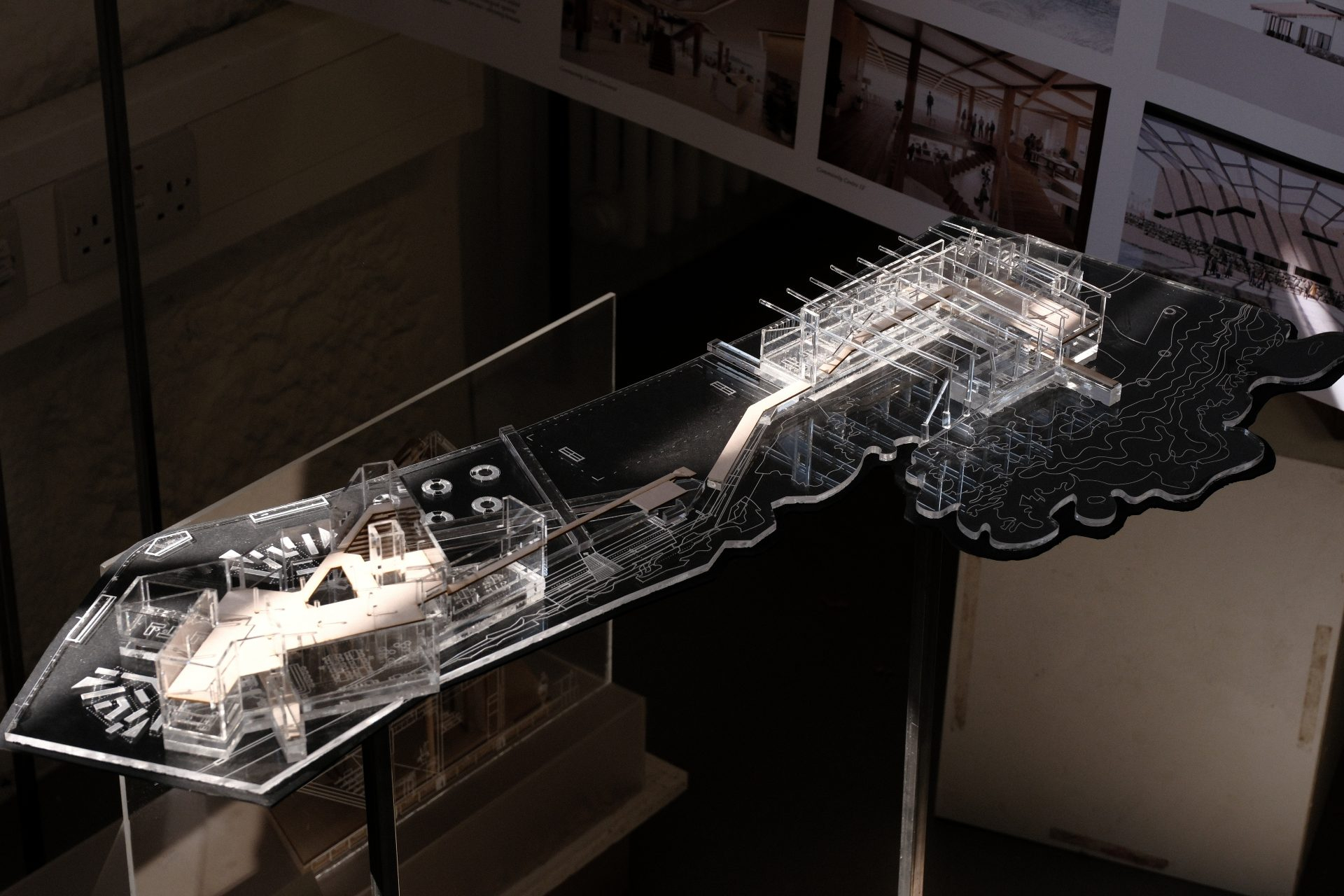
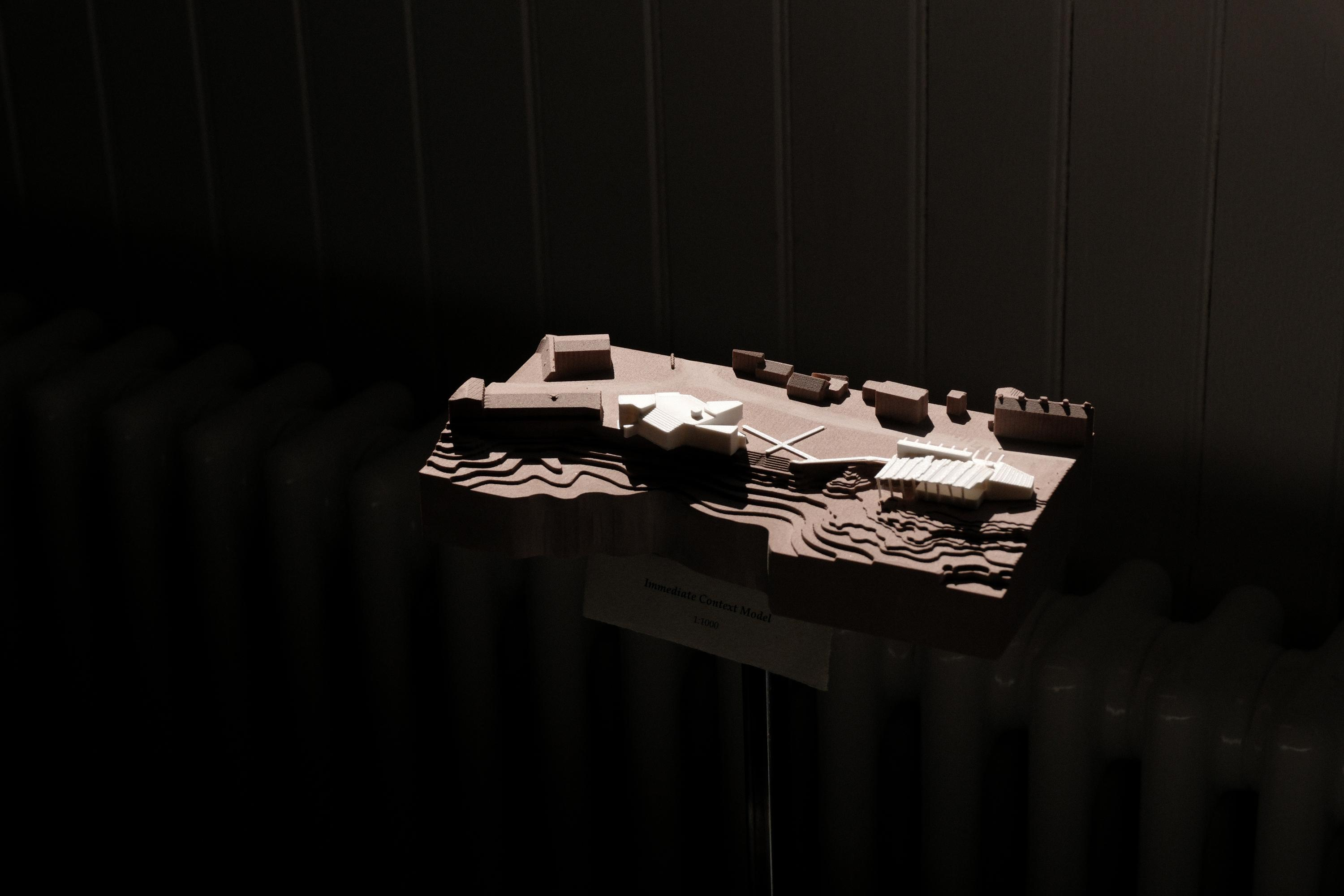
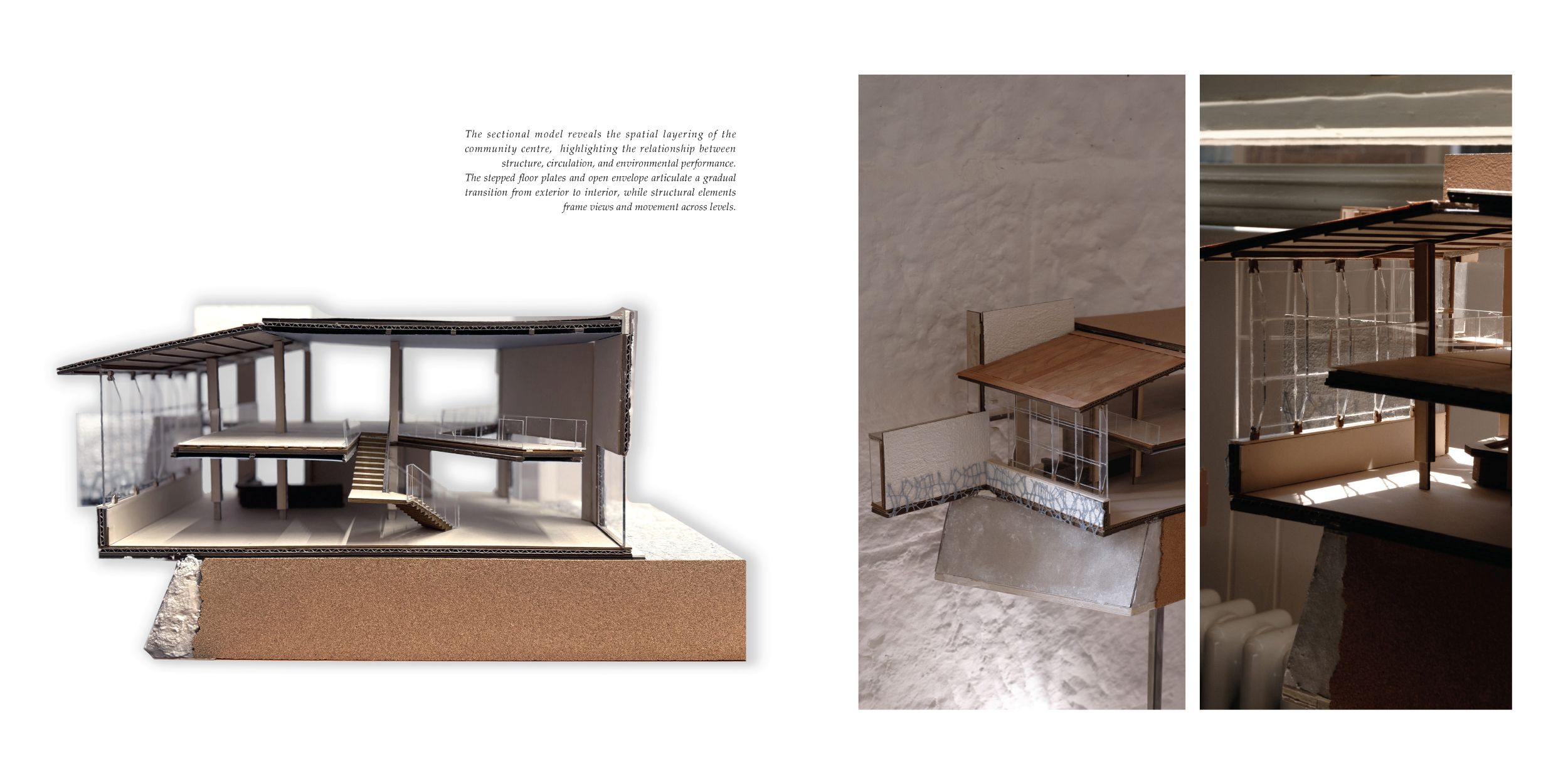
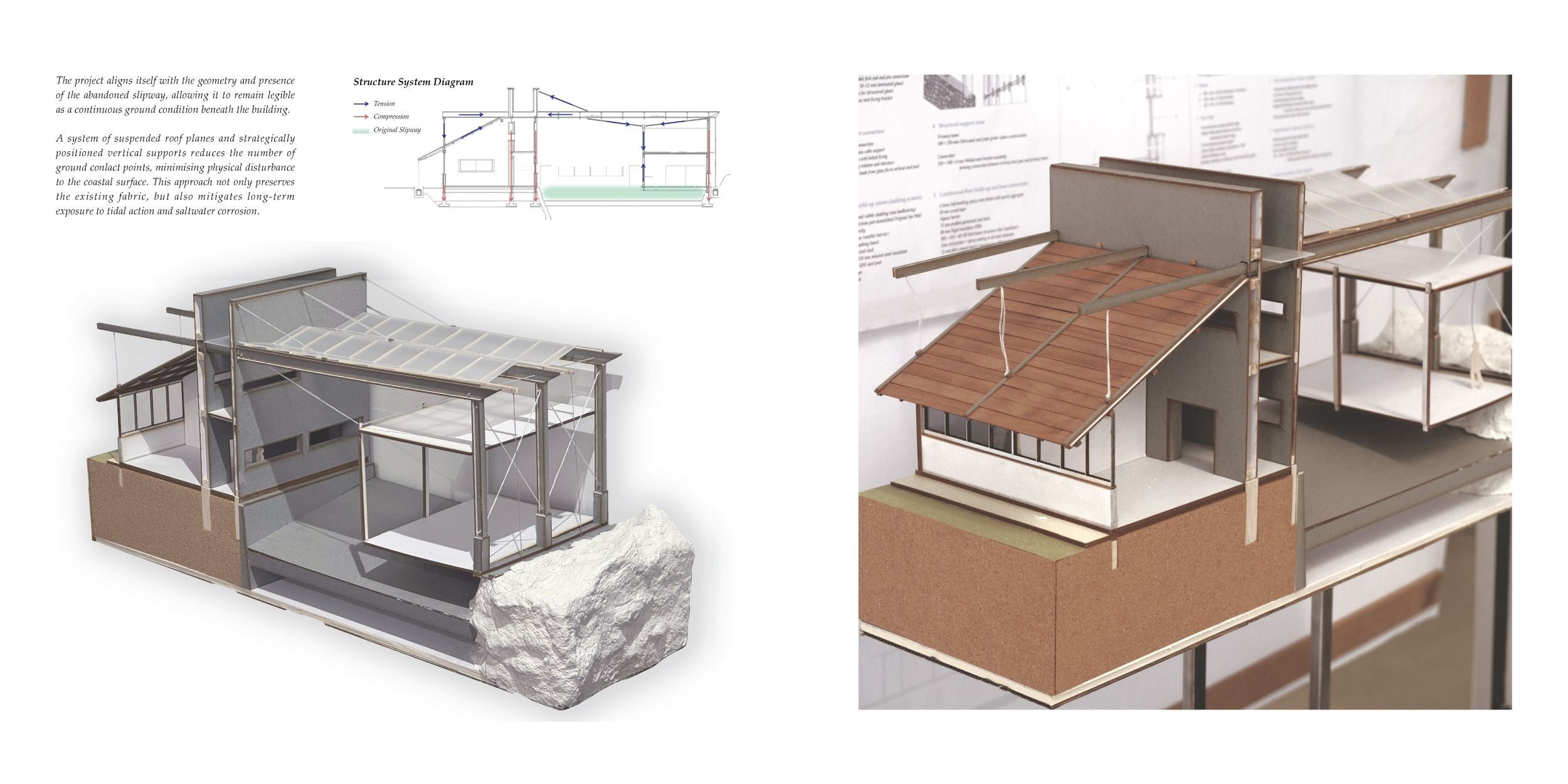
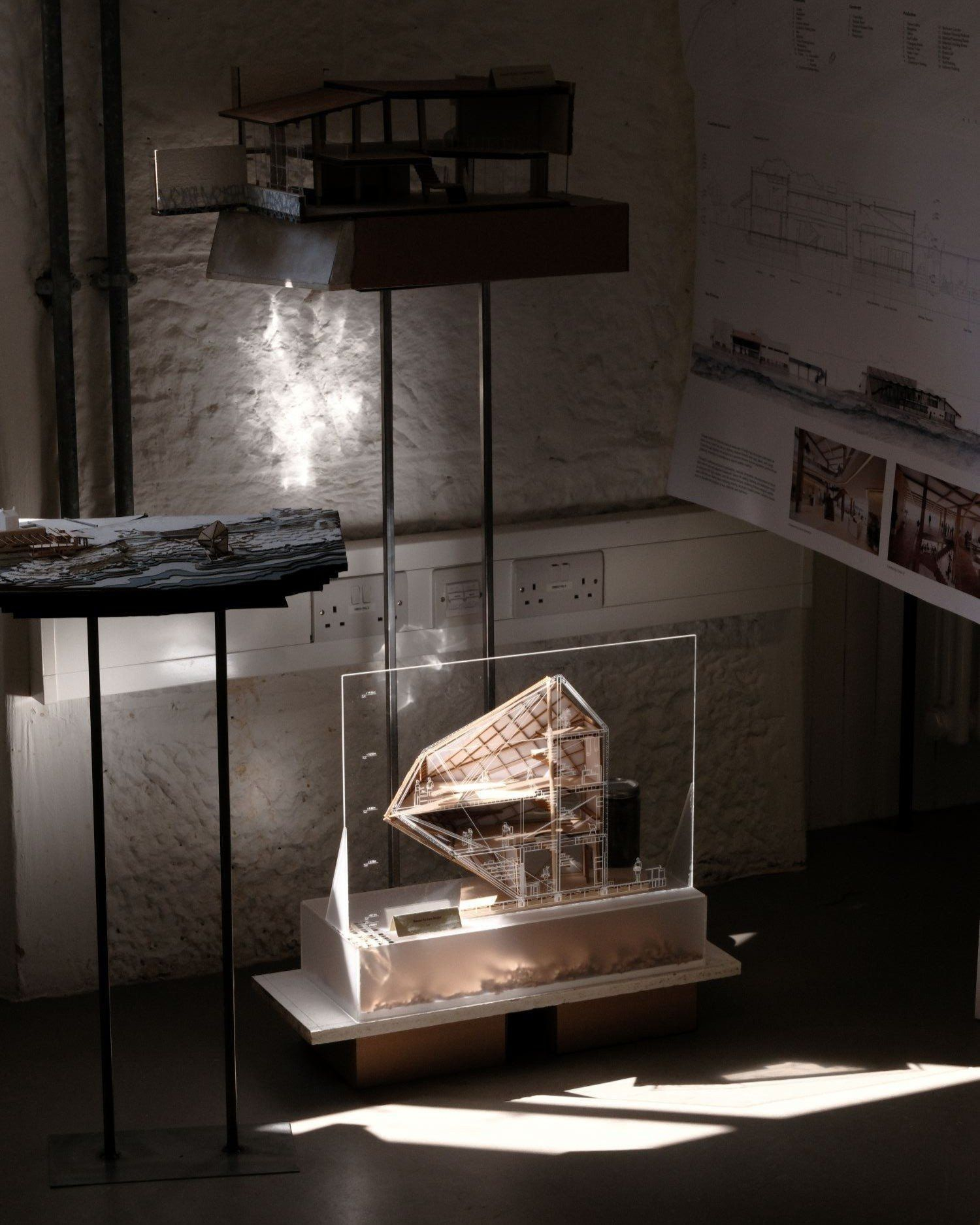
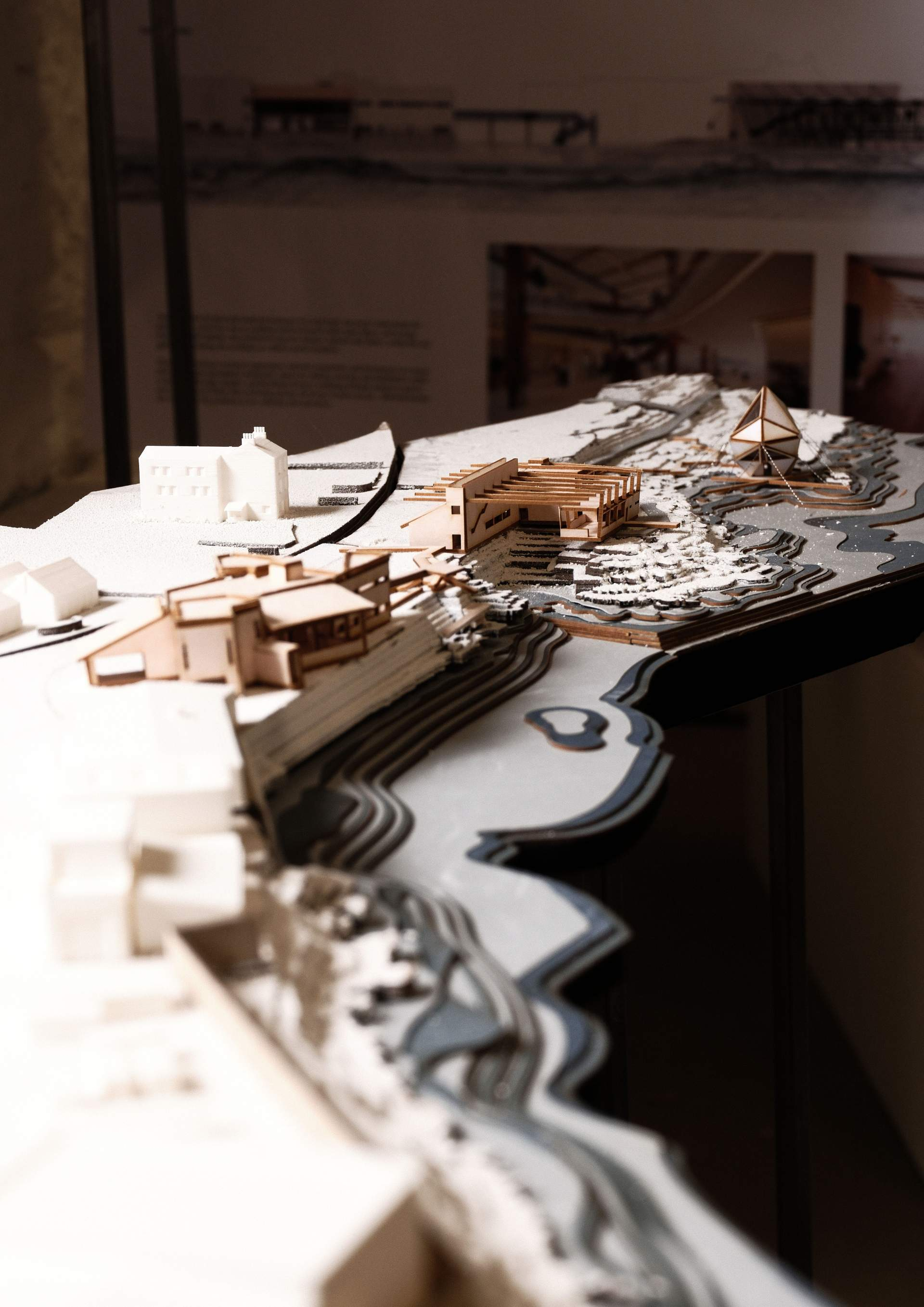
Working across scales from 1:1000 to 1:50, a series of physical models explores the project as a continuous system of territory, architecture, and material assembly. Together, they trace the translation of binding from landscape strategy to architectural form, revealing Shellitory as an interconnected civic and ecological infrastructure along the harbour edge.

Territorial Model Portrait 1:500
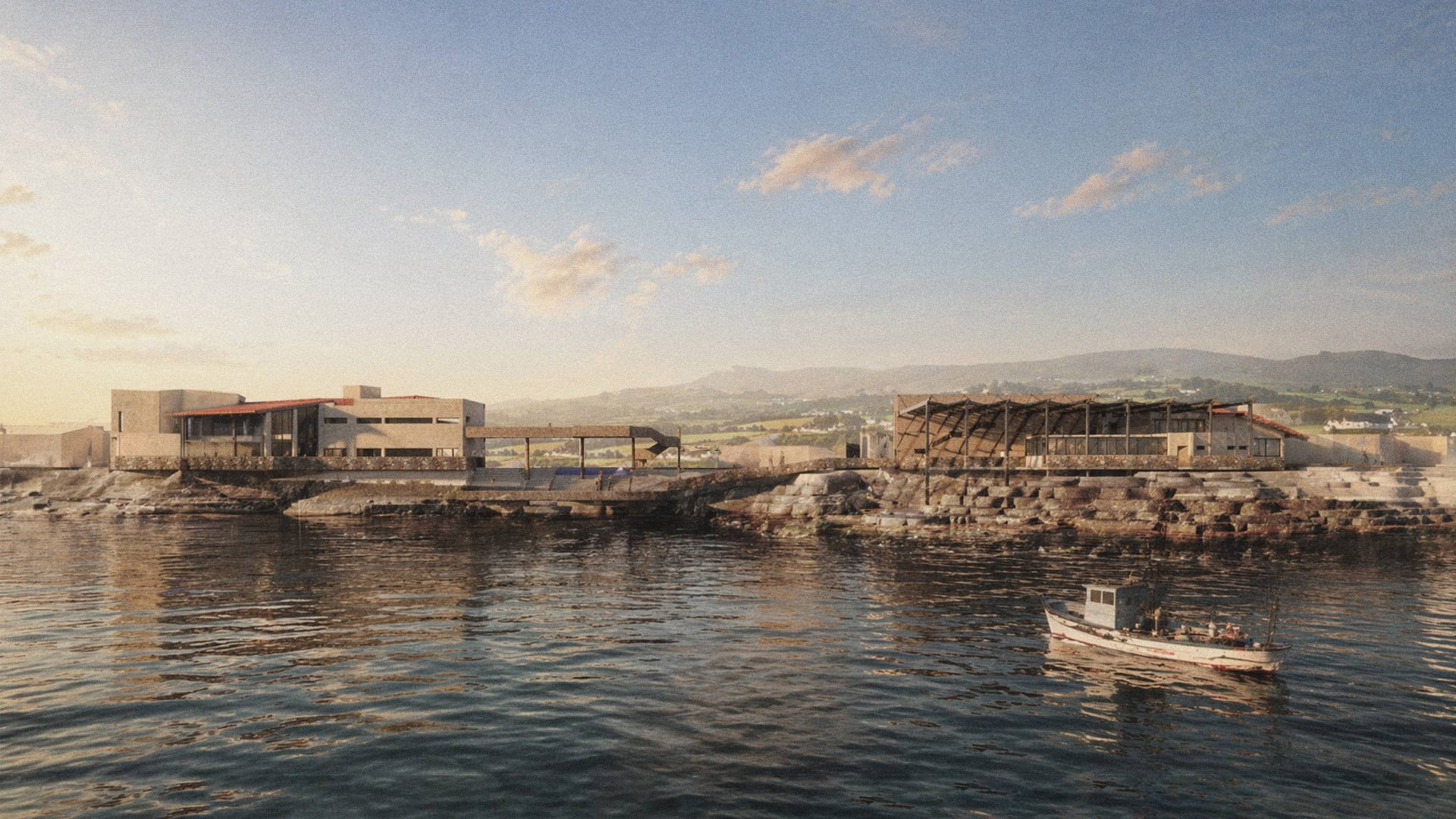
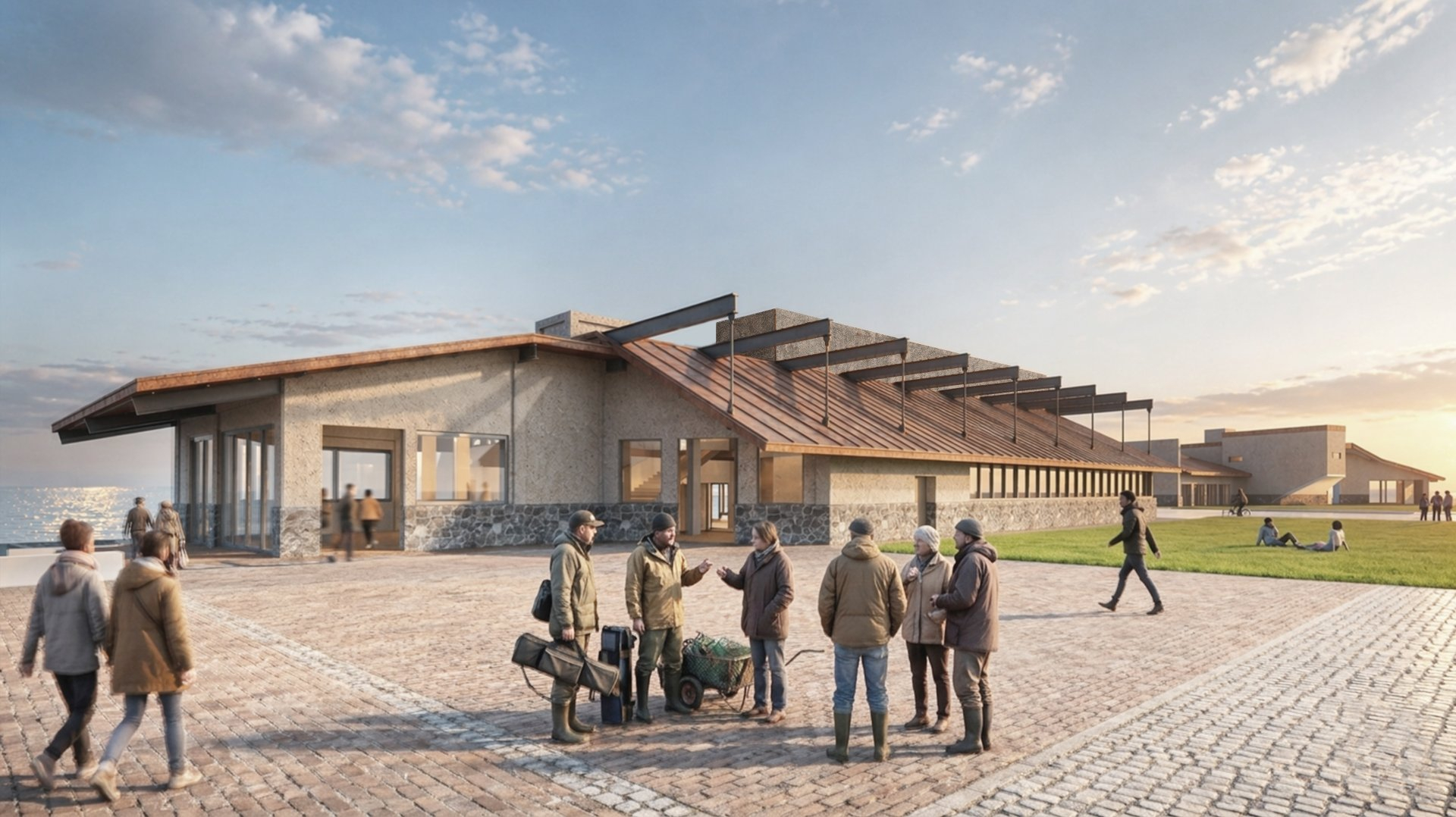
Shellitory Main Seaside View Render
An Inhabited Edge

Architecture - MArch

student list