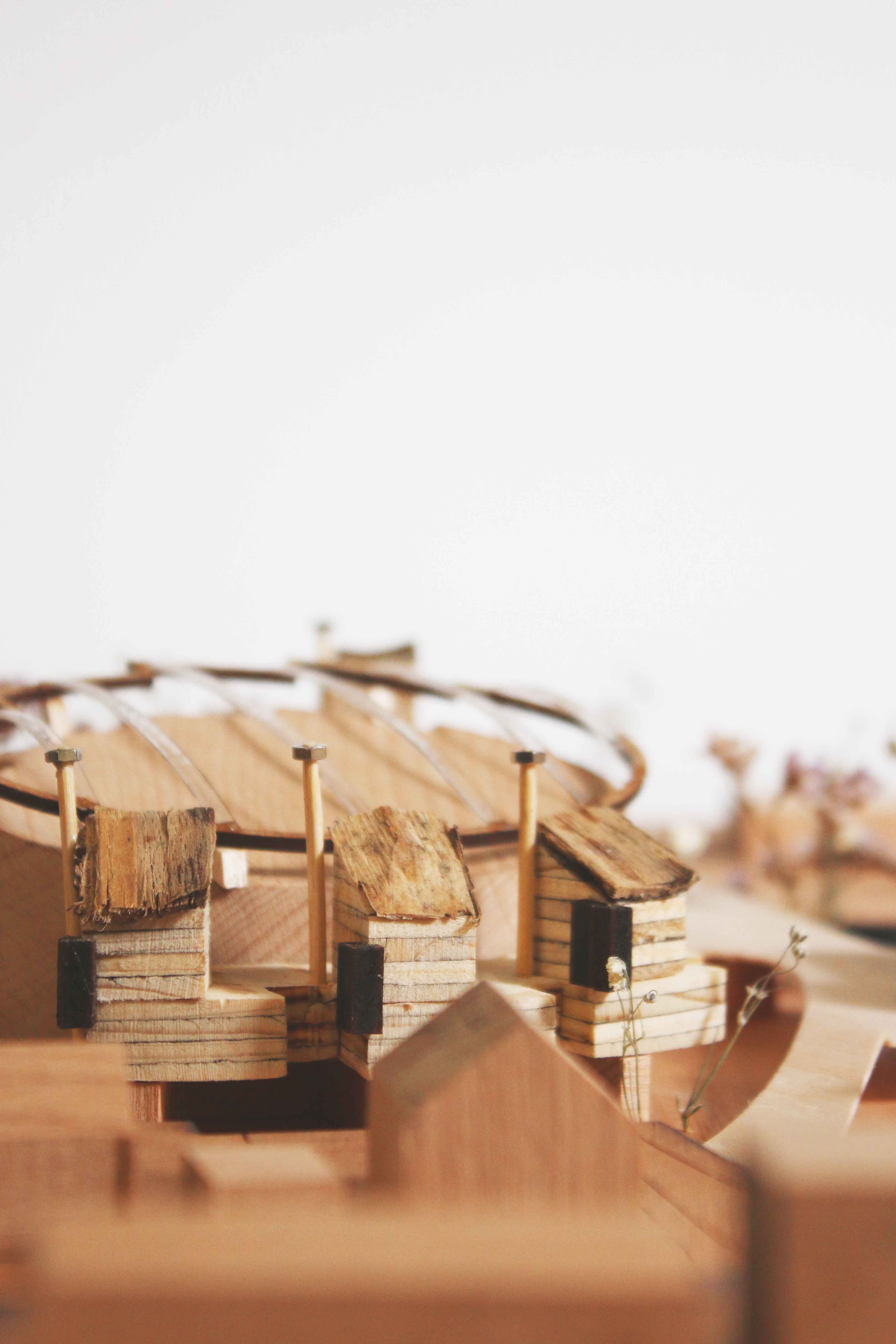
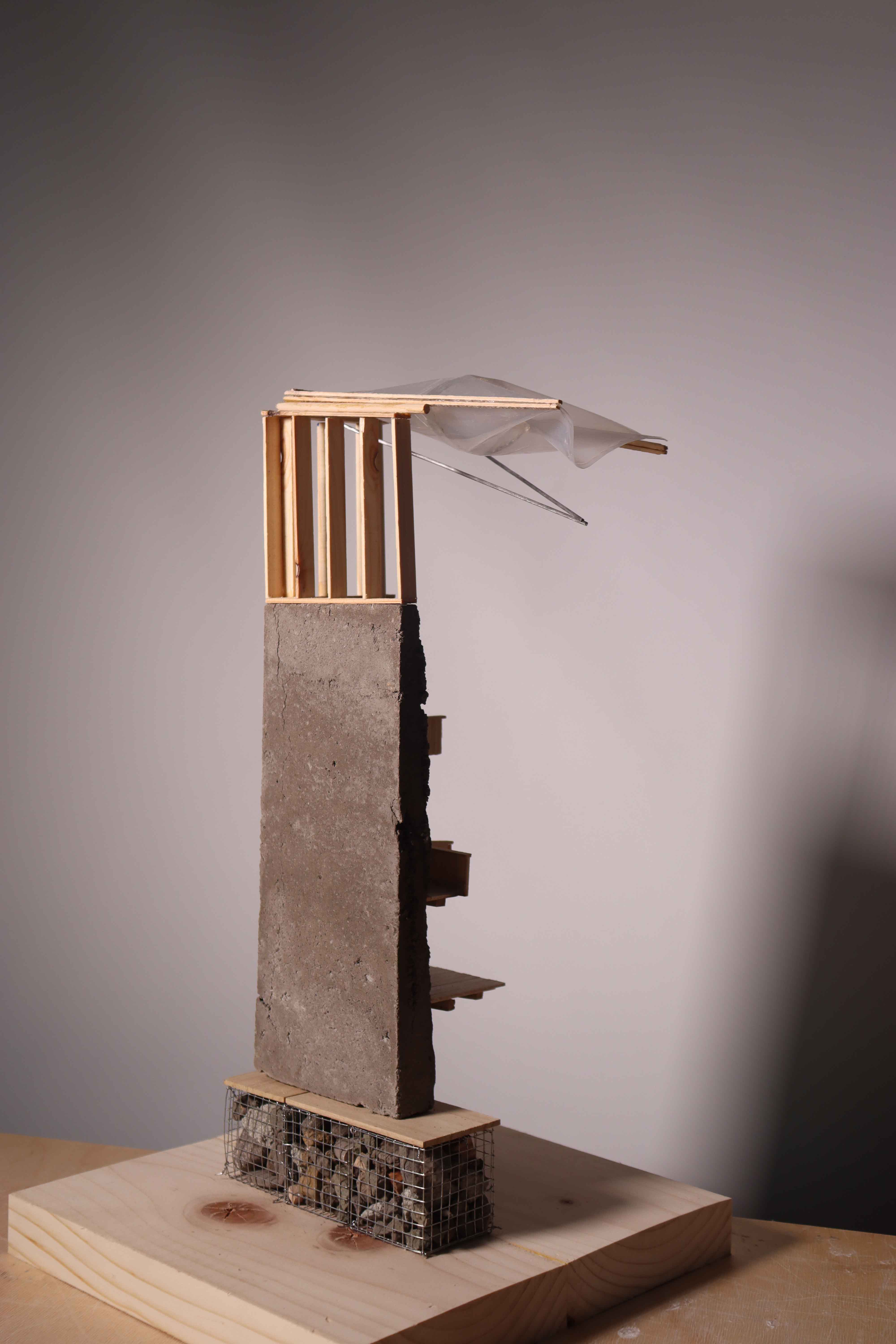
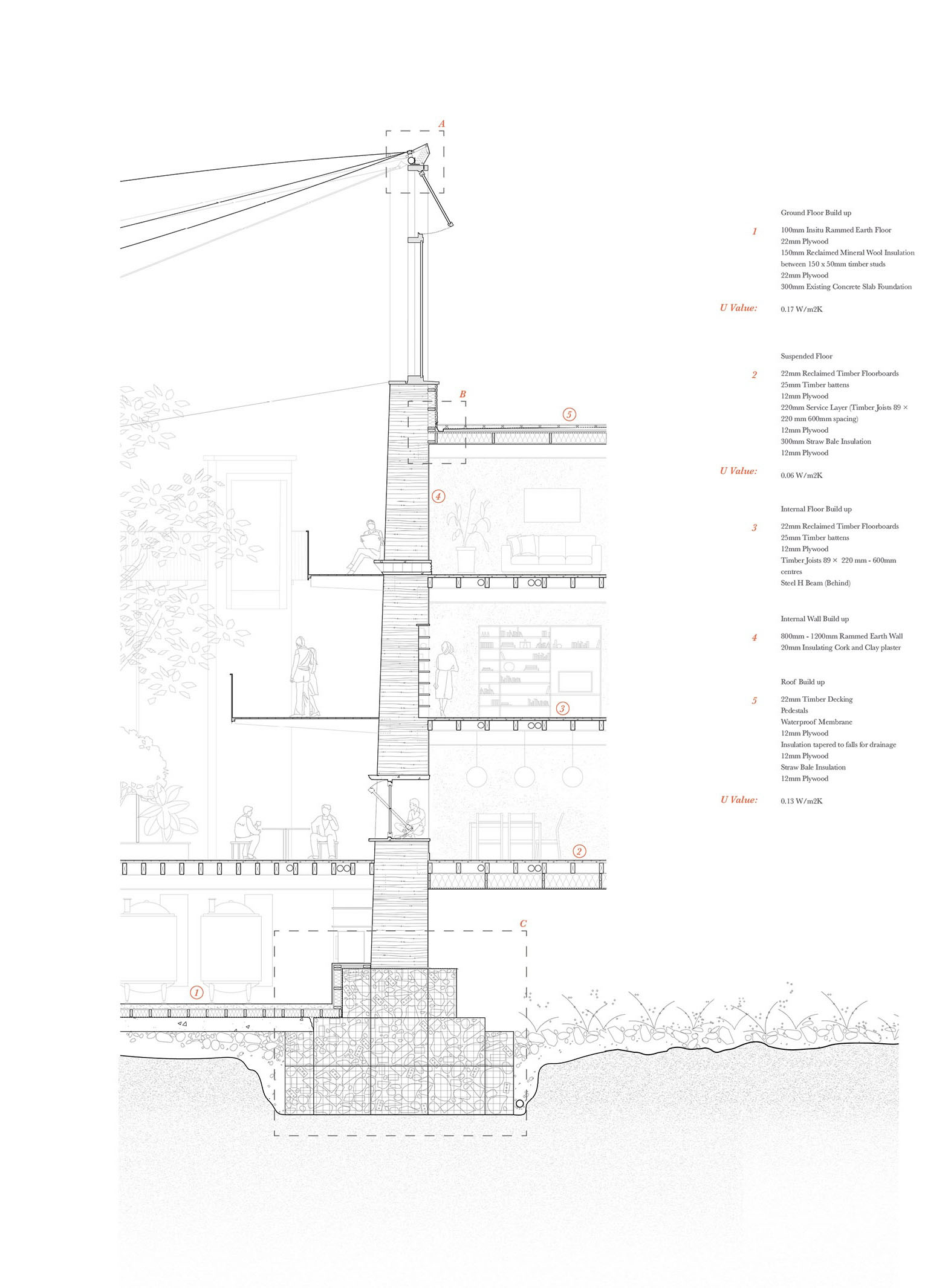
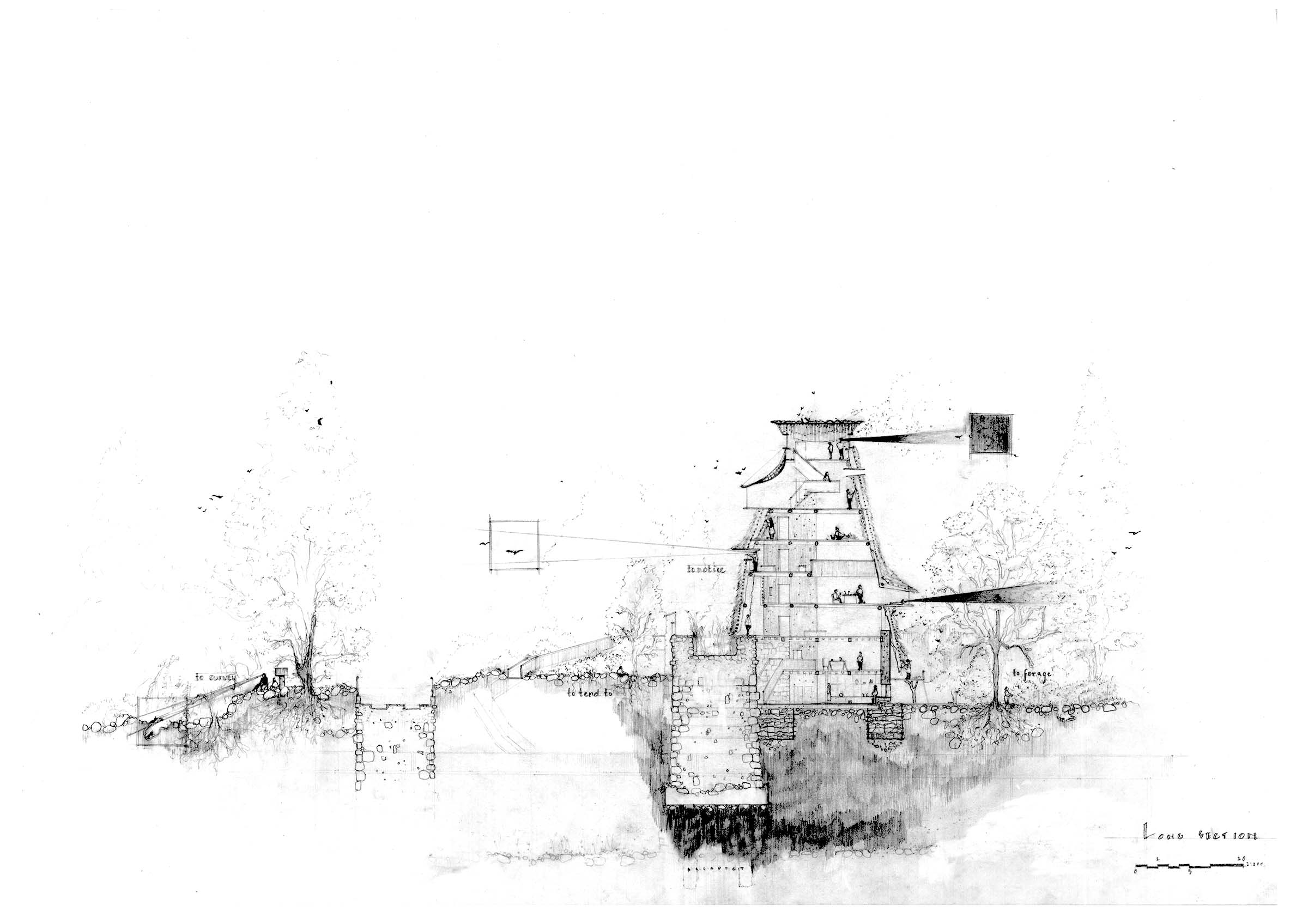
Today, we are faced with what is termed the Sixth Mass Extinction, marked by accelerating biodiversity loss as a key indicator of the climate crisis. In contrast, spaces for human occupancy - city and towns – continue to expand, organised primarily around human needs. As a result, displaced species seek refuge within residual ecological niches, adapting to gradients of human disturbance rather than conditions that enable them to thrive.
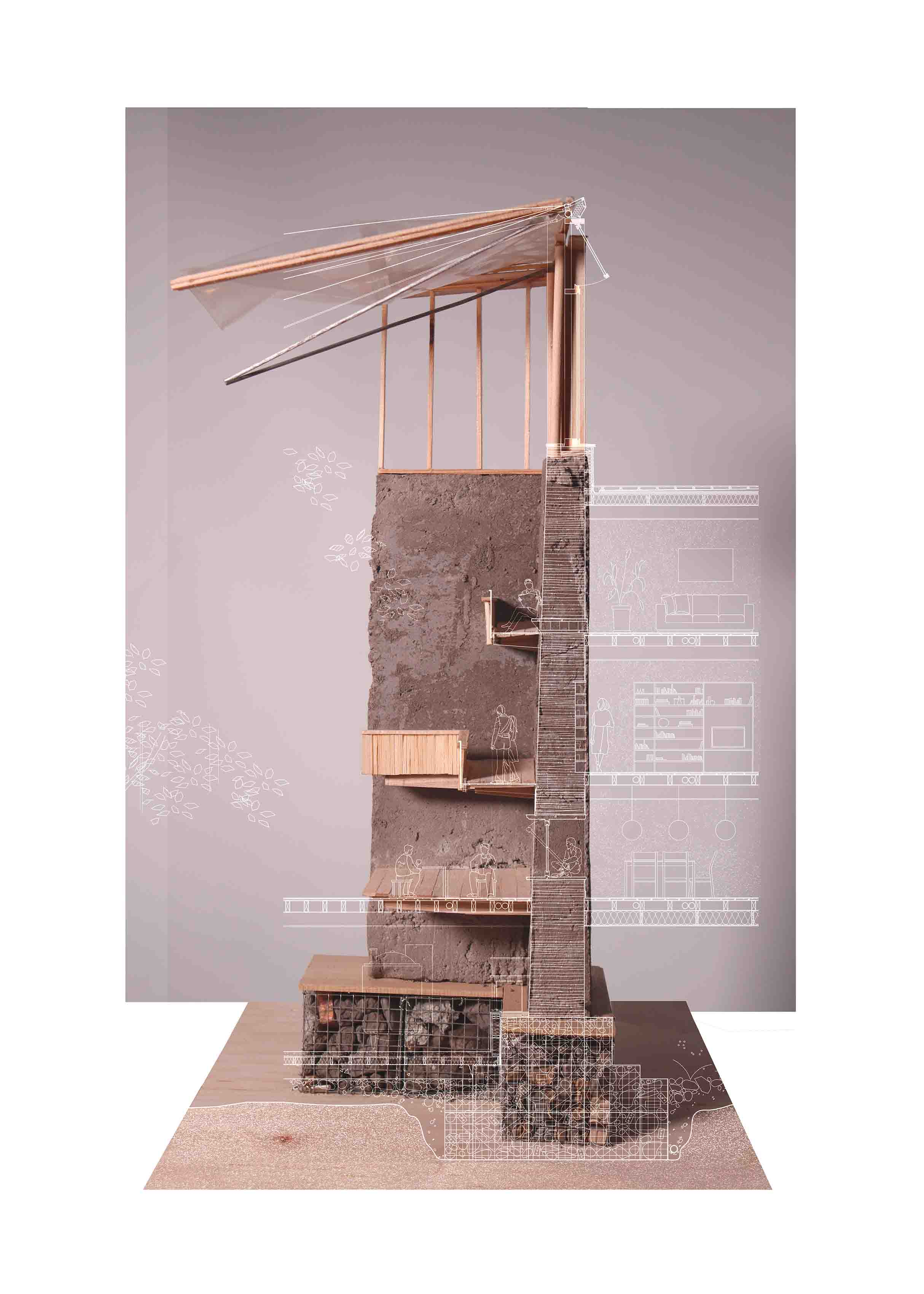
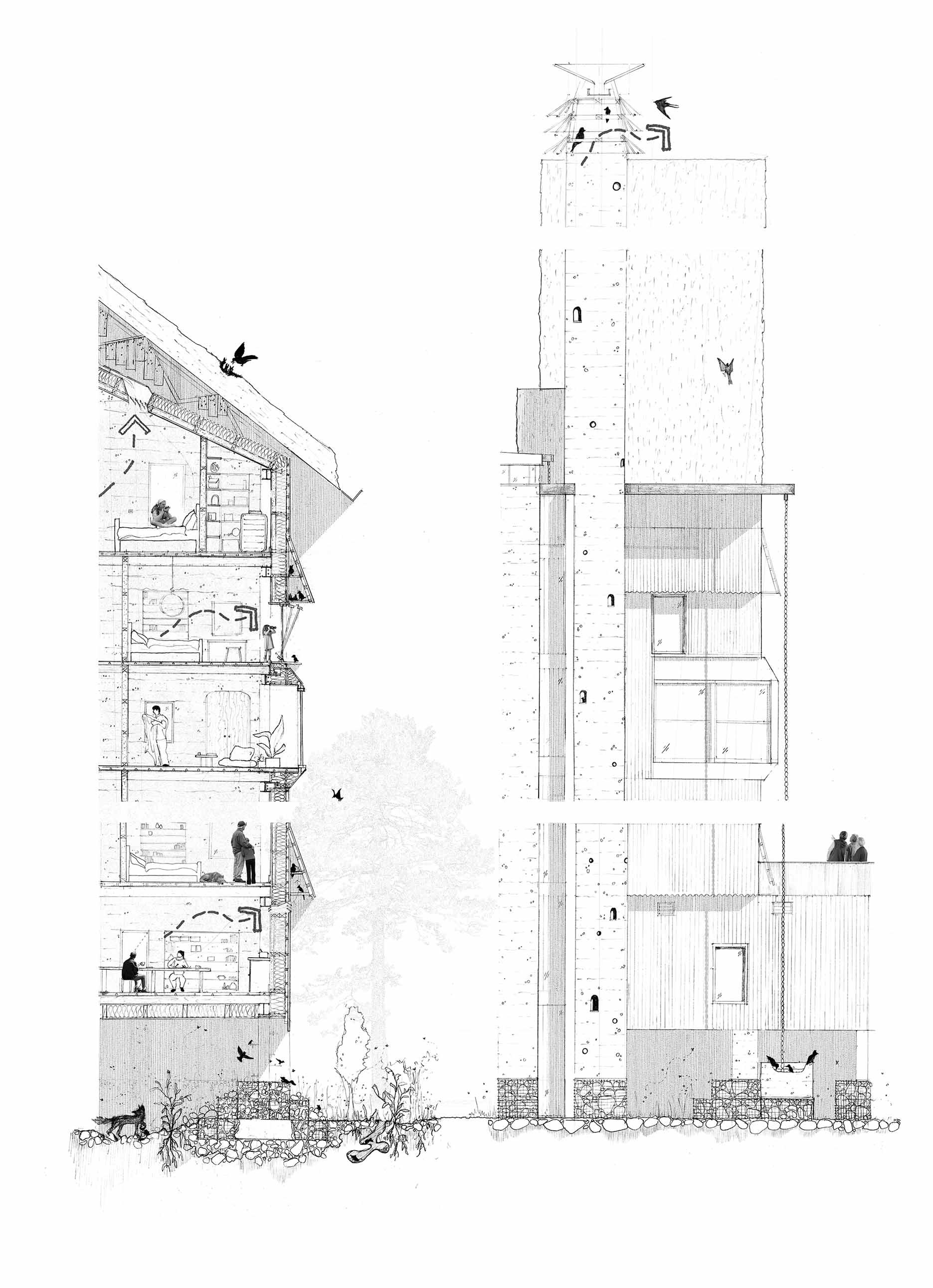
Bridging the separation between human and non-human worlds, this thesis argues that architectural interventions can help remediate the interface – the openings between human and non-human worlds. It proposes a re-design of thresholds—material, thermal, social, and behavioural – as sites where species encounter, avoid, or adapt to one another, transforming the interface into a space of shared resources.
Drawing on Jakob von Uexküll’s concept of Umwelt – each organism perceives the world through its own sensory lifeworld, the thesis reframes the city as a web of overlapping perceptual life-worlds. Informed by Donna Haraway’s notion of multispecies ‘kinship’, the thesis explores how practices of attentiveness and care can cultivate new forms of coexistence.
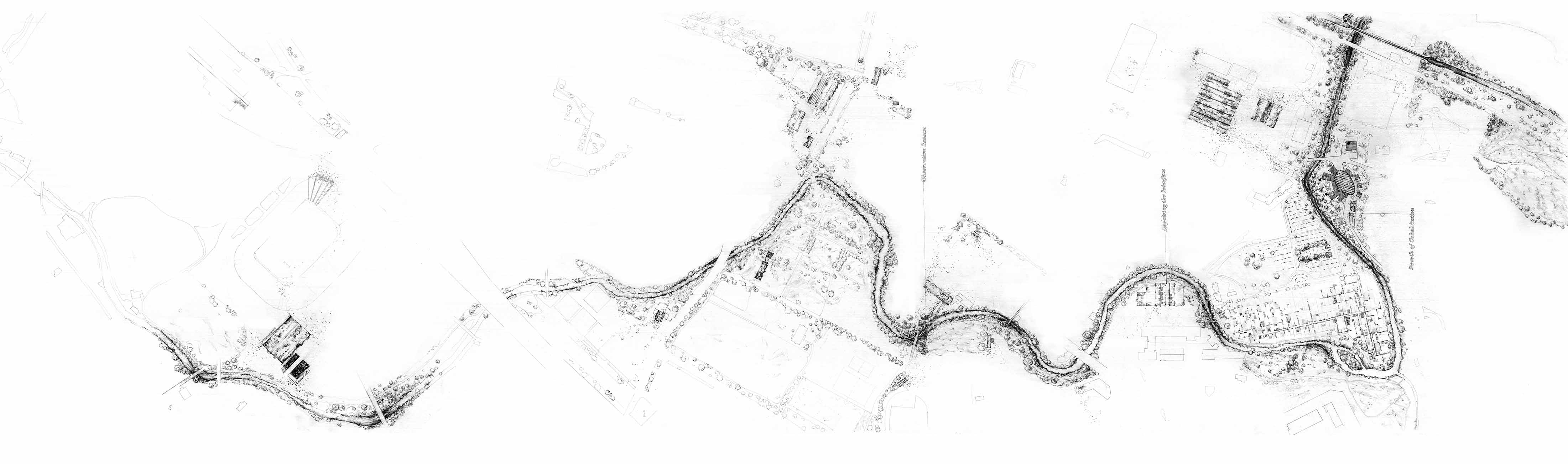
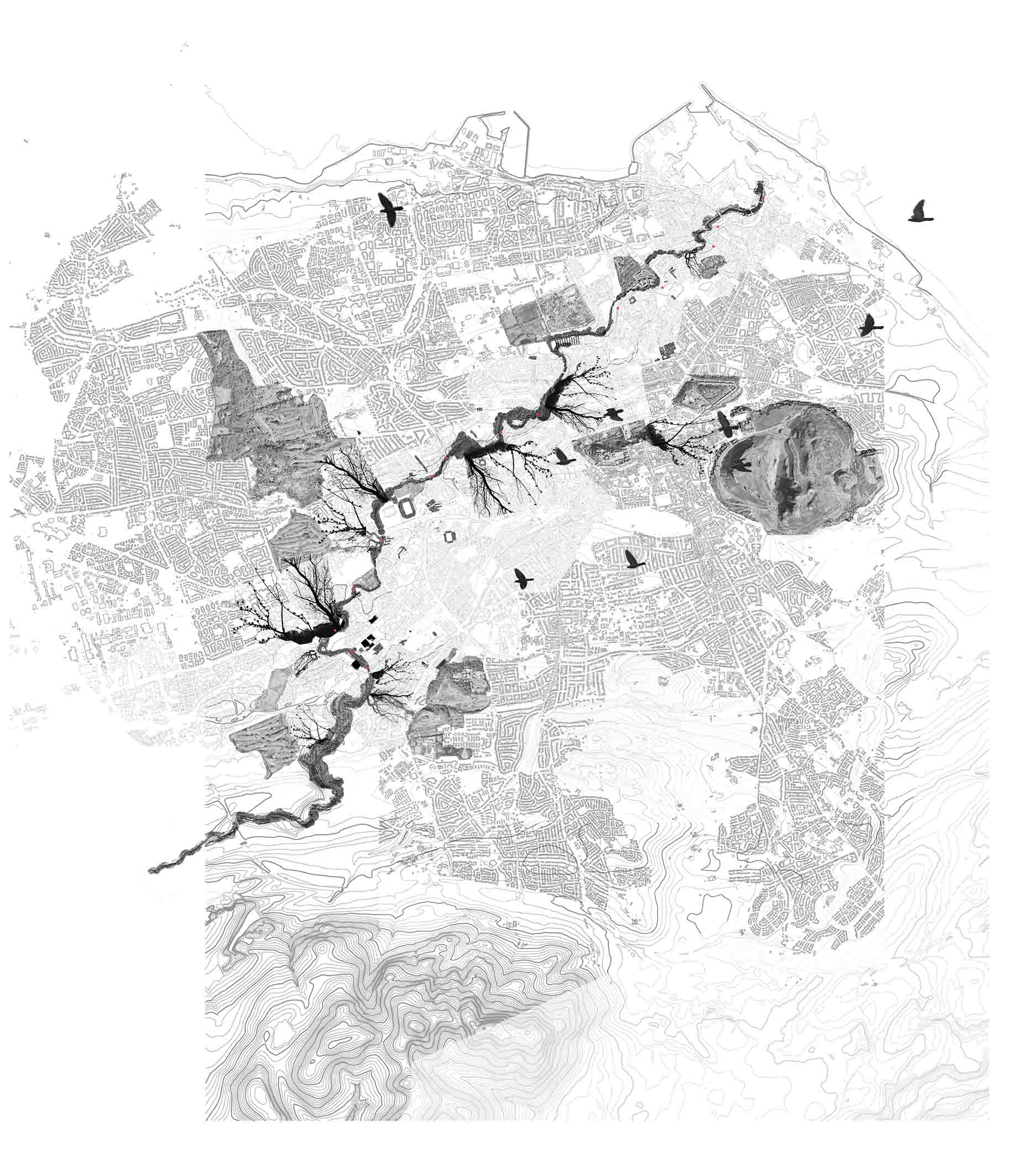
Situated along Edinburgh’s Water of Leith - a vital riparian corridor in Edinburgh, the projects investigates gradients of entanglement between human and non-human actors, where multiple worlds intersect and negotiate space. Through three modes experimental architectural typologies, the thesis explores alternate futures of coexistence:
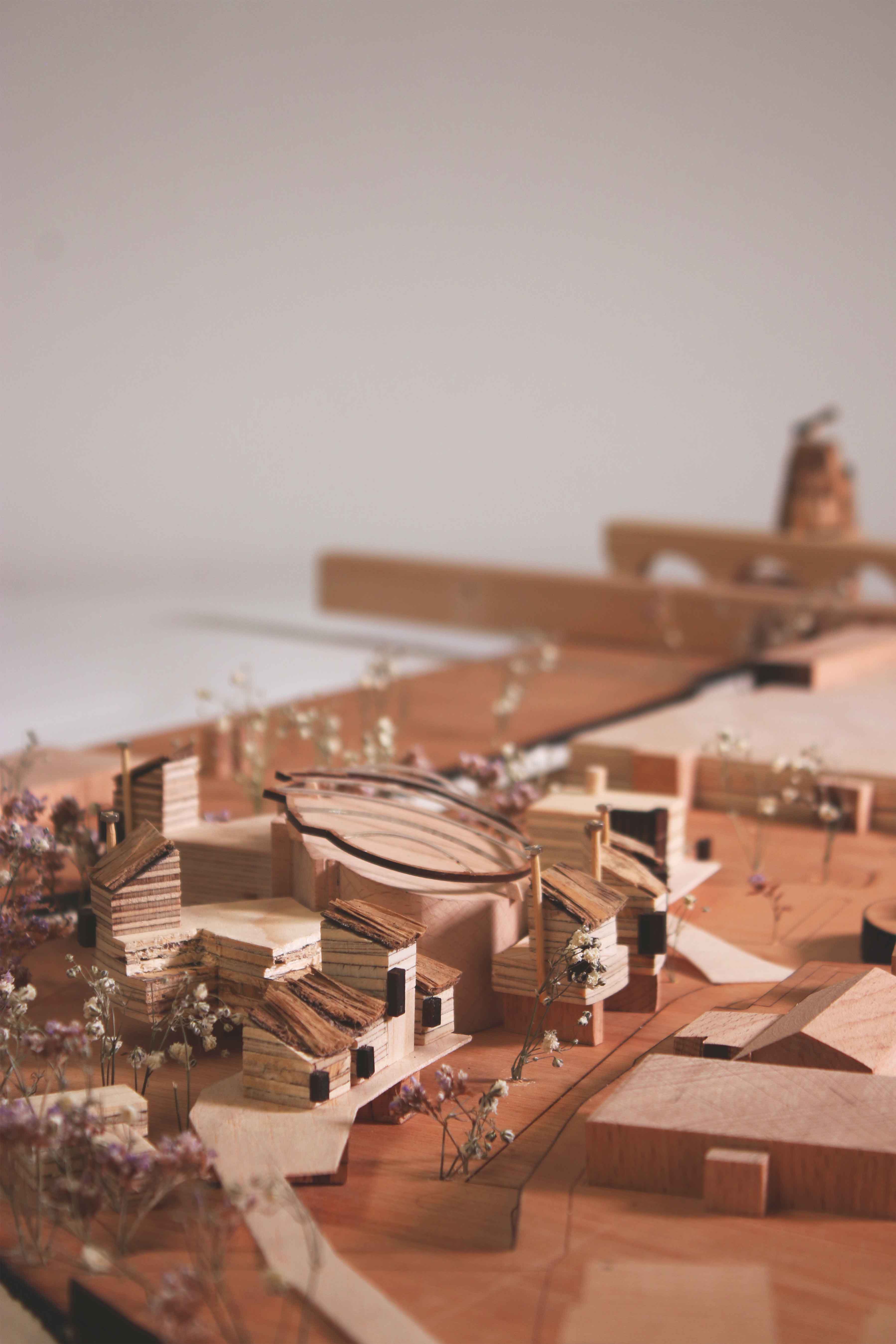
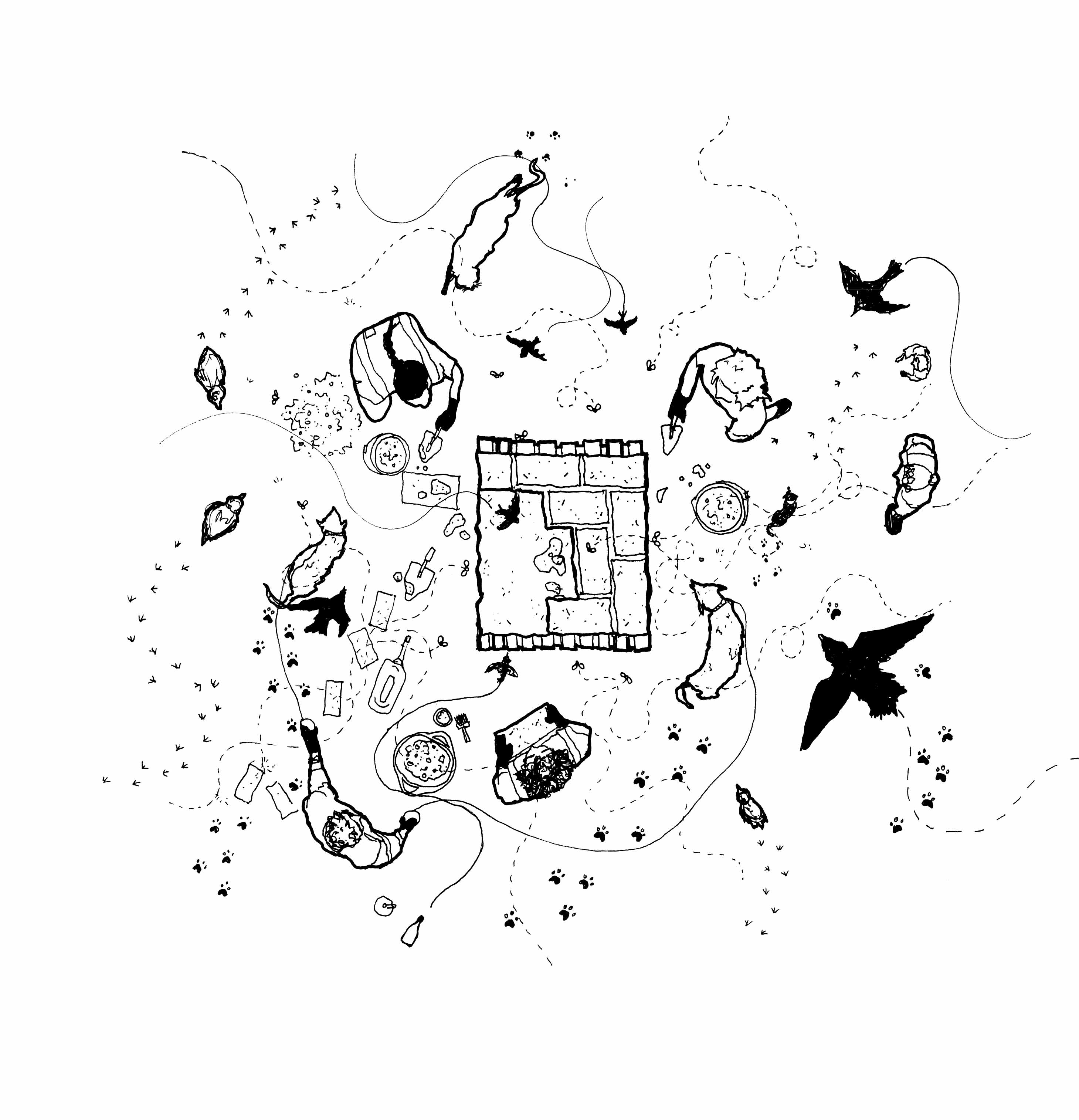
I Hearth of Co-habitation
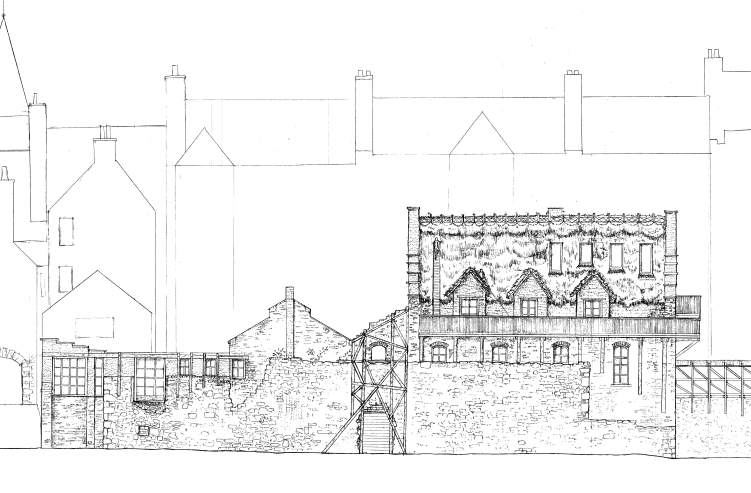
II Observation Beacon
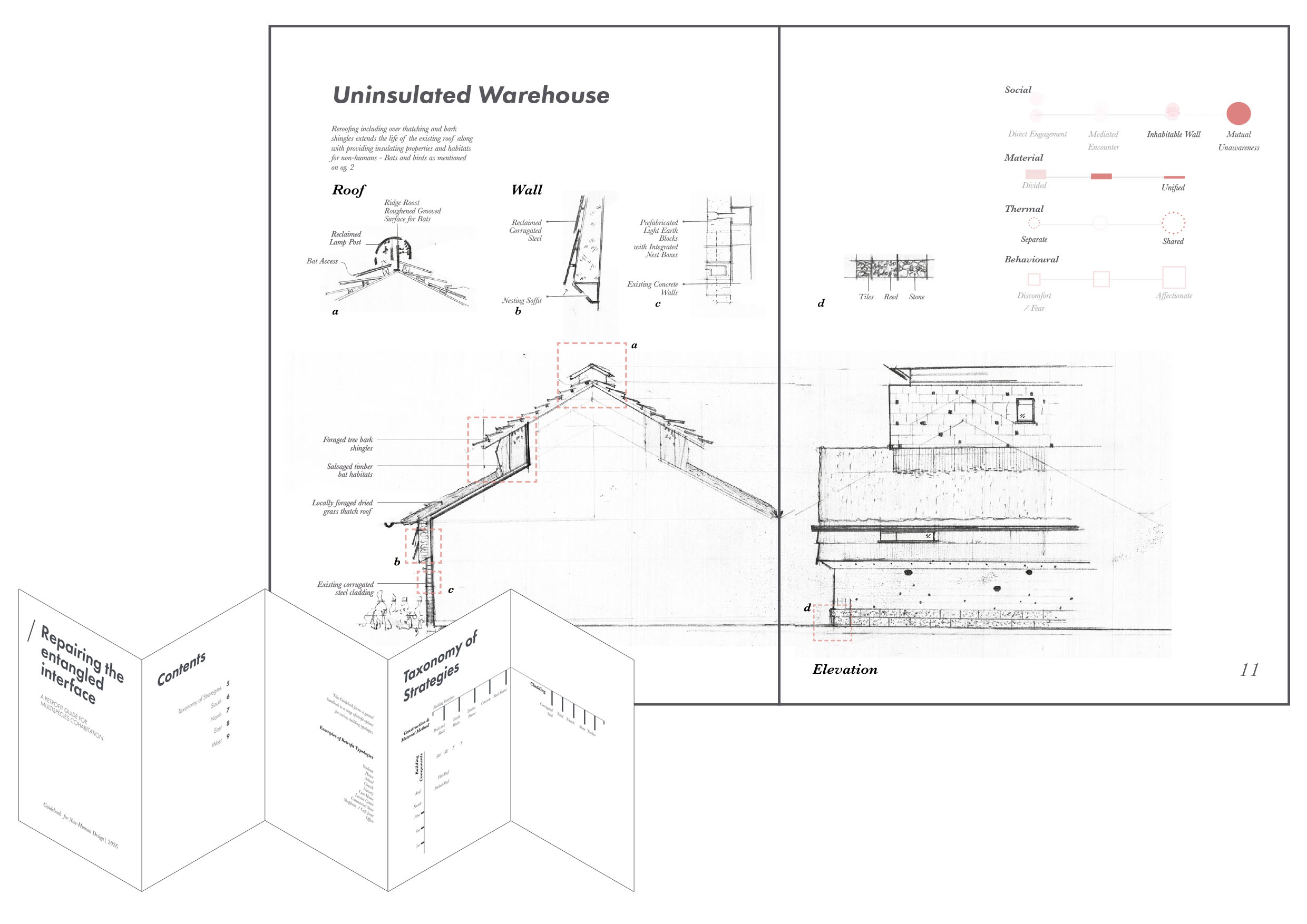
III Repairing the Entangled Interface
Building on ‘situated knowledges’ and live build methodologies, the thesis revalues neglected ecological systems, marginalised non-human spaces, and salvaged material flows. In doing so, it positions architecture not as a tool of control, but as an active practice of care within a multispecies city.