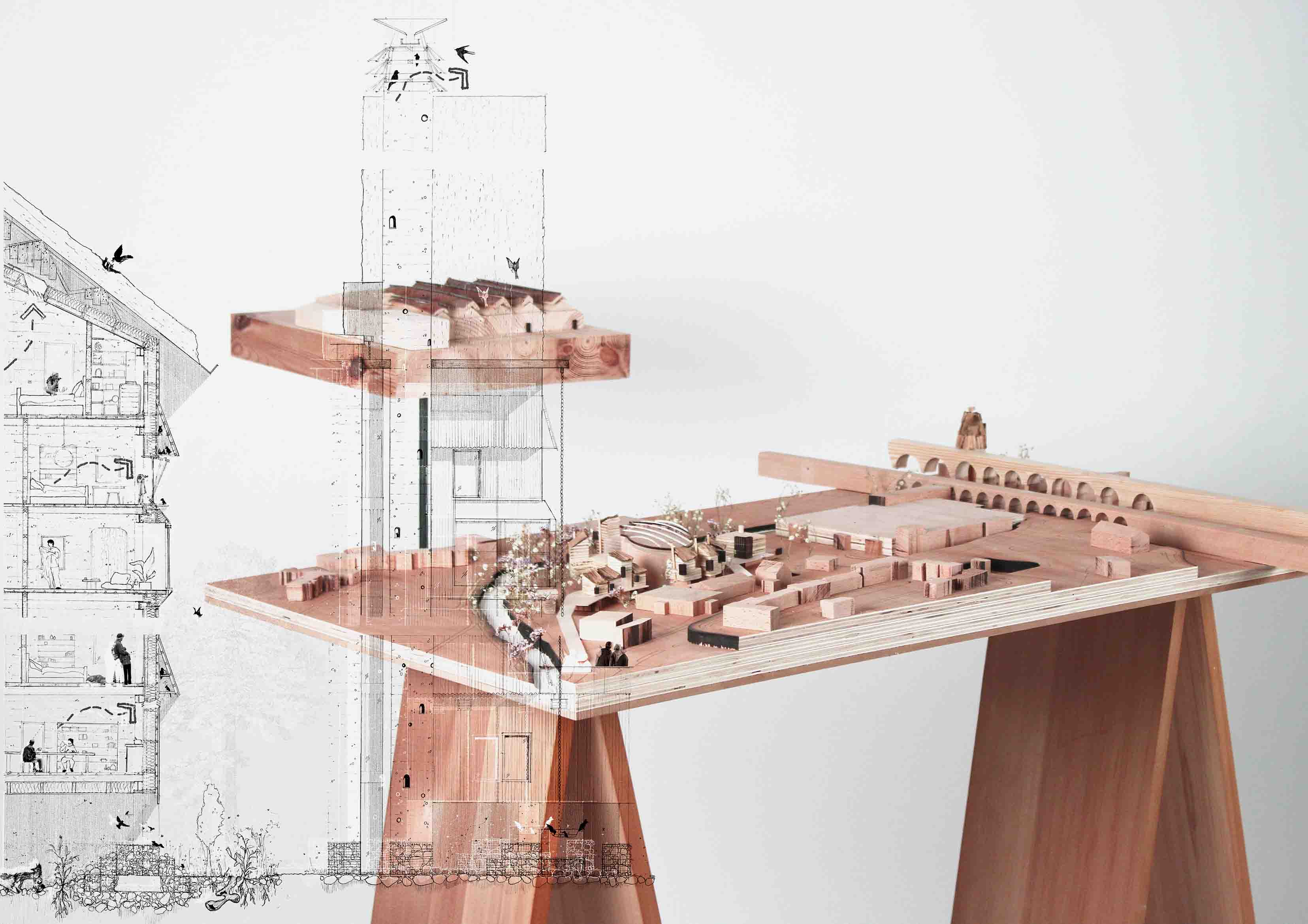


Edinburgh is a city celebrated for its rich historic townscape and cultural gravitas. And like many such cities, heritage and culture, matters that ought to arise from lived collective experience, are increasingly curated, commercialised, and fixed in place. Community presences within the historic core are thinning, replaced by over-tourism, gentrification, and developments that cater more readily to external expectations than to everyday life. The result is a gradual erasure of local values, knowledge, and social memory.
Over two years of collective making and earth-based explorations, I became particularly interested in hands-on design through traditional techniques and craftsmanships, where not only the building fabric is transferred, but the skills and practices that produced it as well. I was drawn to an alternative architectural and urban narrative: one that treats heritage as lived; design as shared, familiar, and at times ad hoc; and the city as shaped not solely by authority, but by the values, experiments, and explorations of its people. Perhaps structures should assume frequent attention and maintenance as a condition of their vitality.
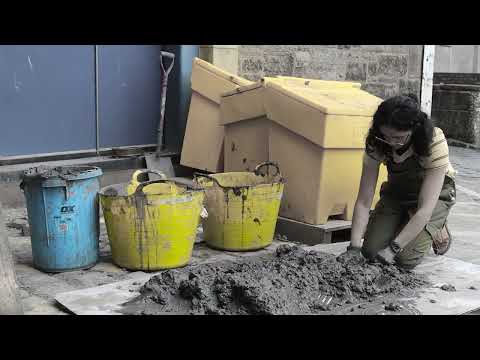
Beginning with the earth-based live-build of the first year, an understanding of the labour intensity and practical realities of building and maintenance was developed, alongside the realisation that, with appropriate guidance, a structure can be highly buildable even by complete amateurs. In the second year, these insights were tested through two separate design works.
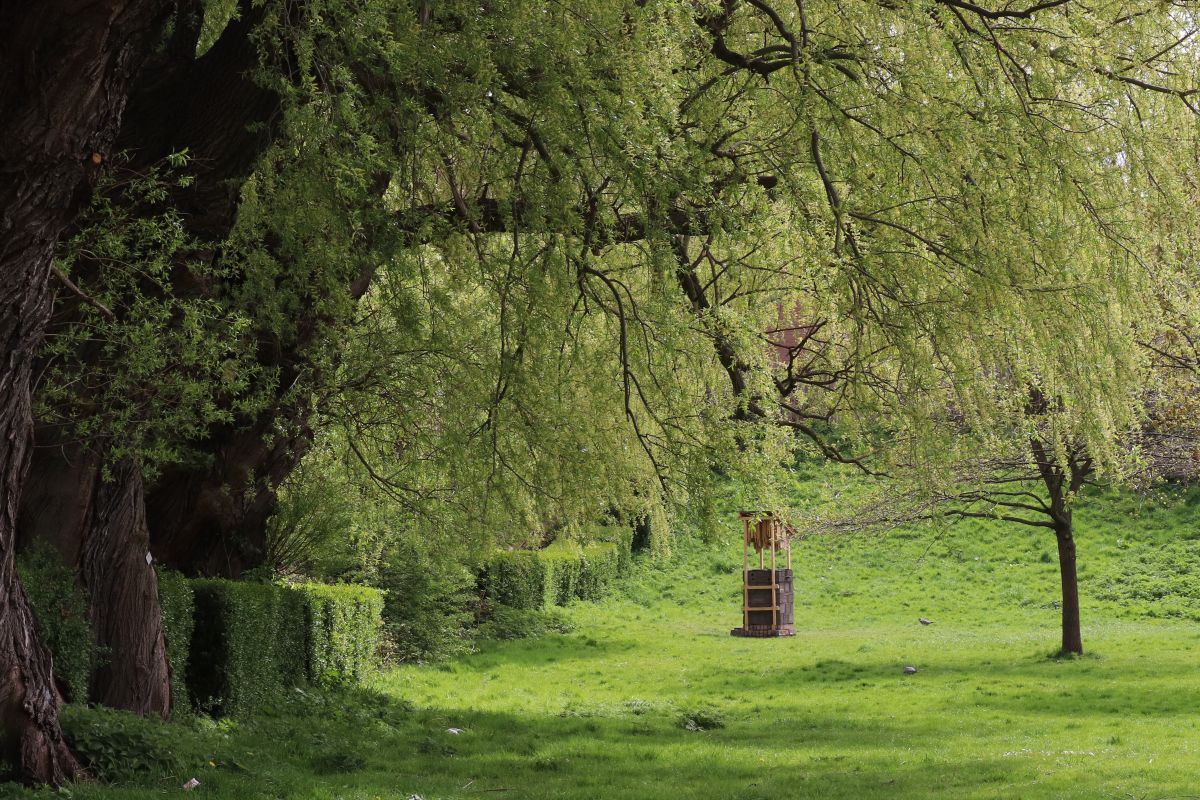
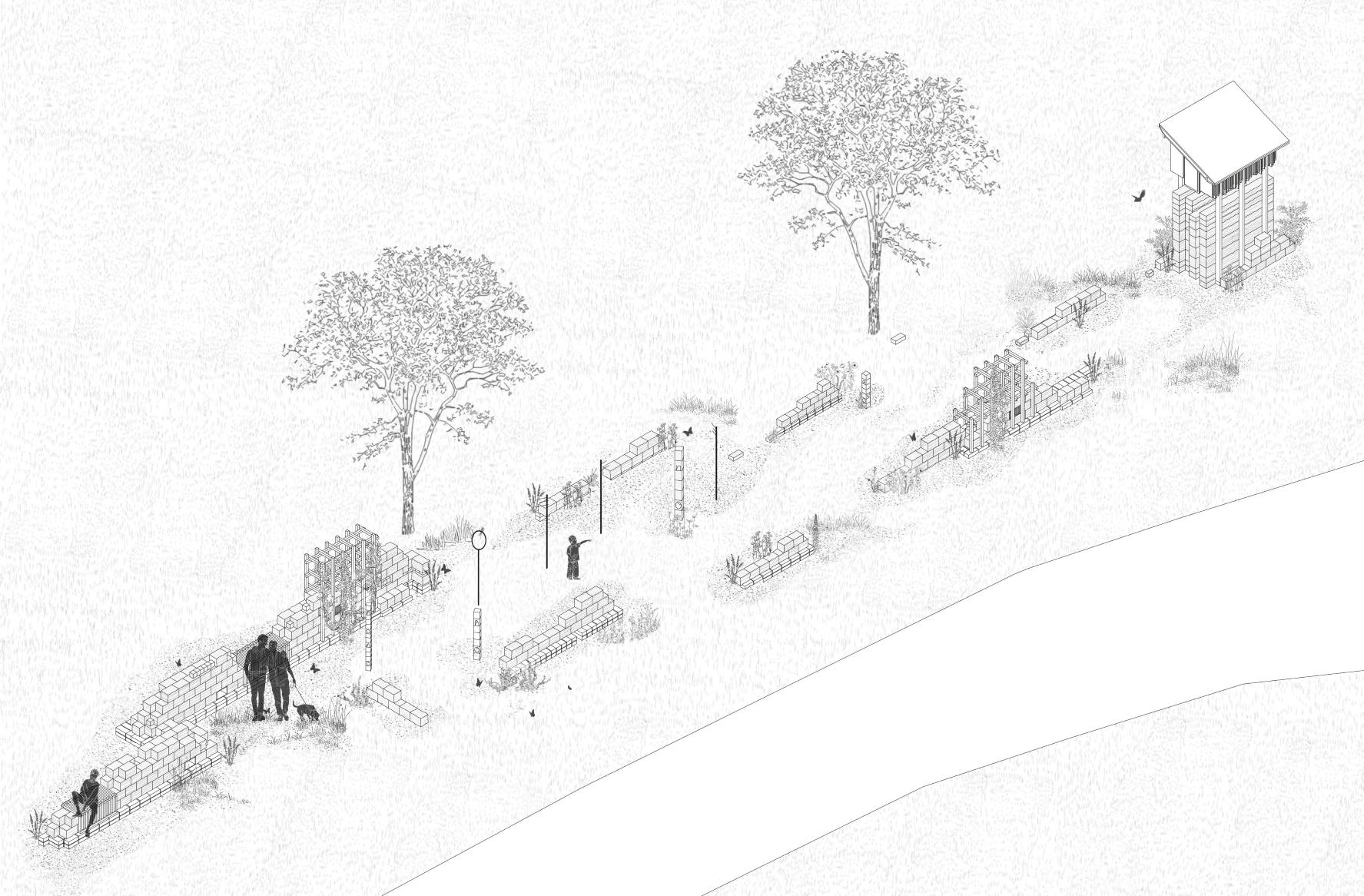
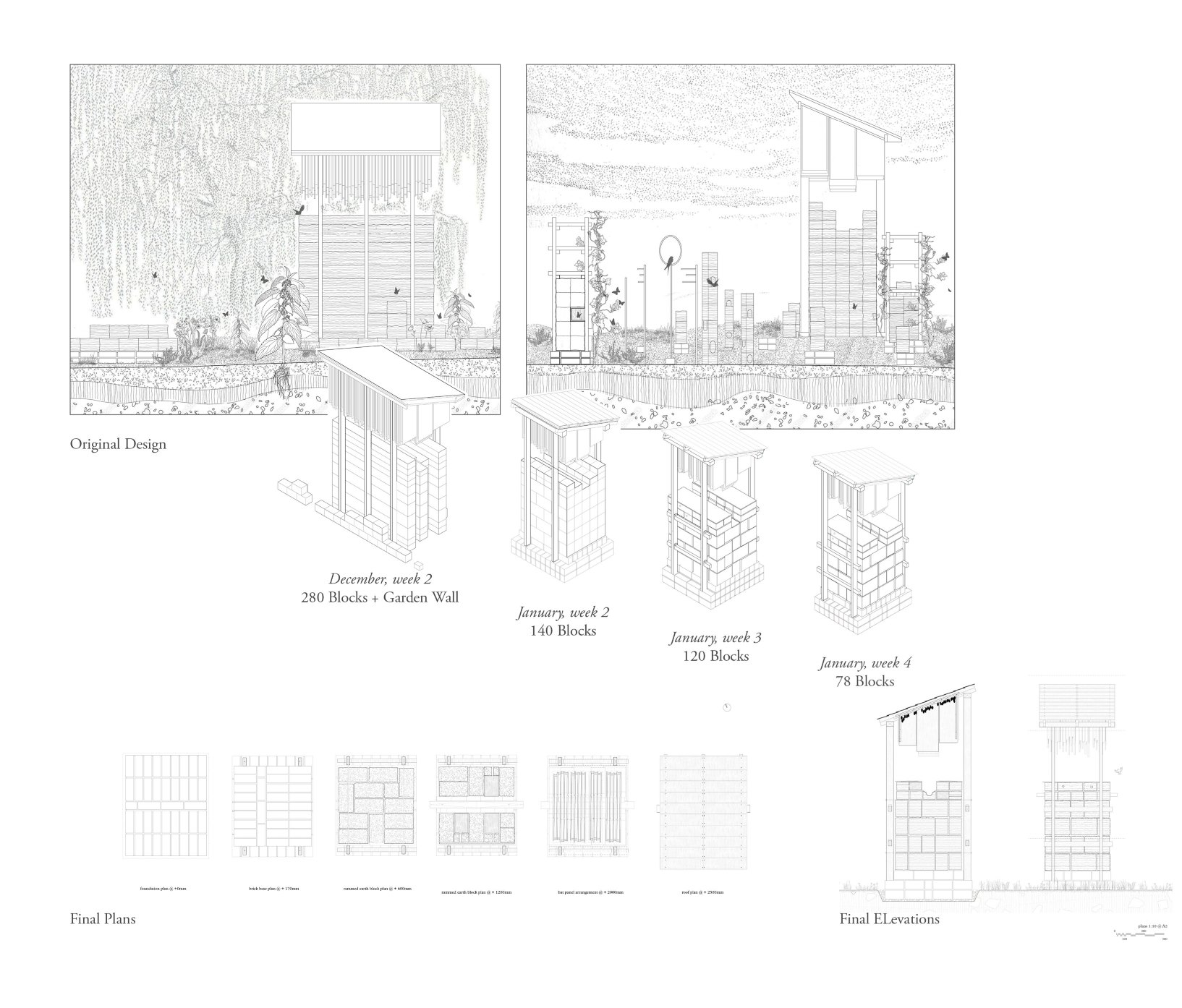
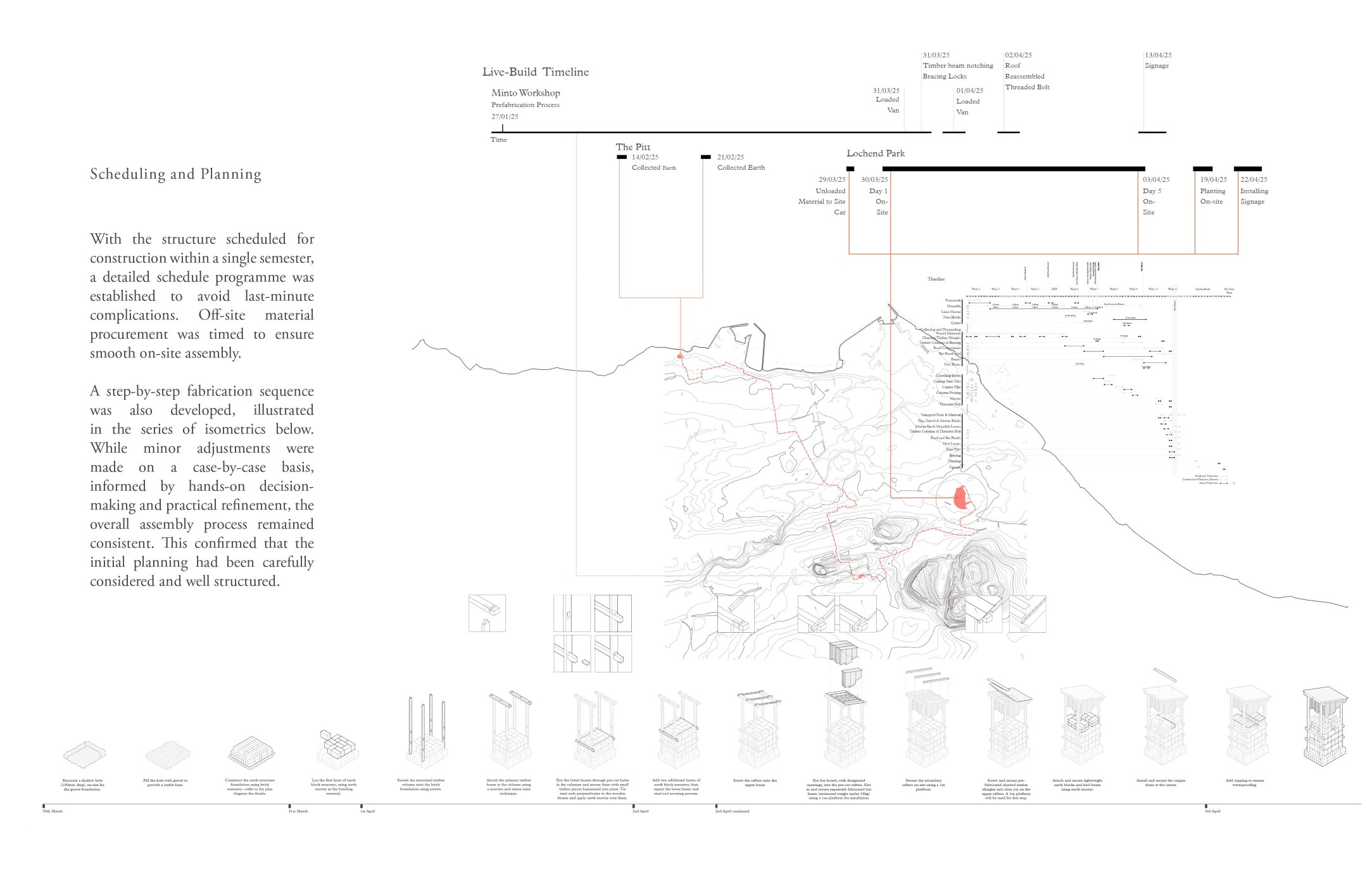
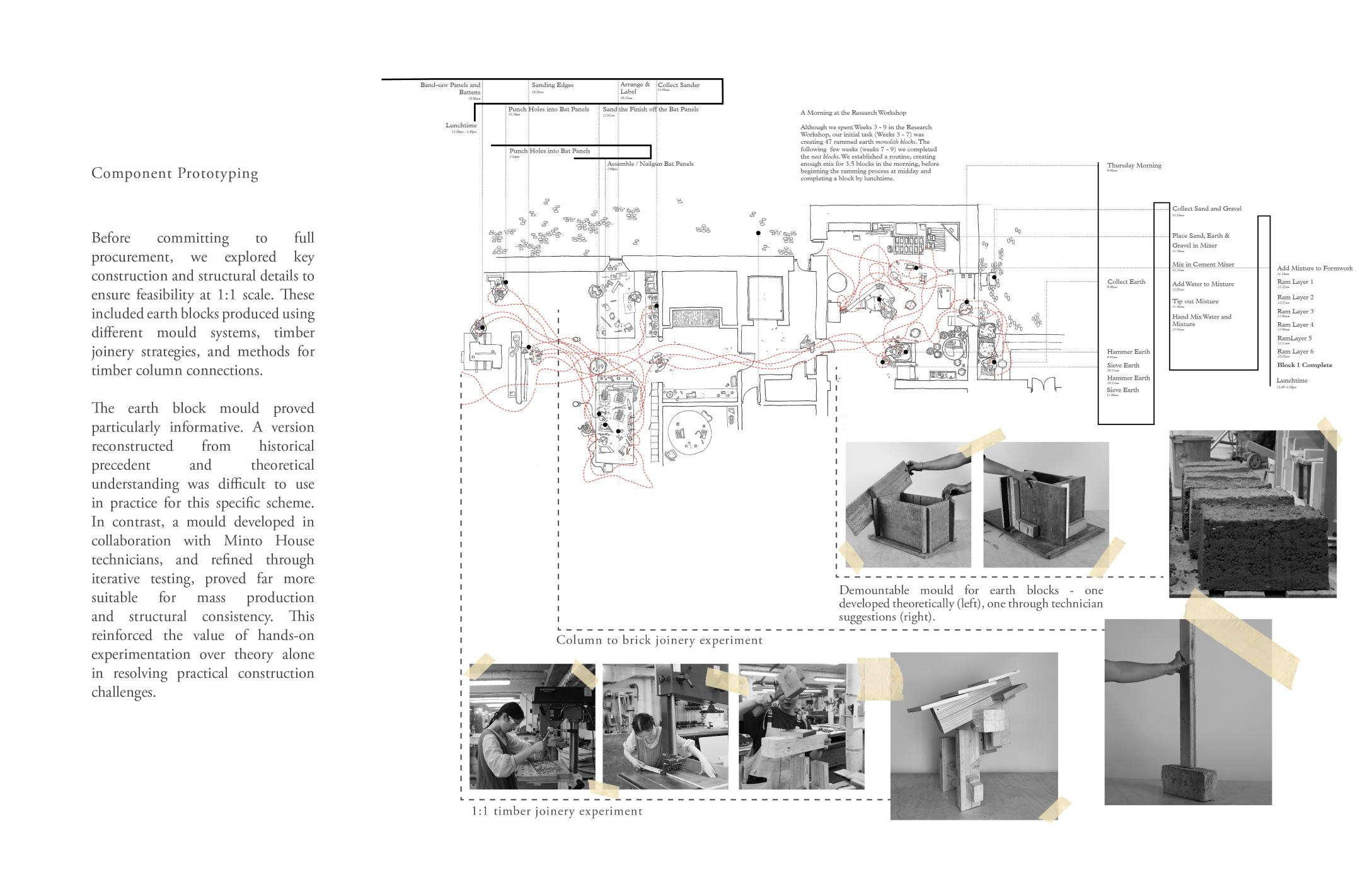
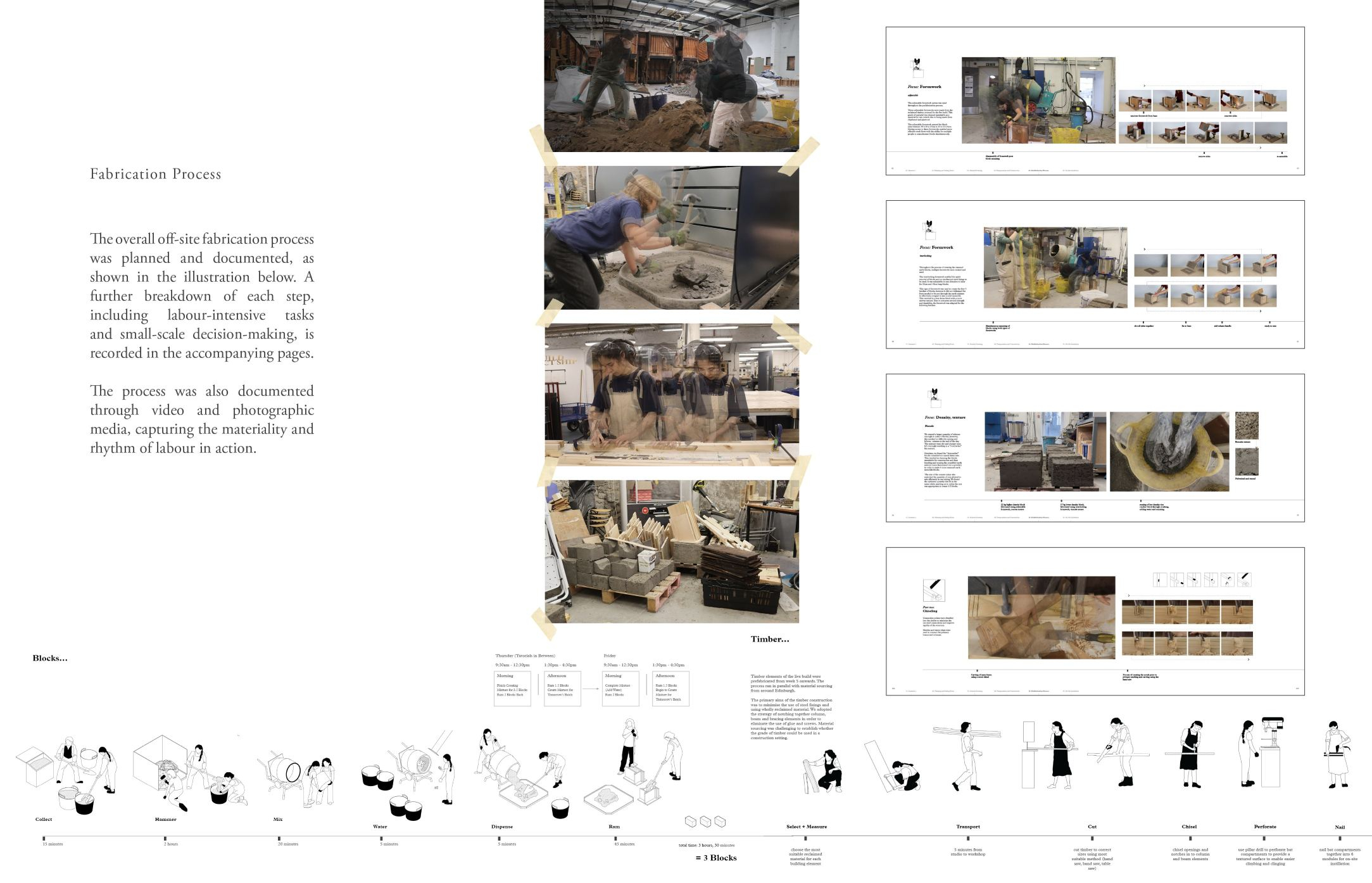
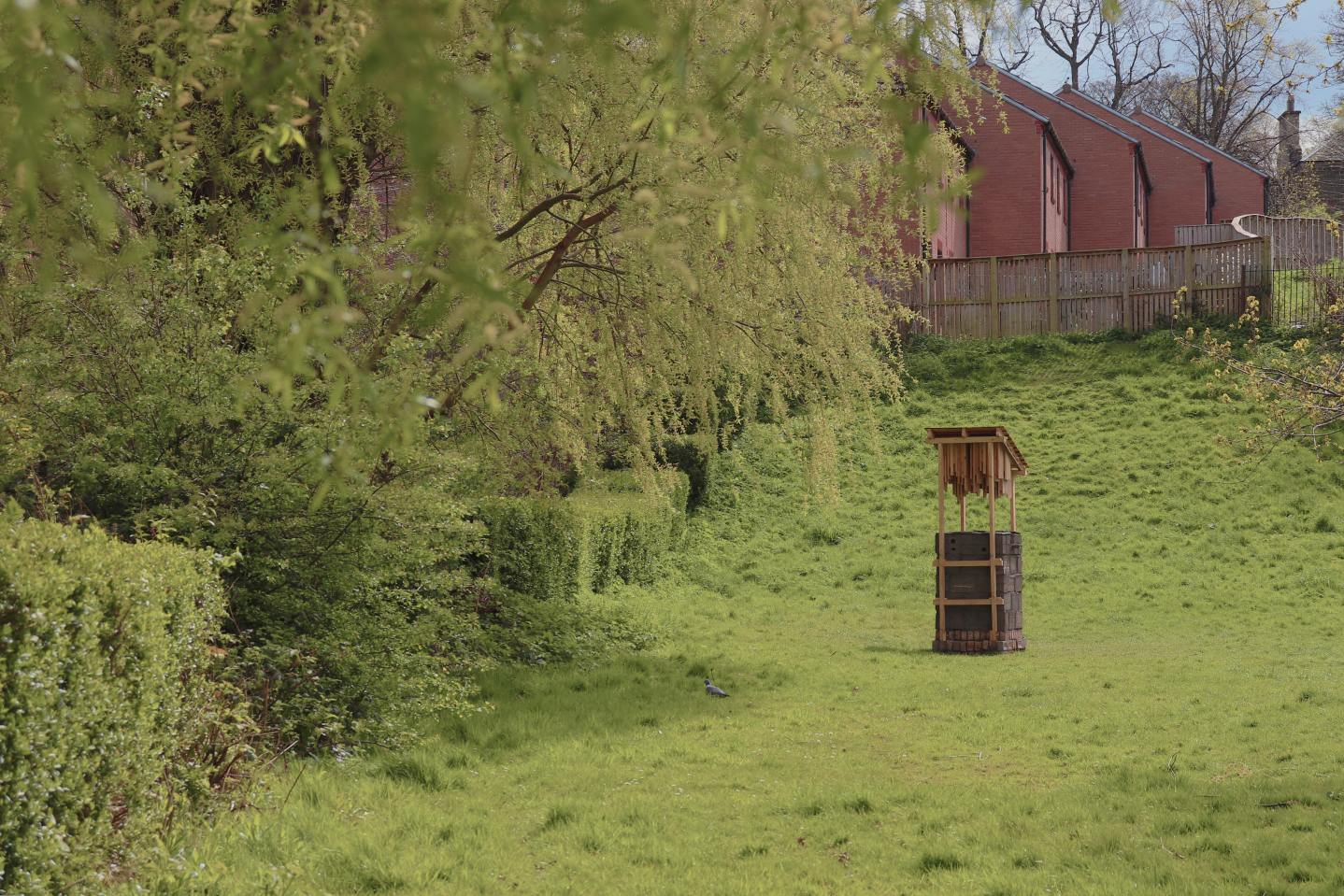
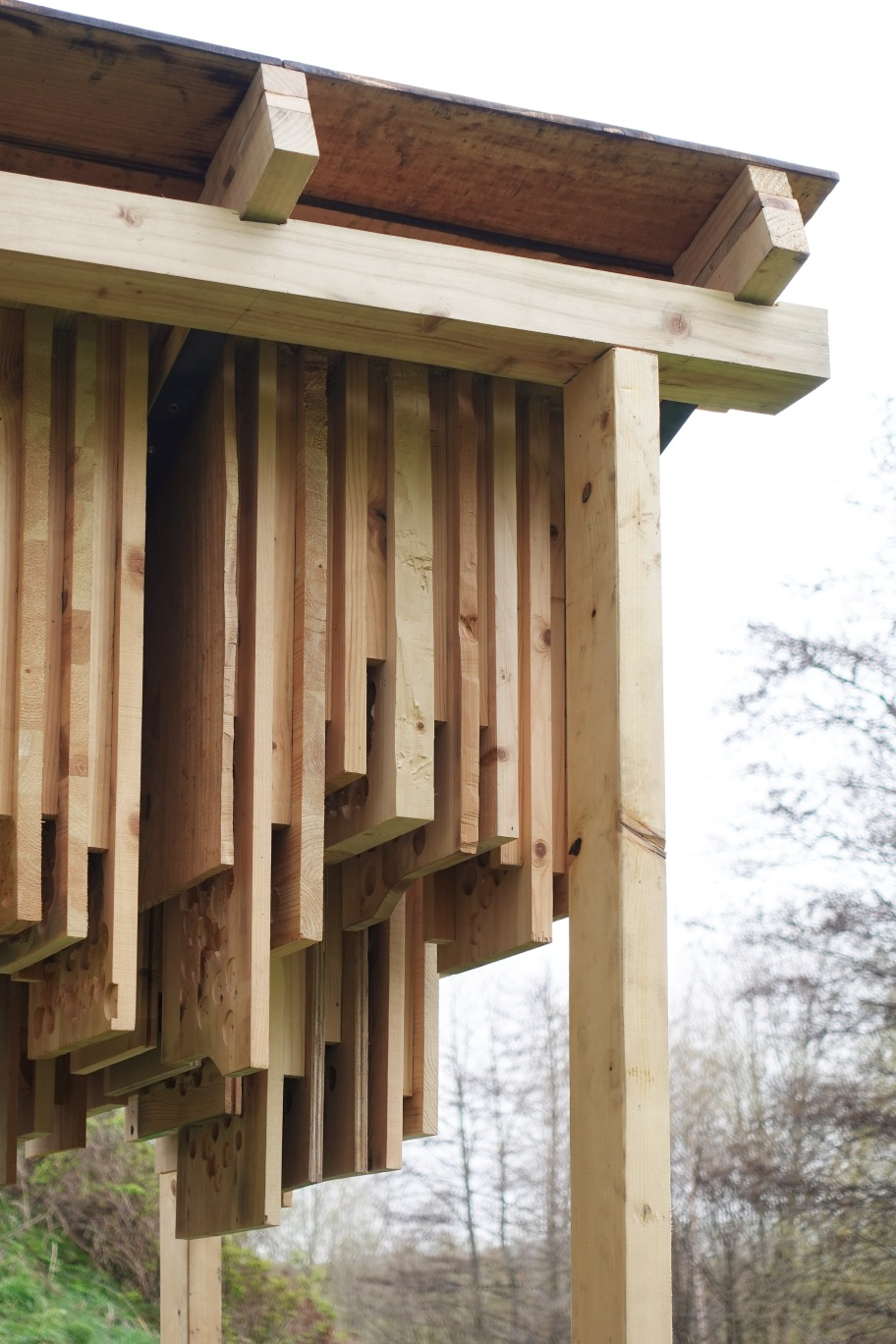
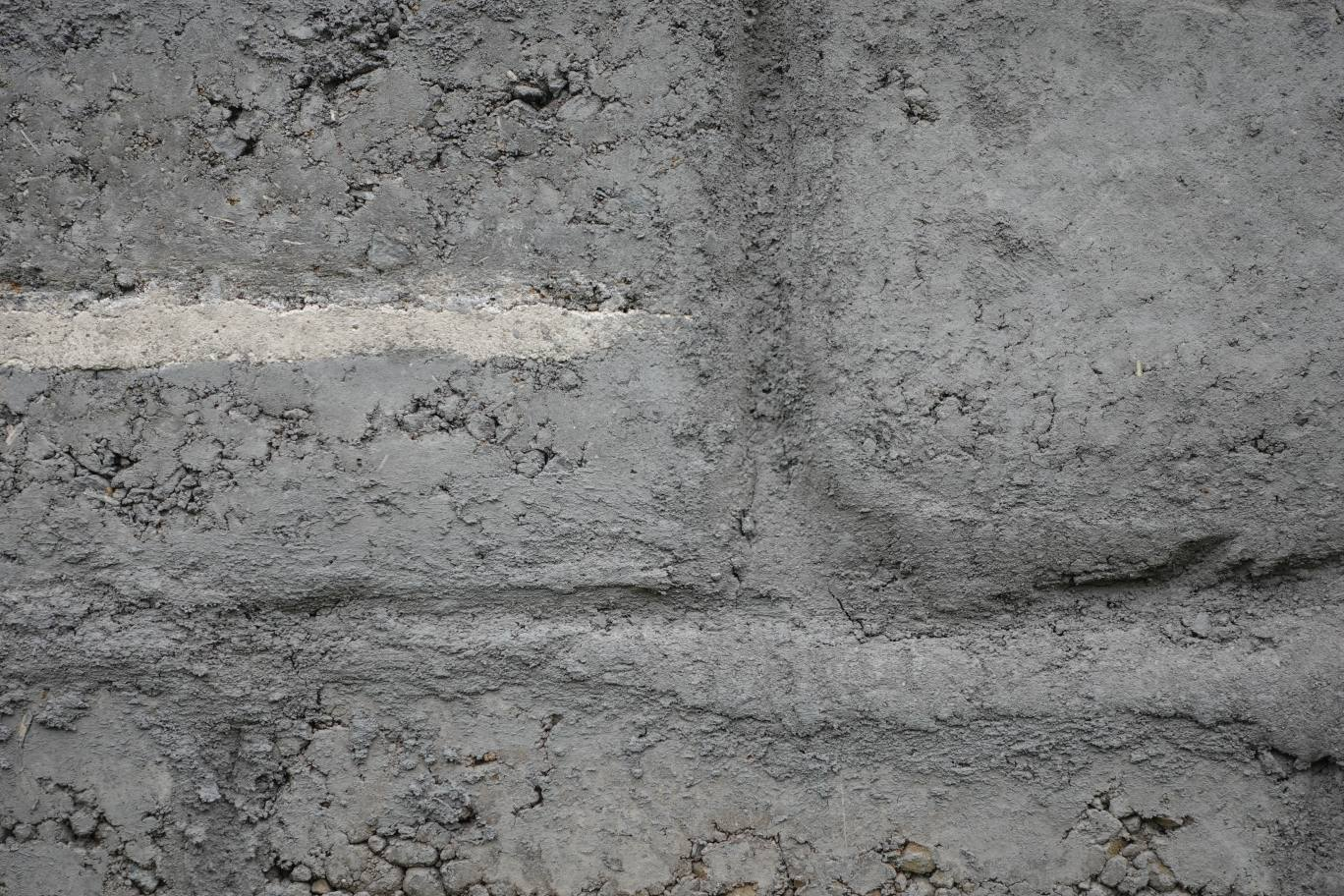
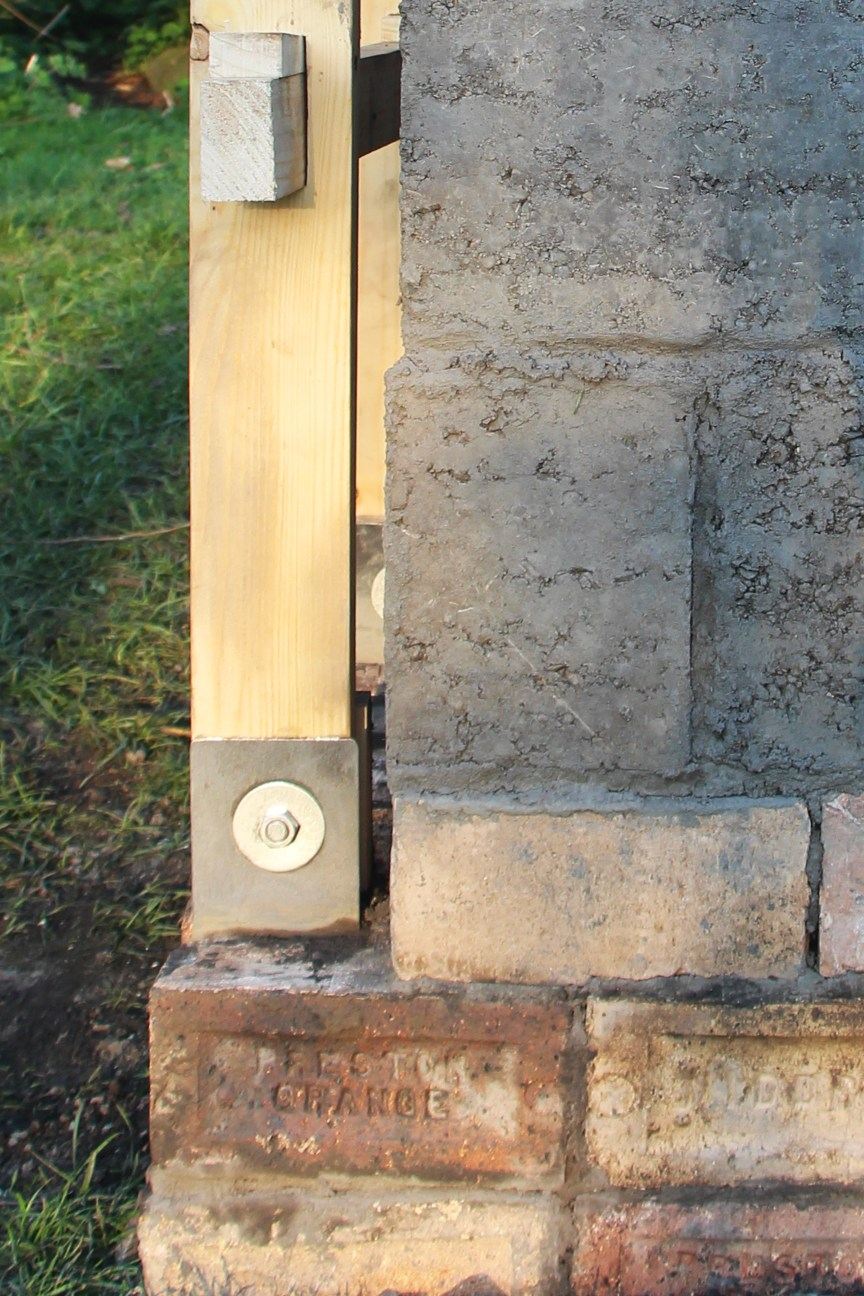
For the first year of our integrated pathway, we undertook an earth-based live-build project. Assigned Lochend Park as our site, we designed and built a rammed earth block and timber-based Bat and Birds Tower.
Design revisions were in constant dialogue with the fabrication process, their labour-intensity, timescales, and overall buildability. The most apparent revision is the reduction in the structure's scale, while most minor revisions are not immediately visible. While both the fabrication process and the design were planned meticulously, many decisions were made on site and in the moment. Yet these ad hoc, last-minute decisions proved forgiving, with the final outcome remaining robust and close to the original concept.
All work for the Live-Build was produced in collaboration with Siya Kulkarni and Daisy Foster.



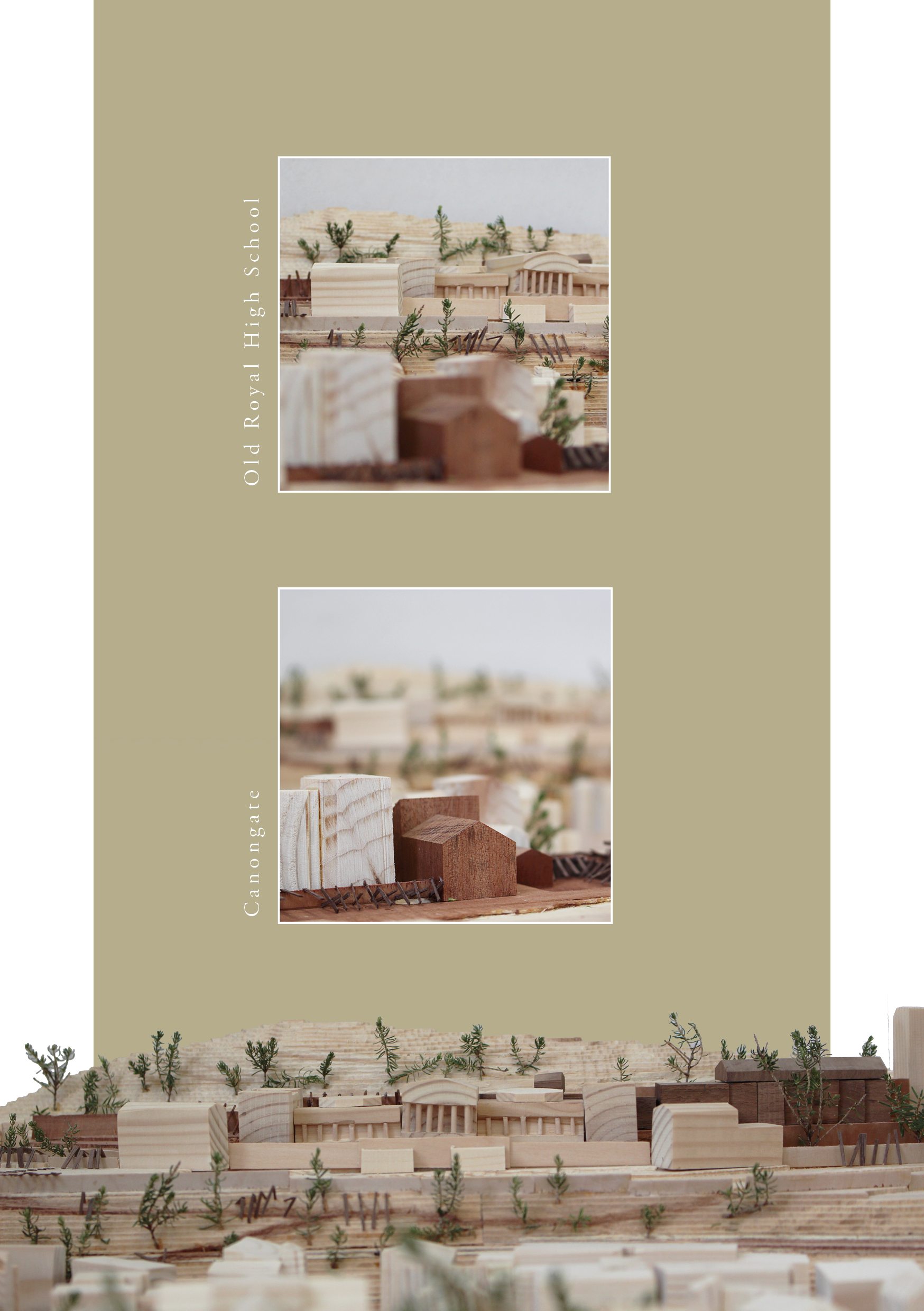
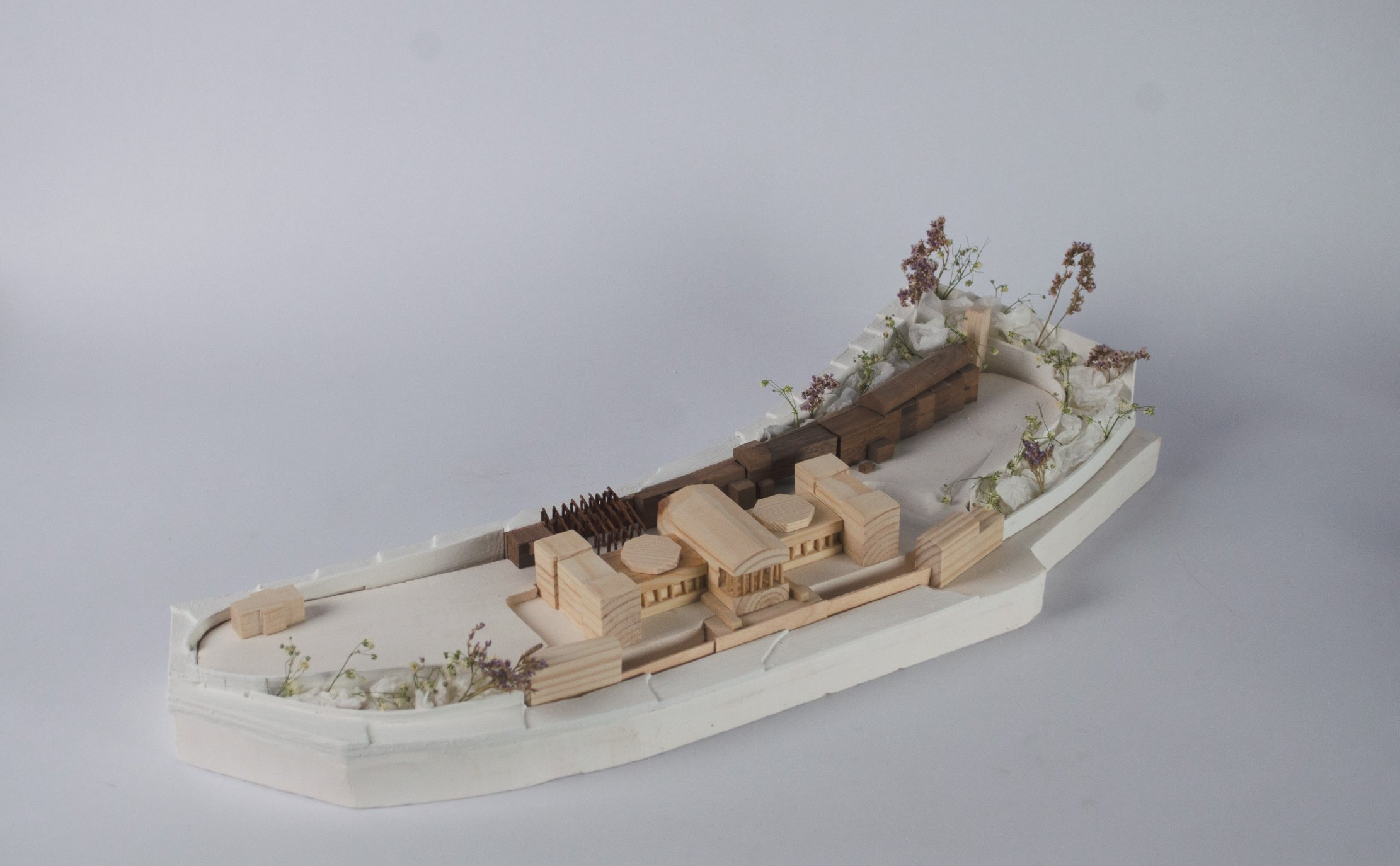
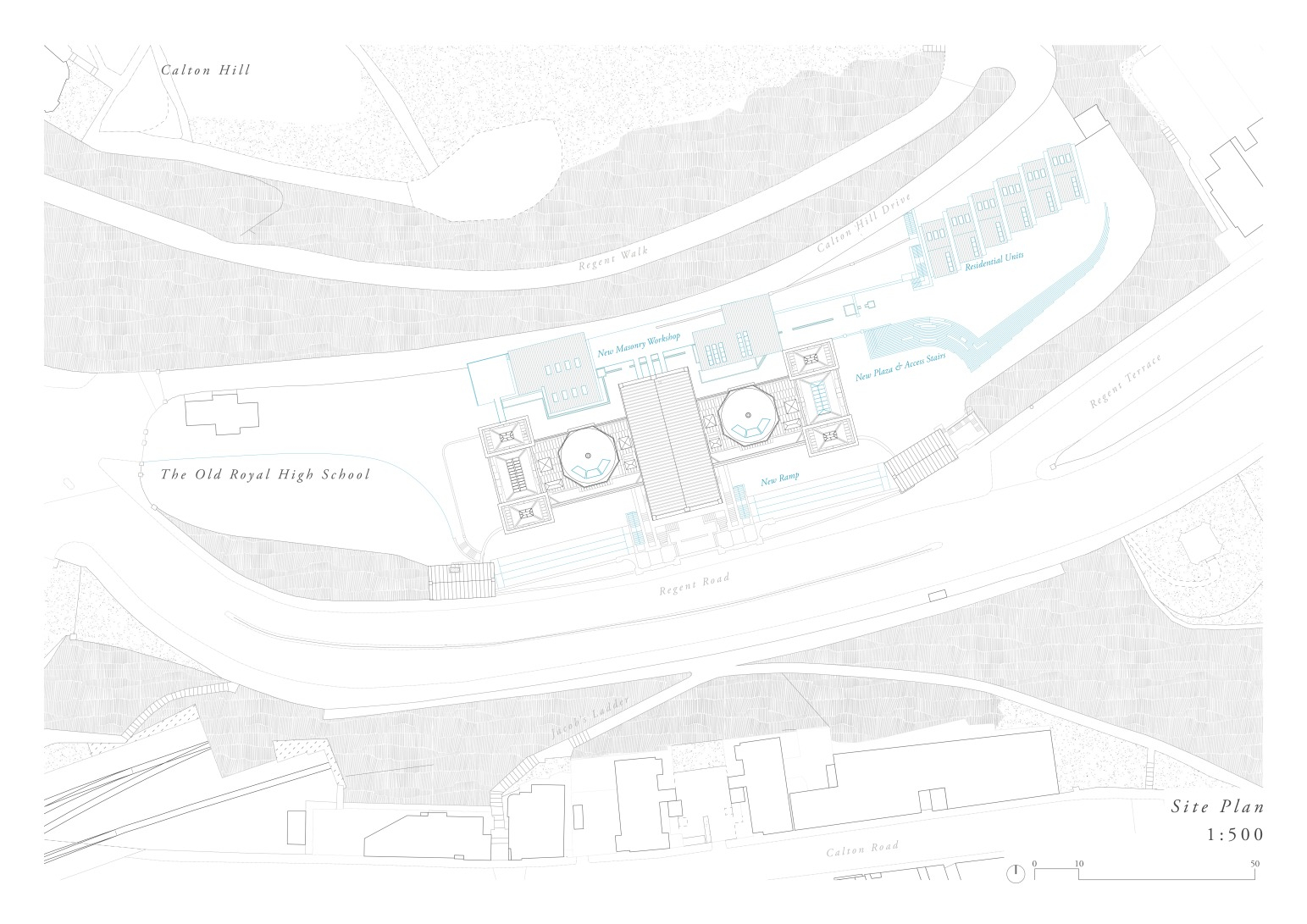
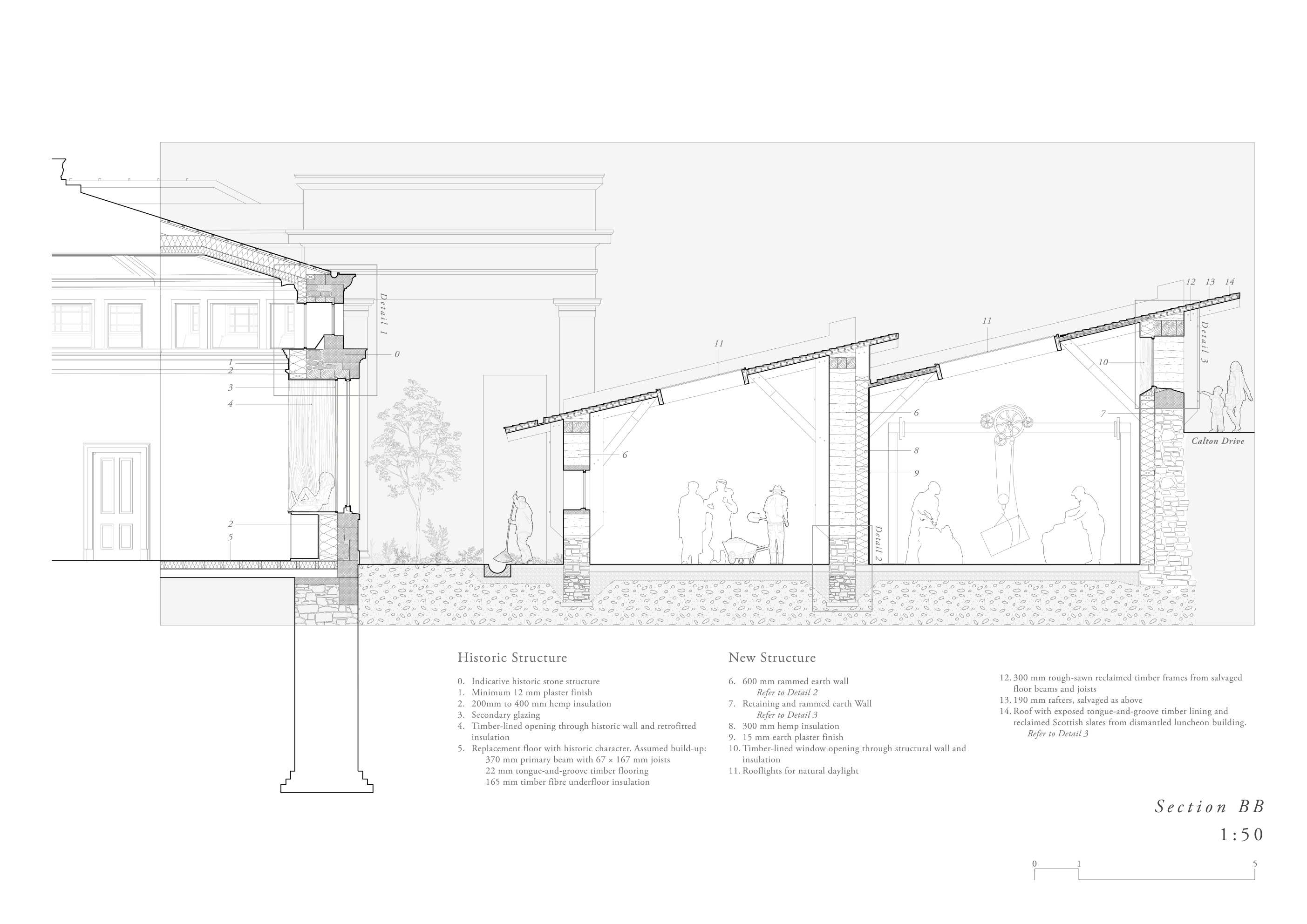
During the technical phase of the Radical Harvest studio, the Mason's Court scheme was developed for the Old Royal High School site, reimagining it as a place for learning traditional craftsmanship, primarily but not restricted to masonry.
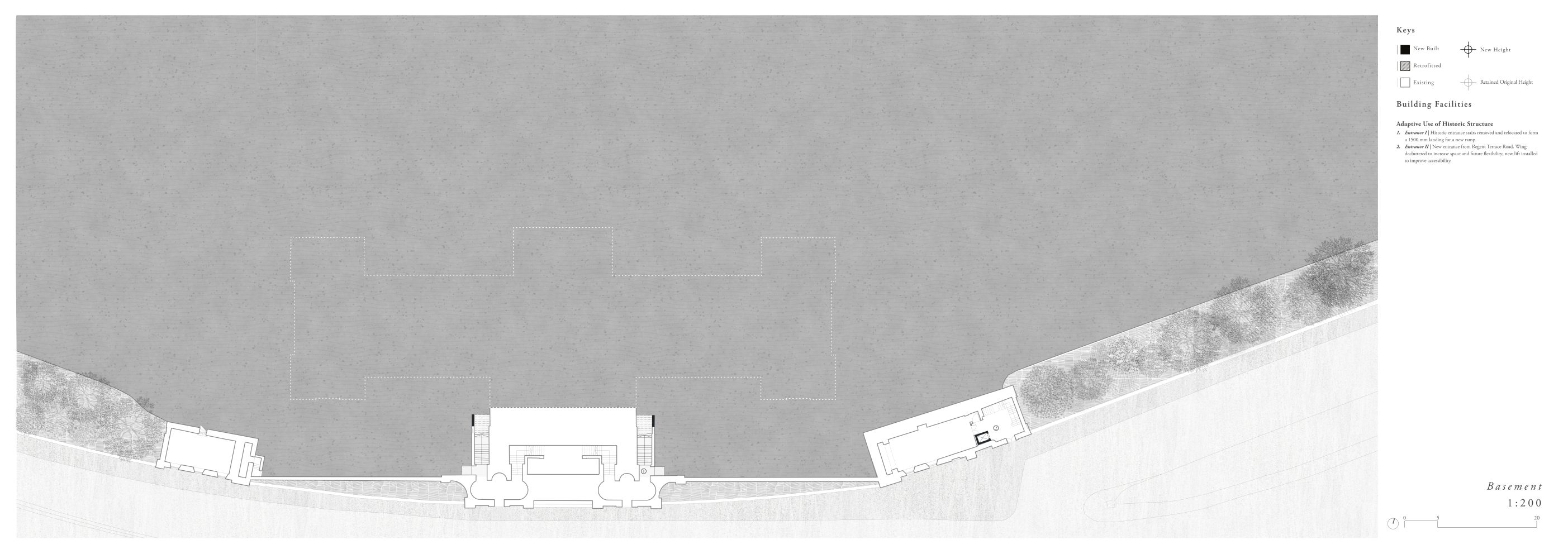
A personal brief was deveoped based on retaining the existing fabric as much as possible, while improving accessibility and introducing external, temporary facilities that are also capable of evolving over time. Internal spaces were adapted and re-levelled, and although less visually prominent, interventions such as new stairs, lift provision, and floor reconfiguration were central to the scheme, emphasising inclusivity and accessibility.
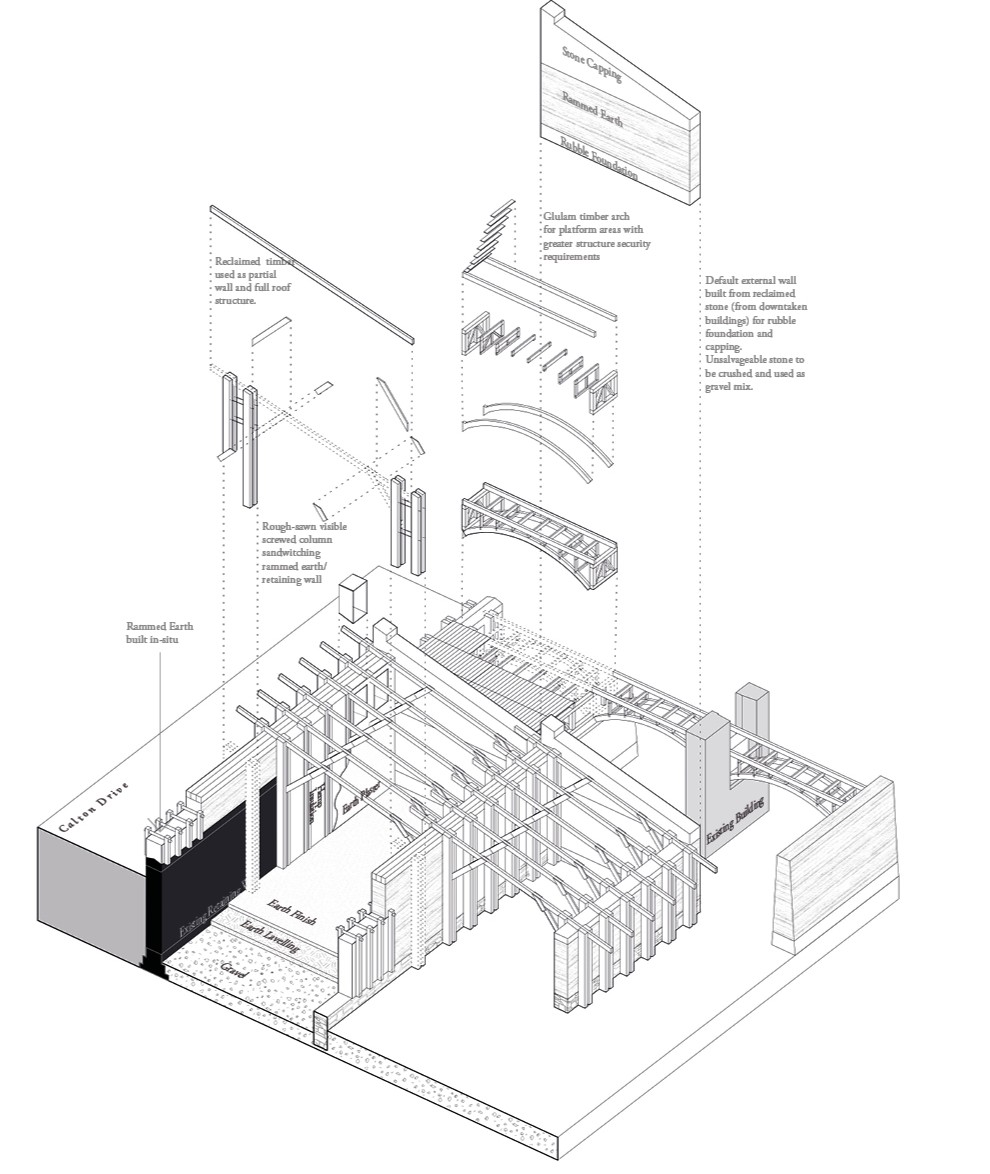
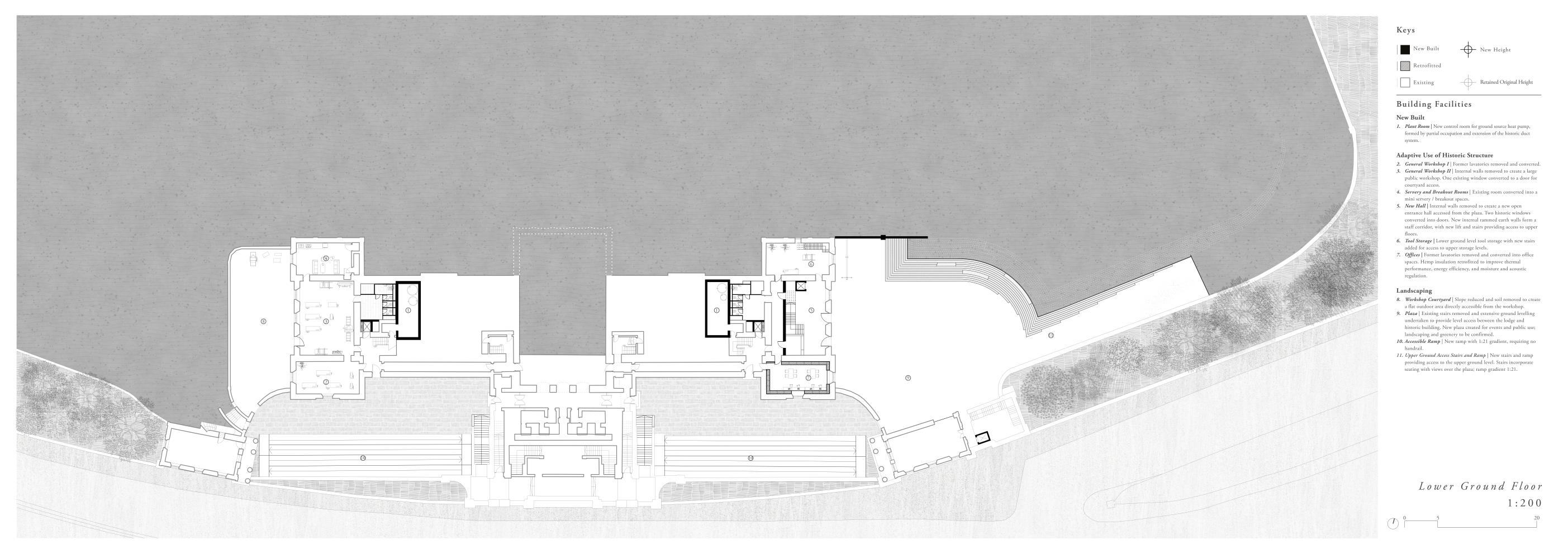
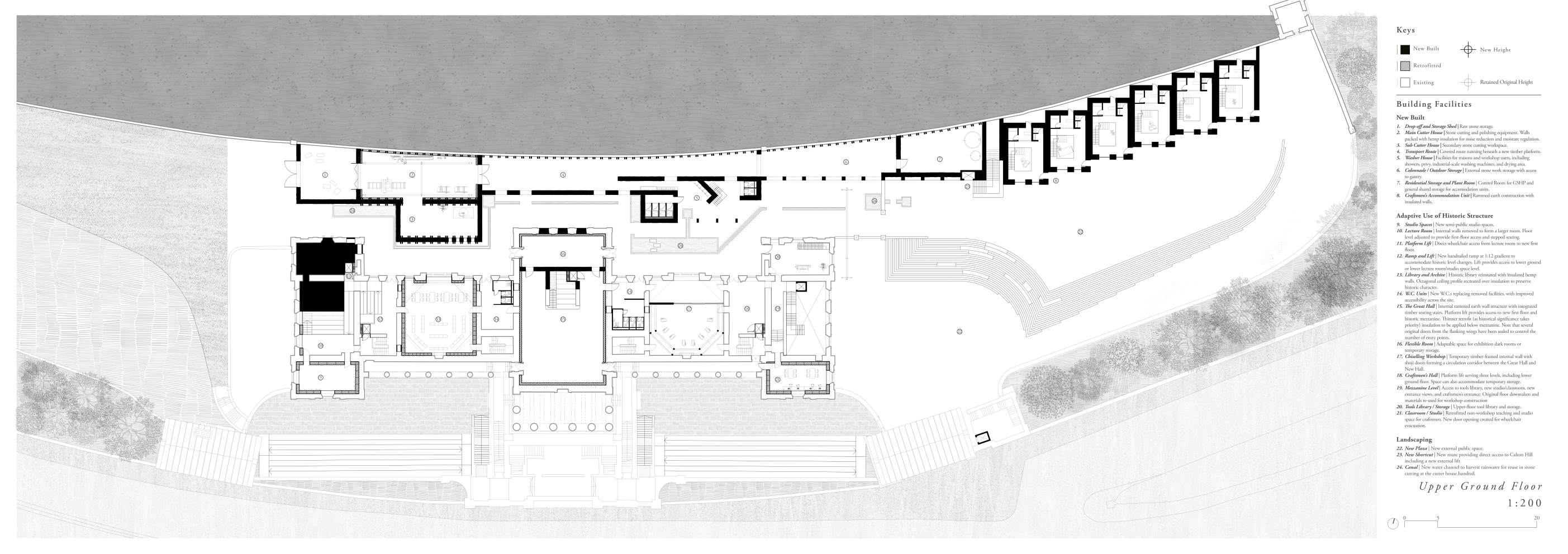
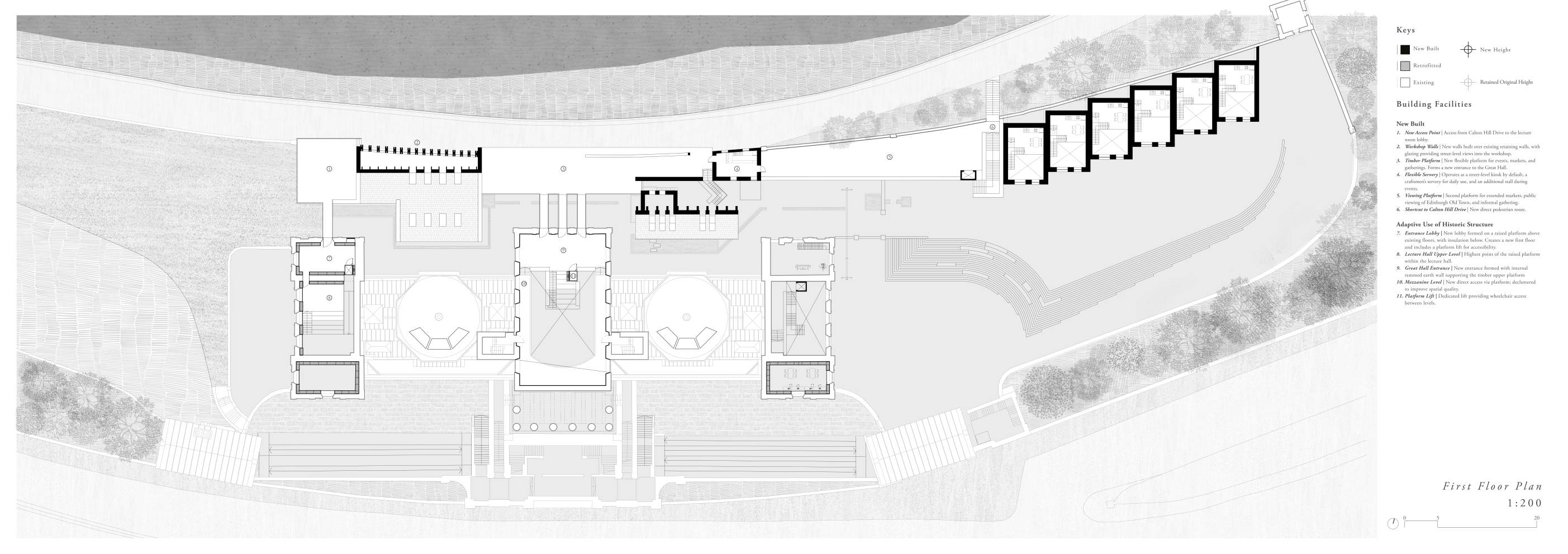
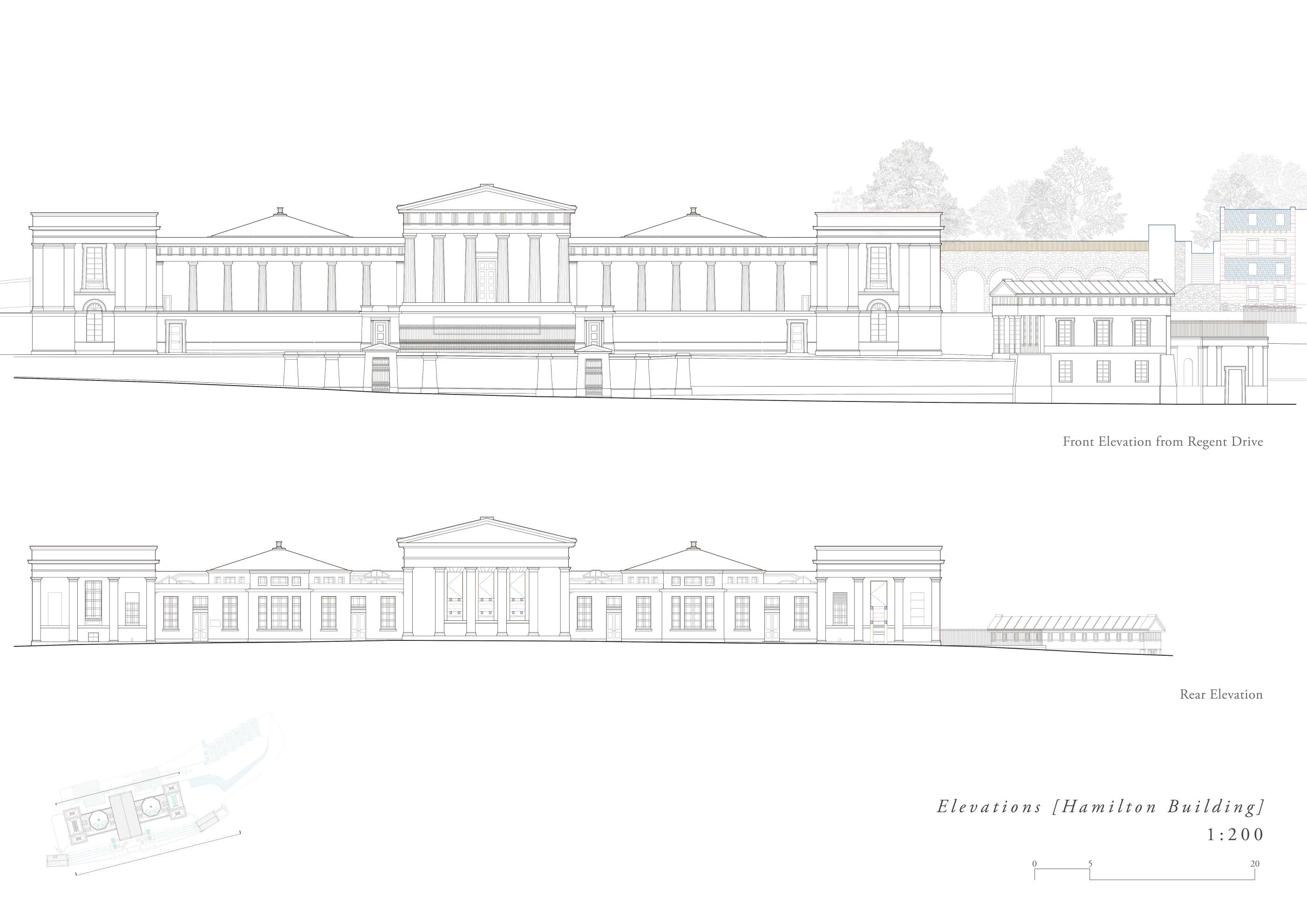
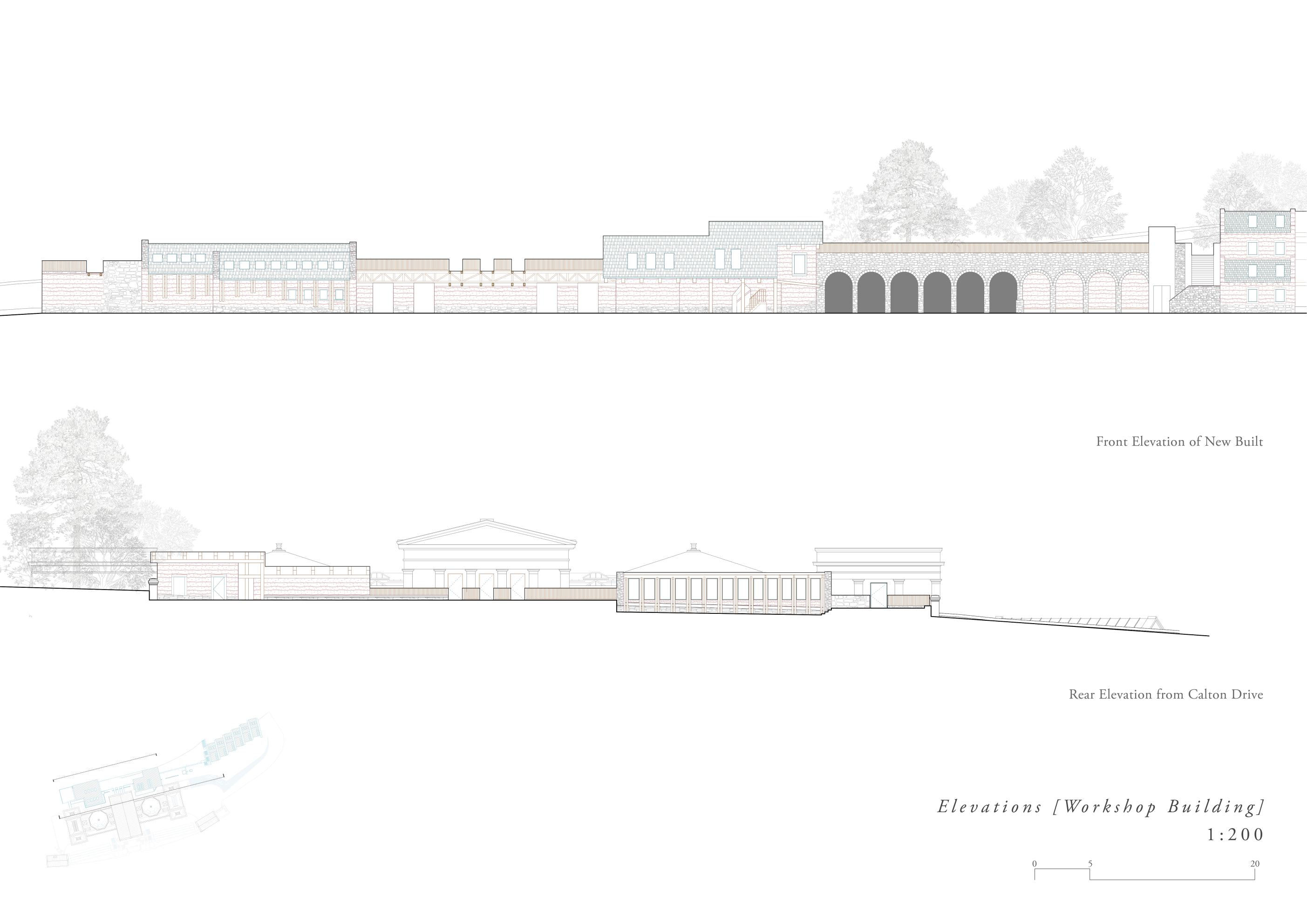
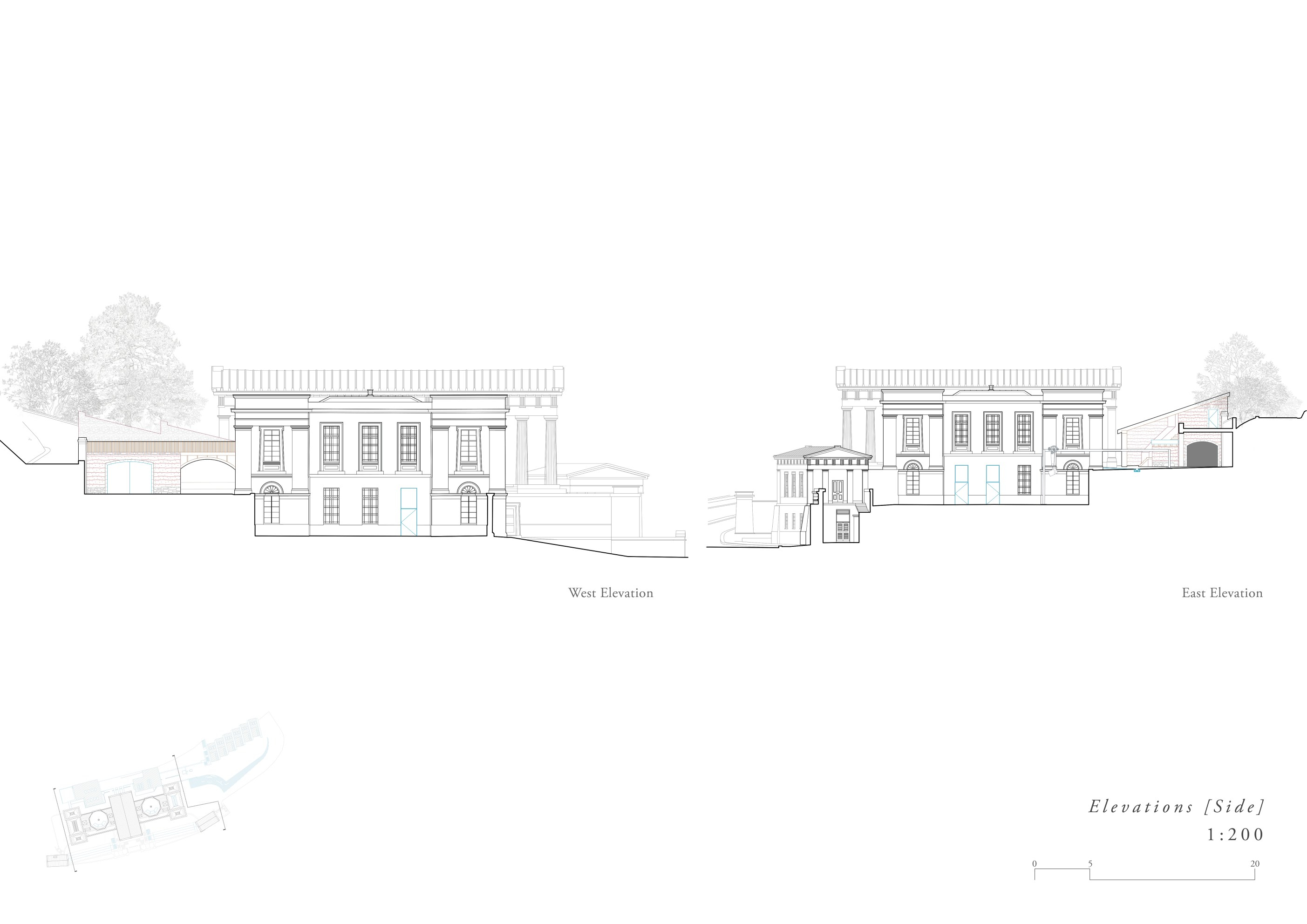
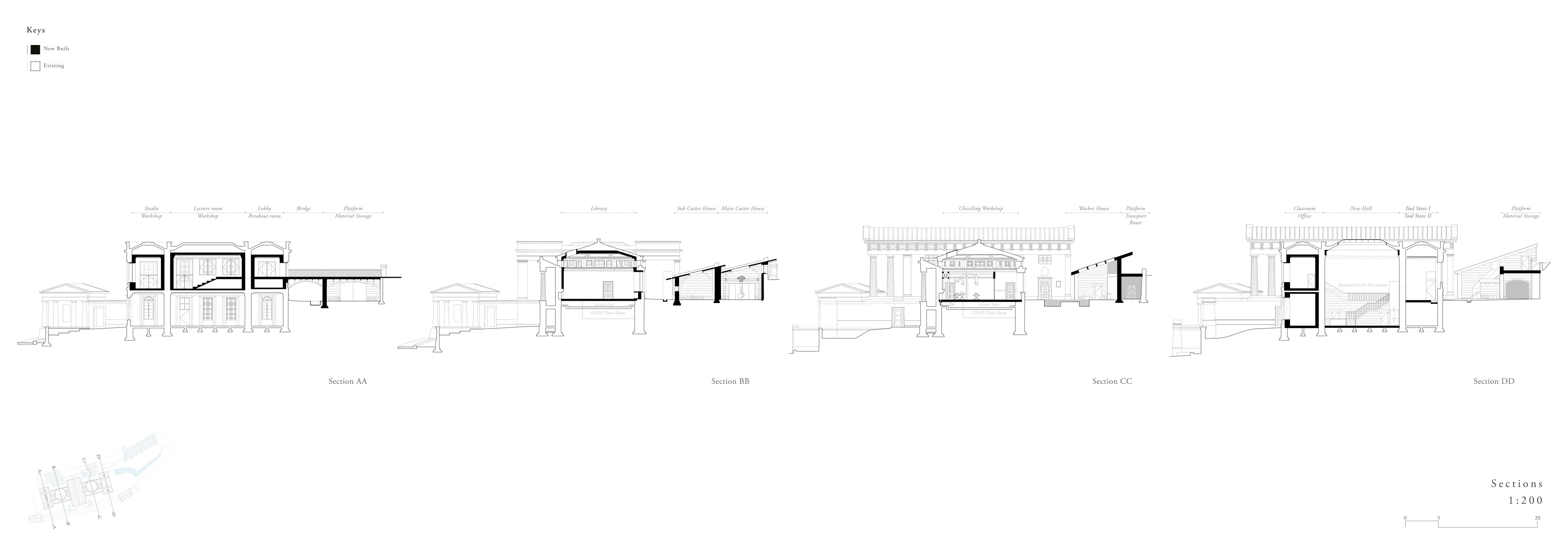
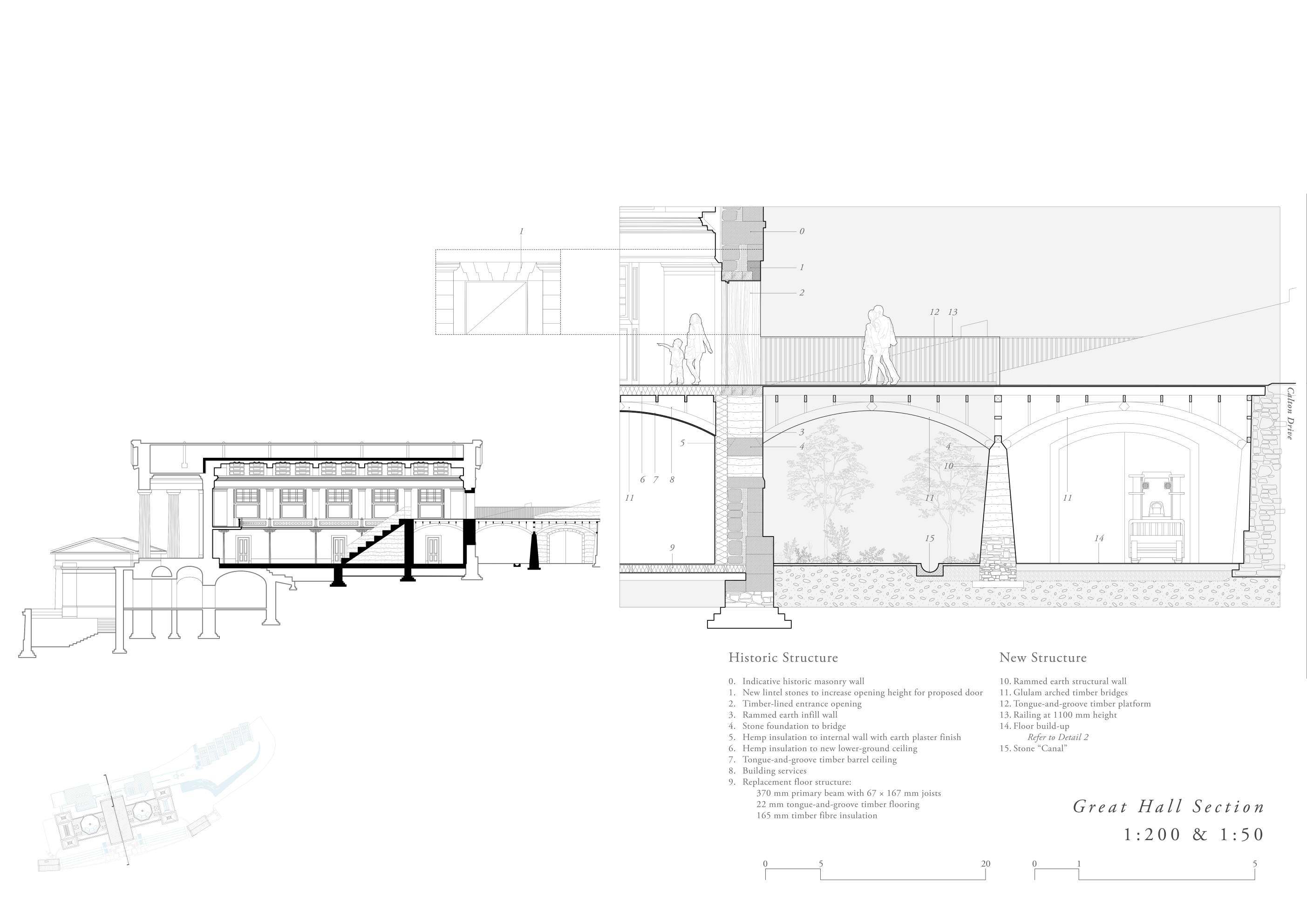
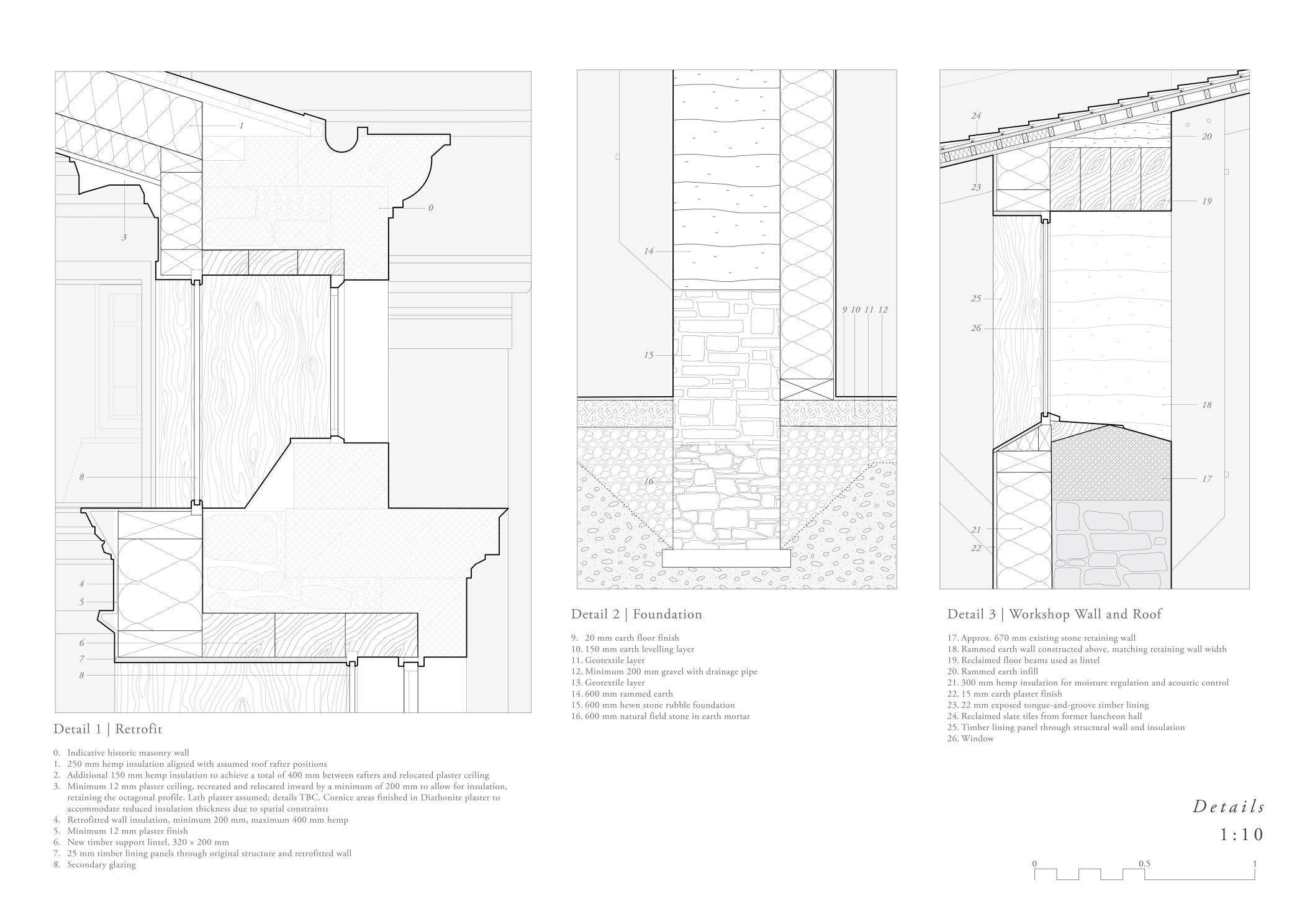
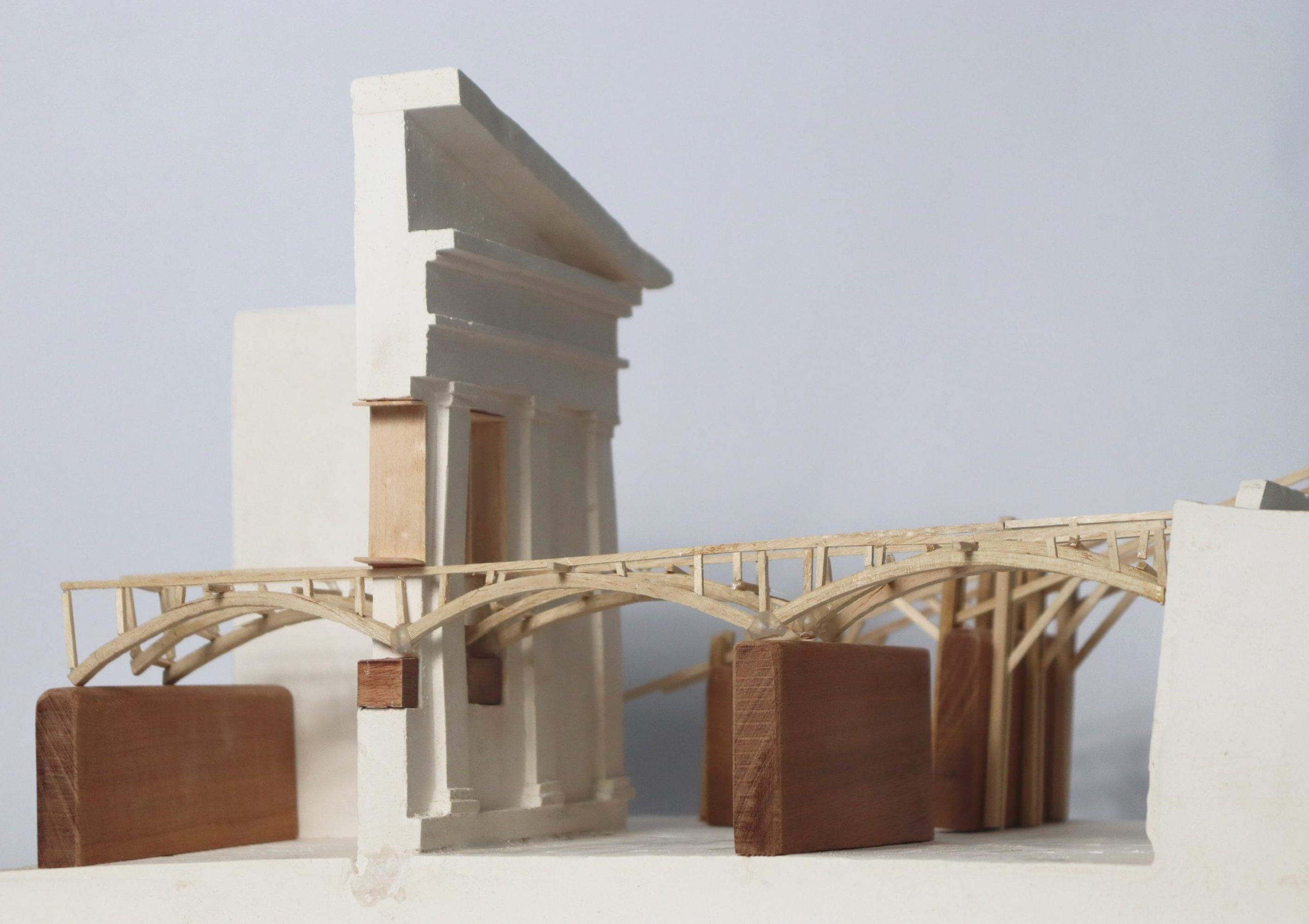
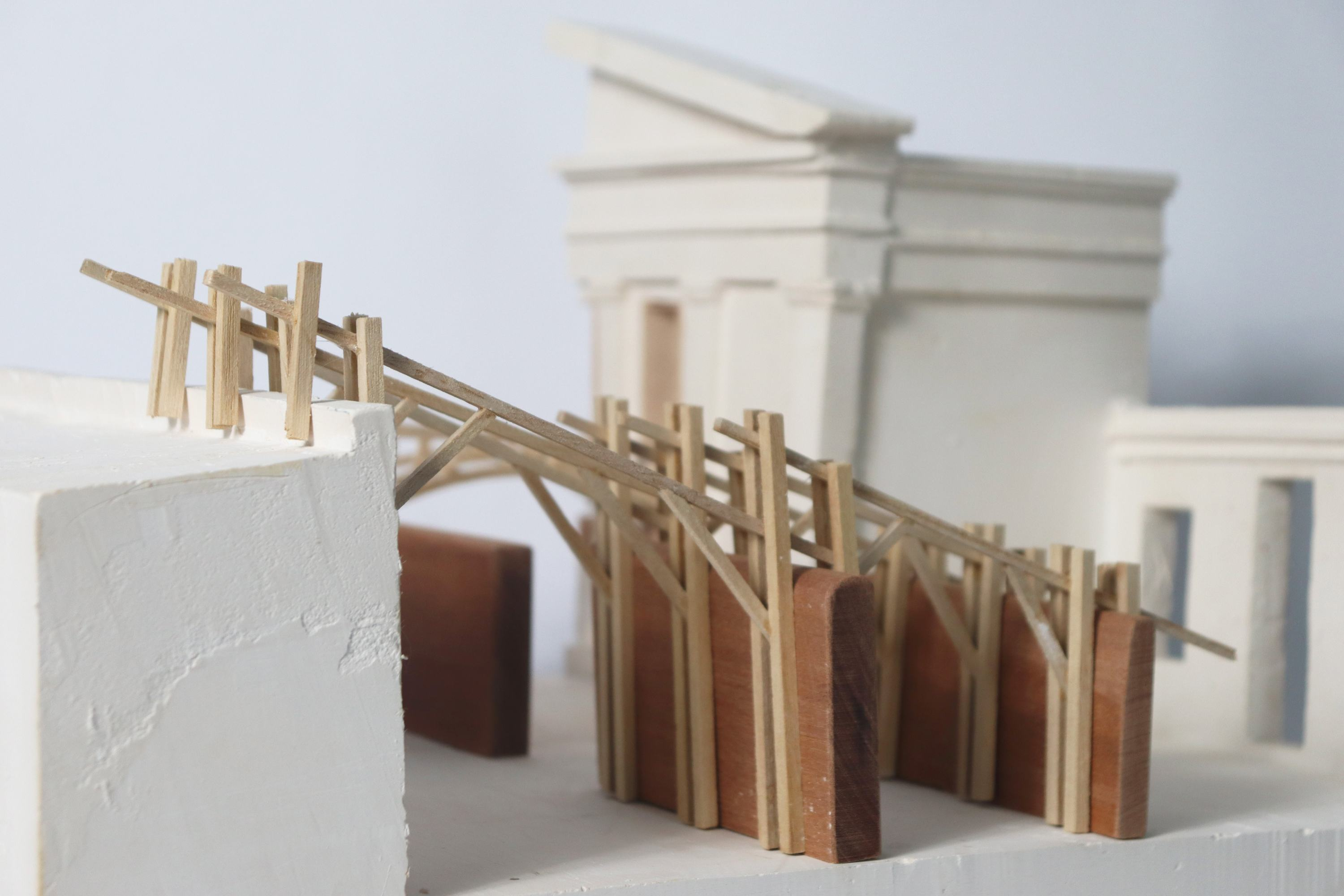


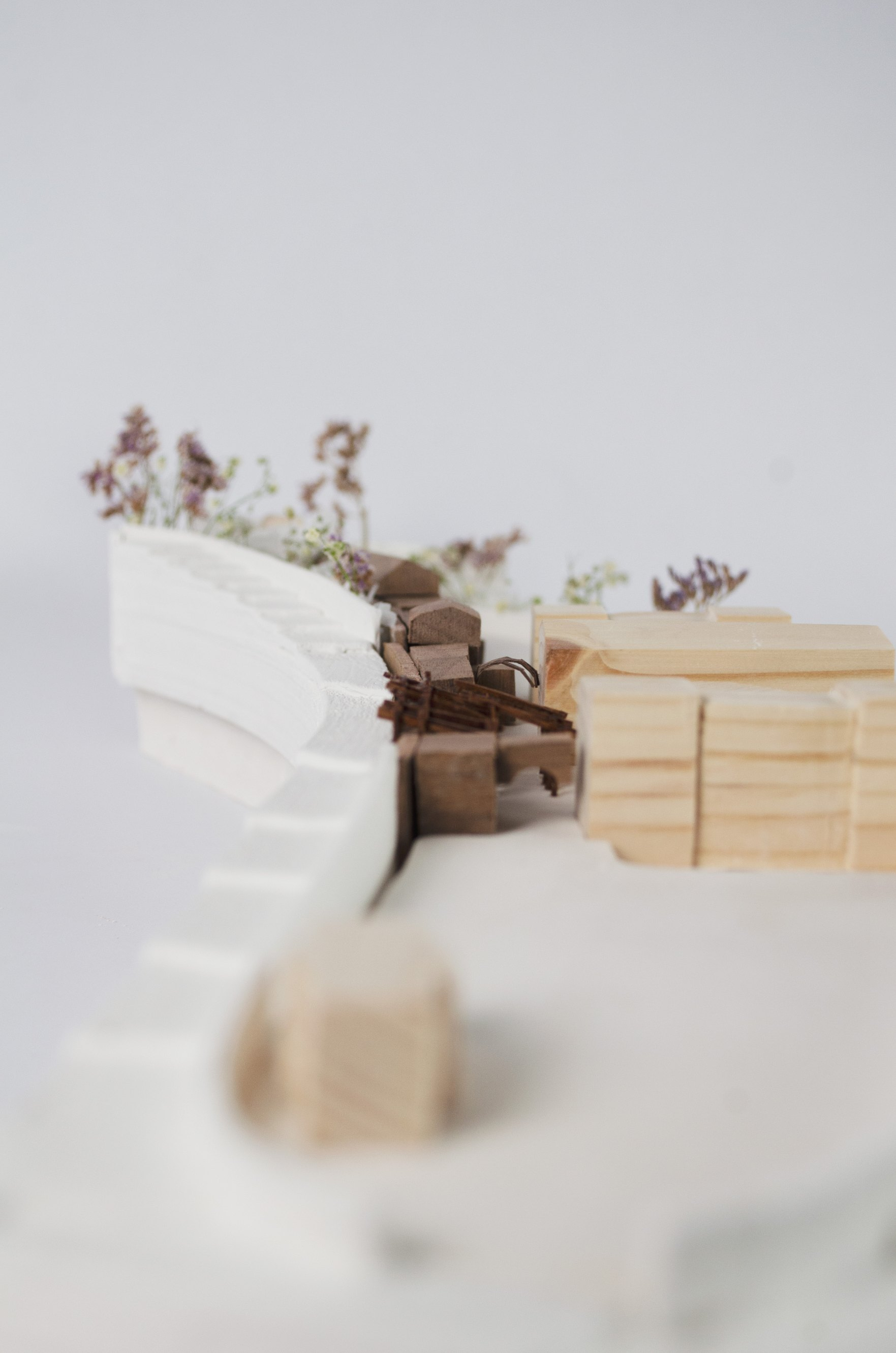
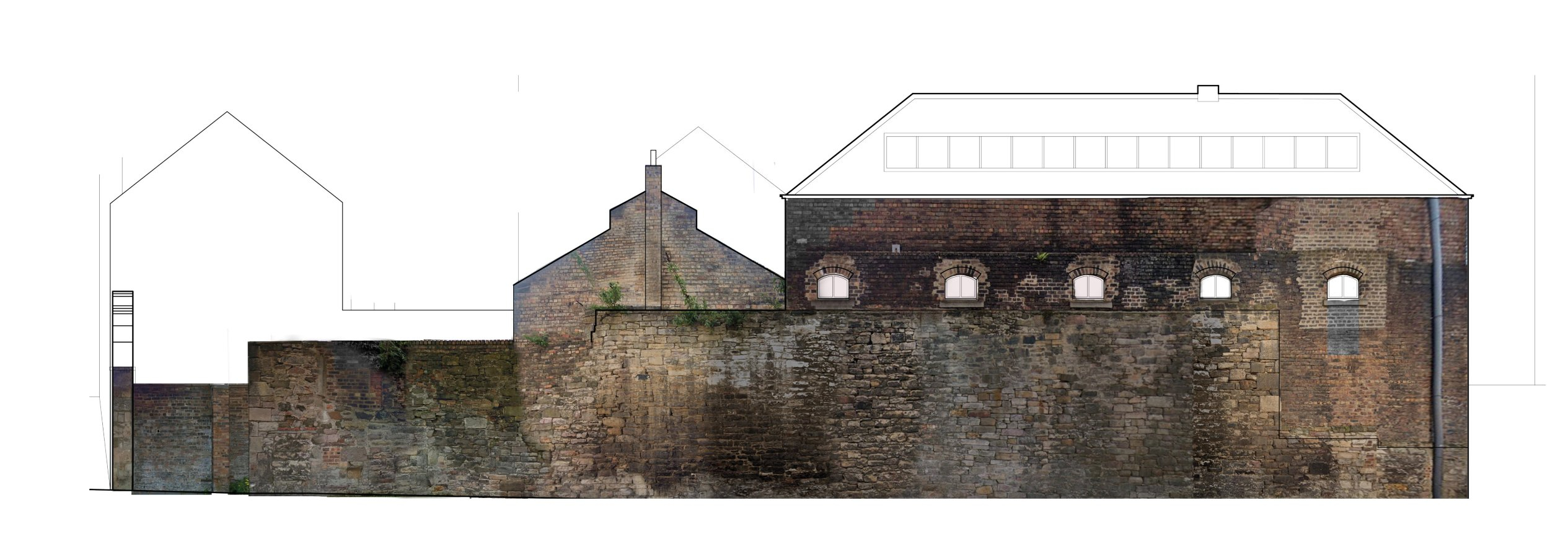
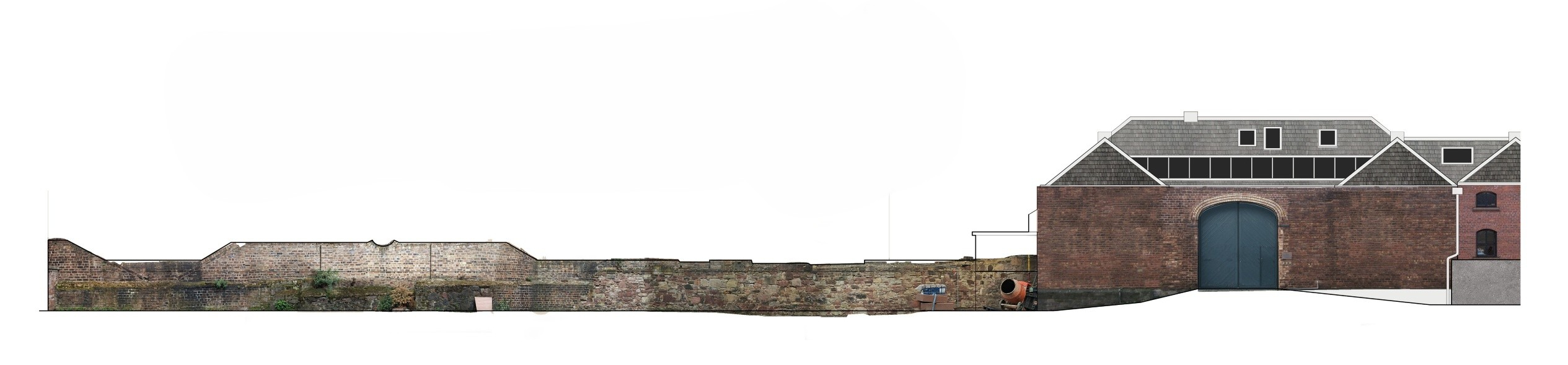
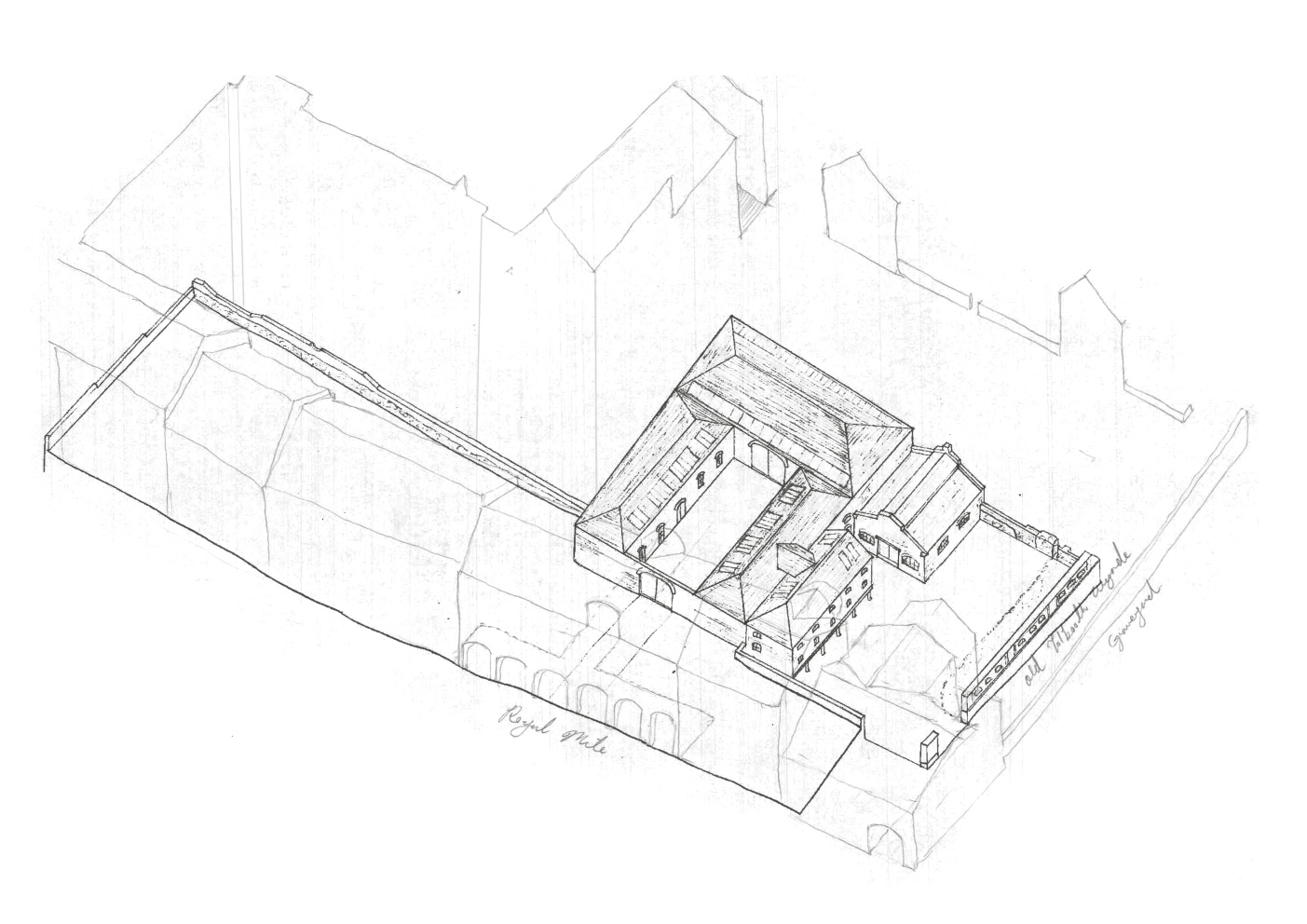
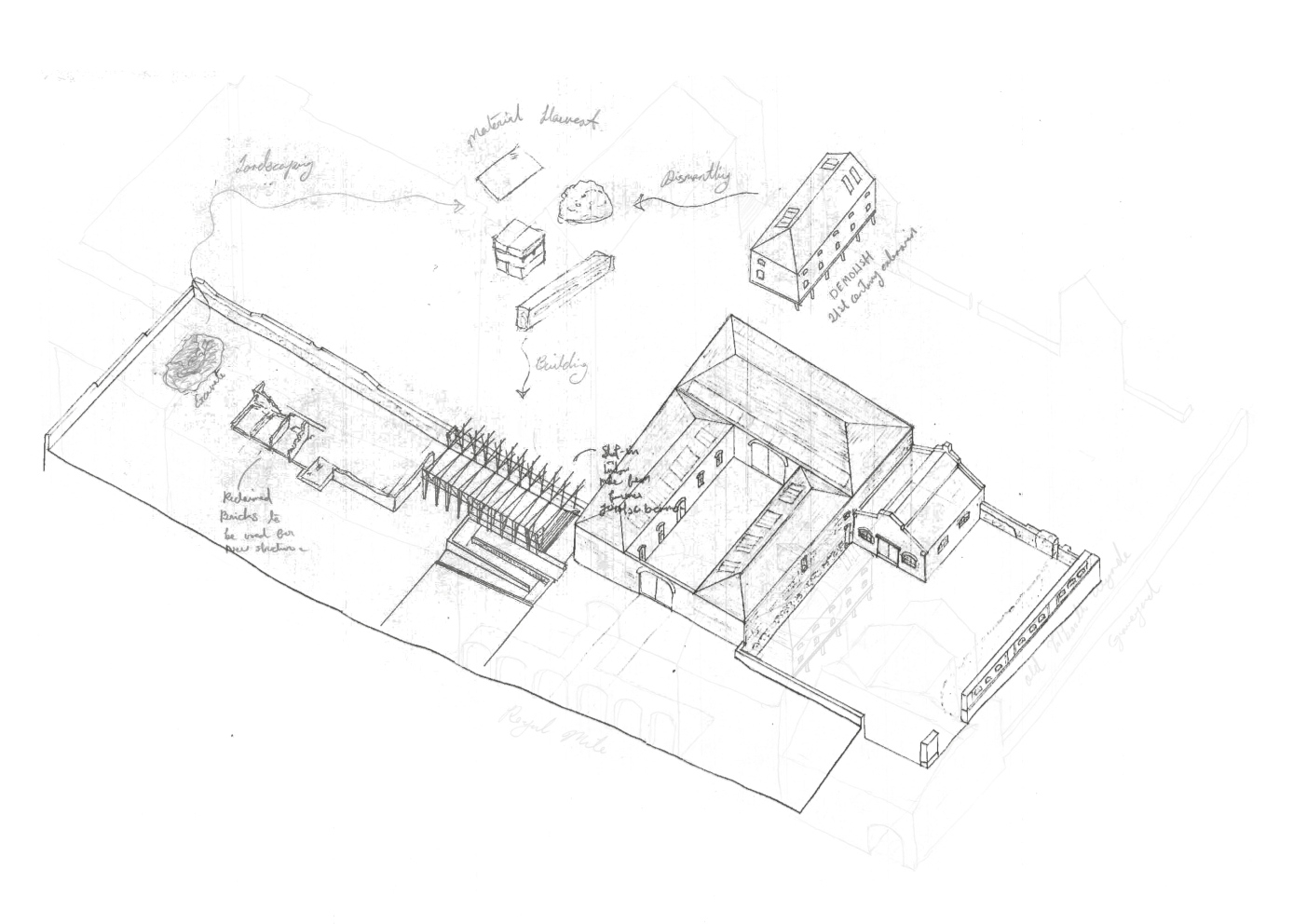
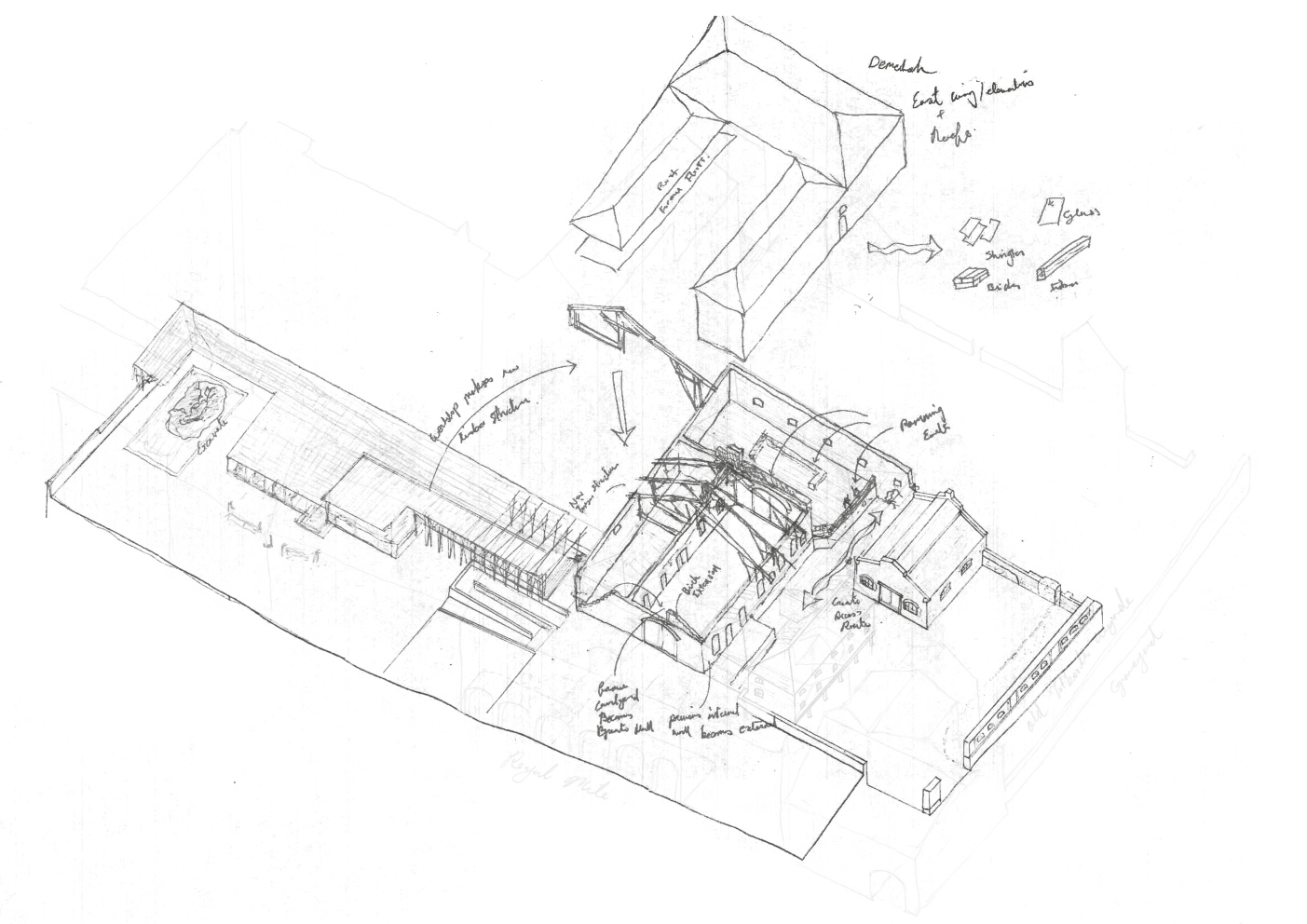
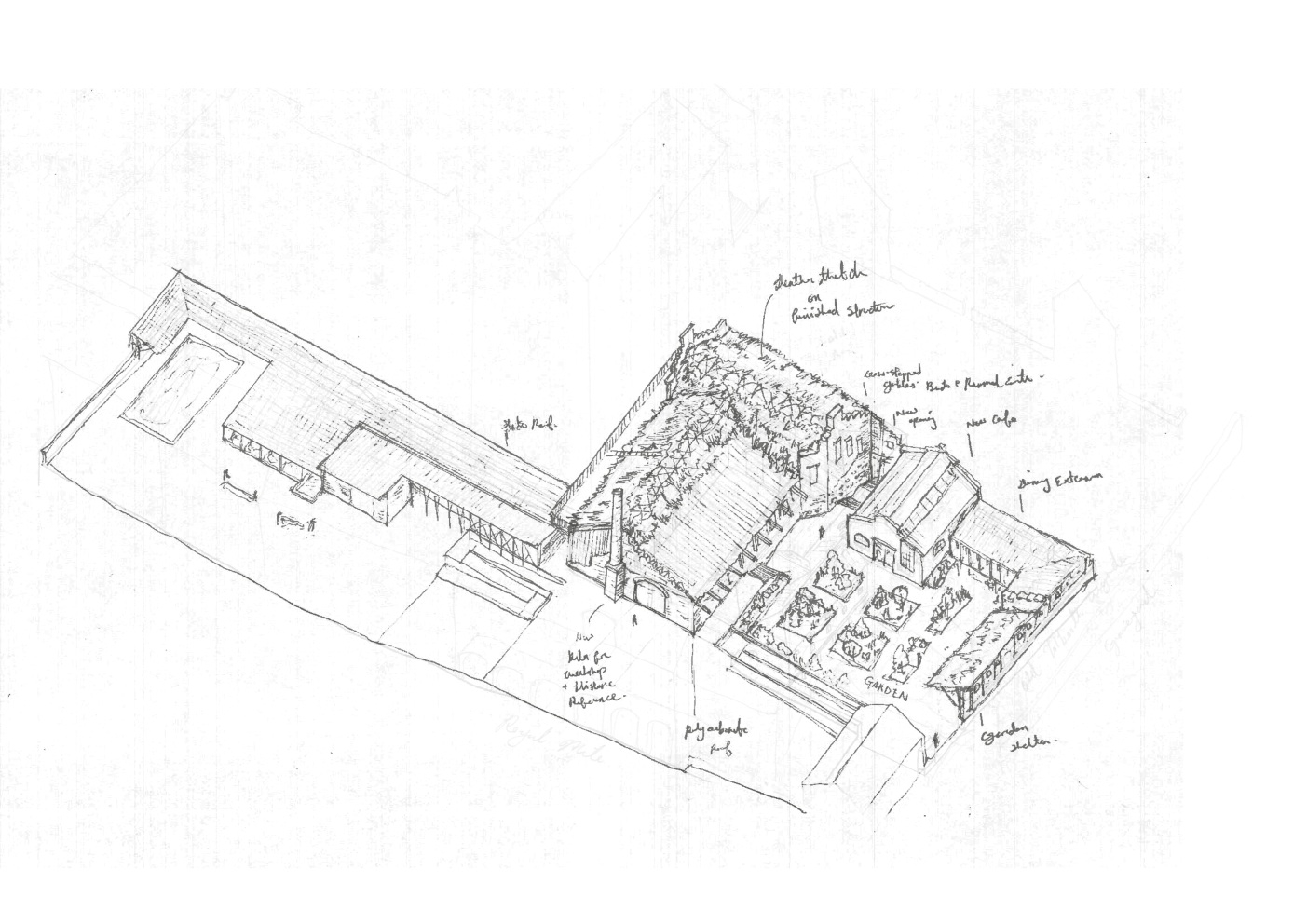
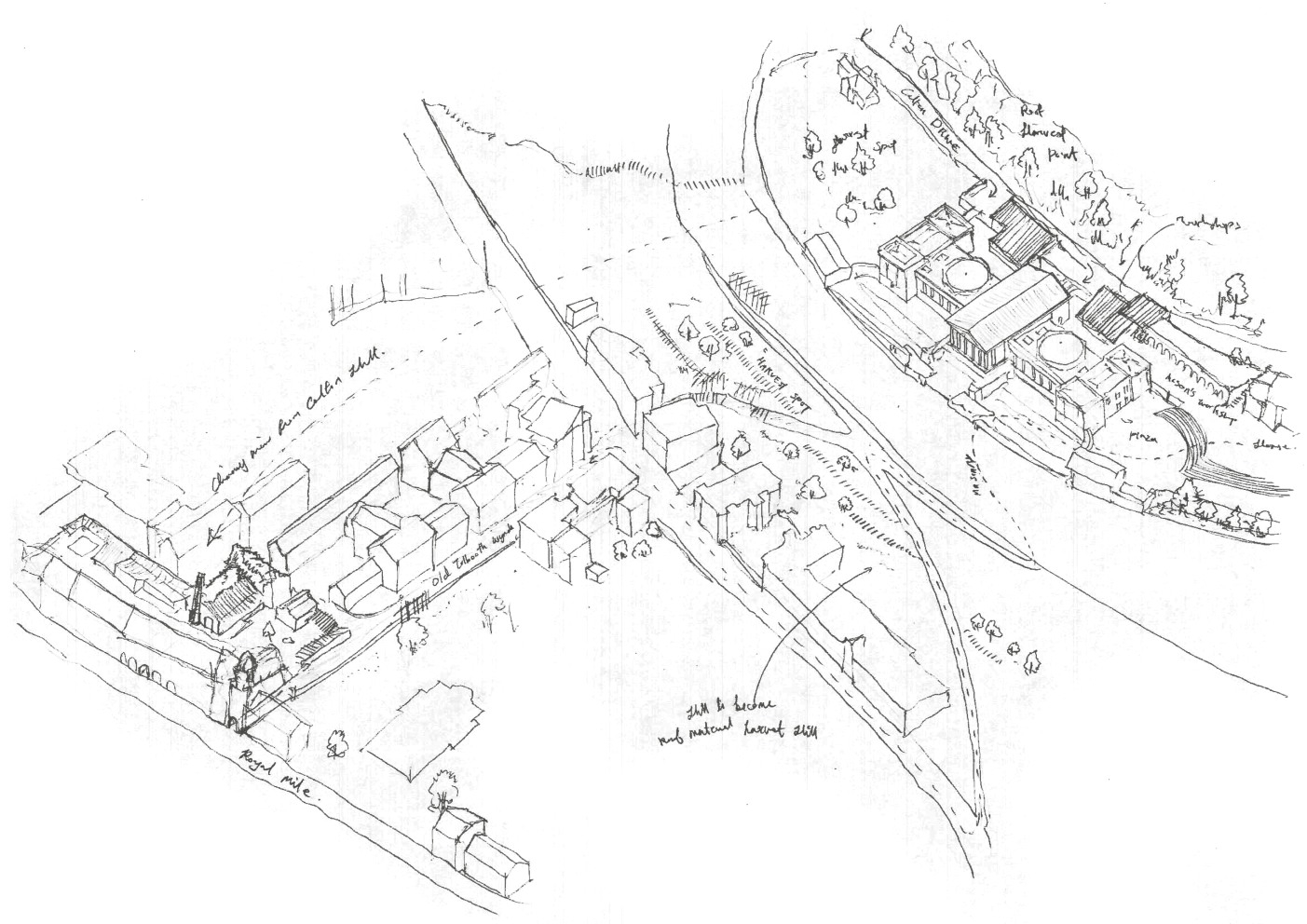
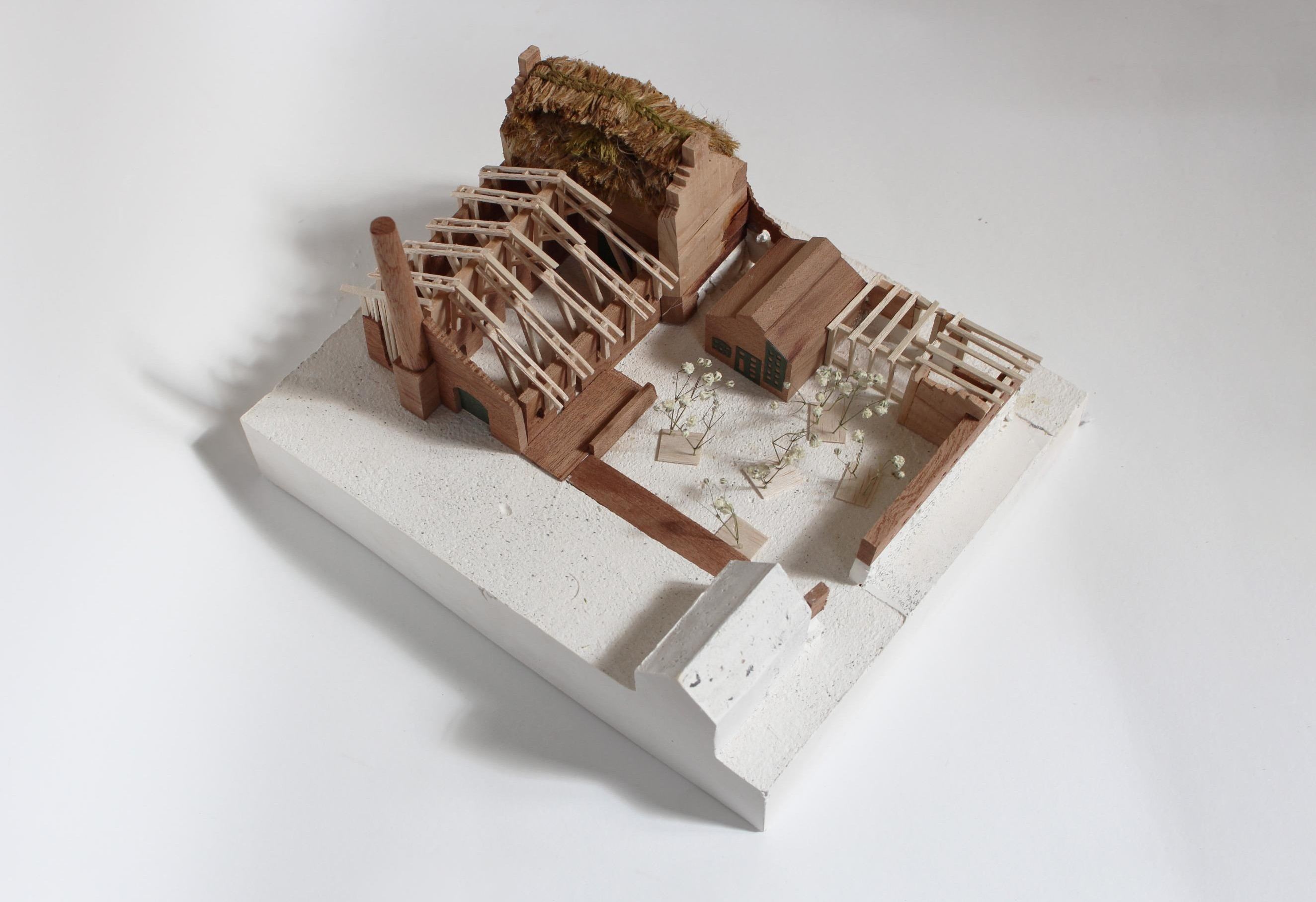
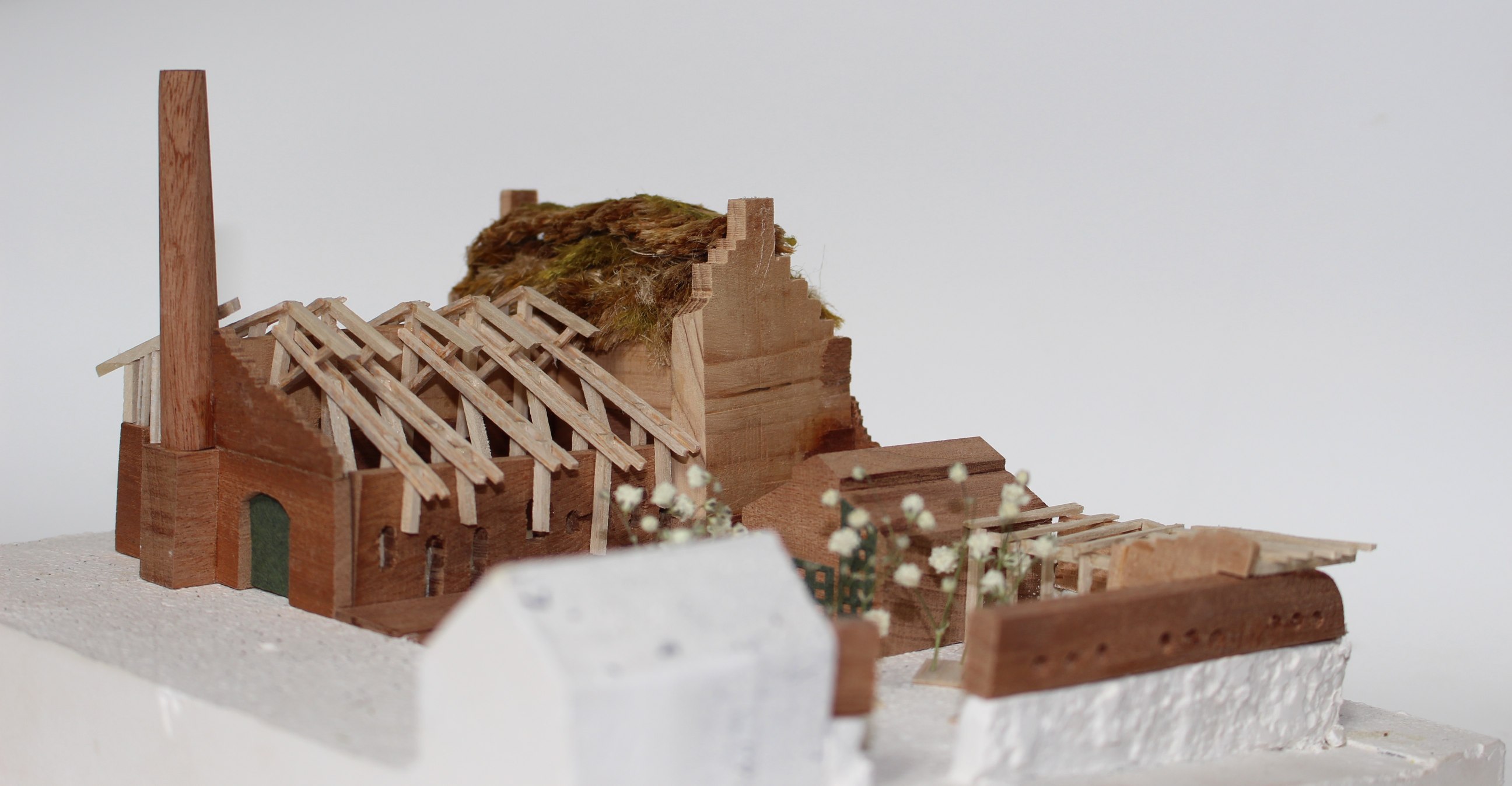
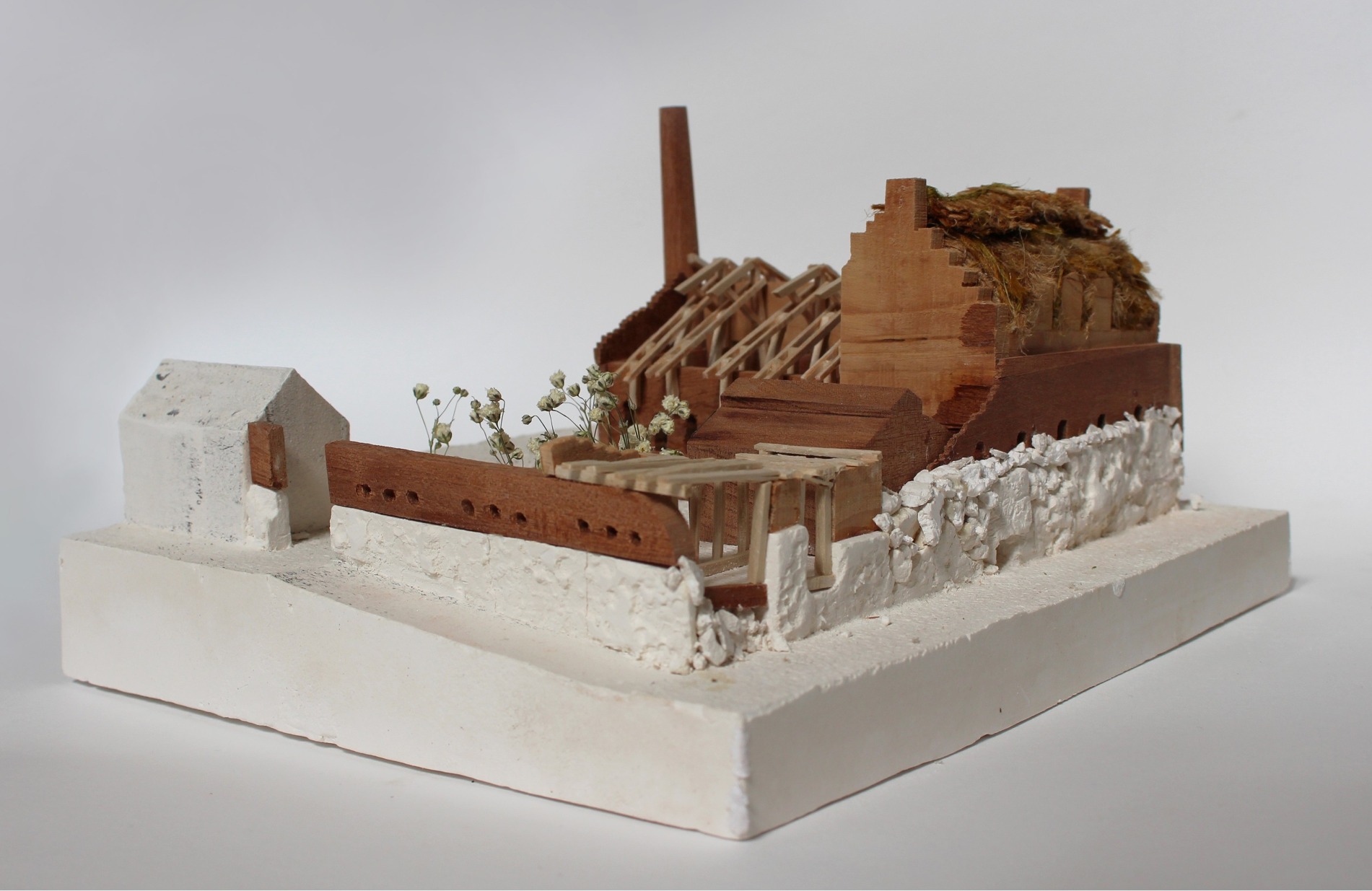
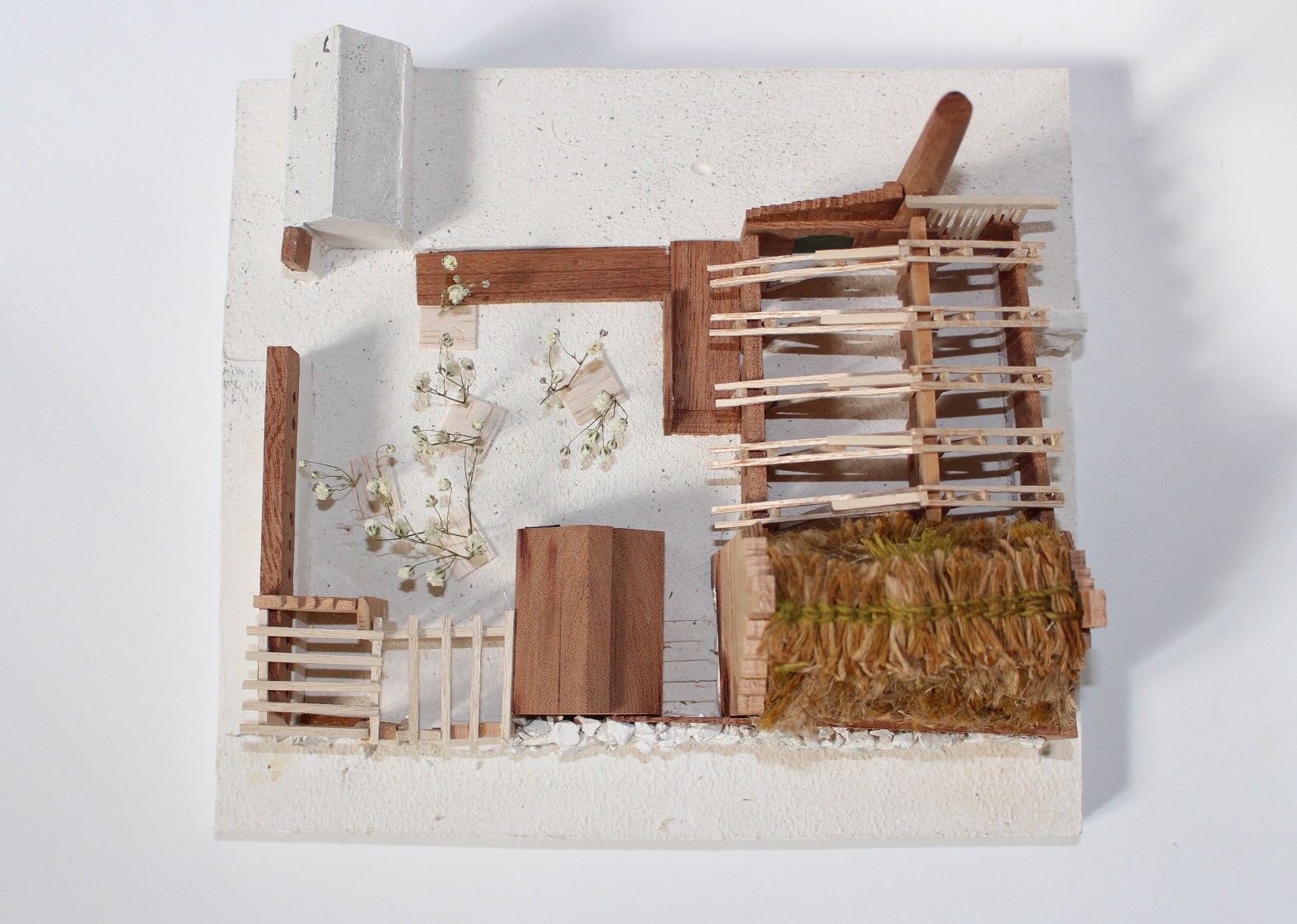
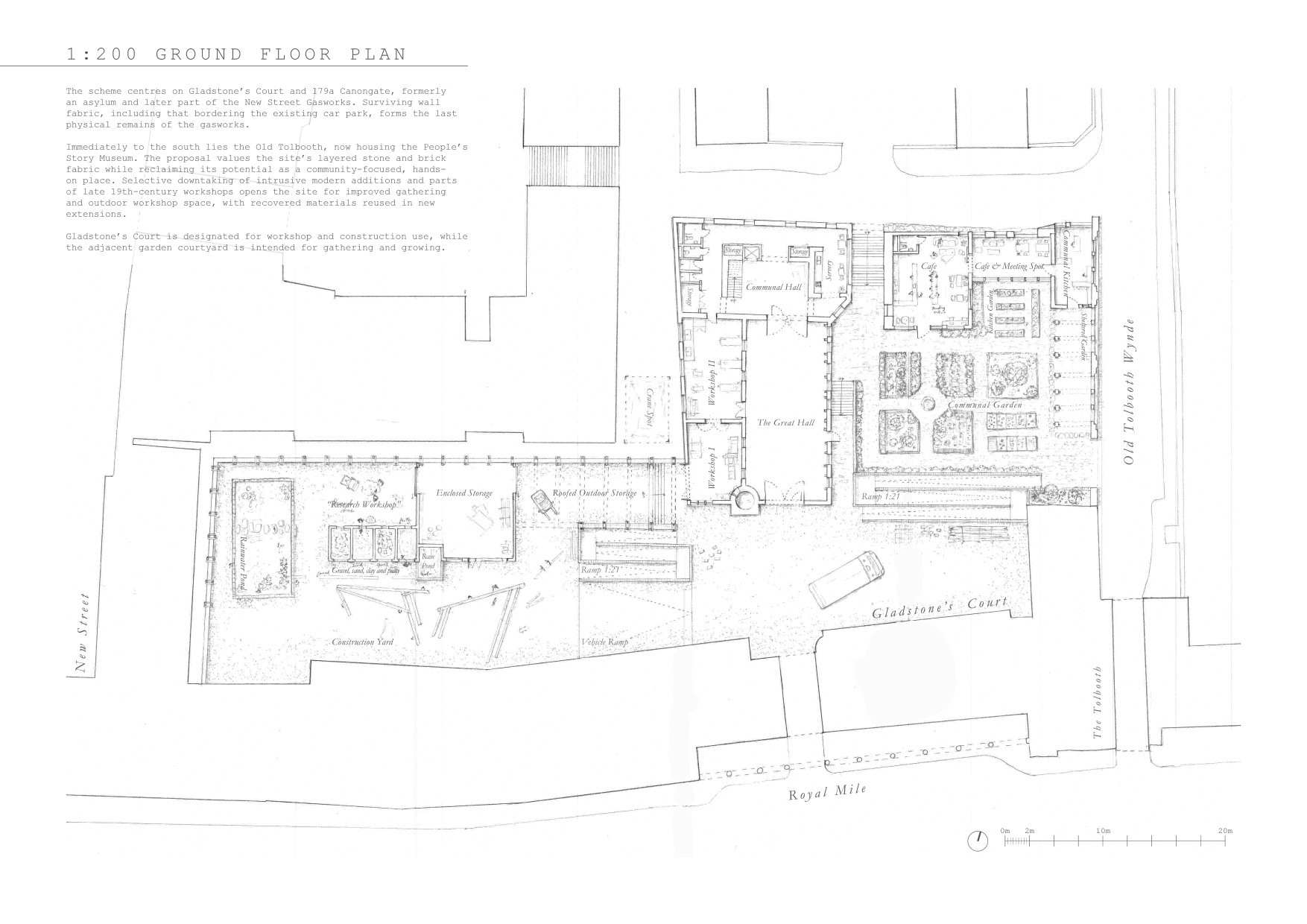
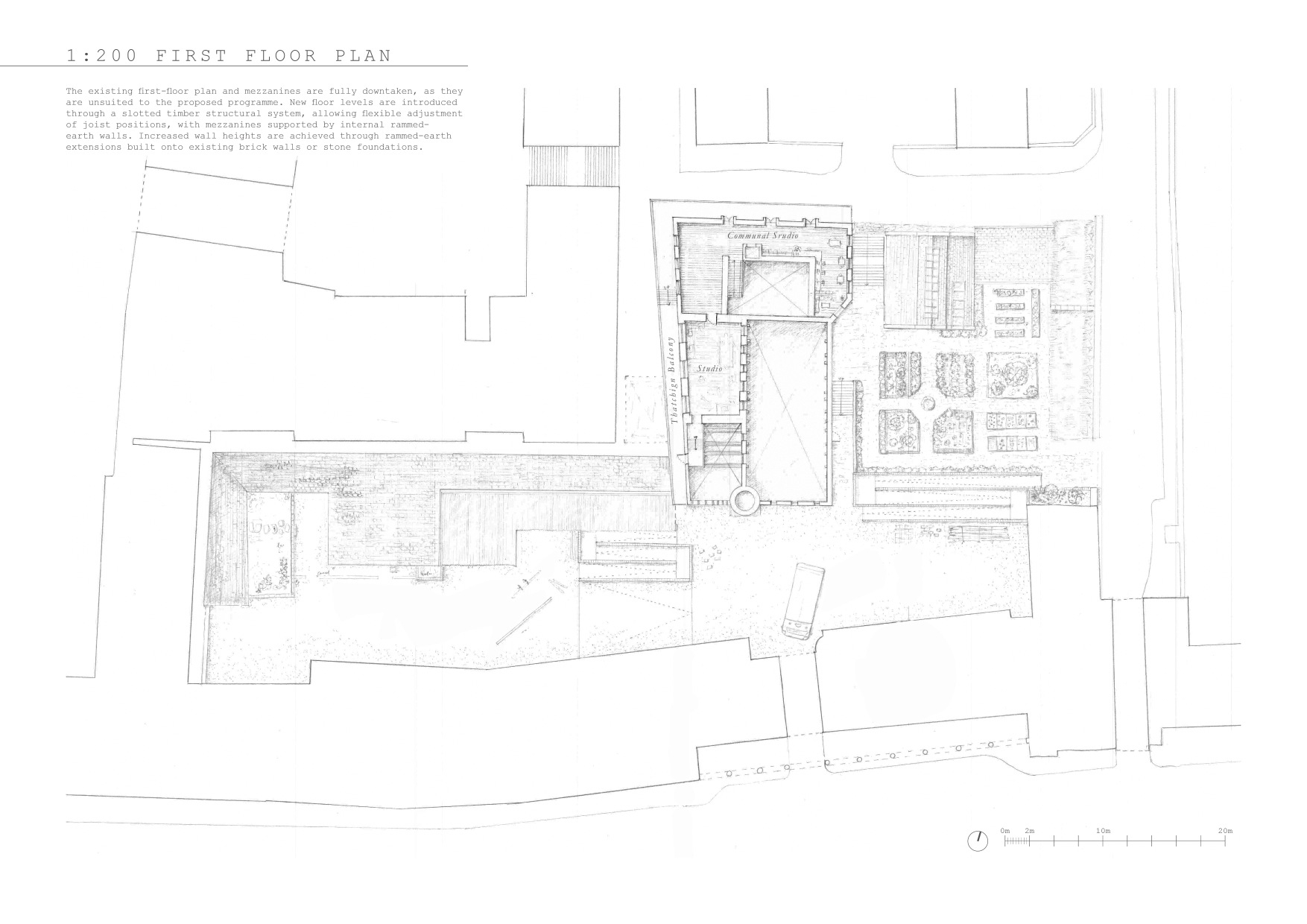
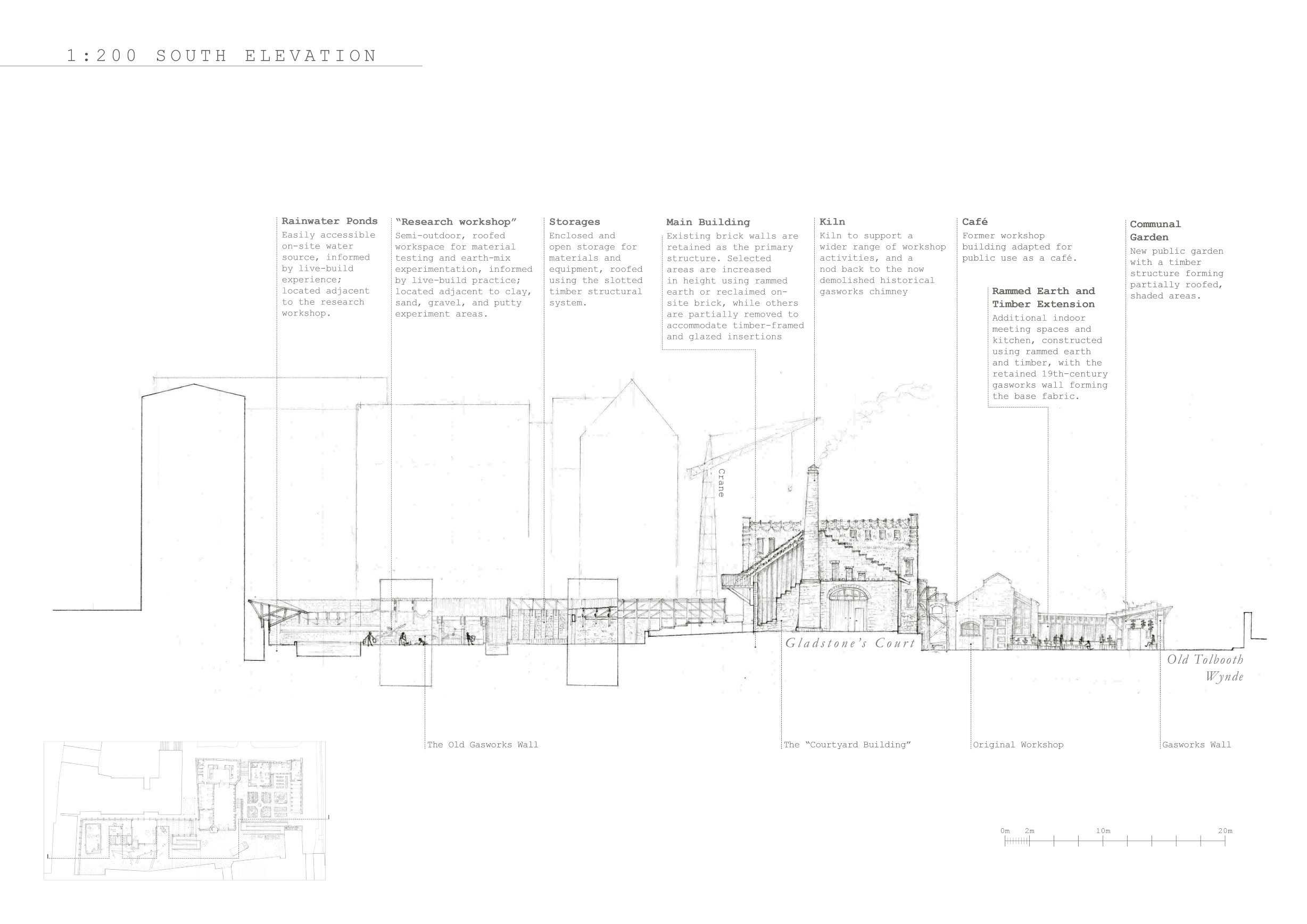
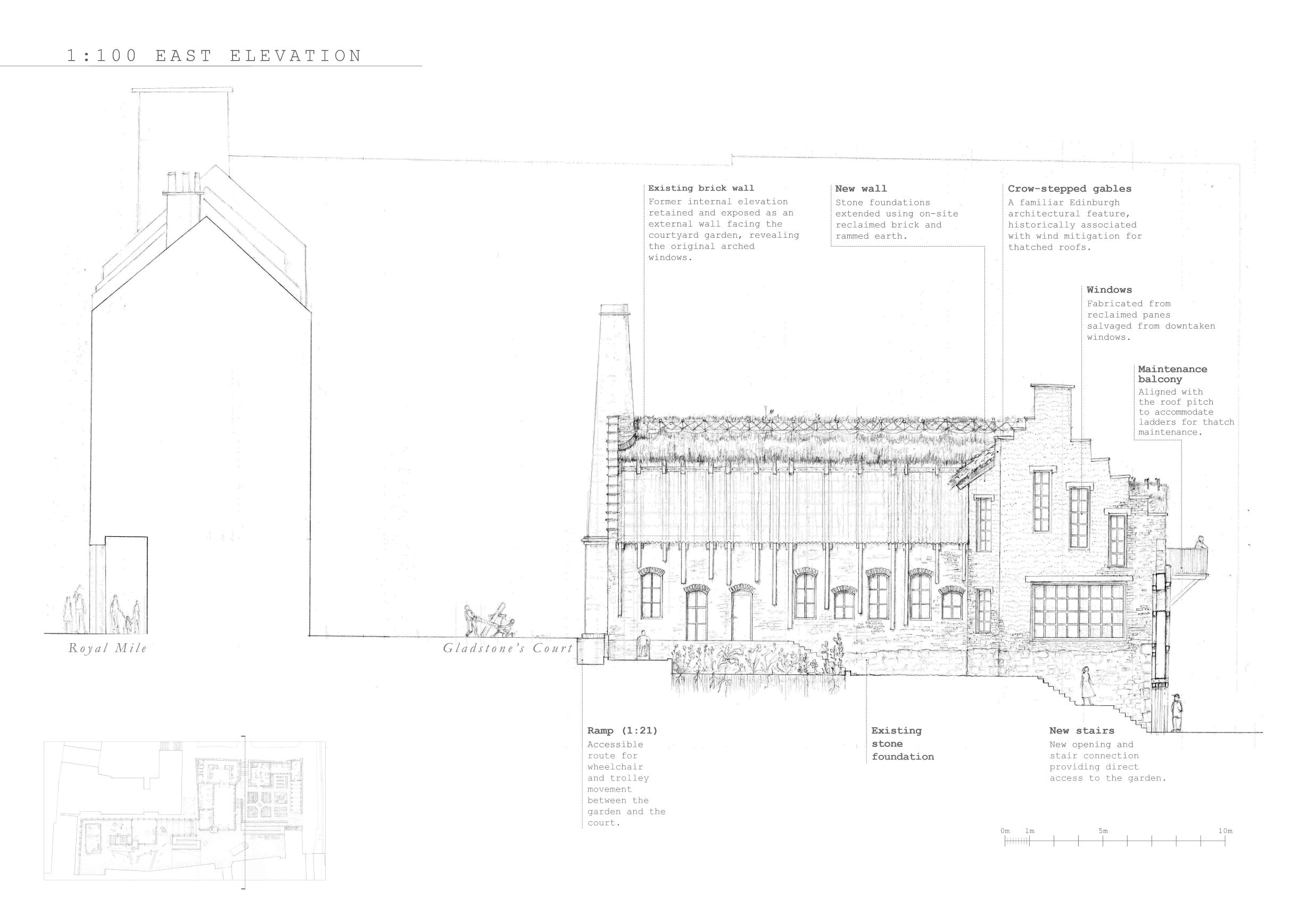
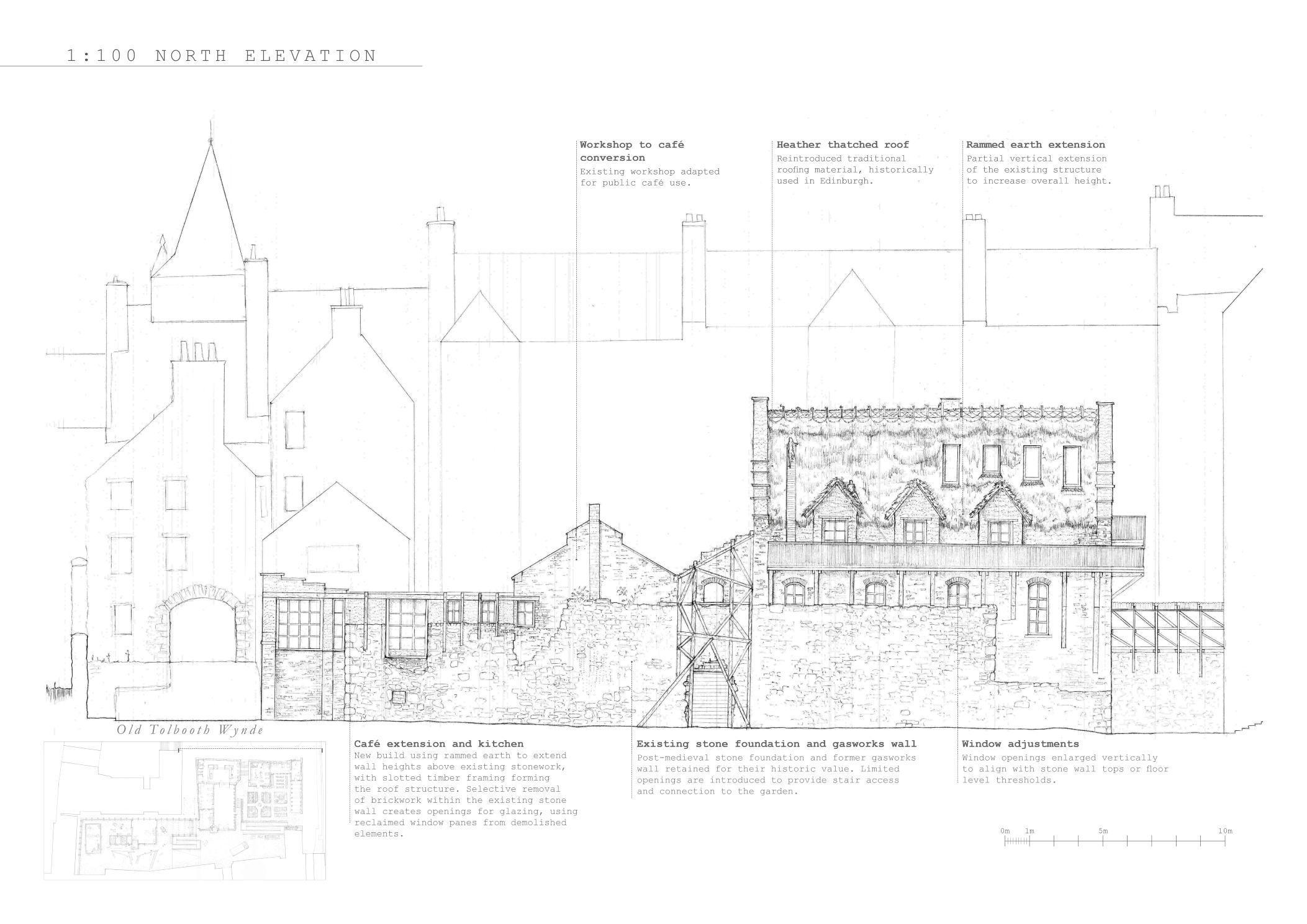
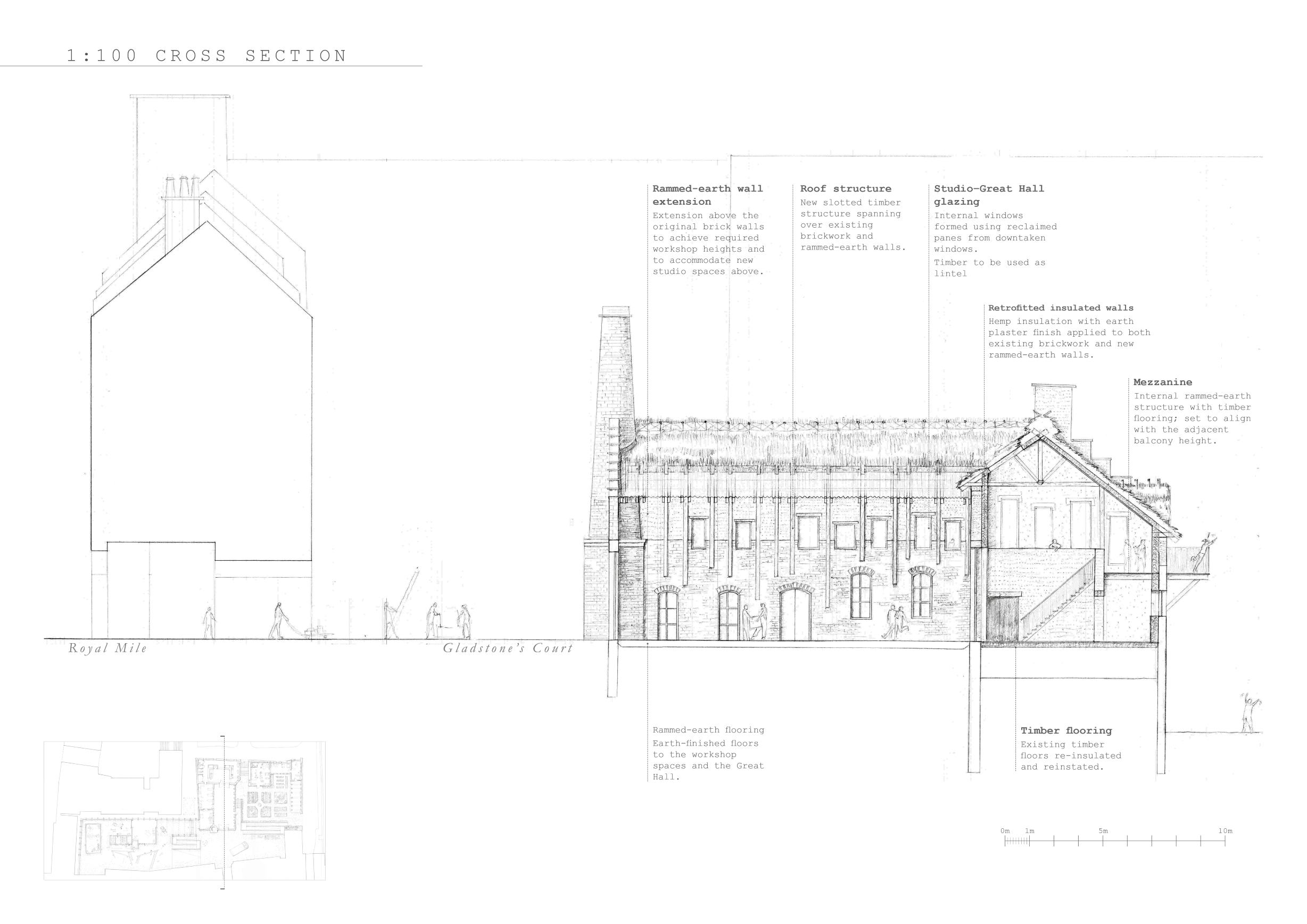
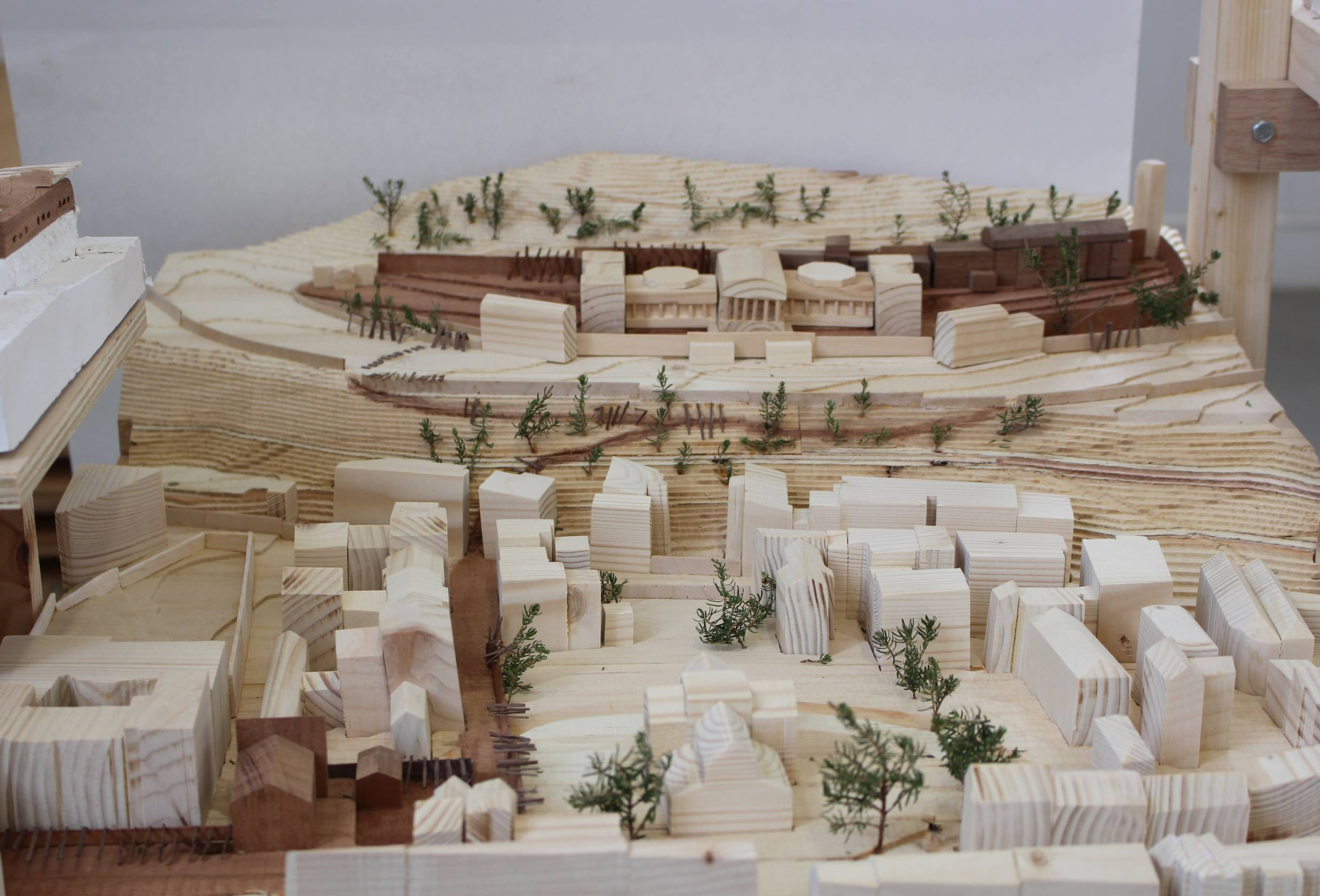
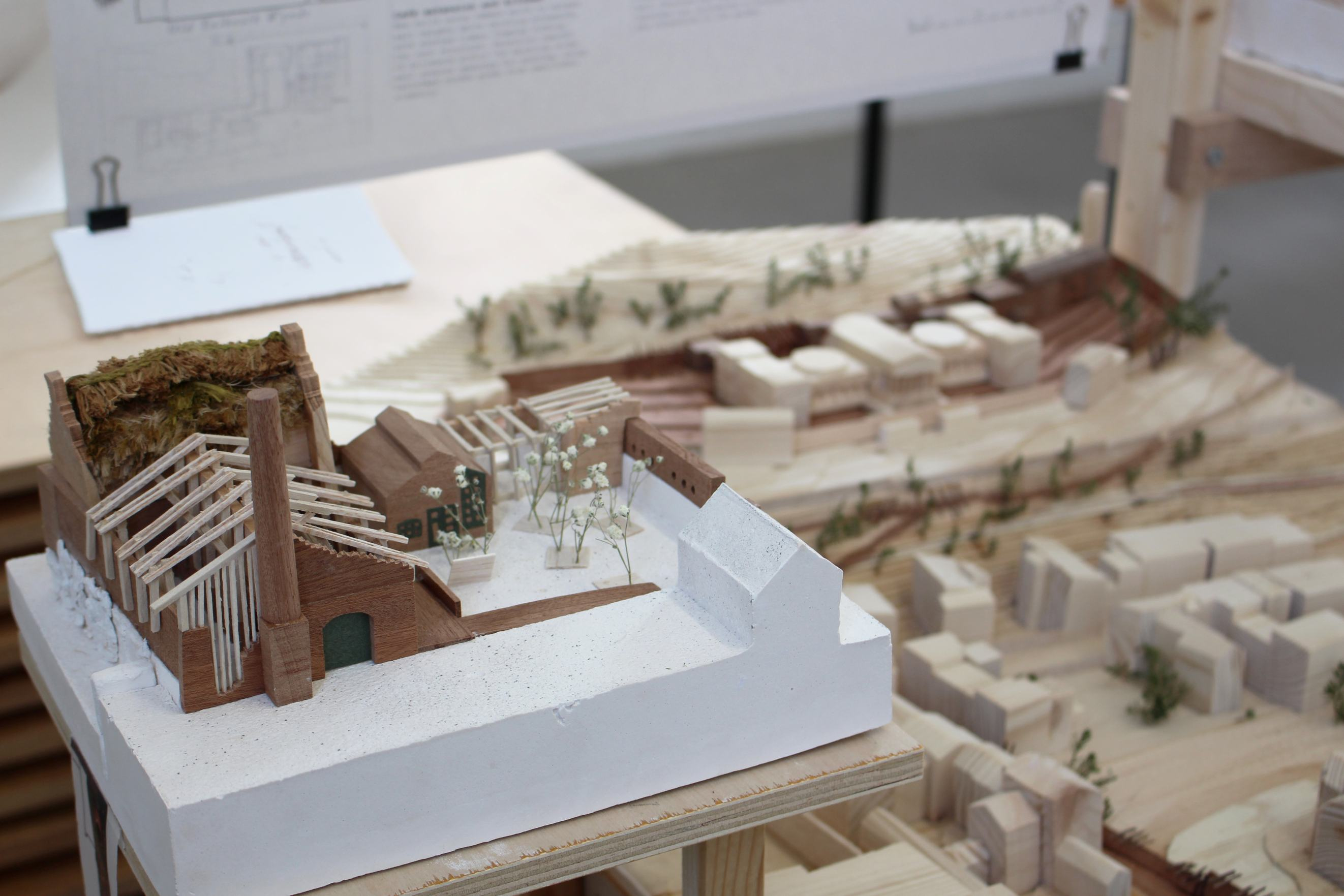
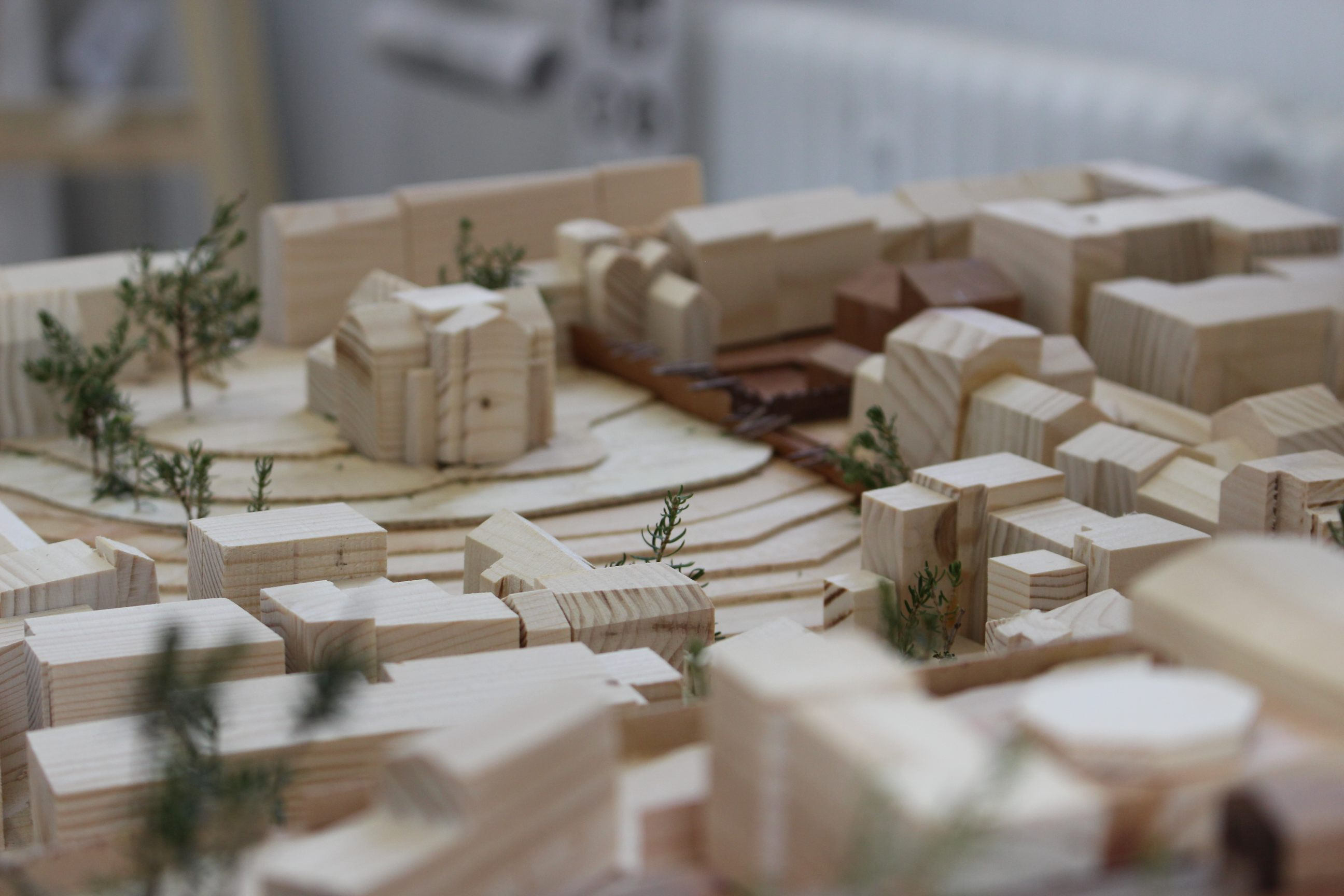
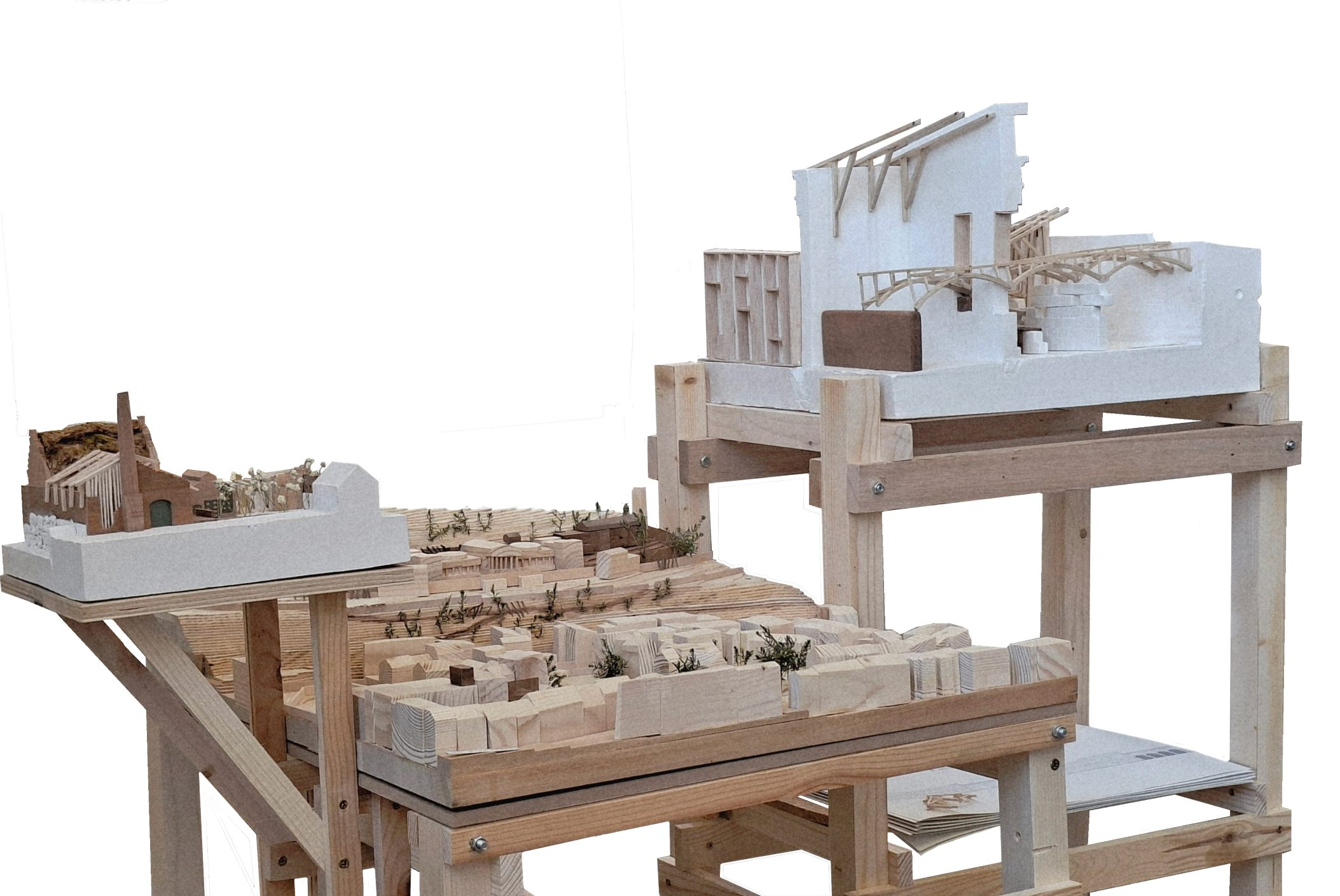
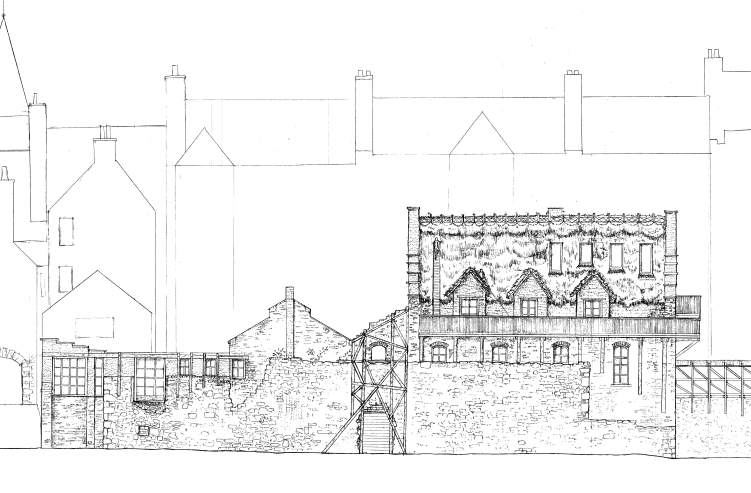
For the final semester, a new site was chosen ten minutes from the Old Royal High School, accessed by either descending through Jacob’s Ladder or via the unnamed ramp. The site, 179a Canongate is one of the last remaining traces of the New Street Gas Works and of the Old Town’s industrial and working history. Further developing the concept established in the Mason’s Court scheme, I sought to lean more fully into a hands-on and less rigid approach to both presentation and design.
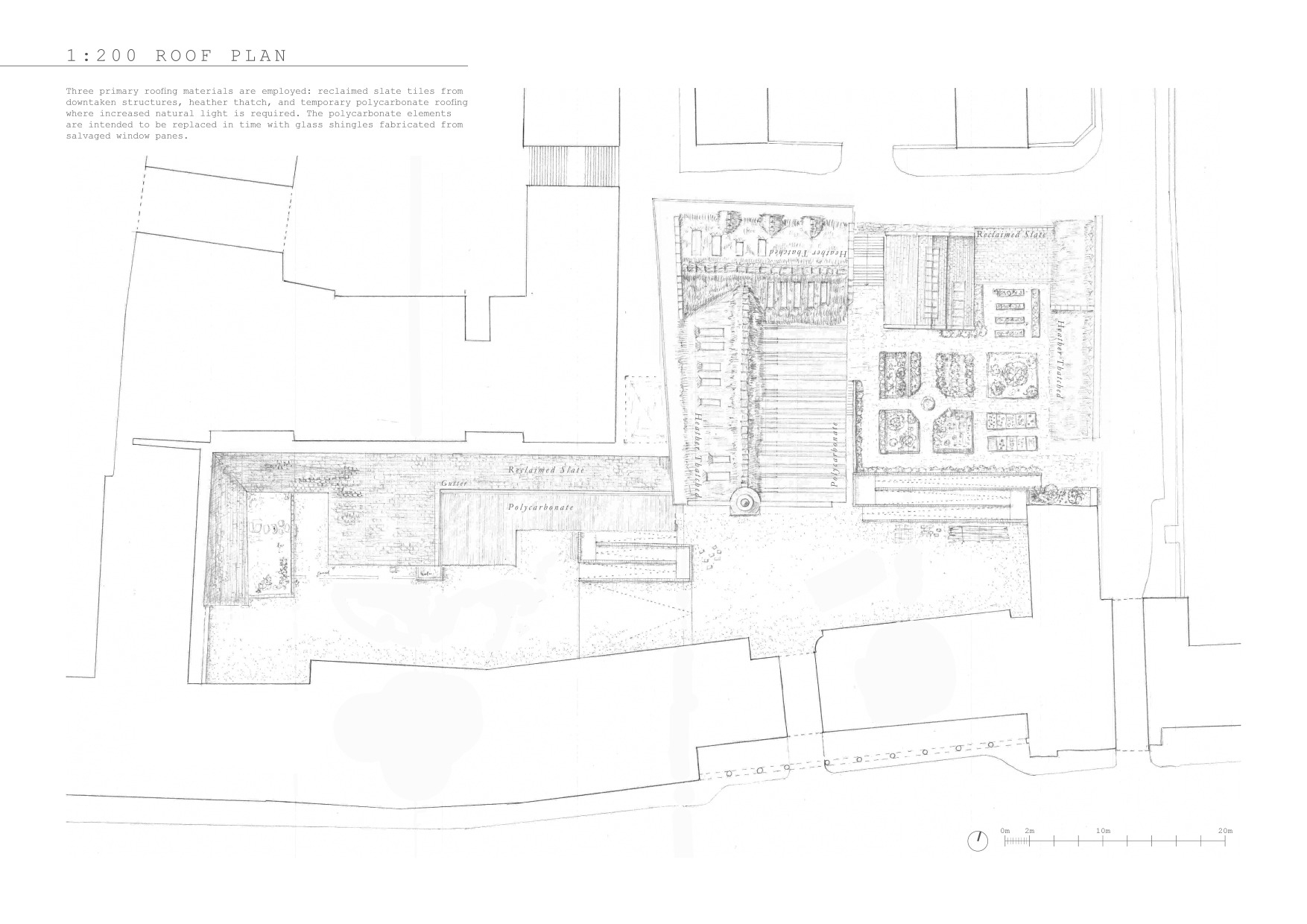
Here, the site was reimagined as a community hub for both general gathering and material experimentation. Like the Mason's Court scheme, construction methods employed a mix of reclaimed materials and traditional building techniques, including rammed earth, harling, and a heather-thatched roof. As the building is unlisted, dismantling and rearrangement was undertaken more boldly than at the ORHS. However, the emphasis on the historic fabric remained central, with the on-site reuse of dismantled materials being a priority.