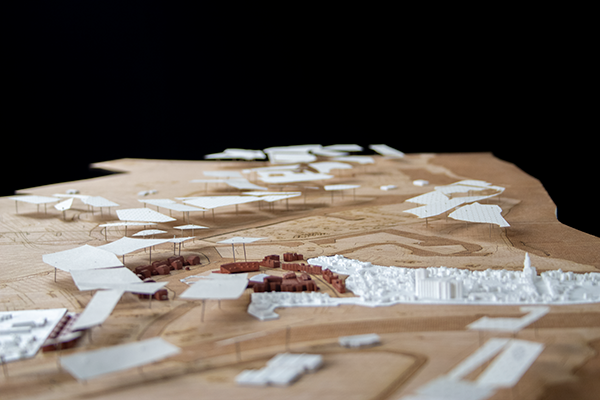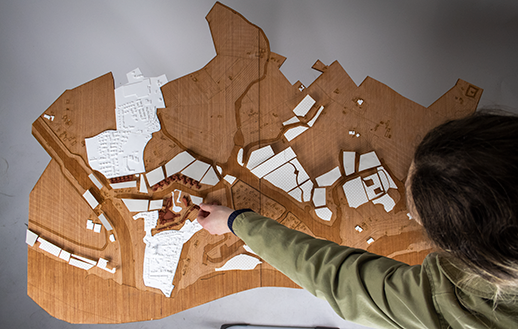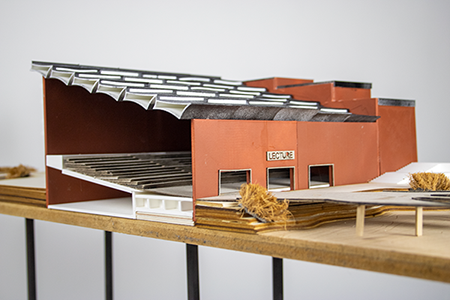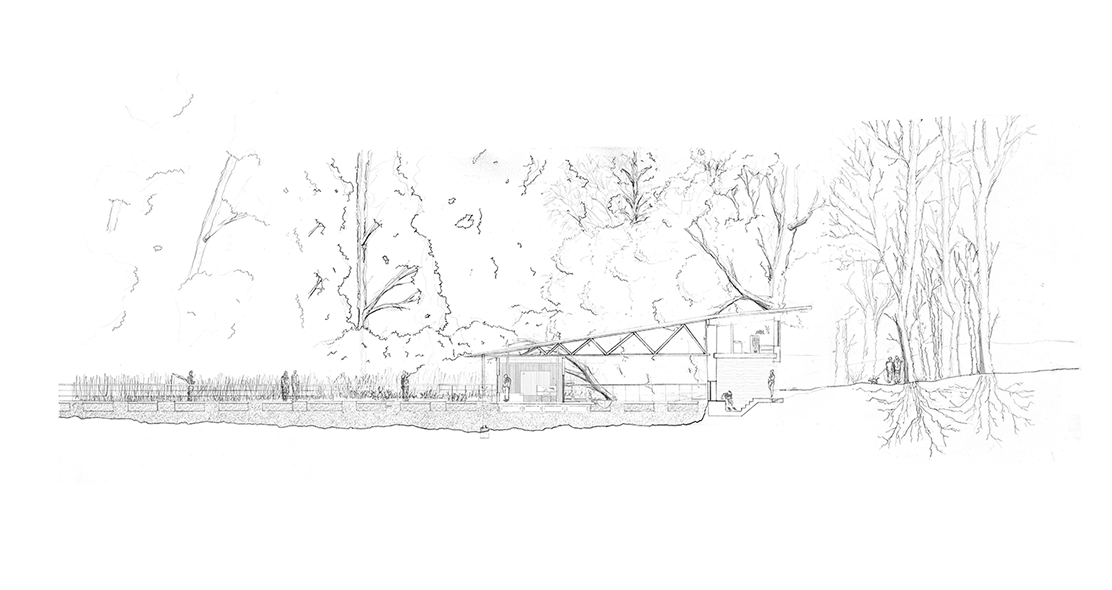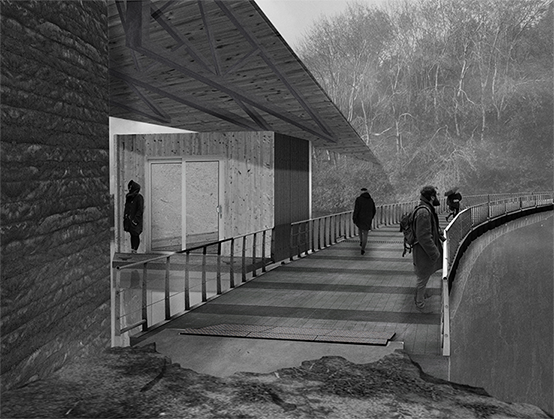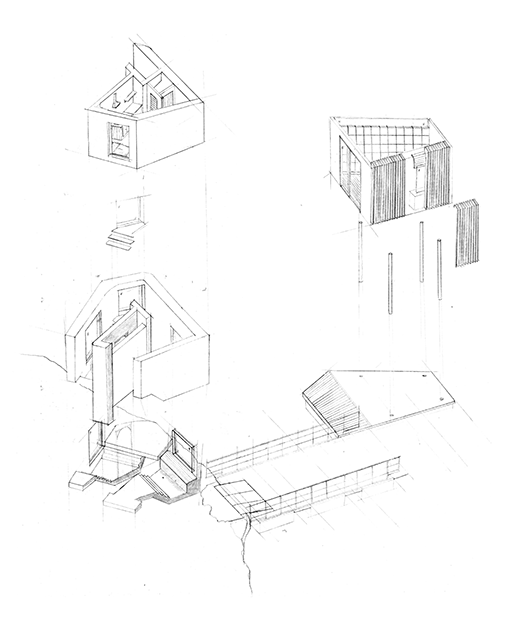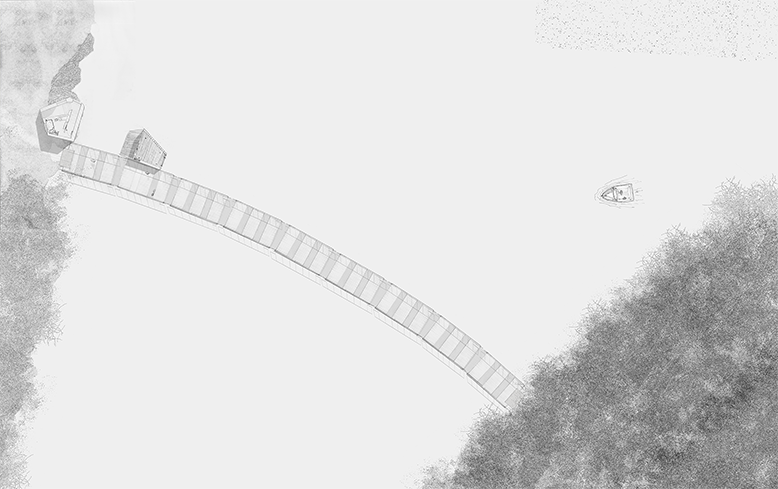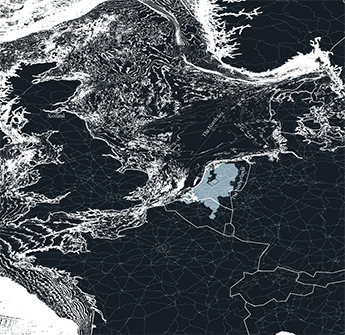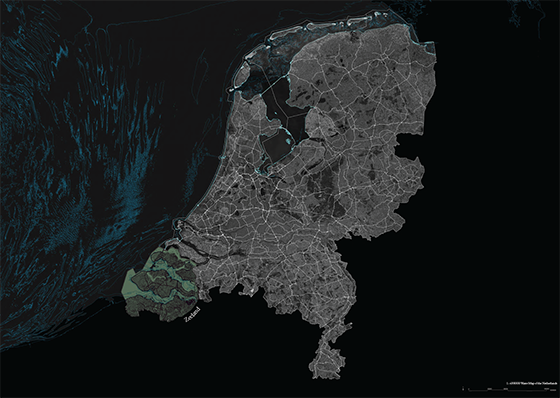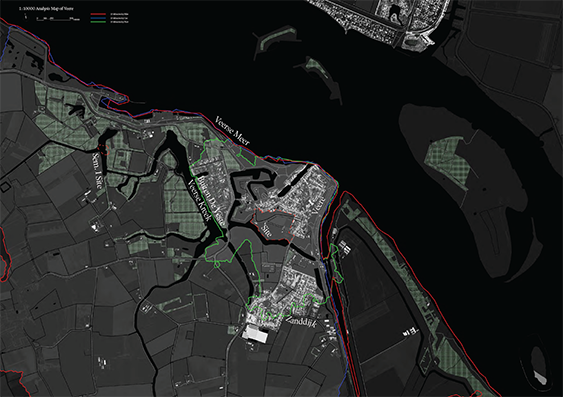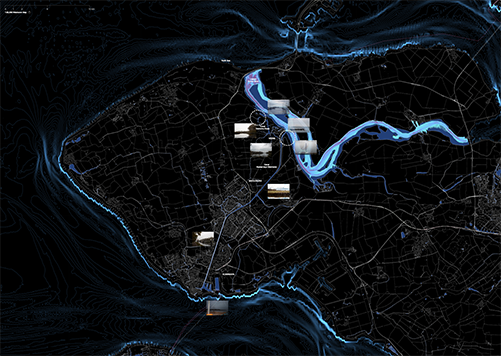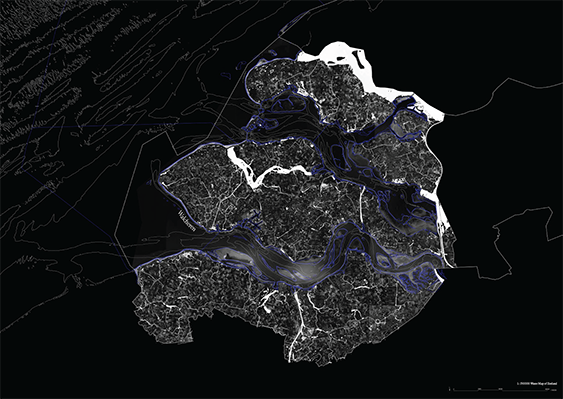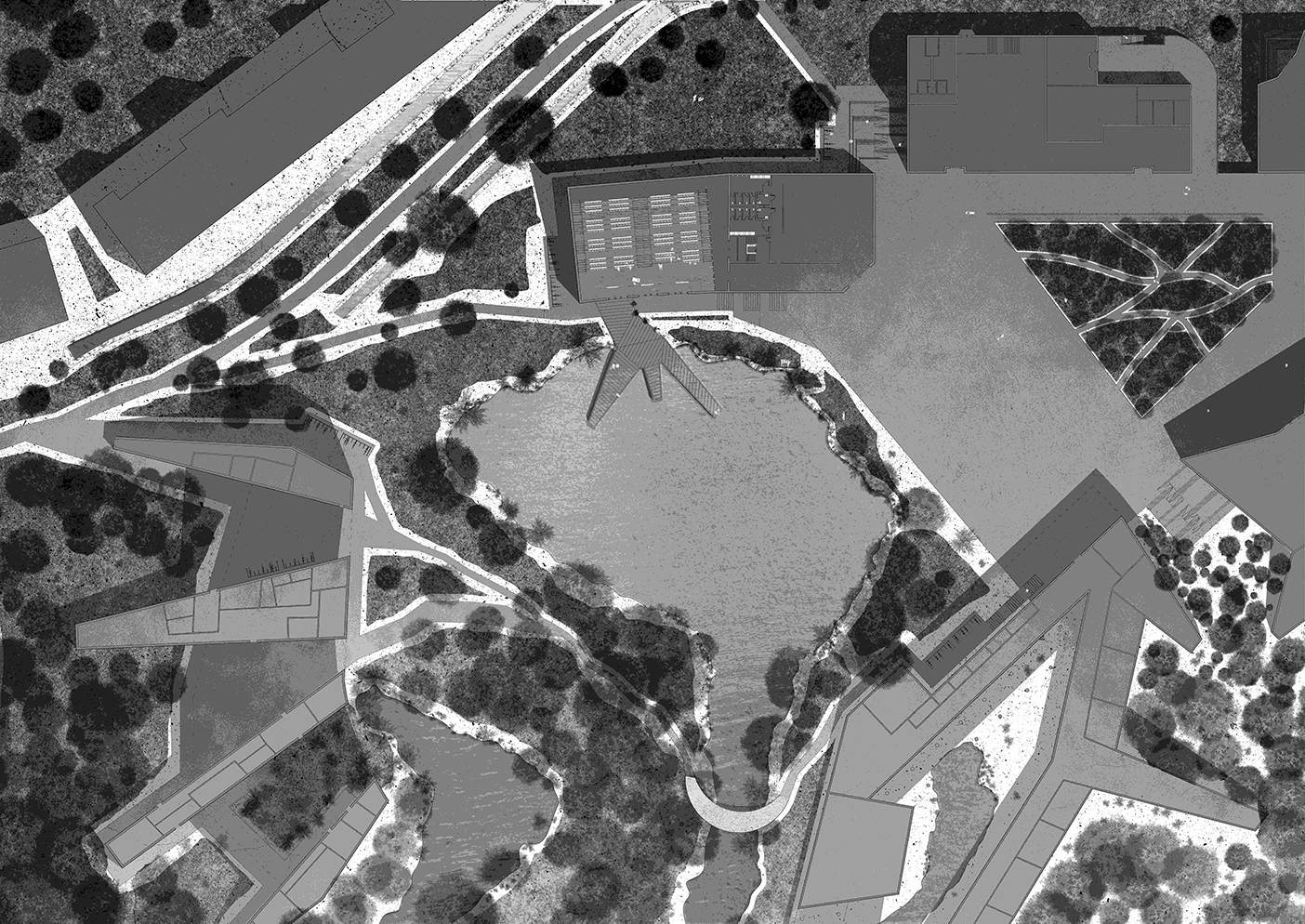
This project proposes a new university campus in Veere, the Netherlands, centred on the study and experience of hydrology and waterscapes. Situated within a landscape historically shaped by the negotiation between land and water, the design embraces this dynamic relationship as both context and generator. Rather than imposing a rigid architectural order, the masterplan is conceived as a porous and evolving system in which built form and natural processes are interwoven.
Water is treated as the primary structuring element. Existing hydrological patterns are extended through the careful carving of new waterways, allowing tidal movement, drainage, and ecological succession to inform spatial organisation. Woodland is introduced as a complementary system, stabilising soil, enhancing biodiversity, and creating a sequence of sheltered environments that mediate between open water and built space. Circulation follows the logic of water and topography, encouraging a slow, experiential engagement with the site.
As both an educational institution and a working landscape, the university operates as a living laboratory, where students and researchers directly engage with hydrological systems, climate adaptation, and ecological design. The project ultimately explores how architecture can move beyond coexistence with nature toward active collaboration, using design as a tool to reveal, restore, and reimagine the relationships between land, water, and human inhabitation.