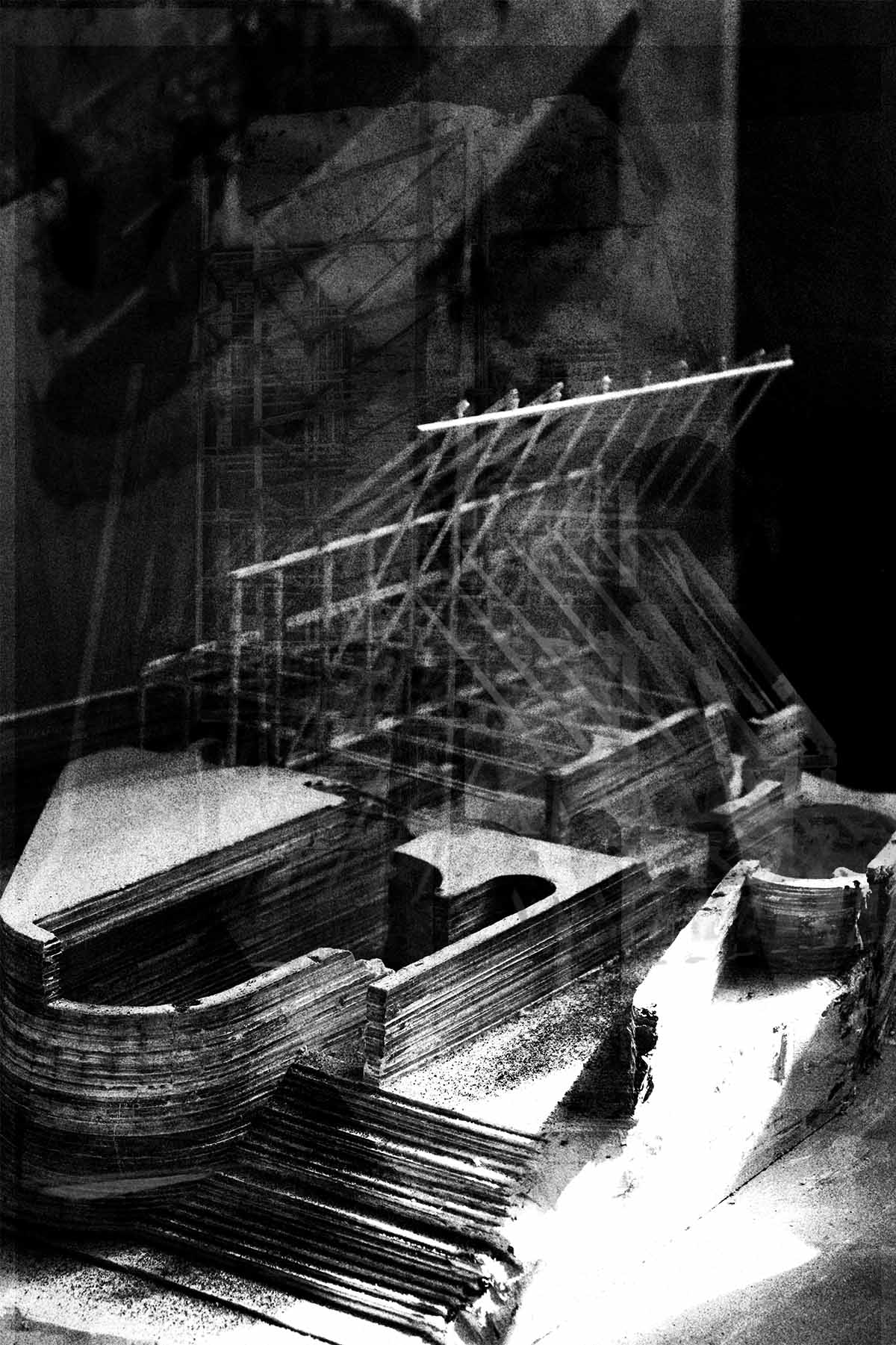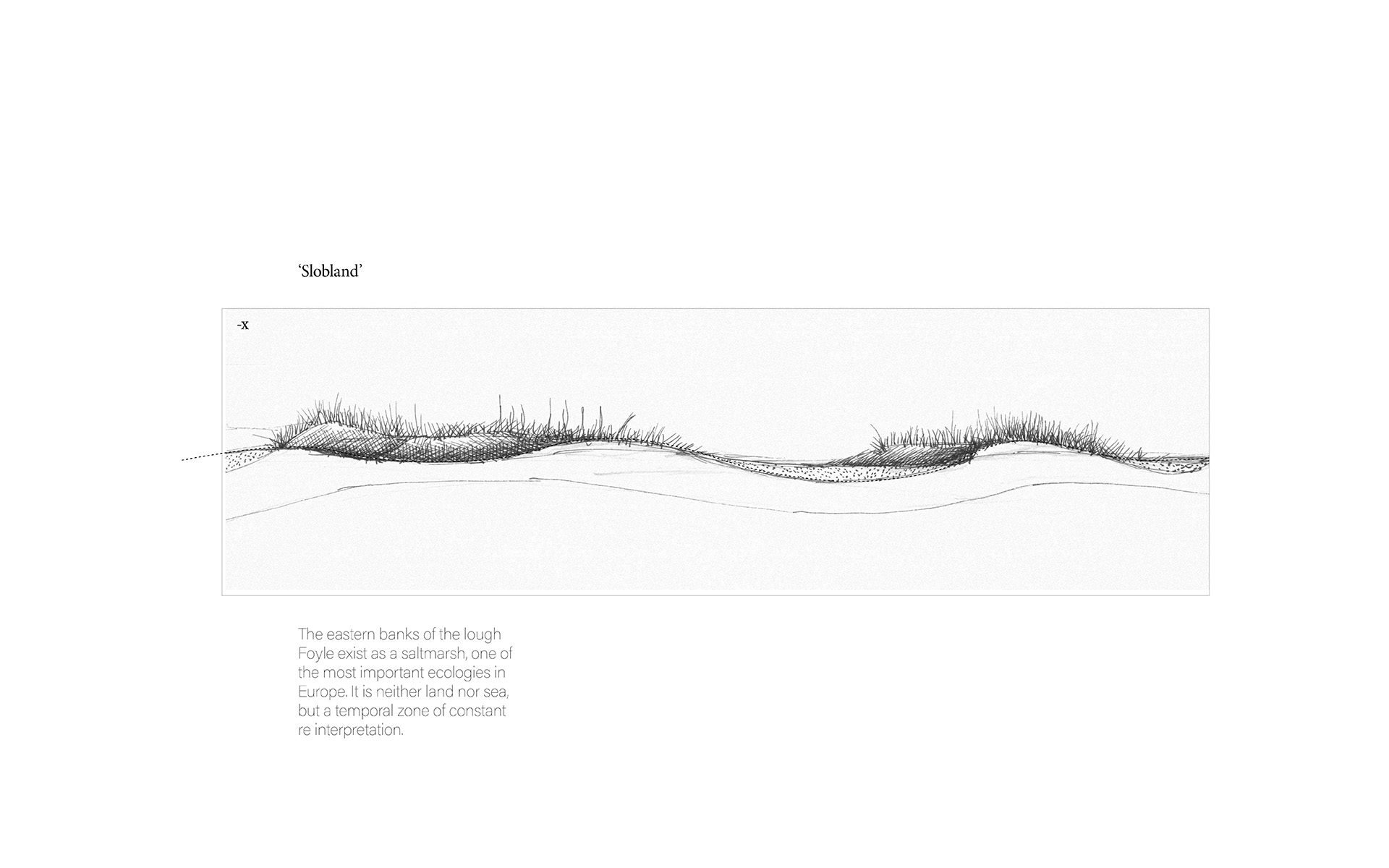


Lough Foyle, an aqueous territory held between the Republic of Ireland and the United Kingdom, where a palimpsest of borders, colonial legacies, and quantifying impulses inscribe themselves thinly across a deep landscape of tidal flux, ecological attrition, and infrastructural decay.
The method of the border emerges as a response to uncertainty: the ambiguous volumes of water are subjected to the logics of hard engineering. Land is raised from ambiguity and subsumed into regimes of ownership. The sea wall, an artefact of ordinance, materialises this ambition.
Yet, the uncertainty of climate change challenges this paradigm. Sea levels will rise, while unpredictable weather surges already transgress the certainties of the wall.
Thus, the project asks, rather than employing ever greater technologies to control a dynamic ecology, we may seek a new paradigm: uncertainty becomes a generator, rather than to be controlled, enabling new forms of social, territorial, and spatial mutuality within a total ecology.
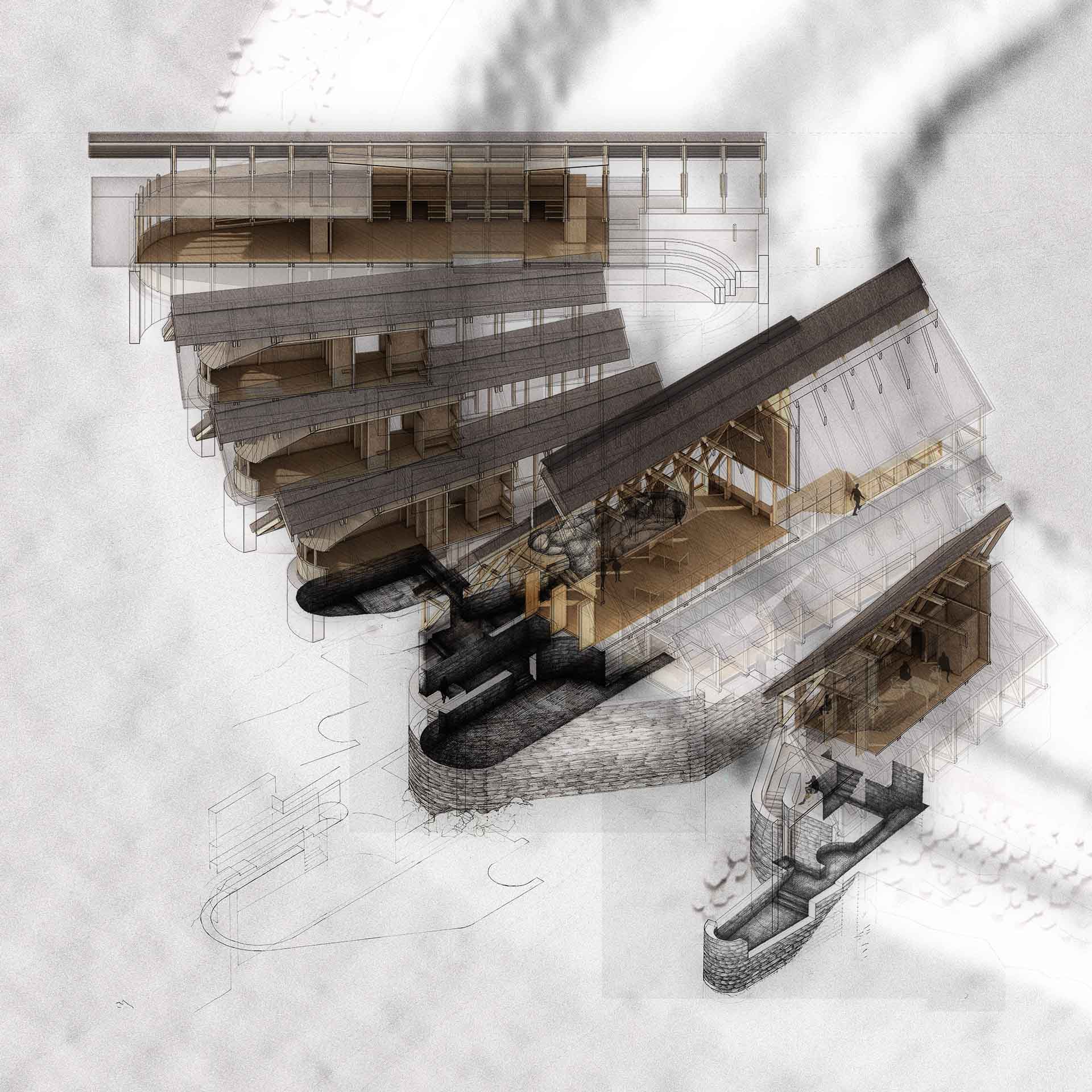
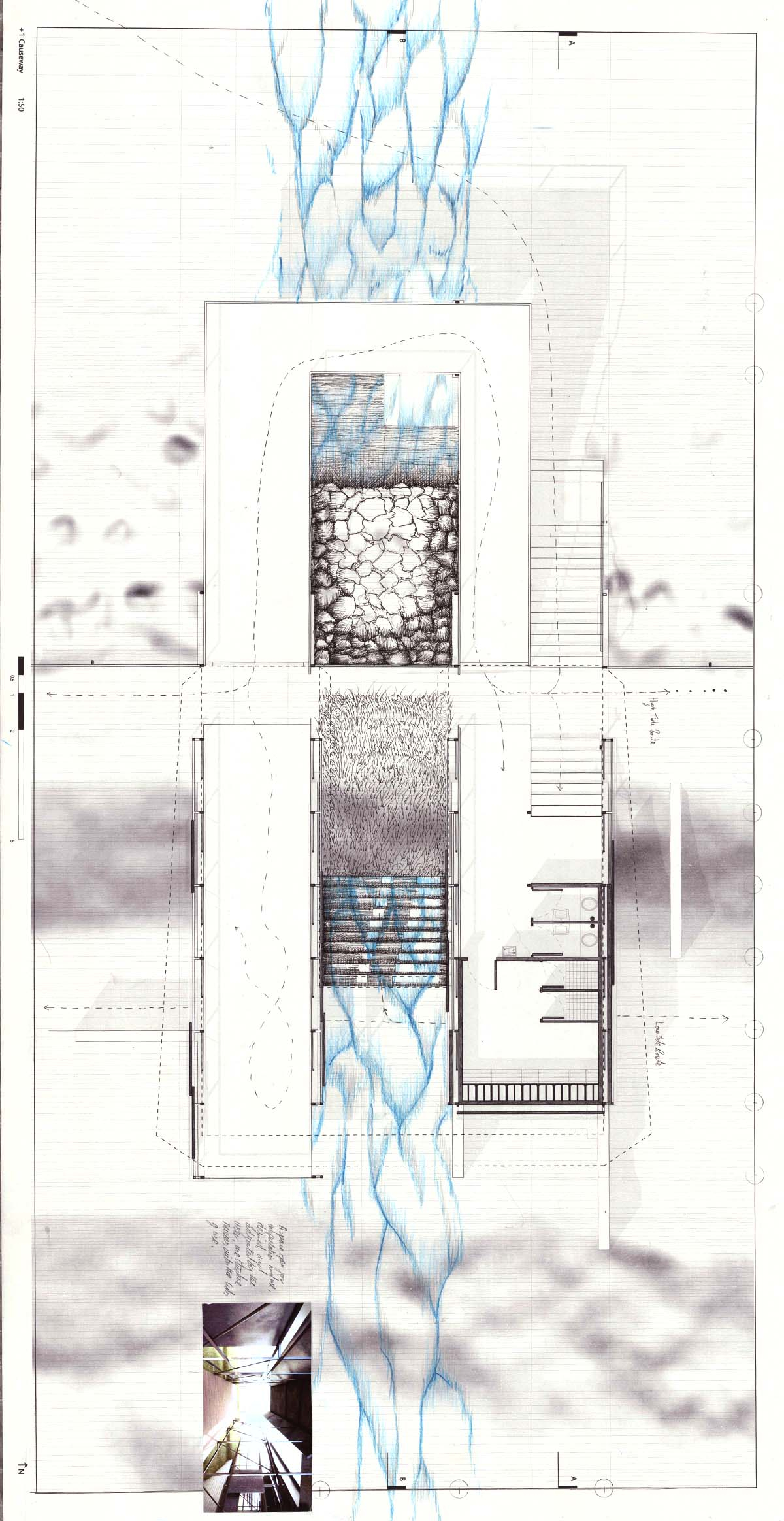
The wall is reimagined not as a border, but as a critical zone of exchange—a locus where revived intertidal salt marshes are cultivated, and the former border becomes an island territory, nurturing opportunities for publics, education, research, and materiality across intertidal states.
The project seeks architecture as a situated practice, endemic to a diffuse and uncertain network of relations, rather than a master of site.



Engaging with the waters of Lough Foyle, a permanently
shifting, ambiguous tidal ecology, yet bordered. On the
western shore, the Republic of Ireland, on the eastern
shore, the United Kingdom, in the form of Northern Ireland.
Here, the Foyle is a tool of division, symbolic
lines of ownership and ambiguous territories
drawn thinly over its undulating surface.
Thus, we appeal to these ambiguous currents not
as a border, but of a site of connections, a shared
ecology that transcends the symbolic borders we draw.
In this endeavour, we will ask how an open
architecture may act in this cohesive total, using
experimental architectural methods (operations),
and modes of representation, we explore how
open built forms may emerge through these
cross-border entanglements, imagining new
ways of conceiving commons and citizenship.
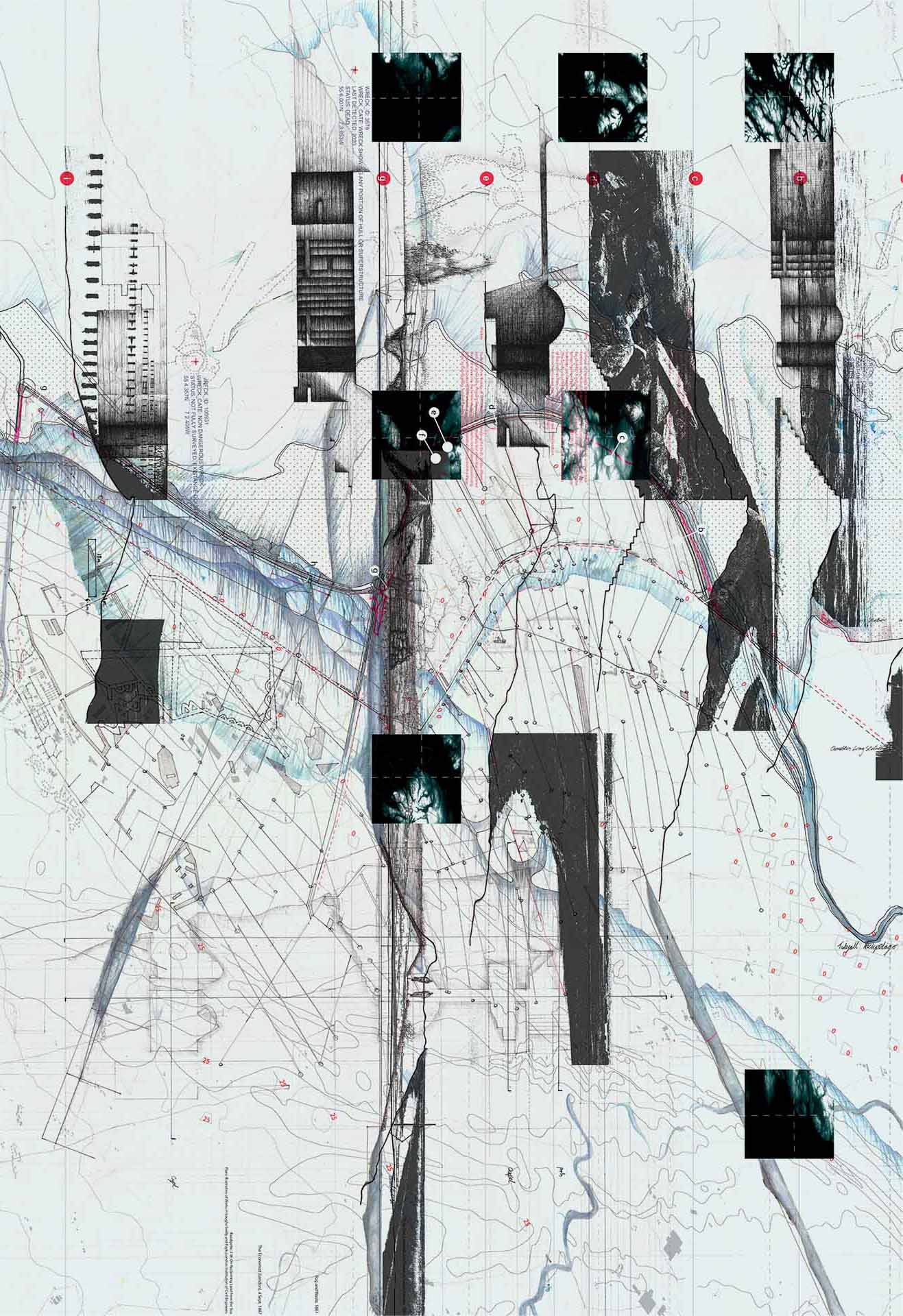

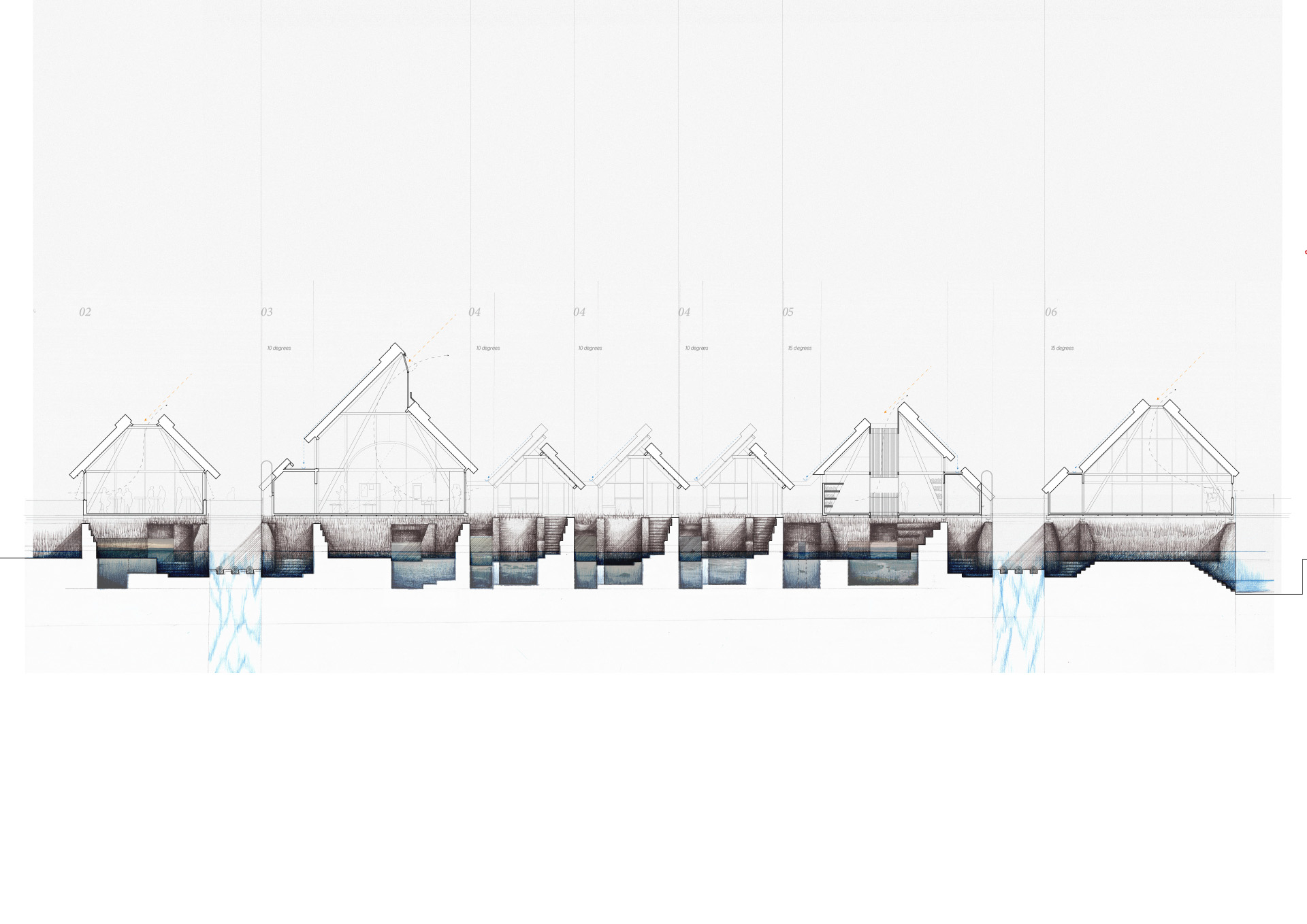


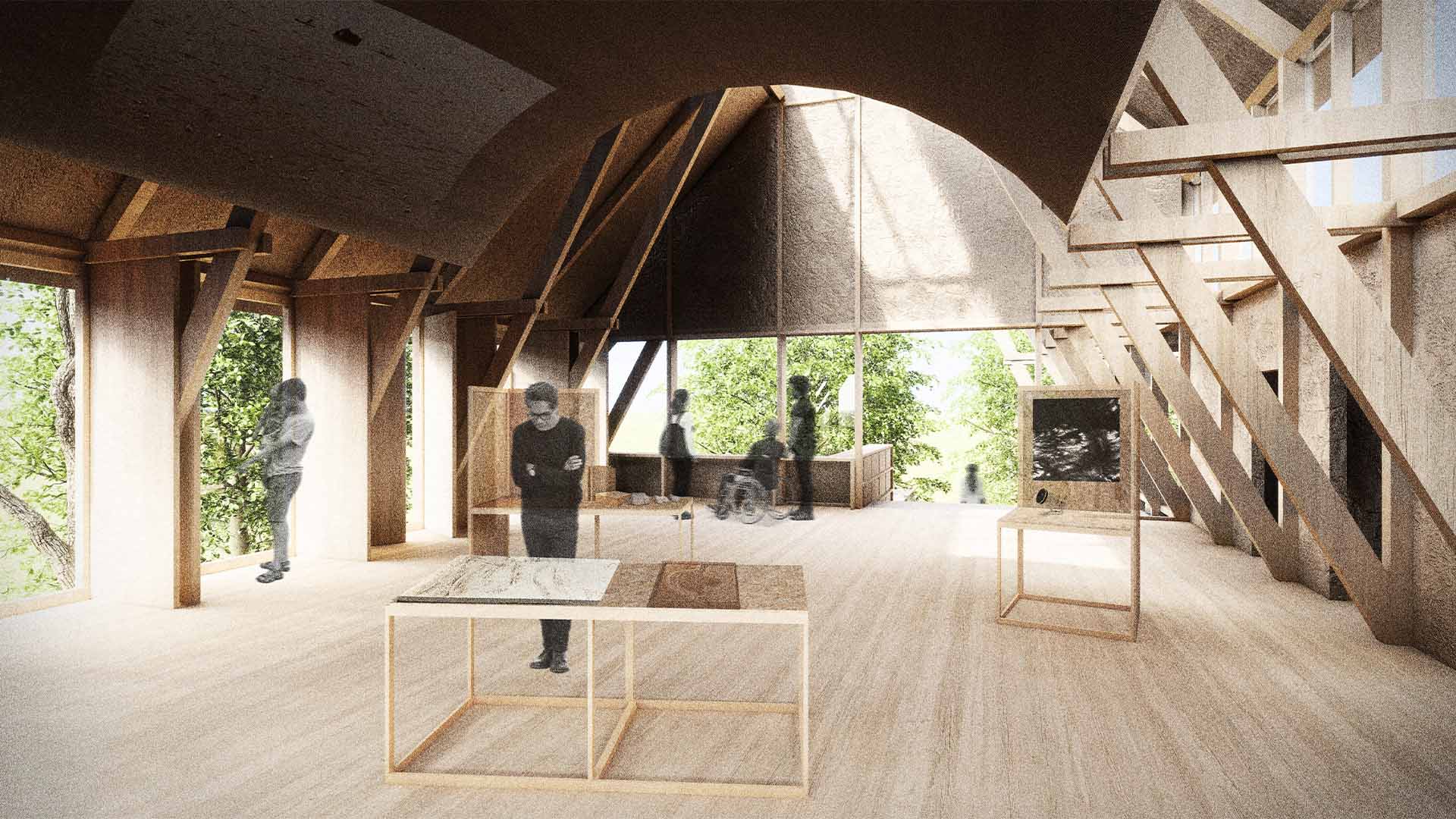


Our study of the Foyle focused on its shifting and
negotiated nature, understanding it as a lived
landscape rather than a static boundary. This approach
led us to develop architectural strategies that respond
to the complexity and interconnectedness of the wider
ecology. In Semester 2, we built on these strategies,
grounding them in specific commitments to the
territory and its context. By developing detailed design
briefs, building programmes, and territorial frameworks,
we aimed to address the ongoing influence of political
histories, cultural practices, and environmental systems.
The sea wall, once a marker of division within this
shared landscape, now becomes a point of passage.
The polders behind the wall, once drained, are reflooded
and return as salt marsh, offering new habitats and
ecological value. This transformation supports the use
of wetland materials, allowing architecture to emerge
from and eventually return to the landscape. The edge
of the wall becomes a place for publics, education,
research, and material exchange, as we begin to
address the 200-year history of environmental damage
caused by coastal engineering.