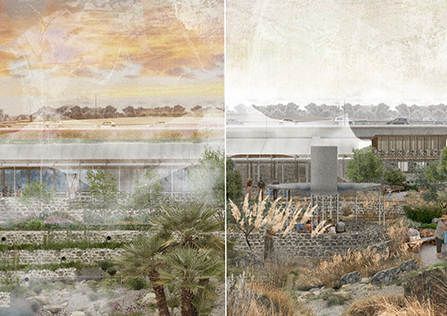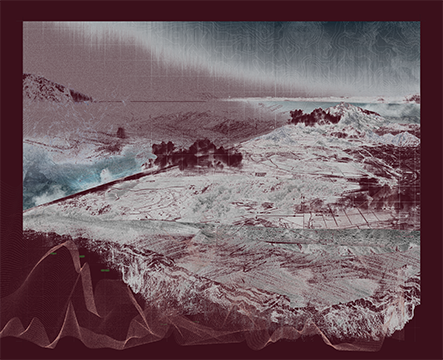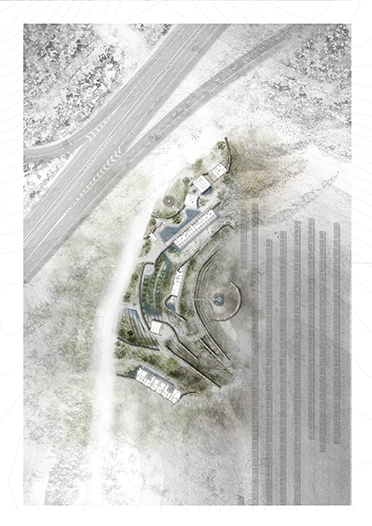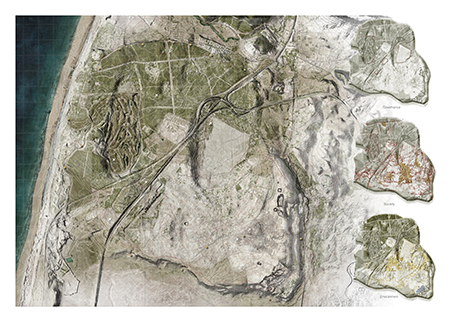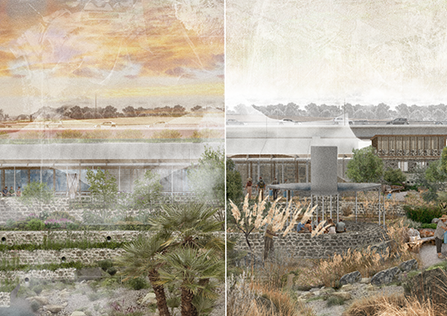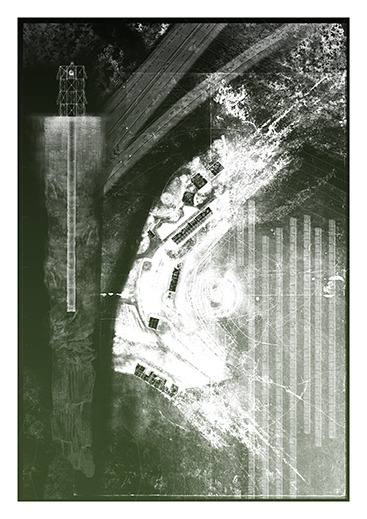


Water leaves slowly: through wells, soils, roots, and the rituals that once gathered communities around its presence. The United Nations’ declaration of water bankruptcy names this loss plainly, calling for institutions able to adapt as climates shift and landscapes change. Framed as of the Critical Zone - the fragile layer where soil, water, atmosphere, and human life meet - these realities emerge in the ground itself at Charf el Akab, a strategic aquifer beneath Tangier’s expanding edge.
Between Two Waters responds through the creation of the commons: water understood not as commodity, but as shared life sustained through collective care. Drawing from Amazigh and Jebala traditions of stewardship, the project revives indigenous systems where governance is seasonal, participatory, and adaptive.
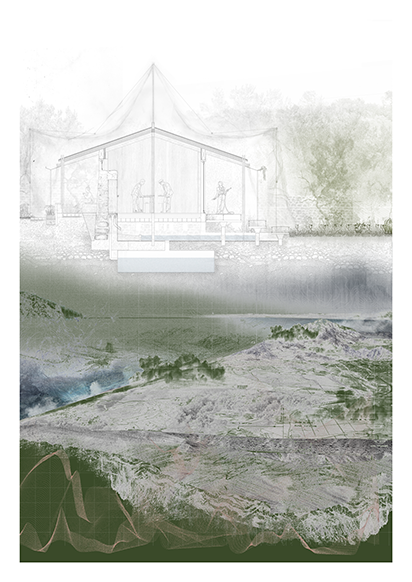
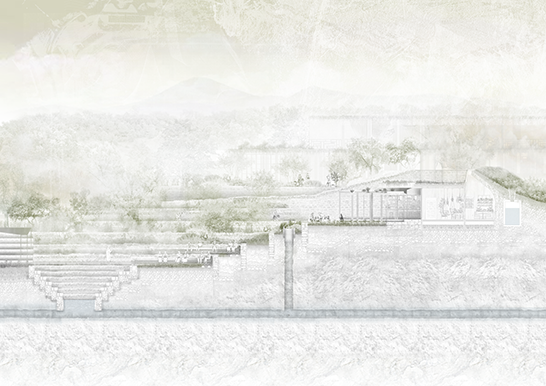
Thus, architecture is no longer imposed upon the landscape as object, but embedded within it as instrument: sensing, mediating, and sustaining relationships between people and earth.
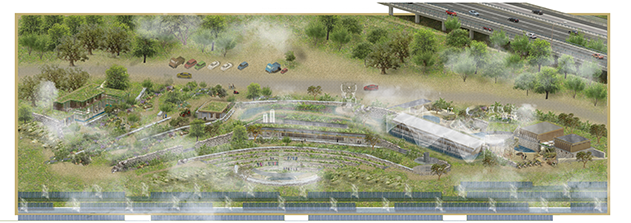
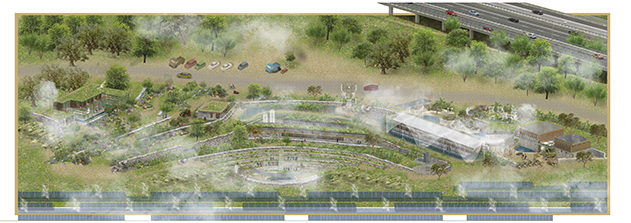
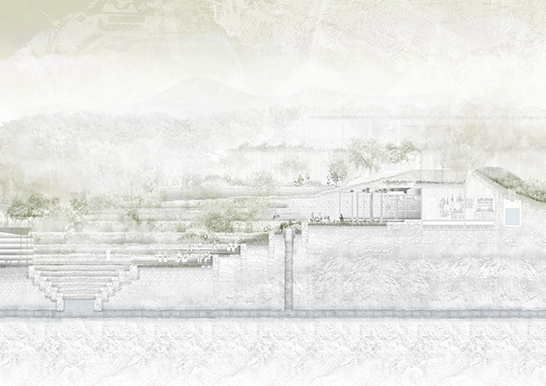
Terraces, basins, gardens, workshops, and gathering spaces harvest fog, slow rainwater, filter runoff, and replenish the aquifer below. Residents come not only to draw water, but to sustain it through cultivation, repair, and shared labour. Ultimately, Between Two Waters calls for architecture to help us land on Earth again: reattached to place, responsible to its ecologies, and invited into deeper relations of care.