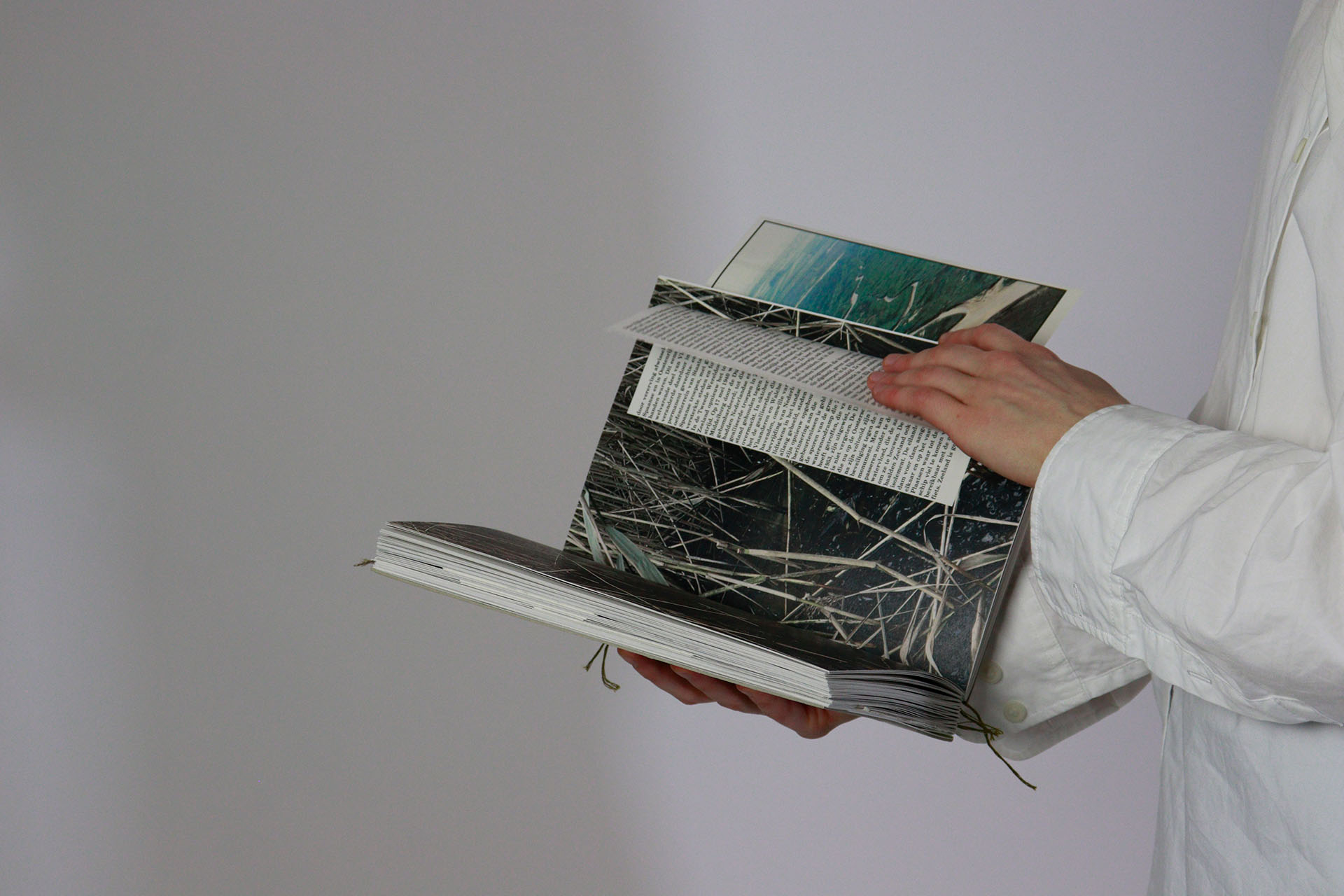
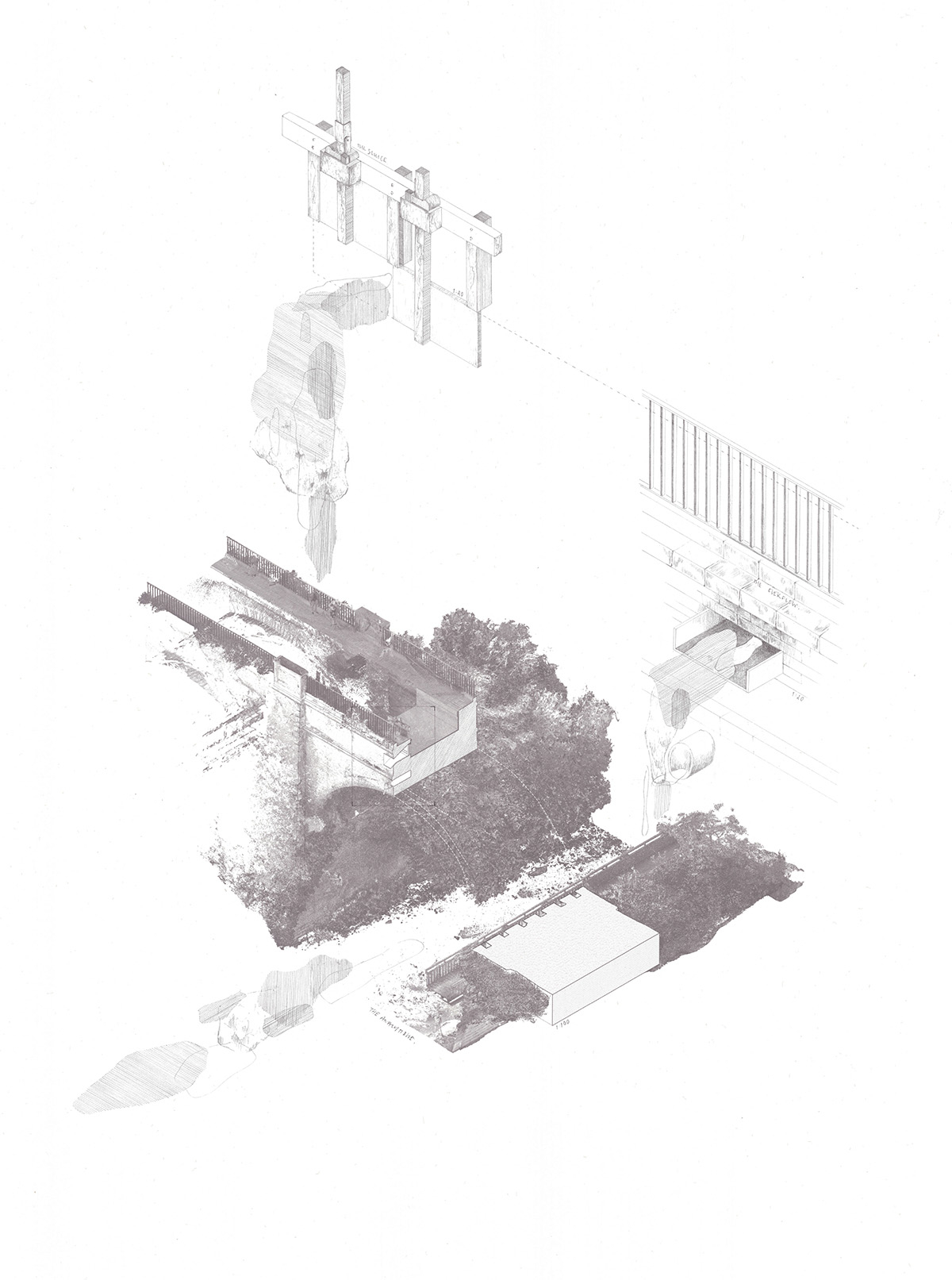
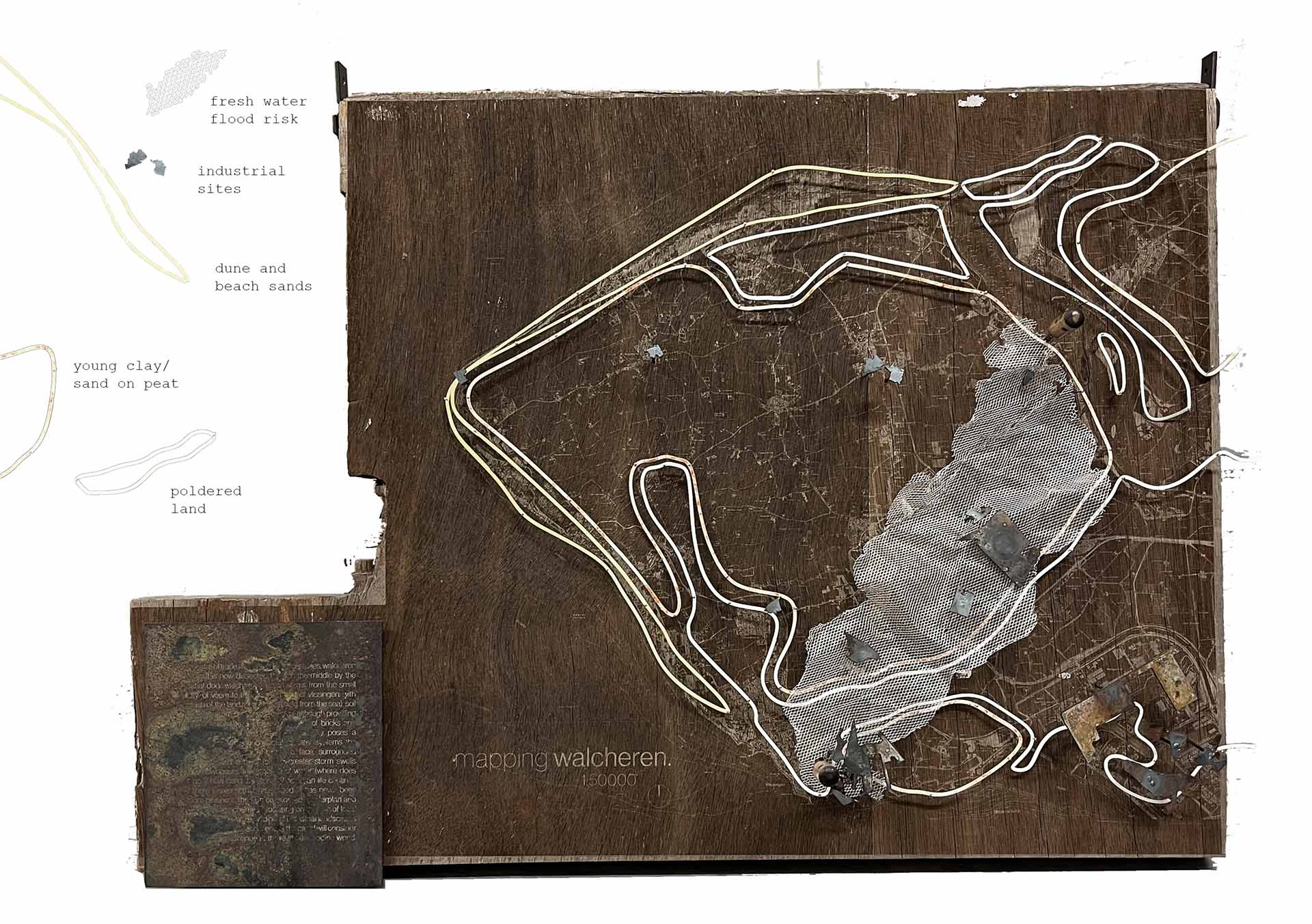
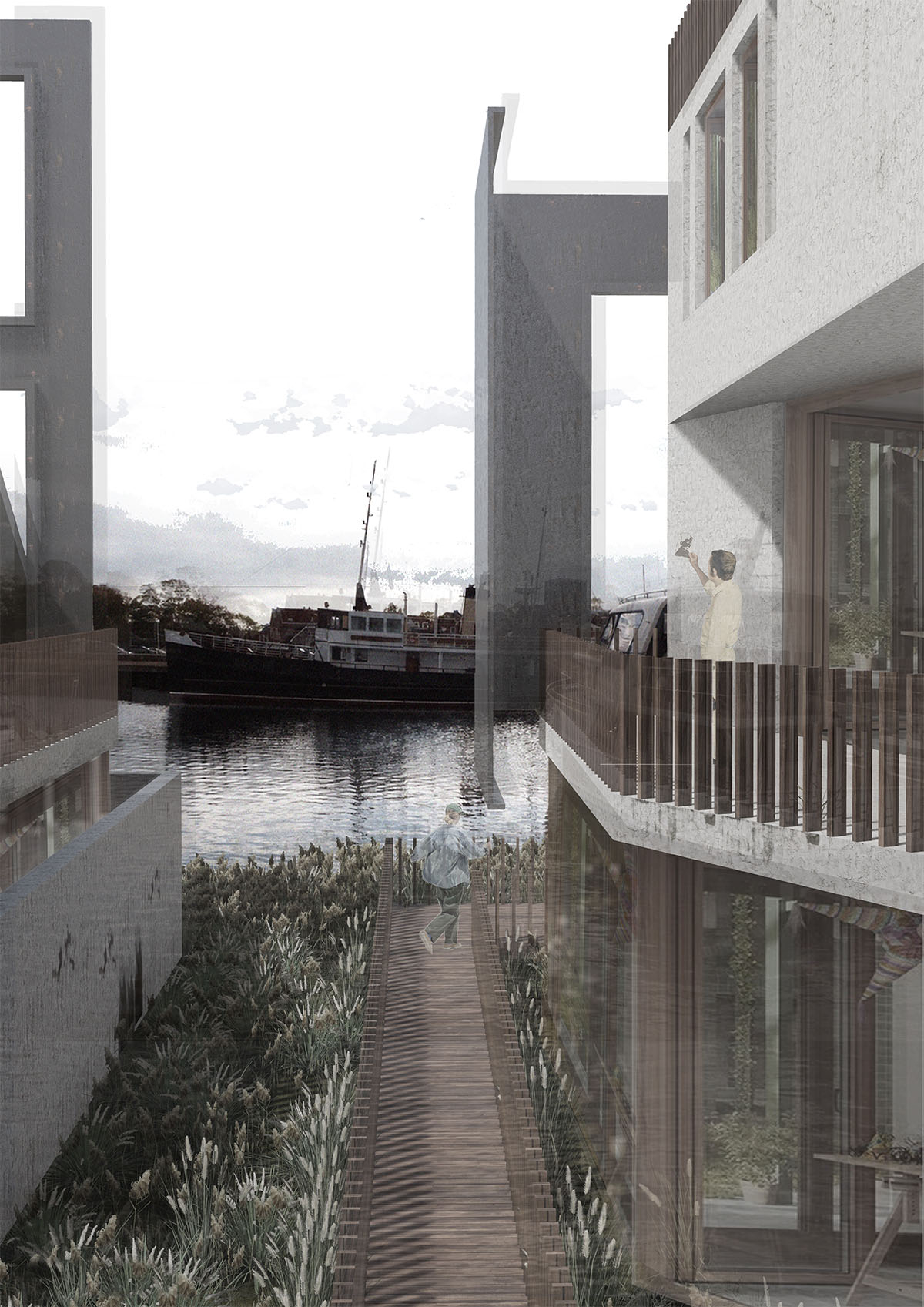
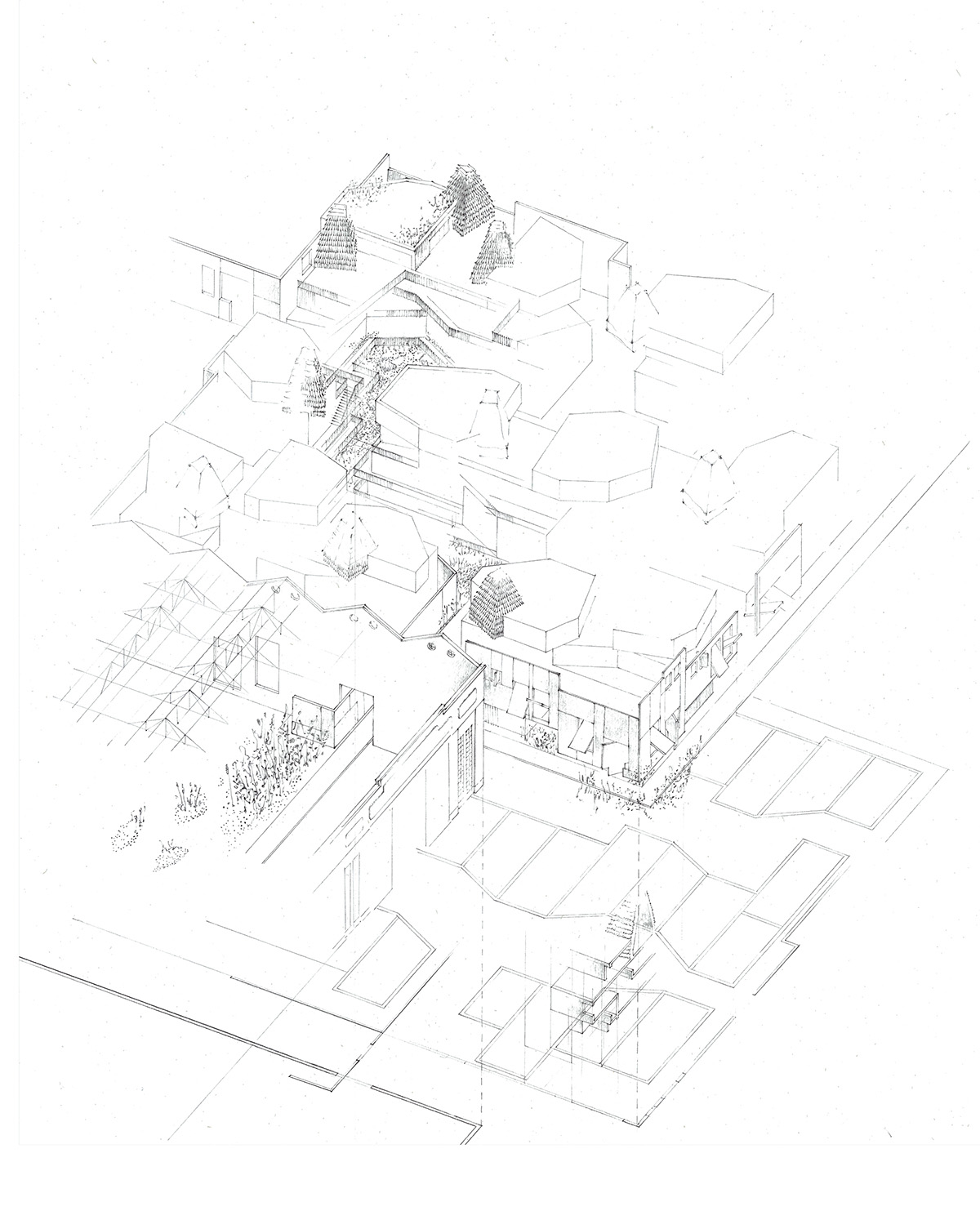
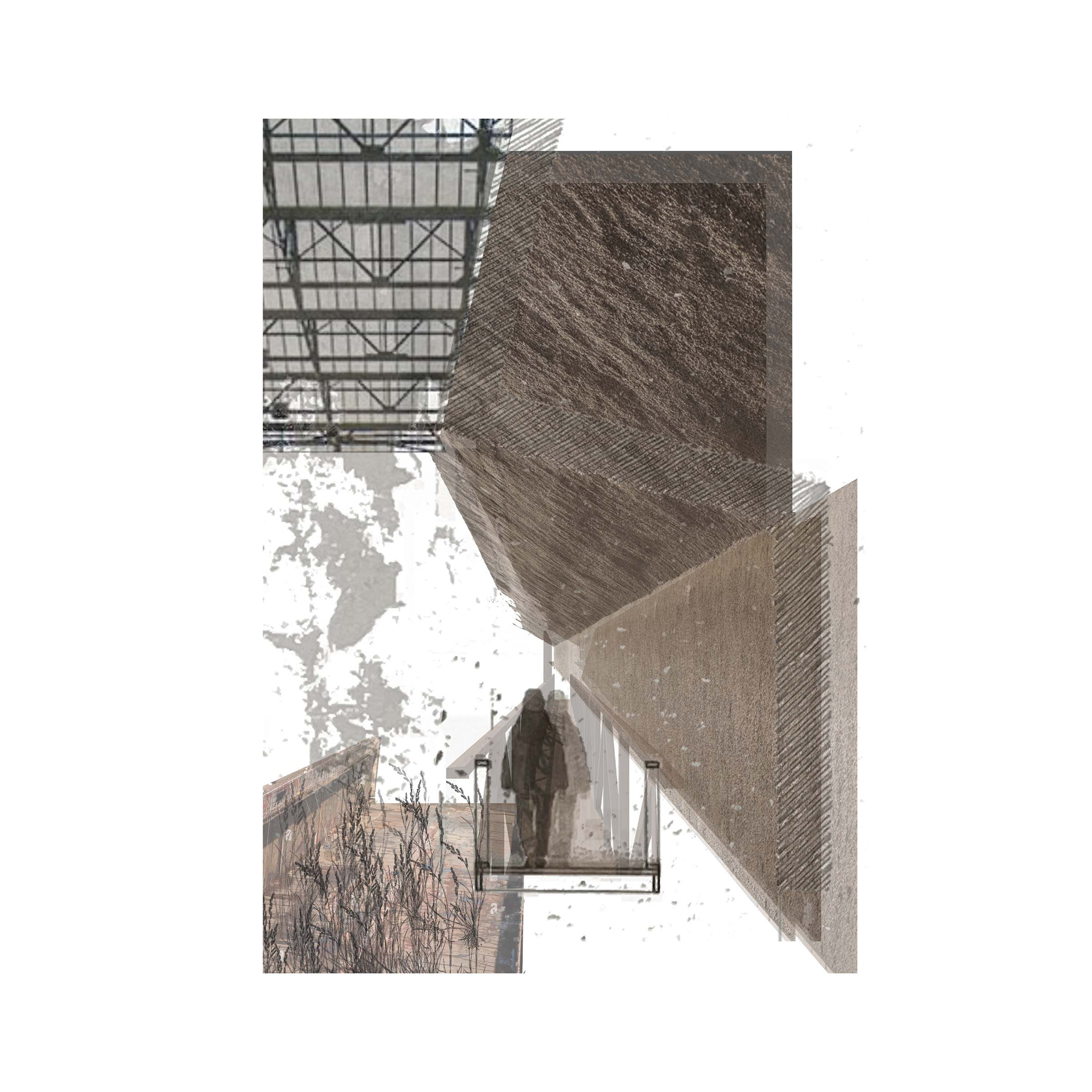
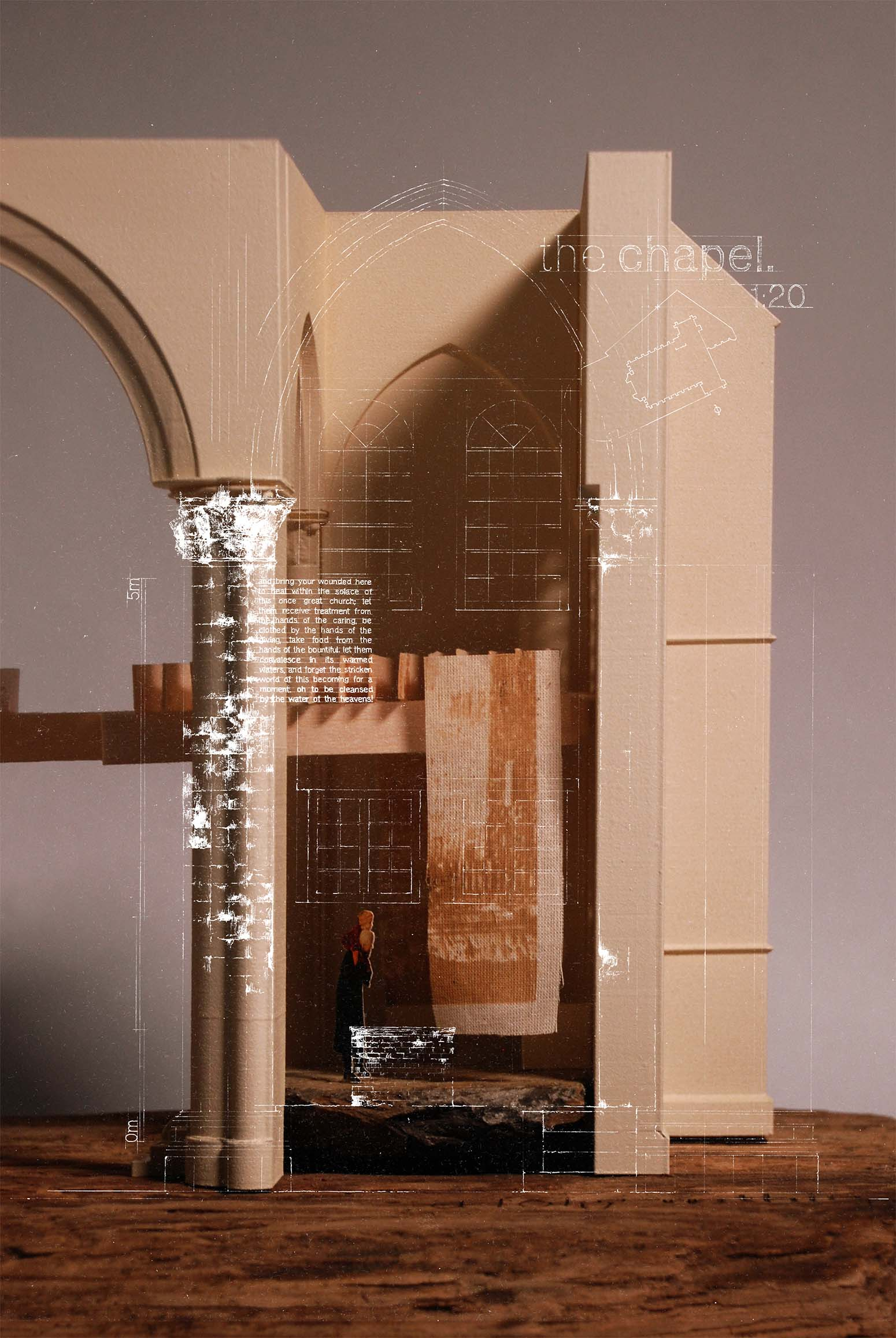
Flowing between land and water, the thesis 'entangled inhabitation: architectures of recycled industries' emerges from Walcheren’s layered history shaped by water management. Anchored in the port town of Vlissingen at the bottom of Kanaal door Walcheren, the project focuses on a neglected land left behind by the decline of the De Schelde shipbuilding industry. Once a defining force within the city, its departure has left a gap within the urban fabric, where fragments of maritime heritage remain embedded within an expanding residential context.
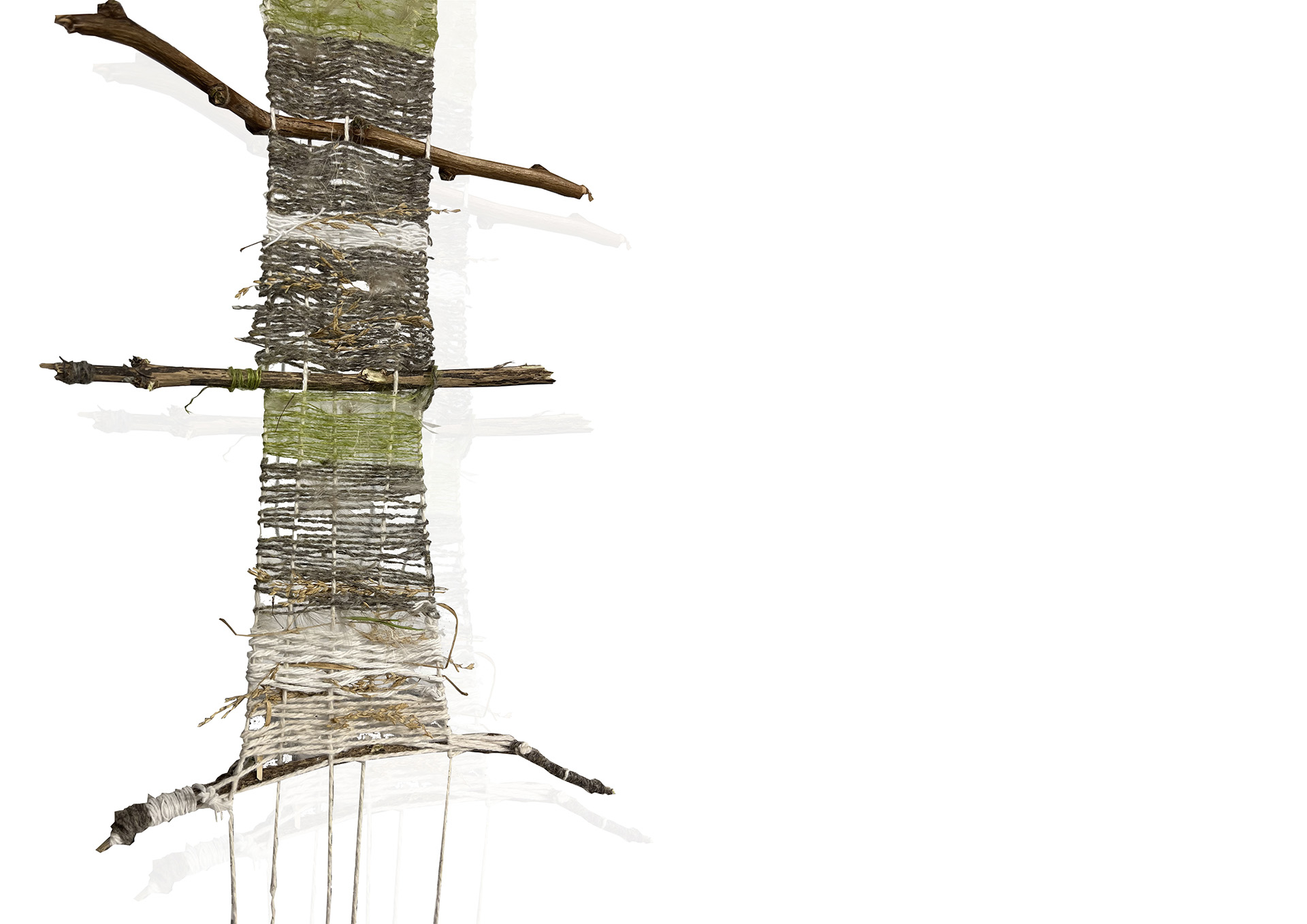
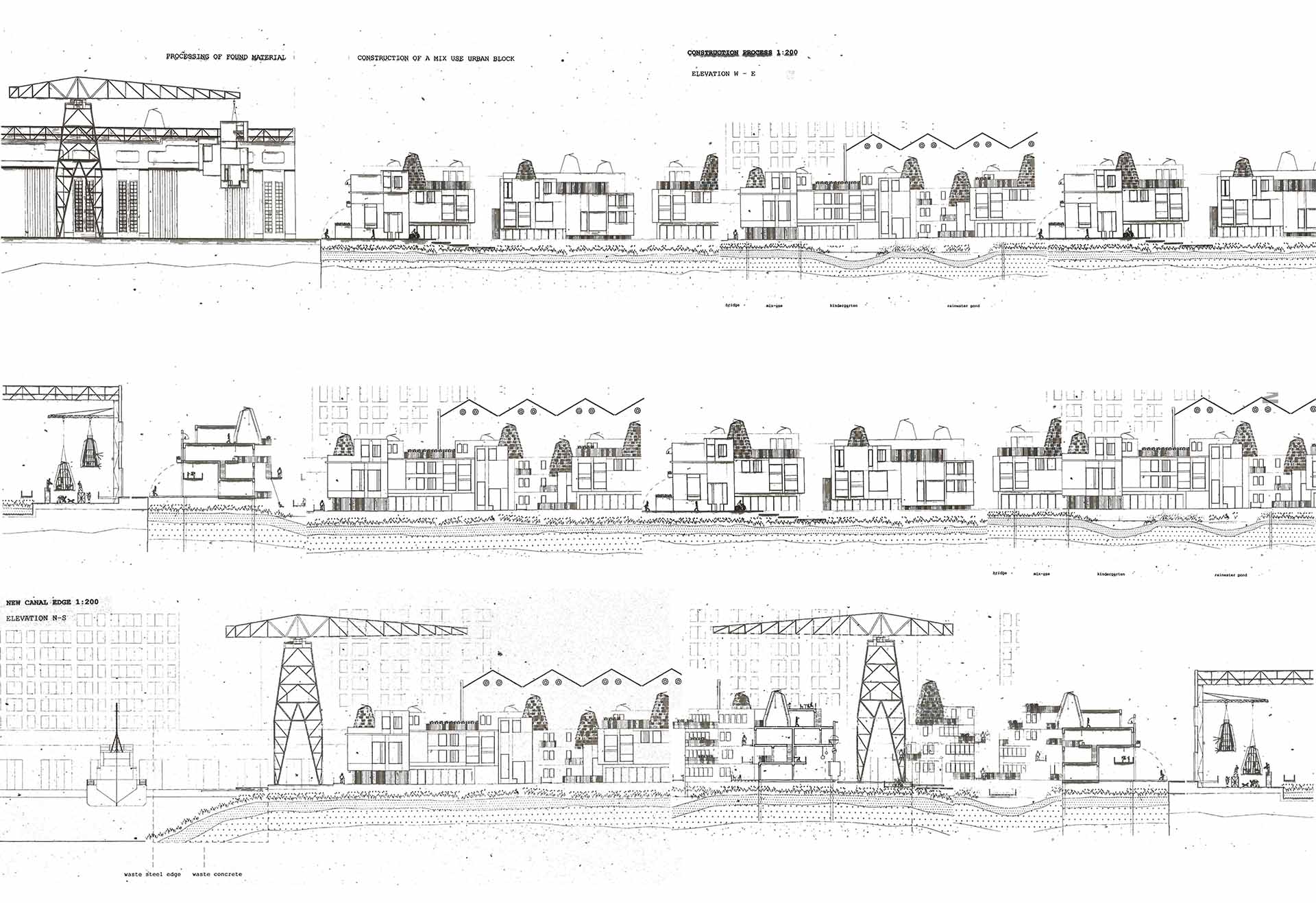
Secured with sea walls and defined edges, Walcheren Peninsula no longer evokes the vast wetlands from which it evolved. The project looks at the potential of echoing that lost soft buffer by introducing habitats rich in entangled human and non-human ecosystems along the canal route. This soft edge acts as a porous flood control, while its vegetation is subsequently harvested, processed within the existing warehouse, and used for the reactivation of post-industrial void spaces along the canal.
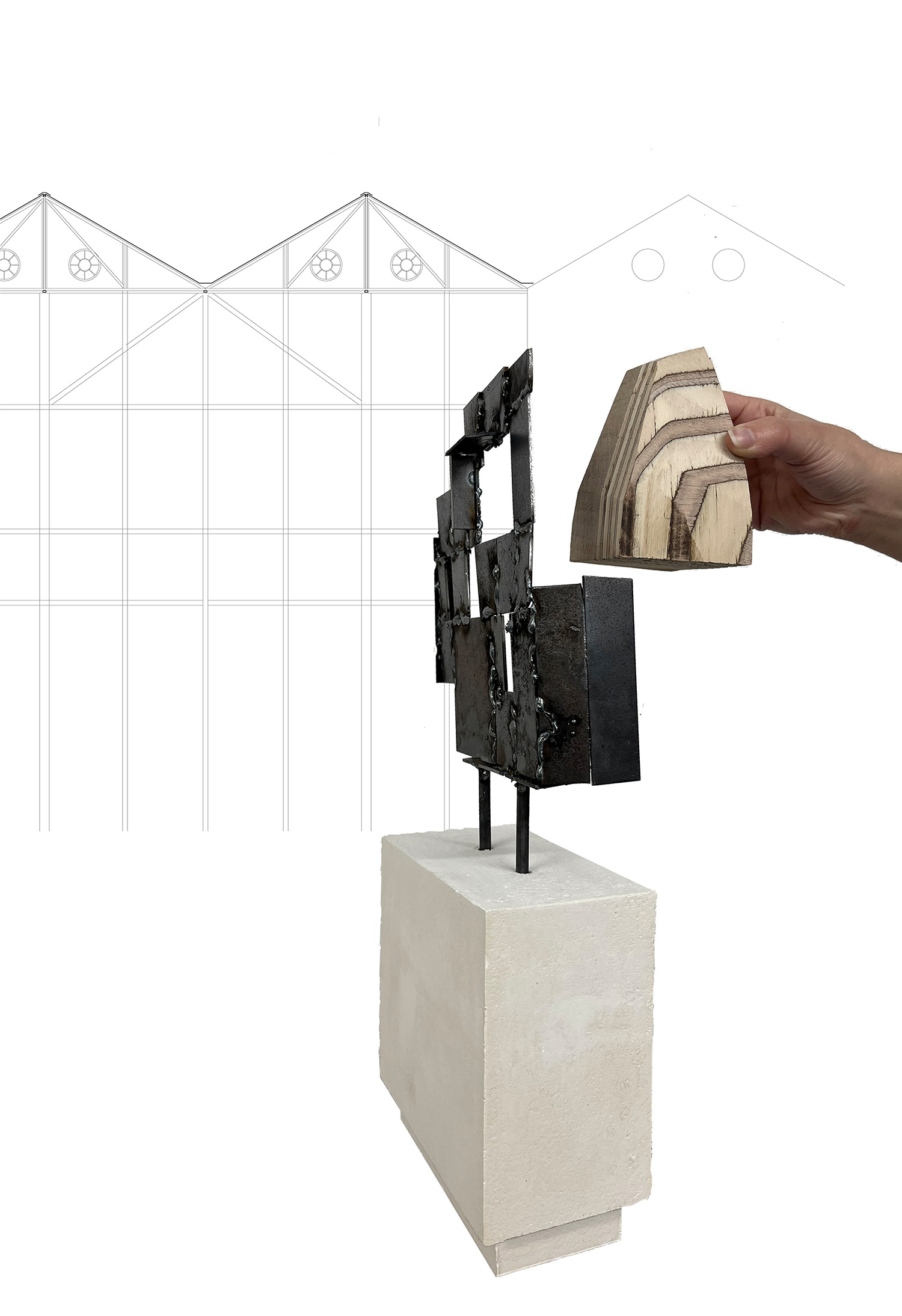
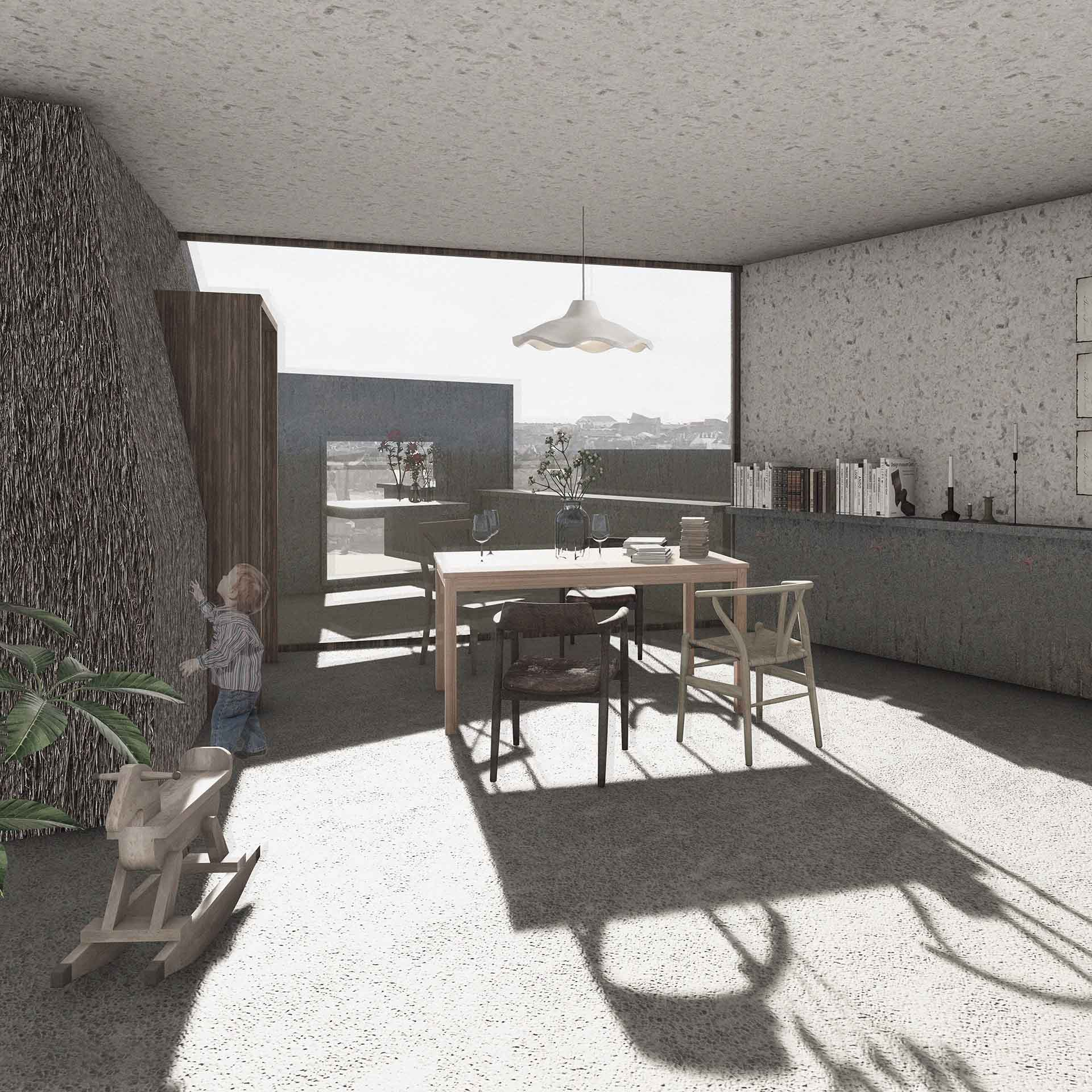
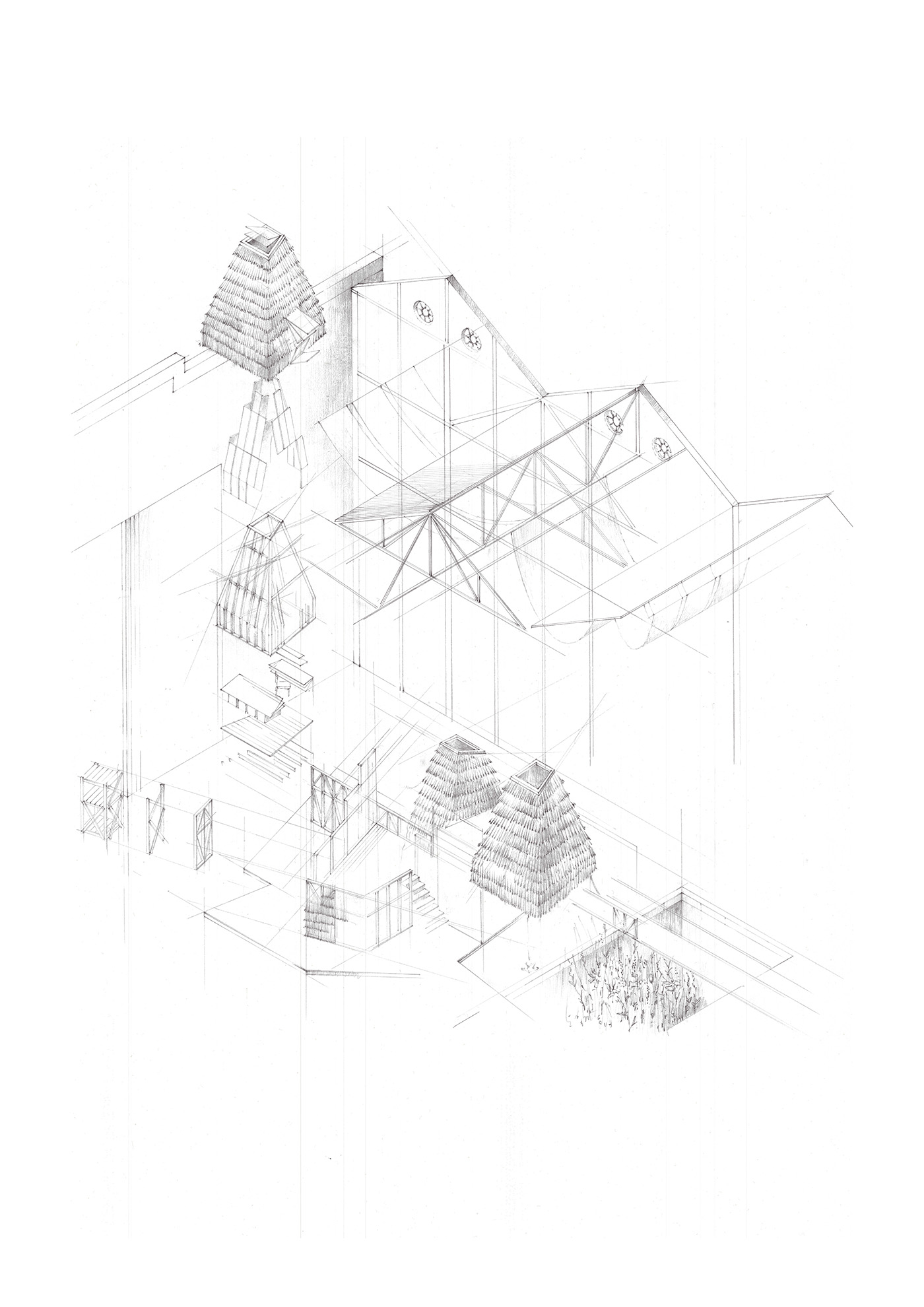
The proposal then explores waste as an invaluable construction resource. Former steel boundary sheets are cut, assembled, and welded into a dynamic collage envelope. Waste rubble is mixed with lime, formed into blocks, and used as a primary structure elevated above the wetland. Scaffold timber is arranged into cone-shaped rooms, initially accommodating workers during construction and later becoming a part of the broader masterplan.
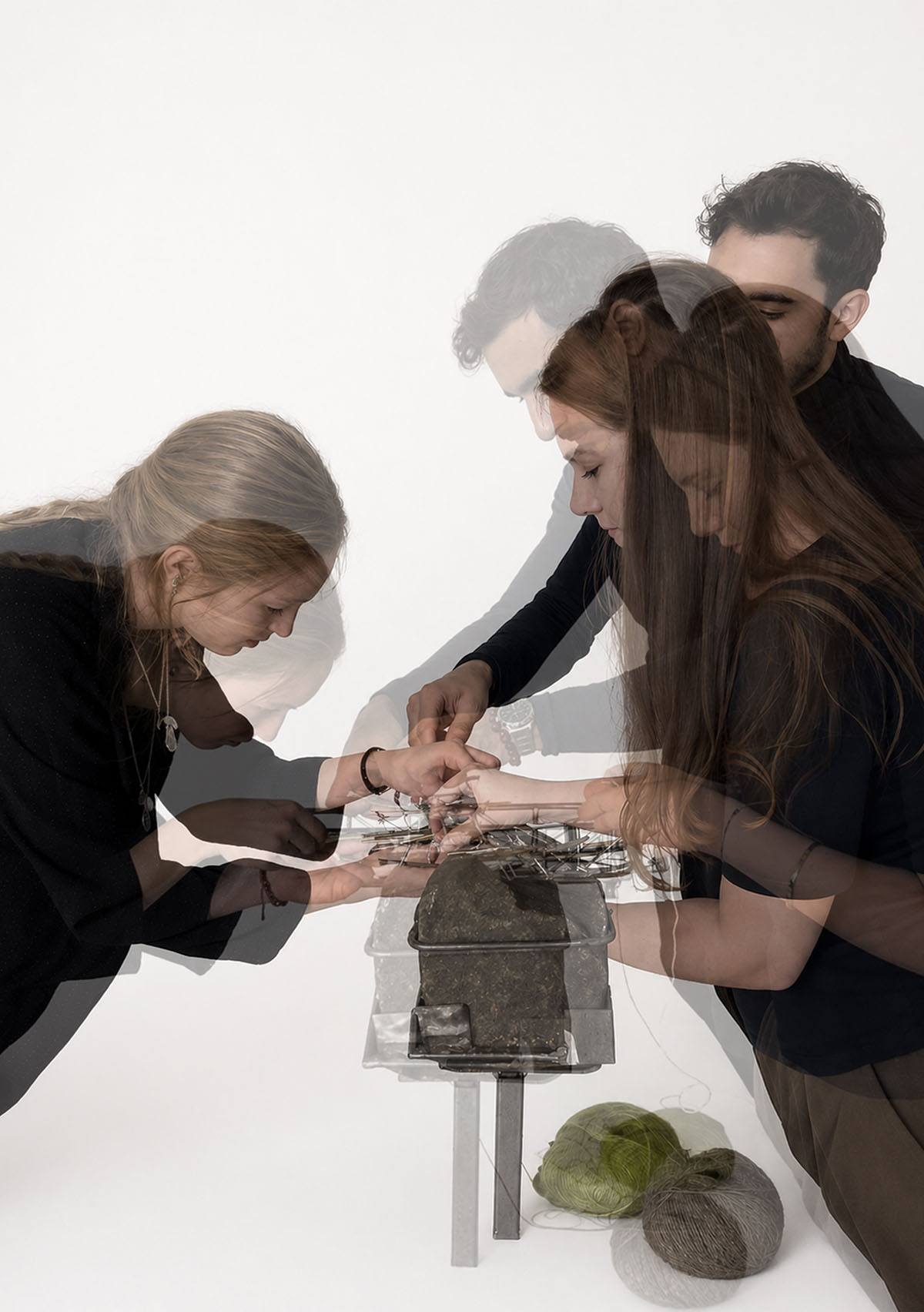
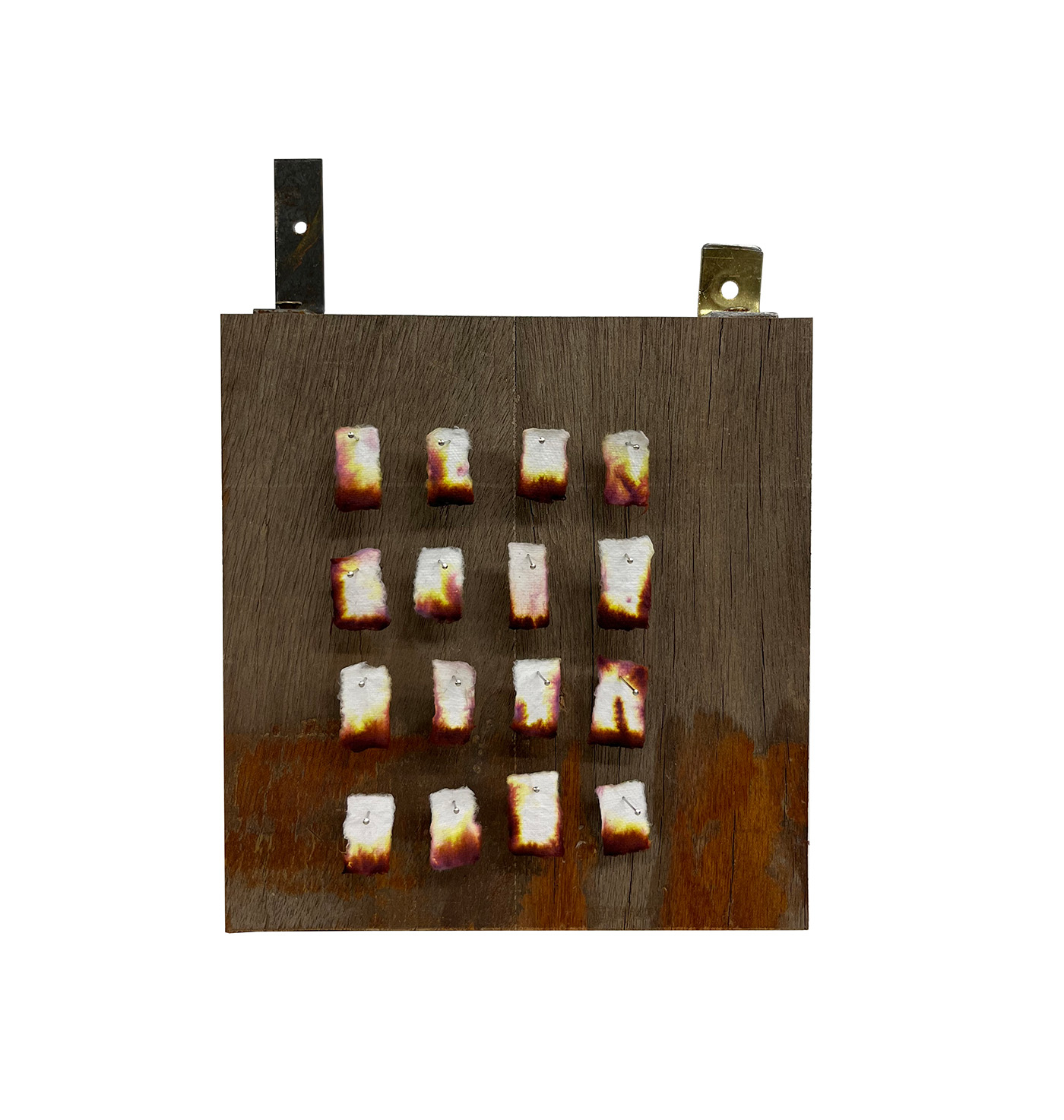
Influenced by Tania Kovats’ 'Drawing Water', the project embraces an exploratory working methodology. Drawing through splashes, spillages, and leakages produces unpredictable outcomes, informing an architectural approach that designs with water rather than against it. Testing becomes fundamental to the process, allowing spatial and material decisions to emerge through continual interaction with entangled conditions.