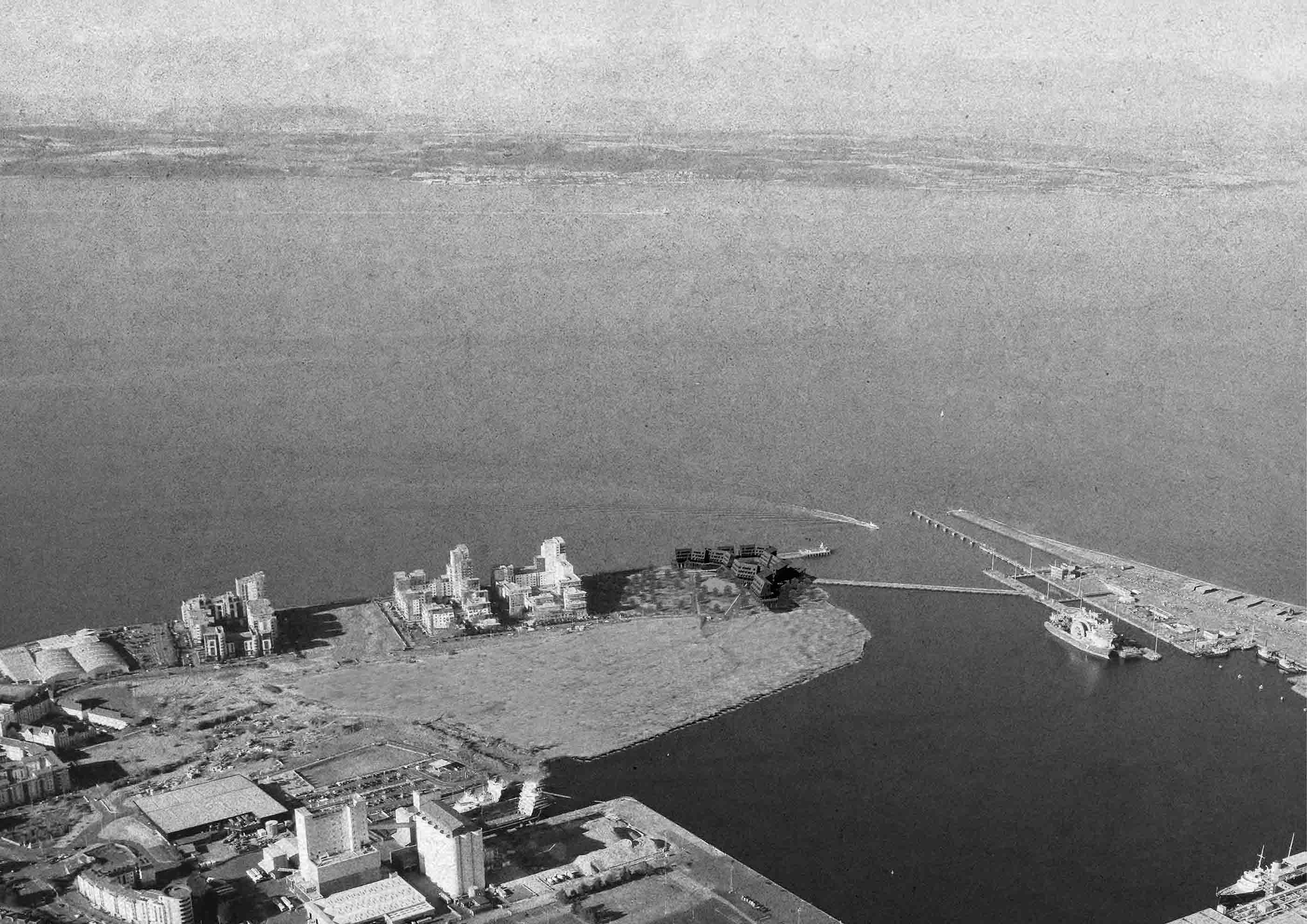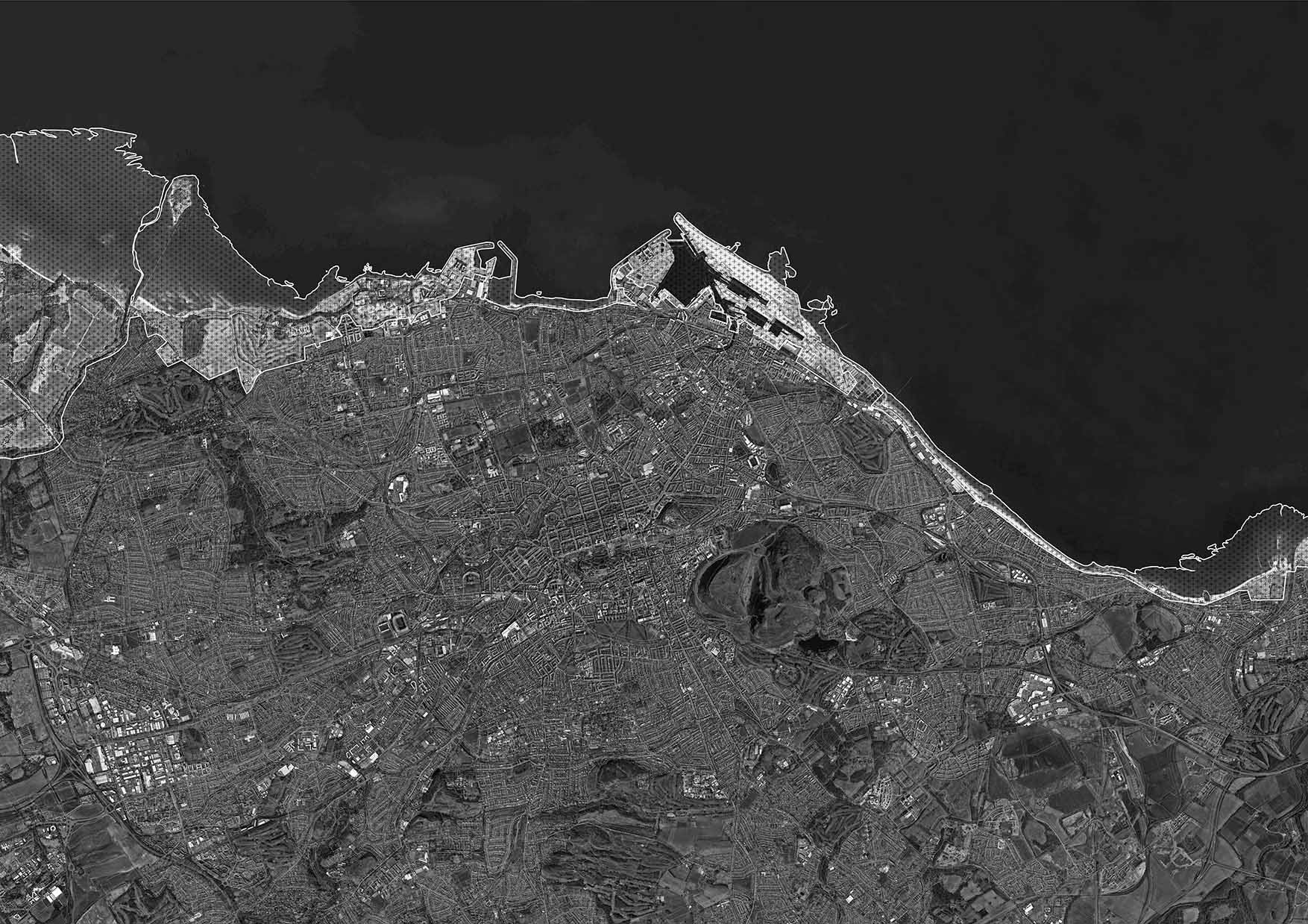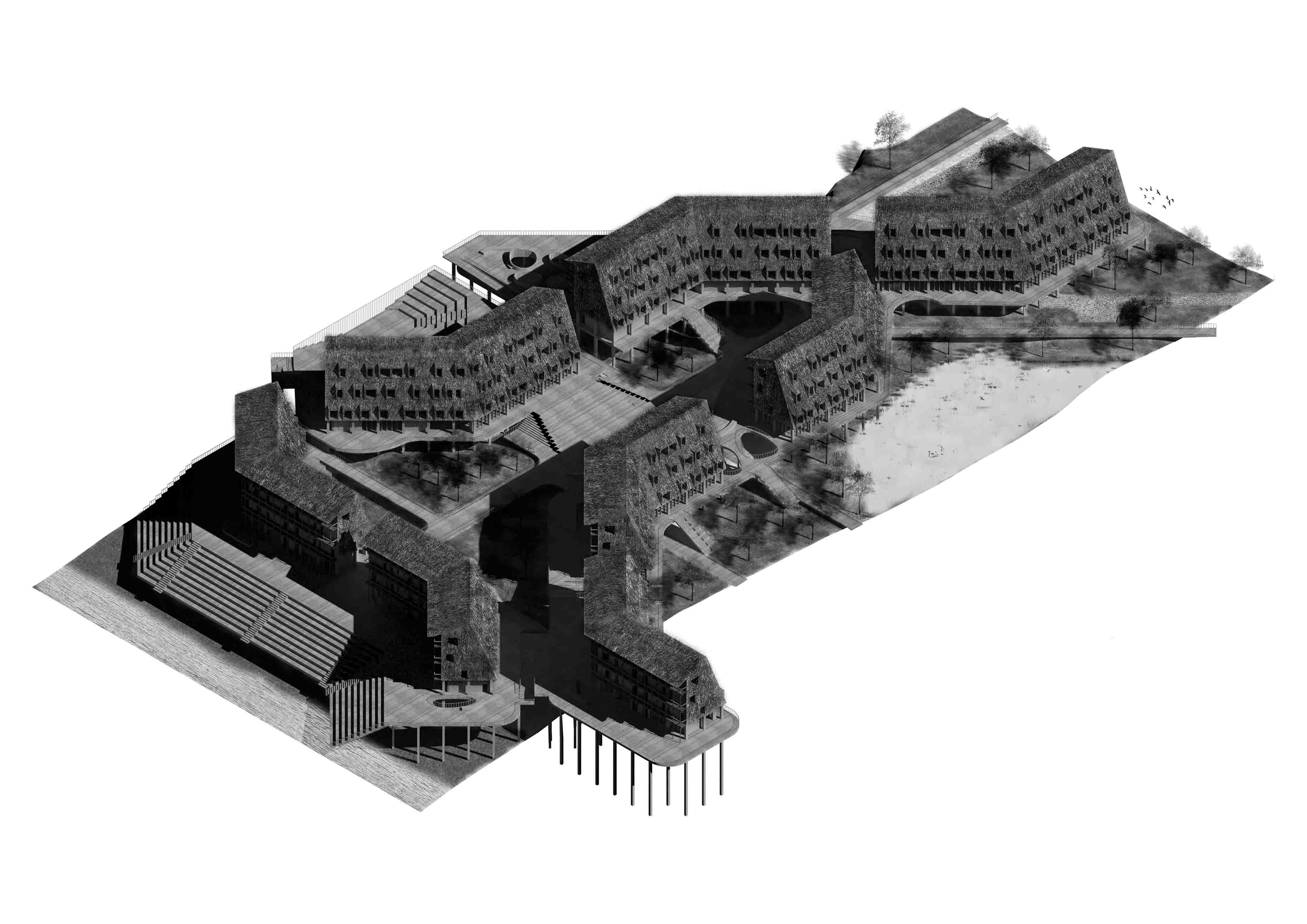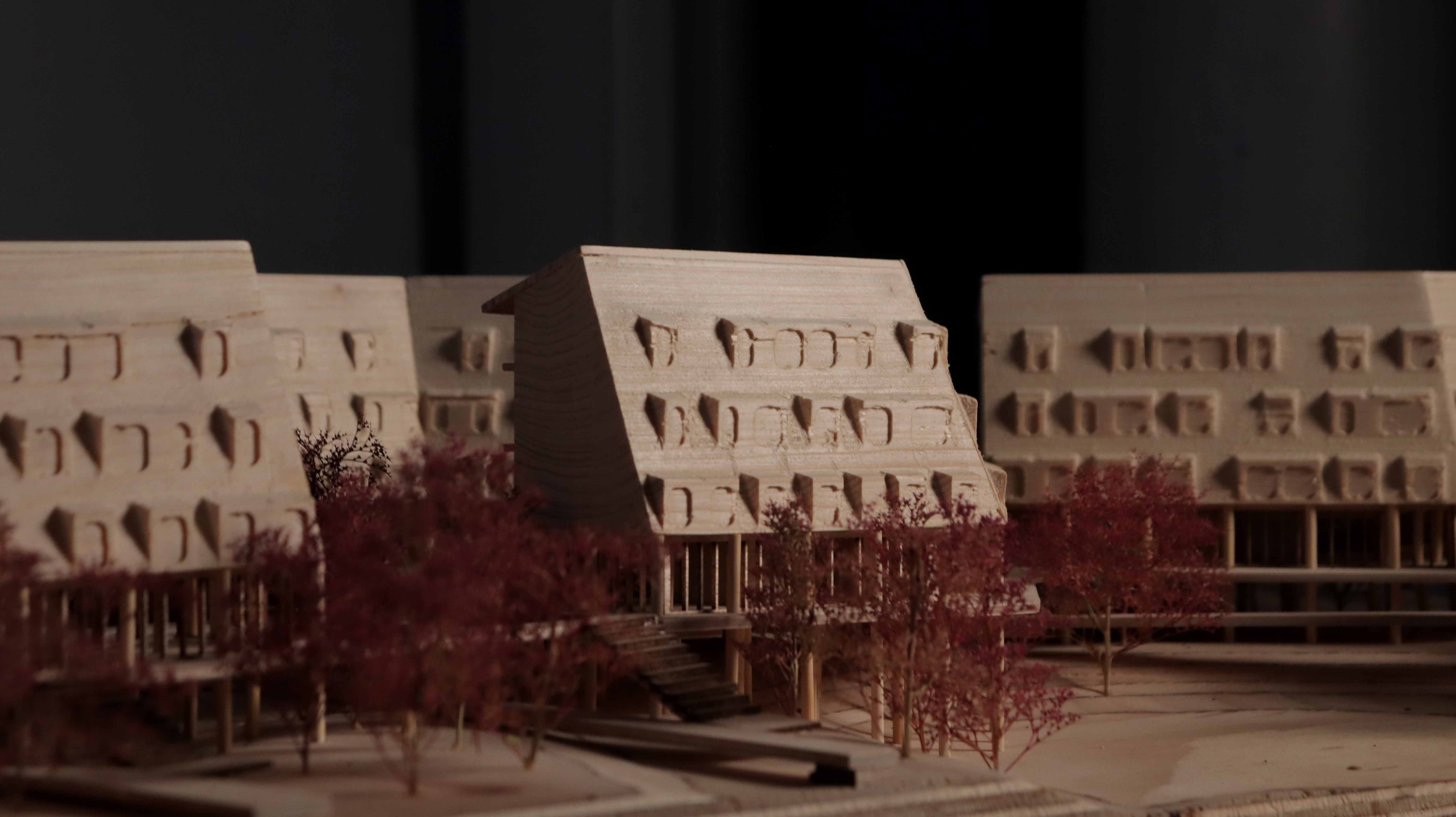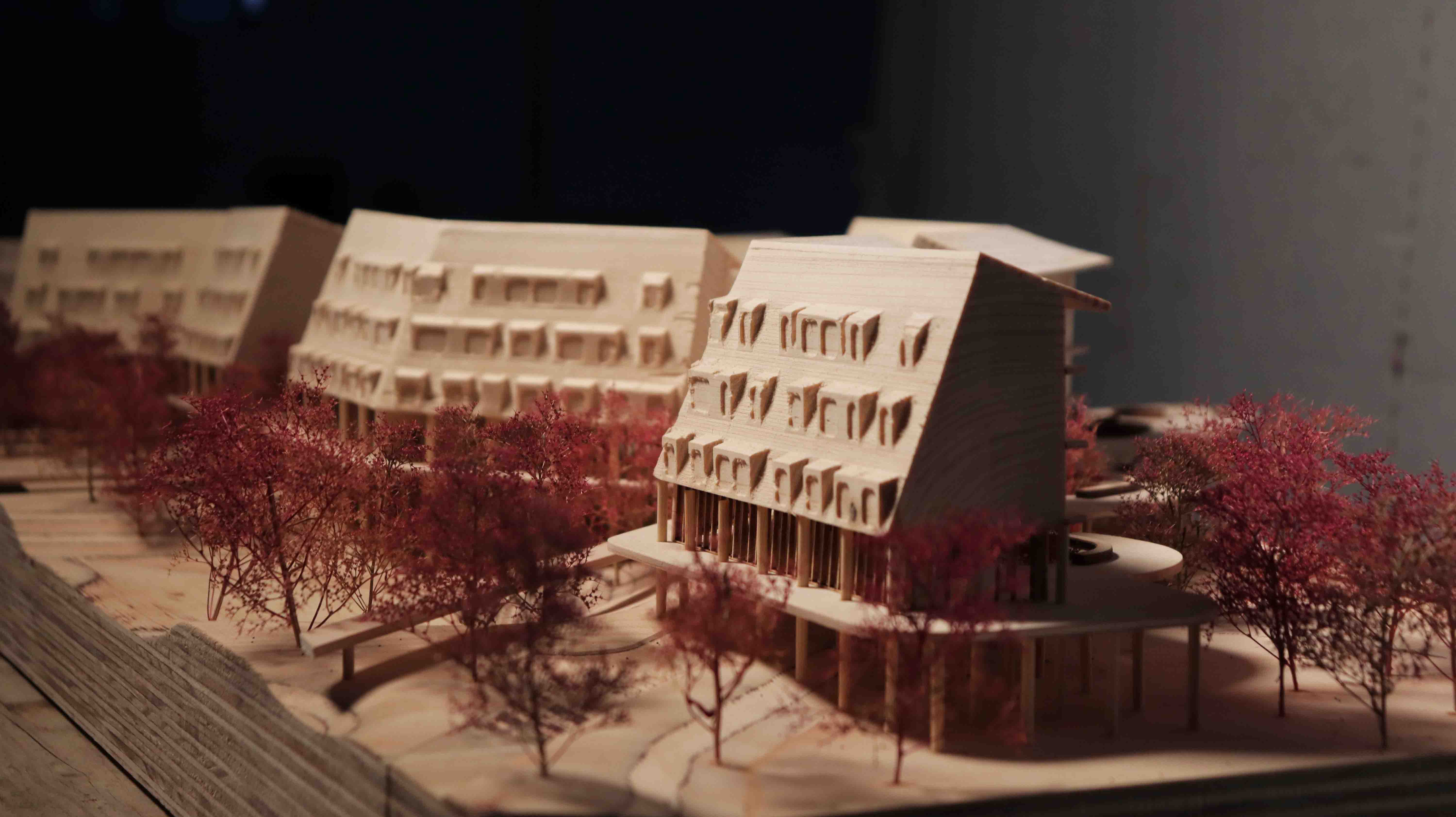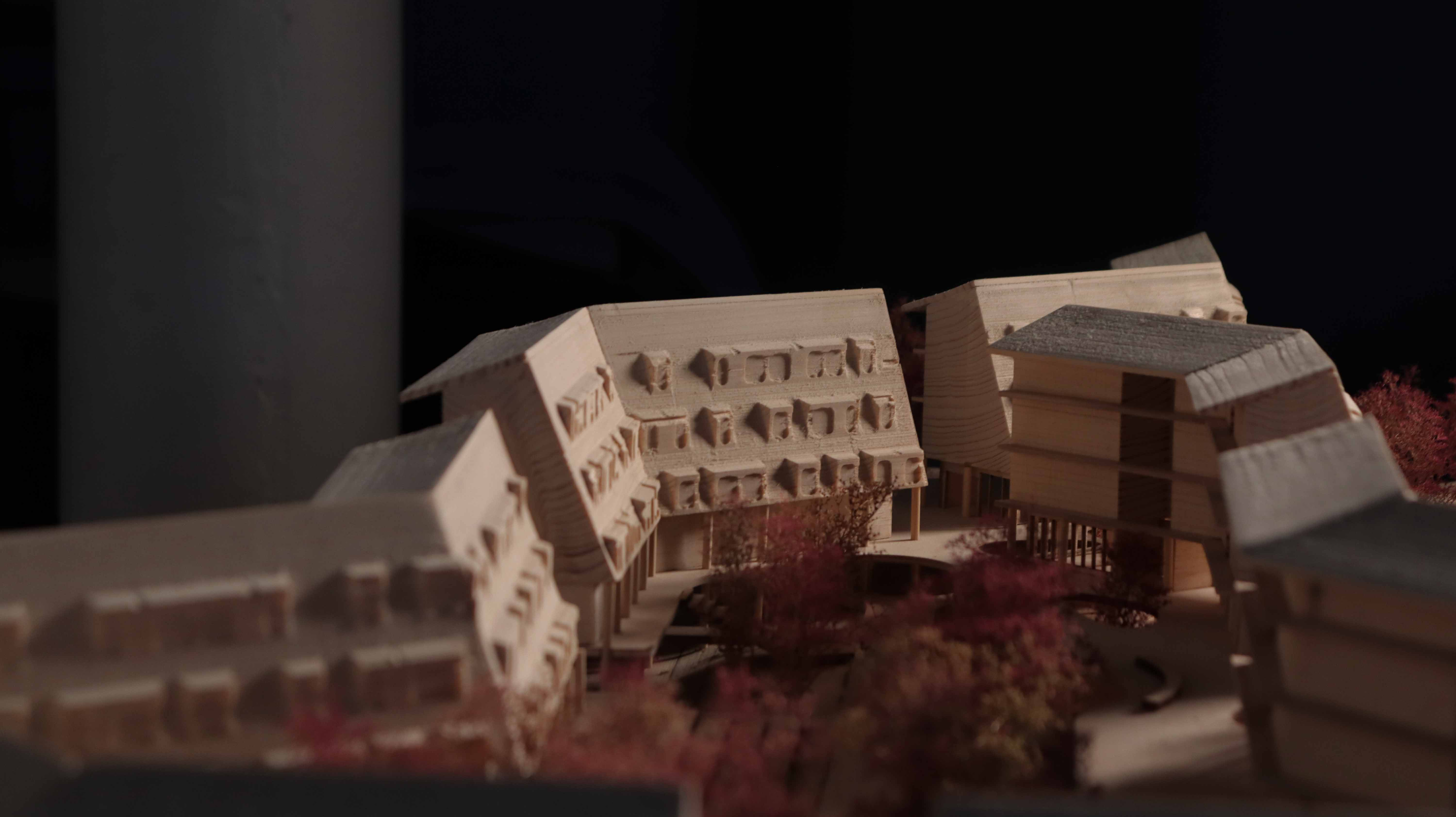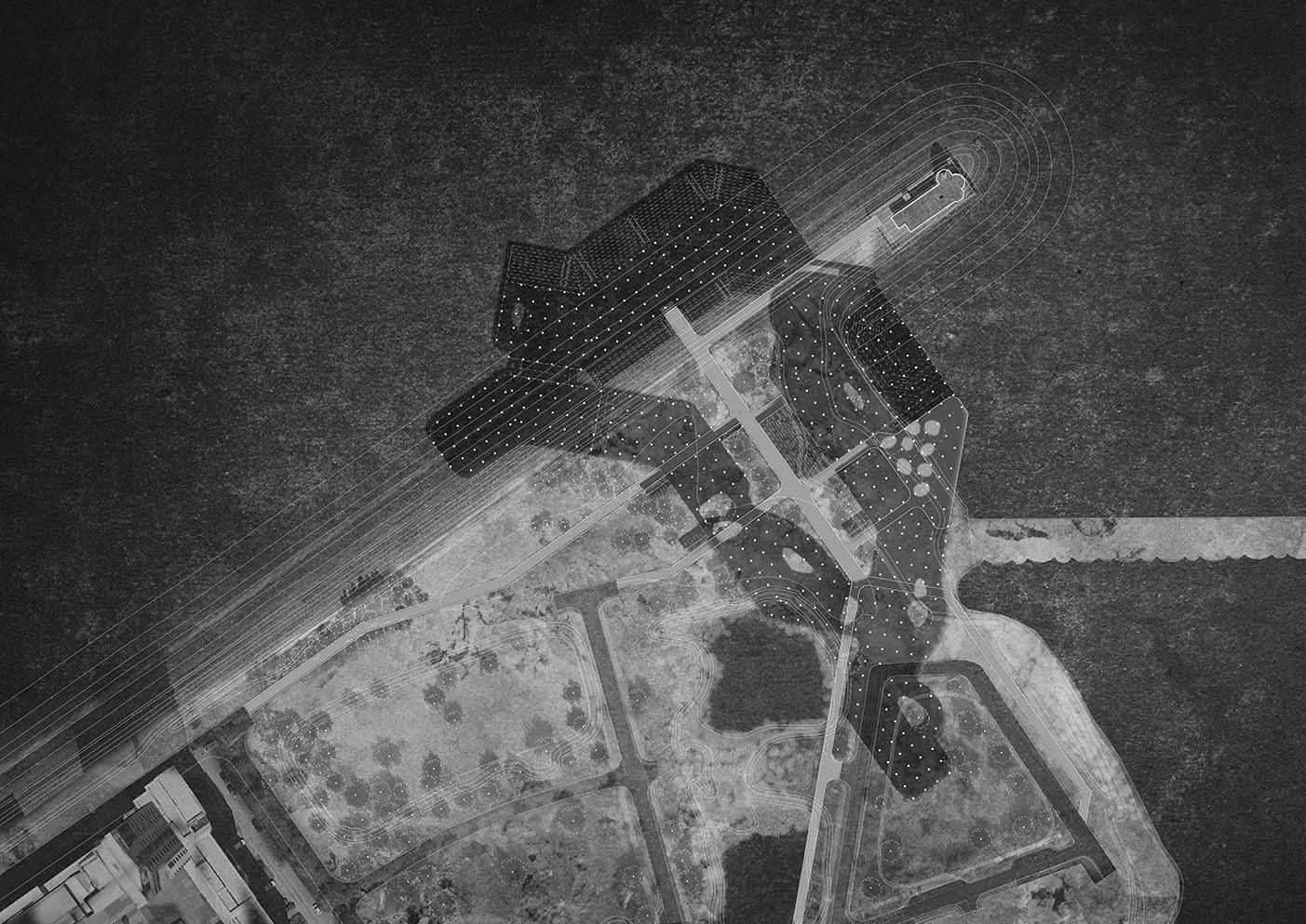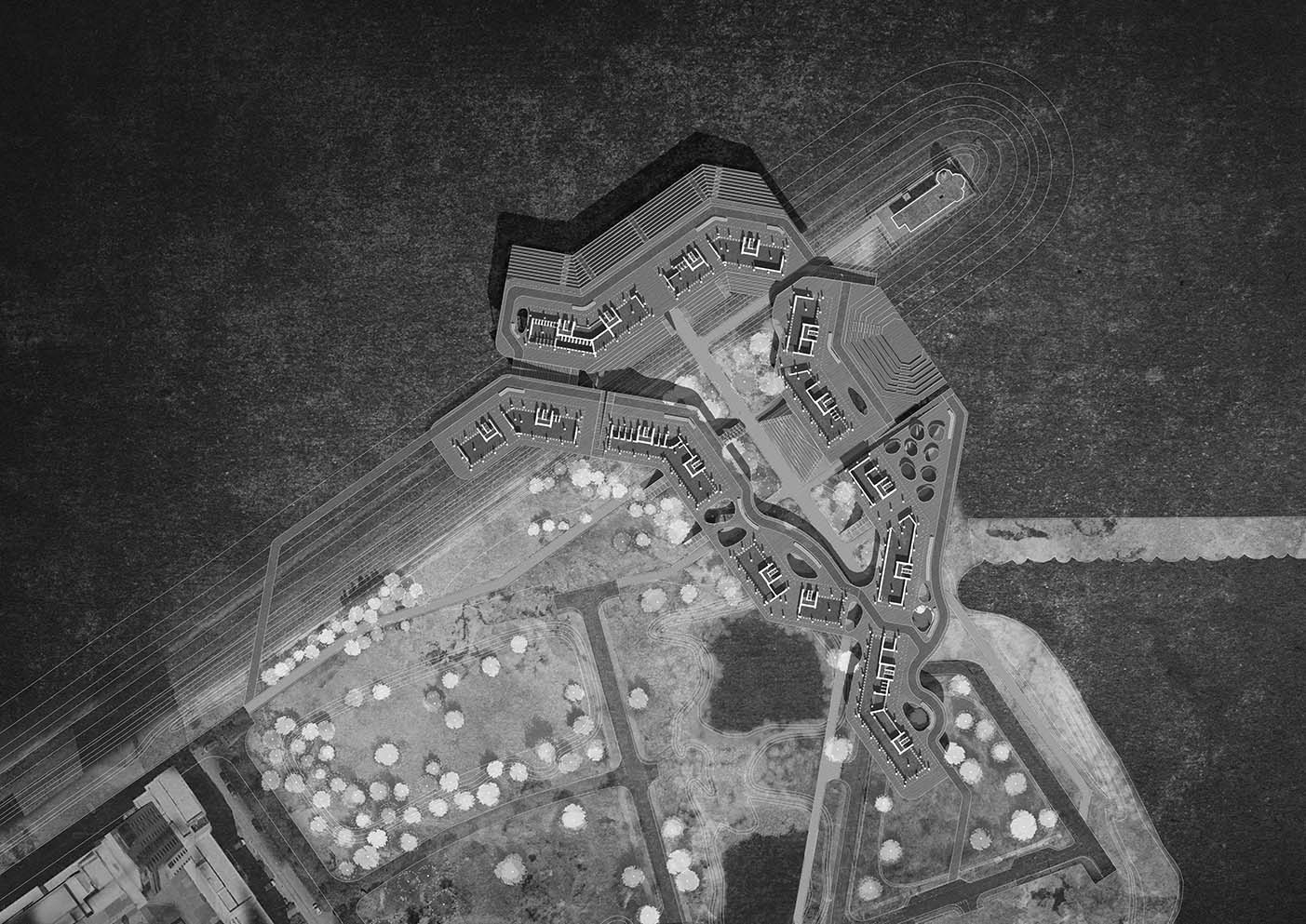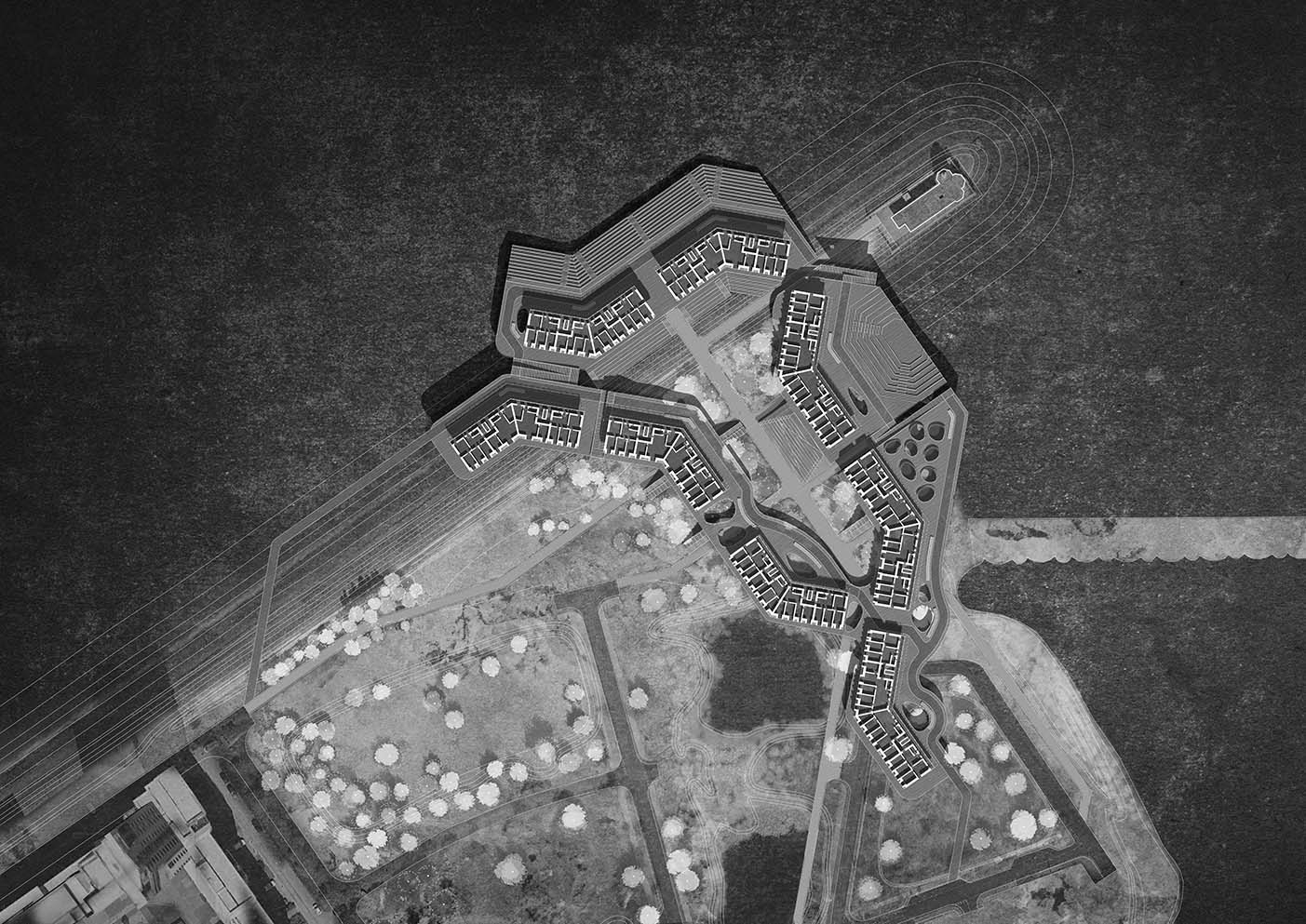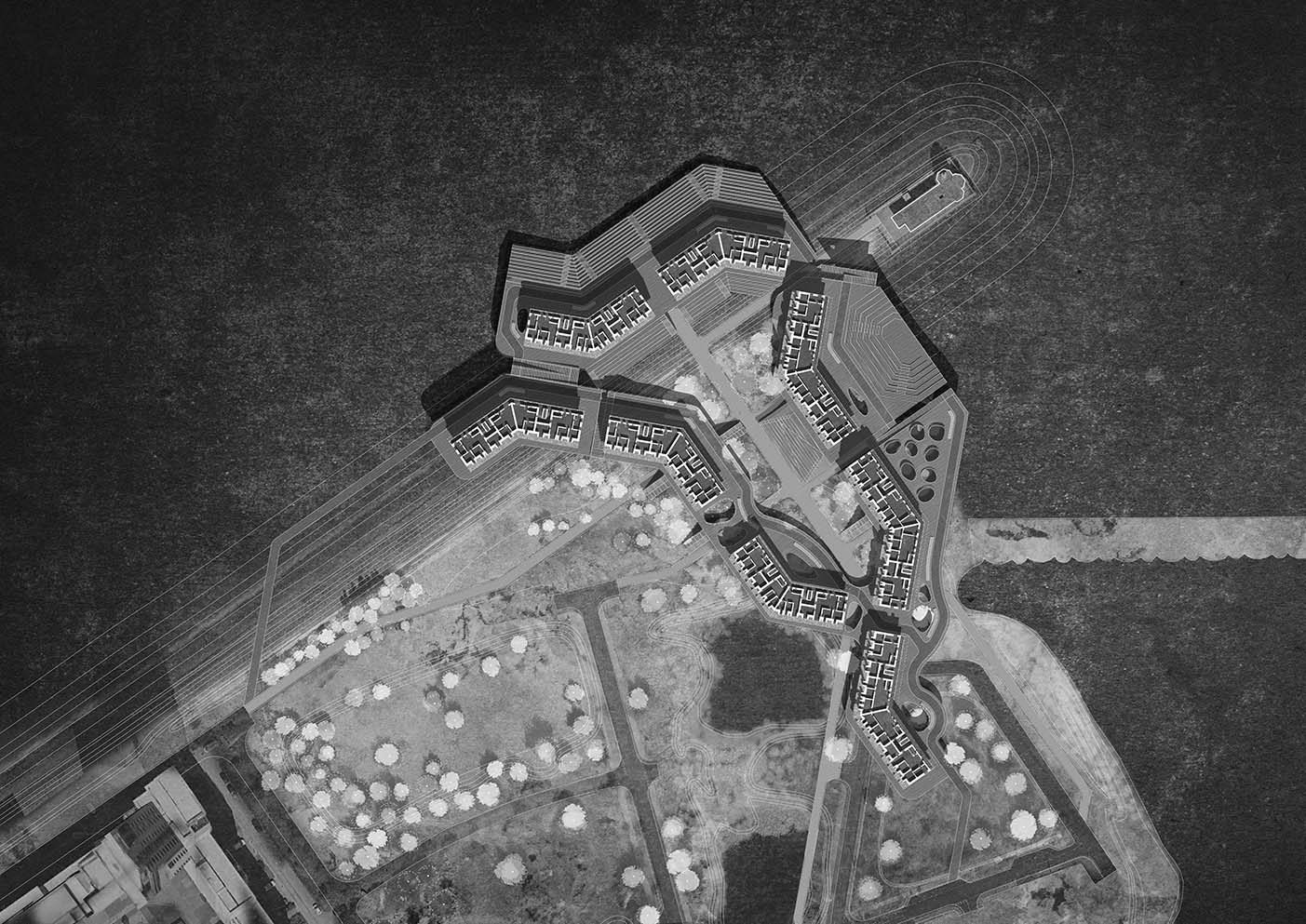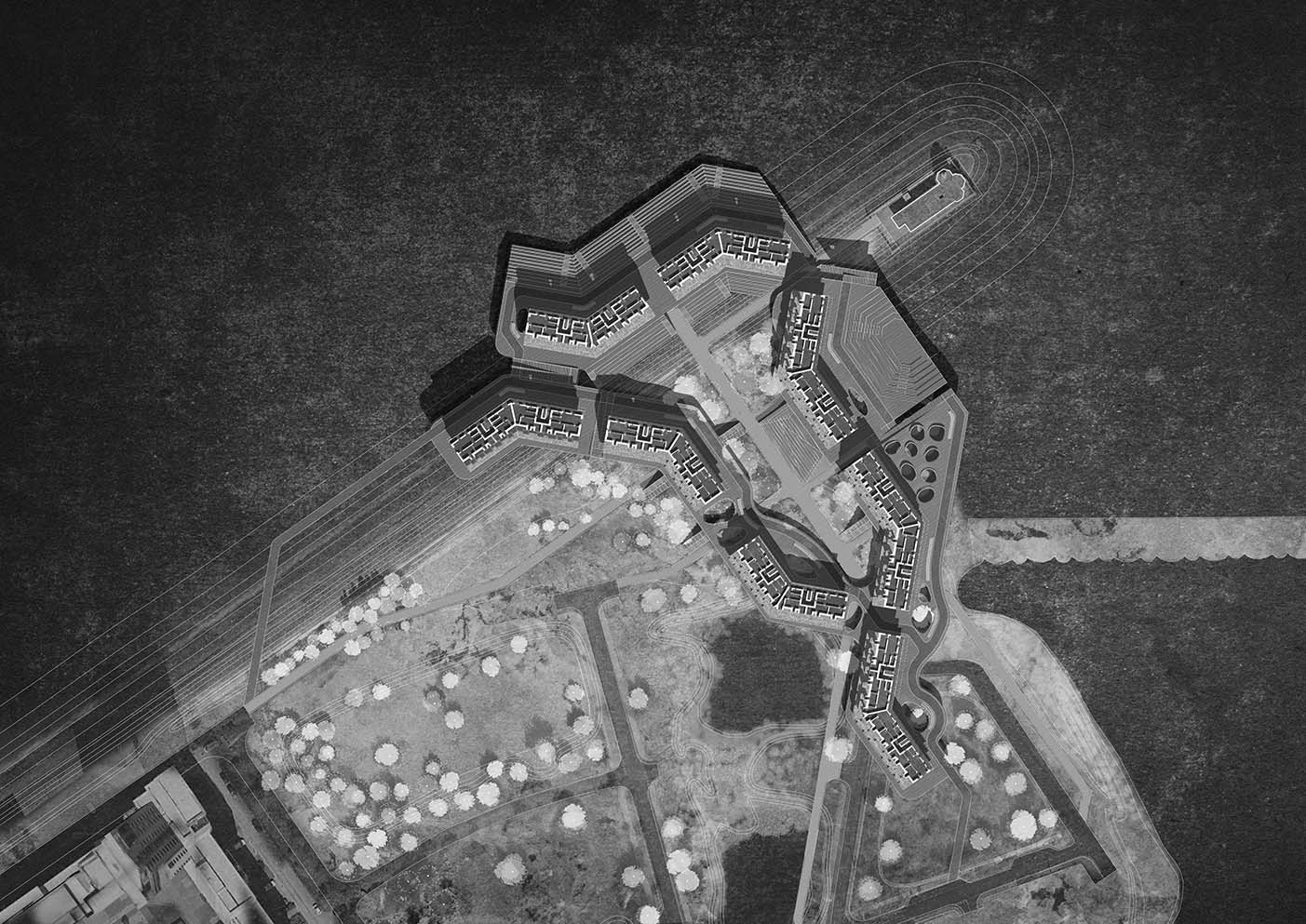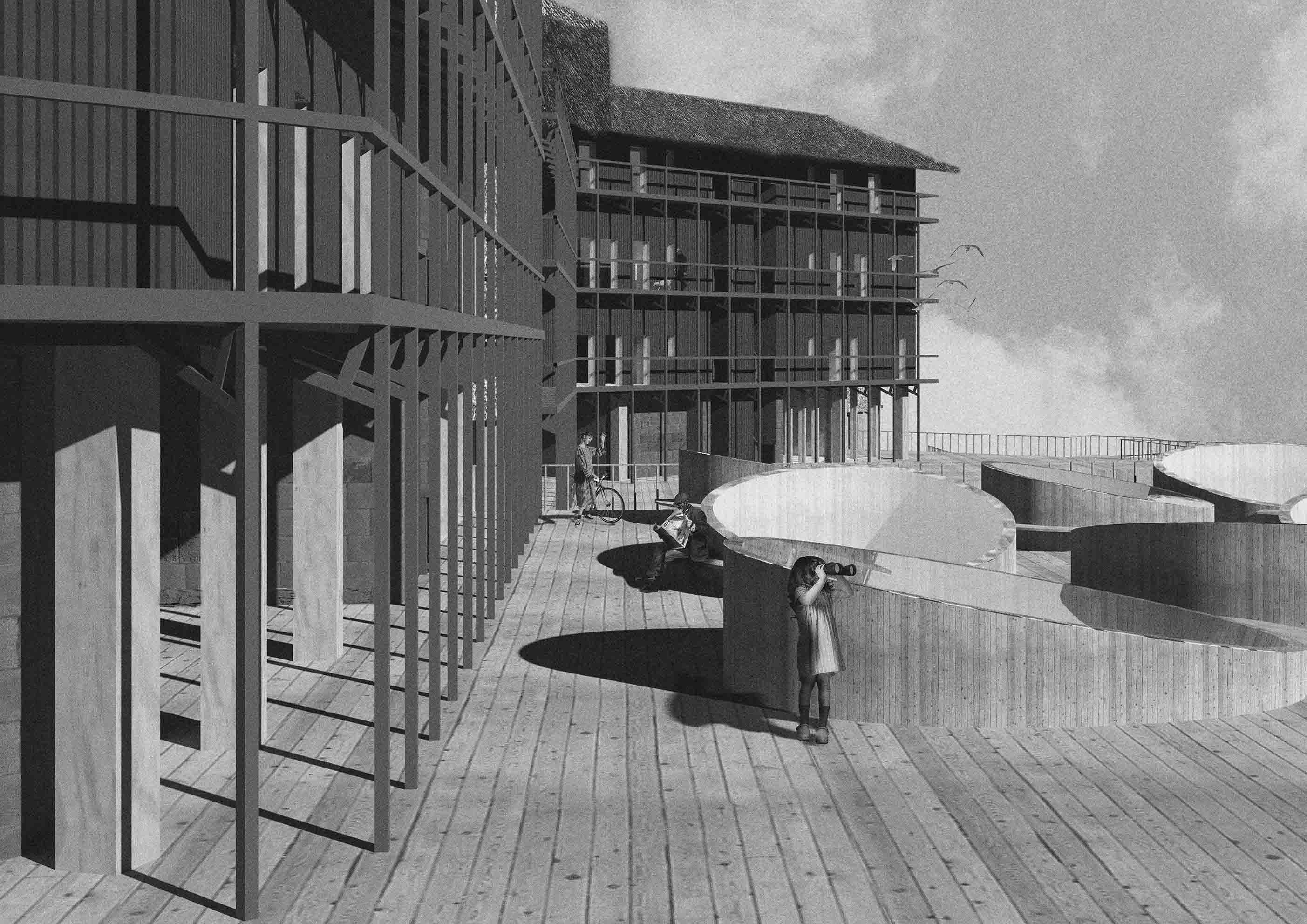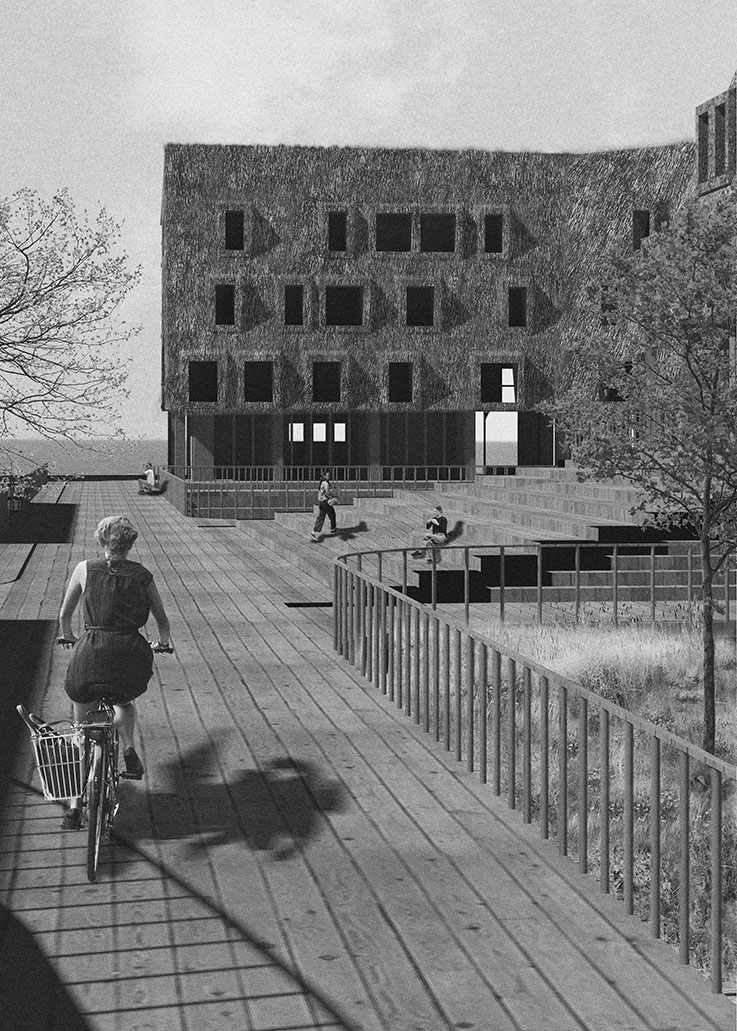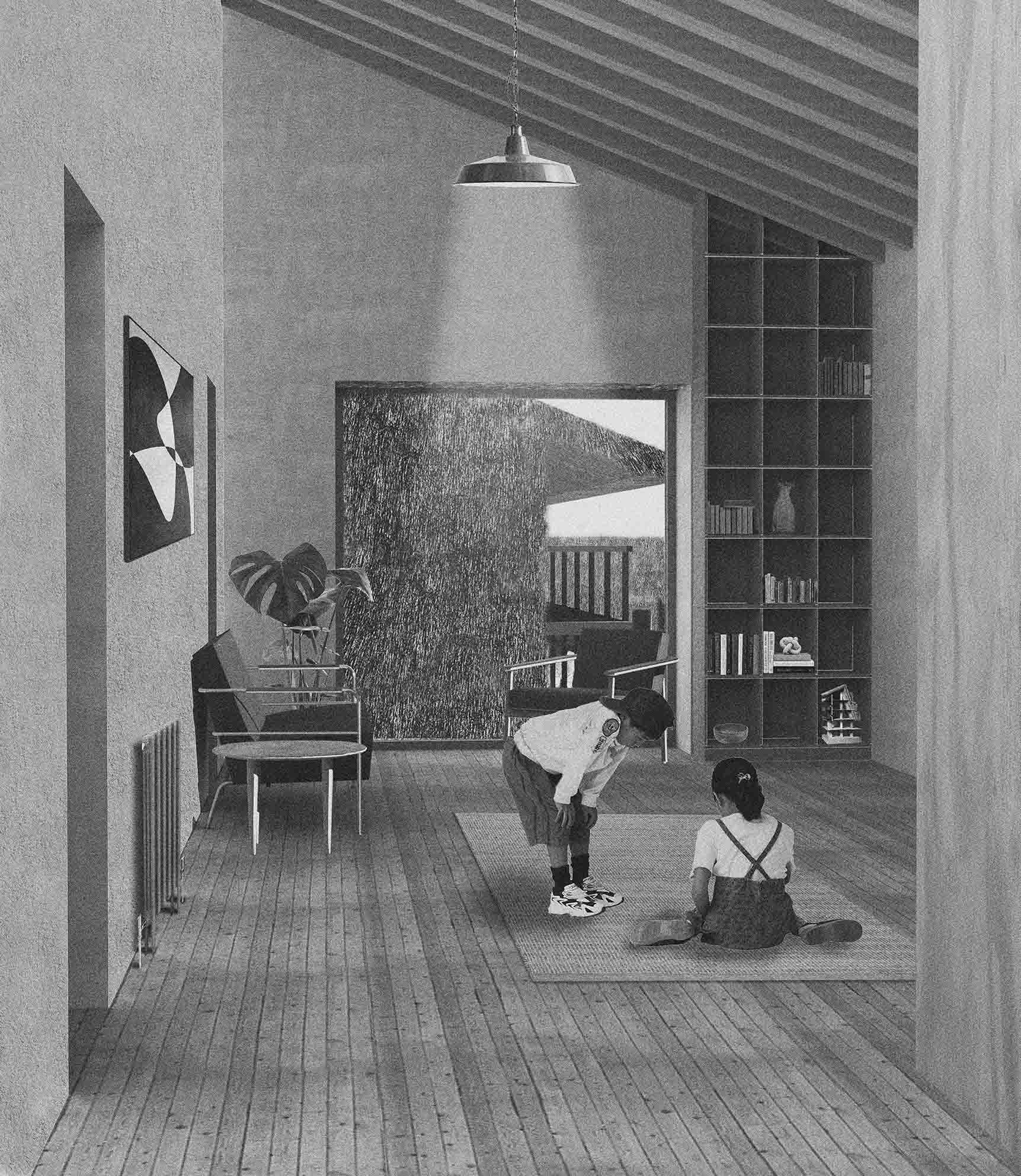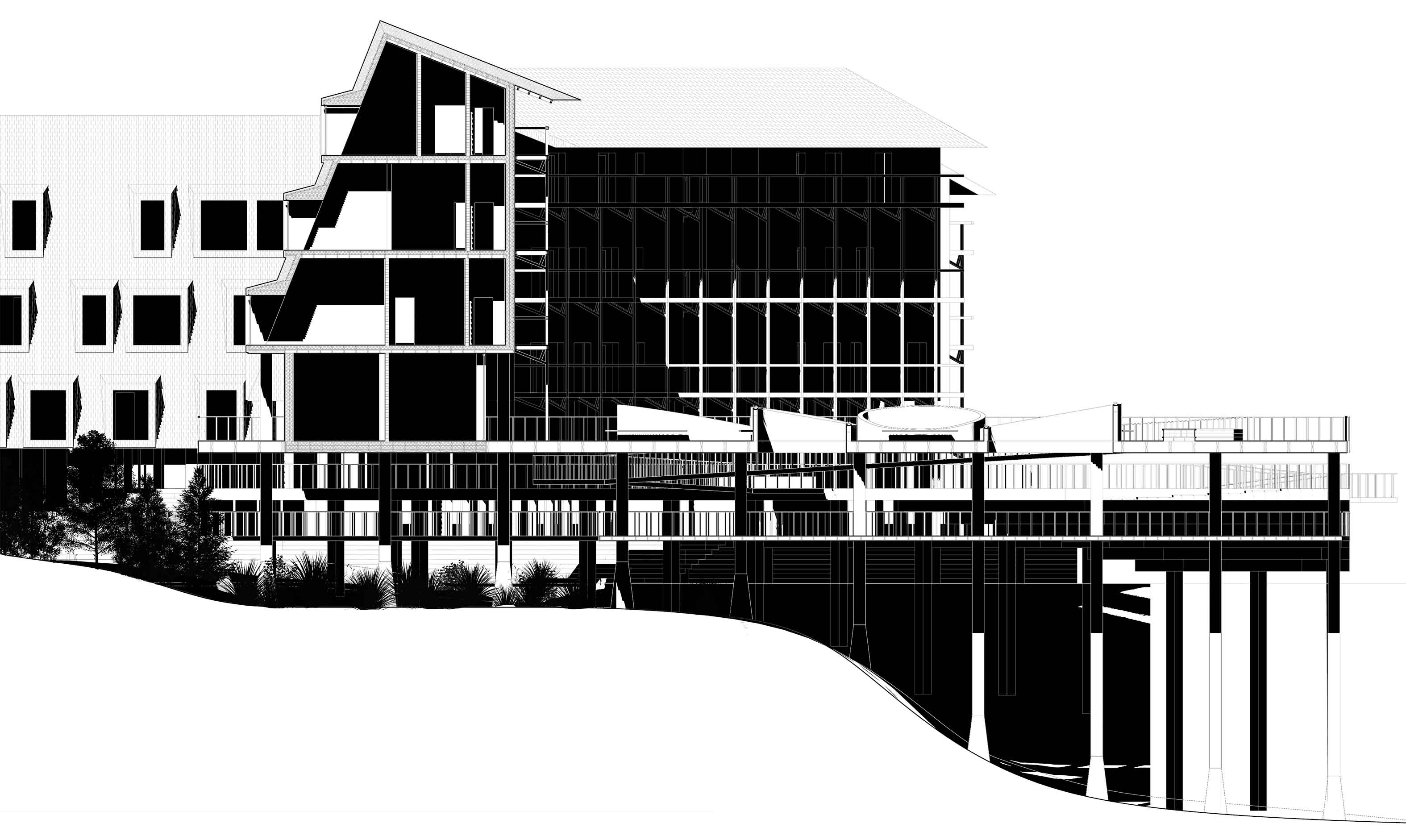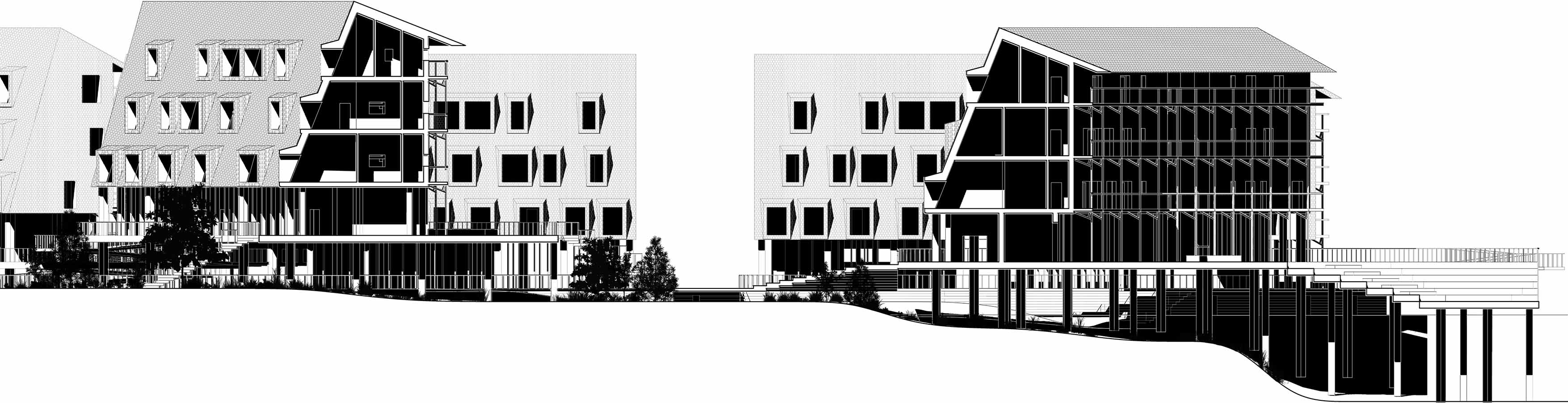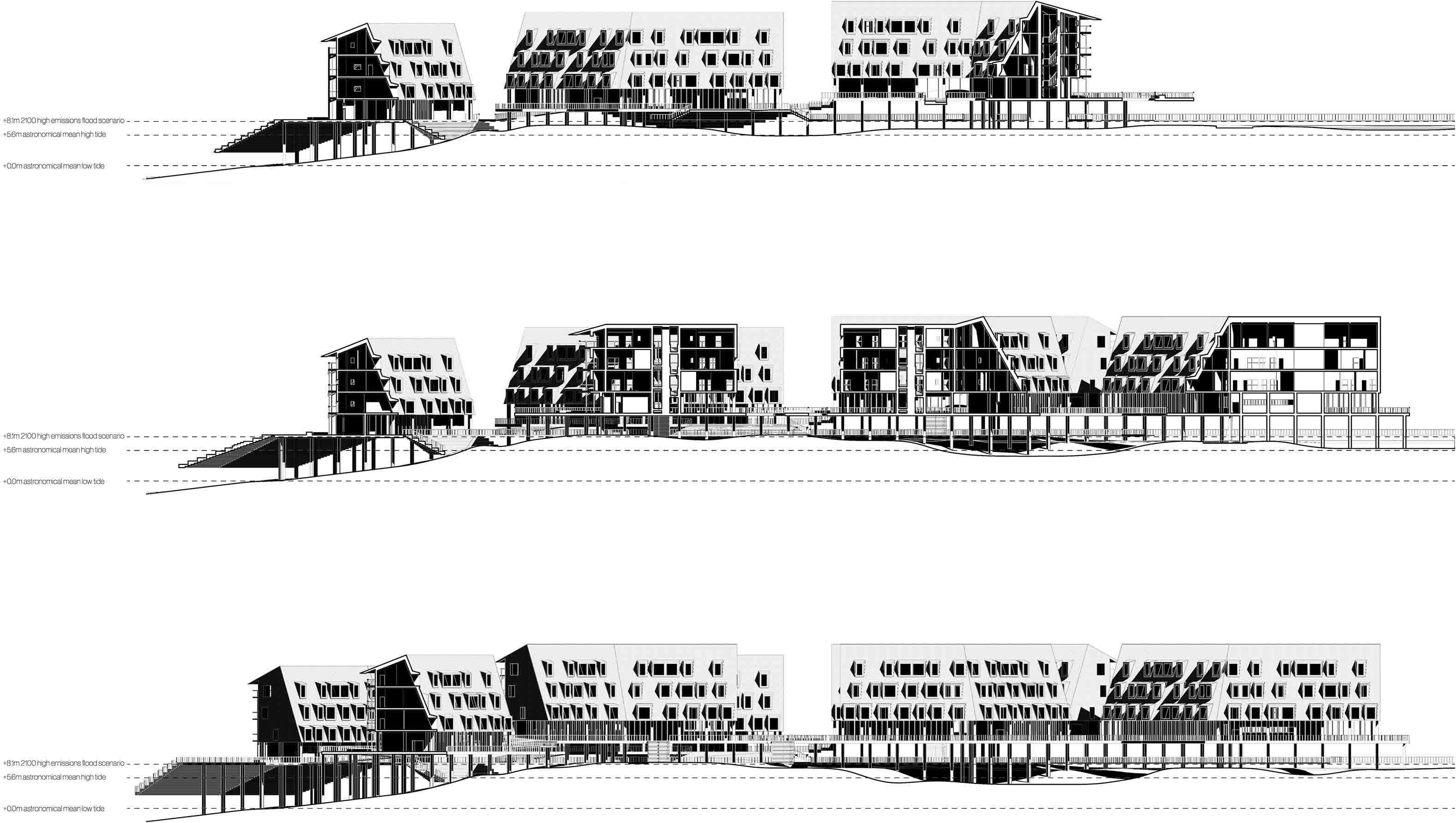
Edinburgh’s shoreline constitutes an urban ecotone where coastal brownfields, sites of industry, non-human habitats, and emerging housing pressures meet a hydrological future that is rapidly shifting due to climate change. This thesis asks how architecture can operate within these edge conditions as an amphibious civic and ecological armature – supporting affordable inhabitation while increasing the capacity of vulnerable habitats to persist under the threat of sea-level rise. These ecotones function jointly as precious non-human habitats and civic edges, yet they are structurally undervalued within conventional development logic.
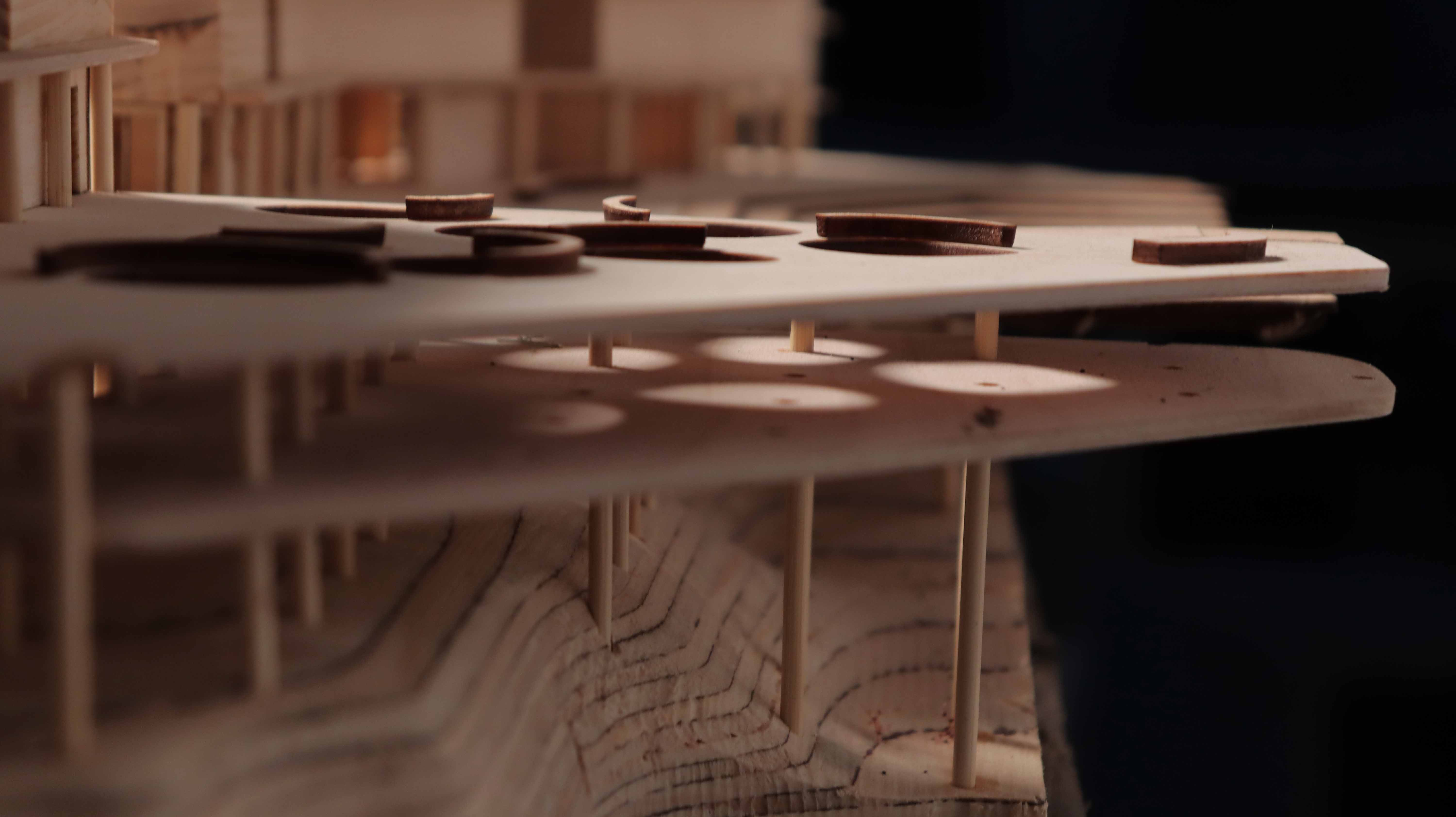
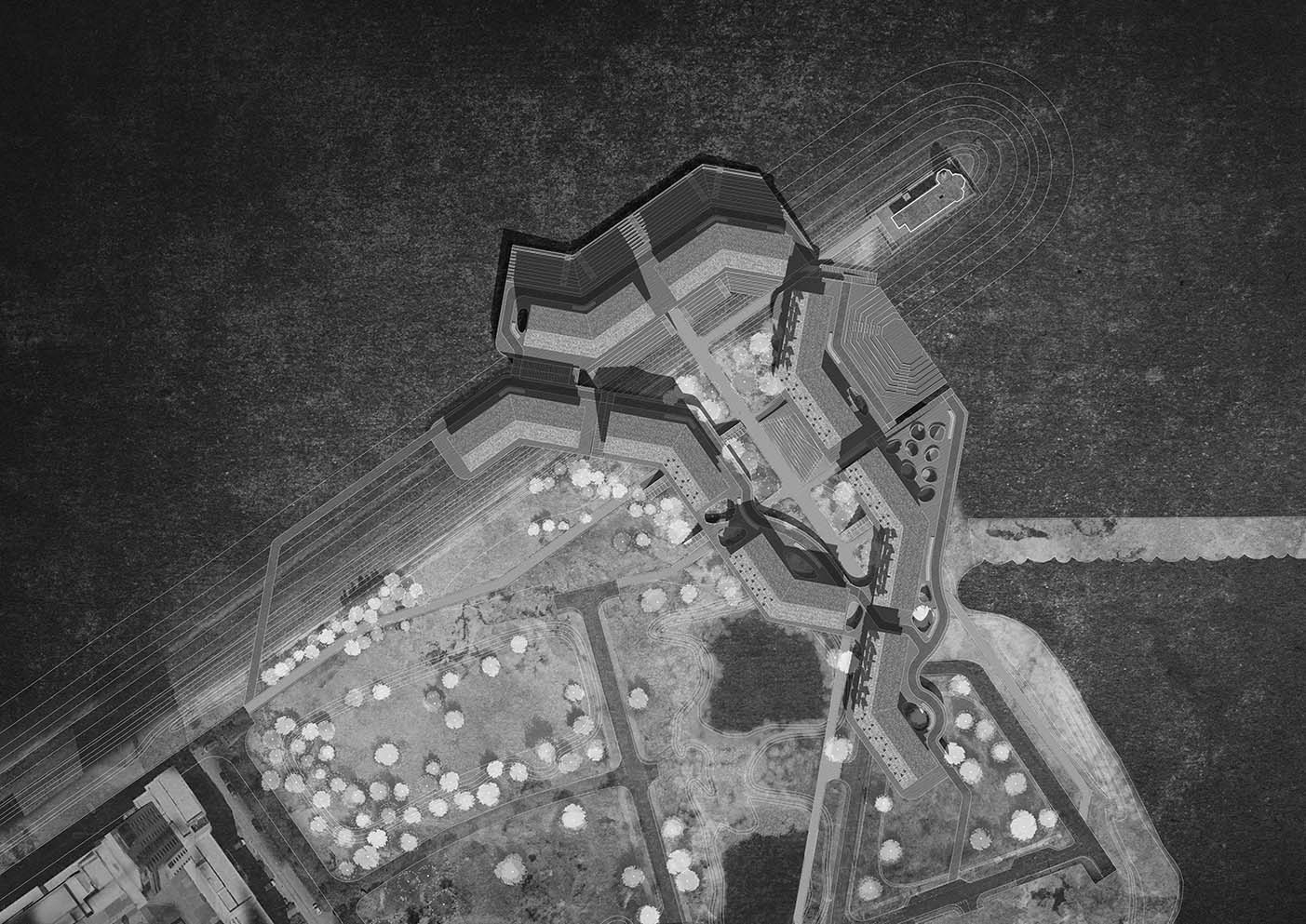
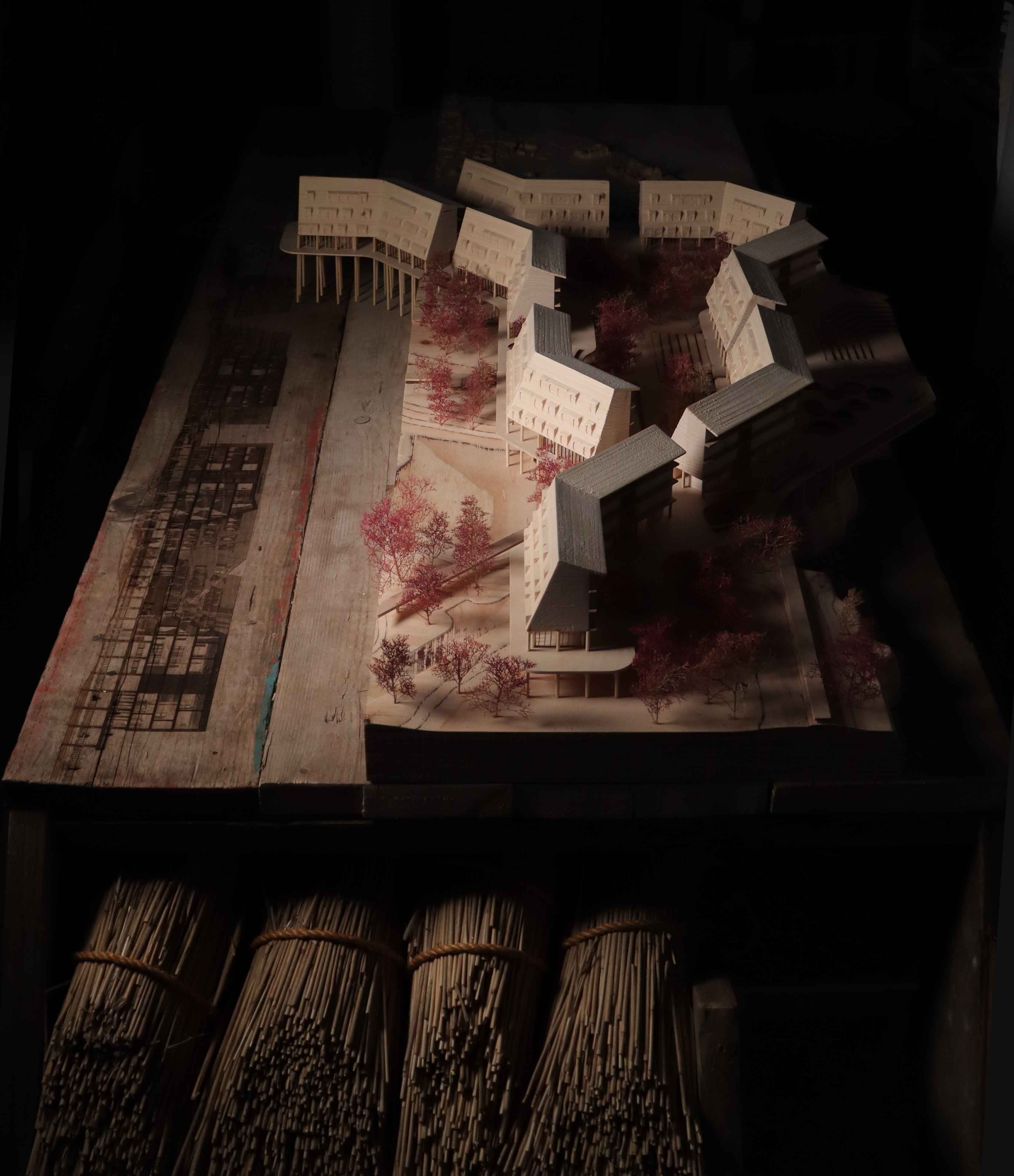
The project mediates these tensions, recognising the city’s housing crisis and desperate need for affordable accommodation, while respecting the species that call these spaces home. Instead of treating flooding as a failure, the project designs for controlled wetness, absorption and the safe continuity of access. A managed organic landscape slows and stores tidal water, while an elevated public spine preserves the ability to move, gather and perform maintenance during future flood events.
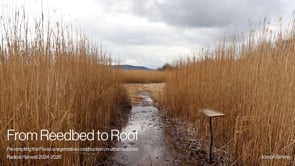
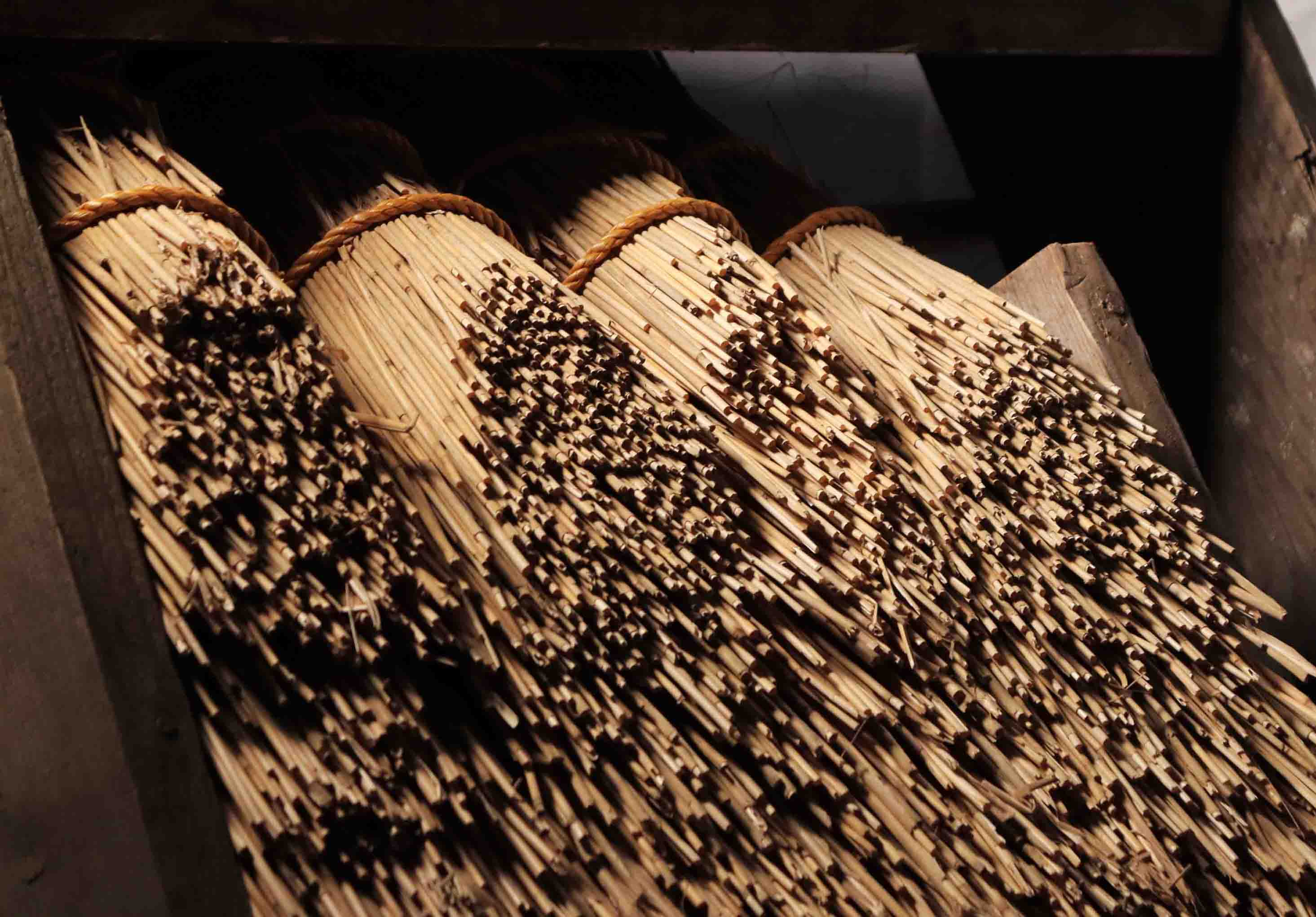
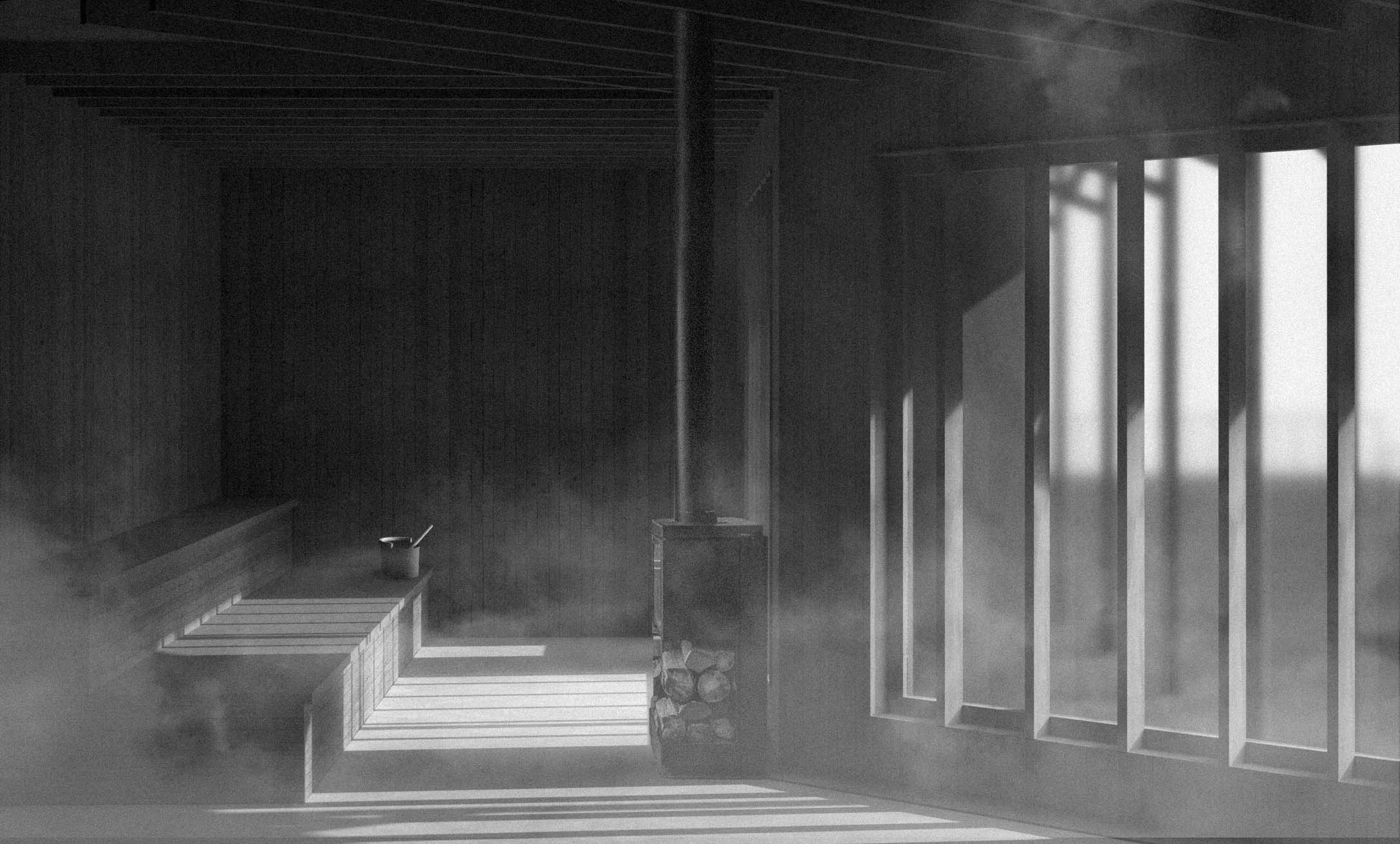
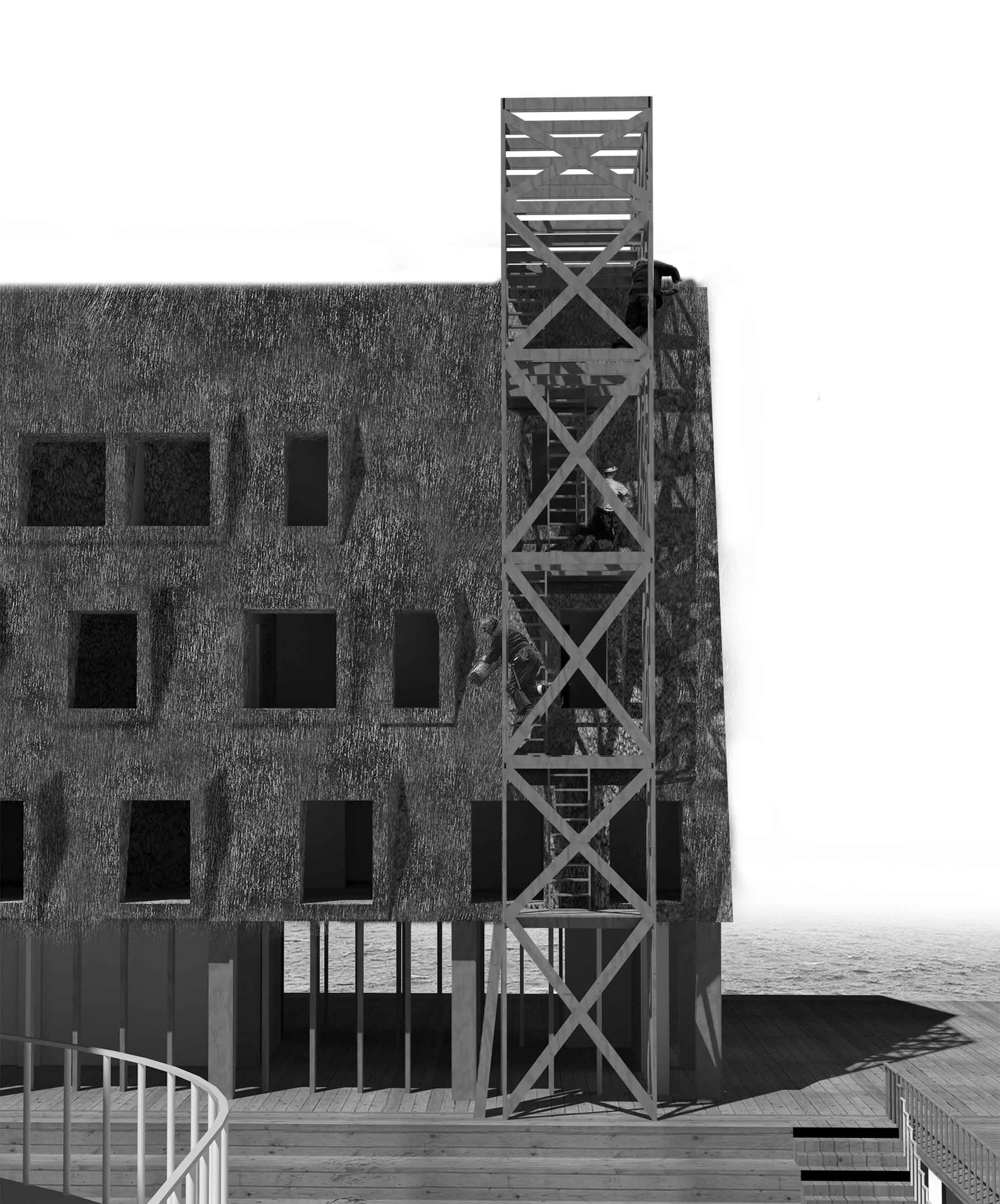
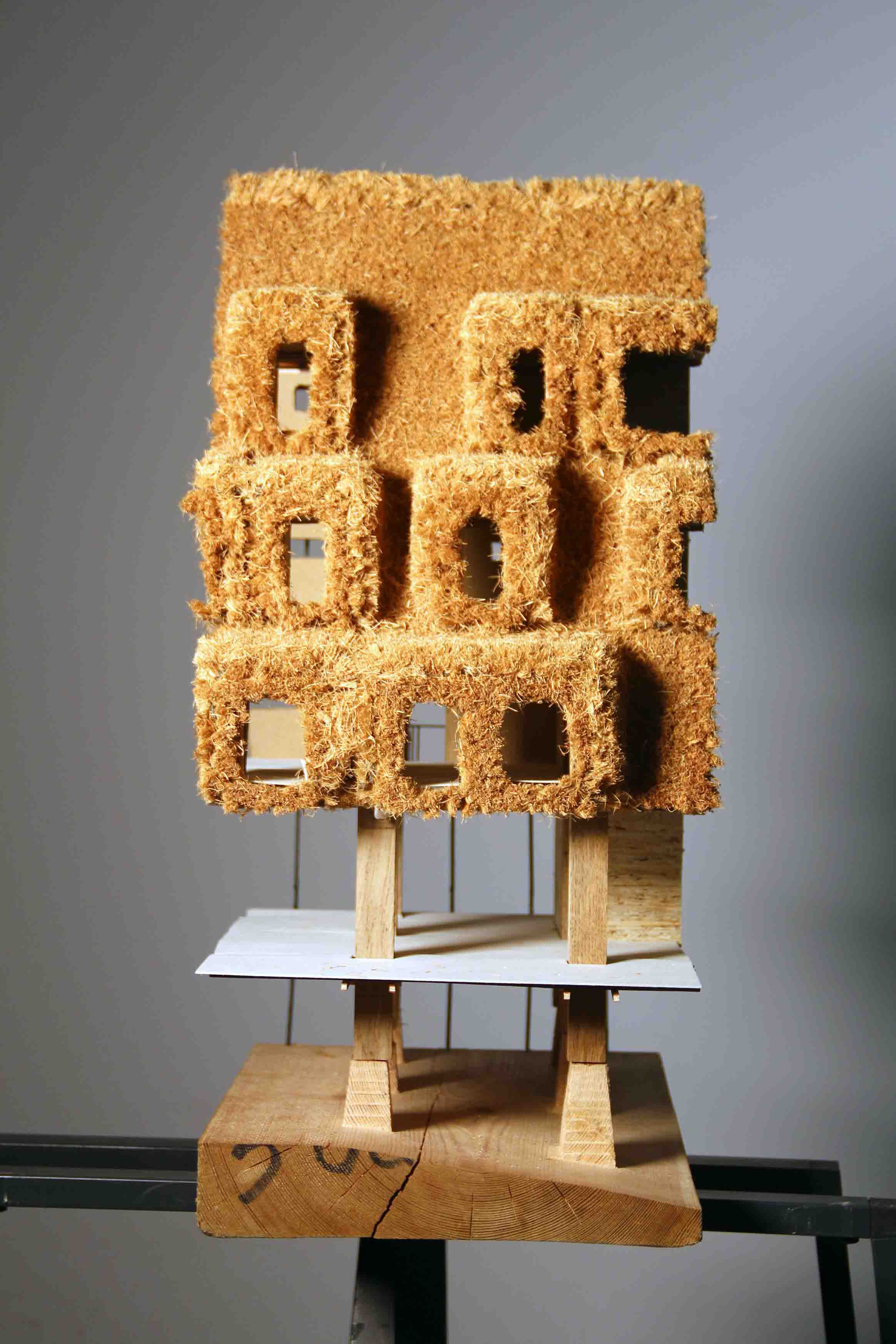
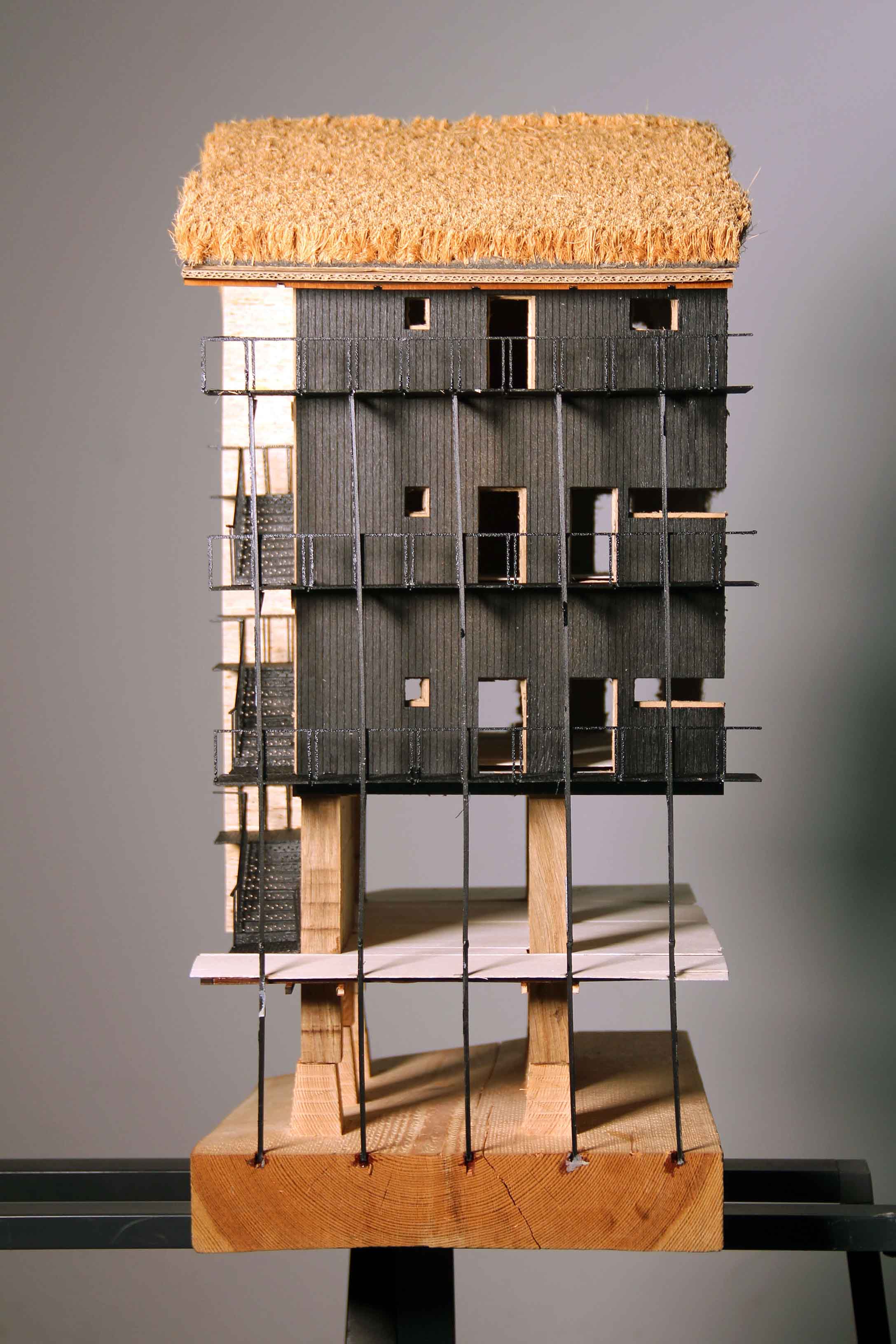
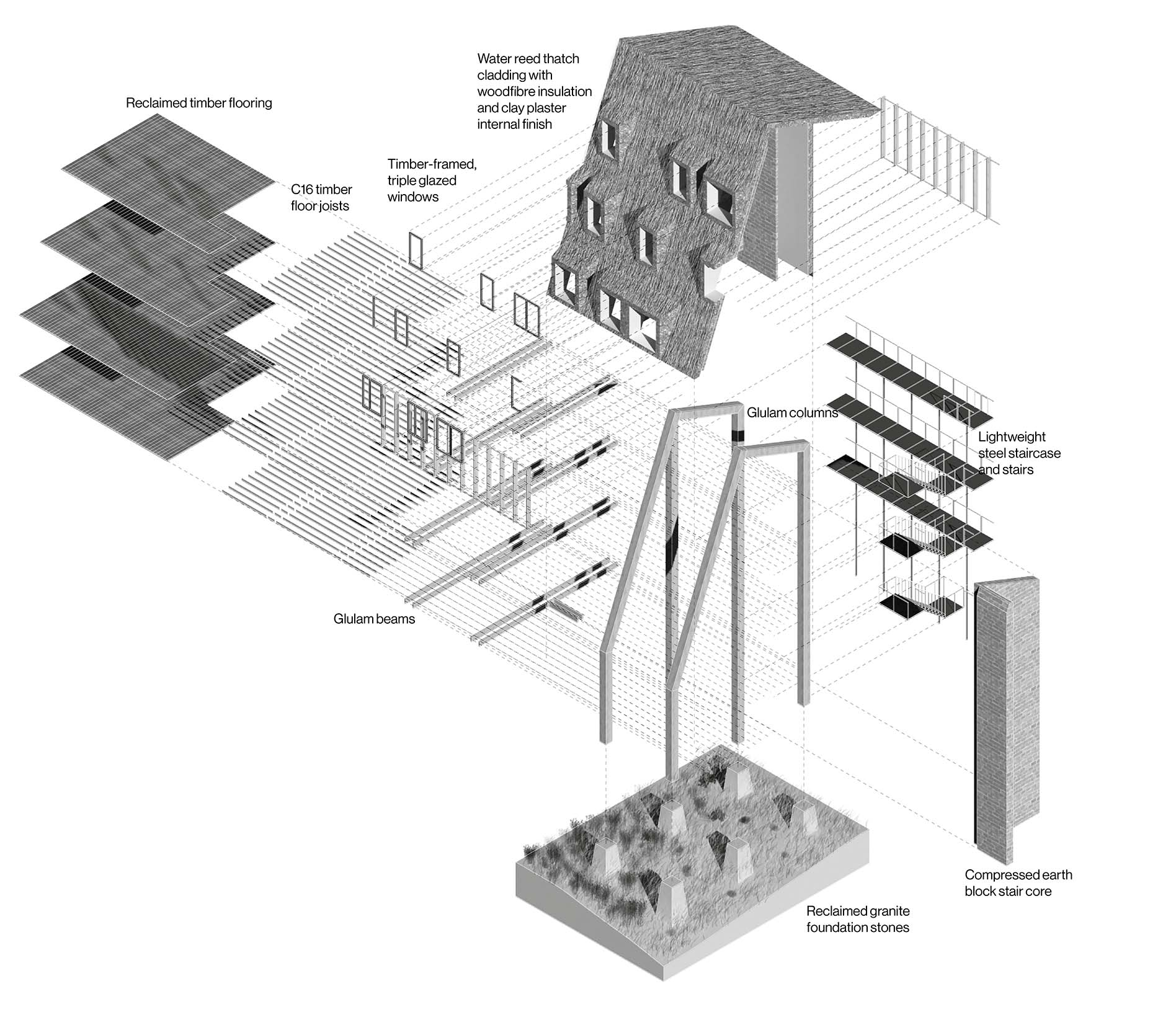
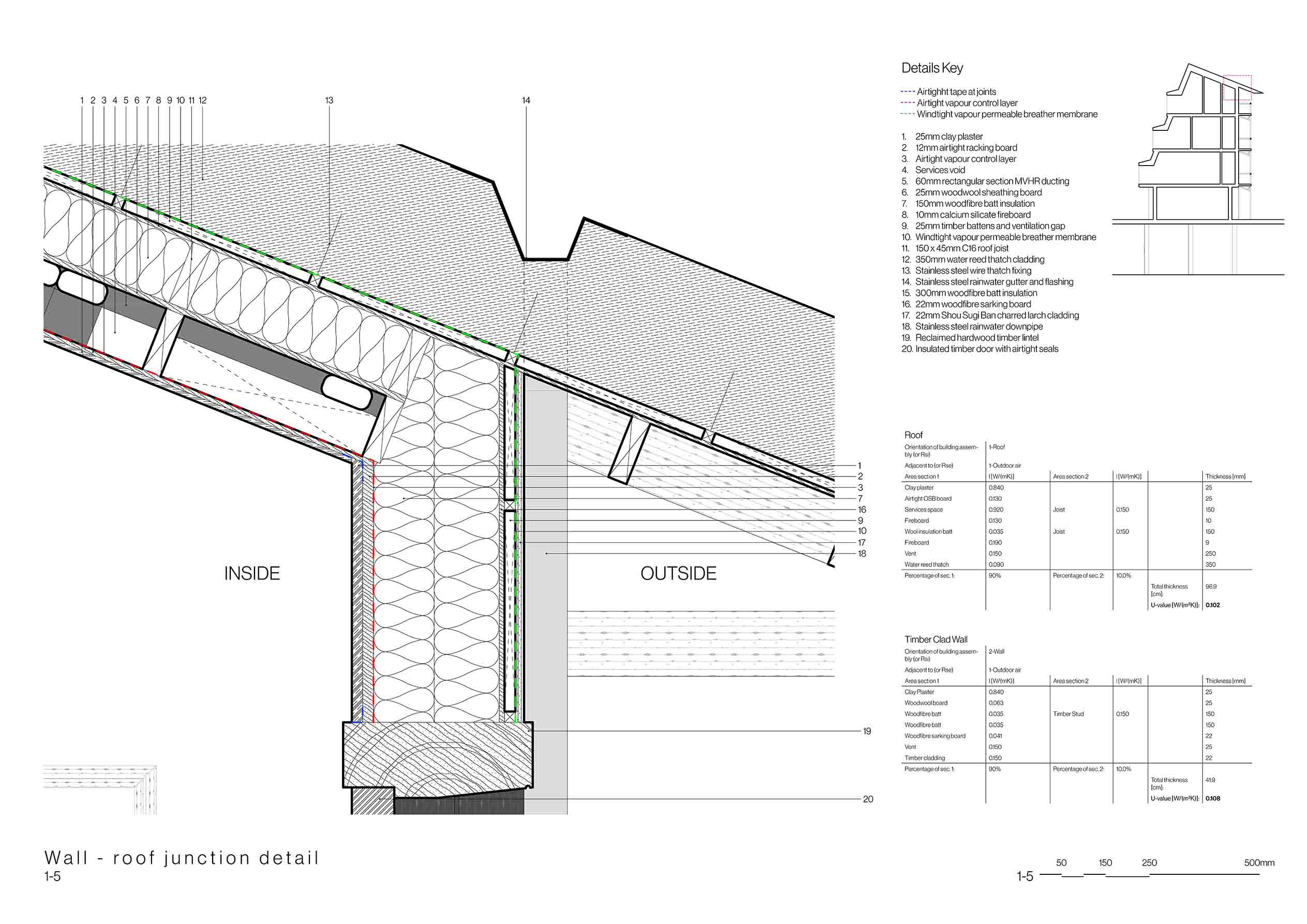
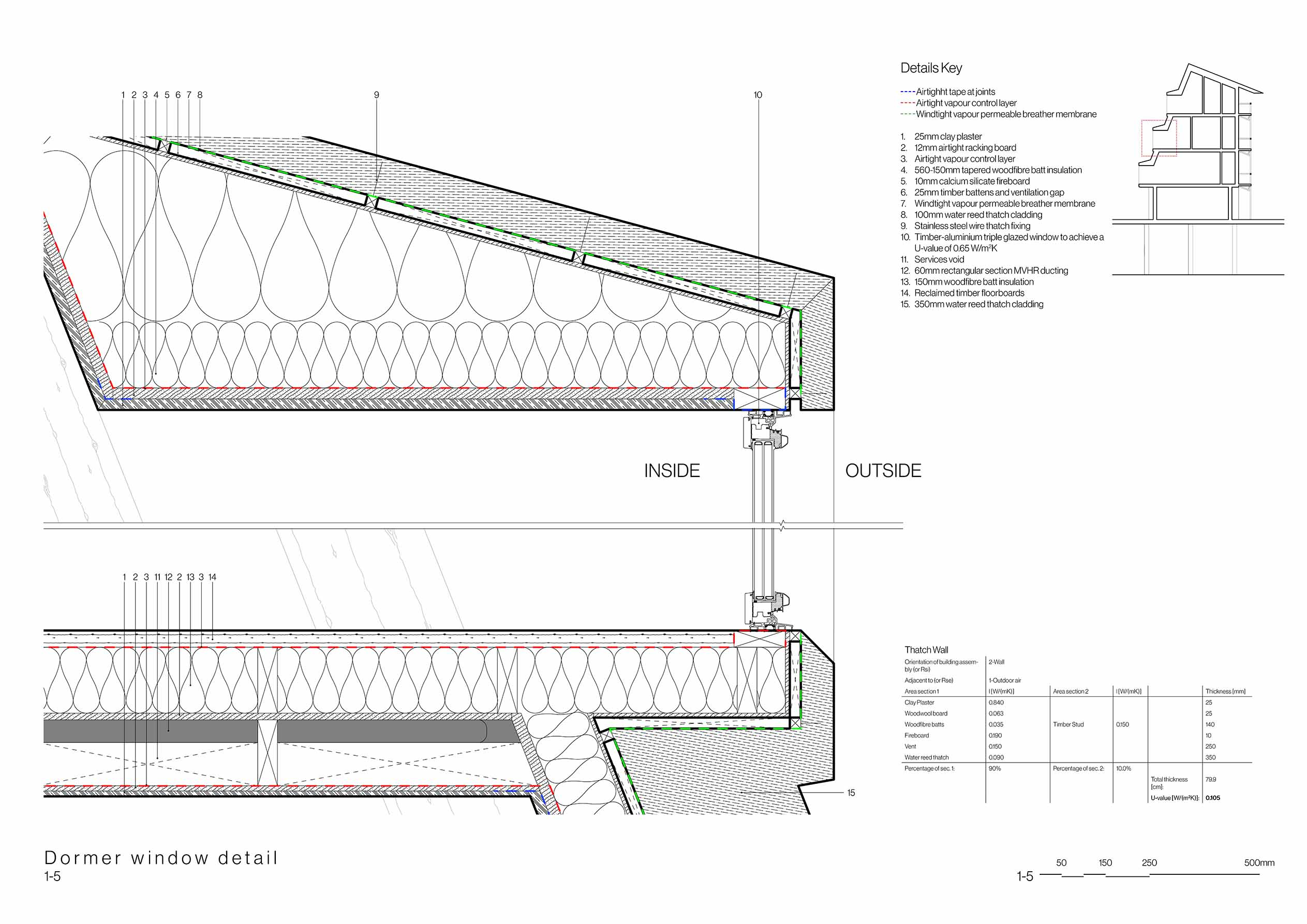
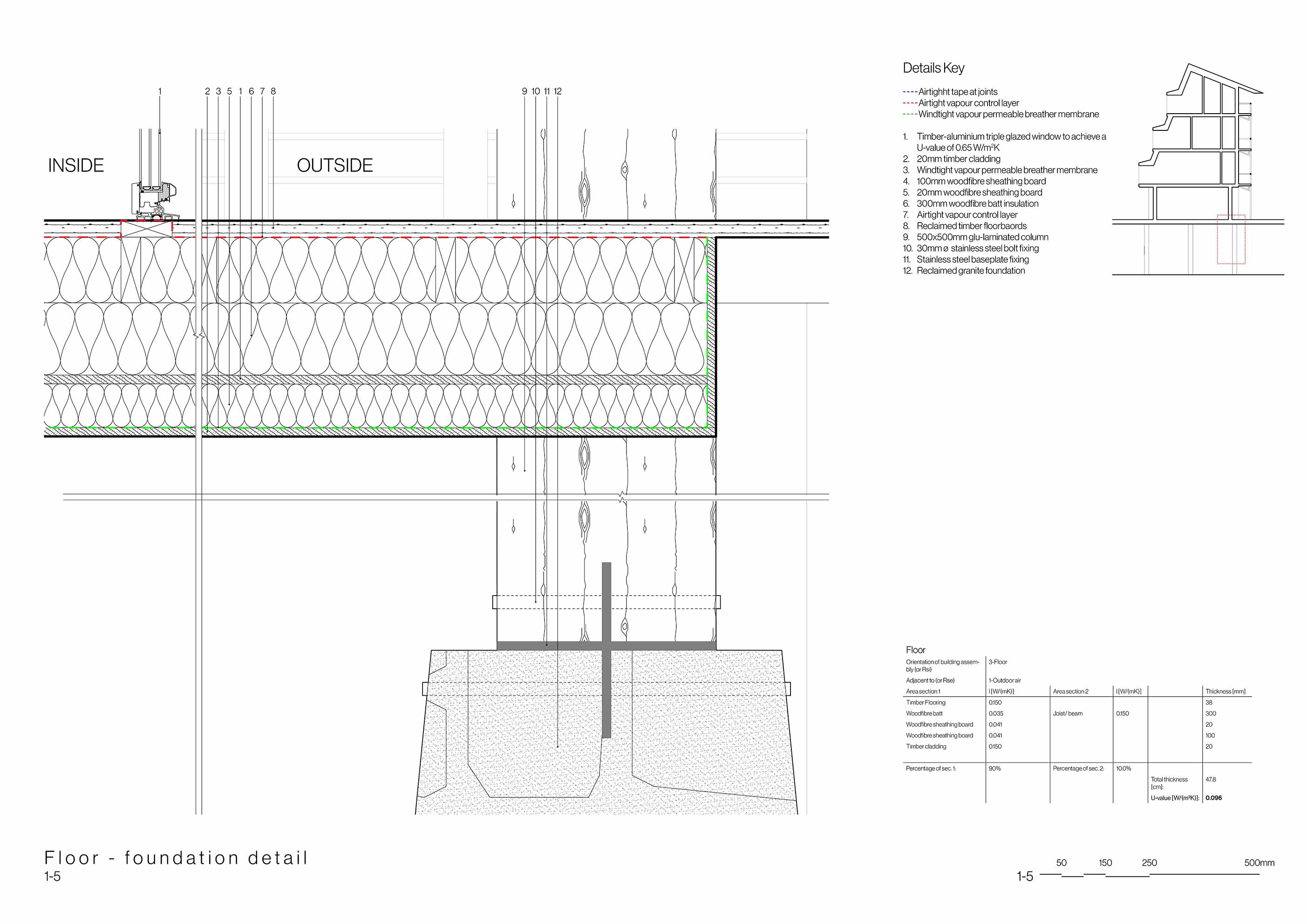
Pre-Empting the Flood transfers the methodological ethos and material intelligence of the live-build project to the proposed architecture, using thatch stock grown in-situ for building envelopes and earthen components and reclaimed granite as modular infrastructure designed to endure wet and dry cycles. Material upkeep and maintenance are anticipated and understood as a part of the project’s long-term performance in response to a changing climate.