Project description

As the relationships between land, sea, and community continue to erode, this project responds not by mourning what is lost, but by cultivating resilience, fostering reconnection, and regenerating the edges we inhabit. It recognizes the coastline not as a fixed boundary, but as a living threshold—dynamic, fragile, and in continuous dialogue with natural processes.

The erosion witnessed here is both a physical reality and a symptom of fragmented relationships. Barriers built for protection have disrupted ecological cycles, weakened community ties, and severed our connection to the sea. This project reconsiders these boundaries not simply as lines of defense, but as opportunities for repair and reconnection.

The design approach is intentionally modest, incremental, and material-driven. Pocket gardens gently pierce existing infrastructures, bridging gaps between human settlements and marine ecologies. Decaying seaweed is reclaimed from the shoreline and transformed into life-sustaining resources for community gardens, reconnecting everyday practices to tidal rhythms. Along the rocky shore, crafted stone interventions support marine life, creating microhabitats and gradually restoring ecological potential.

The Shifting Edge: Erosion on East Coastline of Scotland
Site Selection within the Context of Coastal Erosion

In the face of intensifying coastal erosion driven by climate change, the selection of Dunbar East Beach as the project site reflects a deliberate focus on a landscape where the impacts of environmental transformation are both visible and immediate. Situated along Scotland’s vulnerable east coast, where sediment typically travels from southeast to northwest, East Beach lies along this shifting corridor, its condition shaped by longshore drift and disrupted coastal dynamics. Once a vibrant recreational space, the beach now bears the physical traces of sediment loss, sea wall interventions, and tidal encroachment. Its position at the intersection of ecological fragility and community life makes it a critical site for exploring grounded, adaptive design strategies that respond to the lived realities of coastal change.

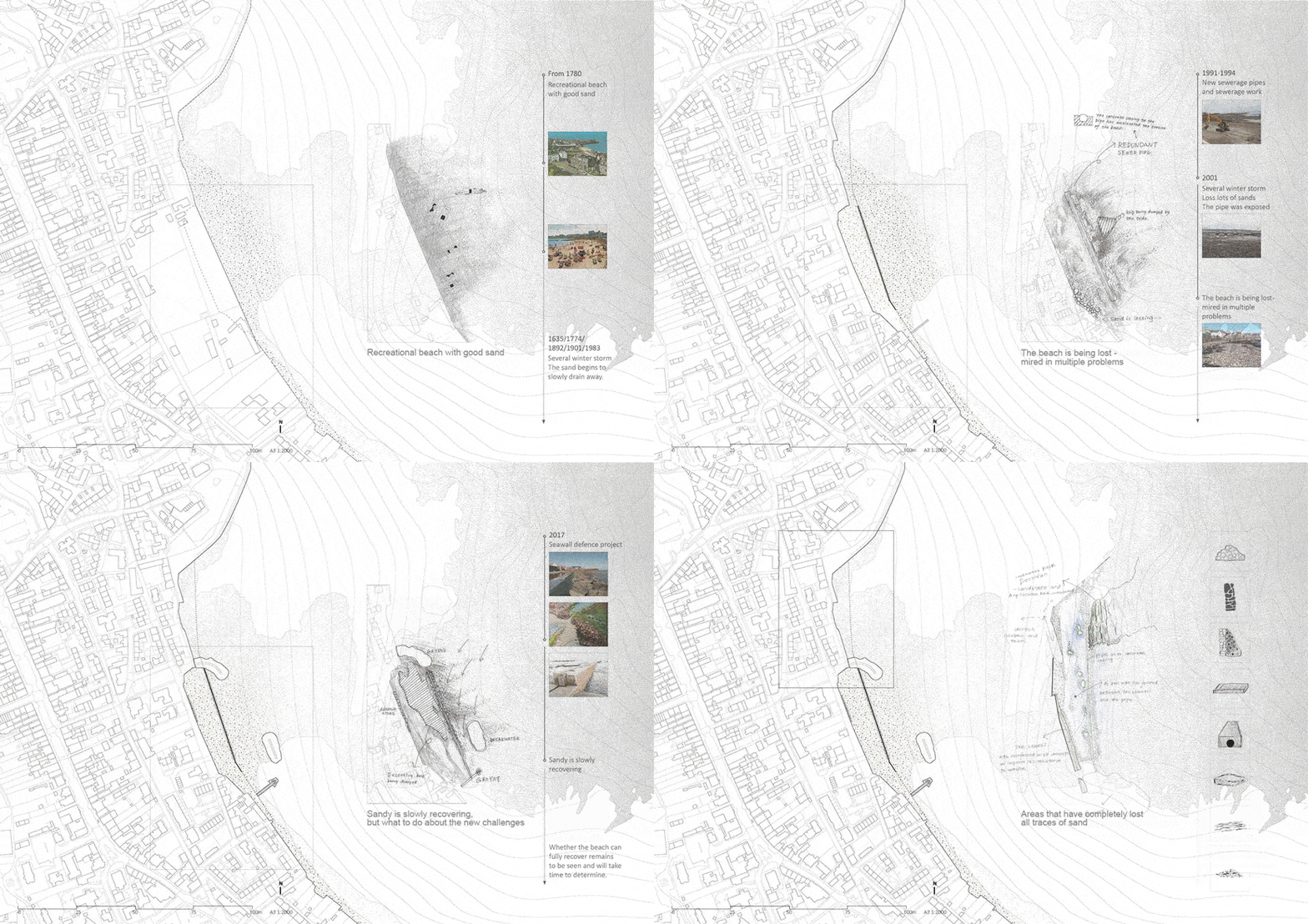
Animated diagram showing the dynamic transformation of East Beach, Dunbar, from the late 18th century to the present. The map traces the shoreline’s gradual loss of sand due to repeated winter storms, transitioning from a once vibrant recreational beach with good sand to a visibly eroded coastline. Historical photographs and timeline annotations on the right emphasize the contrast between past and present conditions, highlighting the ongoing coastal erosion.
The Dynamics process of East Beach
The Language of Matter: Understanding Site in Flux

While large-scale coastal erosion is often measured in meters of lost shoreline, it is, at its core, a material process. The beach is not a fixed form, but a condition in flux—shaped by the movement, accumulation, and decay of matter over time. In this project, I examine the site through the lens of three key materials: Sand, Stone, and Seaweed.

Between Erosion and Renewal

At Dunbar’s East Beach, a single groyne divides two contrasting worlds. To its south, the beach quietly rebuilds itself—sand returning steadily, signaling gentle renewal. To the north, erosion has left bare rocks exposed, evidence of what has been lost. This structure becomes a silent axis, bearing witness to the delicate balance between erosion and accumulation.

My design extends this groyne inland, merging it with a small public green space to form an intertidal garden commemorating coastal change. Within this garden, two distinct yet equally joyful landscapes unfold side by side, inviting residents and visitors alike to experience—and celebrate—the dynamic rhythms of the coastline.

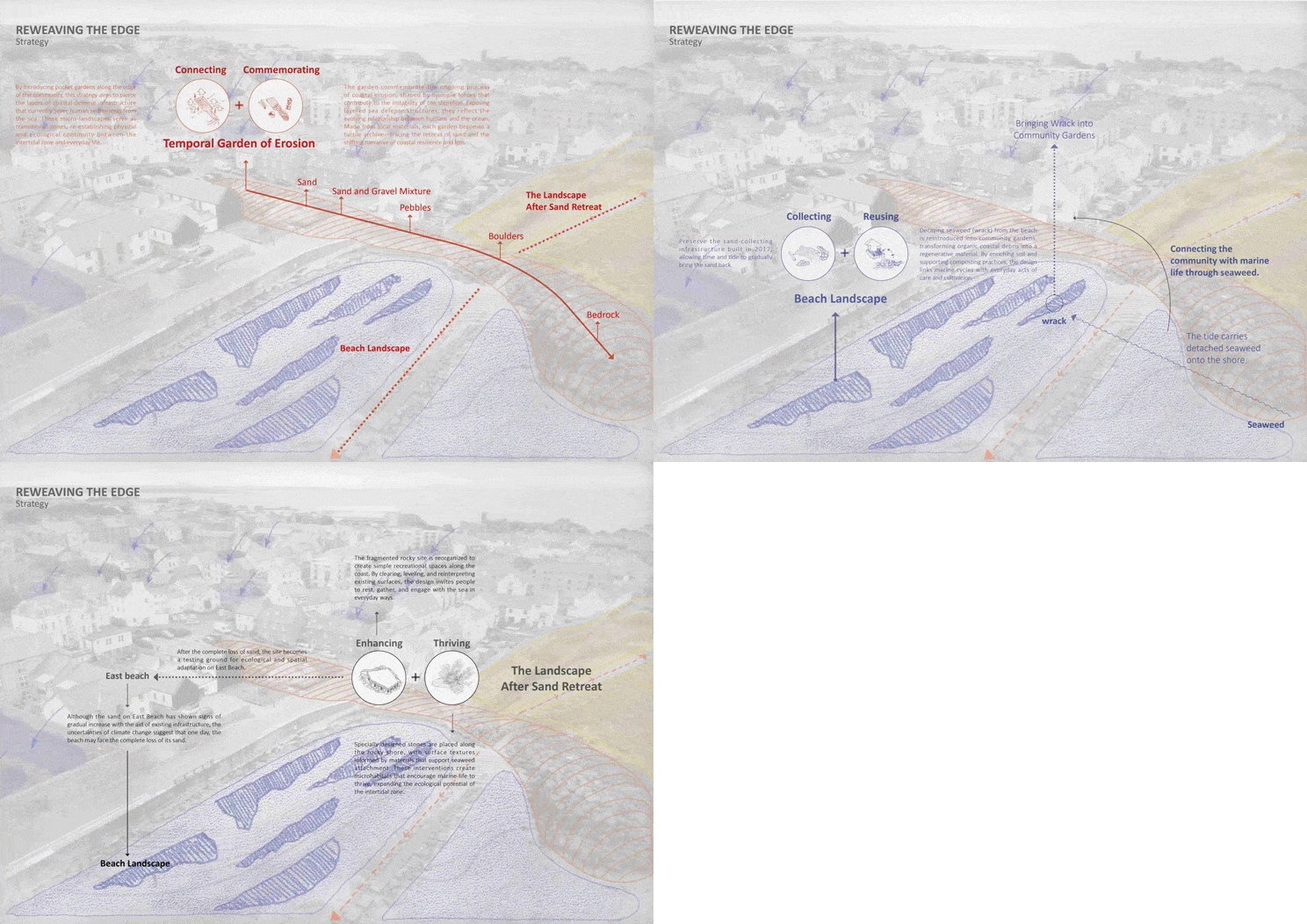
These diagrams illustrate a site-specific strategy for coastal adaptation at East Beach. Through pocket gardens, reclaimed seaweed, and stone interventions, the design reconnects human and marine systems. It addresses sand erosion by commemorating sediment loss, reusing organic debris to enrich community gardens, and enhancing rocky shores with microhabitats for marine life—transforming erosion into a catalyst for ecological and social renewal.
Strategies for Reweaving the Coastal Edge
Temporal Garden of Erosion---Connecting+Commemorating
Story 1: Tracing the Narratives of Erosion
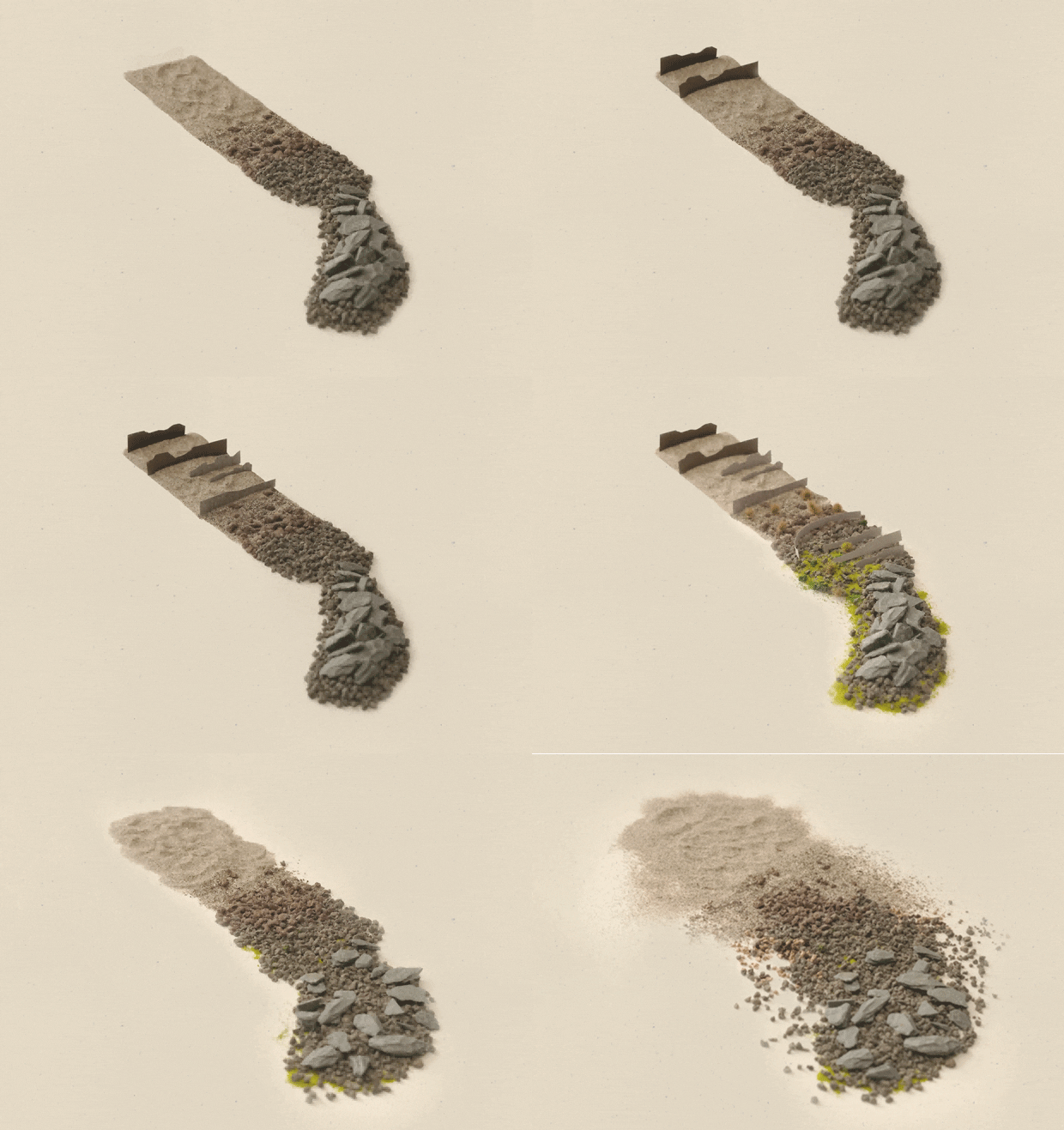
This image shows a conceptual model designed to celebrate erosion, illustrating how coastal change can inspire spatial and material responses.
Model of the Erosion Pocket Garden——Sand gradually erodes, disappearing grain by grain under persistent wave action. Initially, fine sand gives way to a coarser mix of sand and gravel, creating an uneven surface shaped by continuous water movement. Over time, larger stones move in and establish themselves firmly, stabilizing the area against further rapid change
Model of the Erosion Pocket Garden
The Landscape  After Sand Retreat--Enhancing+Thriving
The fragmented rocky site is reorganized to create simple recreational spaces along the coast. By clearing, leveling, and reinterpreting existing surfaces, the design invites people to rest, gather, and engage with the sea in everyday ways.
Story 2: Thriving Beneath the Stones
Beach Landscape--Collecting+Reusing
site3_A beach that slowly collects sand
Story 3: Sandy beaches that slowly collect sediment
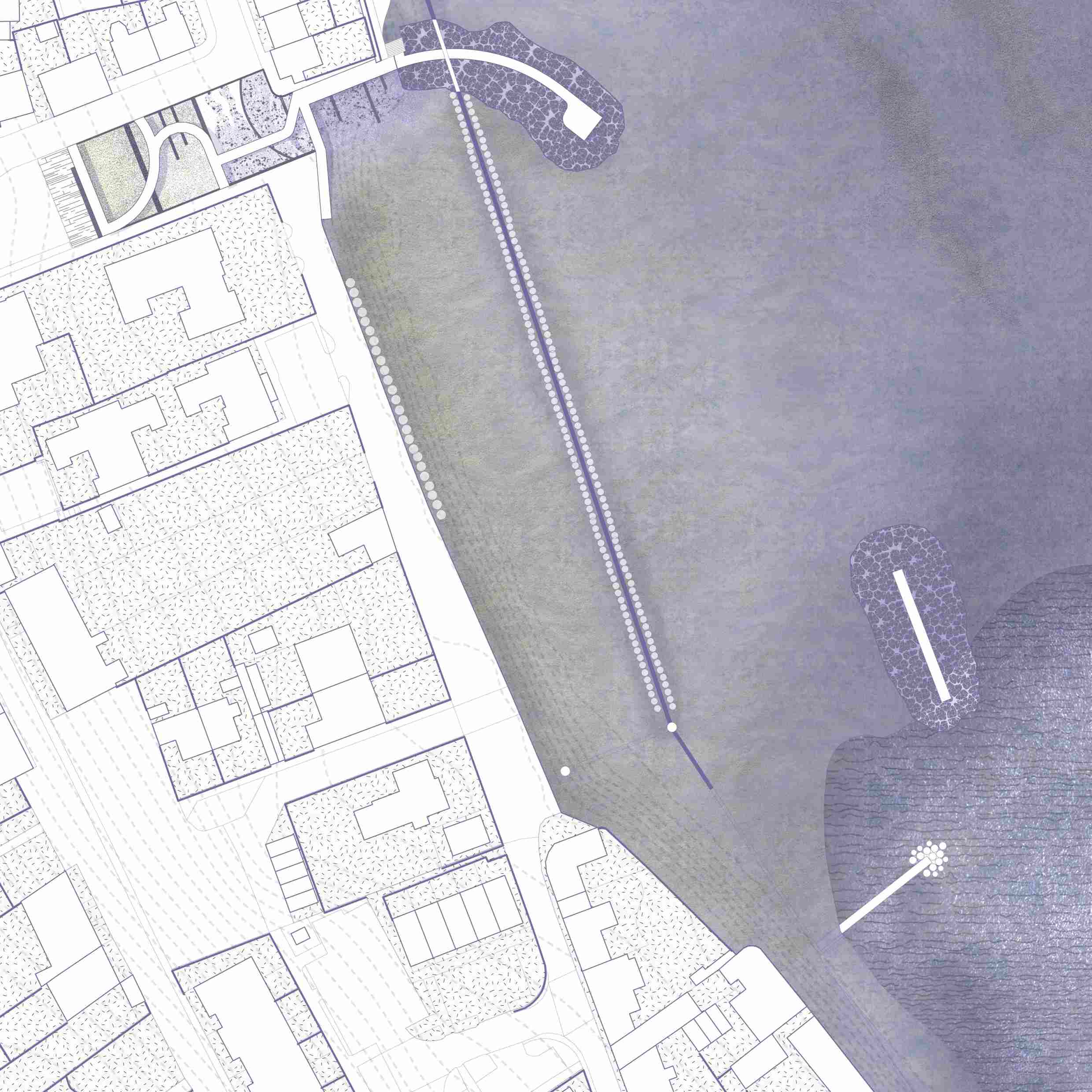
The master plan brings together three site-specific interventions along East Beach: a series of pocket gardens embedded within the intertidal zone, subtle modifications along the rocky coastline, and a stretch of recovering sand nourished by sediment-conscious design.
Student list
open list
close list