Project description

‘And like a sand-glass turned about
The hills in a dry rain
Will flow away and the old land look out;’


Andrew Young, Selected Poems (1998)


Still Flow explores how Culbin’s fragmented environmental memory can be reconnected—and its resilience restored—through the continuous movement of water, sand, and forest. Shaped over time by tides, shifting dunes, afforestation, and human intervention, Culbin now faces rising seas, woodland decline, and a growing disconnection from its ecological and cultural past.

Reweaving memory, restoring resilience becomes both method and metaphor: a living rhythm where water moves, sand migrates, and trees rejoin the land’s evolution. Informed by Heidegger’s phenomenology—Being, Dwelling, Space, and Belonging—the design embraces change, allowing Culbin to breathe, transform, and remain open. What comes next is not fixed, but still quietly unfolding.


The ending is not written—only carried forward in the flow......

Dynamic Culbin

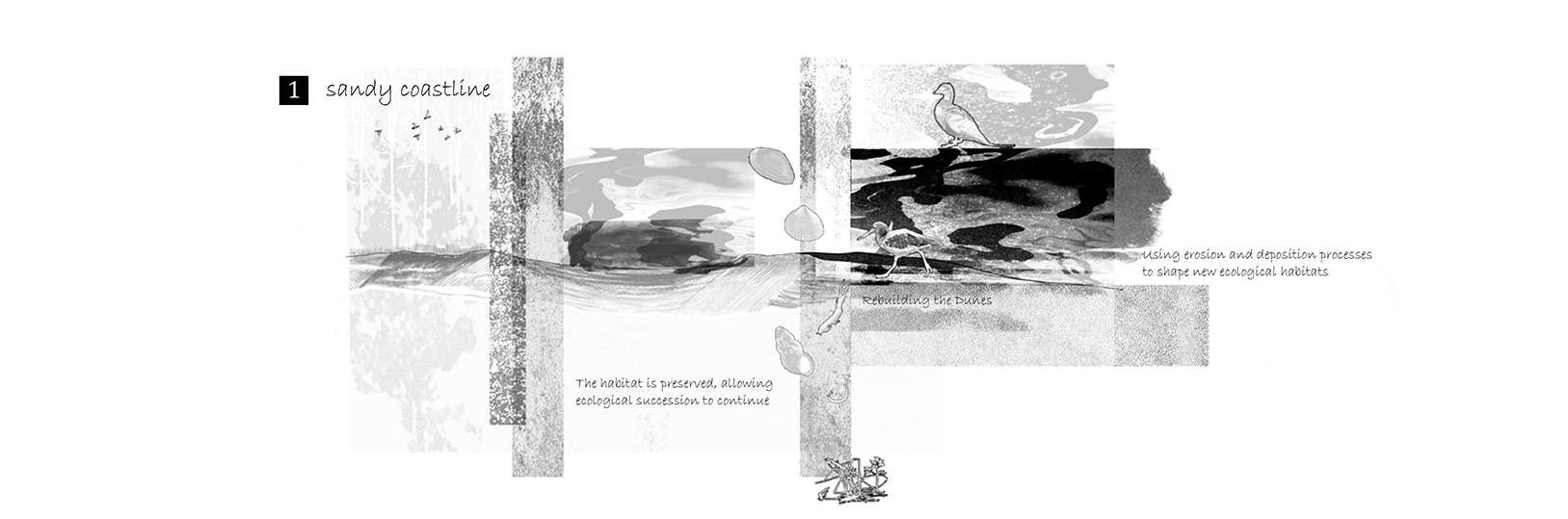
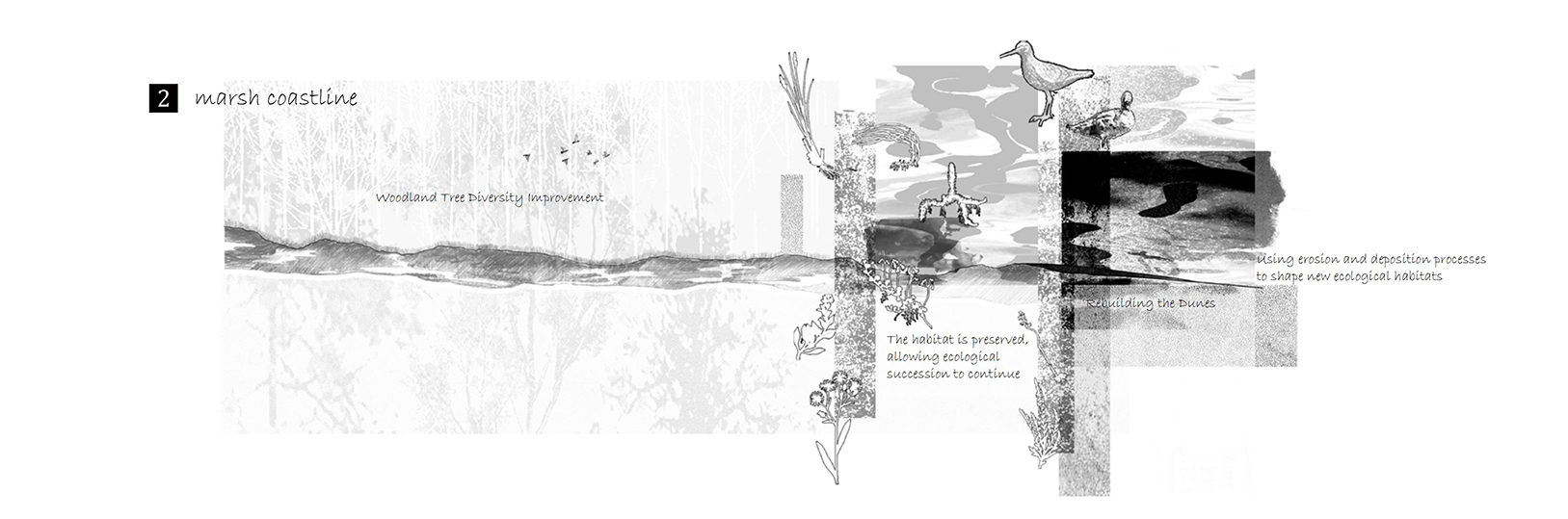
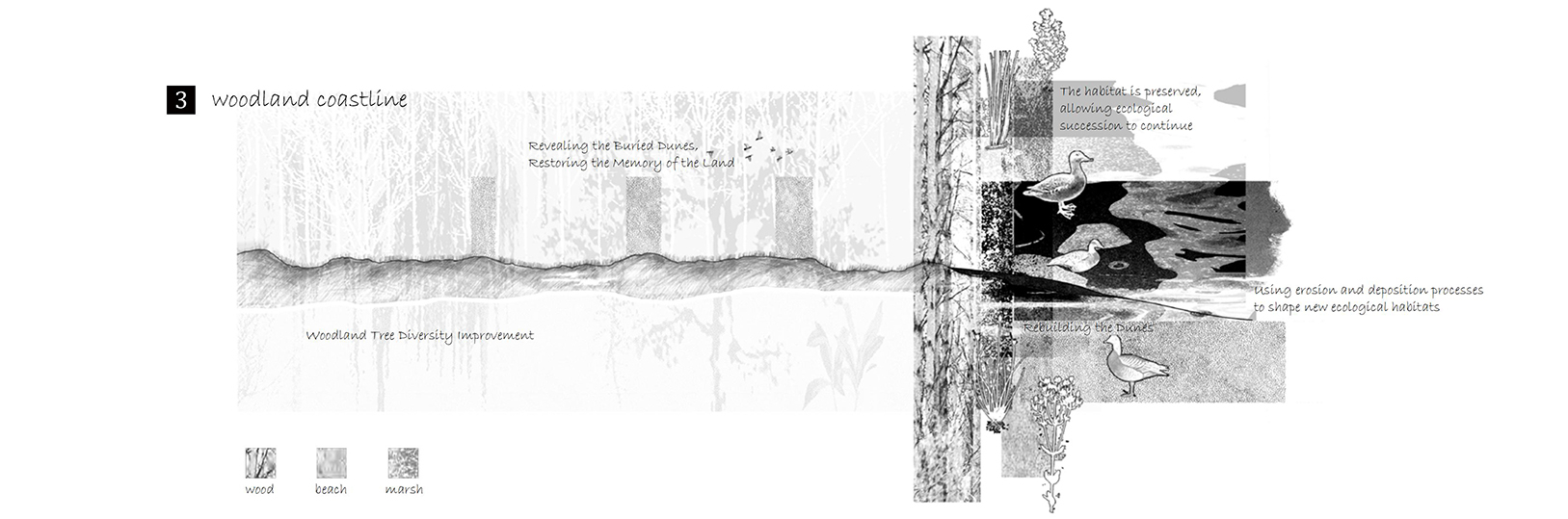
Culbin is a dynamic system shaped by shifting dunes, flowing water, and human intervention. To explore why the site feels so detached, I walked three trails leading to different coastal types—beach, salt marsh, and forest. On each, I observed how ocean currents and afforestation shape the land: gravel ridges extend, sediments settle, trees take root. Over time, these forces reconfigure the landscape. Through this, I came to see how dunes, water, and people interact—constantly changing through the medium of trees. Culbin is not static; it is always in motion.


Interweaving Ecology and Phenomenology

The goal is to restore the relationship between water and dunes, reviving their natural mobility and allowing them to function as living barriers. This process supports the formation of new habitats for endangered species and strengthens ecological resilience through increased tree diversity. In turn, people are invited to shift from disconnection toward layered perception and renewed belonging.

BEING WEAVING: The Flow of Materials

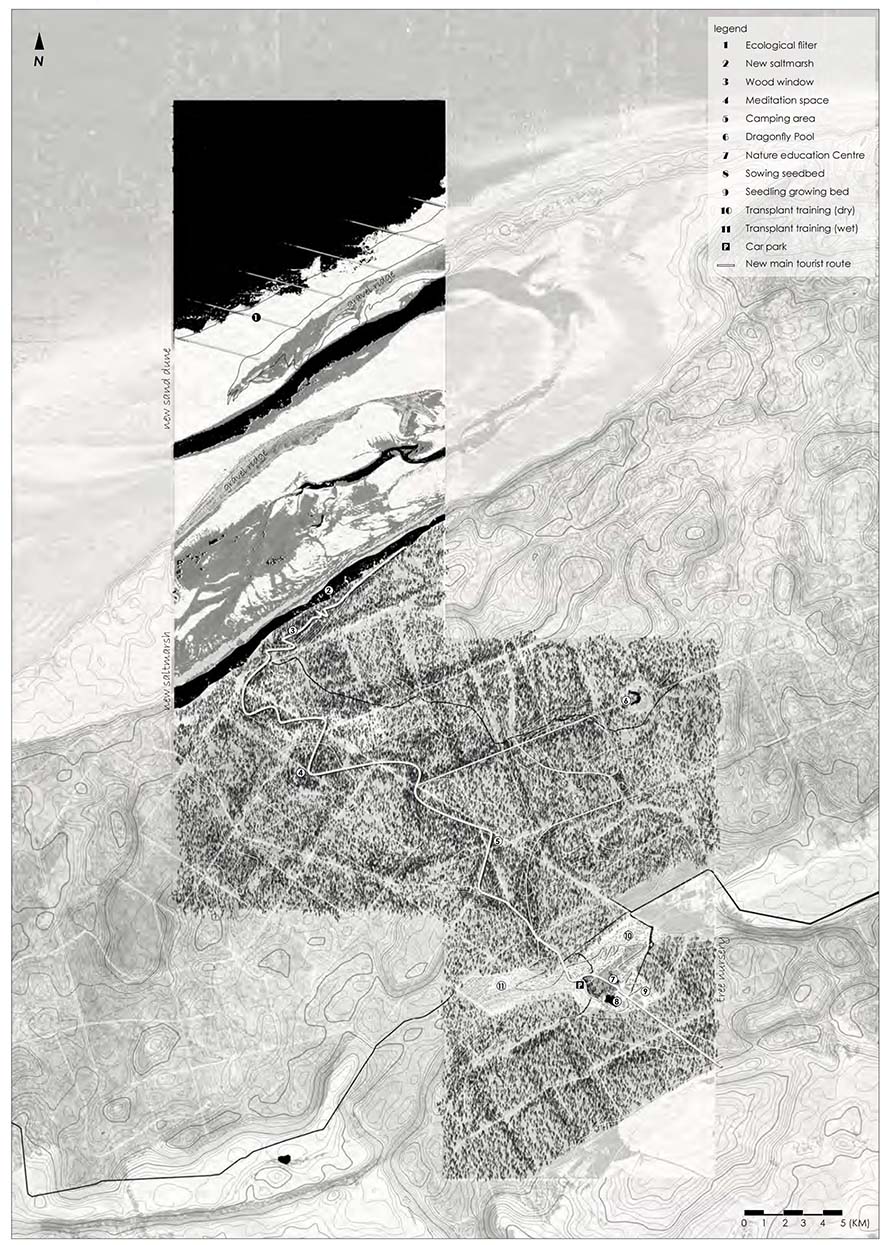
The second path was selected as the testing area. The dynamic interaction between sand dunes, water, and trees gives this zone strong potential for natural regeneration. In the past, trees were planted to stabilise the dunes; today, timber from already-managed woodlands can be used to create new dune structures along the coast using Scots pine.

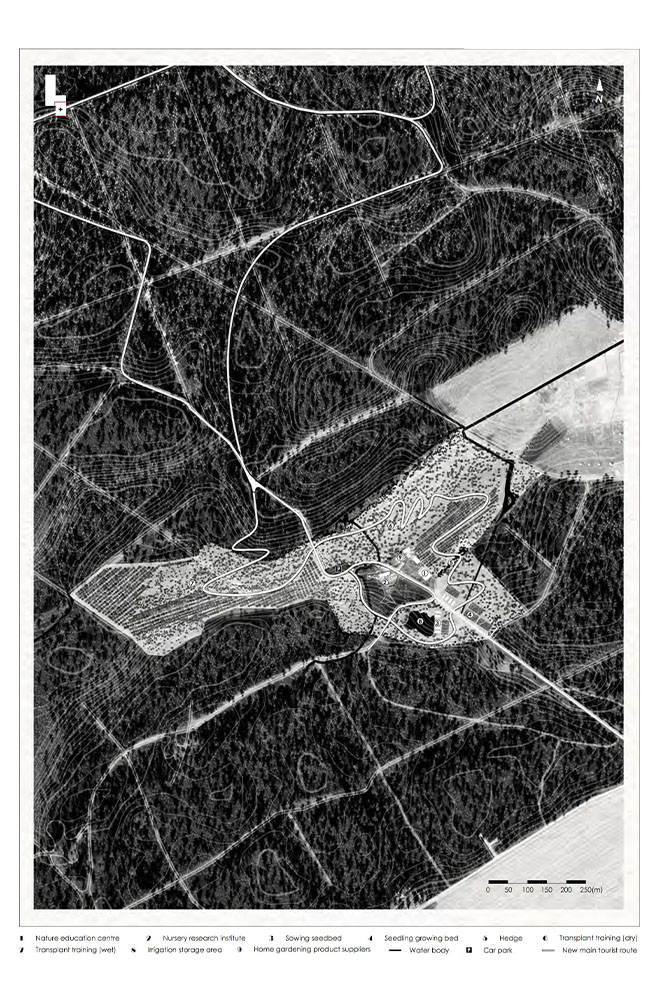
To further support the site’s ecological renewal, a tree nursery is proposed within the forested area—enhancing biodiversity and contributing to long-term resilience.

Interweaving Ecology and Phenomenology
CREATING NEW HABITAT

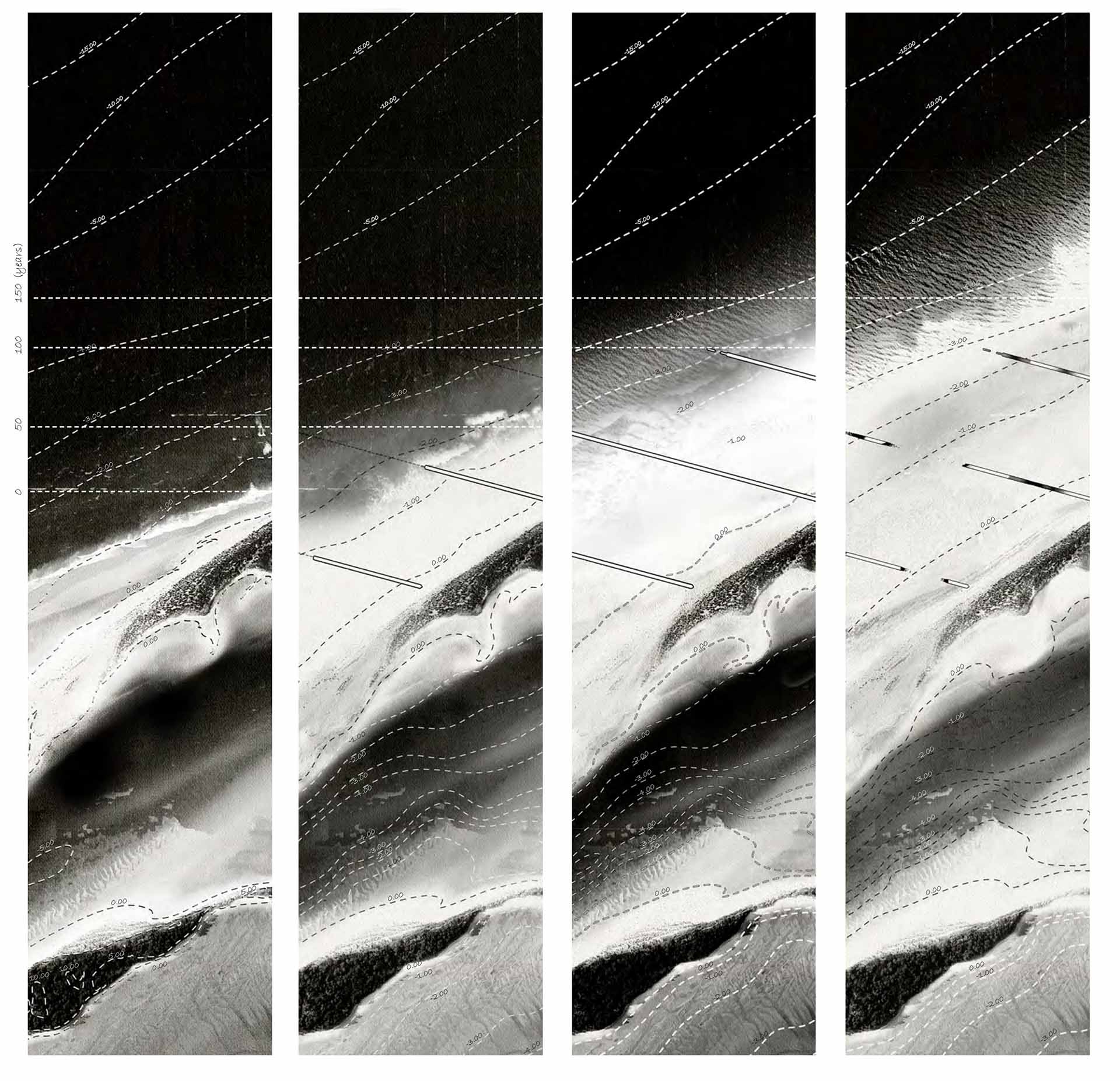
The ocean current from the east is the site’s most promising driving force, initiating ecological succession. 

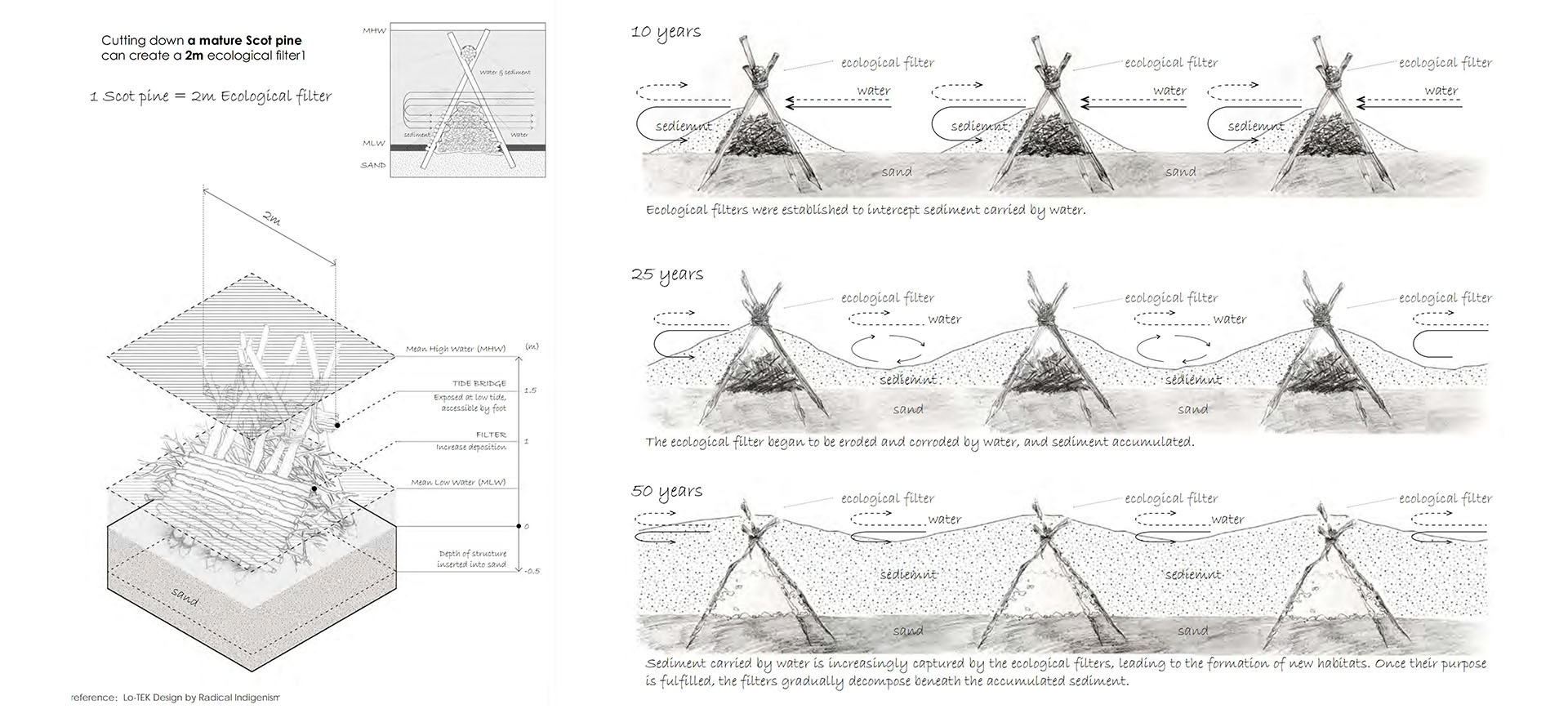
By understanding water’s dual nature—erosion and deposition—this force can be harnessed to shape a regenerative future.

The four images illustrate the ecological filter’s transformation over time:
Now, 50 years, 100 years, and 150 years
as the structure gradually decays, new habitats take root and begin to grow.

Interweaving Ecology and Phenomenology

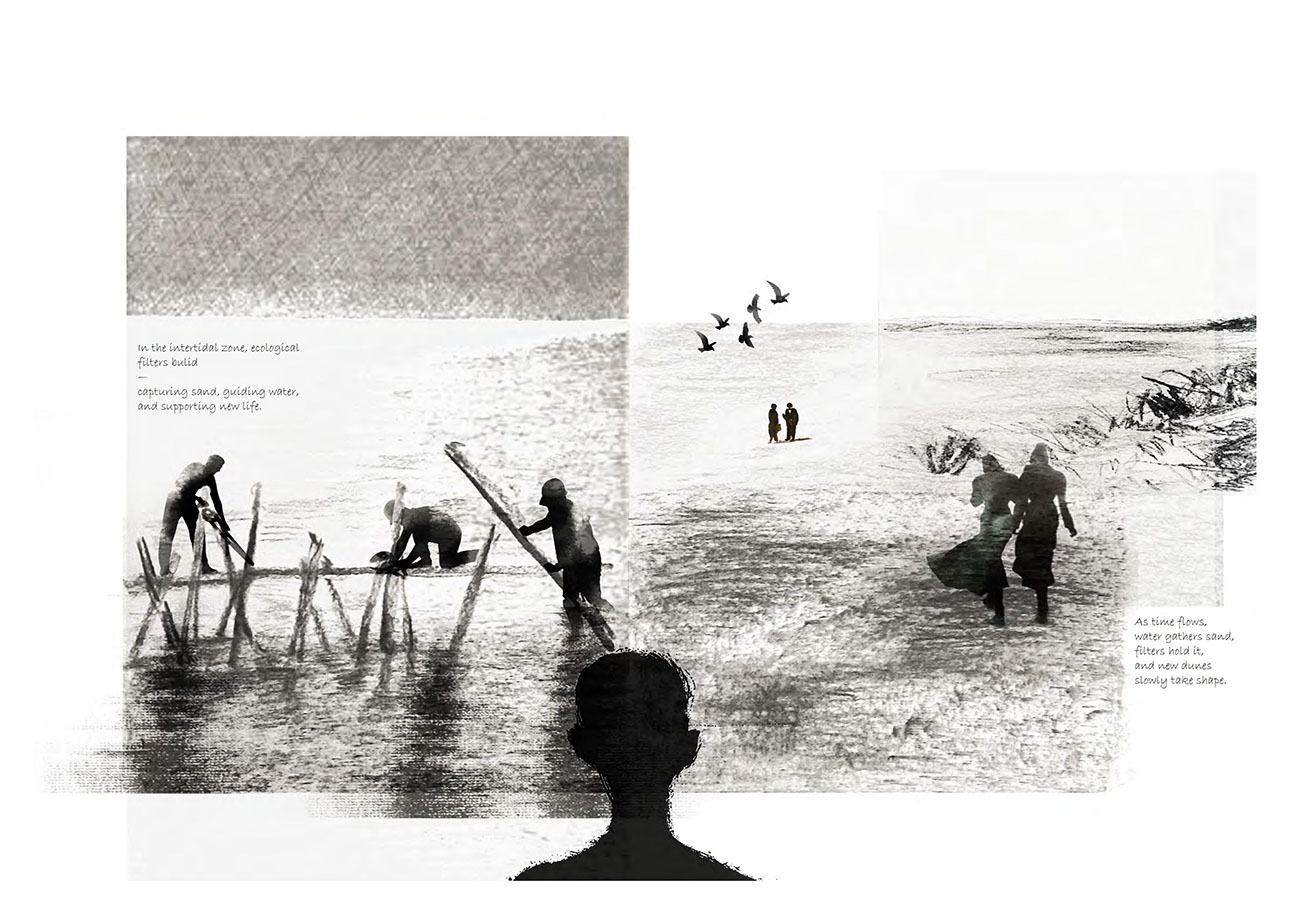
Tree-based ecological filters, created by cutting down mature Scots pines, help trap sediment and support the formation of new habitats. Each 2m structure becomes a living scaffold in the evolving landscape.

TREE NURSERY: A Foundation for Long-Term Ecological Resilience

A tree nursery supports long-term dune stabilisation by supplying seedlings to replace thinned trees.  
This enhances species and age diversity, 
Strengthening woodland resilience.  
The resulting timber can be sold or used to build ecological filters.

Interweaving Ecology and Phenomenology

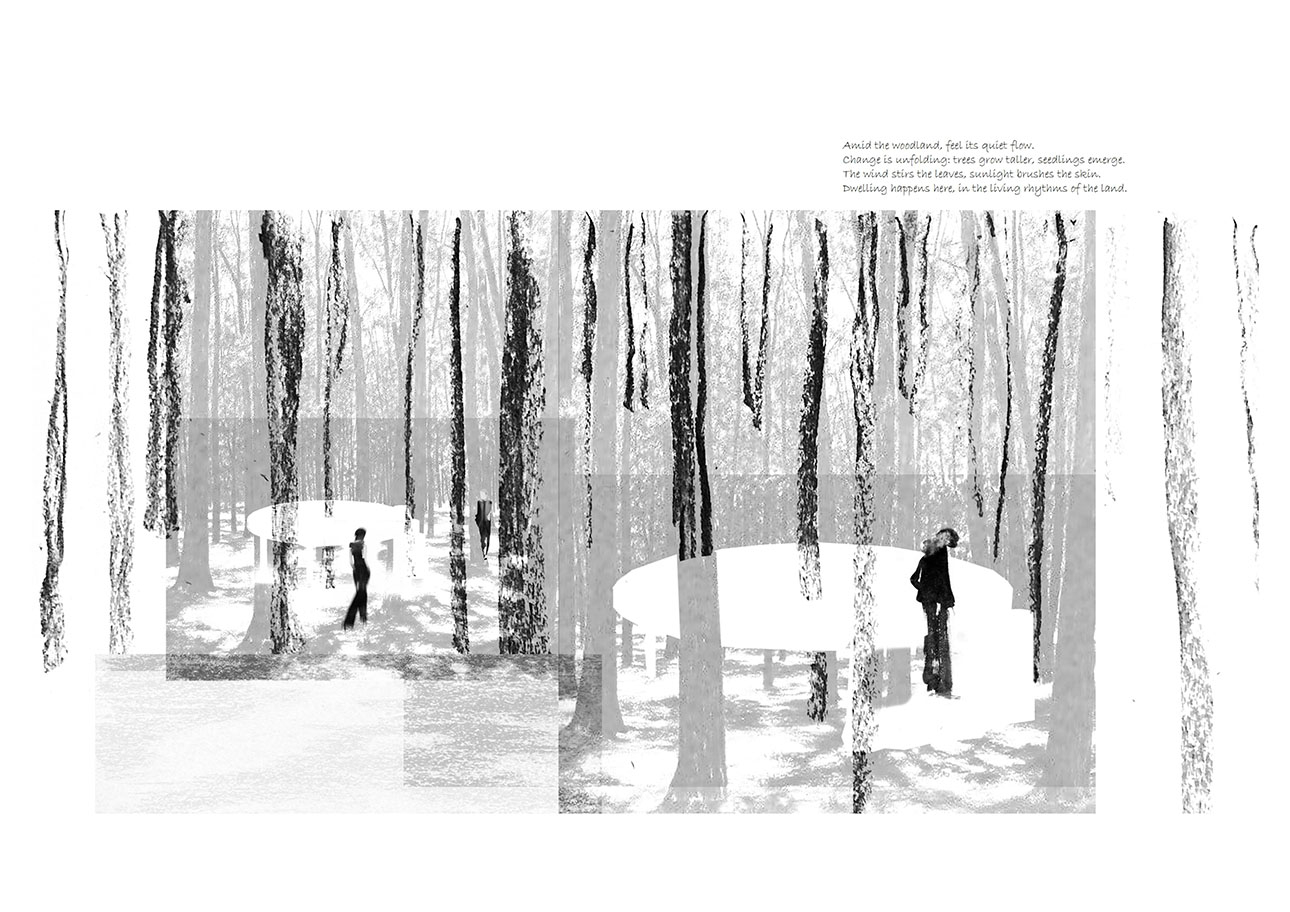
A meditation space sits quietly among the trees, offering a sense of stillness and safety. 

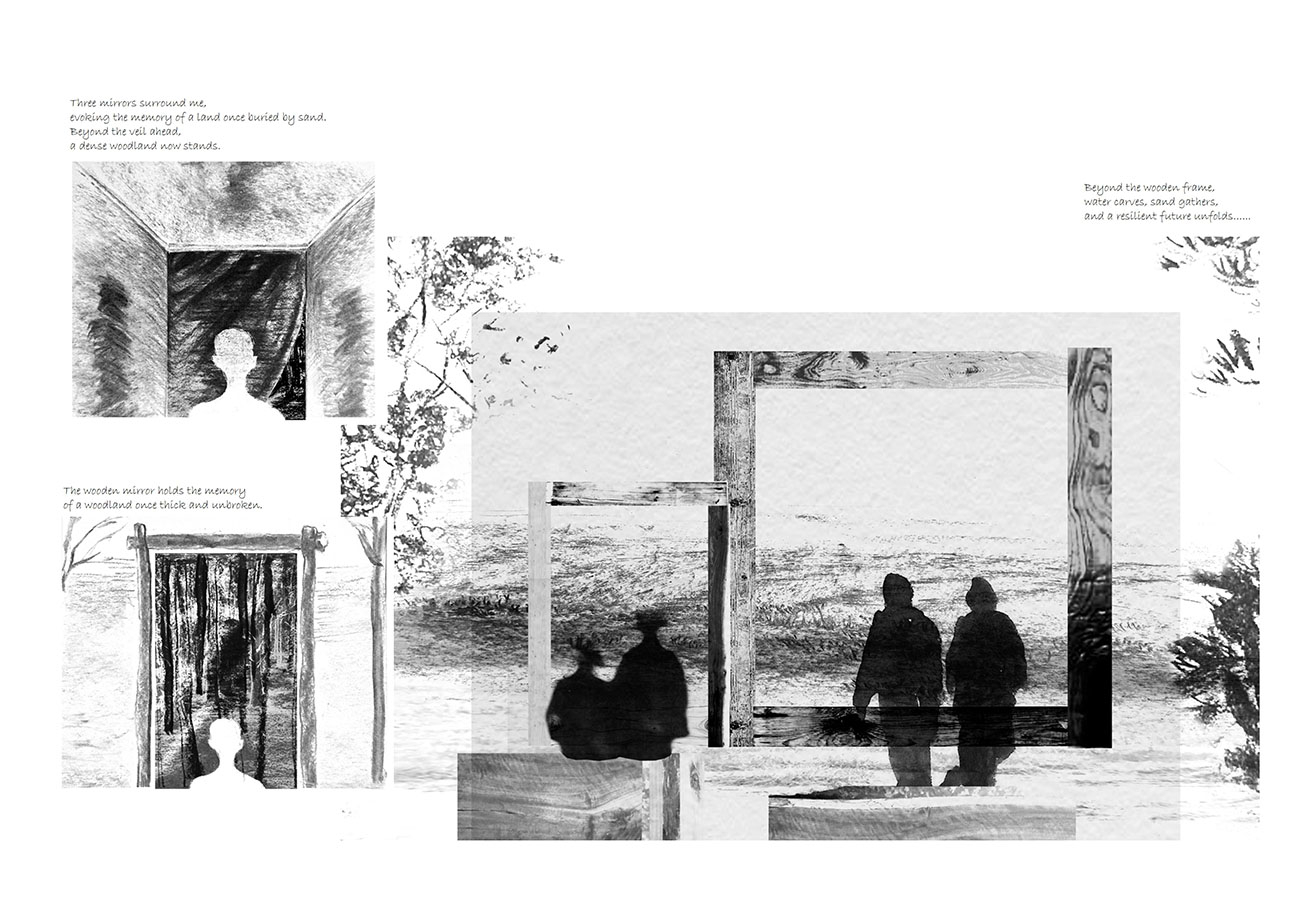
Further on, exposed dunes appear—three mirrors reflect the surrounding sand, evoking its shifting history. A wooden mirror captures the forest behind, still growing. Through a timber frame, emerging habitats come into view. 

At the shoreline, ecological filters are under construction, and a sustainable future begins to take shape.

Interweaving Ecology and Phenomenology

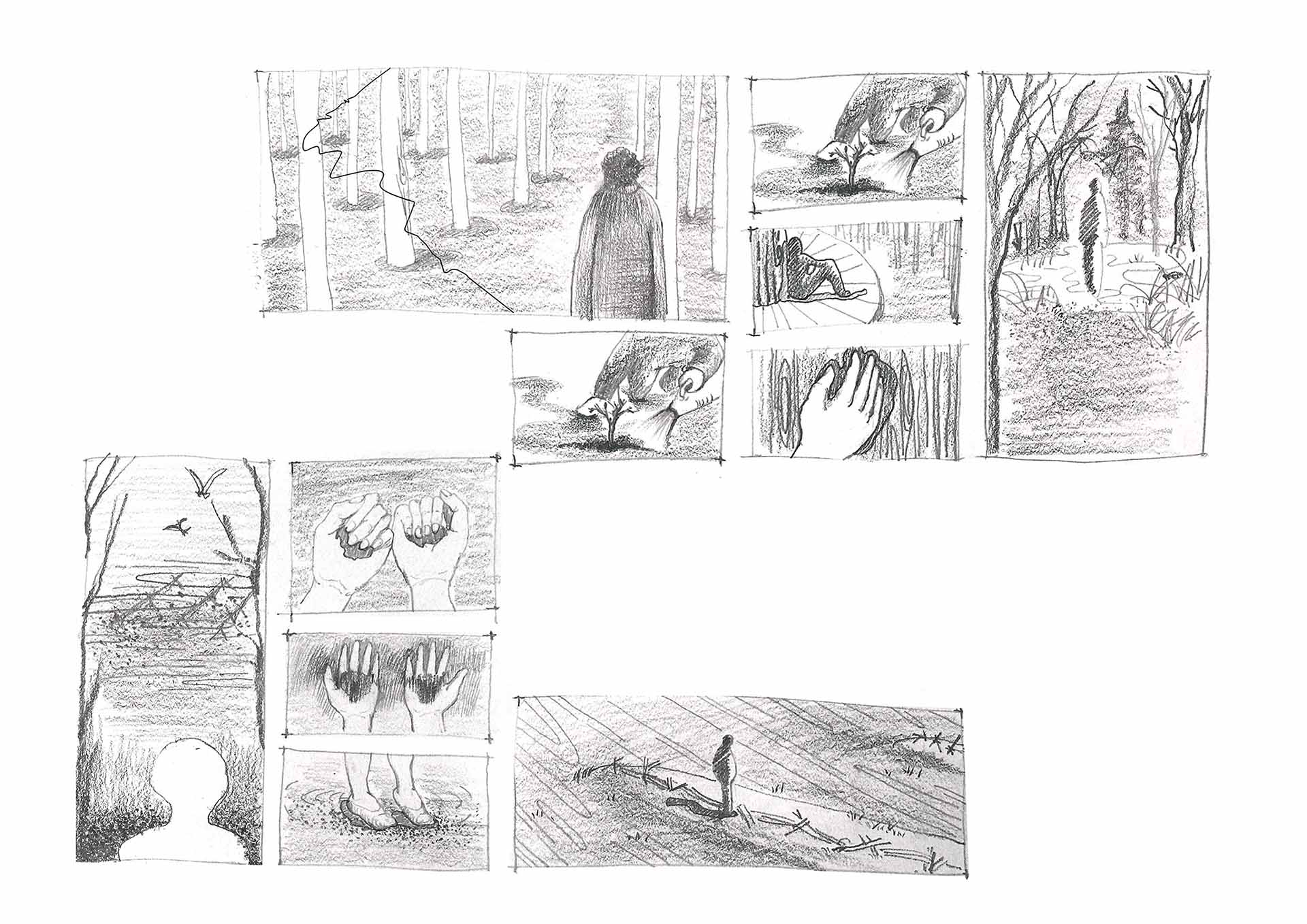
Let the landscape move—and let it remember how to feel.
Still Flow becomes a method of restoring resilience, reviving memory, and allowing Culbin to breathe, change, and sustain itself.

Student list
open list
close list