


Serena Arya


Locus Vitreous is an academic complex within St Mary’s Quad in the University of St Andrews. As a civic proposal, the grounds offer a place to wander, contemplate, and convene. Locus Vitreous rehouses the Bell Pettigrew Museum, an Edwardian taxidermy collection which is rarely open to the public. This slowly deteriorating collection currently lacks a dedicated conservationist. Within Locus Vitreous, two smaller chambers, known as “Cabinets” will enable the study and repair of specimens, while a third, the “Processional Gatehouse” acts as the complex’s a threshold structure.
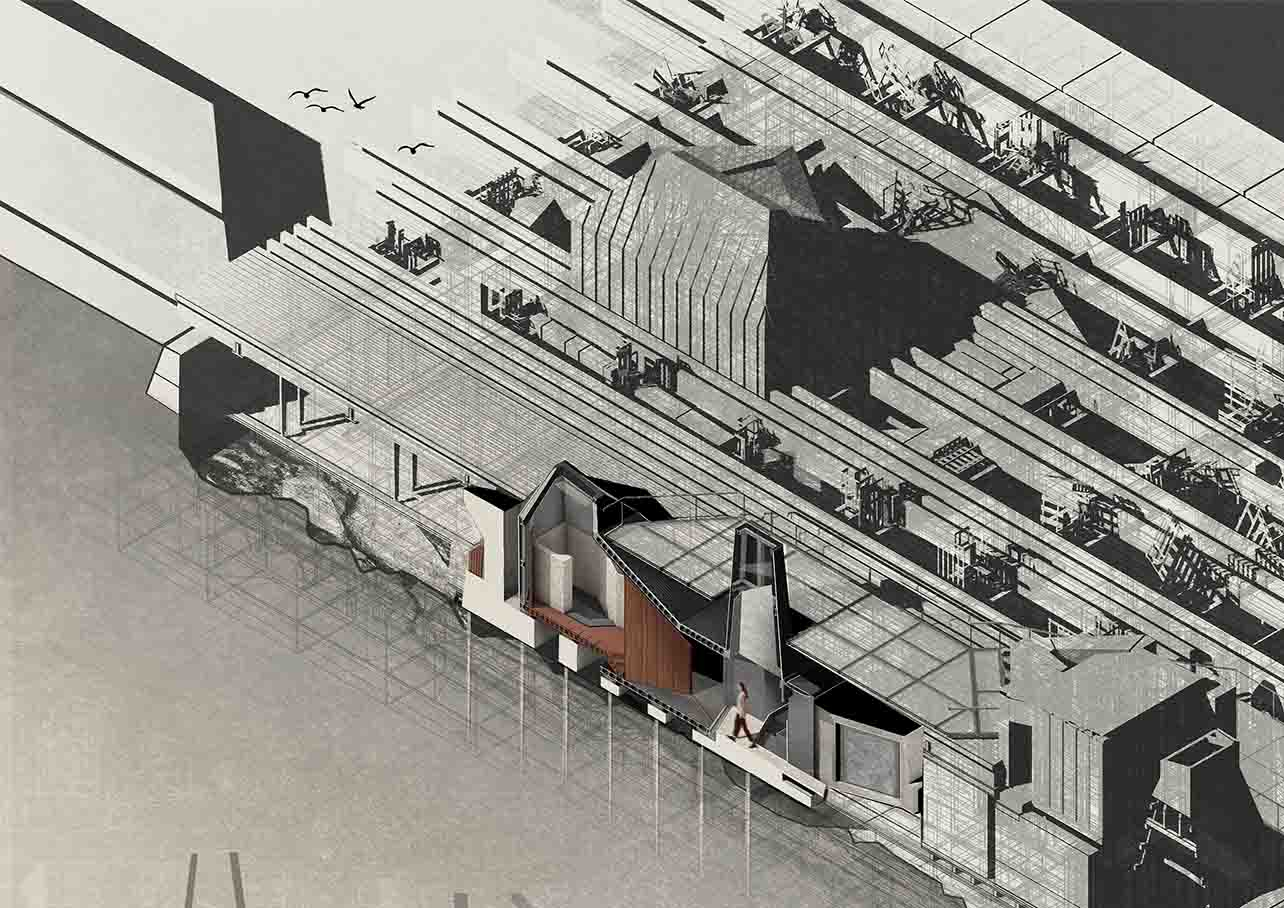
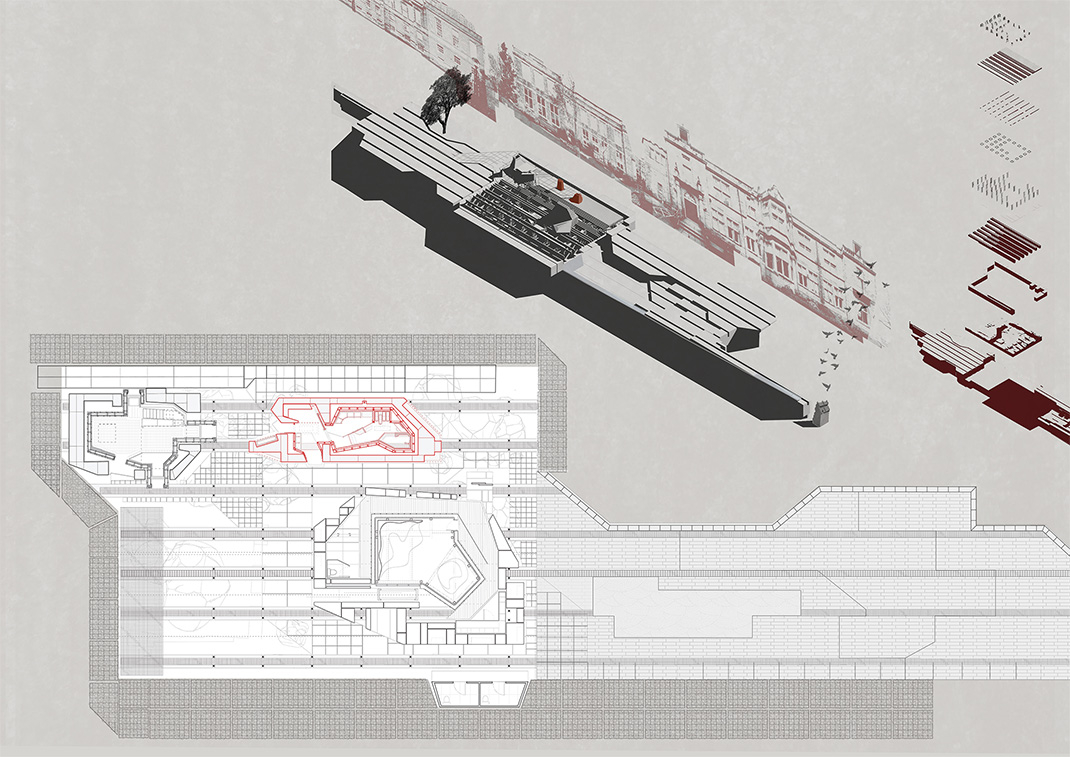
The Processional Gatehouse greets visitors, inviting them to explore and observe the extraordinary collection. Hidden inside, the Cabinet’s interior choreographs the transformation of users: from a member of public to scientist.
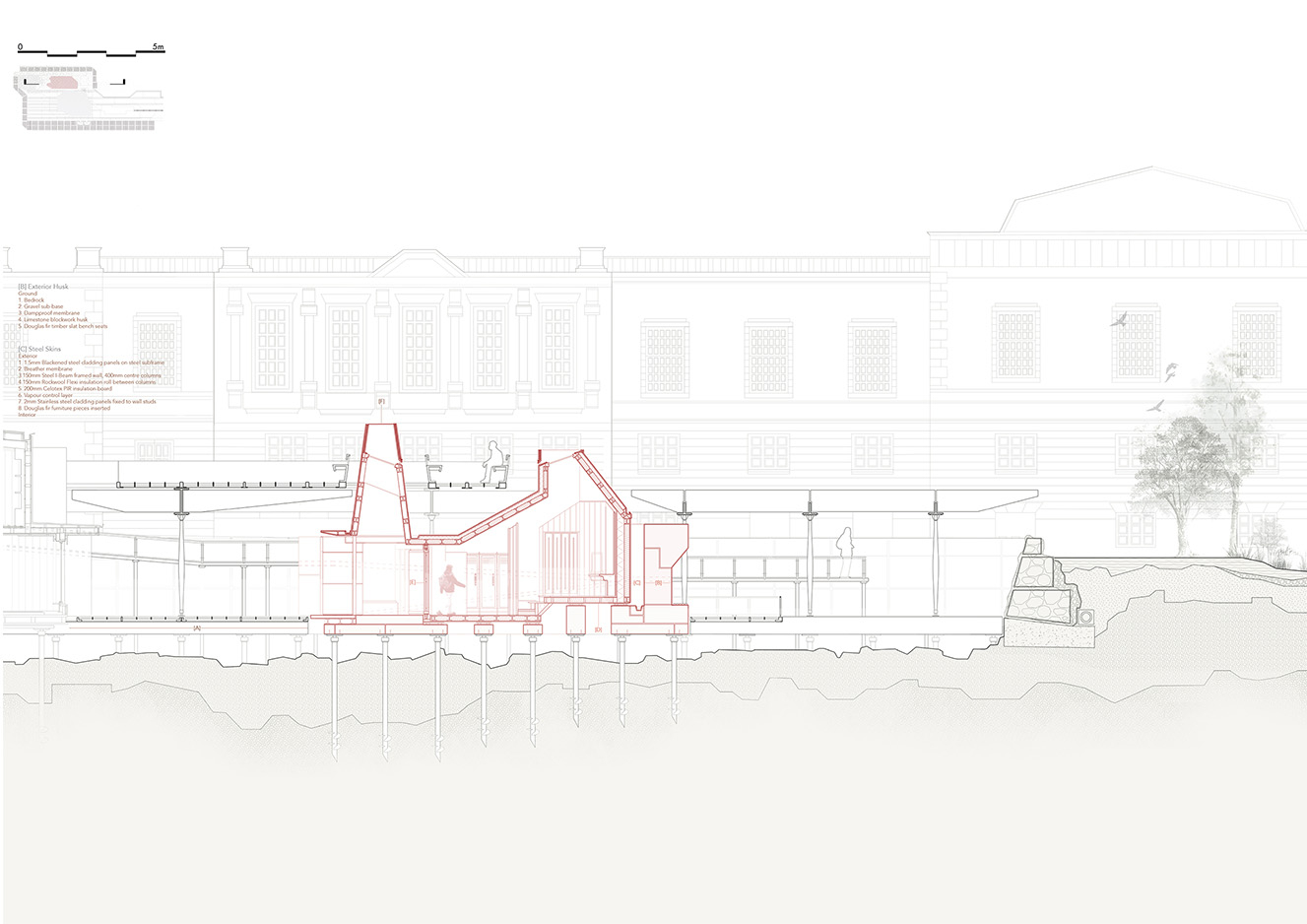
Moving through a thickened mass of limestone into a sheltered vestibule, the user is invited to pause and enjoy a moment of quiet before beginning their day of study. A pillar of light draws down, illuminating the stillness. Ahead, a tectonically weighted marble sliding door slab marks the threshold to the transformative space beyond.
The user steps into a realm of steel: cleanable and clinical - the first act in becoming the Scientist. They store their belongings in lockers, before continuing the ritual change. Deeper within, an articulated timber insert unfolds, forming a raised platform. Here is a marble-lined shower - the ultimate enclosure cradling the user when they are at their most vulnerable. Finally, adorned in a laboratory gown, the Scientist emerges, purified and prepared for study in Locus Vitreous.


Serena Arya

