Project description

Located in the centre of Grangemouth, the project transforms disused La Scala into a conservation centre and community healthcare facility, joined by a shared garden. In response to industrial pollution and the town’s loss of vitality through economic decline and demographic ageing, the intervention offers a place for collective support and renewal. 

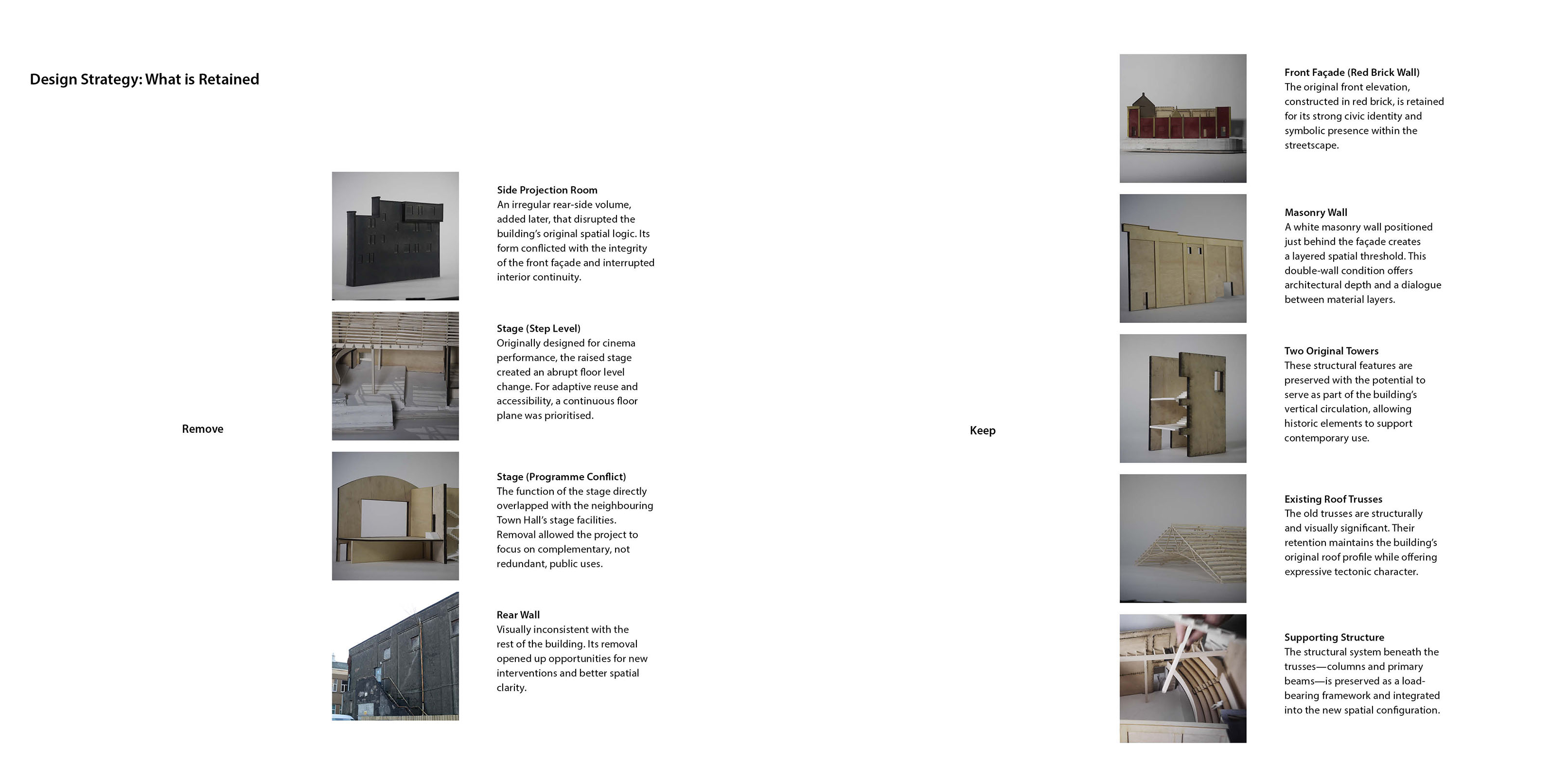
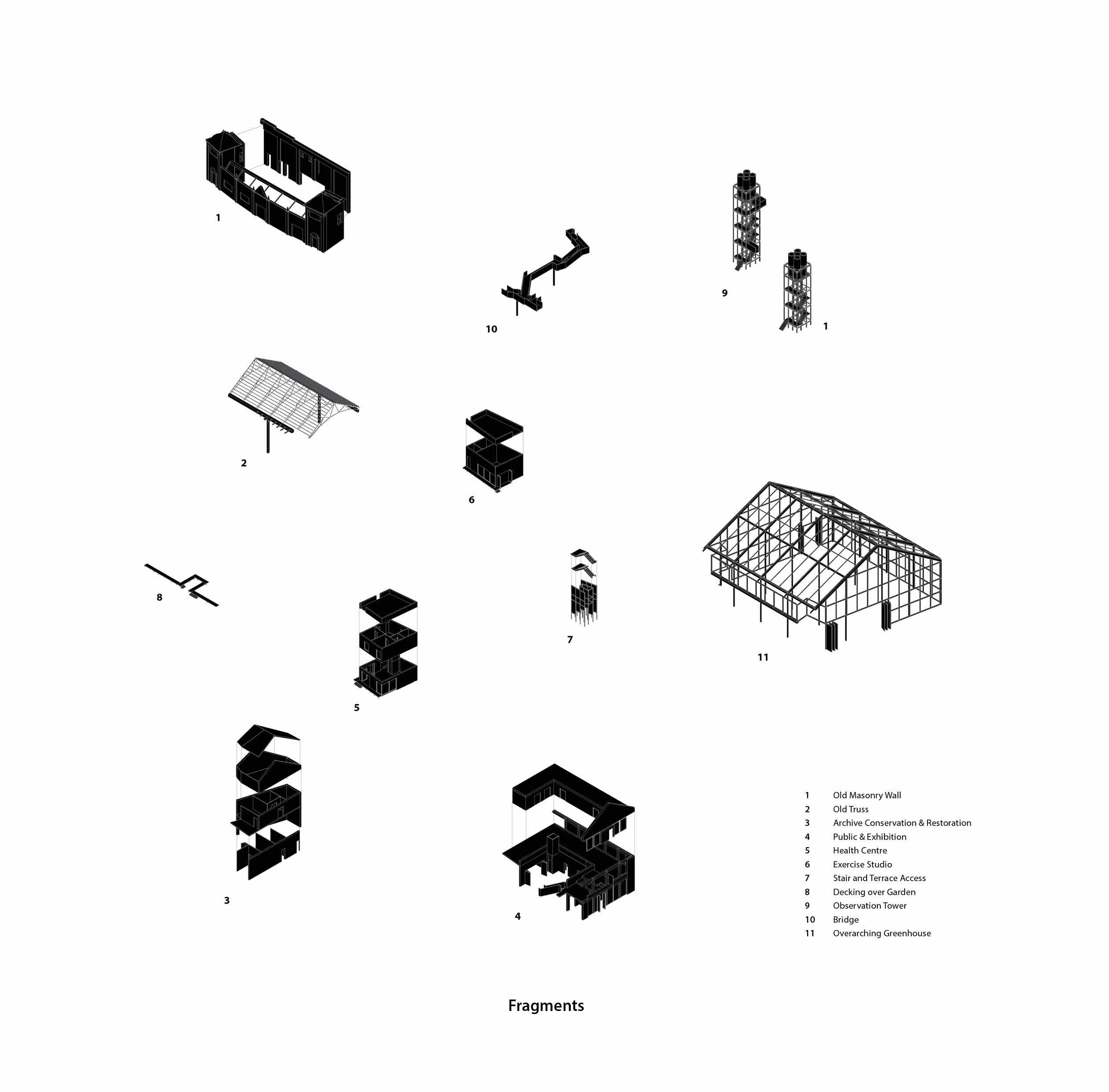
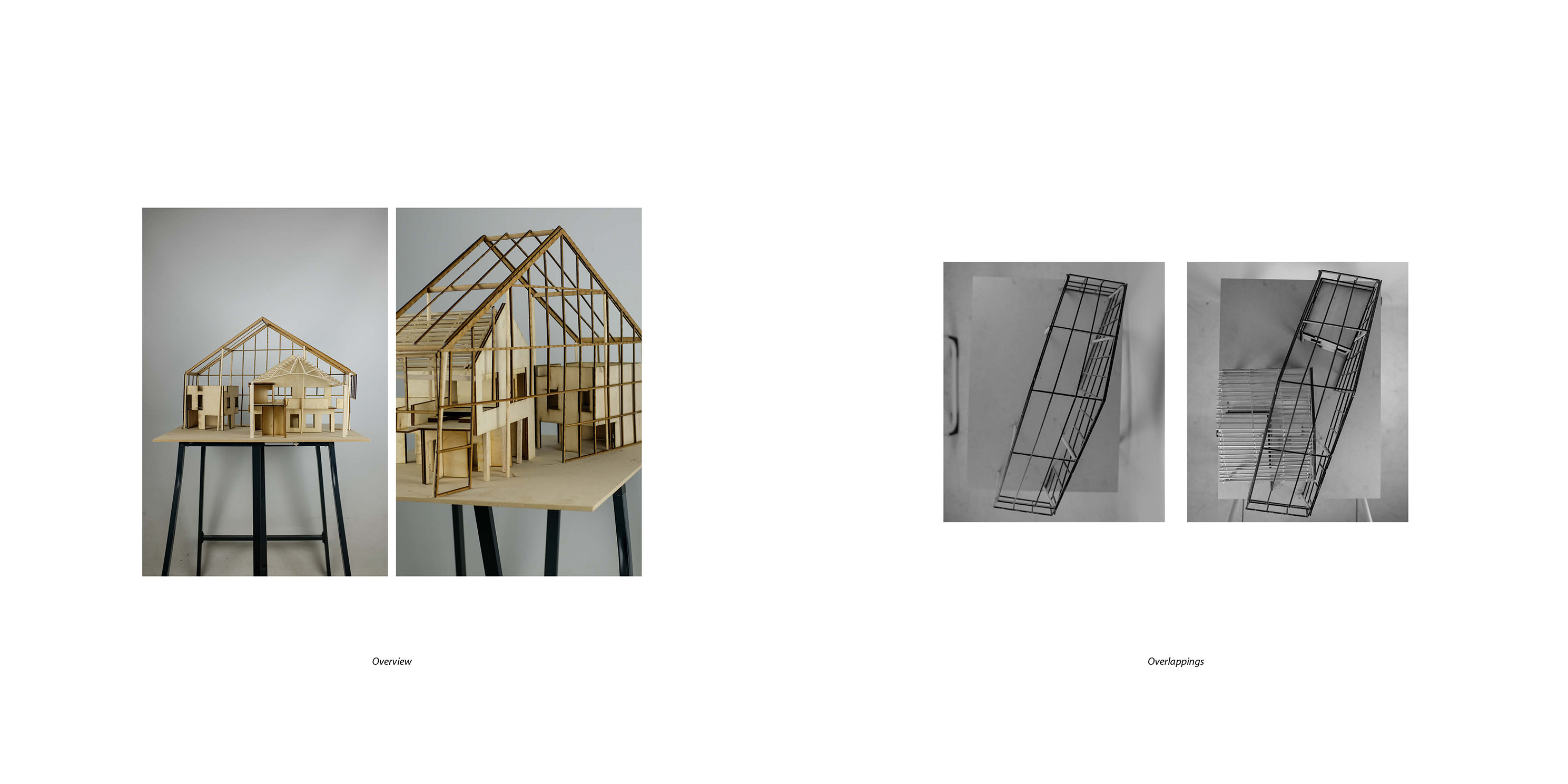
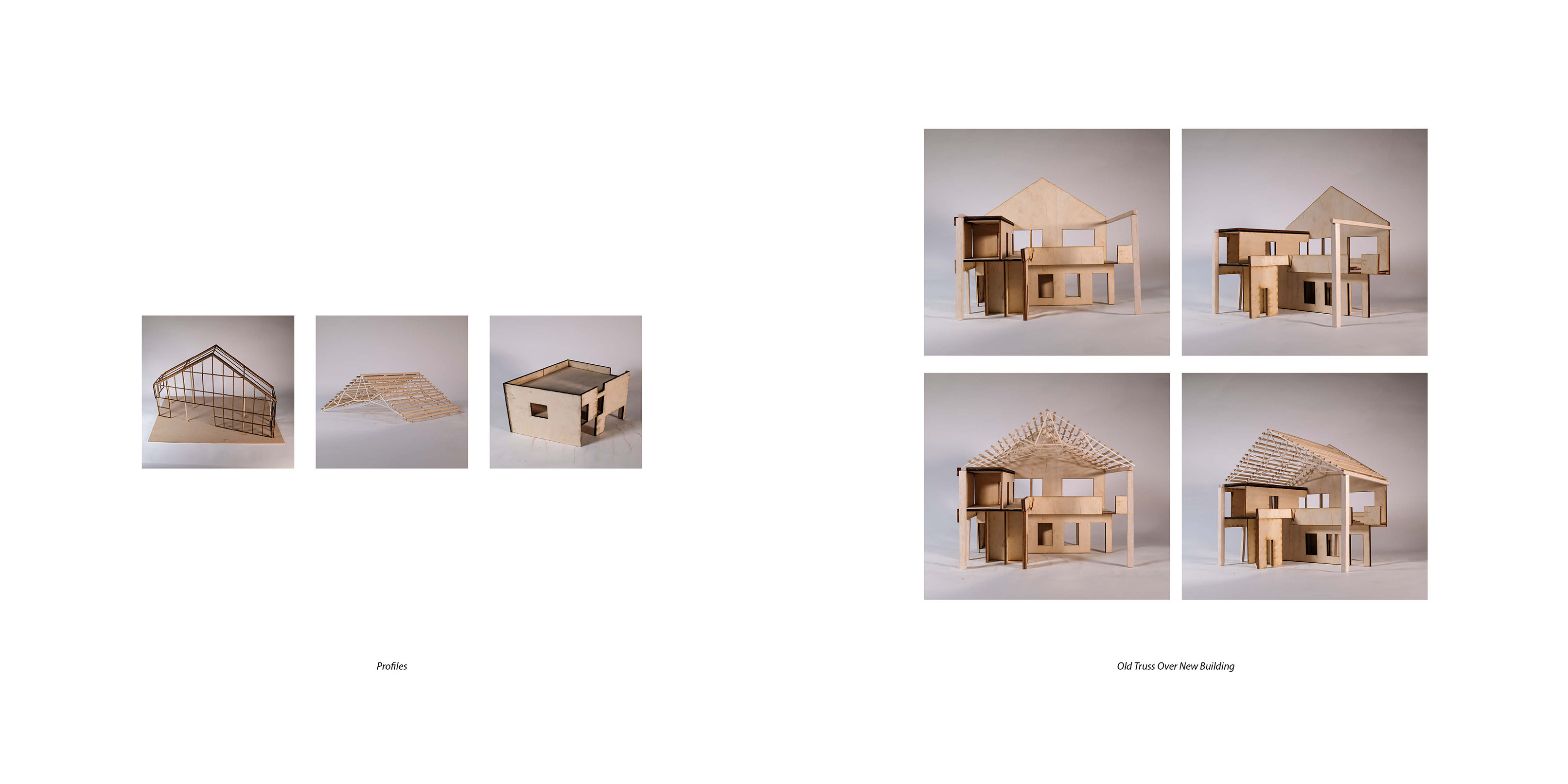
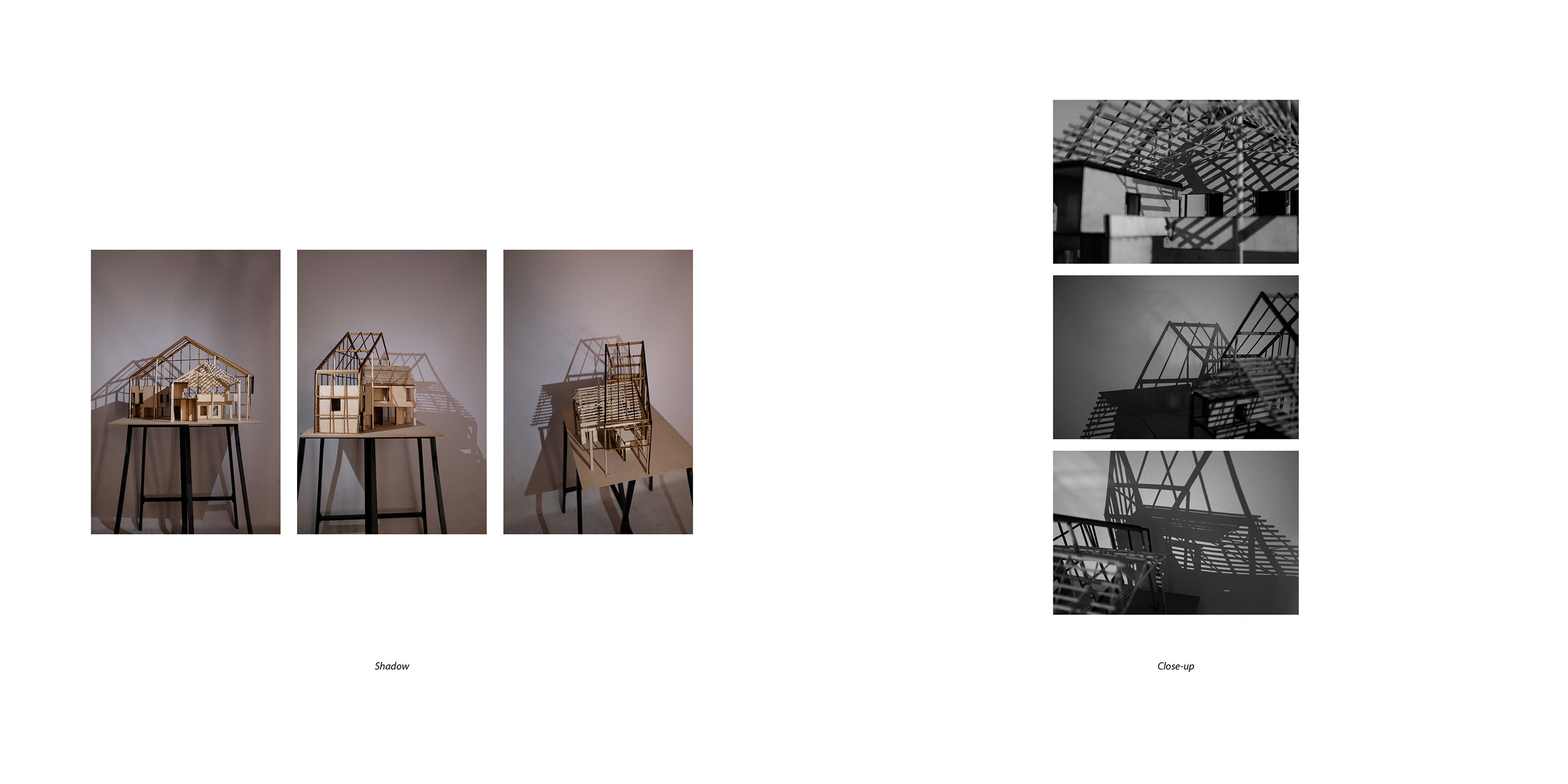
At the heart of the project is an anatomy of misplacement -- a spatial narrative composed through deliberate offsets, quiet misalignments, and moments of tension between past and present, enclosure and openness. These in-between conditions shape how spaces are encountered and remembered. The original masonry façade and roof trusses are retained as anchors of memory. Around them, eleven distinct volumes are arranged, each assuming a specific narrative role: preservation, encounter, or regeneration.

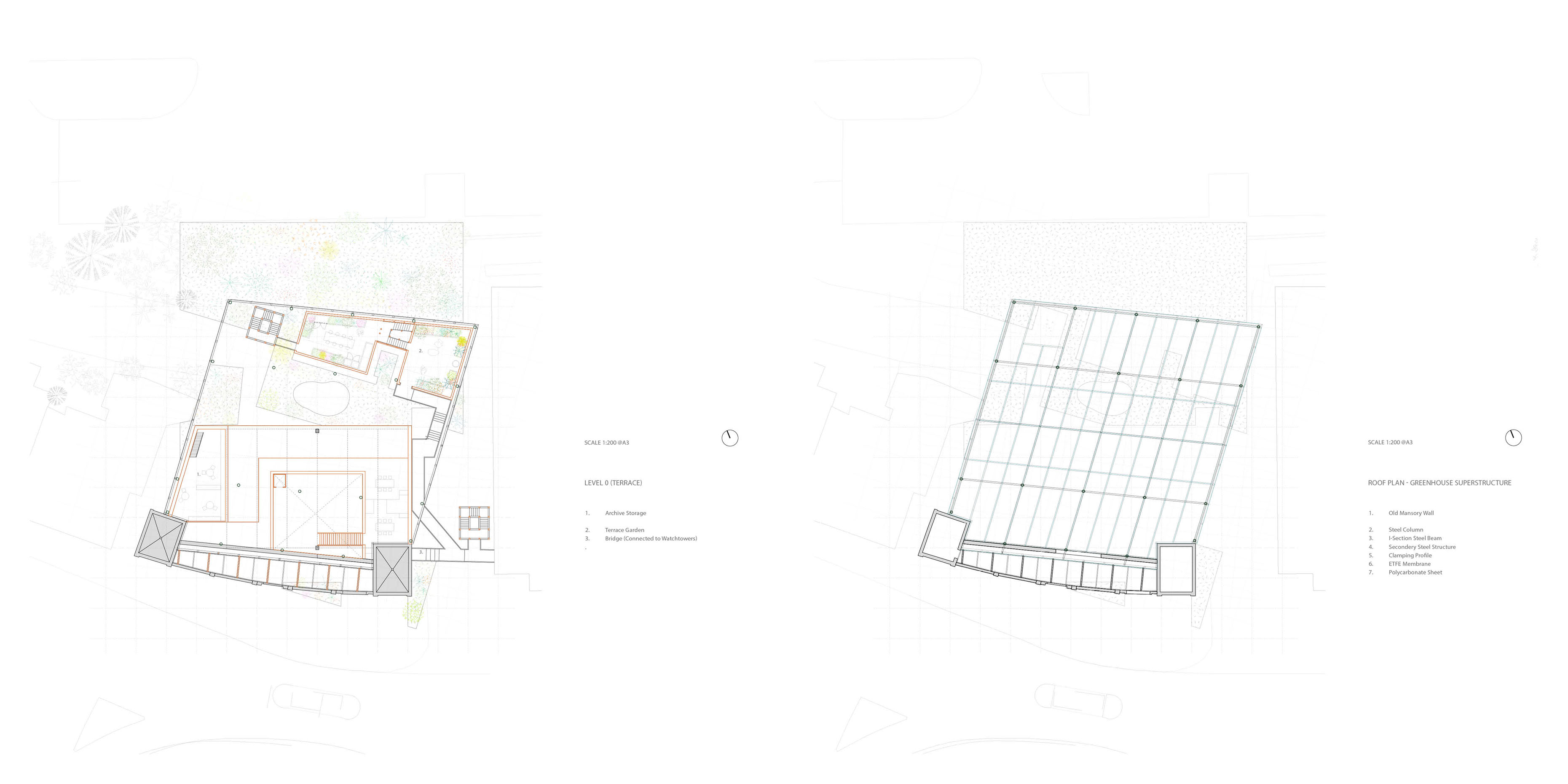
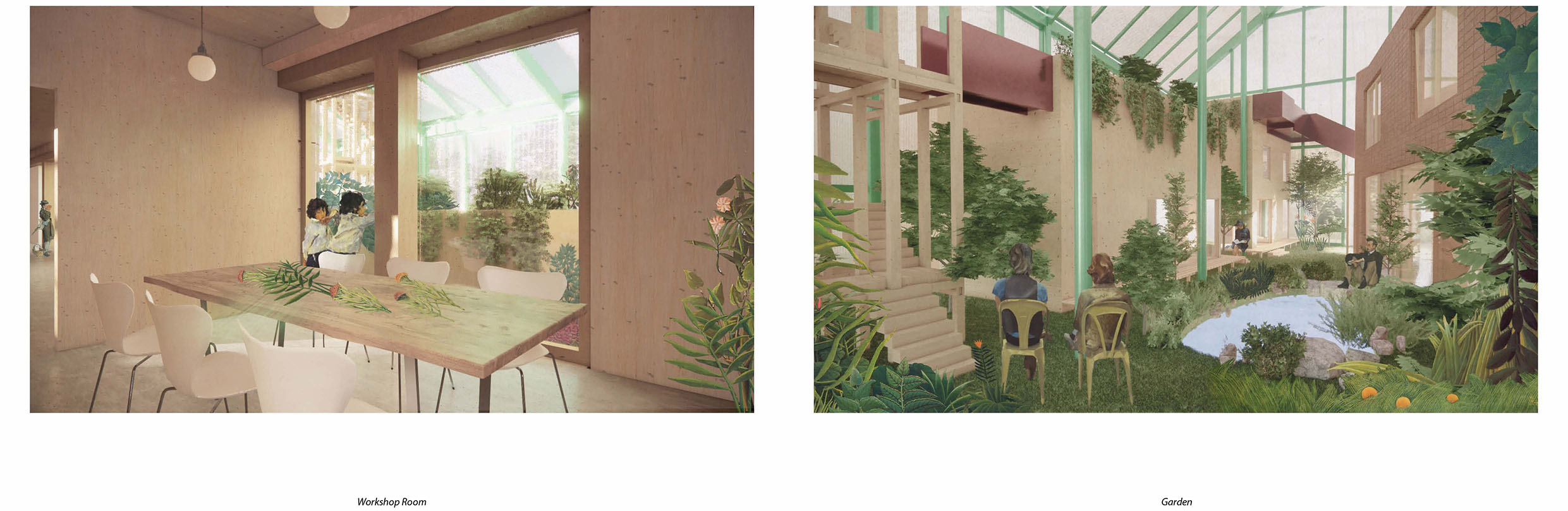
Circulation is choreographed through a sequence of grounded programmatic spaces and elevated bridges and platforms for retreat and observation. A translucent greenhouse shell encloses the site, creating a tempered microclimate while integrating diverse uses. The garden connects the archive, healthcare, and public life, supporting biodiversity through native species, edible planting, and passive water systems. Rather than restoring a singular past, the design proposes layered cohabitation -- social, ecological, and temporal.
Casting: Tectonic Interpretations

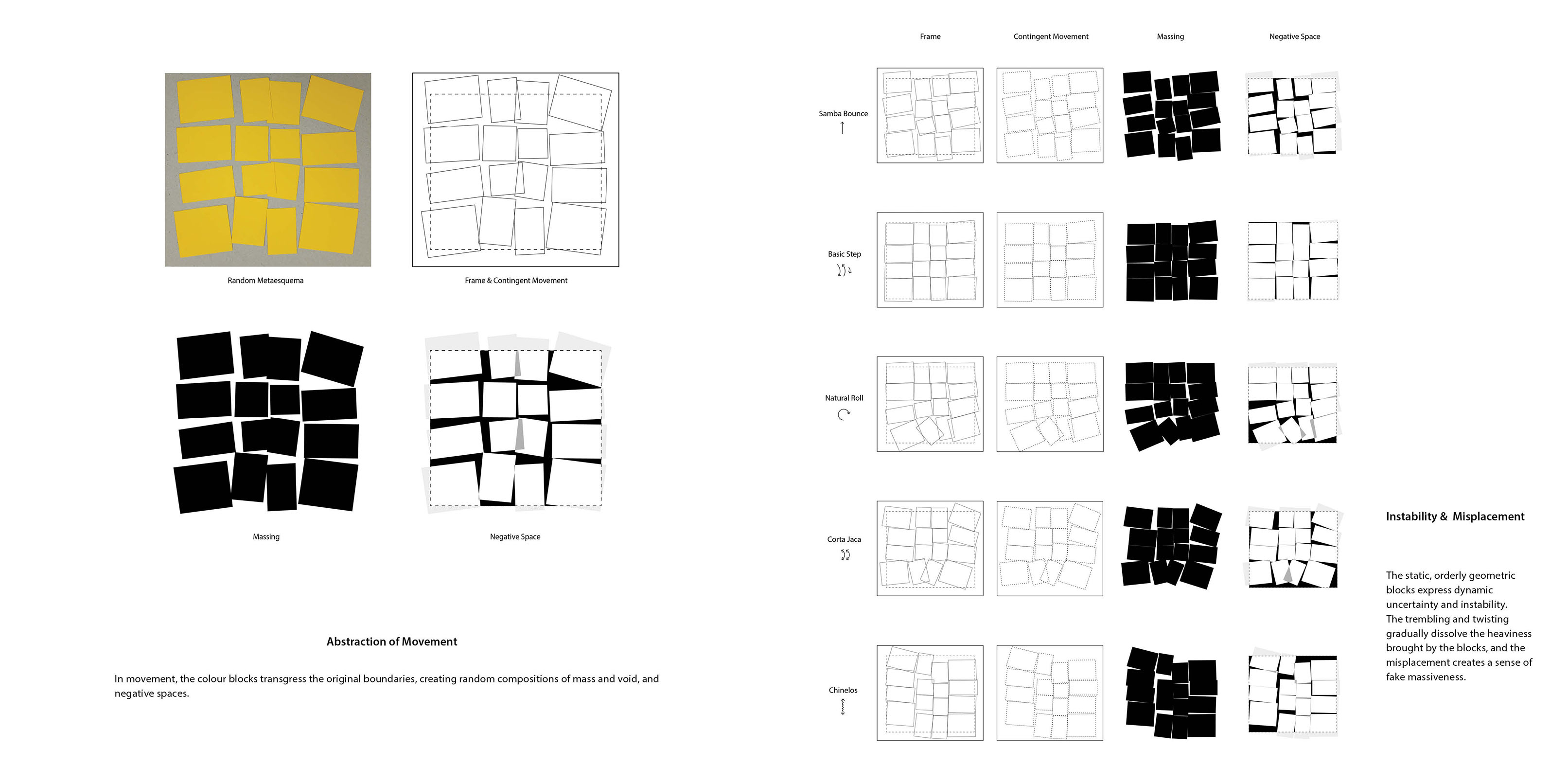
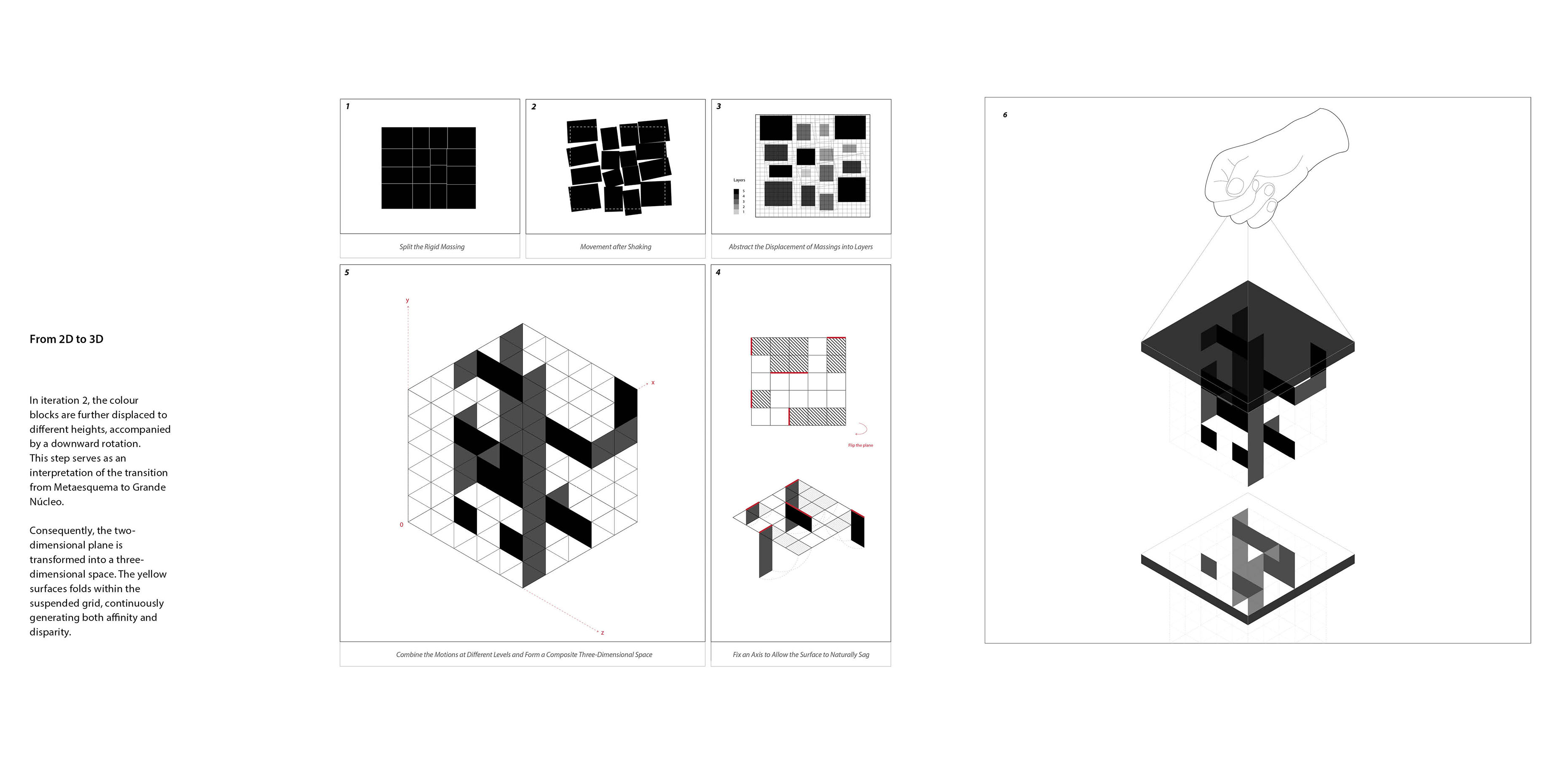
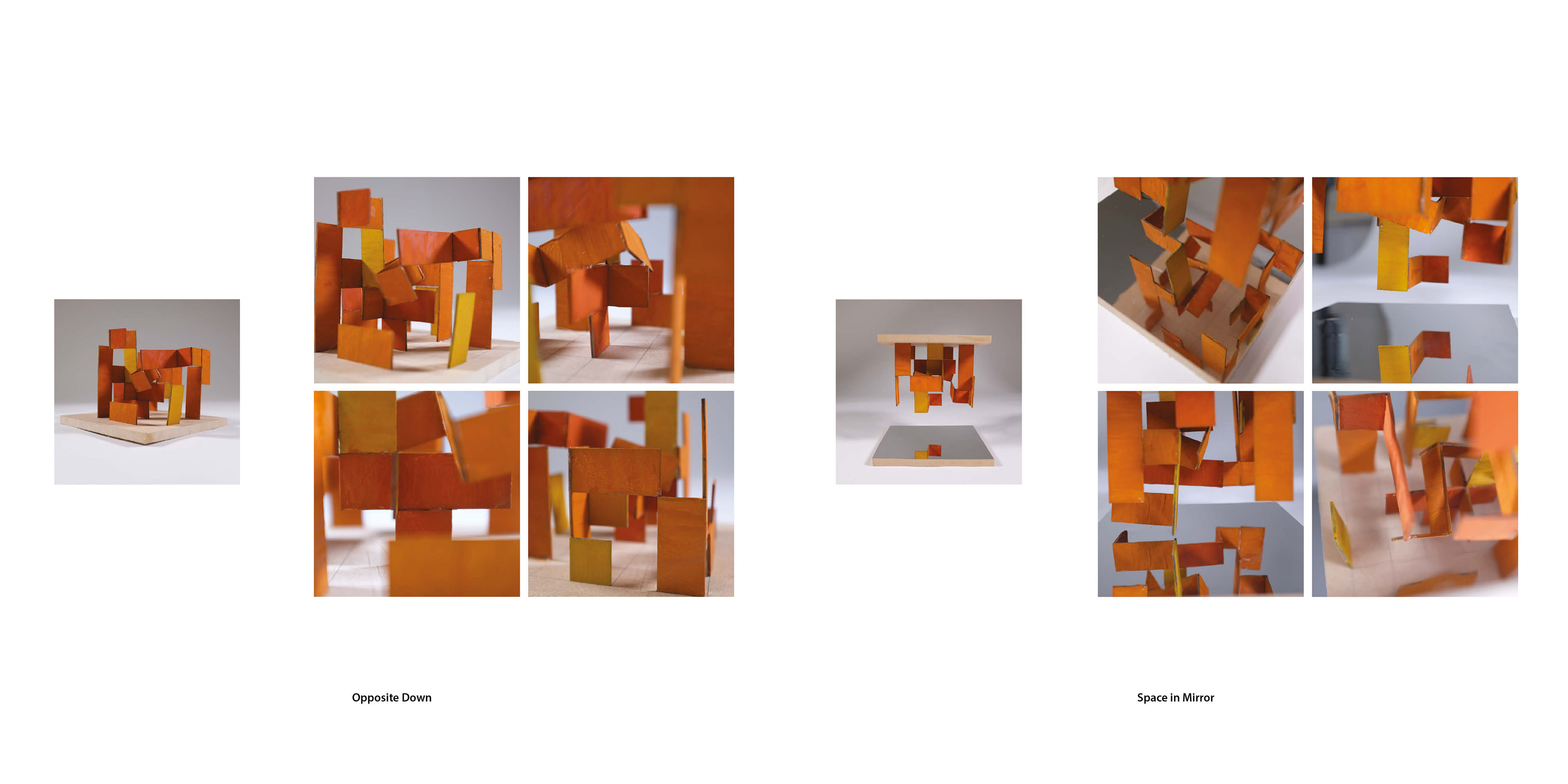
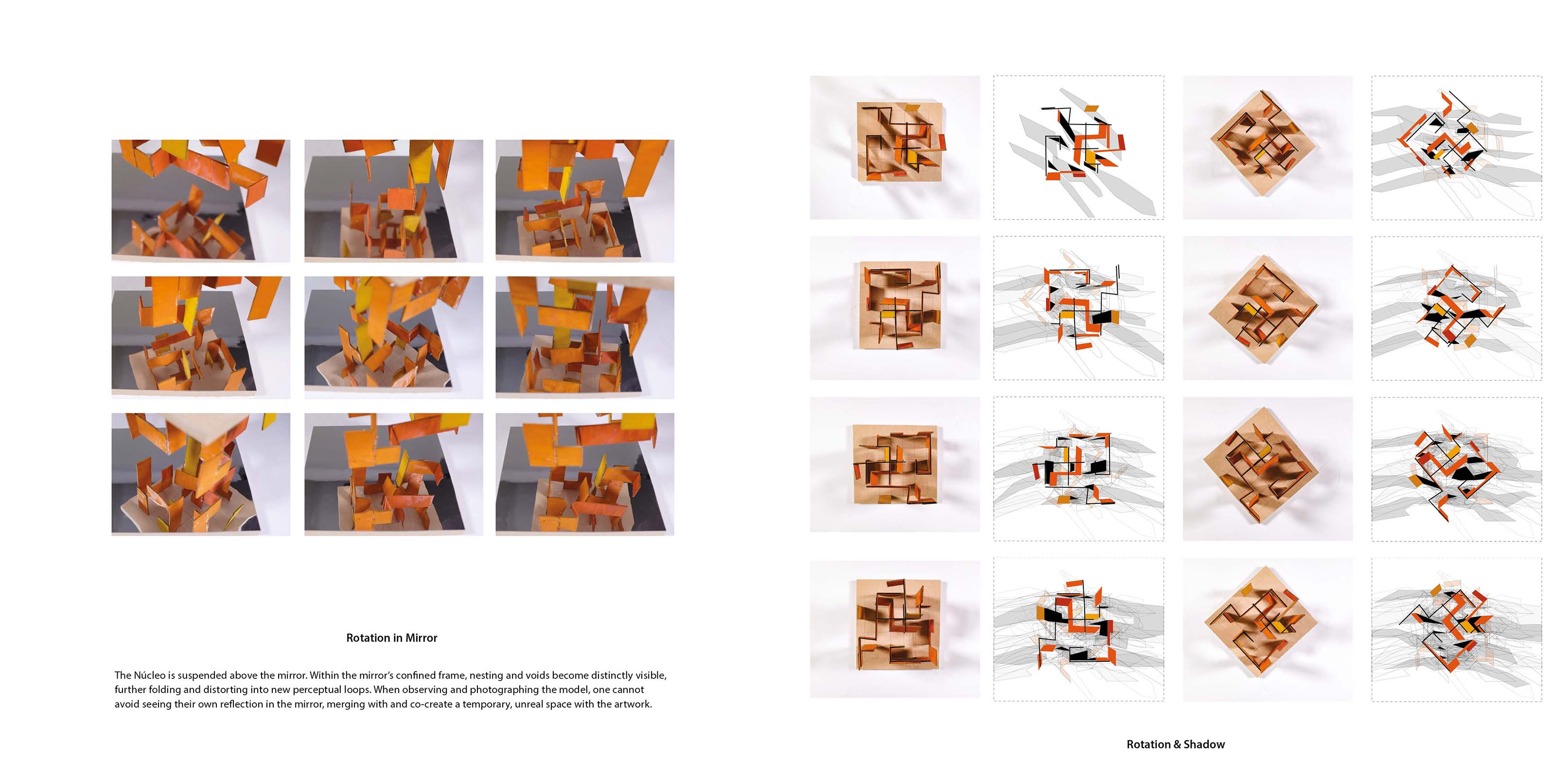
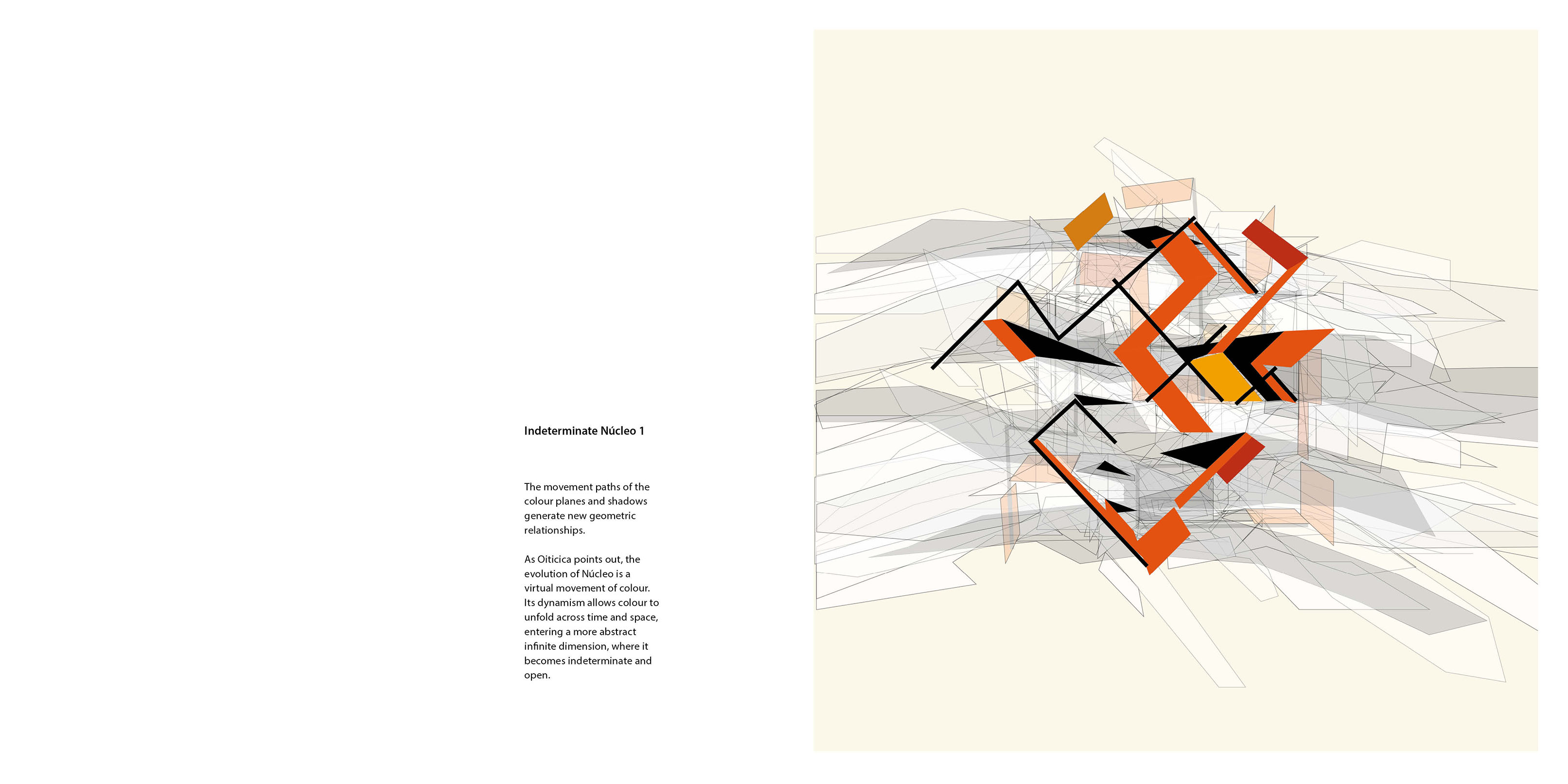
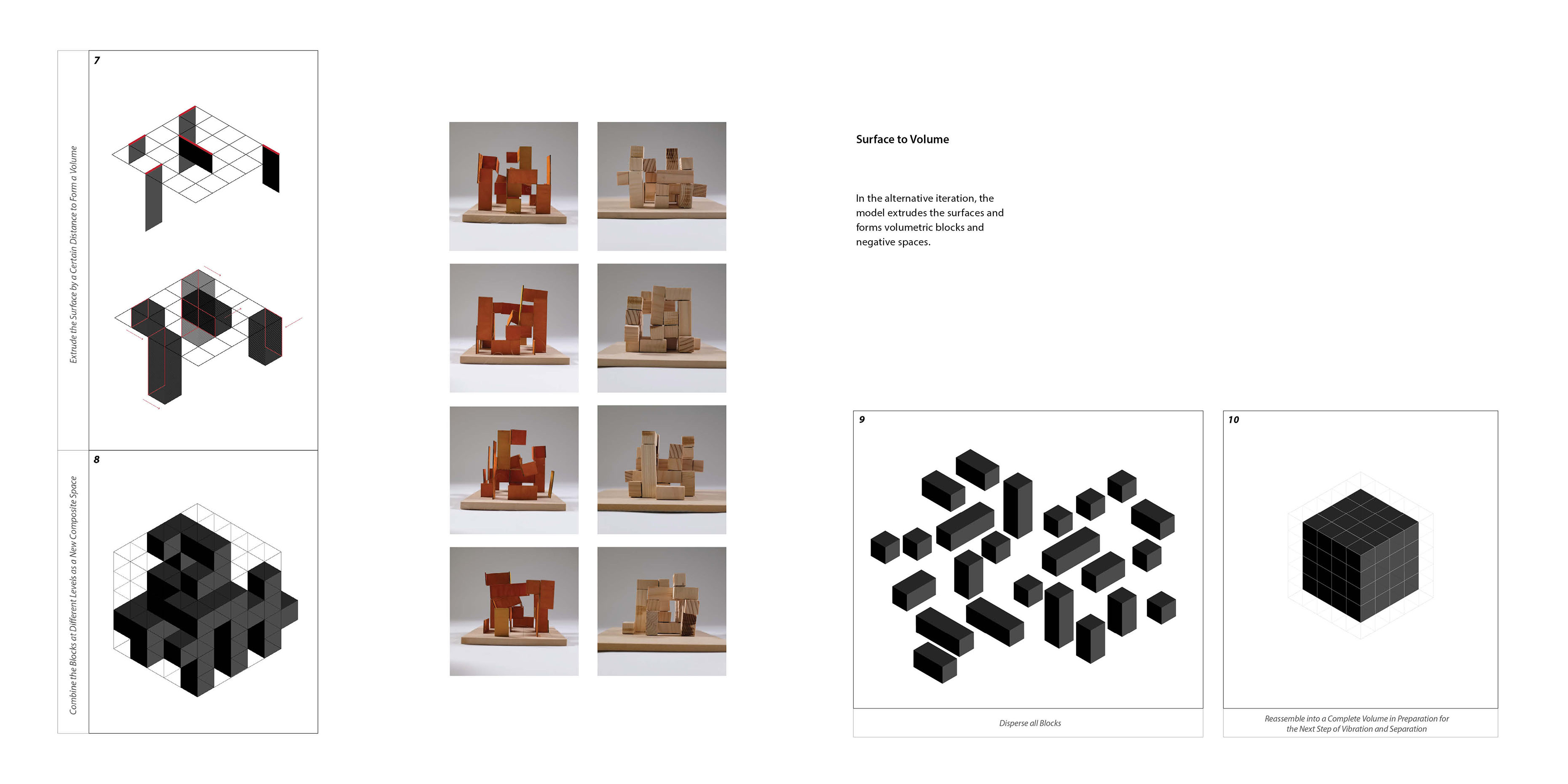
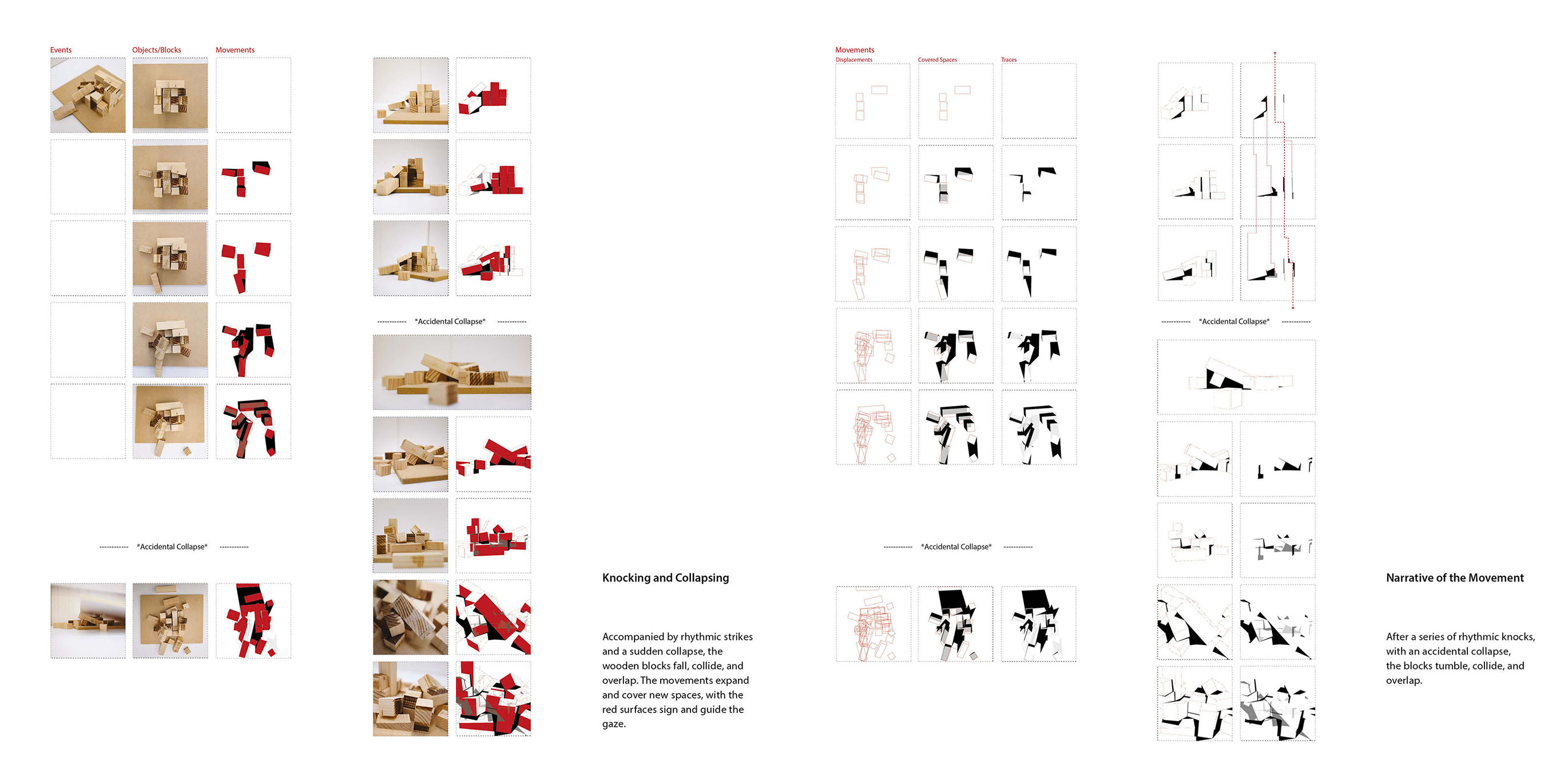
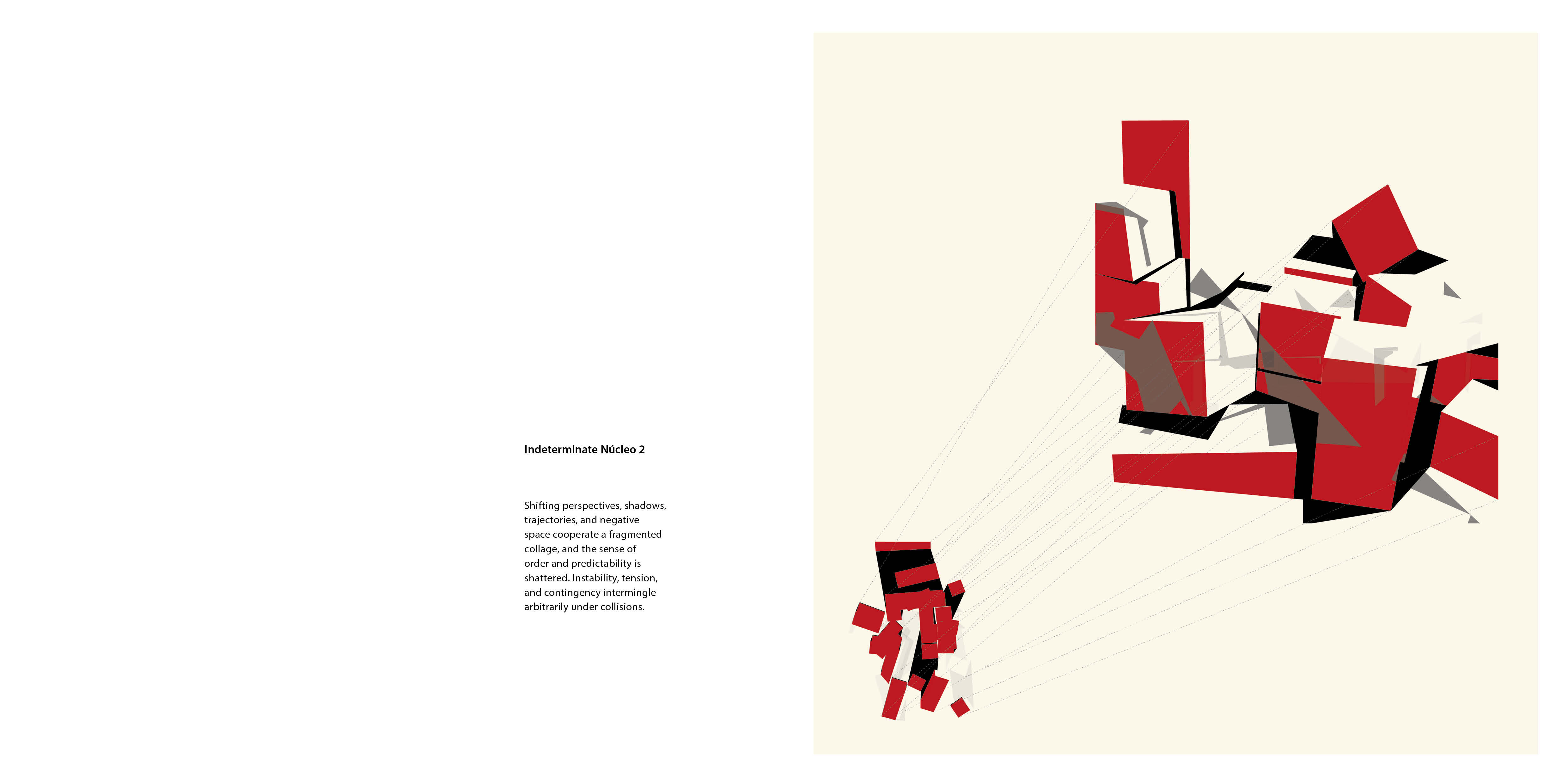
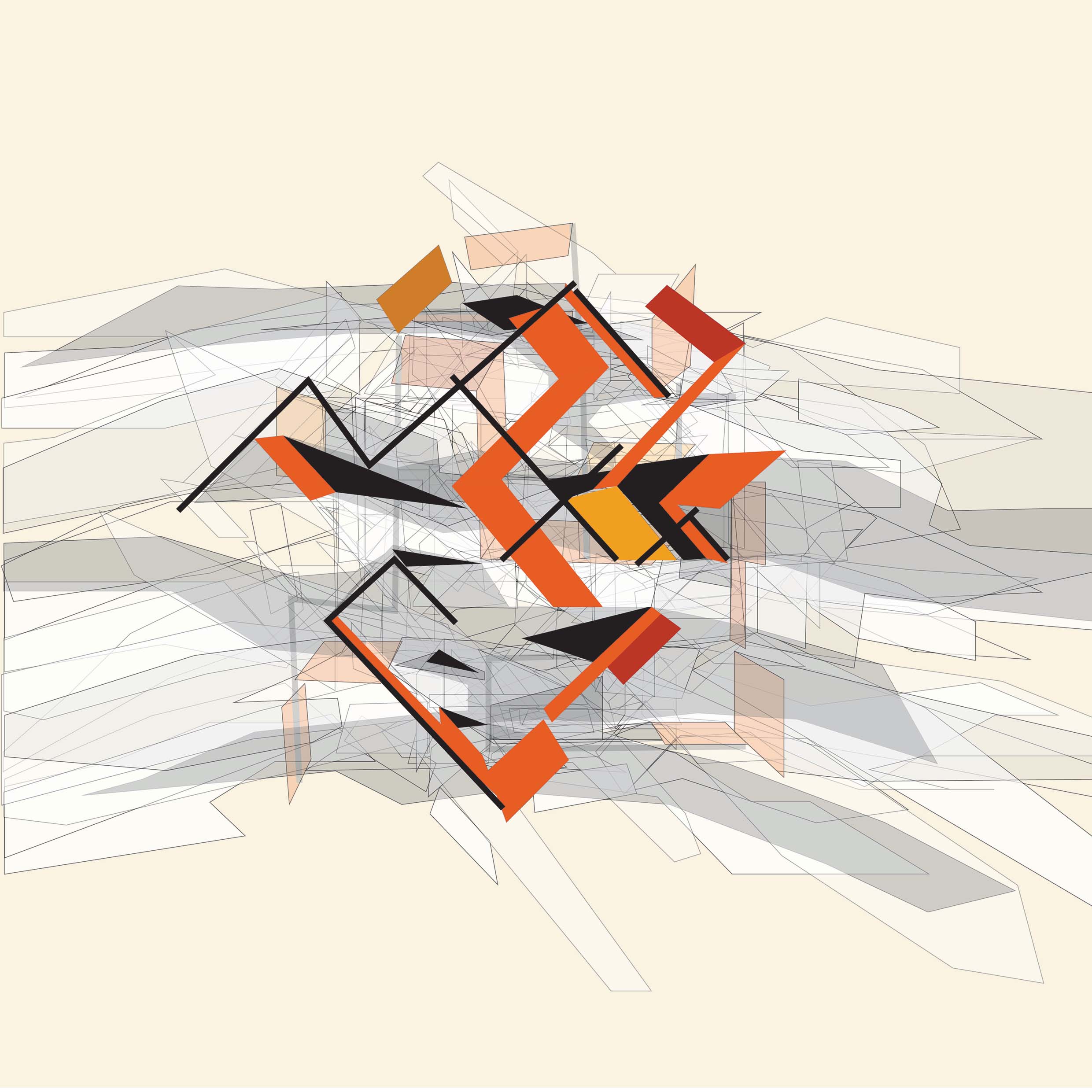
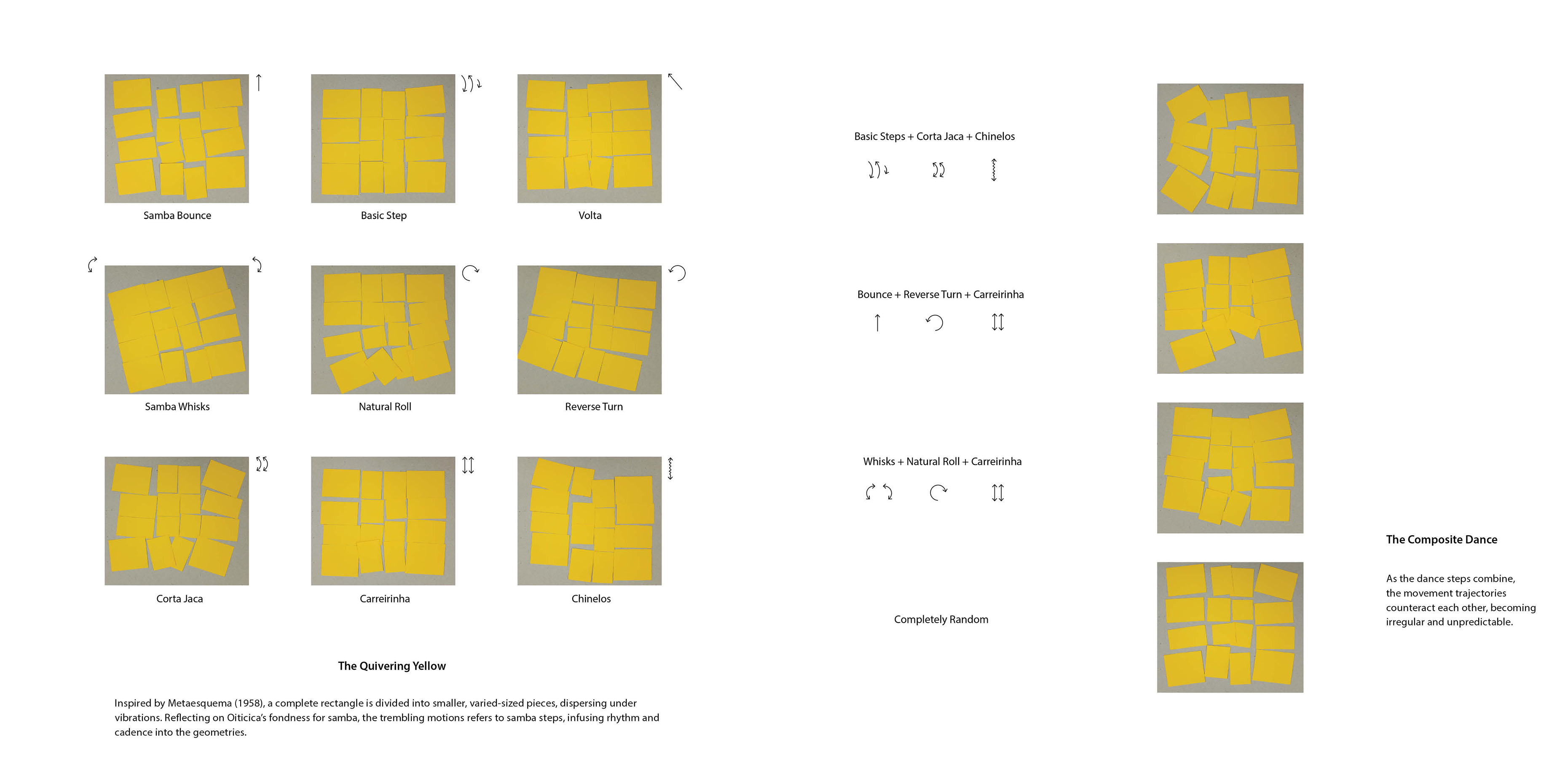
The tectonic exploration was derived from artist Hélio Oiticica and his works. Hélio Oiticica consistently revolves around colour, geometry, distortion, anti-order, and instability. Focused on two of his works, Metaesquema and Grande Núcleo, the tectonic interpretation seeks to deconstruct Oiticica’s transition from two-dimensional to three-dimensional forms, while further expanding upon the themes of movement, distortion, contingency, and instability inherent in his work. Geometric forms, structure, and spatial relationships interact with one another, while colour flows across different surfaces and spaces, generating a dynamic and immersive ambience.

Drawing, Indeterminate Núcleo 1
Scene One: Site studies

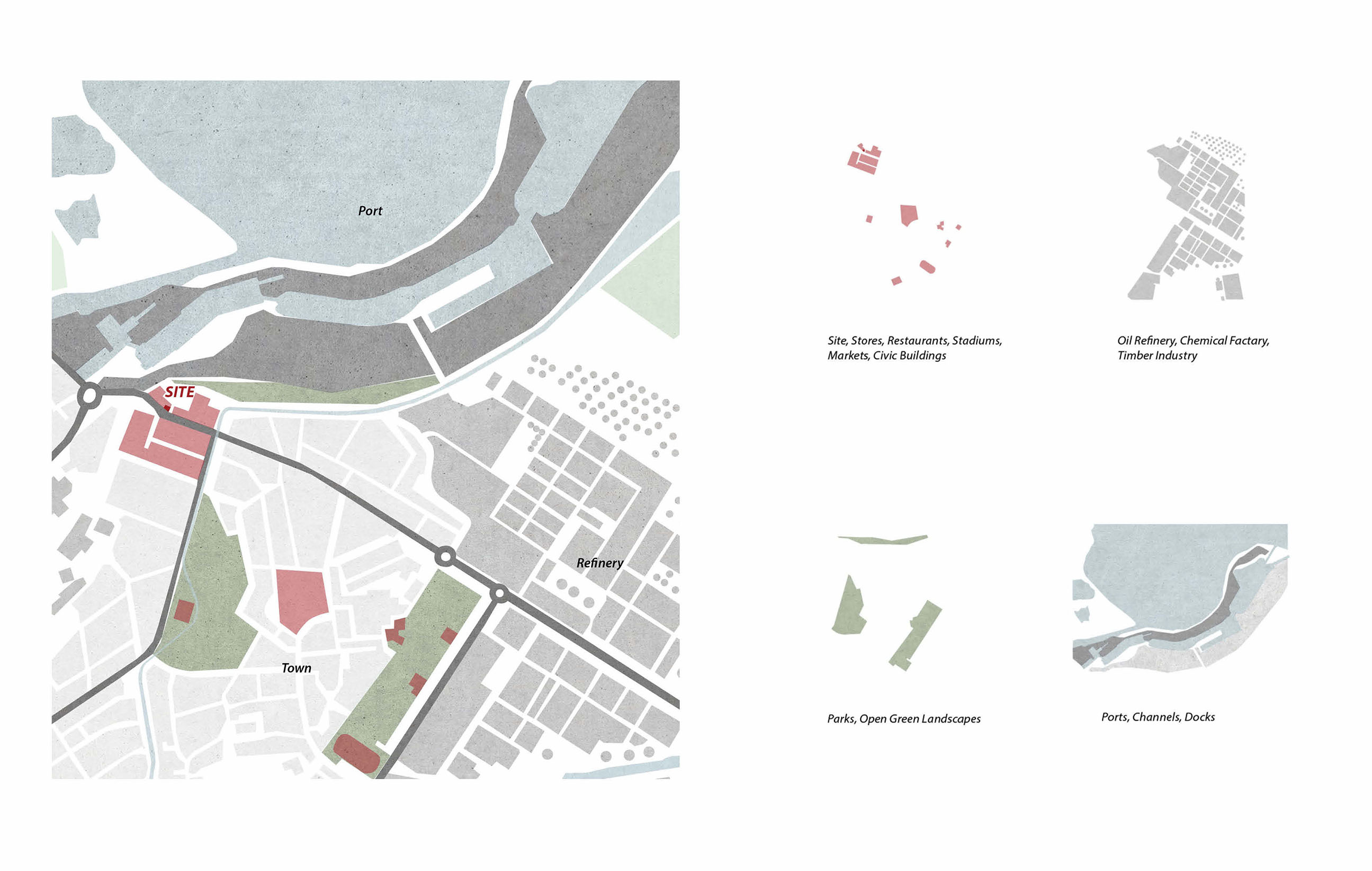
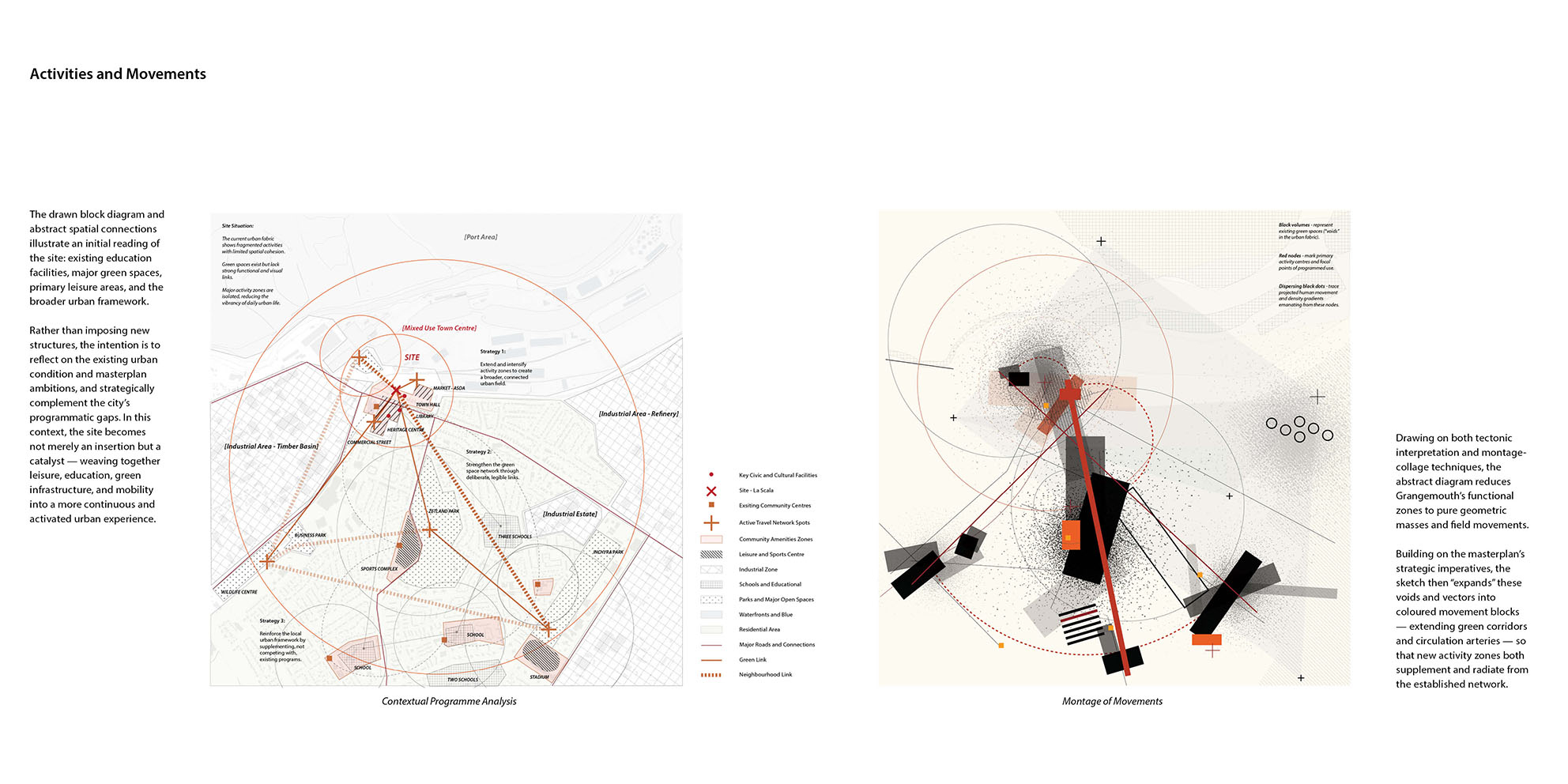
The project locates at the centre of Grangemouth, a coastal industrial town in Scotland shaped by the presence of oil refineries and a sprawling port infrastructure. Grangemouth unfolds as a town shaped by three distinct yet entangled conditions. The Town – a residential grid in gradual decline, marked by economic fragility, population loss, and a disconnection from both its industrial and natural edges. The Refinery – once the town’s economic engine, now a fading industrial monolith. The Port and Canal – historic arteries of trade and movement, now underutilised. This spatial triad embodies a paradox: each part is legible in isolation, yet they fail to function as a coherent whole.


site 1
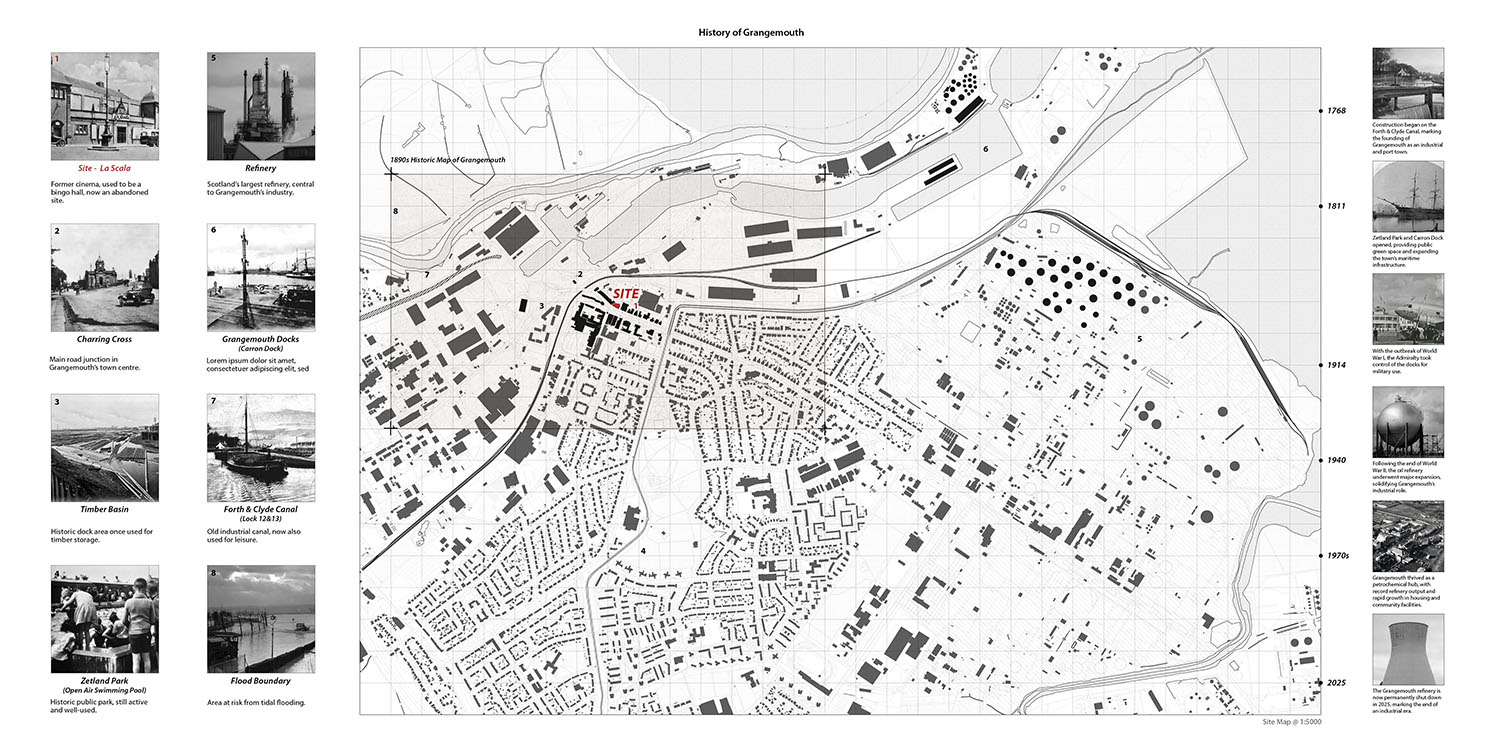
site history
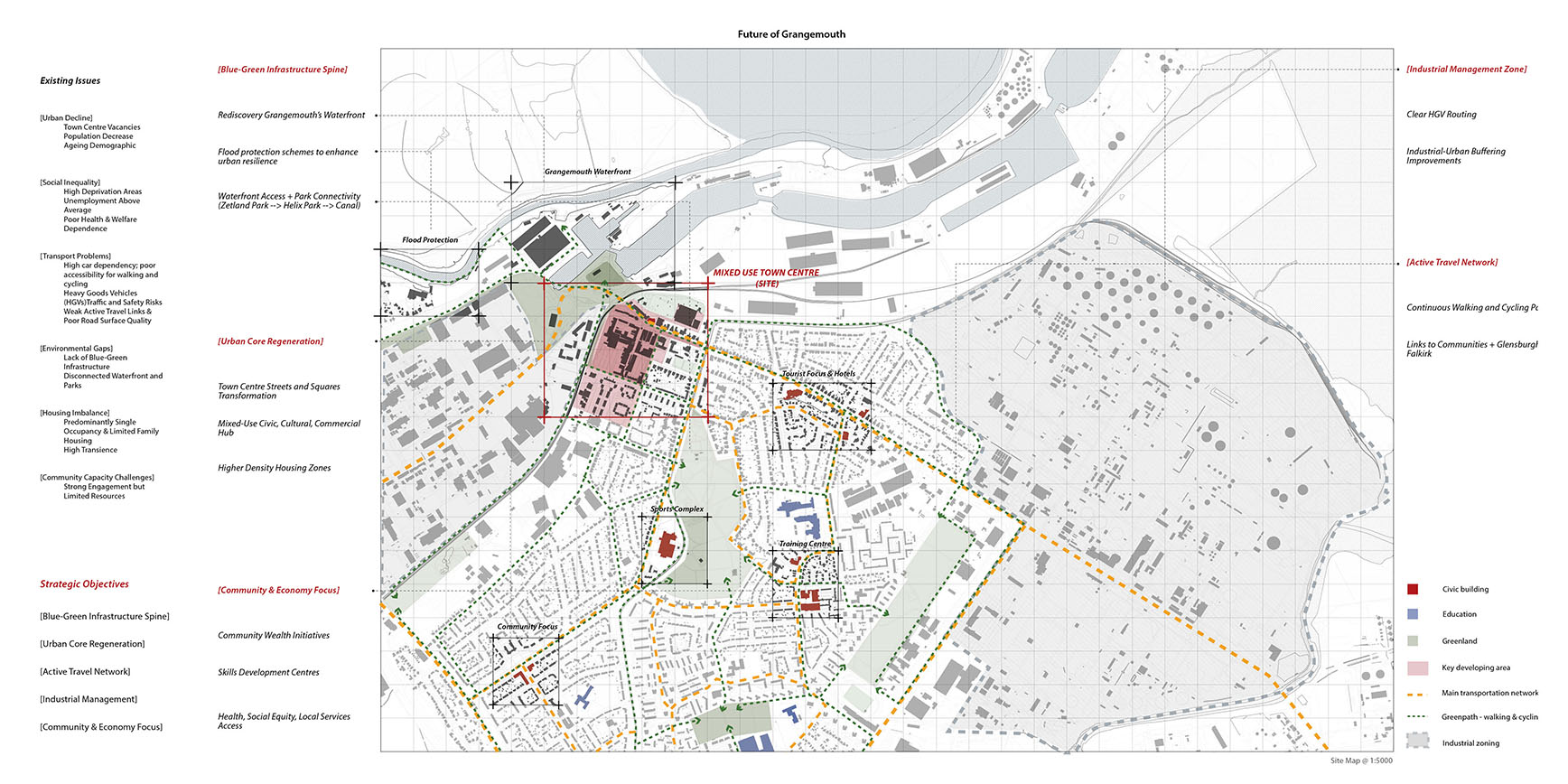
site future
Scene Two: Design Development

Structural, material, and environmental systems are not simply support mechanisms but are actively shaped by the project’s theme from the tectonic interpretation: Movement, Misplacement, and Interaction.

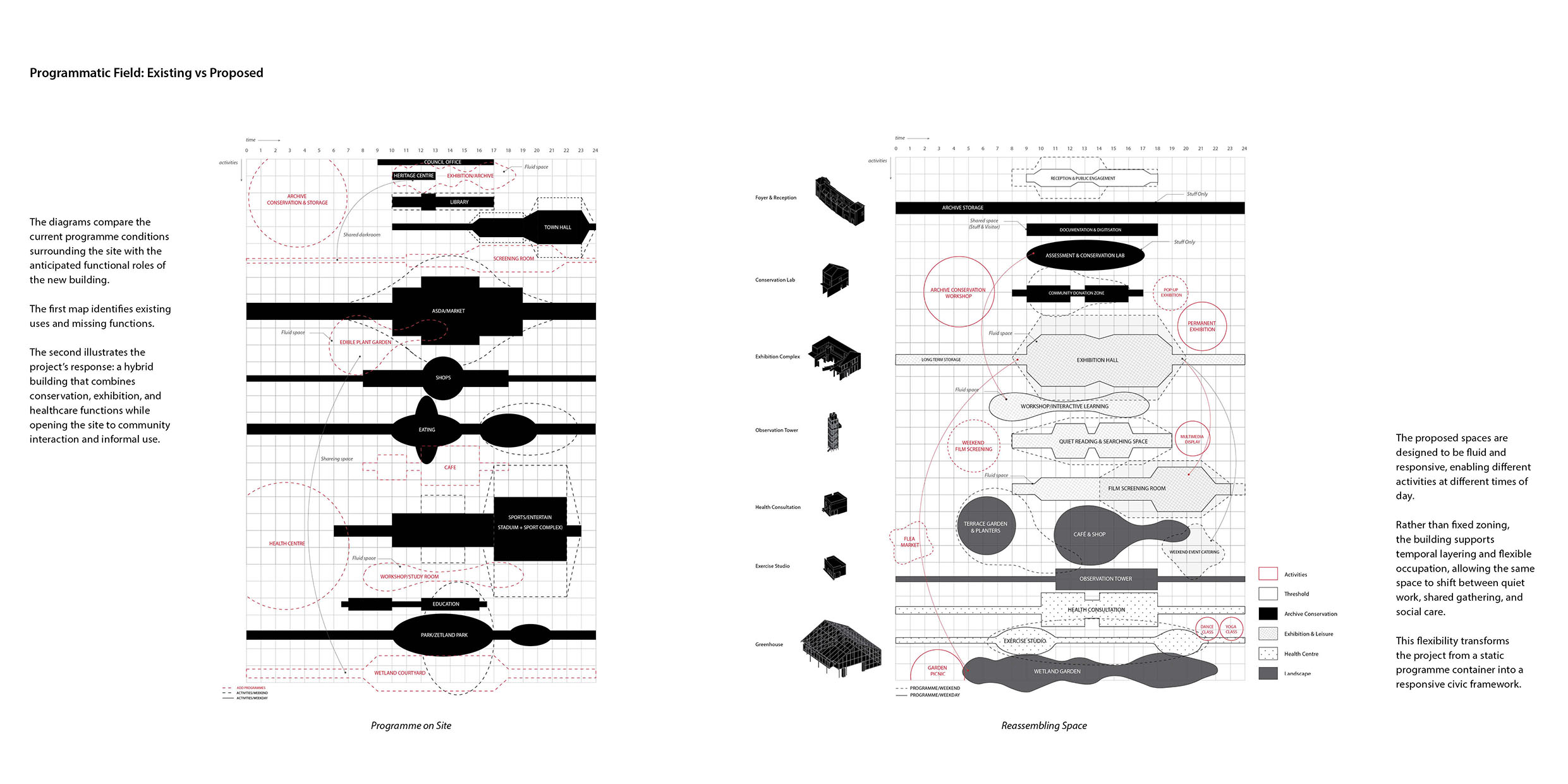
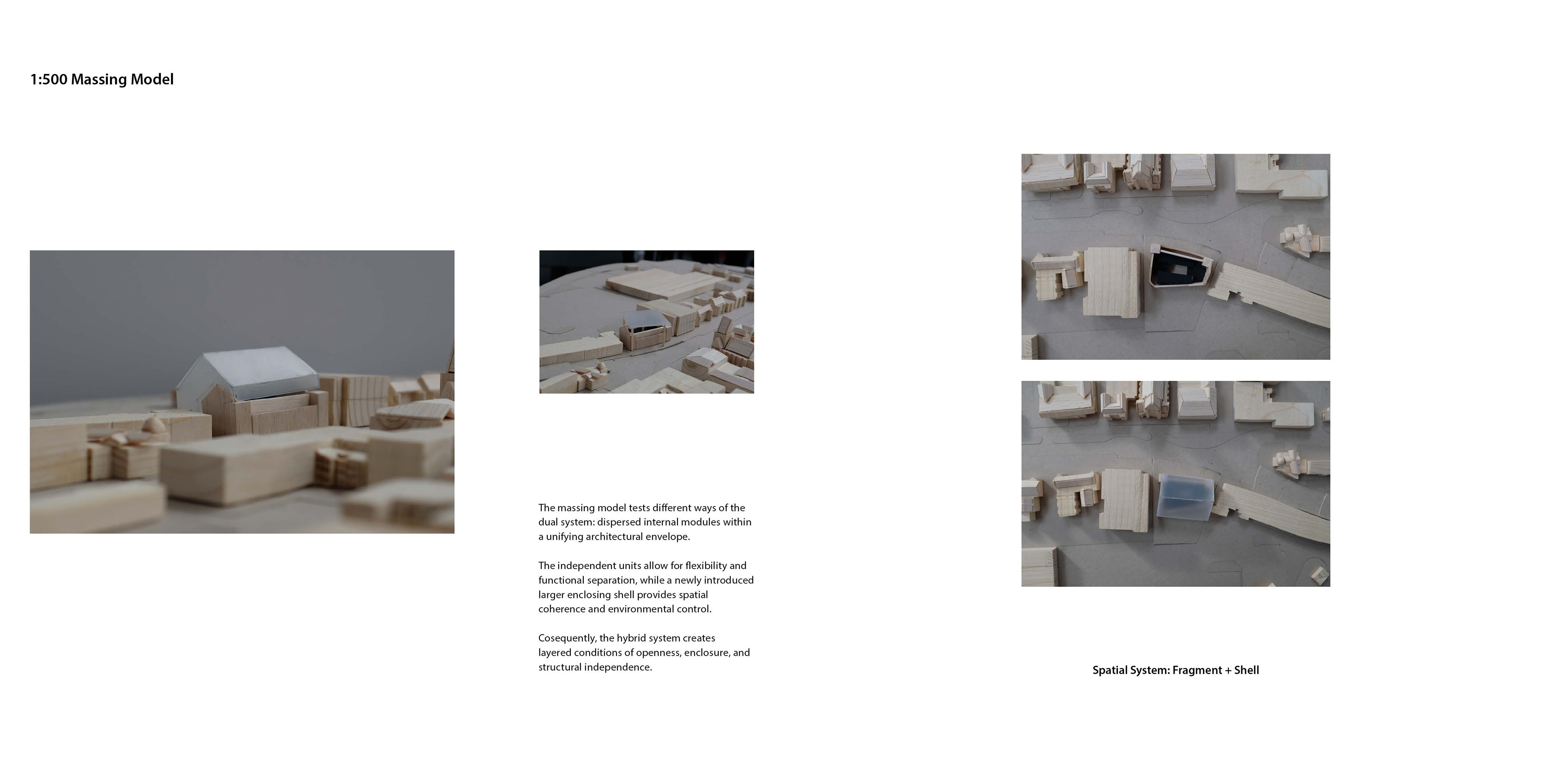
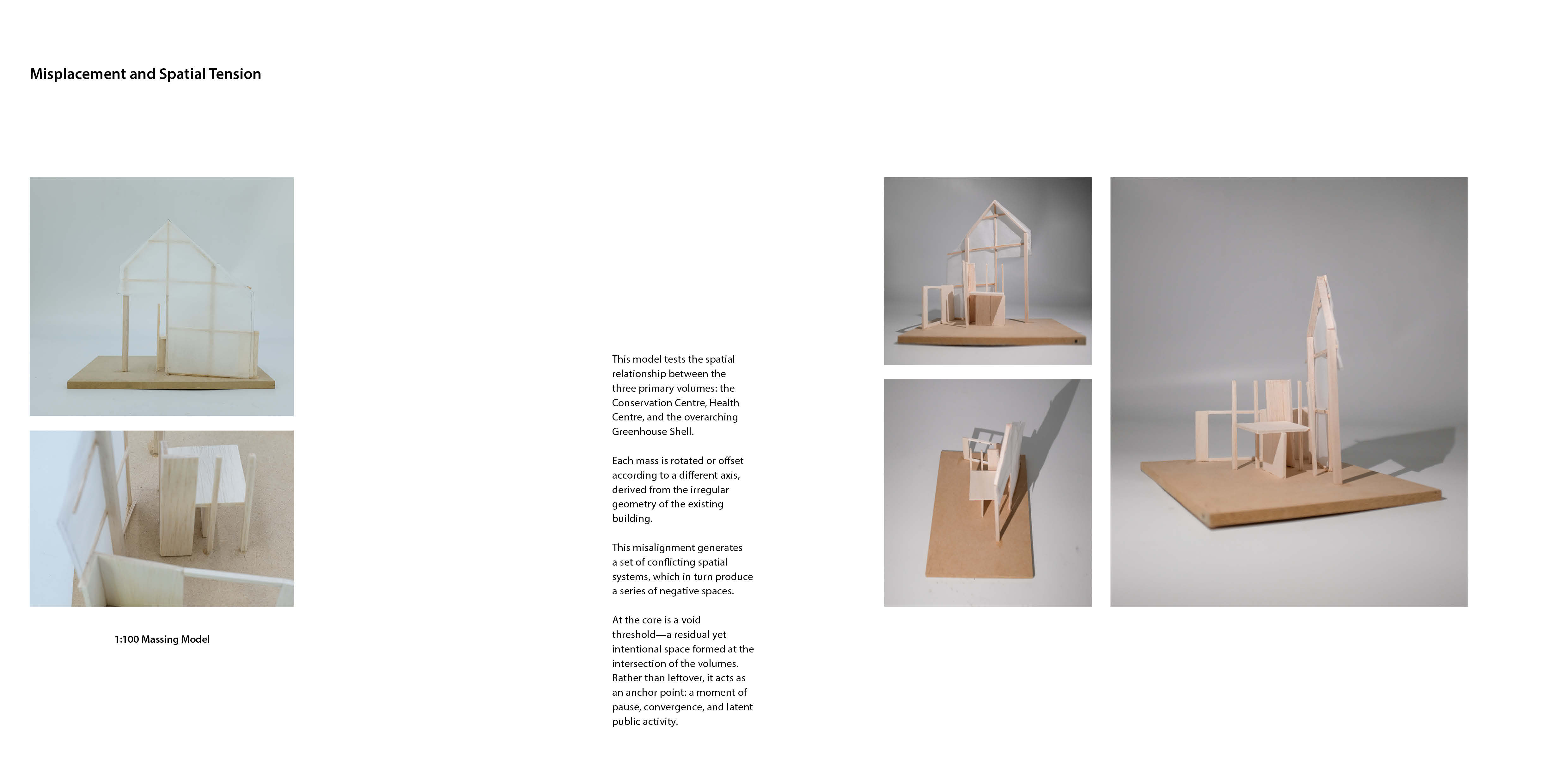
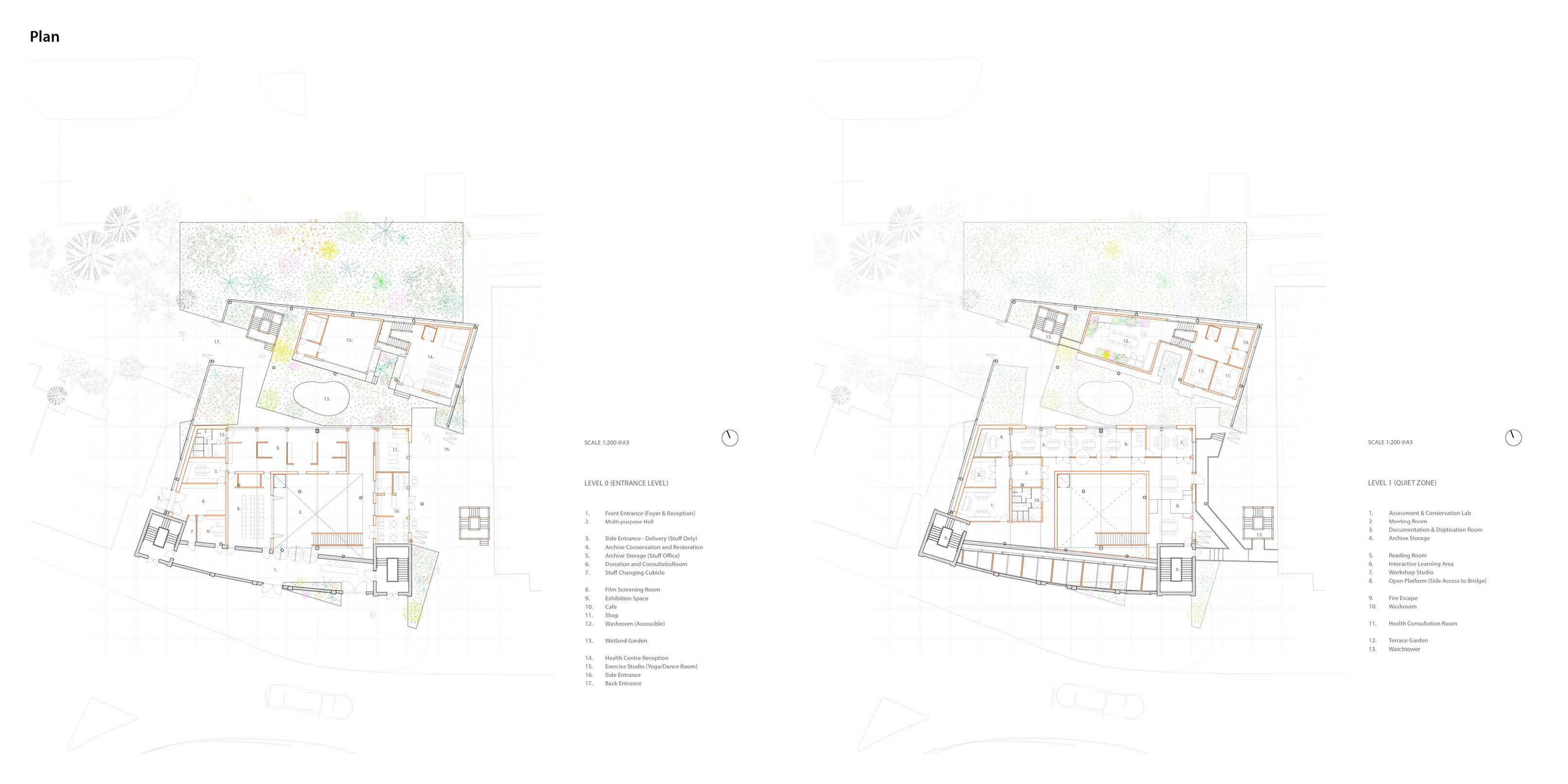
Movement is explored both as circulation and bodily presence. Each programme -- Conservation Centre, Exhibition and Social Activity, and Health Care -- demands distinct rhythms and thresholds, from quiet concentration to open gathering and moments of care. Misplacement becomes a spatial tool: new functions are intentionally distributed in offset, layered arrangements within the existing shell, allowing fragmented programmes to coexist while maintaining spatial independence. Interaction operates across material, social, and environmental layers, where technical choices are designed to amplify the building’s capacity for memory, encounter, and support.

Fragments
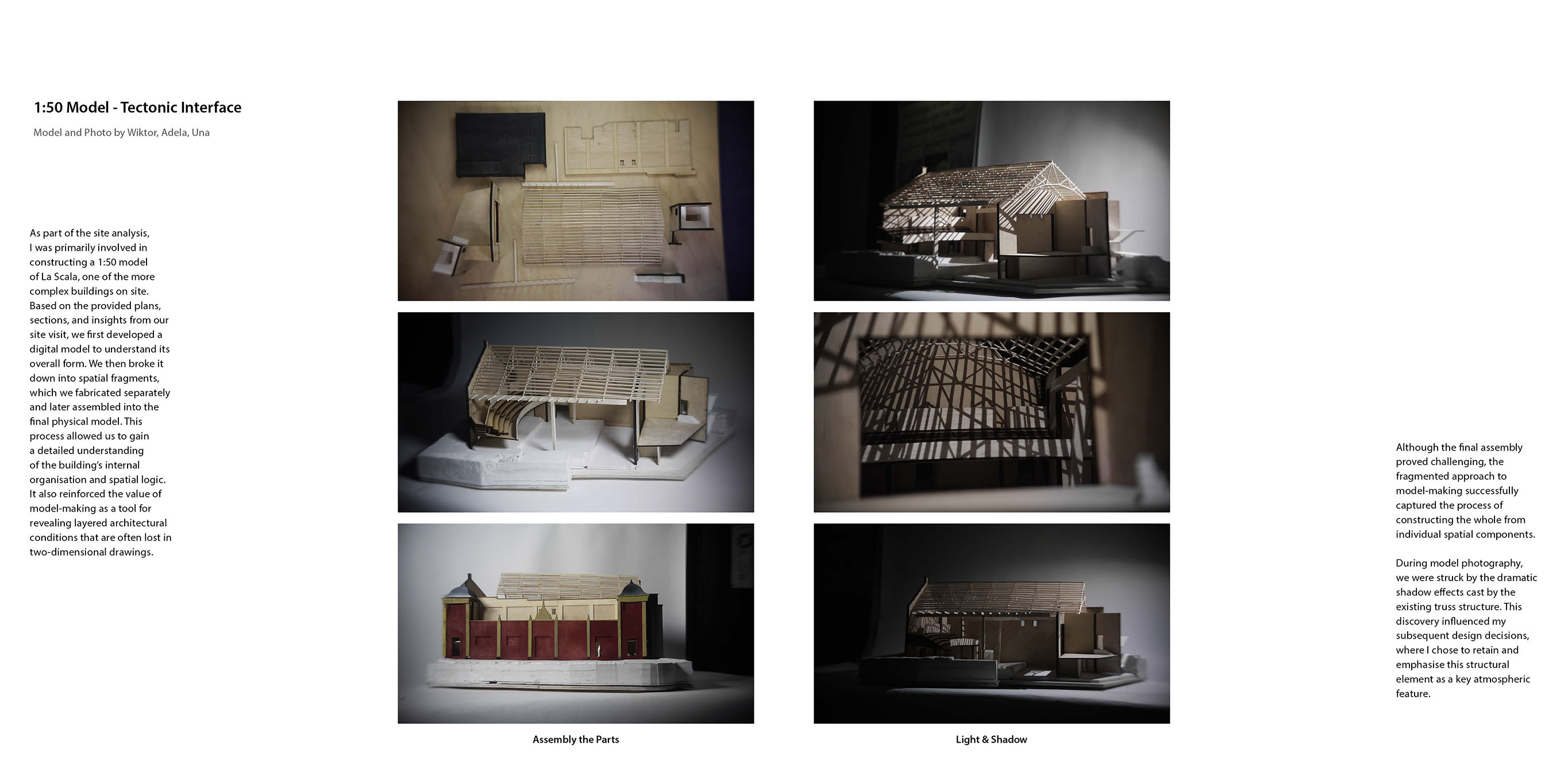
Models in Scales
1:500 model
1:100 Draft Model
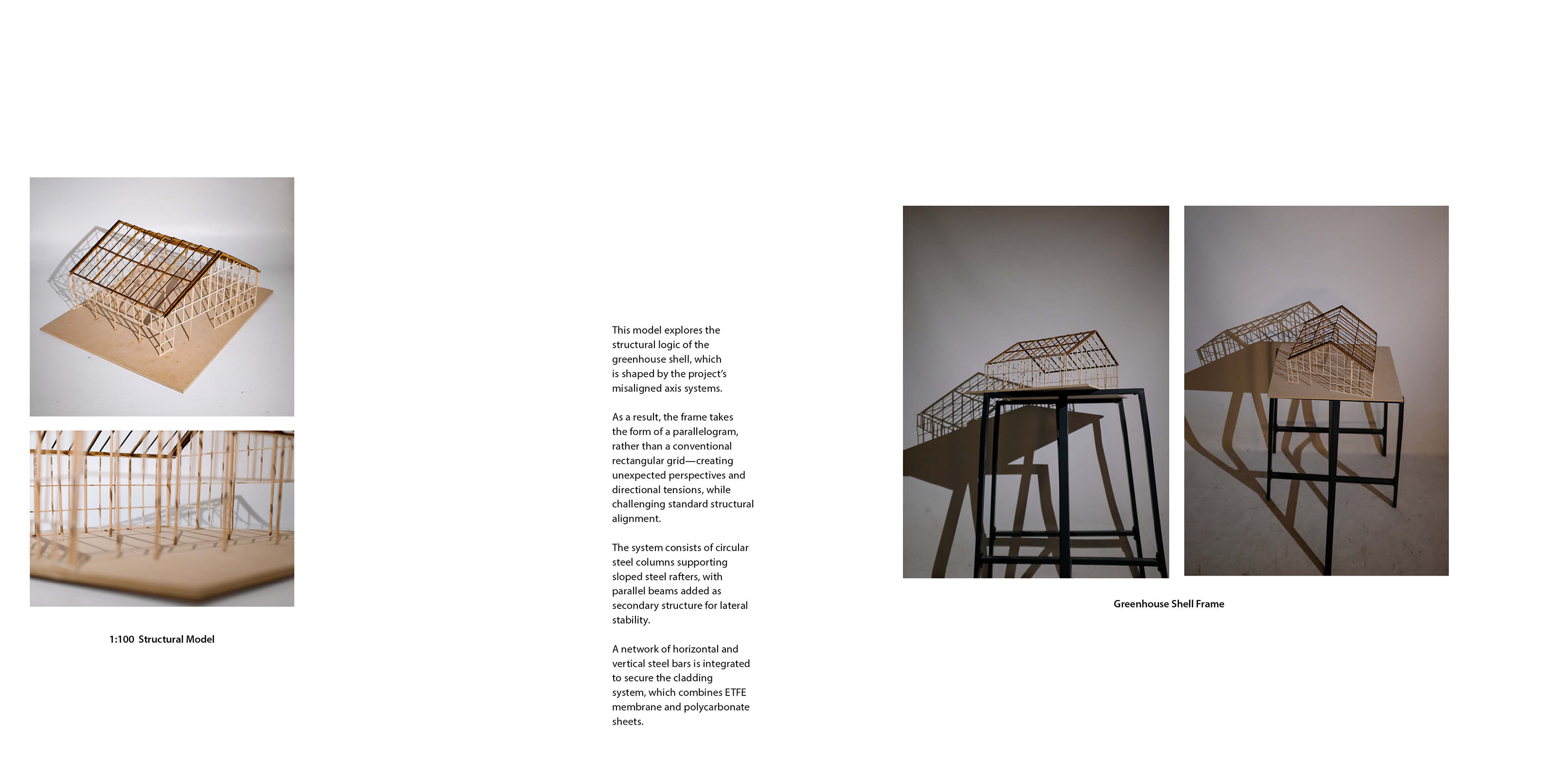
1:100 Structure Model 1
Premiere: Production and Display

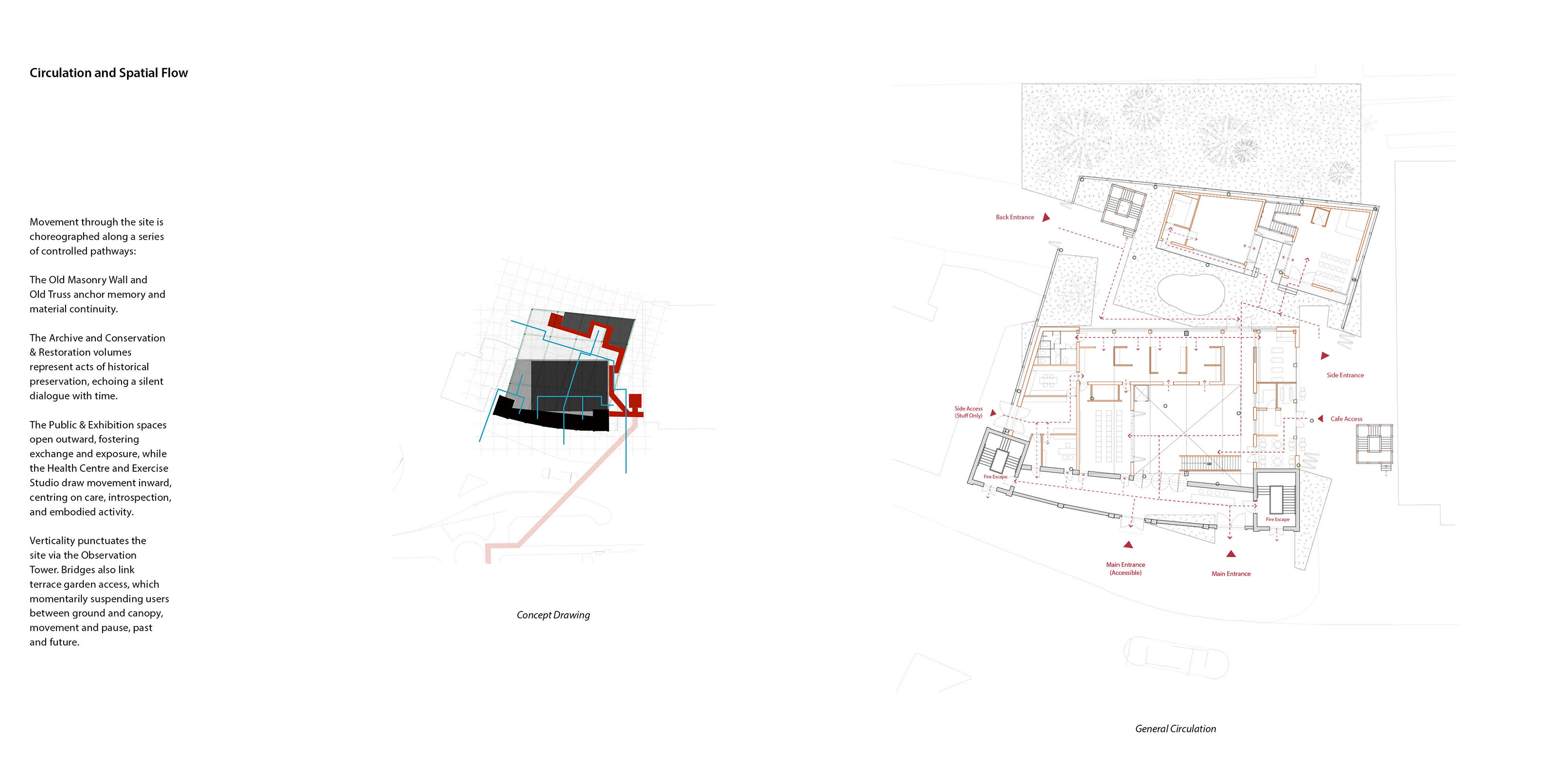
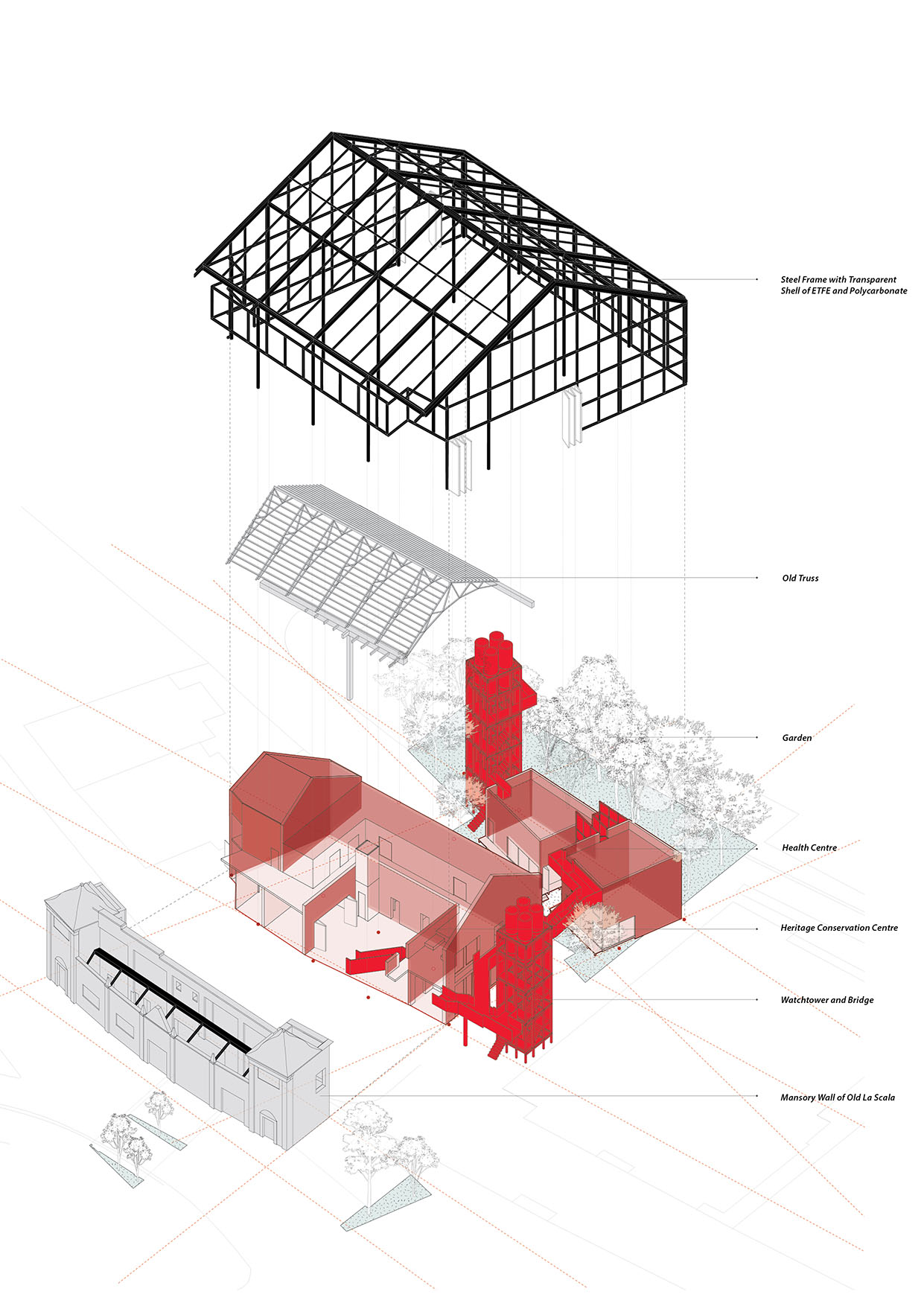
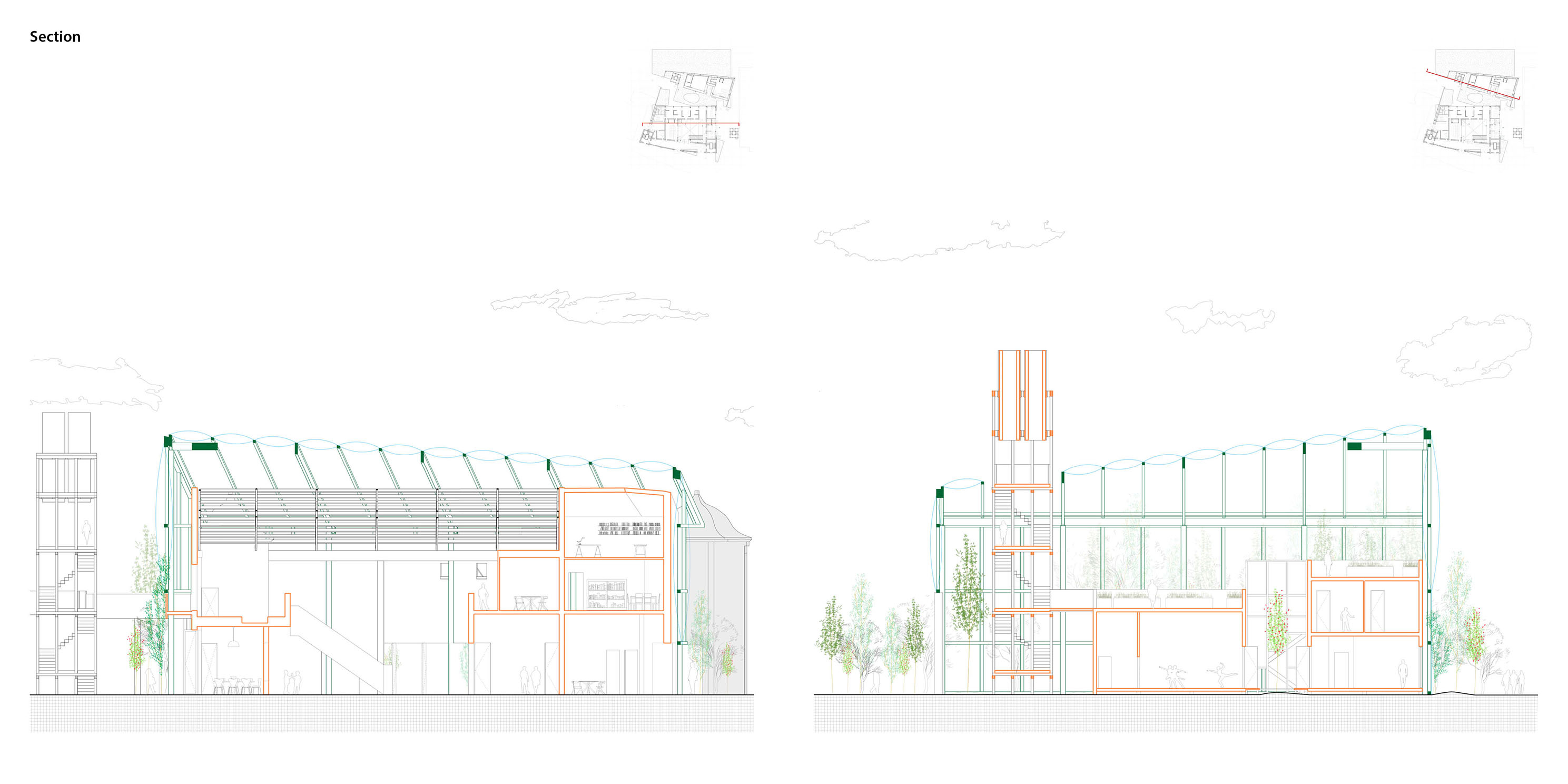
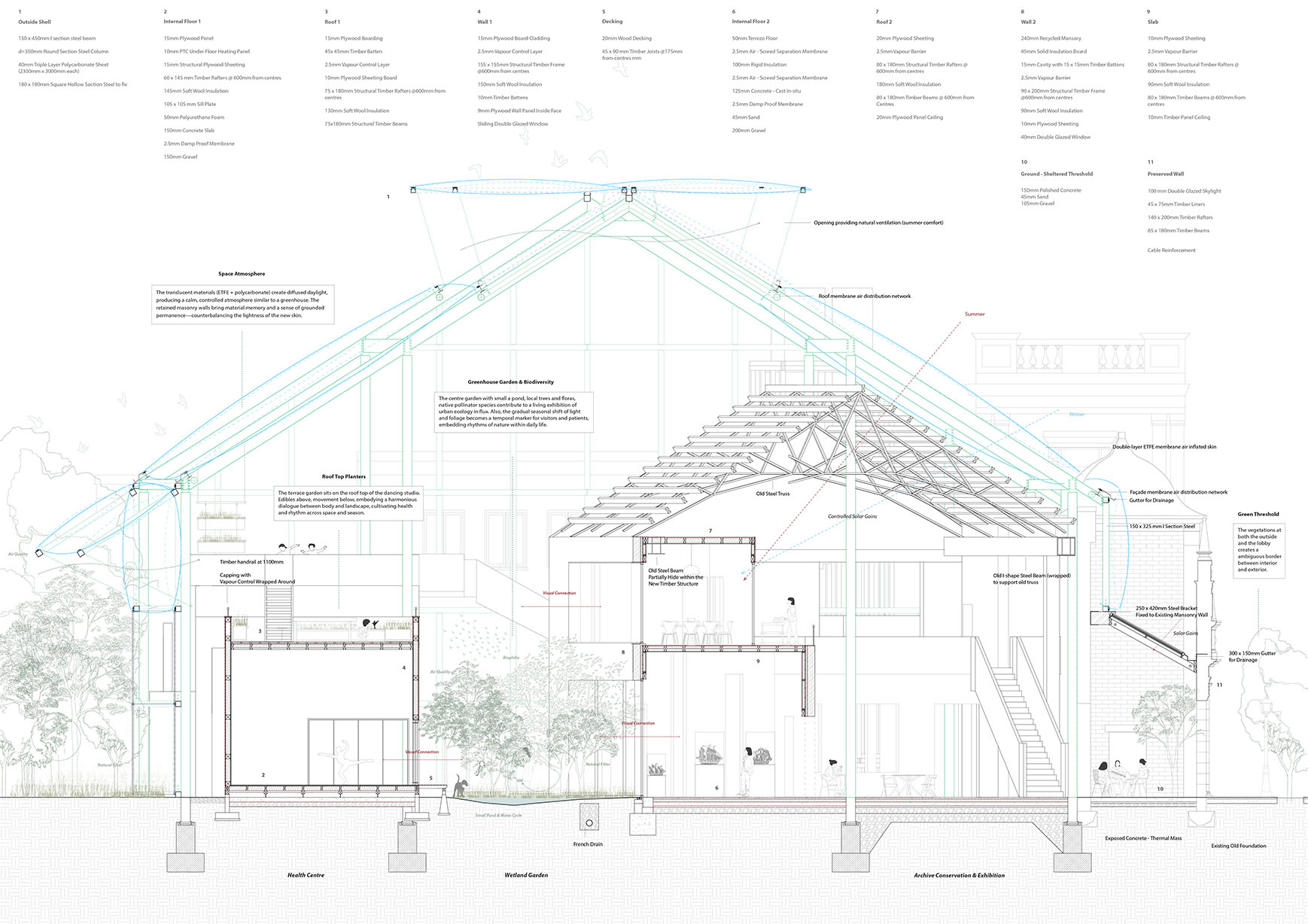
Movement through the site is choreographed along a series of controlled and liberated pathways: The Old Masonry Wall and Truss anchor memory and material continuity. The Archive and Conservation & Restoration volumes represent acts of historical preservation, echoing a silent dialogue with time. The Public & Exhibition spaces open outward, fostering exchange and exposure, while the Health Centre and Exercise Studio draw movement inward, centring on care and embodied activity. Verticality punctuates the site via the Observation Tower and terrace garden, which momentarily suspending users between ground and canopy, movement and pause, past and future. The Overarching Greenhouse becomes a unifying skin: a breathing, mutable envelope where controlled environments (archive, health) and open, living systems (garden, public space) co-exist without resolution.

Exploded Isometrics
Isometrics
The Technical Drawing
Detail Section
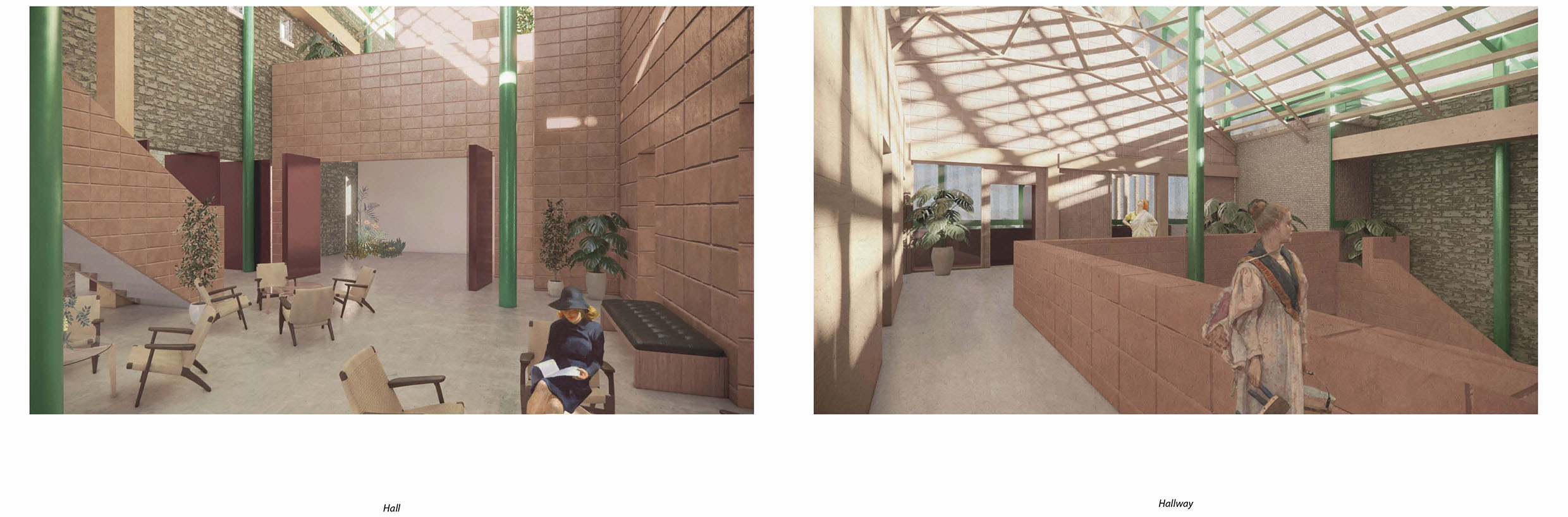
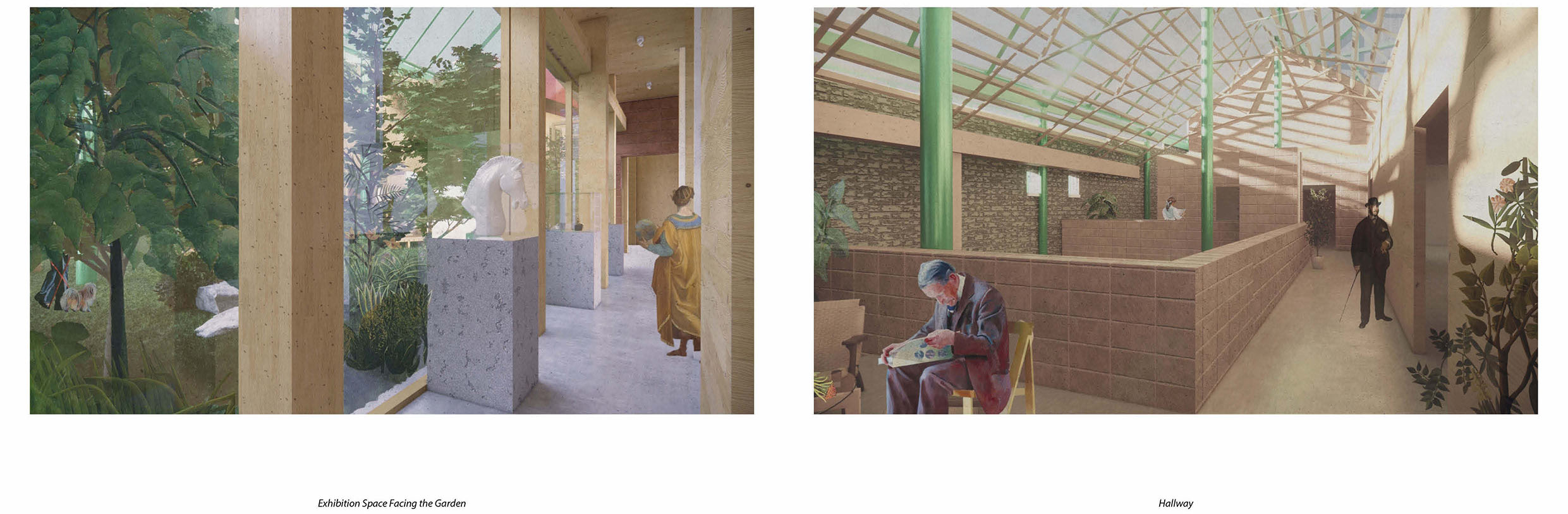
Atmospheres of Use
Render1
render2
render3
Student list
open list
close list