


Bella Fane
Second Occupancy: the annexe in the field of Lincoln's Inn

Follow:

Awards
Skills & Experience
- 2024 Placement Period Flores & Prats Architects, Barcelona
- 2024-25: Crumble Magazine Issue 9 - Designer
- 2023 ReUse the Ruin Summer Course, Florence, Italy
Note before reading on This page presents a series of drawings, photographs, collages, and references that together construct the project Second Occupancy. The work can be explored here on the website, or experienced in its originally intended format, as a book. To view the project as a digital flipbook, visit the Issuu link.
Abstract
Second Occupancy is an architectural investigation into how we engage with archival material, its use, interpretation, and hidden potential. Motivated by a desire to re-frame the archive not as a static repository, but as an active site of learning, speculation, and reinvention. It asks how archival drawings, objects, and lectures can be dislocated from their original contexts to speak anew, inviting fresh readings and understandings. Set in Lincoln’s Inn Fields, London, the proposal for an annexe emerges from a series of studies into how architecture might physically and conceptually support the cyclical nature of academic inquiry. The design responds to the idea that the act of repeatedly returning to archival material, sometimes without a clear end in sight, can itself become a pedagogical method. This process of getting lost in the archive becomes not a hindrance, but a space of productive wandering, where learning is shaped by drift, encounter, and reinvestigation.
The annex proposes to spatialise this condition, to allow for a form of occupancy where meaning is neither fixed nor predetermined, and where the archive itself becomes an active agent in architectural thought and education. Here, the archive becomes more than a collection; it is an active participant in shaping architectural thought. The spaces are designed to encourage lingering, re-reading, and reinterpretation, allowing visitors to engage in a continuous process of discovery that resists finality. By moving users between moments of reflection and projection, the tectonic architecture enhances the archive’s potential to expose the creative and political climates in which works were originally produced. Inviting users to navigate these historical conditions not as static backdrops, but as evolving contexts that inform present-day discourse. The annex becomes an architecture through which time is made tangible, drawing connections across generations of architectural thought and inviting speculation about what might come next. In doing so, it makes the cyclical, uncertain nature of research and reinvention not only visible, but inhabitable.
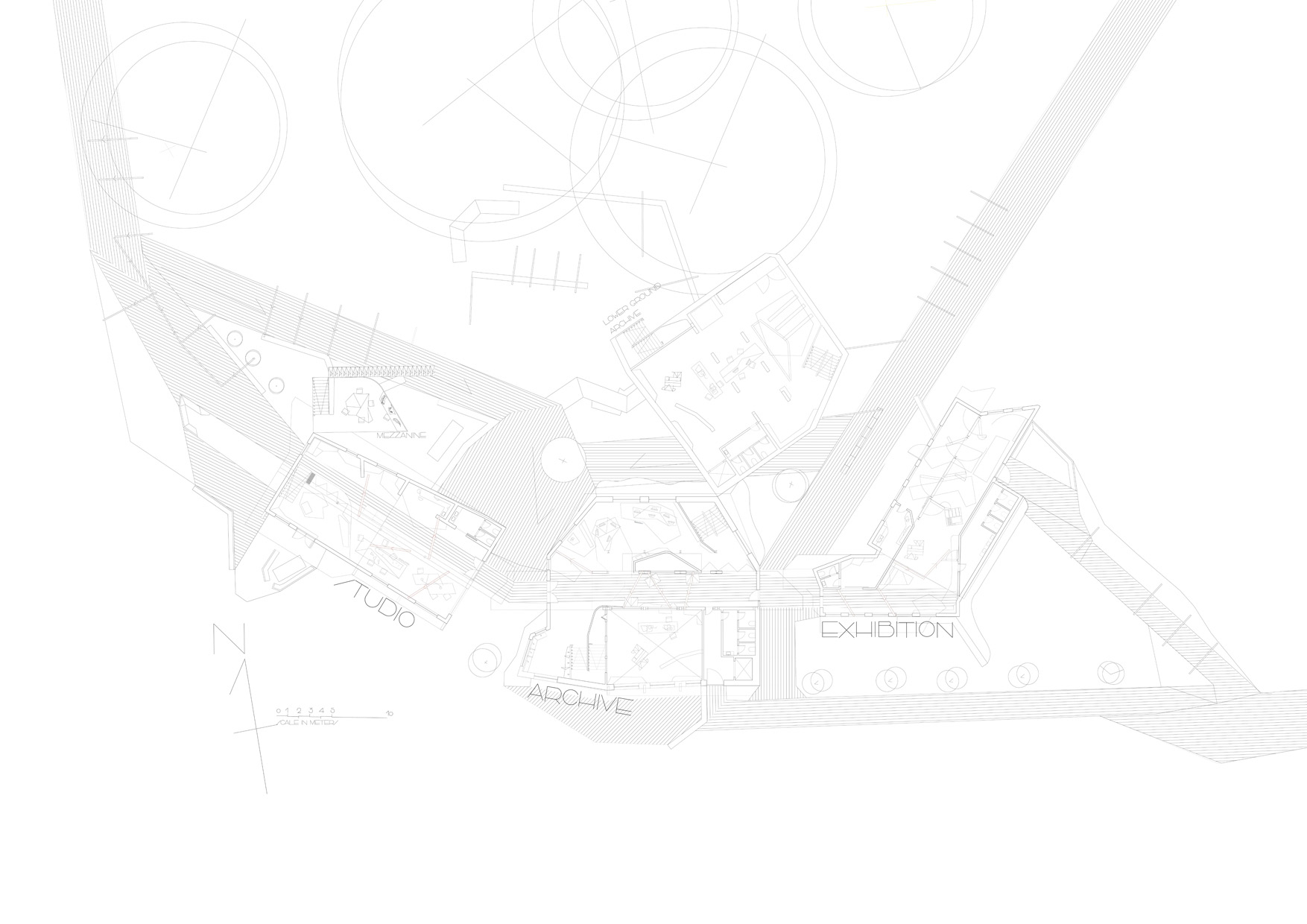
programme of the annexe
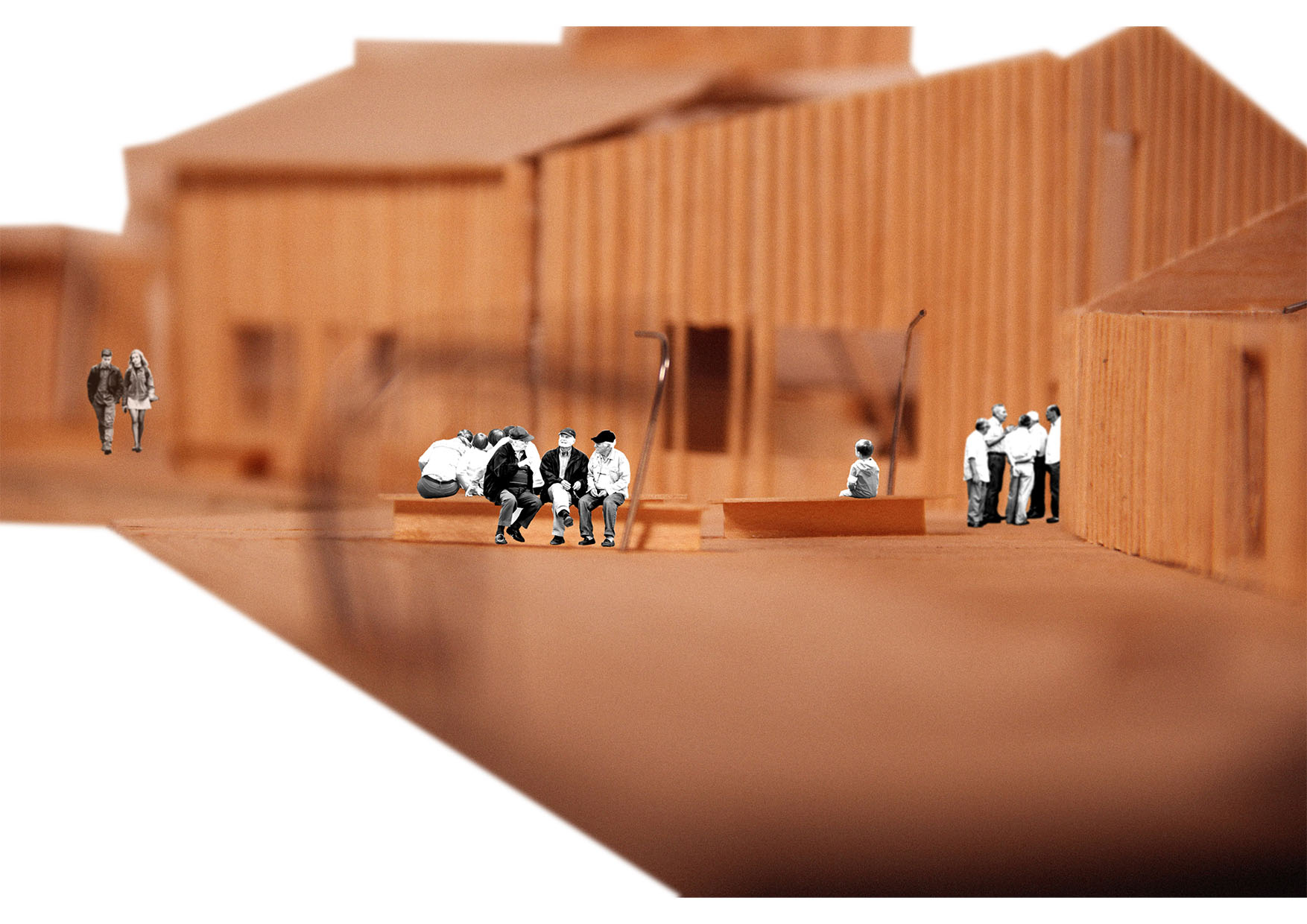
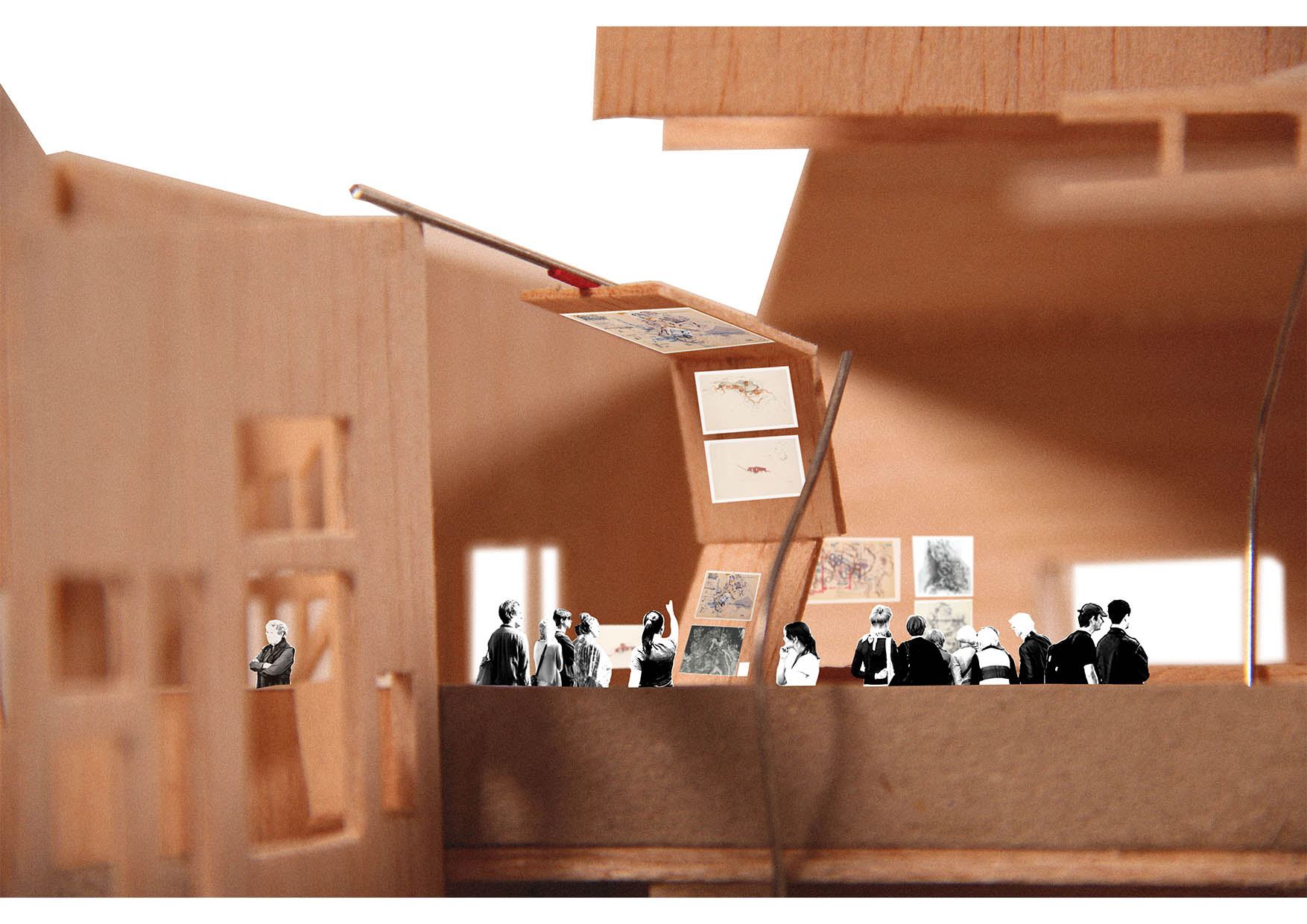
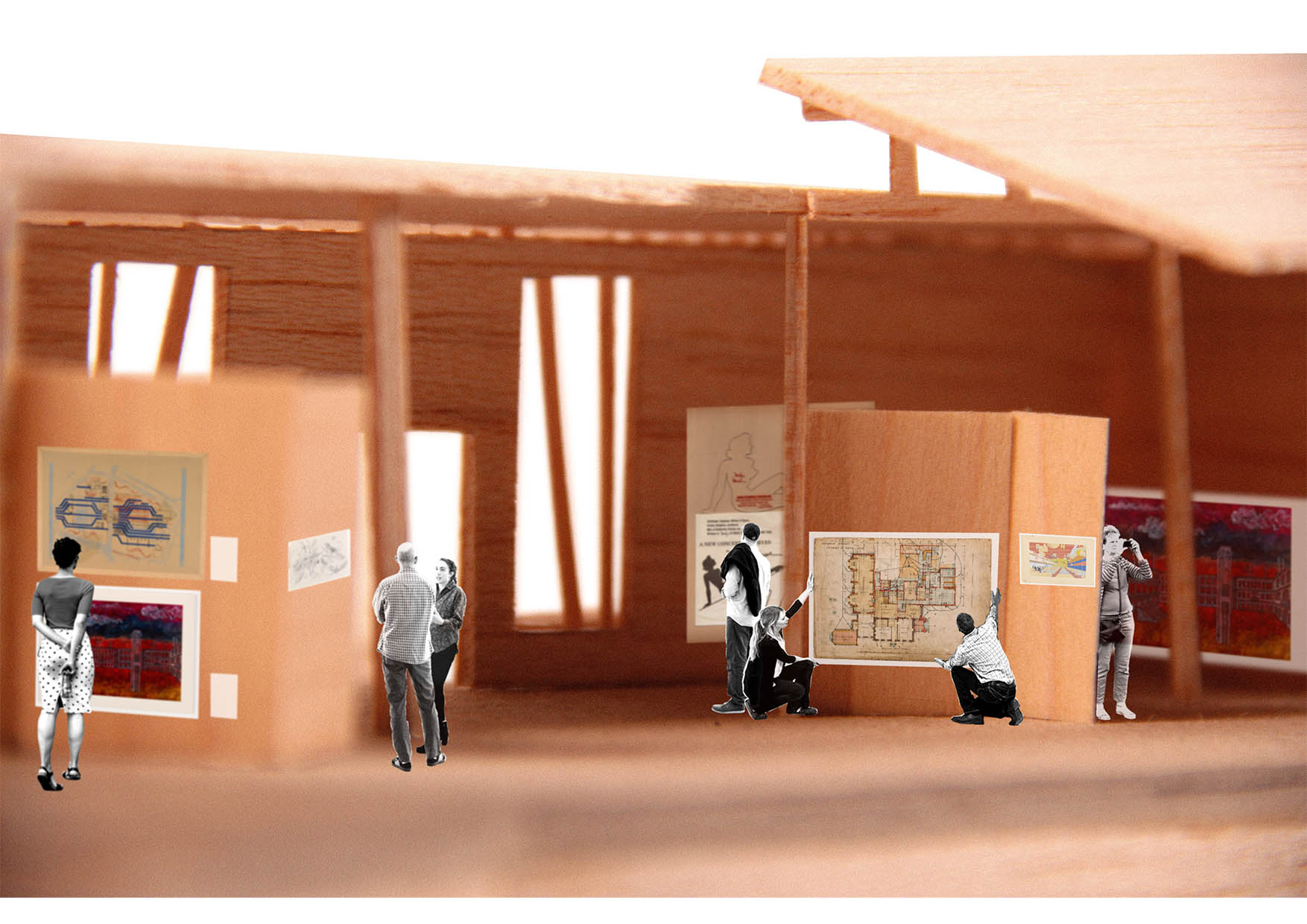
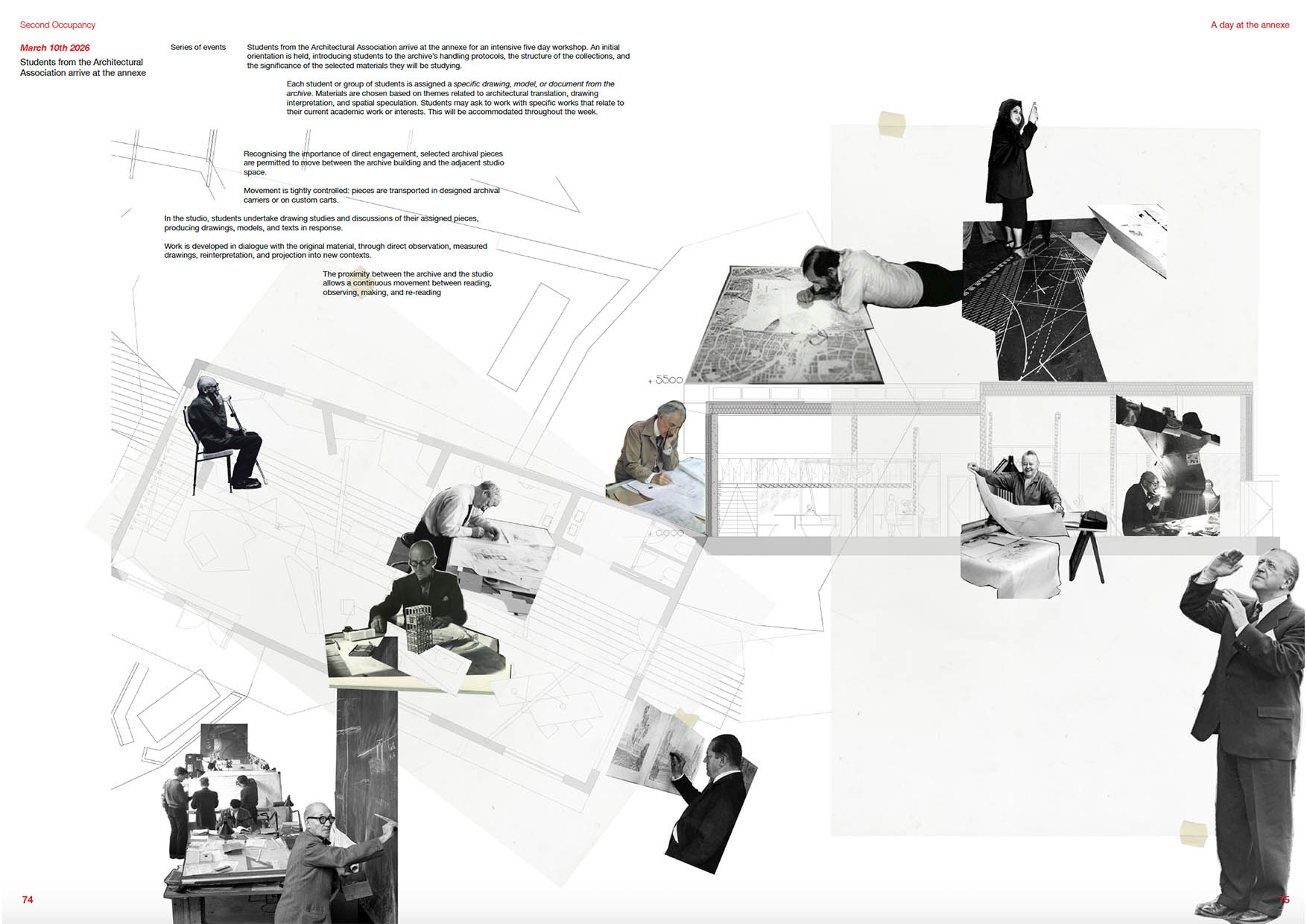
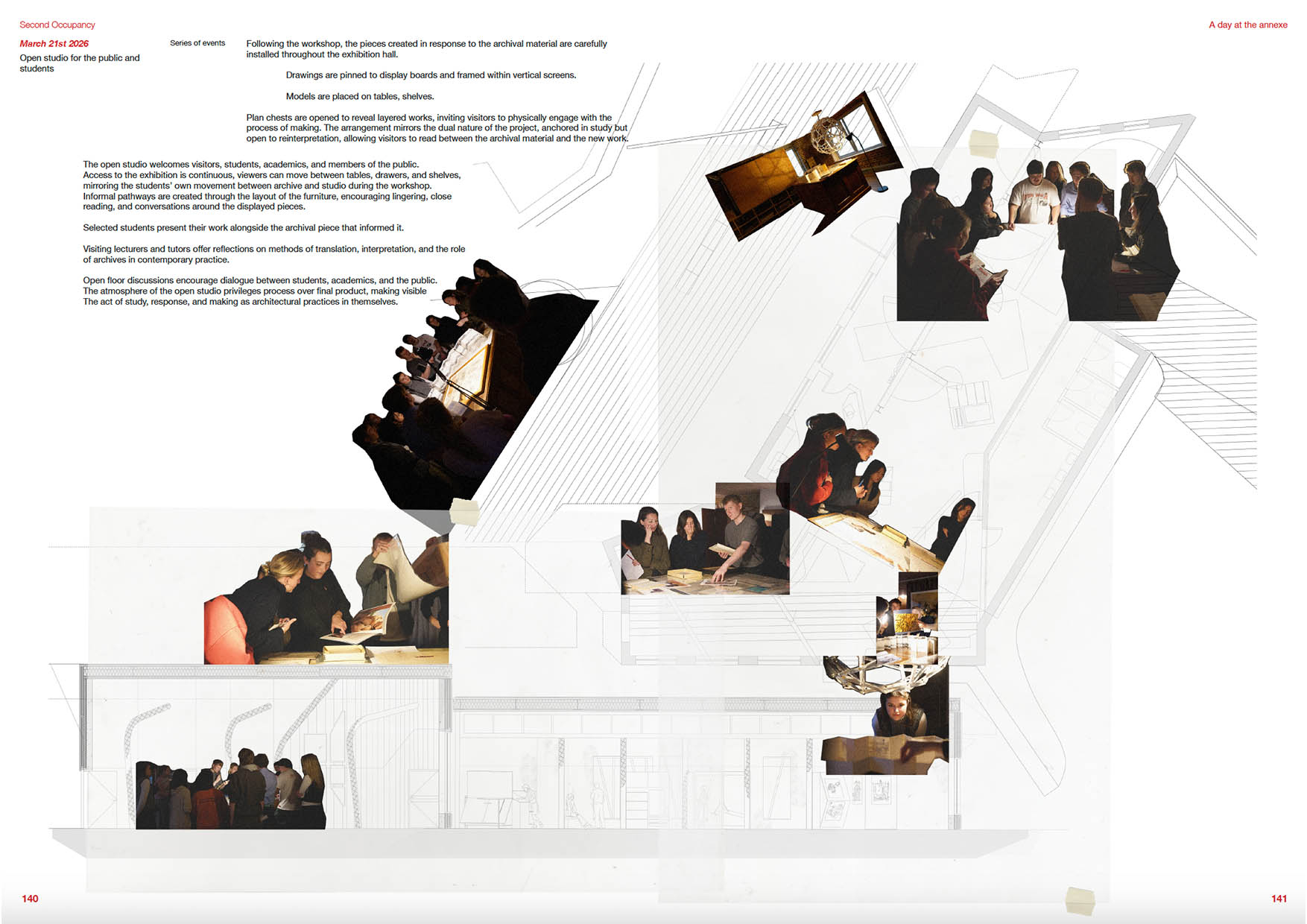
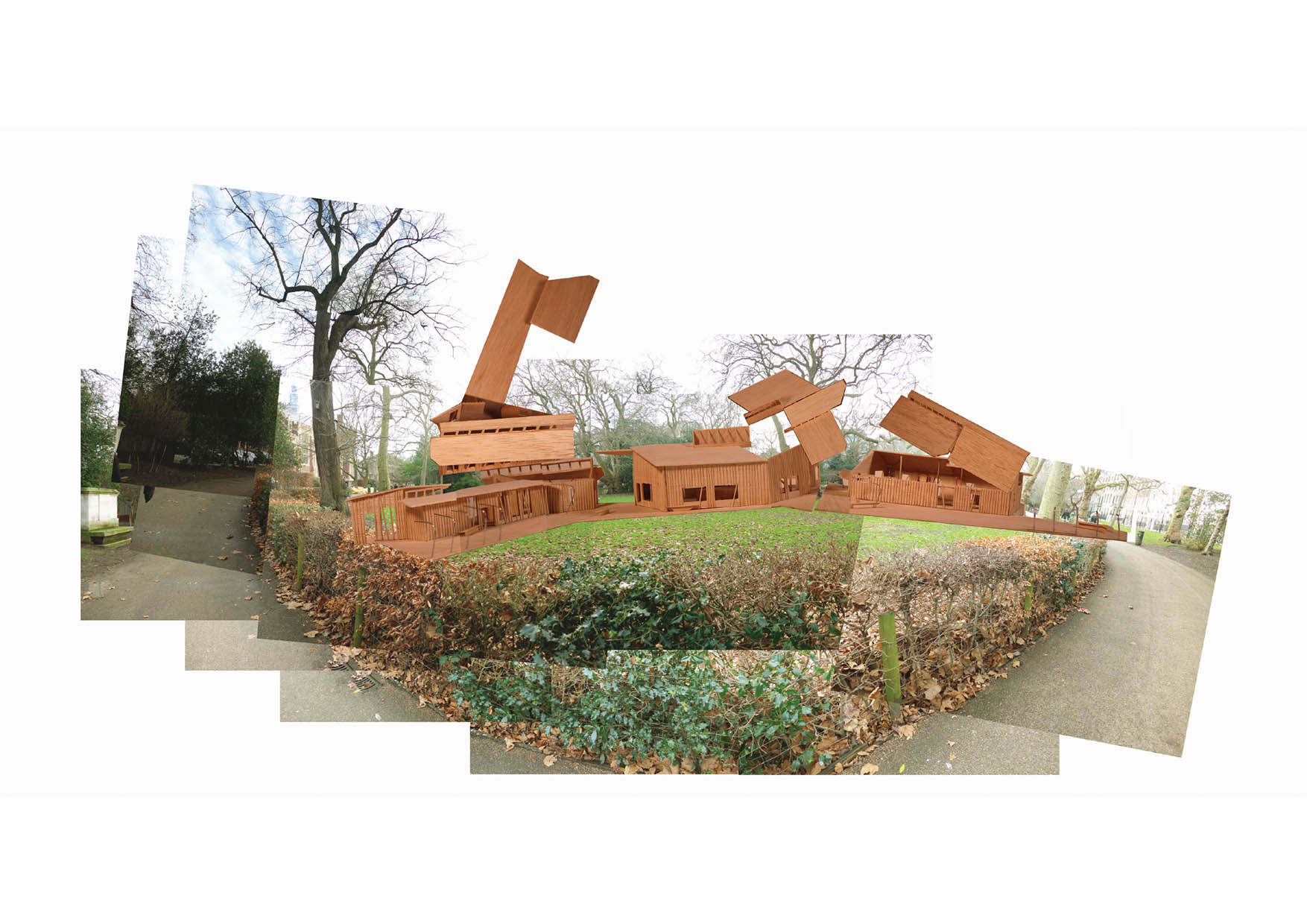
The three buildings function together to form the cyclical environment of the annexe. Each building is equipped with custom-designed furniture, specifically tailored to its function ( discussion, production, presentation). These pieces are integrated into the architecture, ensuring flexibility and adaptability for various activities. Covered by a single roof, the buildings provide an open, monitored space where the arrangement of furniture facilitates seamless interaction between different architectural processes.
Archive (Discussion)
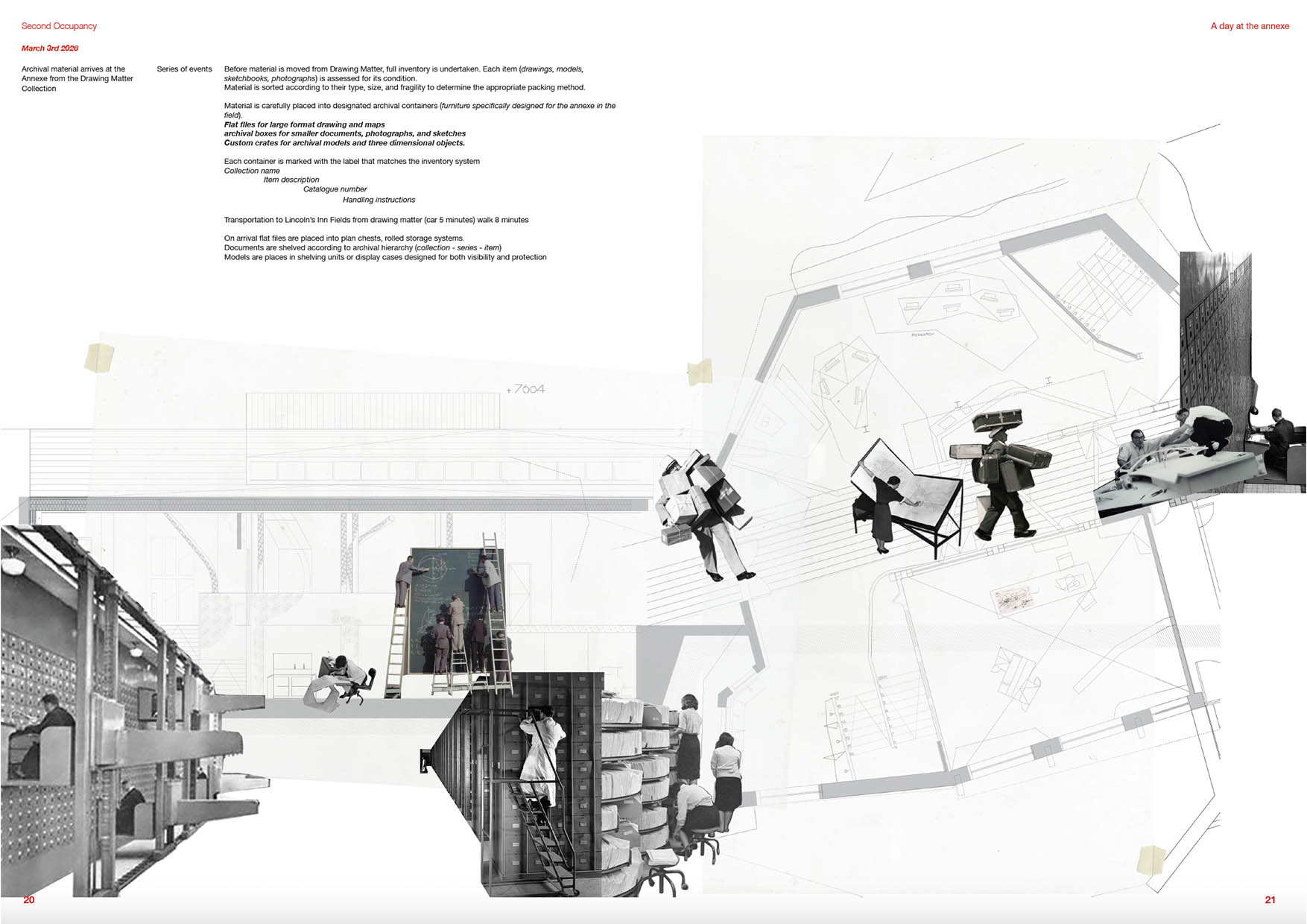
The central archive building houses a main archive, research rooms, computer and library spaces, display tables, a large goods lift for transporting oversized items, and a detailed archive facility for the sorting, storage, and cataloguing of works.
Studio (Production)
The studio is an open-plan space with a mezzanine level. Facilities include a kitchen, adjustable drafting tables, drawing boards, and modular shelving, all adaptable to the needs of different workshops. A small workshop beneath the mezzanine provides space for model-making activities.
Exhibition (Presentation)
The exhibition room accommodates more public-facing activities, with exhibitions curated in response to the work produced in the archive and studio buildings. A small office for the exhibition team ensures the building can function independently when the archive and studio are closed. The exhibition hall features a large foyer and bathroom facilities, capable of hosting large scale events. With direct access to the car accessible road along the side of Lincoln’s Inn Fields, the building is designed for easy public entry and movement.


Working with Existing Institutions
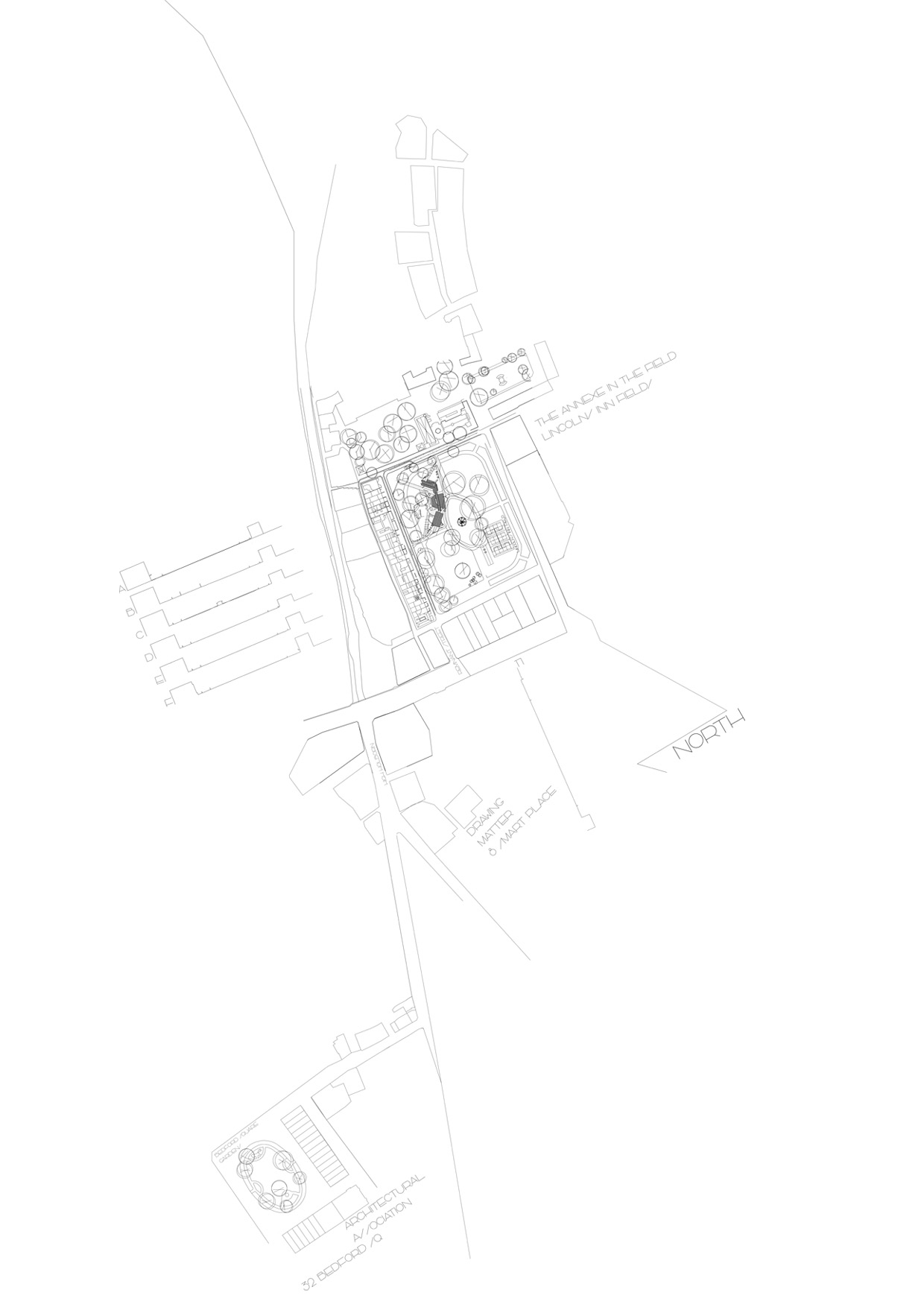
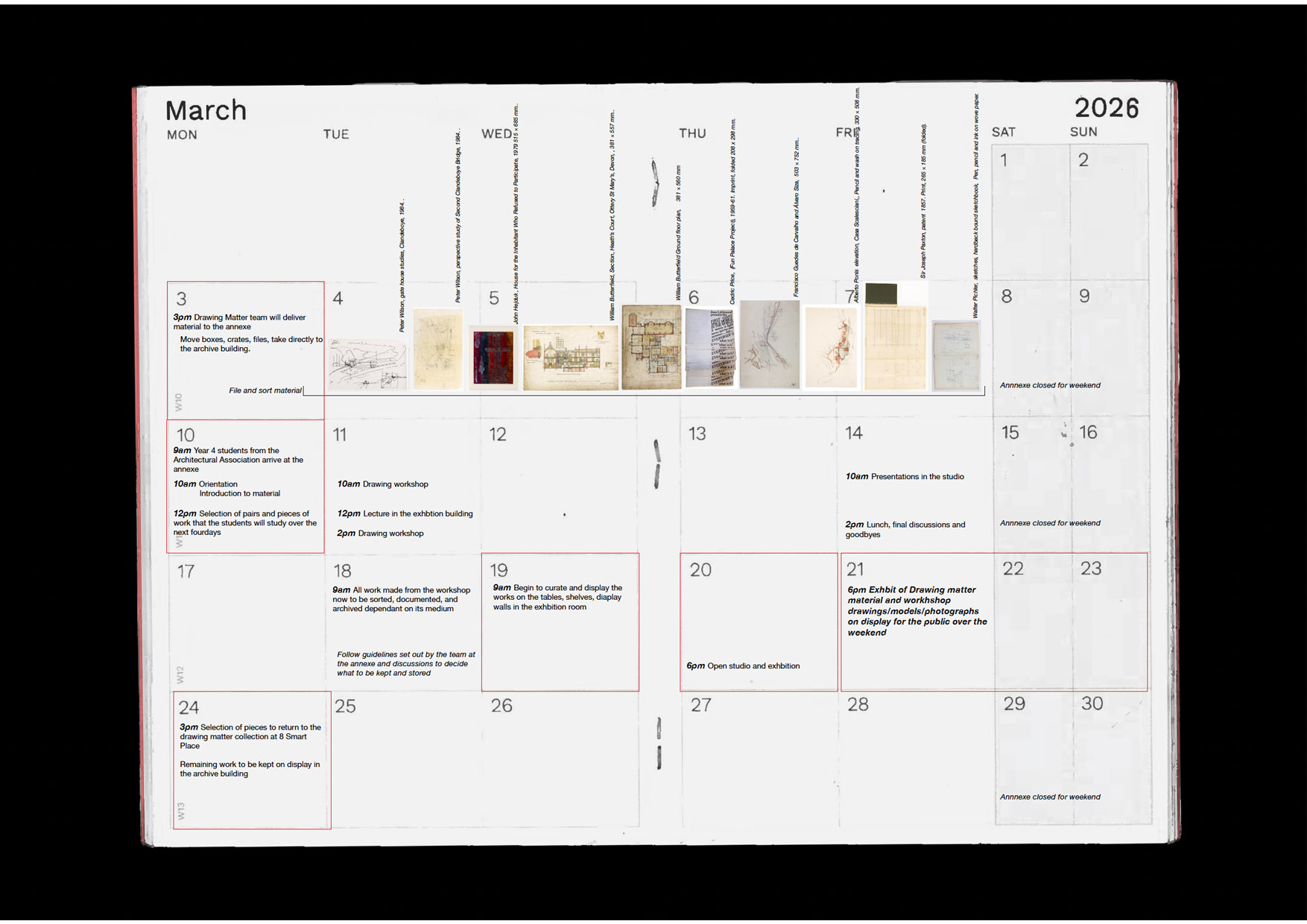
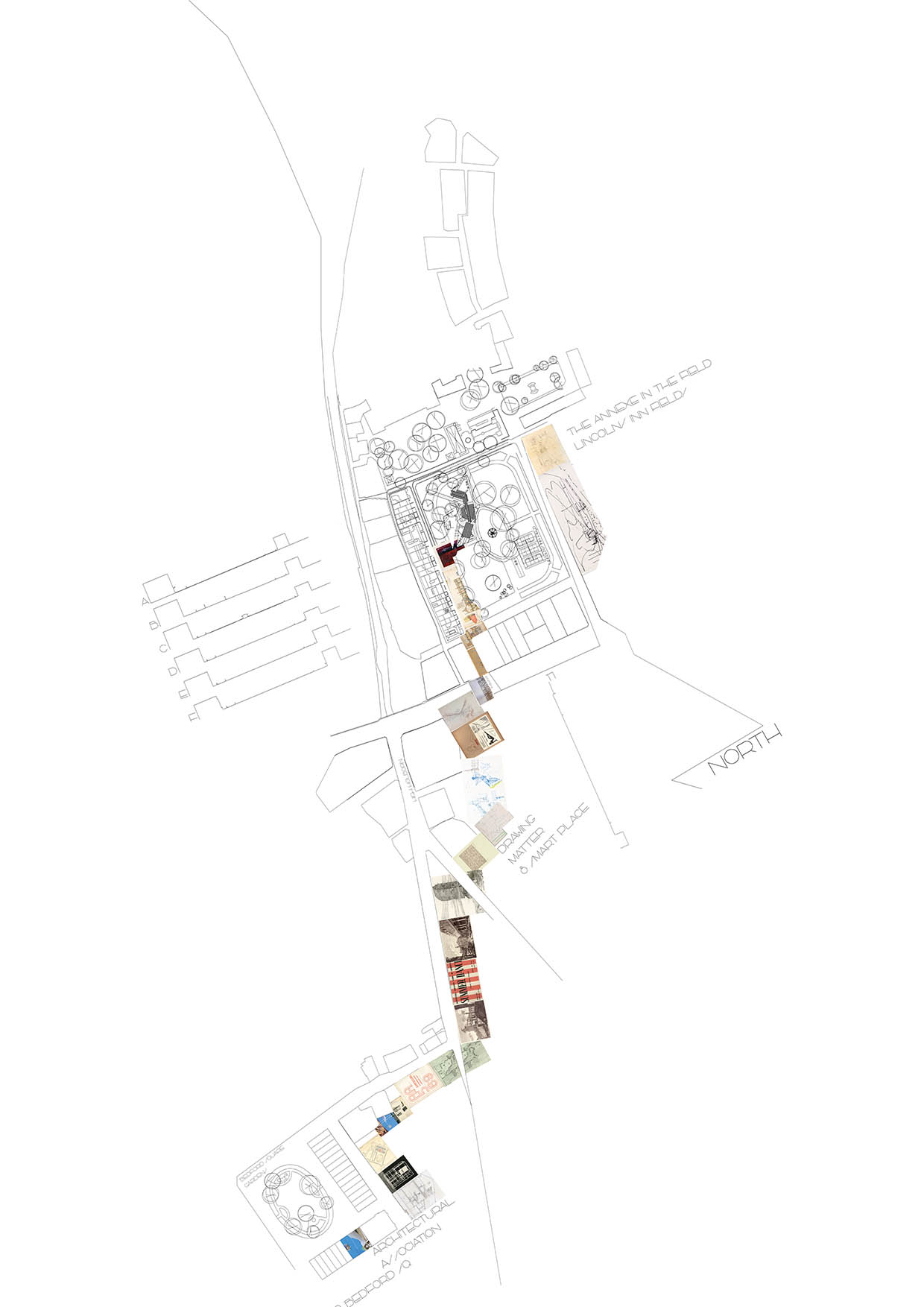
The proposal for Lincoln’s Inn Fields will serve as an annexe to the existing archives of Drawing Matter and the Architectural Association (AA). Conceived as an extension of programme, the annexe acts as an intermediary space between public and private realms. While standing independently from both institutions, it remains within close proximity, easily reached on foot. Working in close collaboration with Drawing Matter and the AA, the annexe builds upon Drawing Matter’s existing ethos of learning through archival drawings and hosting workshops.
The Drawing Matter collection will offer opportunities to teach the history and significance of archival drawing practices, while the Architectural Association’s involvement will deepen the annexe’s academic focus, bringing students and researchers into closer, more immediate contact with archival material. For both institutions, the annexe provides expanded archival storage and the flexibility for the material itself to dictate the nature of activities (whether study, making, or exhibition).
By offering an open, spacious environment, the annexe will free the mind to wander without constraint, encouraging interaction with material in ways not limited by conventional archival settings. The specialist knowledge of the Drawing Matter team, particularly in the sourcing and careful preservation of works, will also serve to inform and guide the AA’s ongoing efforts to organise and archive its own extensive and historically rich body of work, while encouraging students to engage with the legacy and graphic culture of the school since its founding.
(Alternative) Alternative Histories
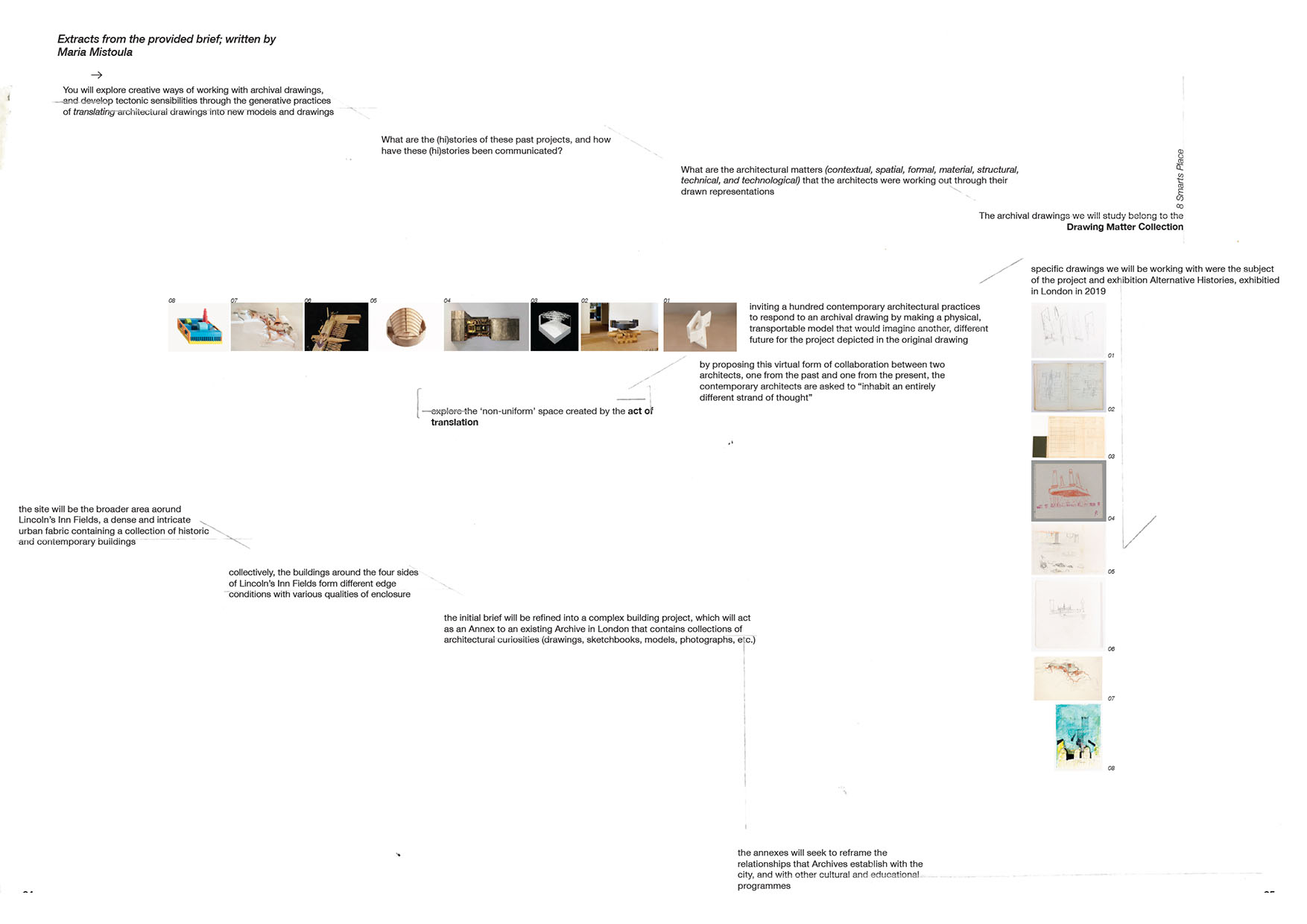
To mark the beginning of the Tectonics project, students engaged with a pre-existing exhibition curated by the Drawing Matter collection. Titled Alternative Histories, the exhibition acknowledges architecture as a corpus of inherited ideas. It invited over 80 contemporary practices from across the UK and Europe to imagine a dialogue with architects of the past.
Taken as a whole, the responses challenge simplistic notions of reference, history, and influence as the primary drivers of contemporary architectural thinking. From method to material, the project opens up not only new ways of looking at the past but also a series of conversations about how architects today construct their present.
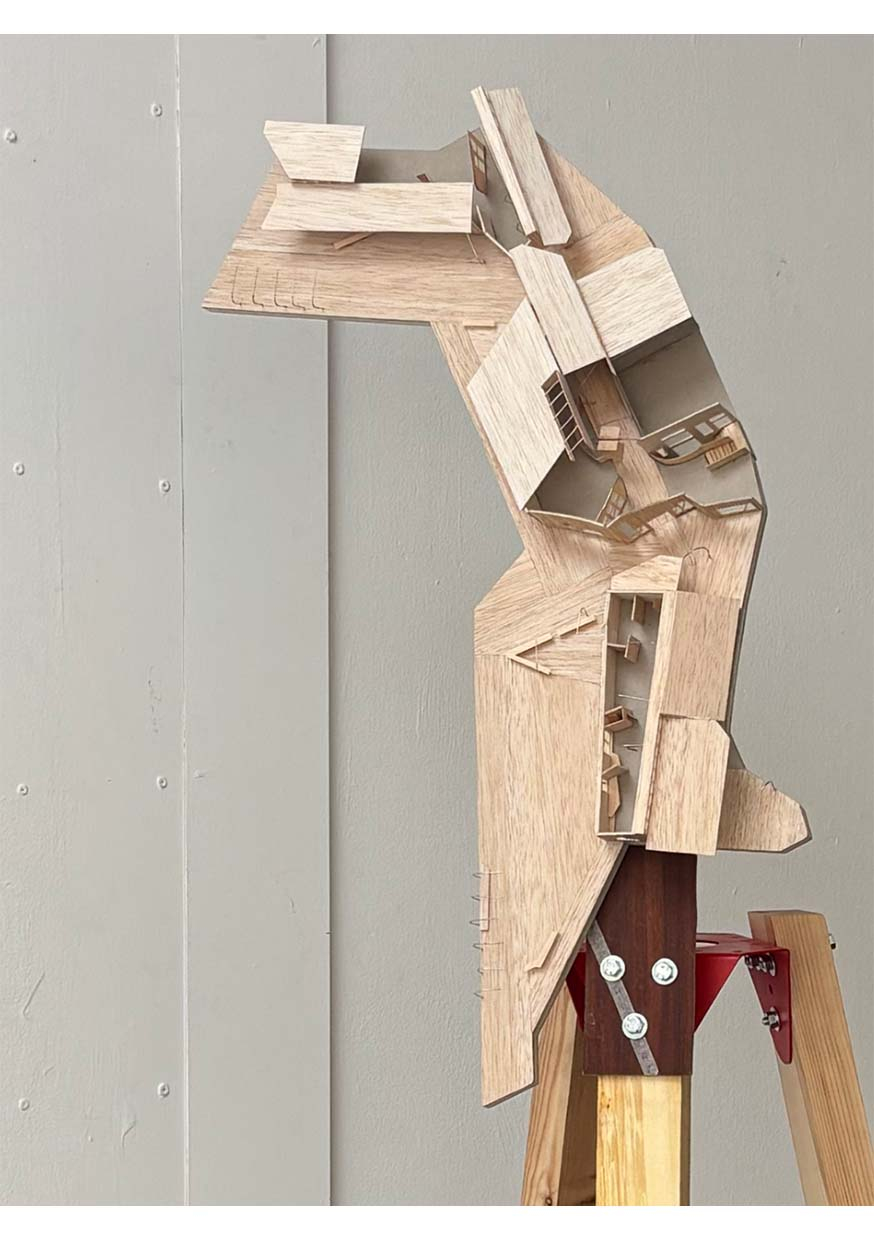
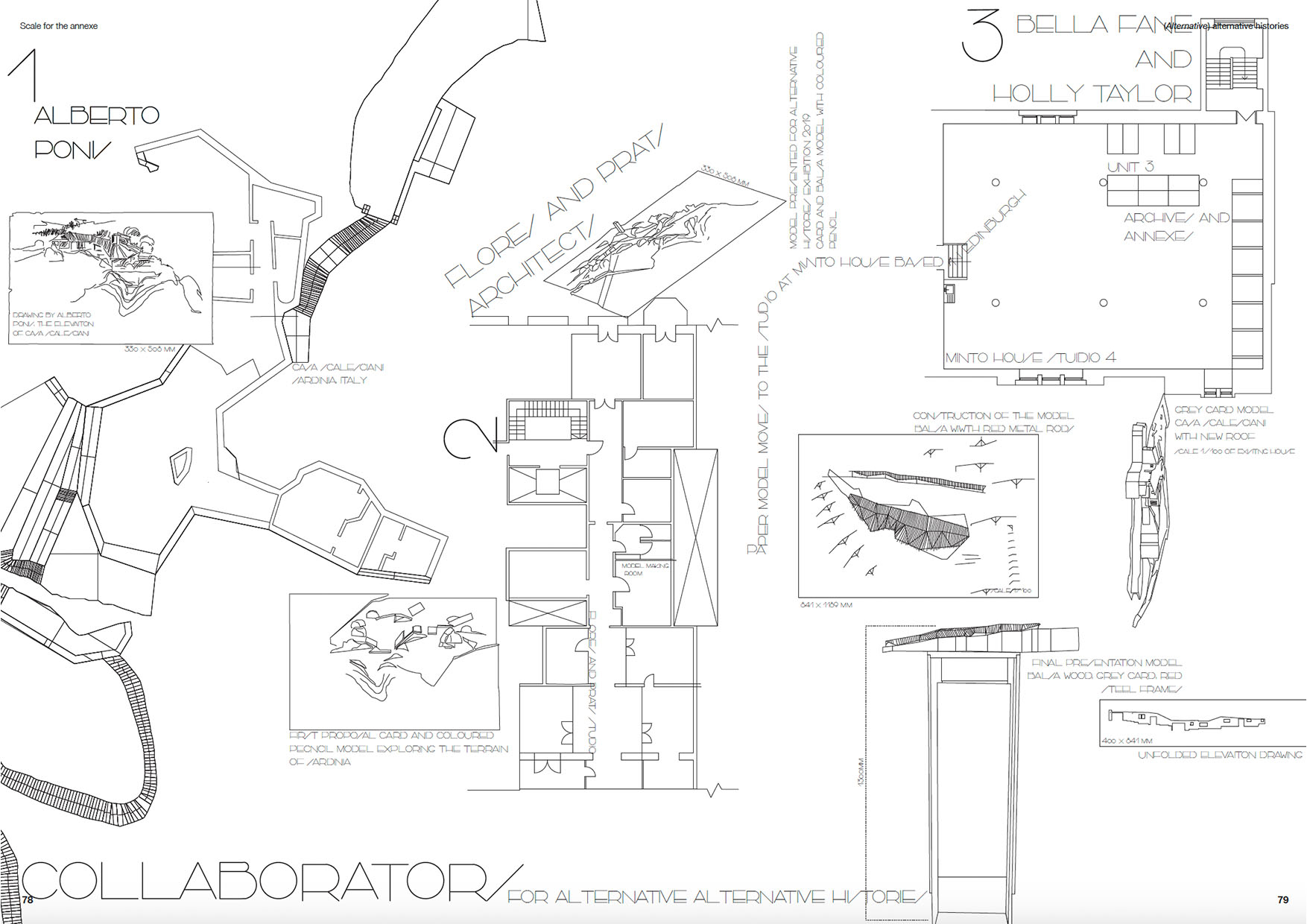
The selected drawing for this project is an elevation sketch by Alberto Ponis of Casa Scalesciani, a coastal house in Sardinia. The response model, originally created for the Alternative Histories exhibition, was produced by Flores & Prats Architects in Barcelona. Together, these two archival pieces form the foundation for the study in the weeks ahead.


Bella Fane
Second Occupancy: the annexe in the field of Lincoln's Inn
Follow:
Share:

