


Natasha Kawalek
Exile Stories

Follow:
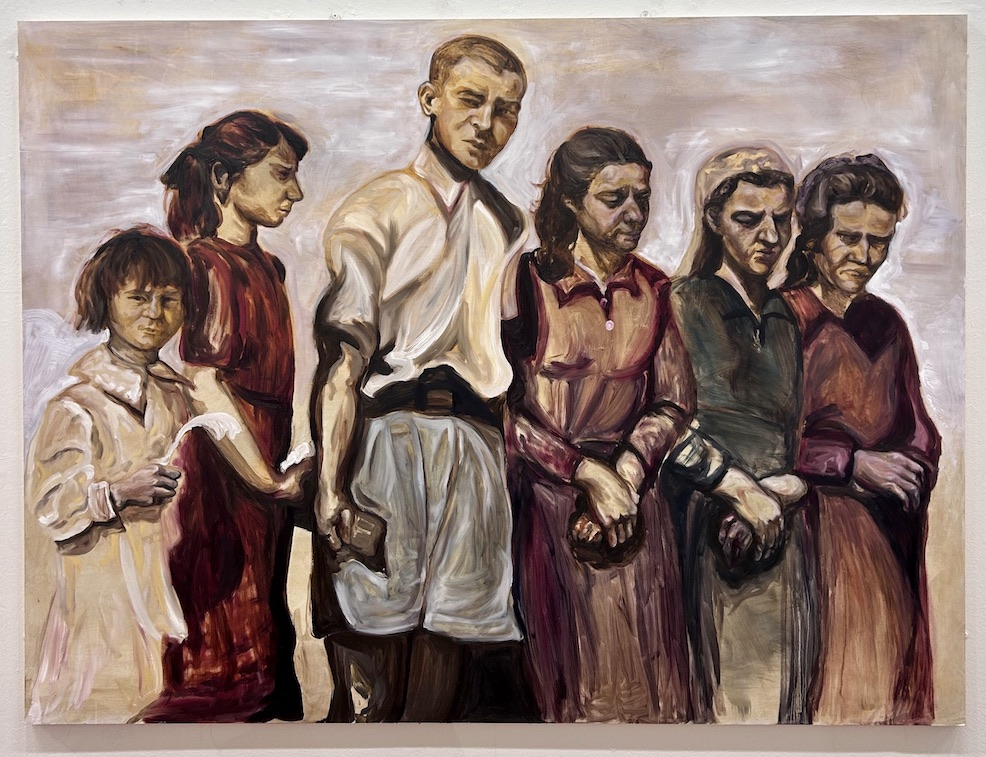
At the Graveside
Works
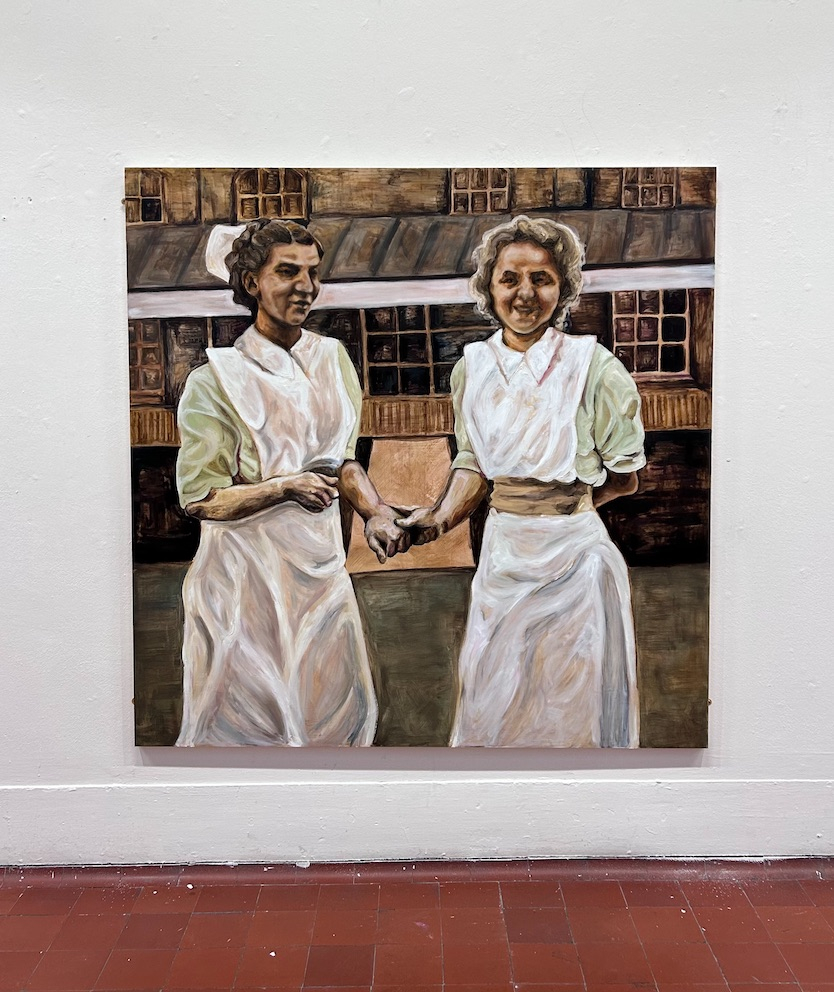
Nurses

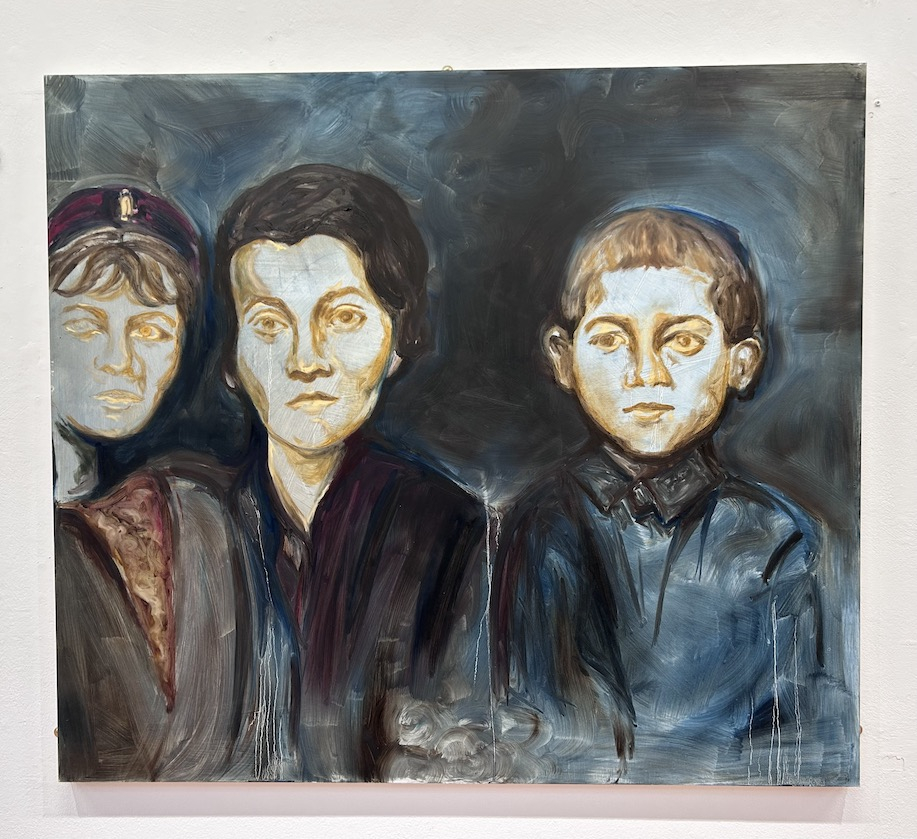
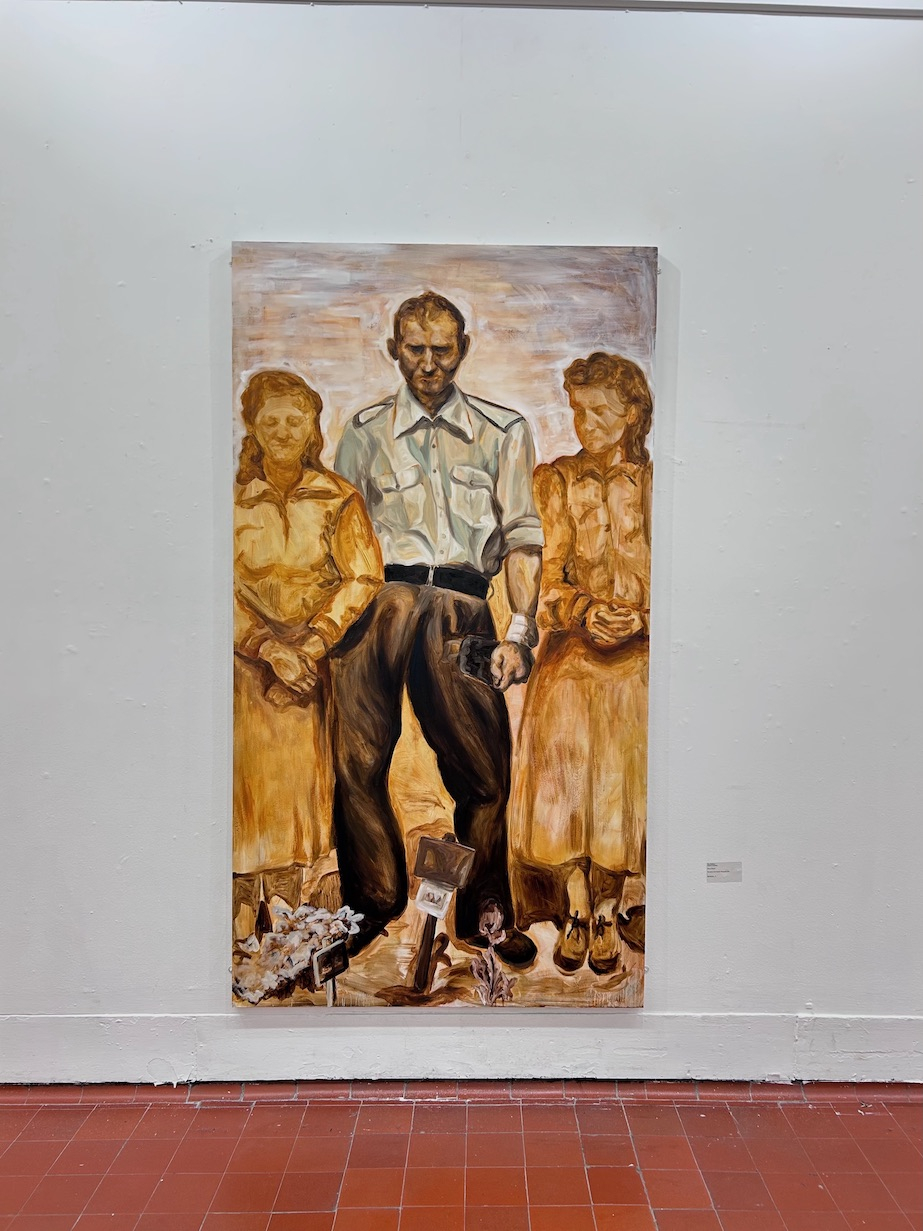
Three Figures
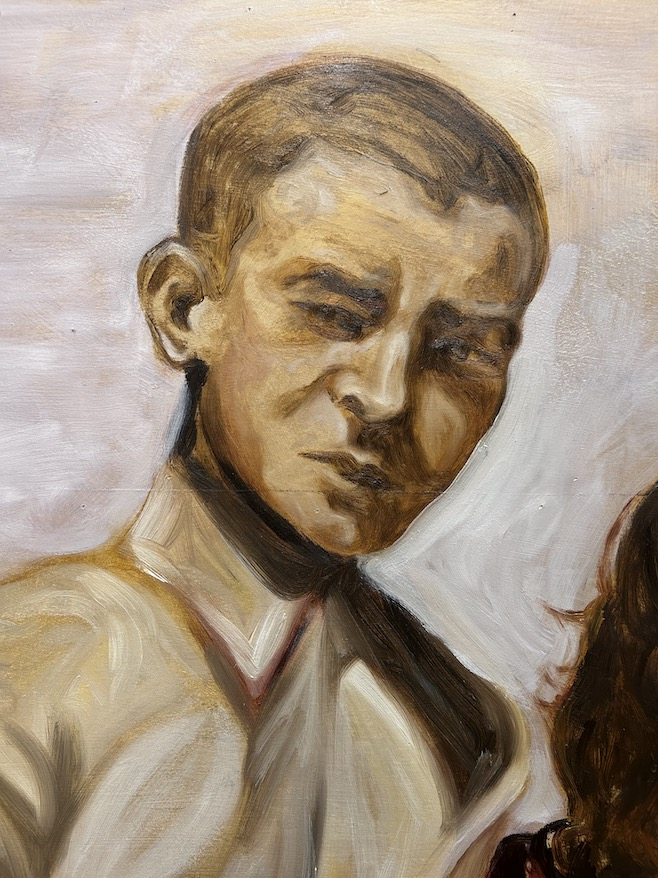
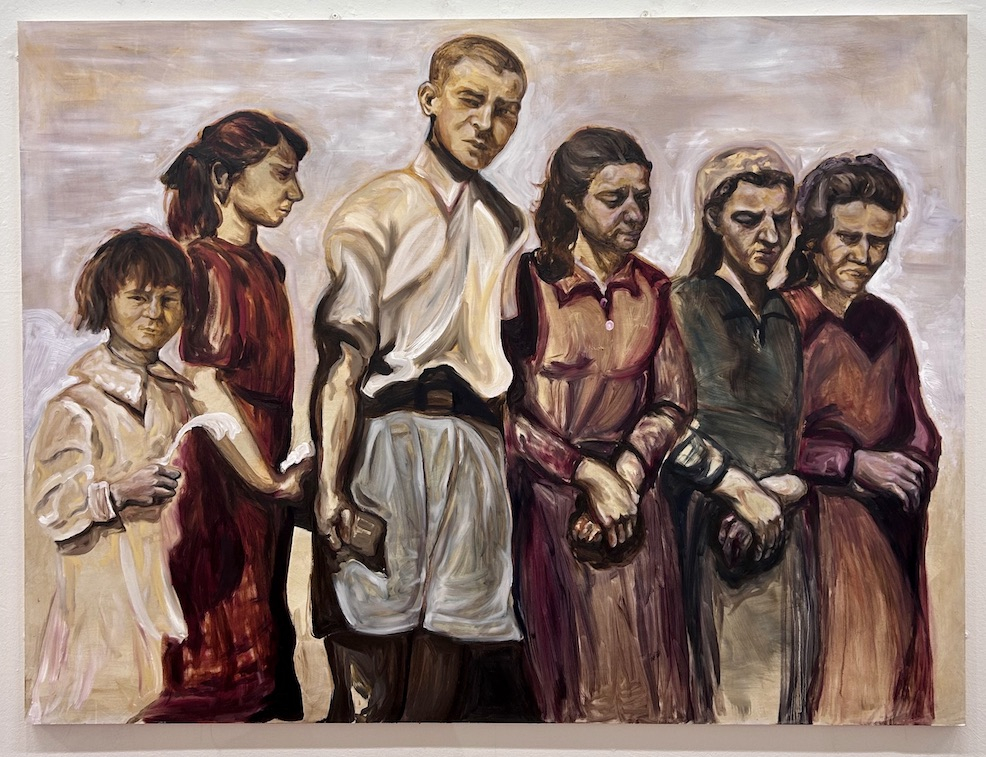
At the Graveside


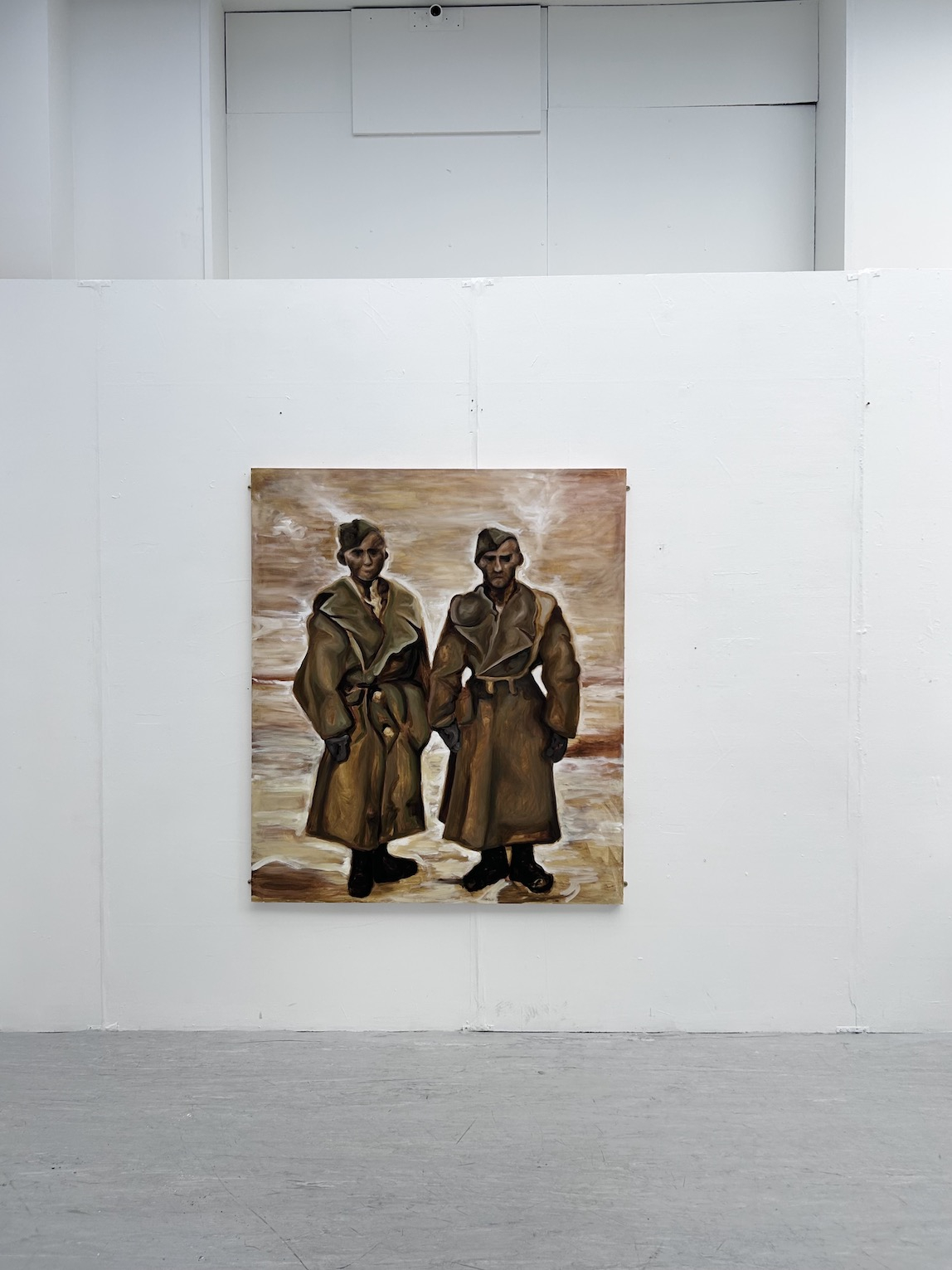
Two Friends, The Caspian Sea

Chess Game
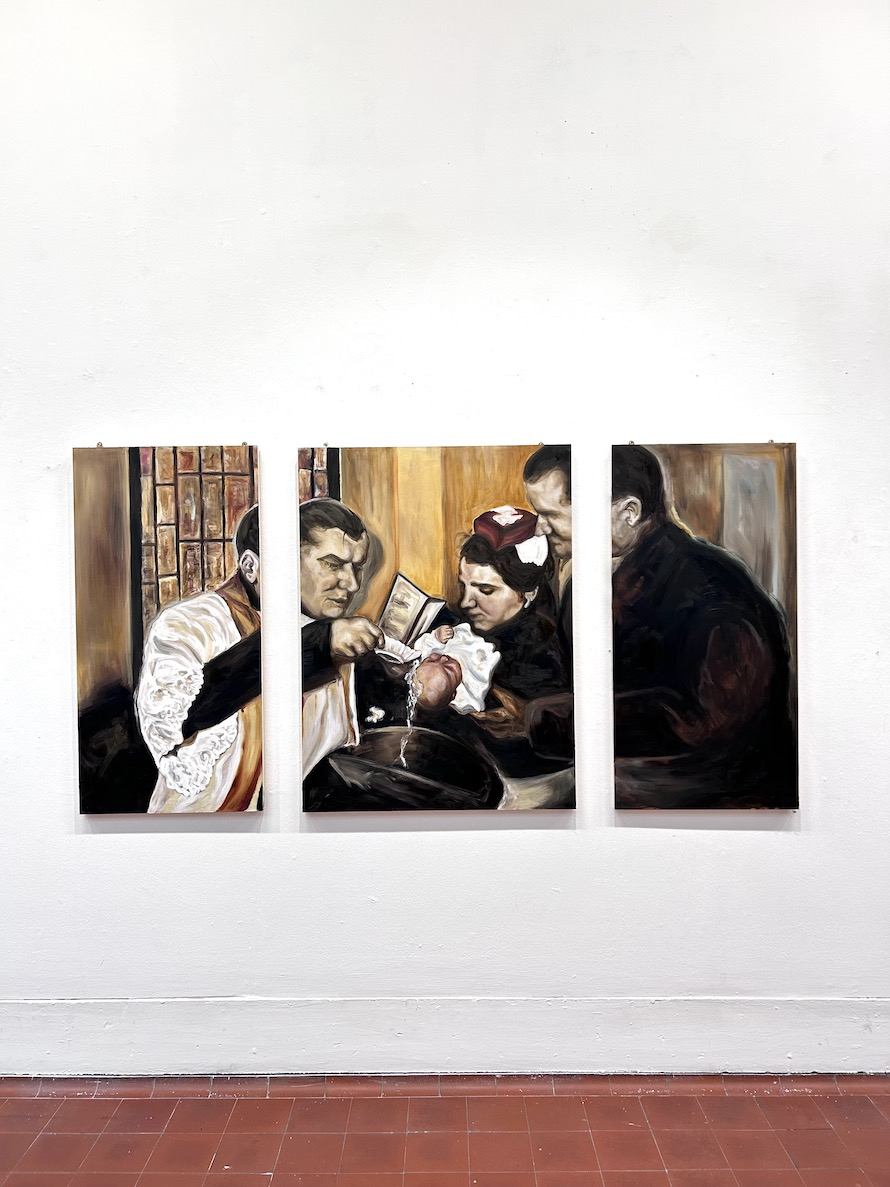
Baptism
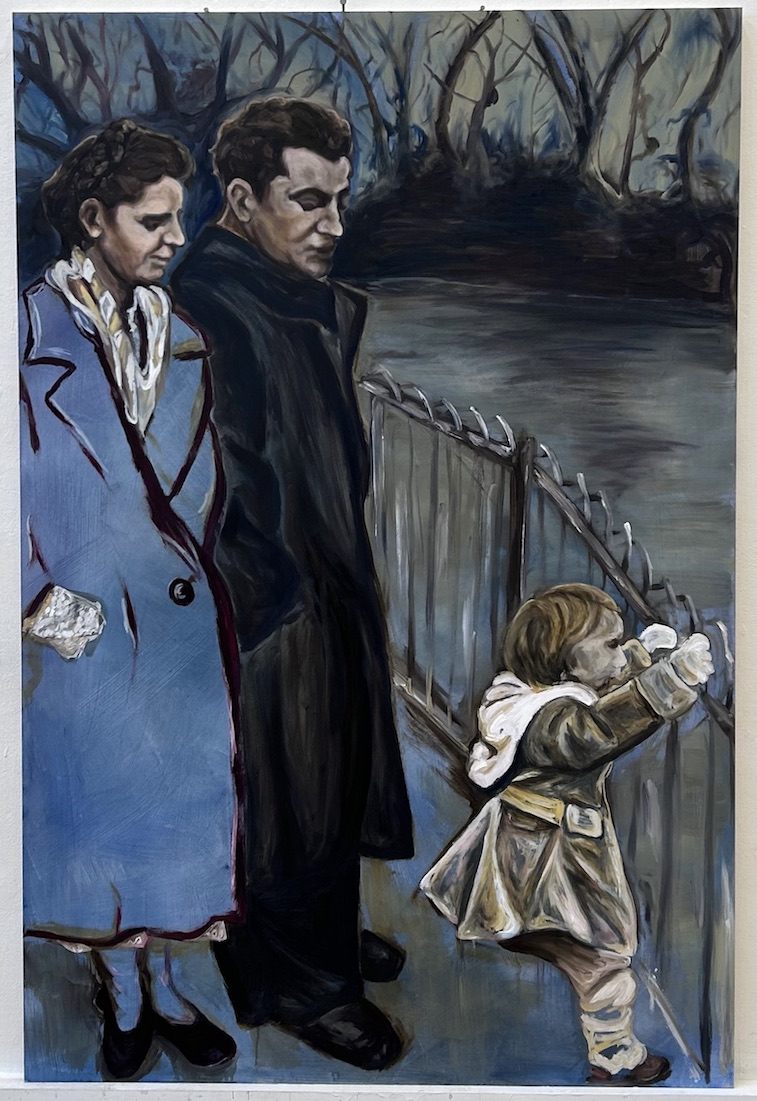
Alexandra Park
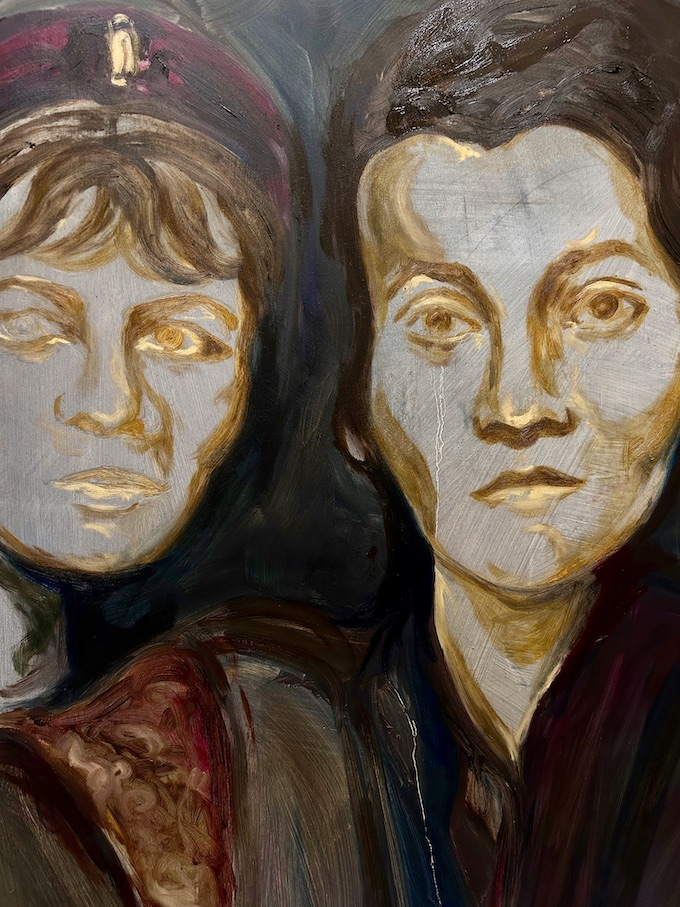
The Partisan
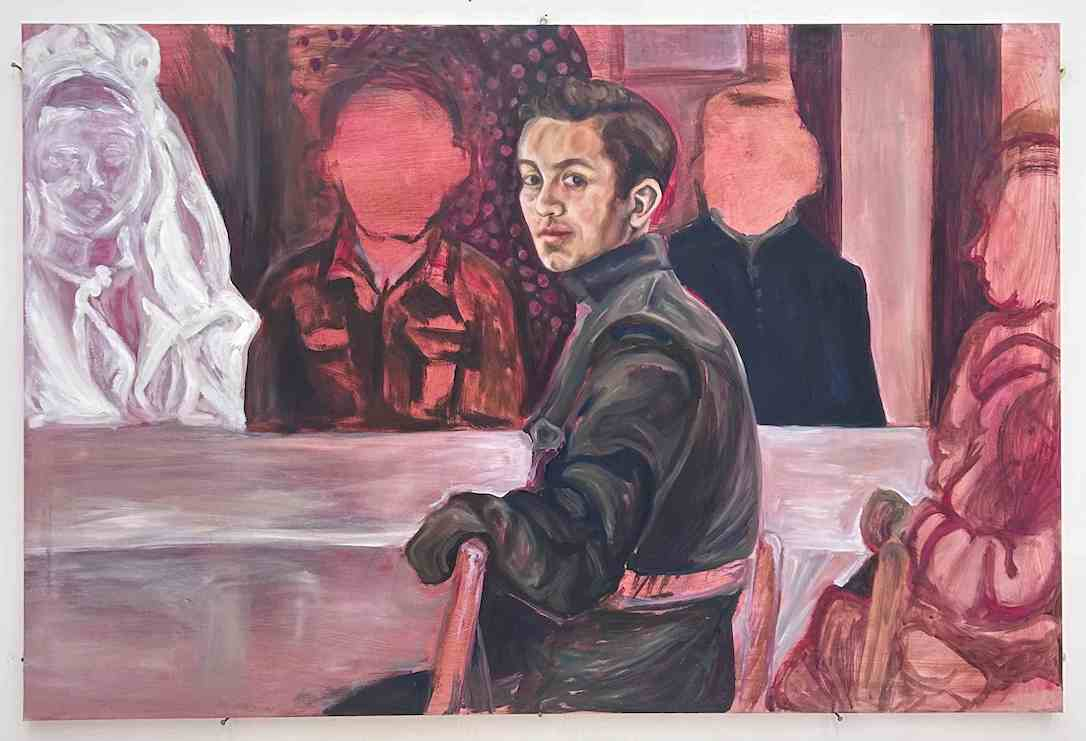
The Bride

Chess Game

Nurses' Hands
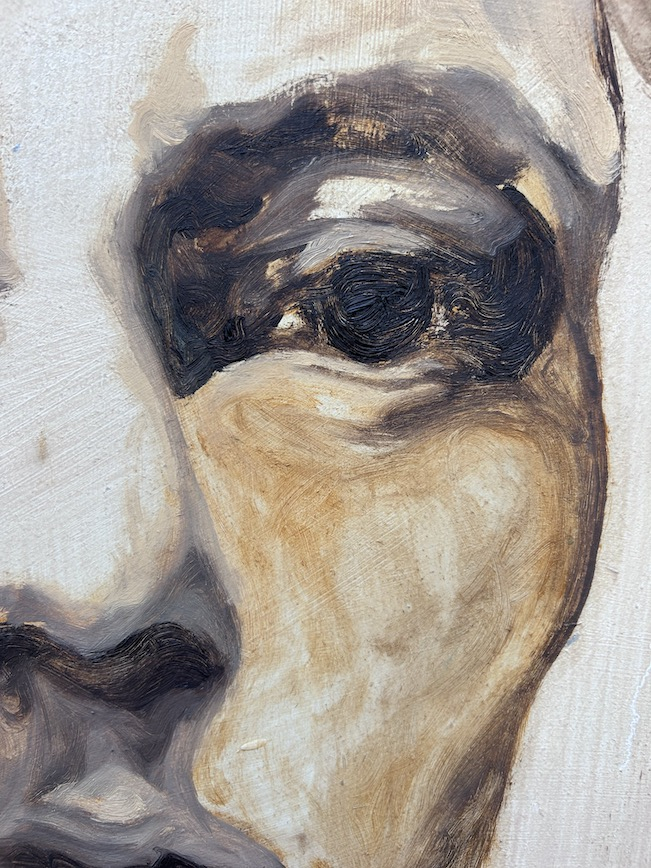
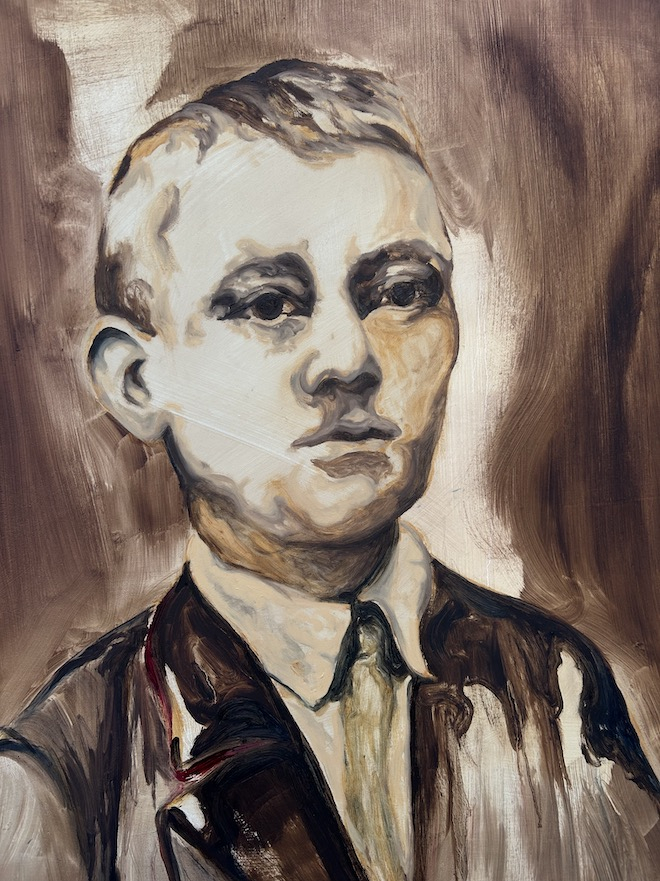
Mikolaj
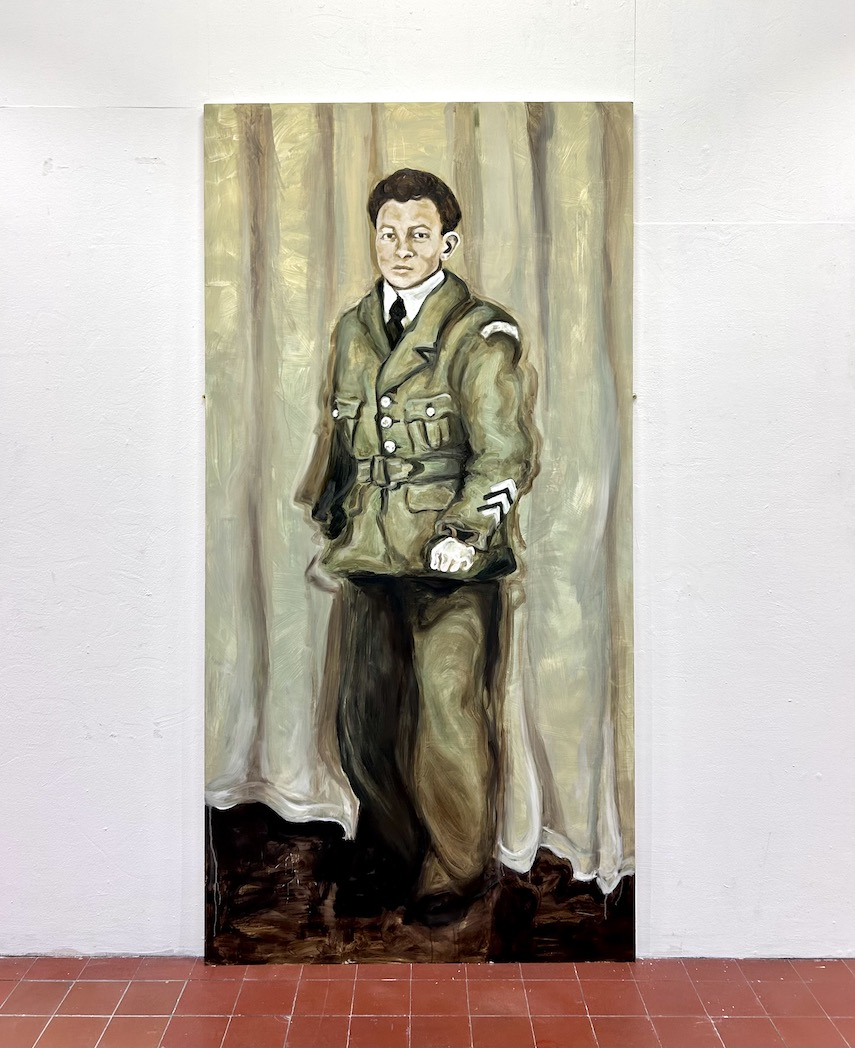
Uniform Fitting
Awards
Project description
Exile + Remembering:
Natasha Kawalek’s work inquires into the boundary between remembering and fictioning, exploring the painted image as mediation with what lingers from histories, collective and inherited trauma.
The paintings explore personhood, distance and memory in the exile stories of the hundreds of thousands of Poles deported into gulags during WWII. Her grandfather and family were among the deported. Upon release, he migrated through the Middle East to safety. The work responds to the problem of preservation of these historical stories in post-memory contexts, which is now more important than ever before.
The most important aspects of history are often the personal accounts, which are inevitably erased with time. Natasha seeks to elevate and foreground the personal journeys of exile during this time. When foregrounding the stories of individual struggle, absence becomes a medium of awareness
Natasha paints from family archival photographs, an act of mediation between the cold historical depiction and the subjective interpretations of the present. The photograph therefore functions as a landscape of forgetting, as they become more and more distant from the present. Susan Sontag (1977) describes this as dead memory, where real, lived moments become inert objects. Painting holds the fluidity of this dialogue - carrying articulations of relationship and distance, as compositions fluctuate between uncanny absences, such as bare tables and vacant forms, entangled with the intimate, the specific. Figures dissolve into silhouettes, in between being space or a recognisable form.
This work is important as it relates to the contemporary issue of representation of these narratives: “The dead are remembered, but the dead do not remember” (Snyder, 2010). These are stories we inherit, reflect and reinterpret in narratives of self and societal definition.
It matters how we relate and retell all the traumas we inherit so that we might create better futures.
Statement on the Subject Matter Itself:
Mościska to Manchester through the Gulag and the Desert: These paintings explore the exile stories of the hundreds of thousands of Poles deported into gulags during World War II. The artist's late grandfather, his sisters and their parents, were among those who ultimately migrated through the Middle East to new lives in the UK, Australia, USA and other countries.
Their story starts in Mościska (Mostyska) in what is now western Ukraine (then Poland). These “Bloodlands” (Snyder 2010) of Eastern Europe were the scene of multiple military movements and desperate tragedies. Sent by cattle-truck to the gulags in February 1940, the family were released in September 1941 and trekked with many thousands of others to make up the Anders Army in the Middle East. For many, like my grandfather, after emerging from the gulags as “skeletons with rags” (Davies 2015), their time in Persia (modern day Iran) became one of renewal, hope, but also new uncertainty. Mikolaj, my great-grandfather, did not survive the journey and is buried in Tehran. After this, my grandfather was separated from his mother and his sisters for many years but eventually were reunited for new lives in Manchester. They took on jobs, had homes and nurtured families.
Davies, N. (2015) Trail of Hope: The Anders Army, An Odyssey Across Three Continents. Oxford: Osprey Publishing.
Snyder, T. (2010) Bloodlands: Europe Between Hitler and Stalin. London: Bodley Head.
Sontag, S. (1977) On Photography. New York: Farrar, Straus and Giroux.
Natasha Kawalek
Exile Stories
Follow:
Share: