Description

My work begins on the ground.

It begins with foraging—fallen leaves, plants and petals, rusted metals, soils and bark. Materials gathered not by design but by attention: what the season offers, what the place releases, what would otherwise go unnoticed underfoot.

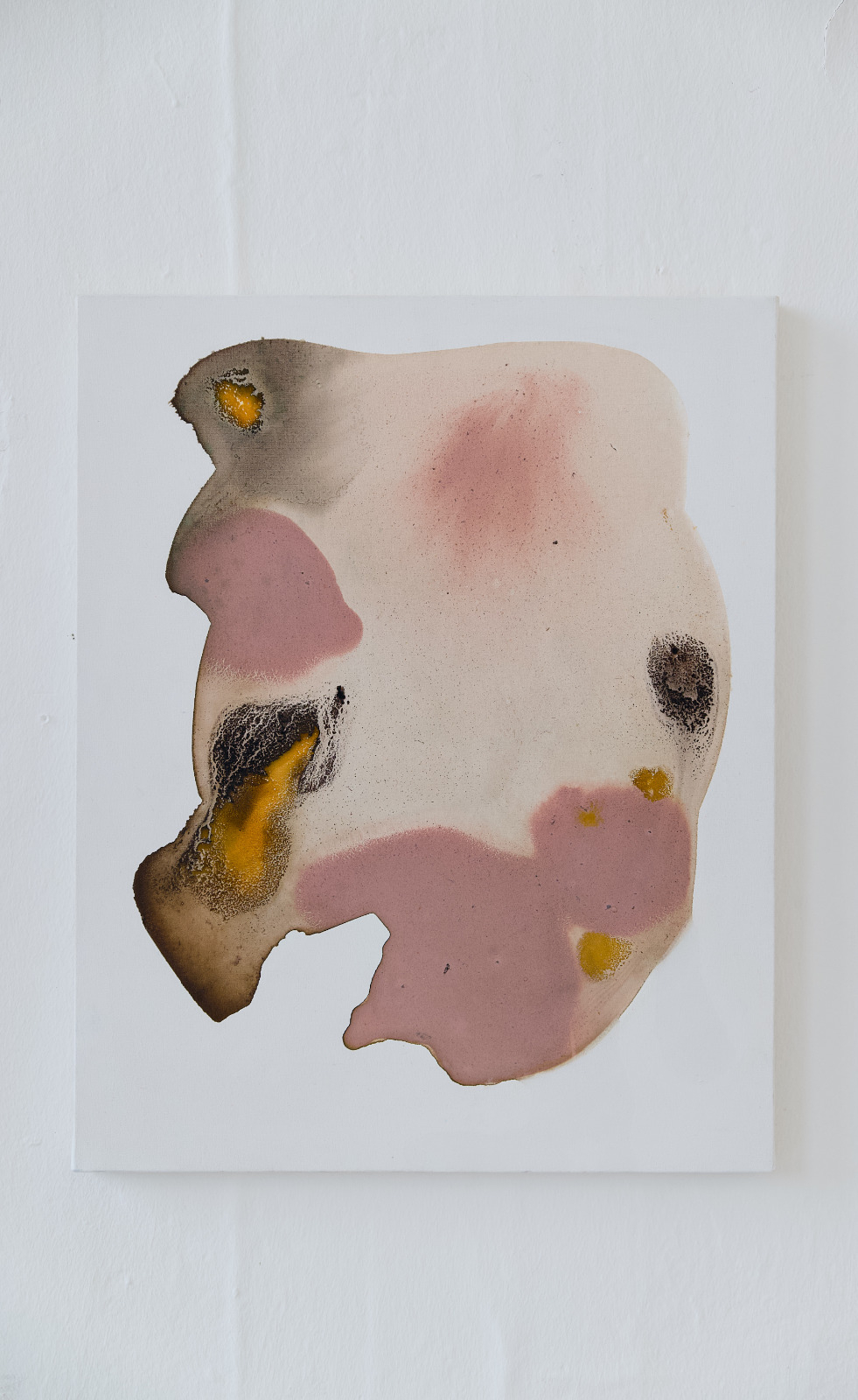
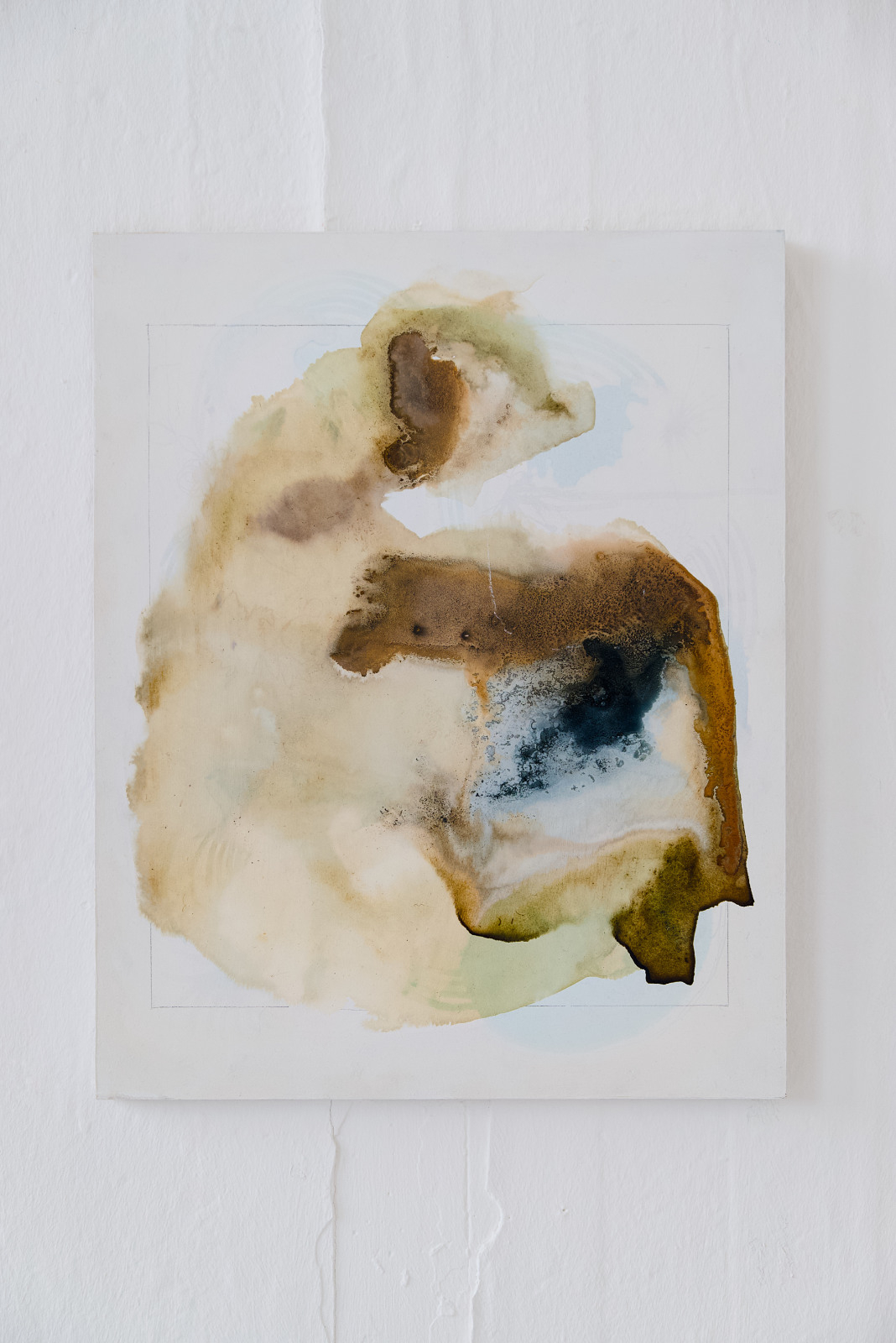
Materials boiled down to colour, metals left to oxidise, water carrying what the earth releases. The inks I make are unstable by nature. They stain, bloom, crystallise, settle. They resist being fixed, frozen once dried. Their behaviour becomes a collaborator—gravity, heat, time and chemical reactions shaping the surface alongside my hand.

Looking closely becomes a way of understanding.

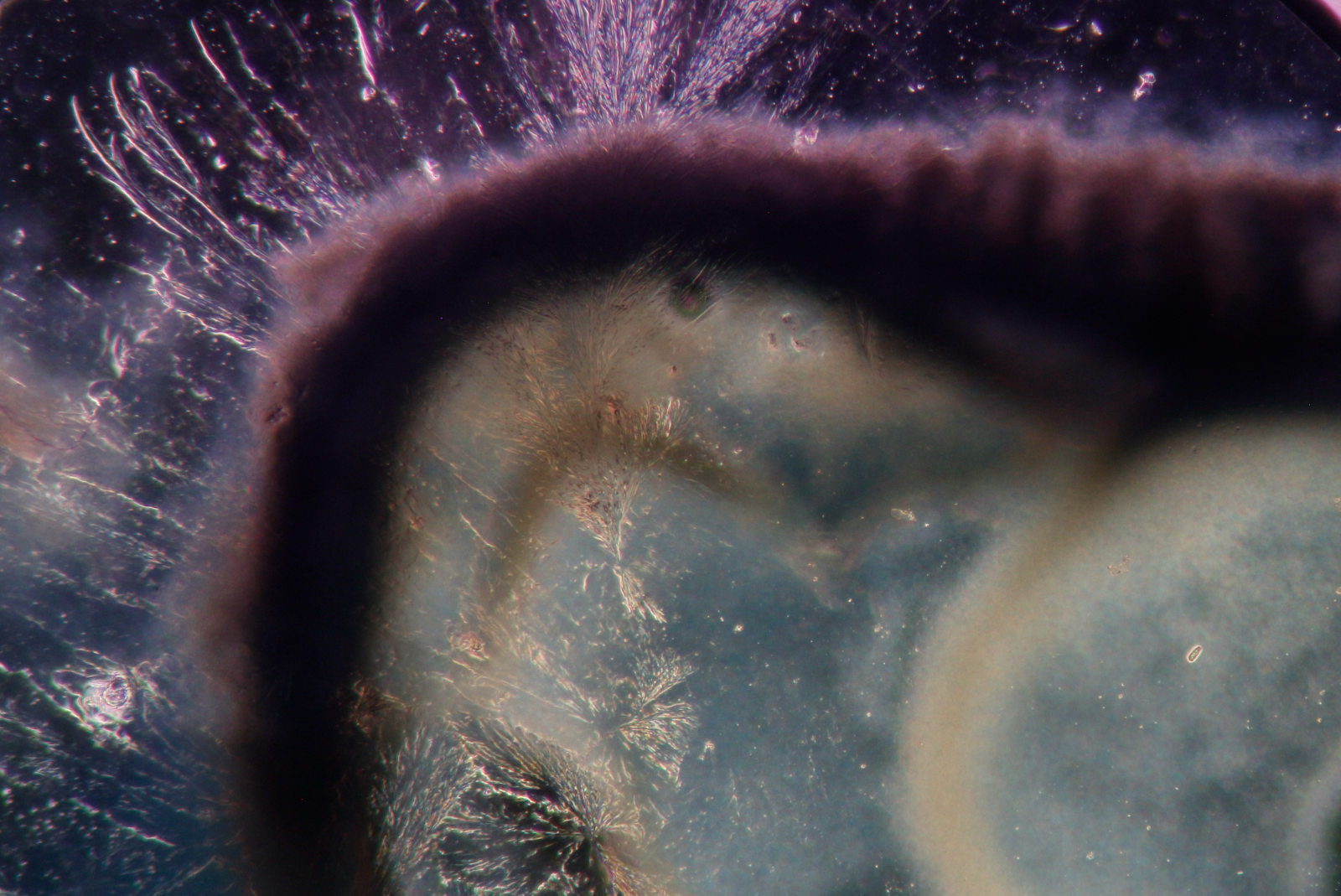
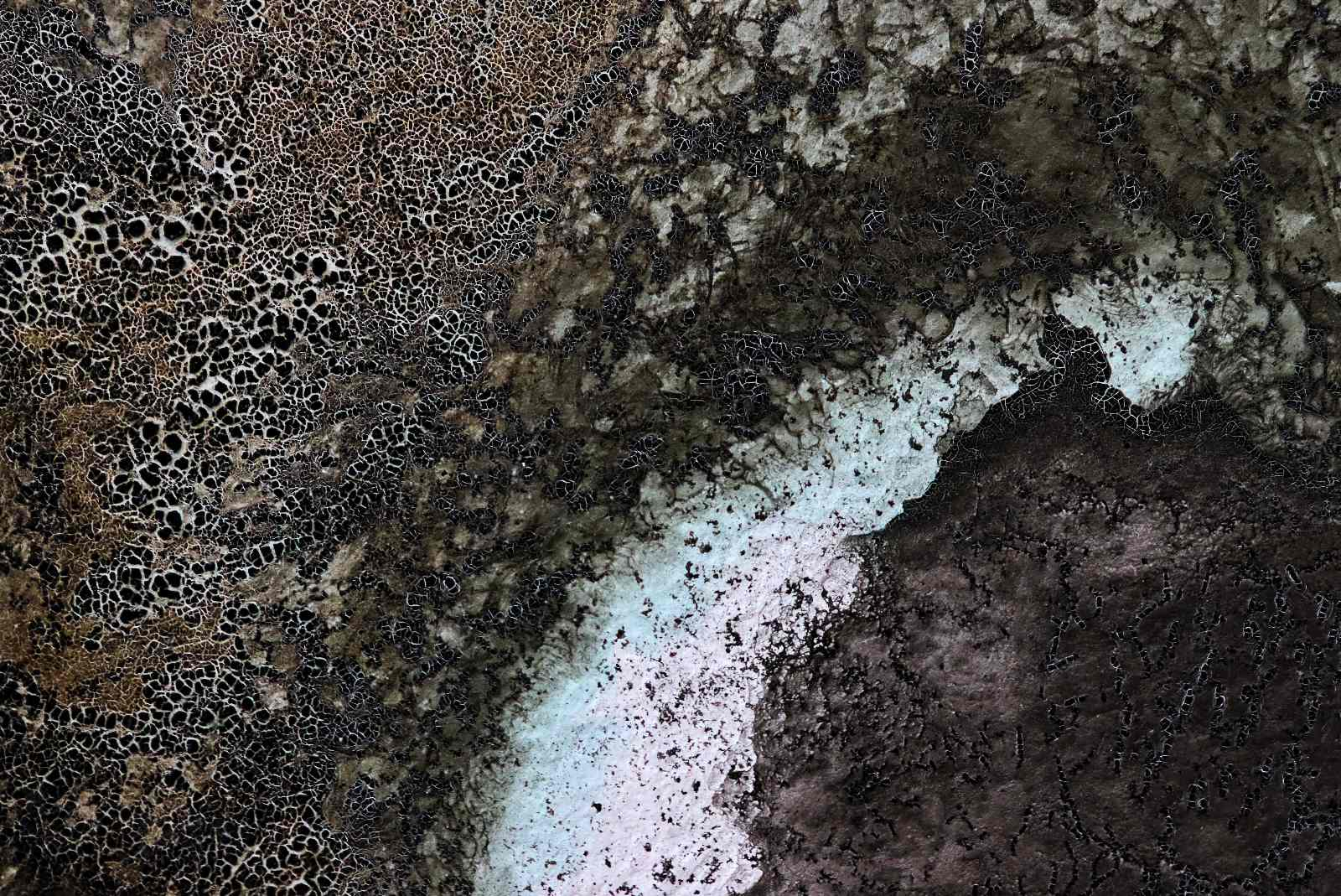
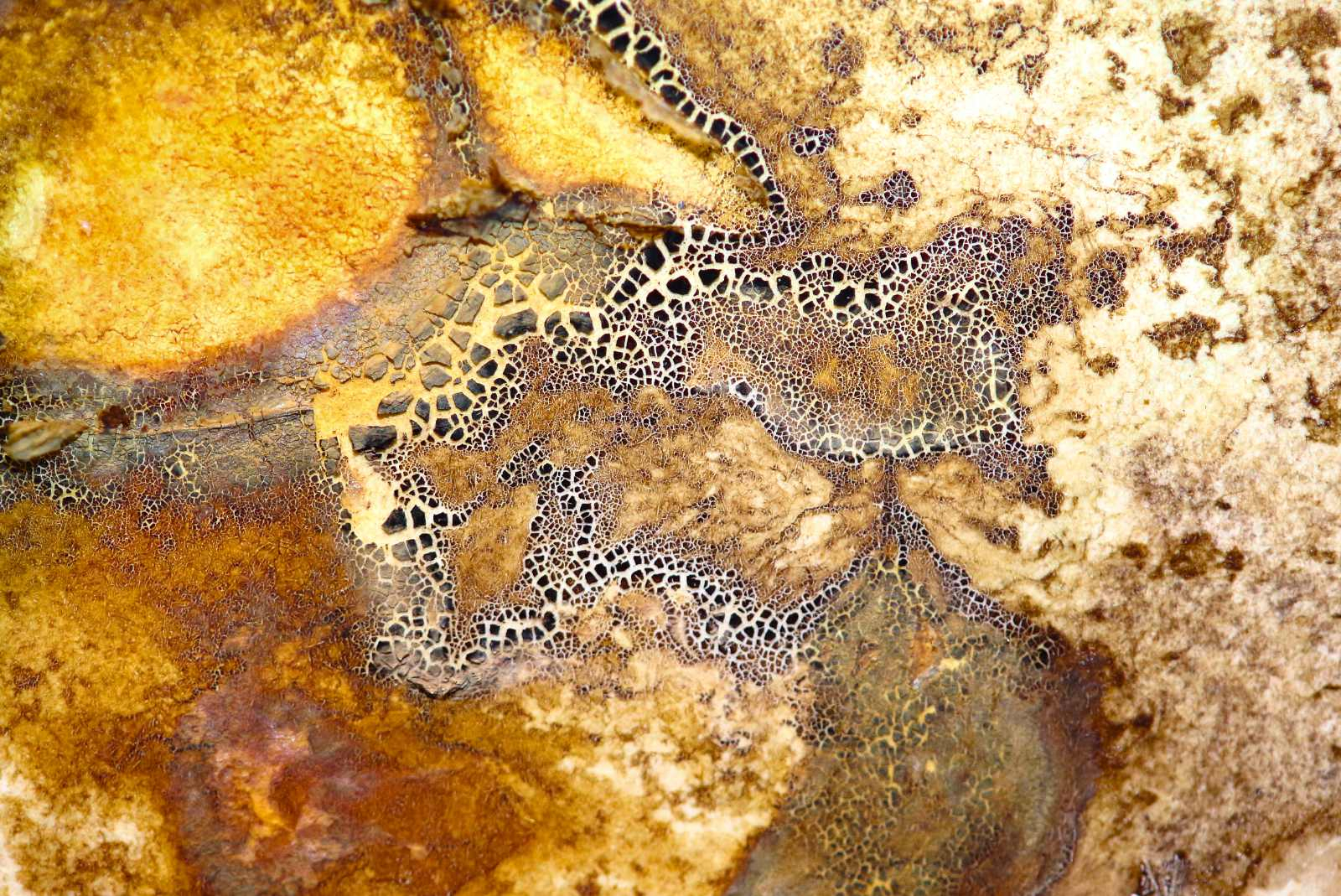
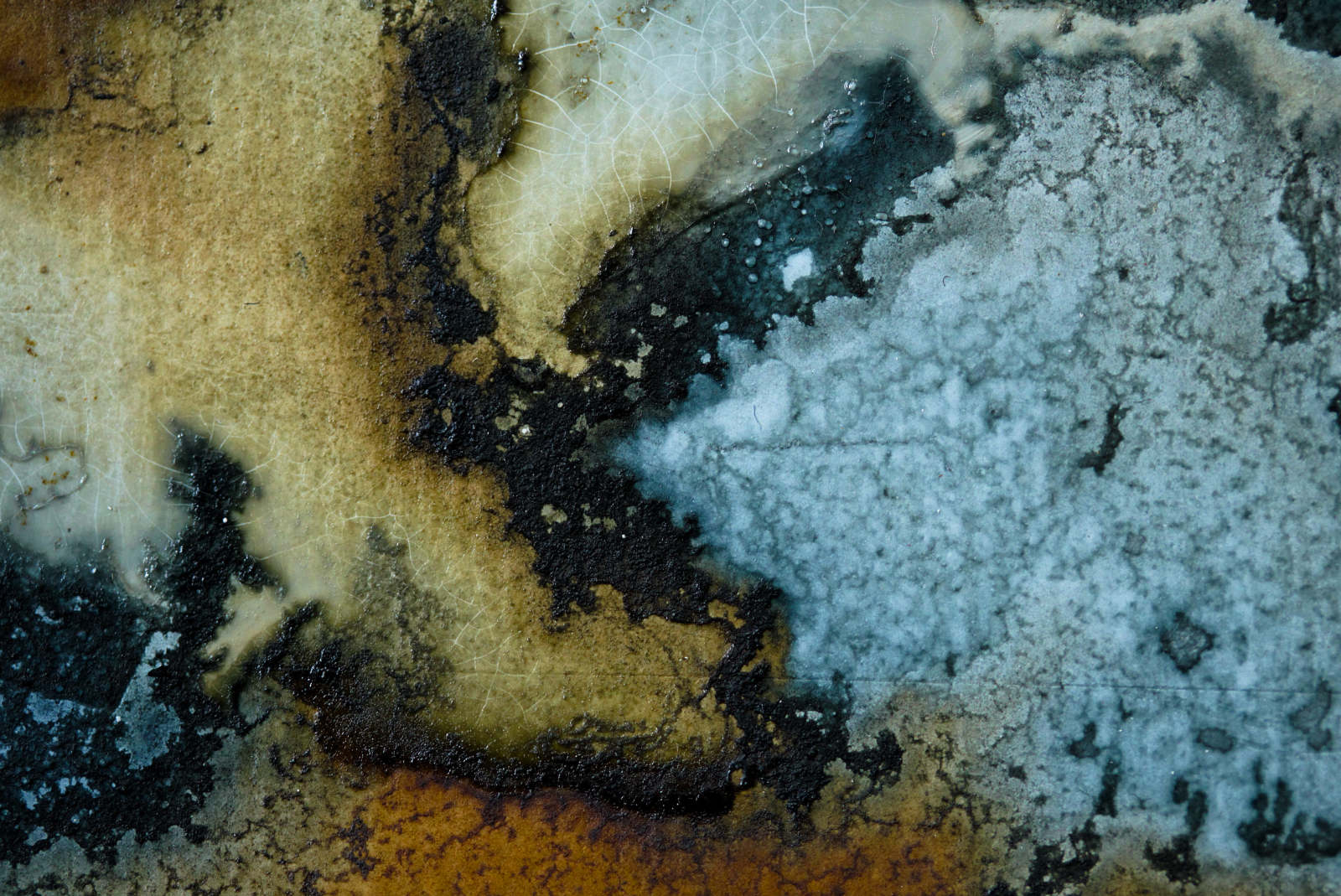
Macro photography and microscopy expose the secretive, internal life of the material—a life usually hidden in minuscule detail, overlooked in favour of the image. Scale collapses. The surface opens into a whole new minute universe. Cracks form like dried riverbeds. Fields of colour resemble aerial landscapes or cosmic atmospheres. The crystalline structures of copper salts look like nothing so much as constellations.

The minute echoes the vast. A sublime lives not only in mountains or open skies but in the behaviour of matter—in the quiet drama of colours transforming, in the unpredictable way two inks react to each other, in the life that continues on the surface long after the brush has lifted.

What appears as a painting is not just an image made by the artist, but a record of collaboration: between intention and material, between control and release, between earth, water, time and touch. The painter's role is not to master the material but to create the conditions in which it can speak.
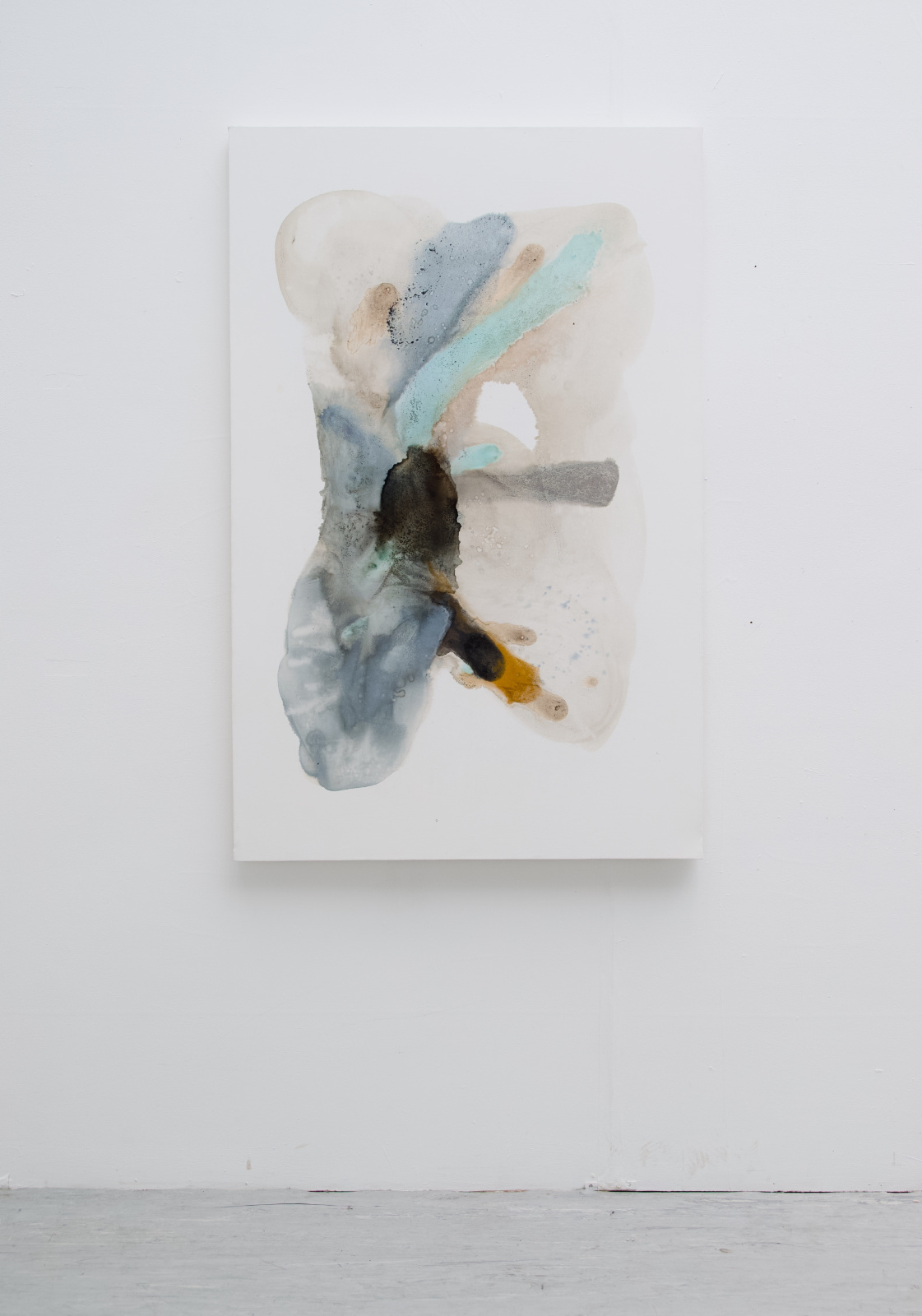
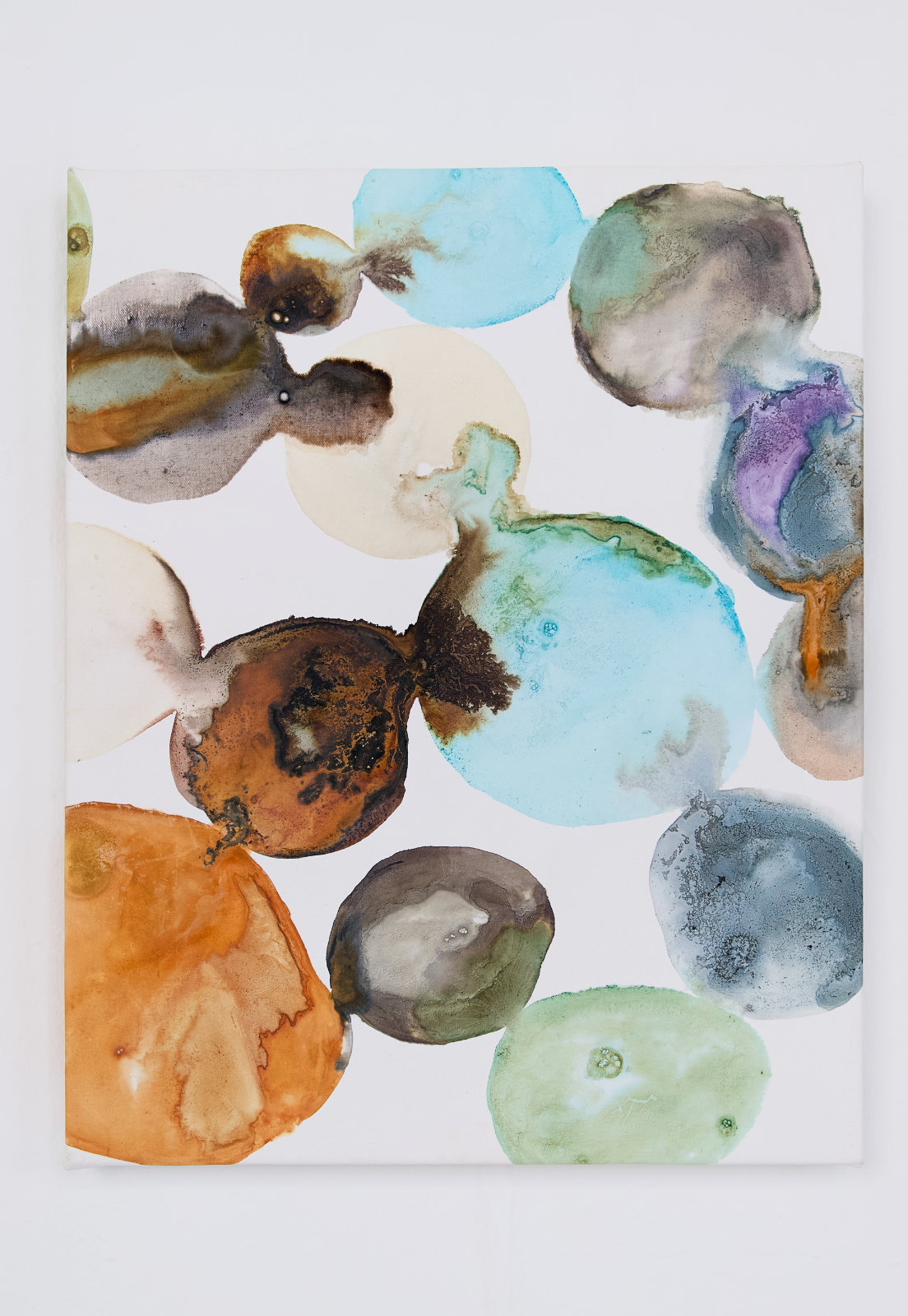
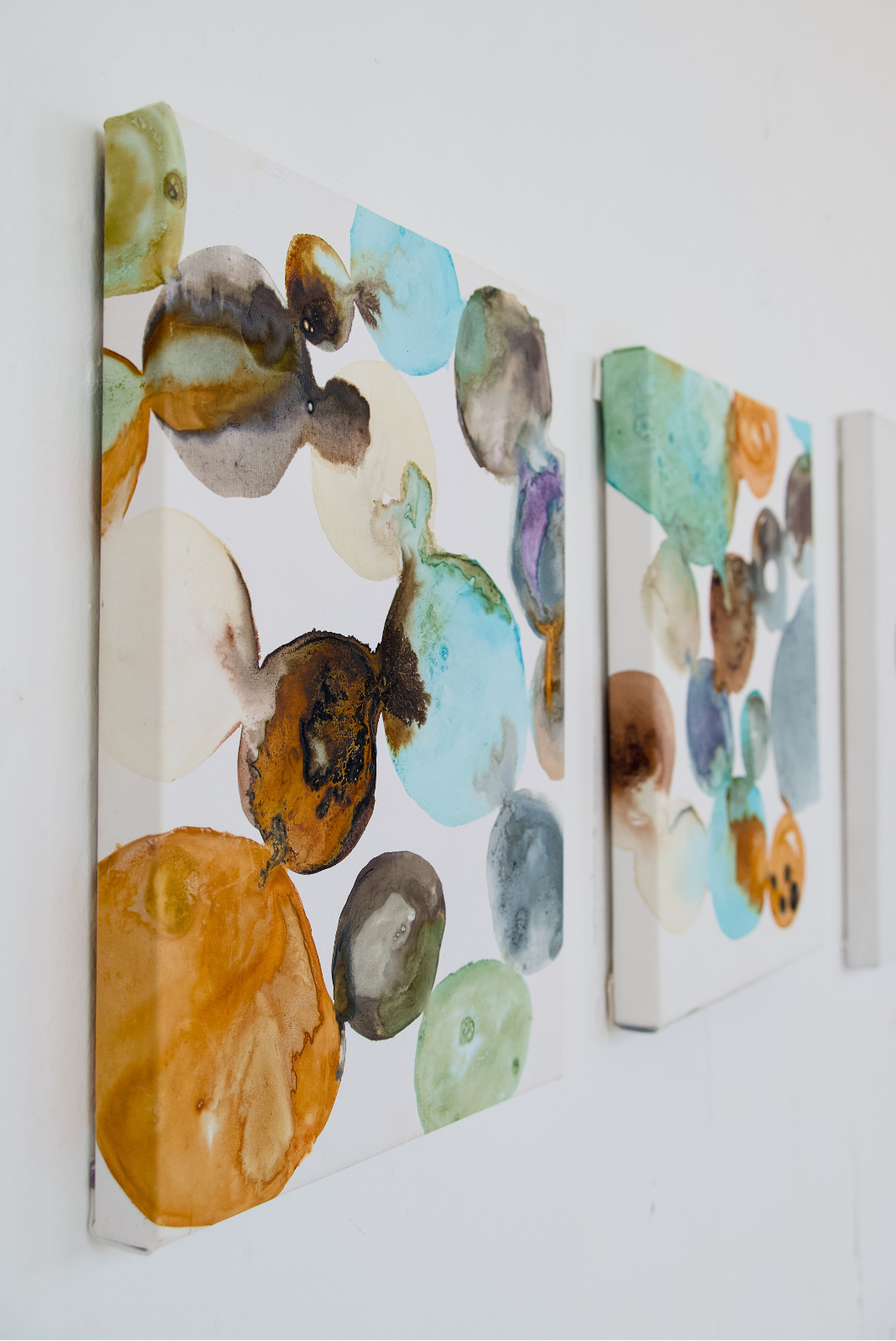
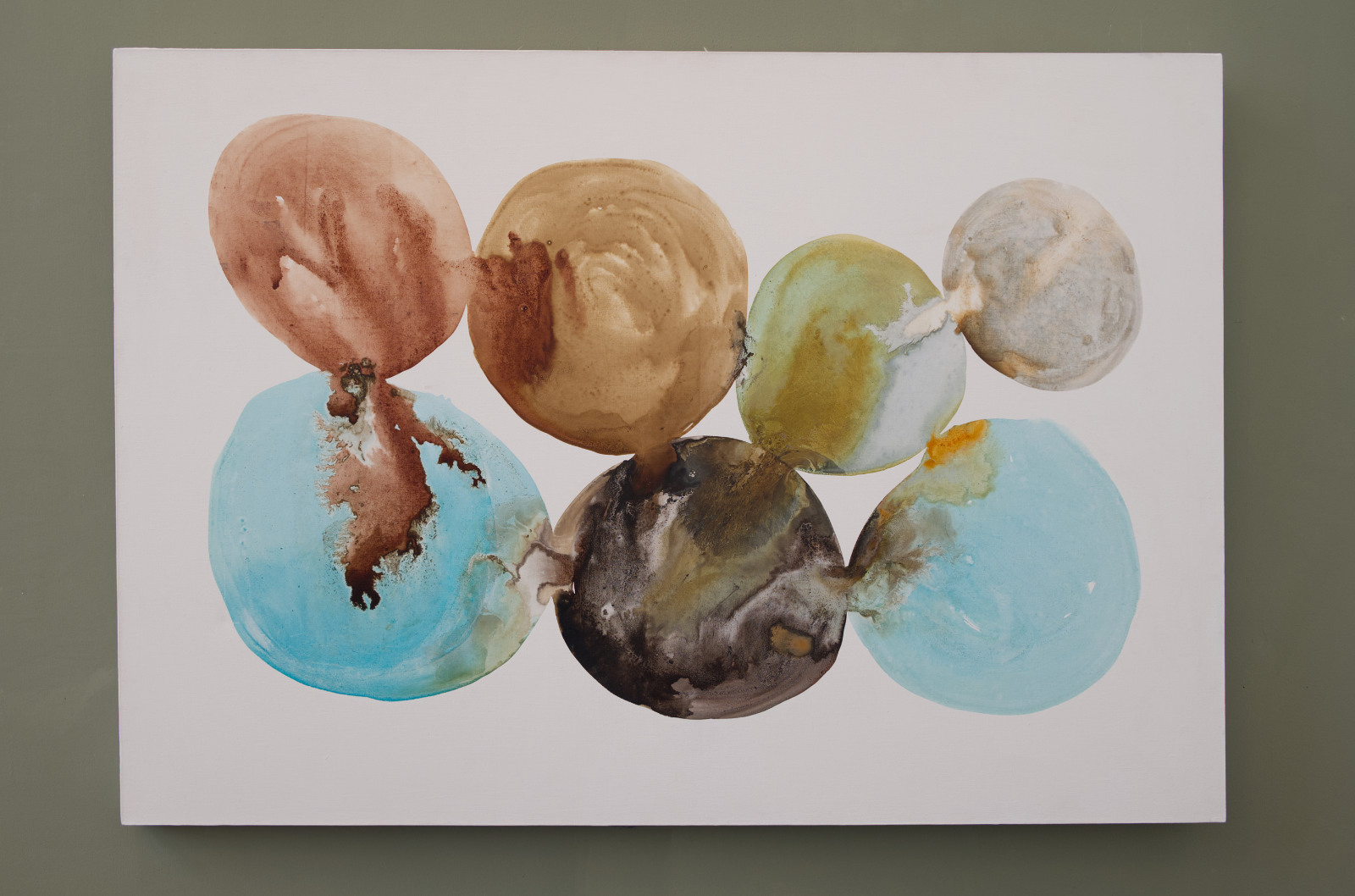
A 130 × 90 cm landscape canvas made with natural inks. Seven soft, rounded forms overlap across the white surface, with colours ranging from pale blue and green to rust orange, ochre, grey, and dark brown. The inks bleed into one another, leaving stains, tide marks, sedimented areas, and darker crystallised edges.
The Inks


The inks used in these works are made rather than bought. Source materials are gathered from local environments such: as my home garden and pavements, kitchen scraps, and the university metalwork shop and a few from my homeland of Rio de Janeiro, Brazil. Copper scraps, rust, acorn caps, oak husks, pine cones, red cabbage, hibiscus, staples removed from canvases, onion skins, avocado pits and skins, soils, bark, and fallen petals. My palette is shaped by place, season, and availability rather than predetermined colour outcomes.

Colour is extracted through soaking, simmering or boiling, with processes depending on the material and times ranging from hours to several weeks. The resulting liquid inks may be modified using household acids, alkalis, or metal salts to shift their chemistry: vinegar to brink out pink hues, baking soda or lye bring green hues, alum to intensify, iron to darken toward deep greys and blacks. More often, inks are left raw, their pH modified directly in the painting, allowing reactions to occur on the surface itself.

Unlike commercial paints, these inks do not behave uniformly. No two batches are identical. Organic source materials vary by season, soil, and age; water chemistry differs between recipes; even a residue left in a pan from a previous session can alter a colour. While some ink-makers take scientific precautions to minimise these variables as far as possible, I choose to see them as part of the work’s material agency. The unexpected result of an added modifier, an ink left too long on the heat, two colours meeting unpredictably on a wet surface: these are not failures but events, carrying information about the material's own nature.

These inks are also subject to change over time. They may fade, deepen, or shift in response to light and air. Rather than treating this as a limitation, the work embraces it: the painting continues to live after it leaves the studio, a record not just of how the inks were applied, but of how they behave across time.

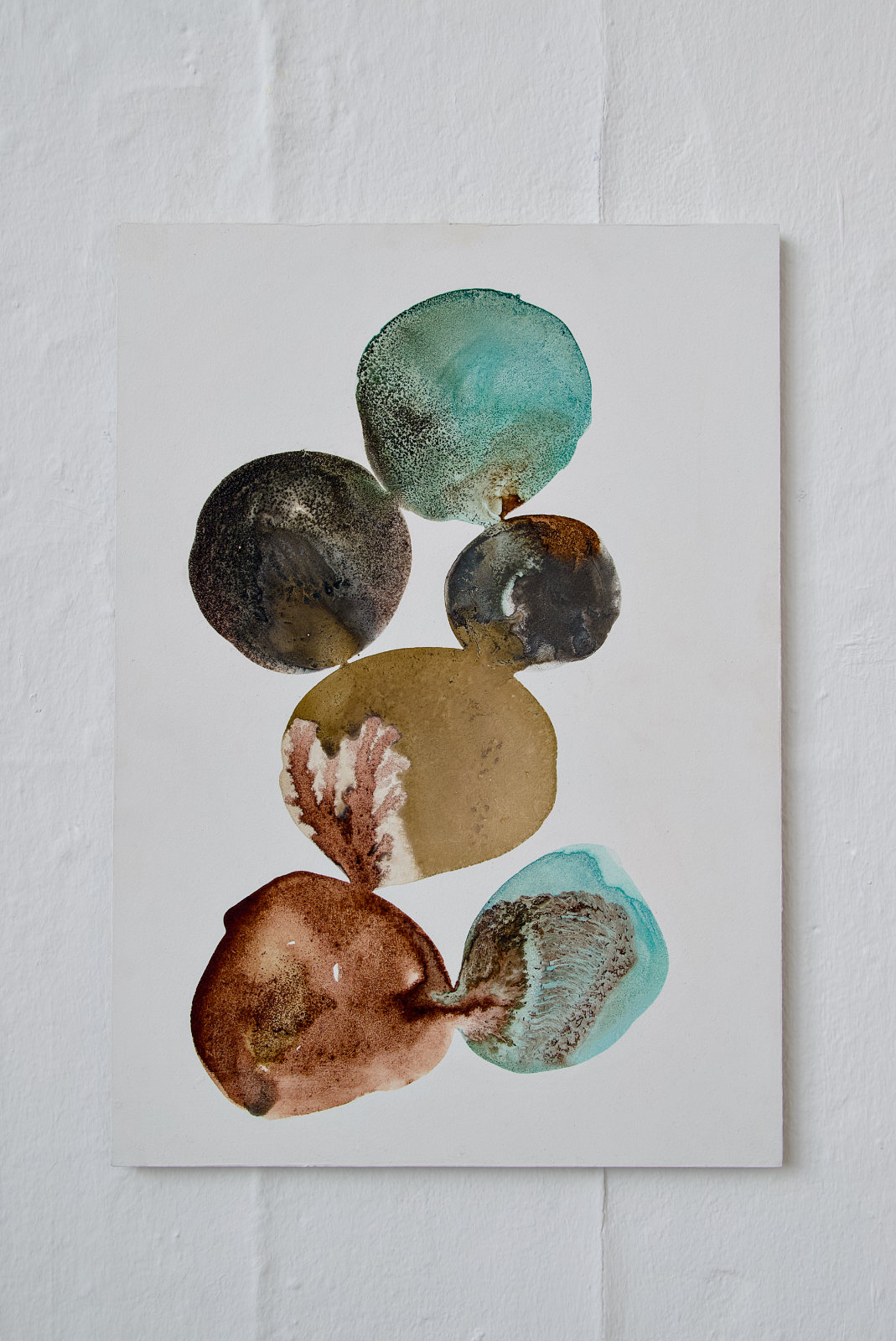
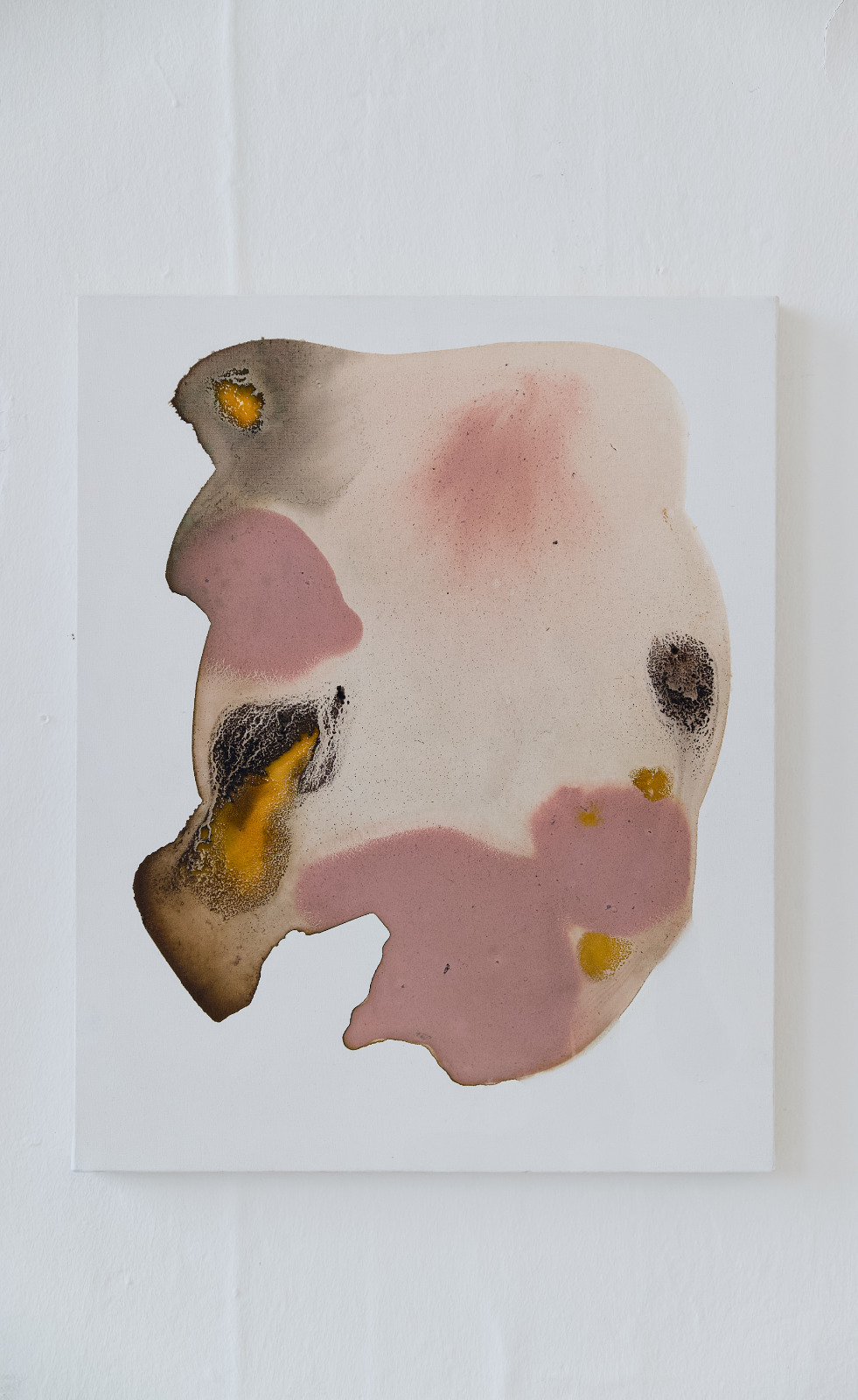
A 30 × 40 cm portrait-format canvas made with natural inks. On a white background, seven rounded pools of colour form a loose vertical chain down the centre of the canvas. The colours include turquoise blue, dark grey-black, ochre brown, rust orange, muted green, and pale blue-green. The pools touch and bleed into one another in places, with visible sedimentation, speckled crystallised edges, translucent staining, and darker concentrated patches of pigment.
A 130 × 90 centimetre landscape-format canvas made with natural inks, showing seven rounded, overlapping pools of colour on a white ground. The forms include pale blue, rust orange, ochre, green, grey, and dark brown areas, with visible staining, bleeding, sedimentation, and crystallised edges.
Looking Closer

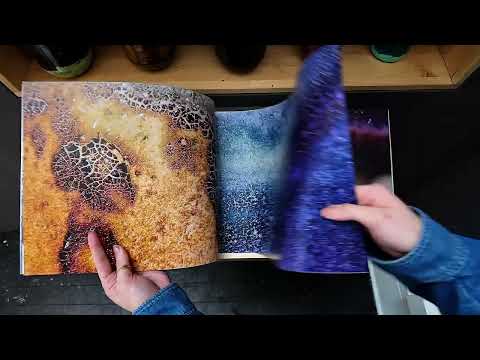
Macro photography became a research tool before it became part of how the work is shown. By photographing paintings at high magnification—a 60mm macro lens—it became possible to study how pigment settle, pools, fractures, and concentrates across a surface beyond the capacity of the naked eye.

What these photographs revealed was not only technical information but something more revealing: the surface of a painting ceases to look like a painting. Cracks in dried red cabbage ink resemble aerial views of frozen lakes, other like dried river–beds, or beaches seen from above. Crystalline copper salt formations, observed under dark-field microscopy at the ASCUS Lab read as cosmic atmosphere and far away galaxies. The same structures that appear at the scale of a brushstroke echo forms seen at the scale of a landscape or a cosmos.

This collapse of scale is central to the work. At the microscopic level, inks behave through the same fundamental processes that shape the physical world at far larger scales—accumulation, sedimentation, crystallisation, transformation over time. The sublime, usually associated with the overwhelmingly large, reveals itself in the overwhelmingly small.

These macro photographs are not simply documentation. They are a mode of looking that is itself part of the practice, an invitation to slow down and linger with what the surface holds, to observe the painting not as an image made by an artist but as a place where material is still, quietly, doing things.

Painting - BA (Hons)

student list