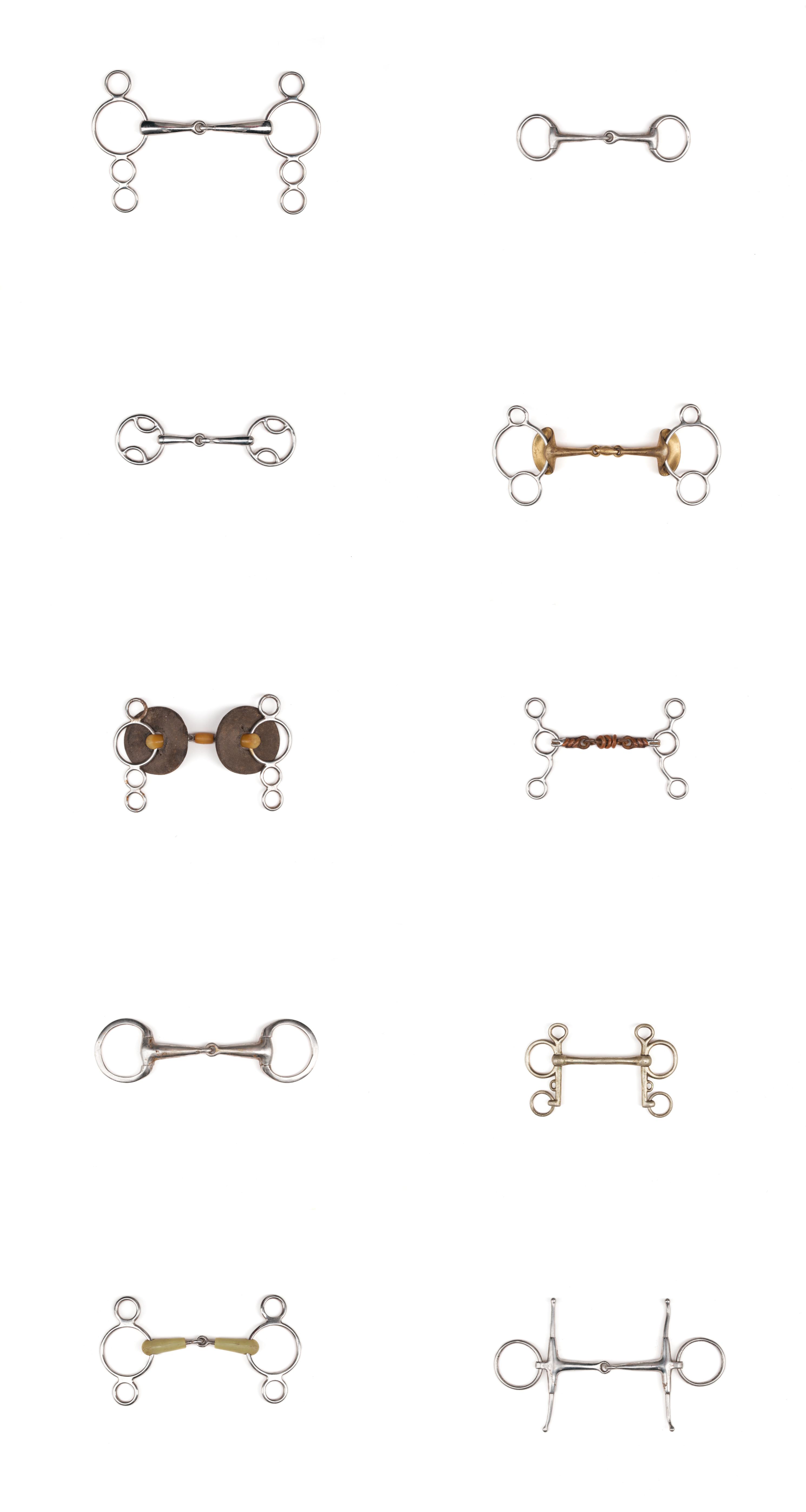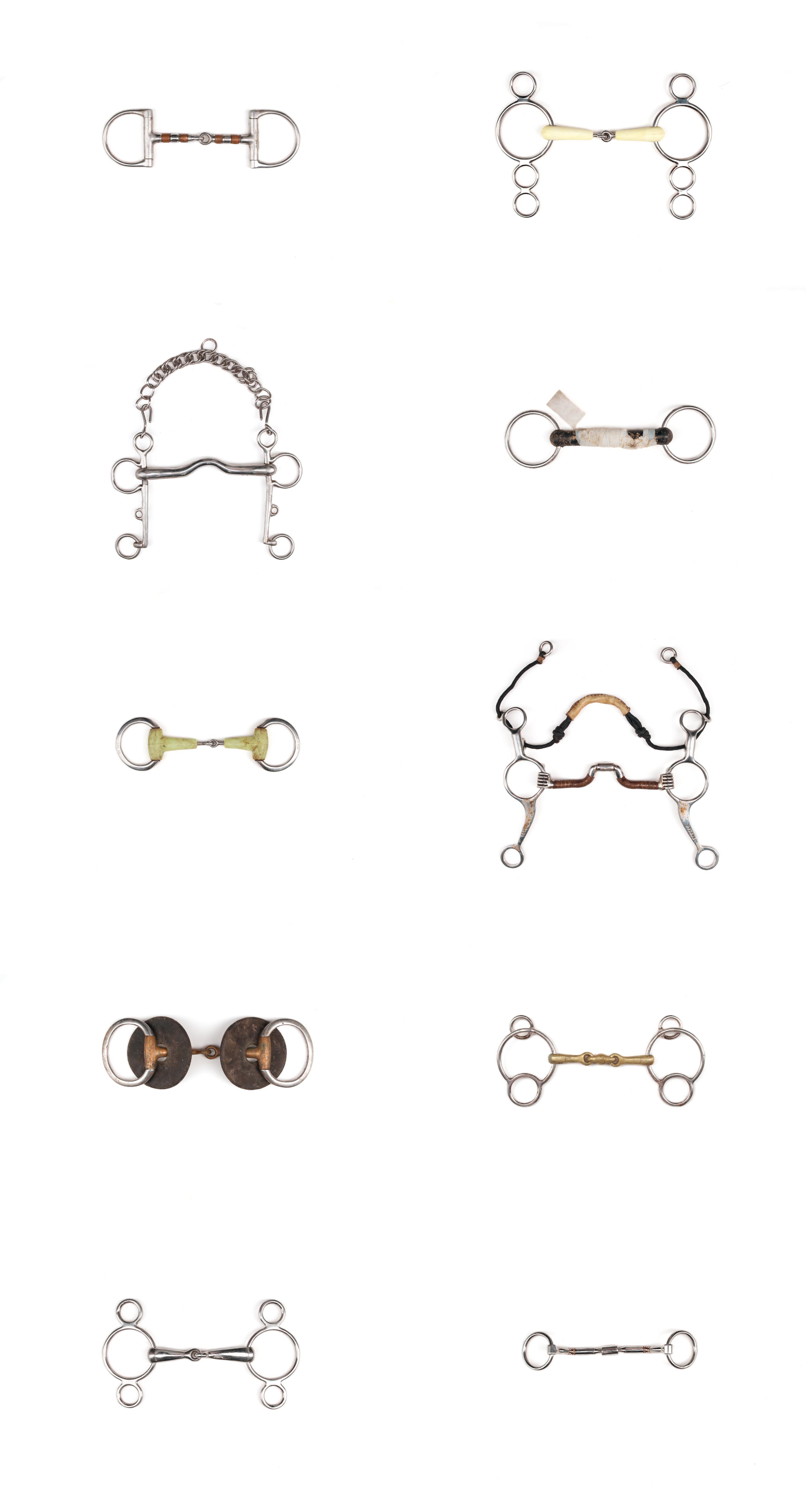
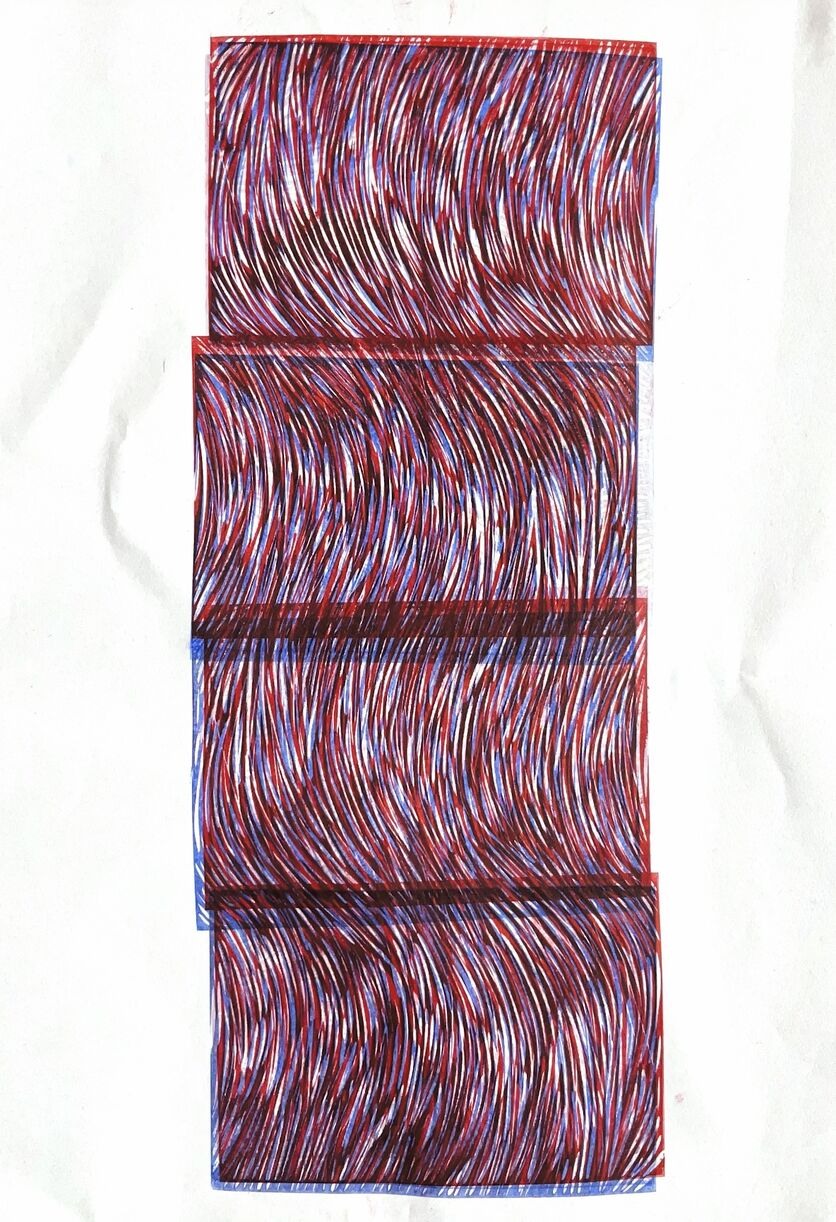
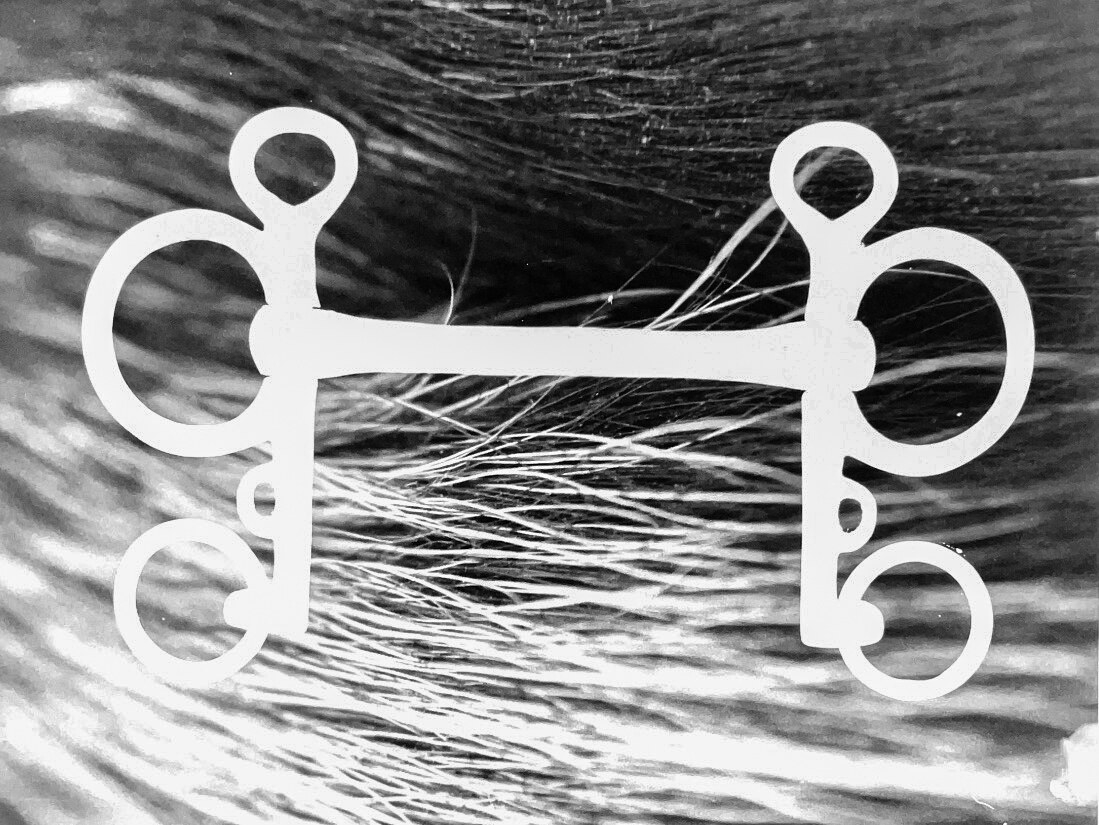
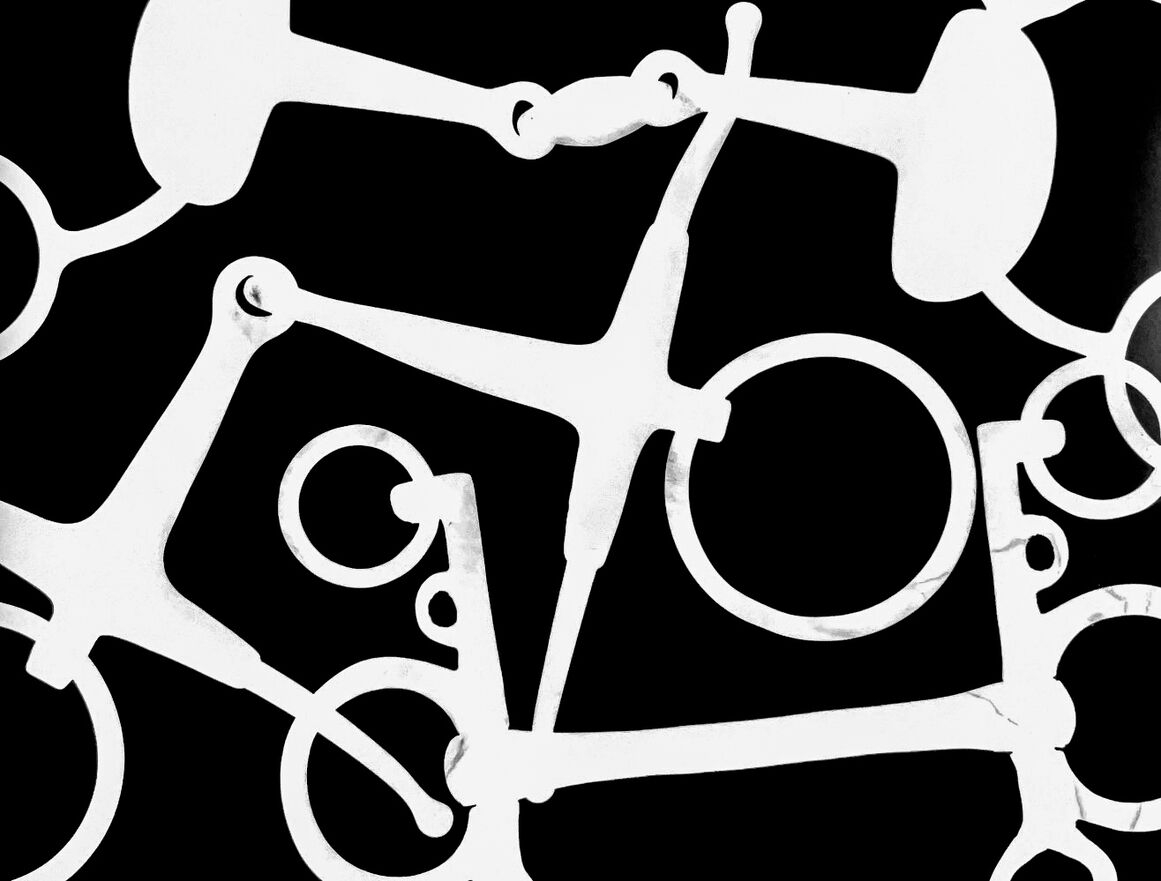
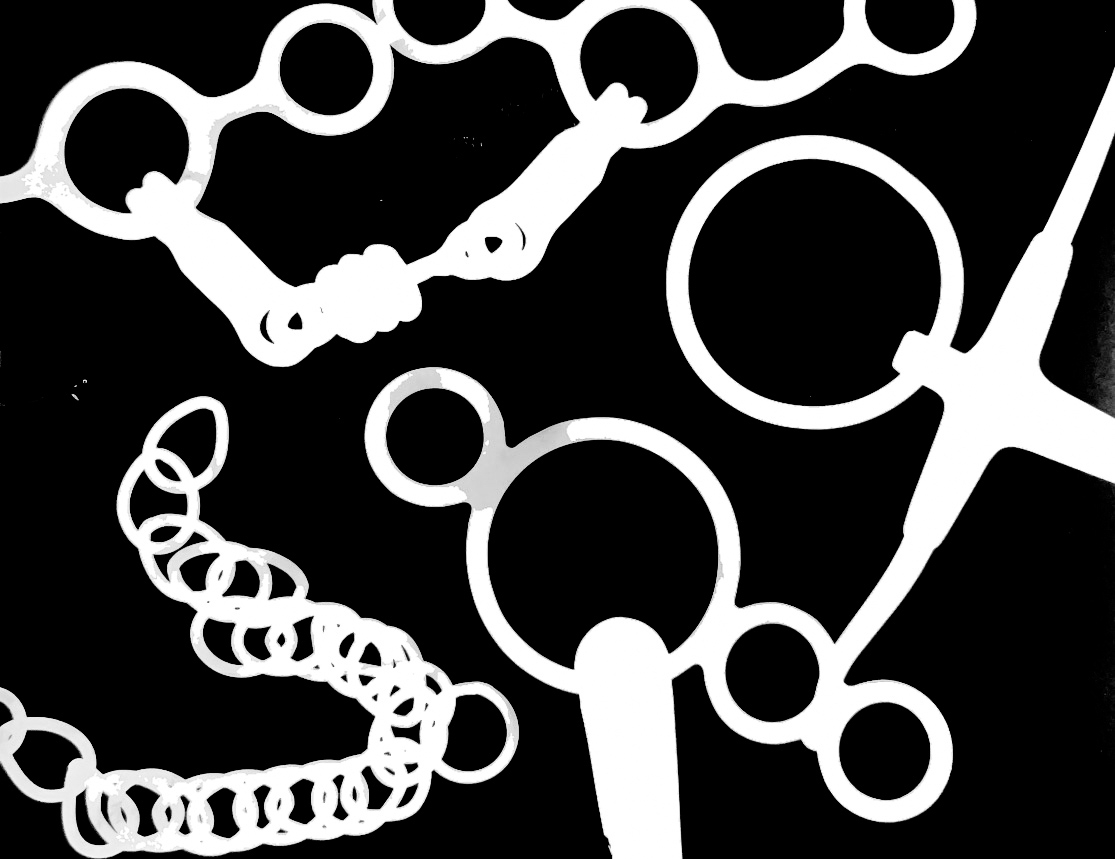
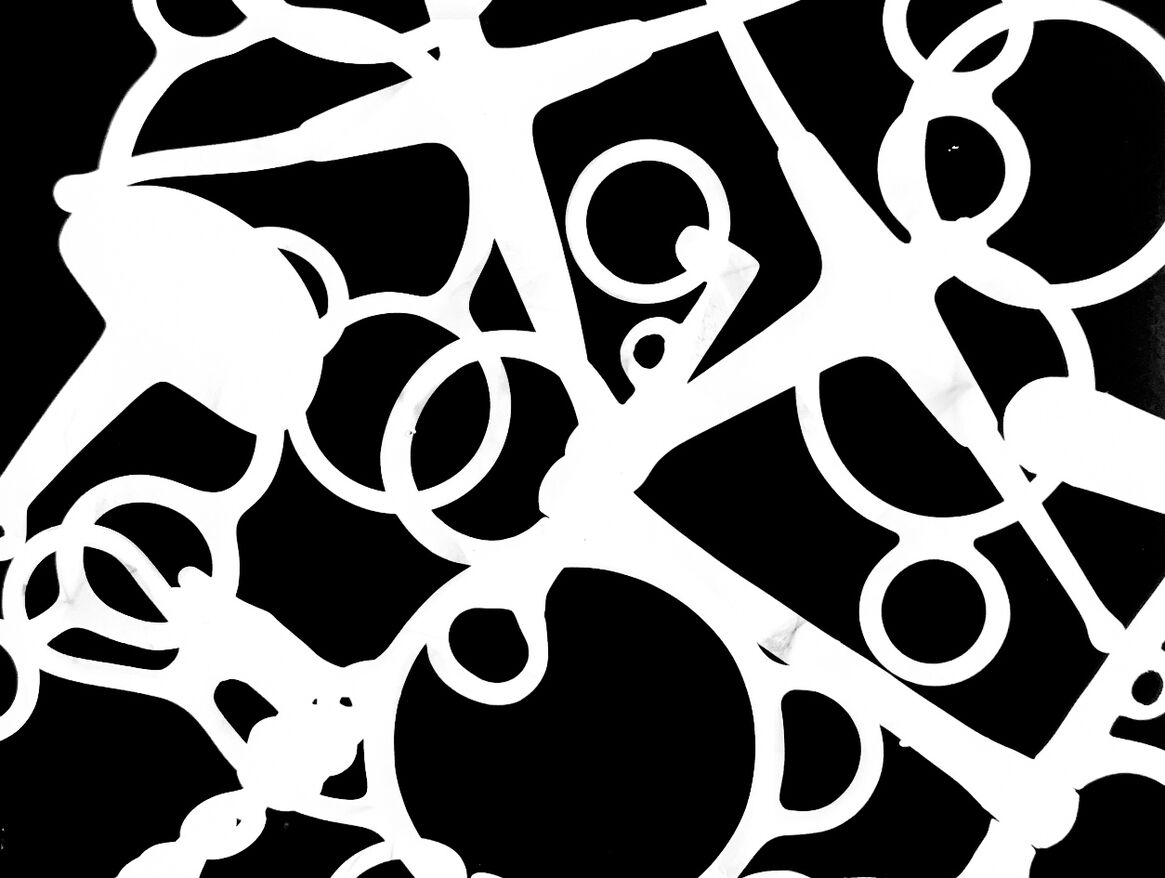
Typology of bits.
This typology explores horse bits as functional yet highly coded objects, examining their repeated forms, subtle variations and material qualities through classification and display. Removed from their usual equestrian context, the bits become ambiguous sculptural forms that sit between tool, ornament and instrument. To viewers unfamiliar with equestrian culture, their shapes can appear bodily or sexually charged, revealing how specialist knowledge influences recognition and interpretation.
Traditionally understood as tools of communication between horse and rider, bits also carry complex associations with restraint, obedience and control. The work considers the ethical tensions embedded within riding itself, particularly the question of consent within human-animal relationships. Horses cannot offer verbal consent; instead, riders interpret behavioural assent or refusal through movement, tension and physical response. By isolating and cataloguing these objects, the typology draws attention to the uneasy overlap between care, intimacy and domination, questioning how trust and control can operate simultaneously within the horse-human bond.