Project Description

Pressure Sore Alleviation & Movement Facilitation 

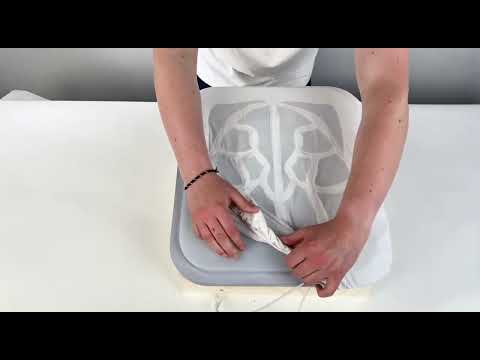
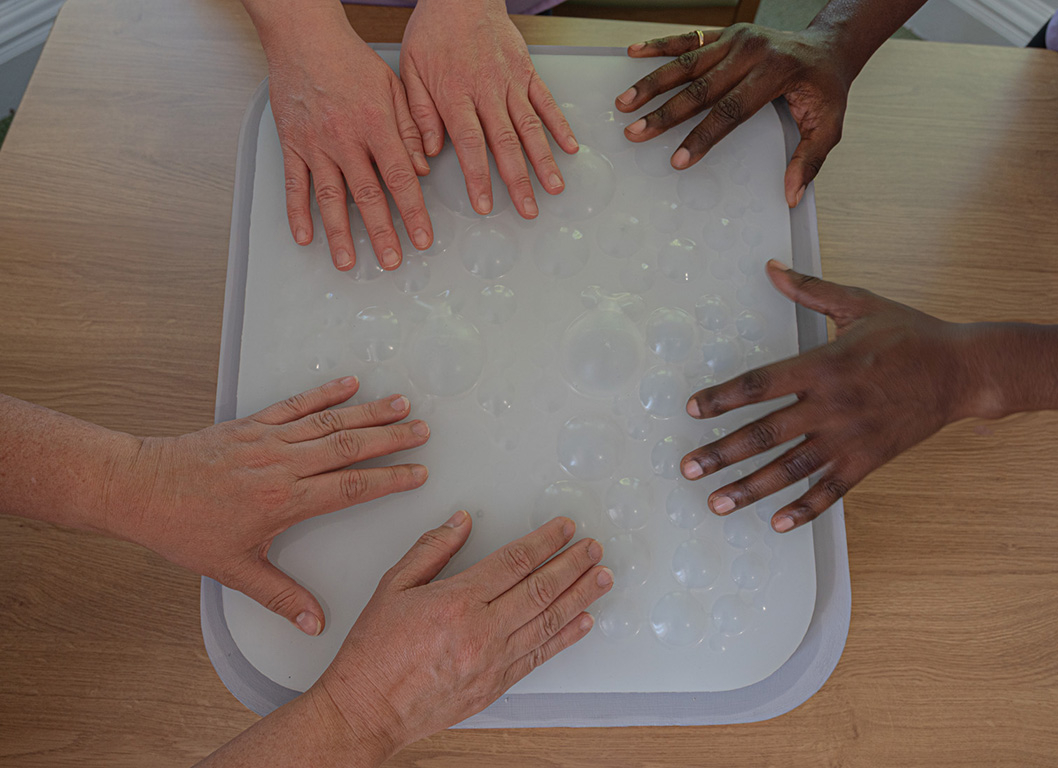
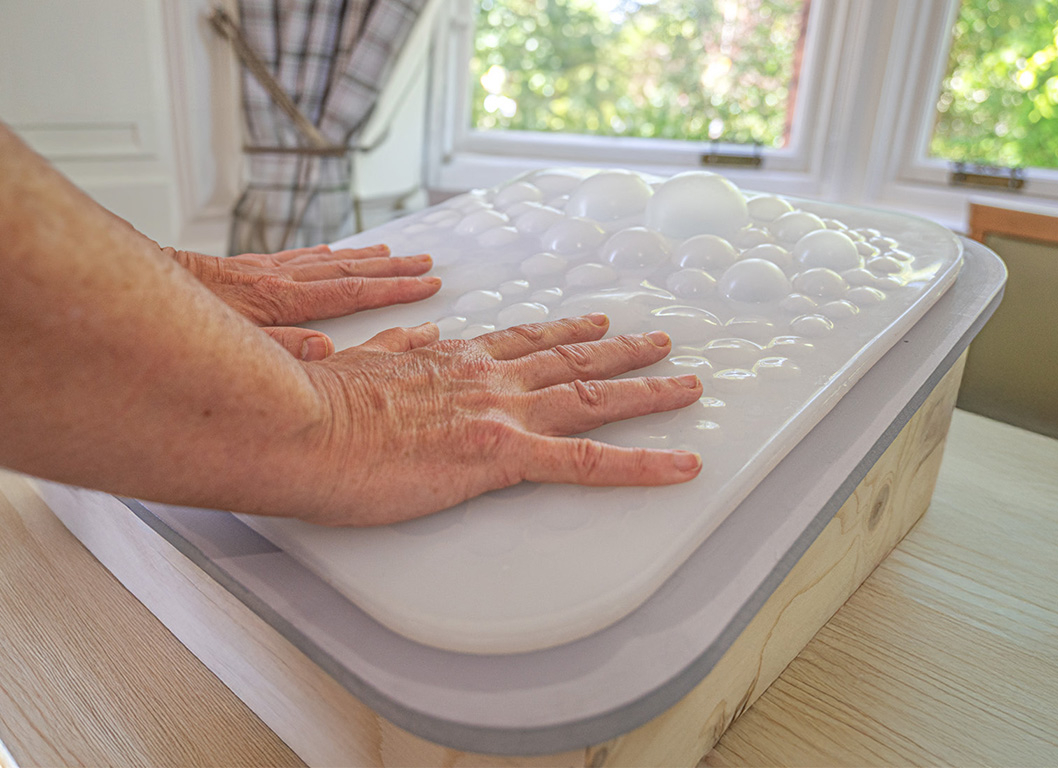
Flo is a pneumatic bubble mattress with a multi-functional performance – both sensing and actuating – to assist moving and manual handling of immobile individuals, with the purpose of enhancing the symbiotic nature of the carer-patient relationship. 

Developed through a critical lens, Flo uses soft robotics to speculate on the future of care and how new material cultures could re-shape our relationships with support systems. Using dynamic airflow, Flo gently repositions the body throughout the day. Its network of inflatable bubbles caresses the skin in constant variation, ensuring no single point bears prolonged pressure. This rhythmic, ever-shifting contact helps distribute weight evenly, stimulates circulation, and offers a gentle massage to the muscles, enhancing comfort while reducing the risk of pressure sores.

I aim to create an interaction that feels intuitive and embodied, where users are not just being acted upon by the material but rather, they are engaged in a reciprocal relationship with it. The material responds, moves, and breathes alongside them—shifting the experience from a conscious act of control to something more rhythmic, fluid, and intertwined with the act of living. 

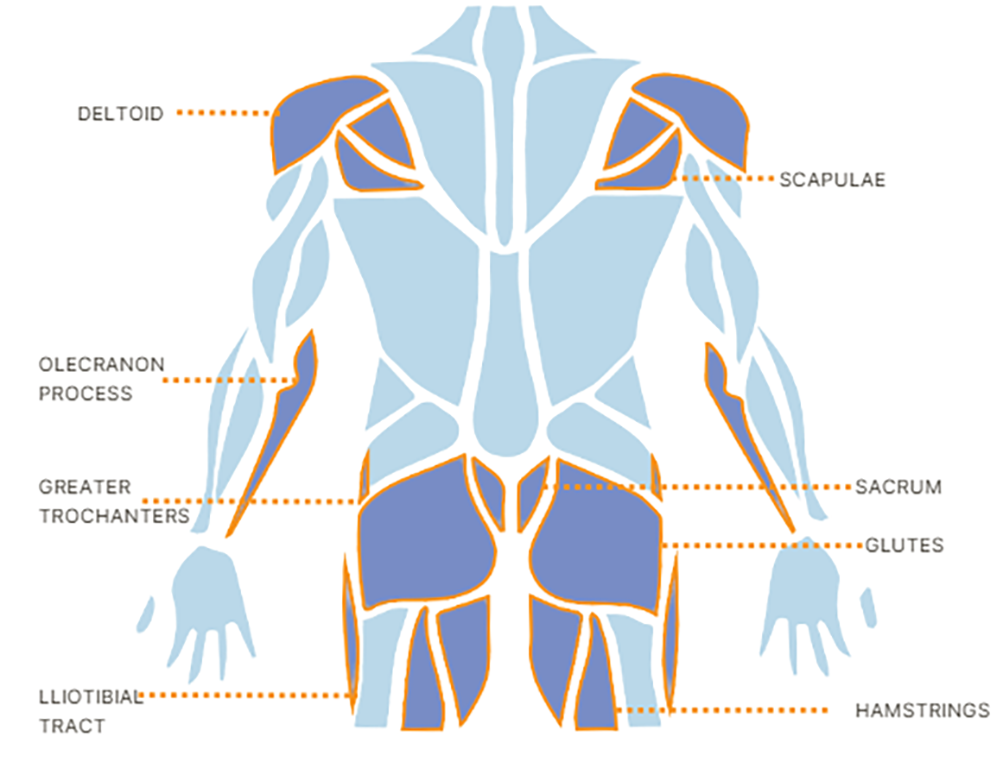
Anatomical Model

Pressure sores are painful injuries caused by prolonged pressure on the skin, often affecting immobile or bedbound individuals. They can develop within hours and lead to serious infections, significantly reducing quality of life. Treating them costs the NHS over £1.4 billion annually, yet they are largely preventable (NHS 2019).  

Anatomical Model Diagram
Skills & Experience
  • Fabricademy Bootcamp (Brussels, 2025) – certified training in smart textiles ,digital fabrication & soft robotics
  • Project Management & Systems Intern, Wessington Cryogenics (Systematix, 2024)
About Rachel

Rachel’s work explores the intersection of craft, technology, and social systems. She takes a material-led approach to designing for care, focusing on how soft robotics can create new forms of haptic interactions for diverse user needs.

Drawing from her experience working in care, she approaches design empathetically with a commitment to addressing the needs of those too often overlooked. Her interest in design for ageing and disability stems from a desire to create more dignified, responsive forms of support that acknowledge and honour the quiet architecture of our care systems.

She believes that good care is as much an art as a skill and intends to use design as a way to recognise and value the work that sustains human wellbeing.

Rachel Brown Professional Photograph