Project description

This project questions how ecological regeneration is often delivered through spectacle and controlled environments, using the proposed Eden Project in Dundee as a provocation. Rather than rejecting the ambitions of environmental repair, it reconsiders how relationships with nature can emerge through slower, more everyday experiences. 

Located on the former gasworks site along the River Tay, the proposal responds to contamination, fragmentation, and ecological loss through a contemplative landscape framework. Integrating phytoremediation, blue-green infrastructure, sensory planting, and productive gardens, the site is transformed into a restorative public landscape for reflection and community engagement.

The Garden After Eden proposes an evolving ecological landscape shaped by time, participation, and care — exploring how post-industrial land can become socially and ecologically restorative without spectacle-driven regeneration.
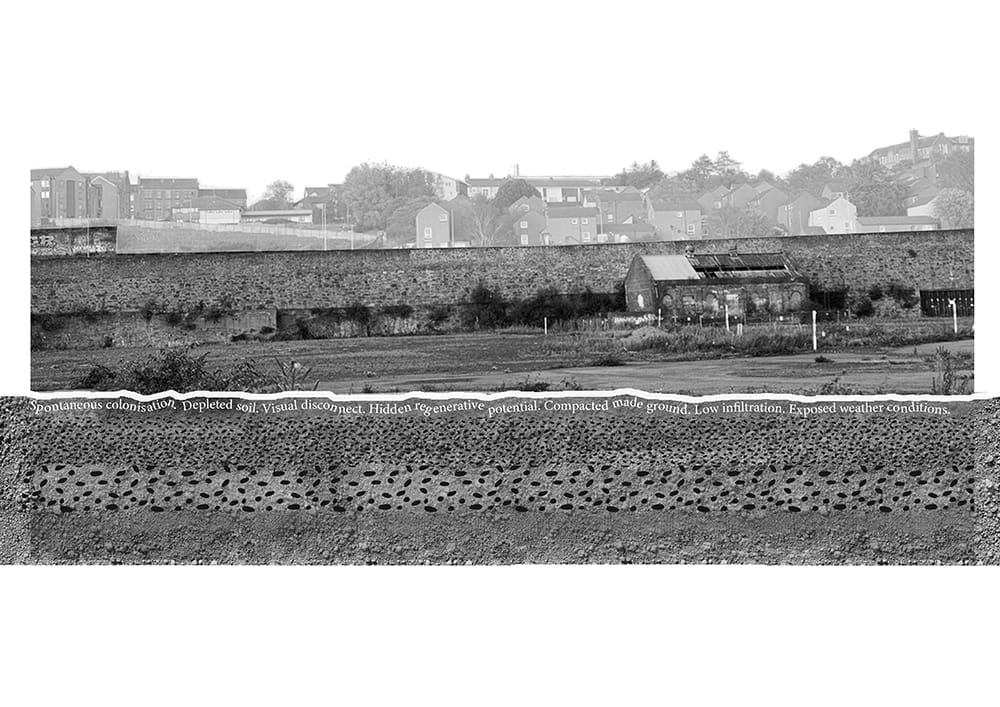
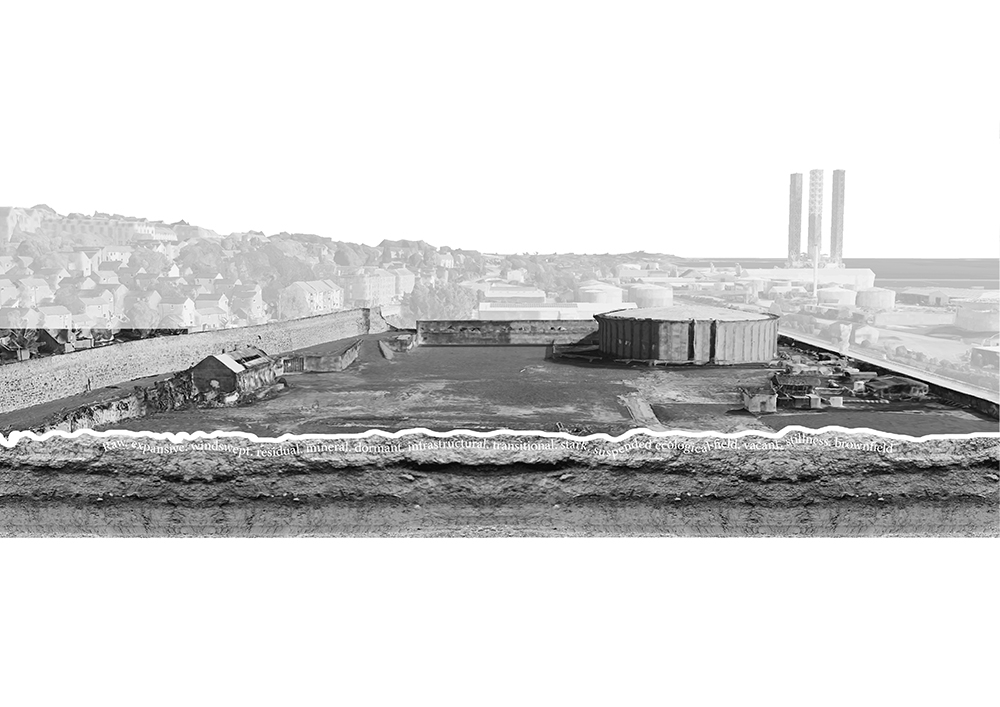
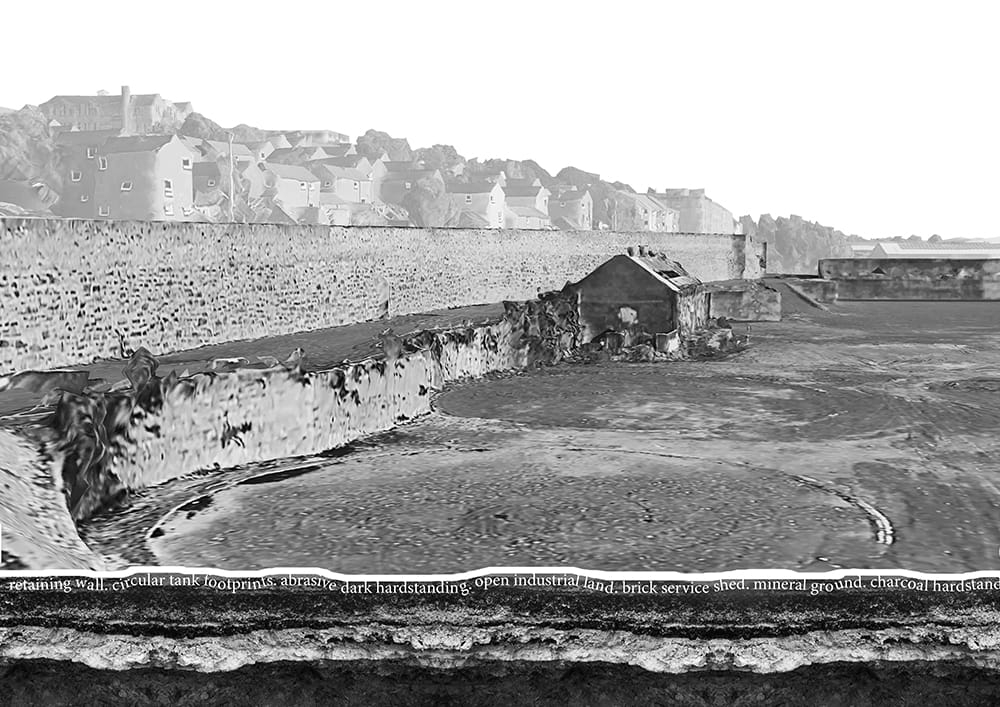
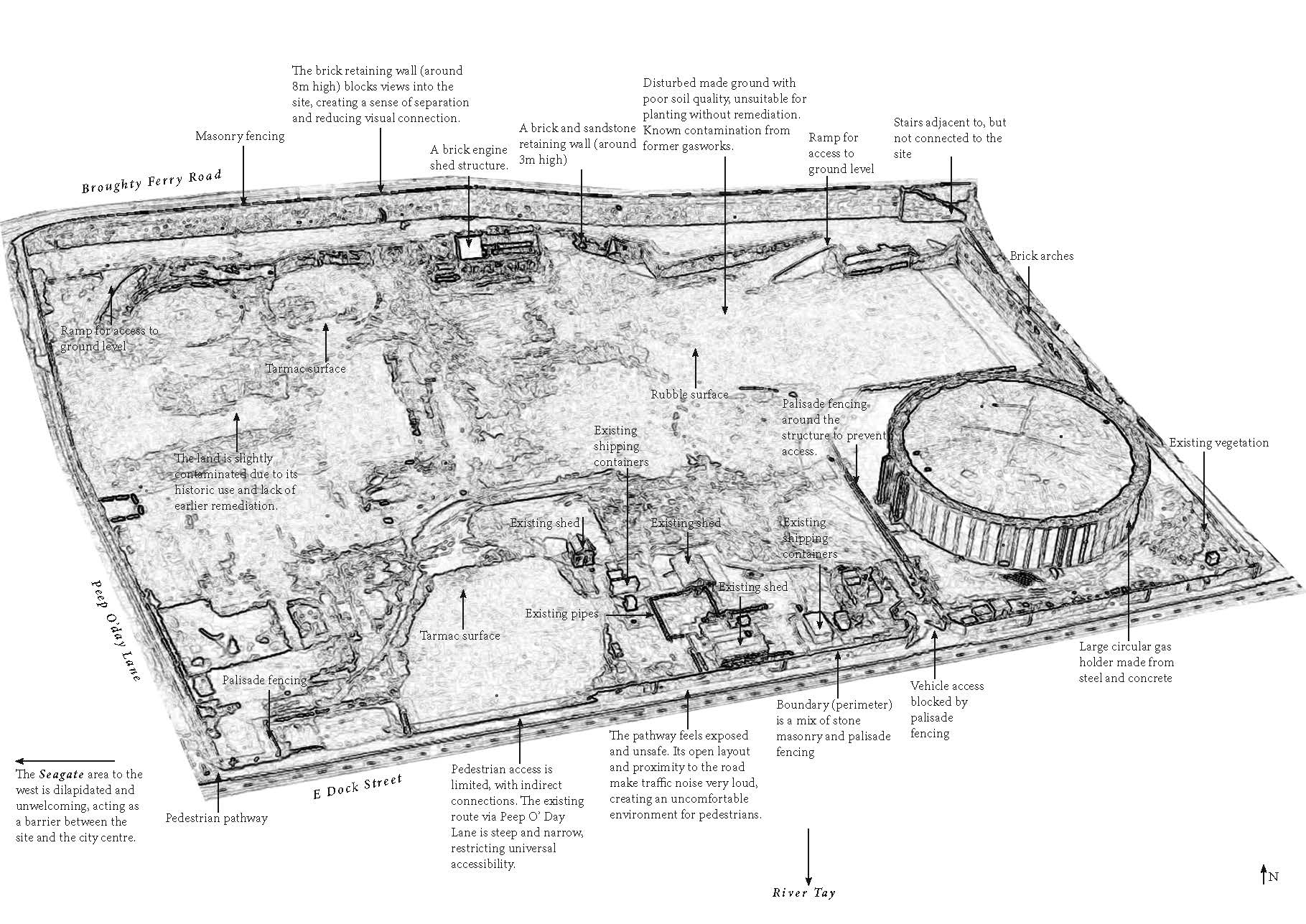
The former gasworks land sits between the River Tay and Dundee's urban edge — a post-industrial void largely cut off from the city and waterfront it neighbours. Surrounding infrastructure fragments the site, making pedestrian access indirect and exposed to road traffic, noise, and a lack of enclosure. Brick retaining walls, palisade fencing, and industrial remnants create both visual and spatial barriers between the city and the waterfront, while the ground itself carries known contamination from the former gasworks, resulting in poor soil quality and limited ecological function. Rather than erasing these conditions, the proposal treats them as drivers for design.

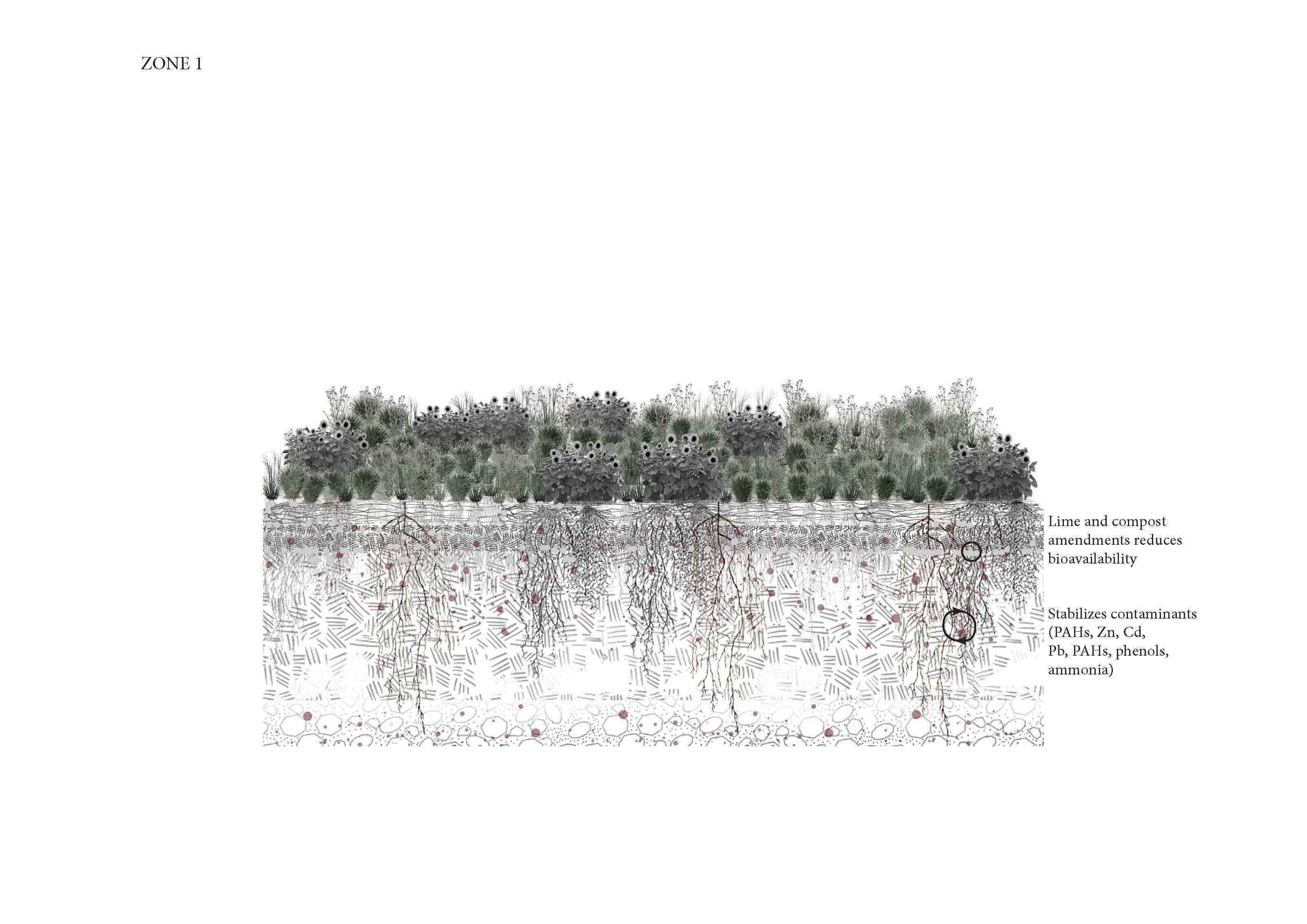
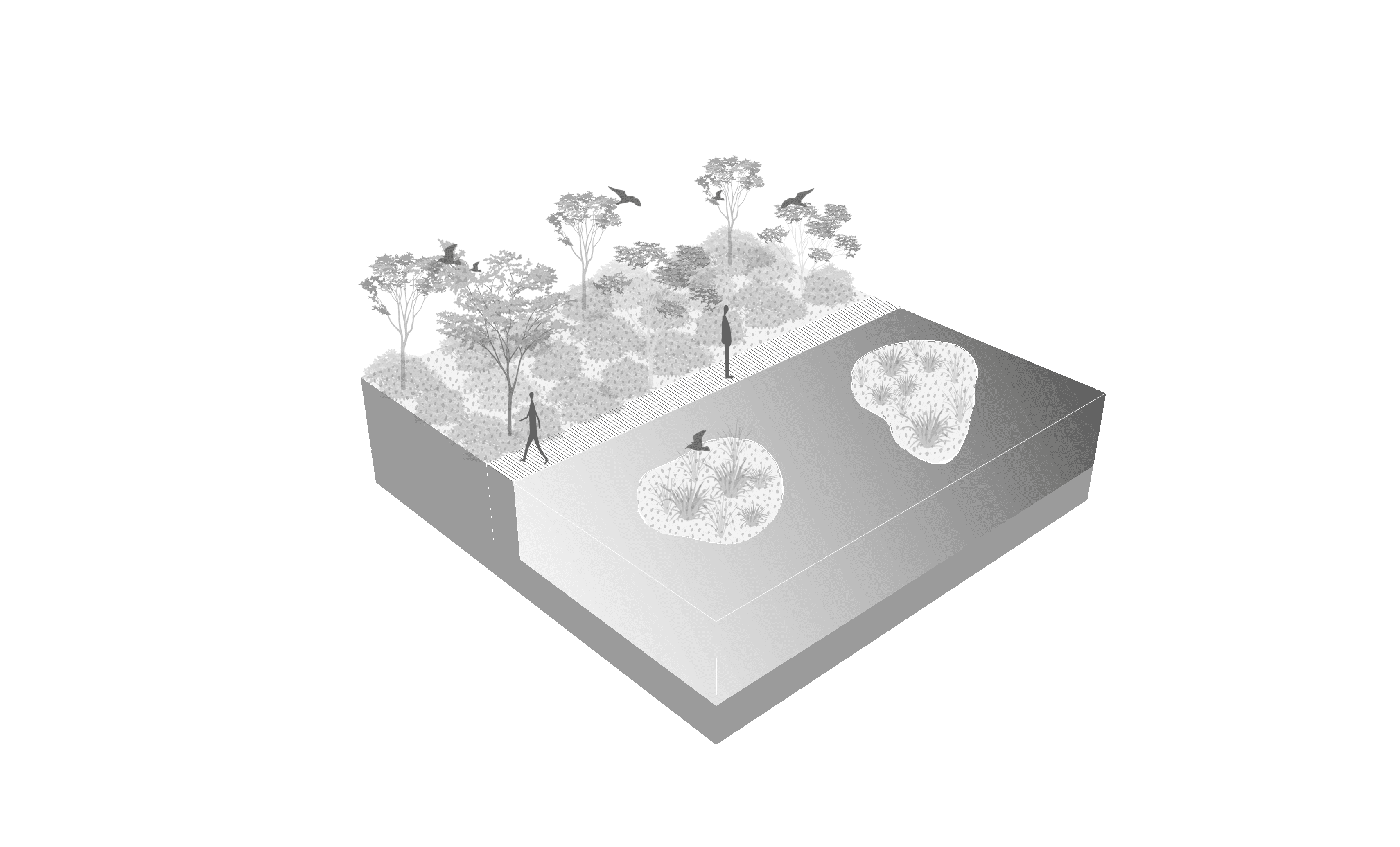
Phytoremediation zone 1 scheme
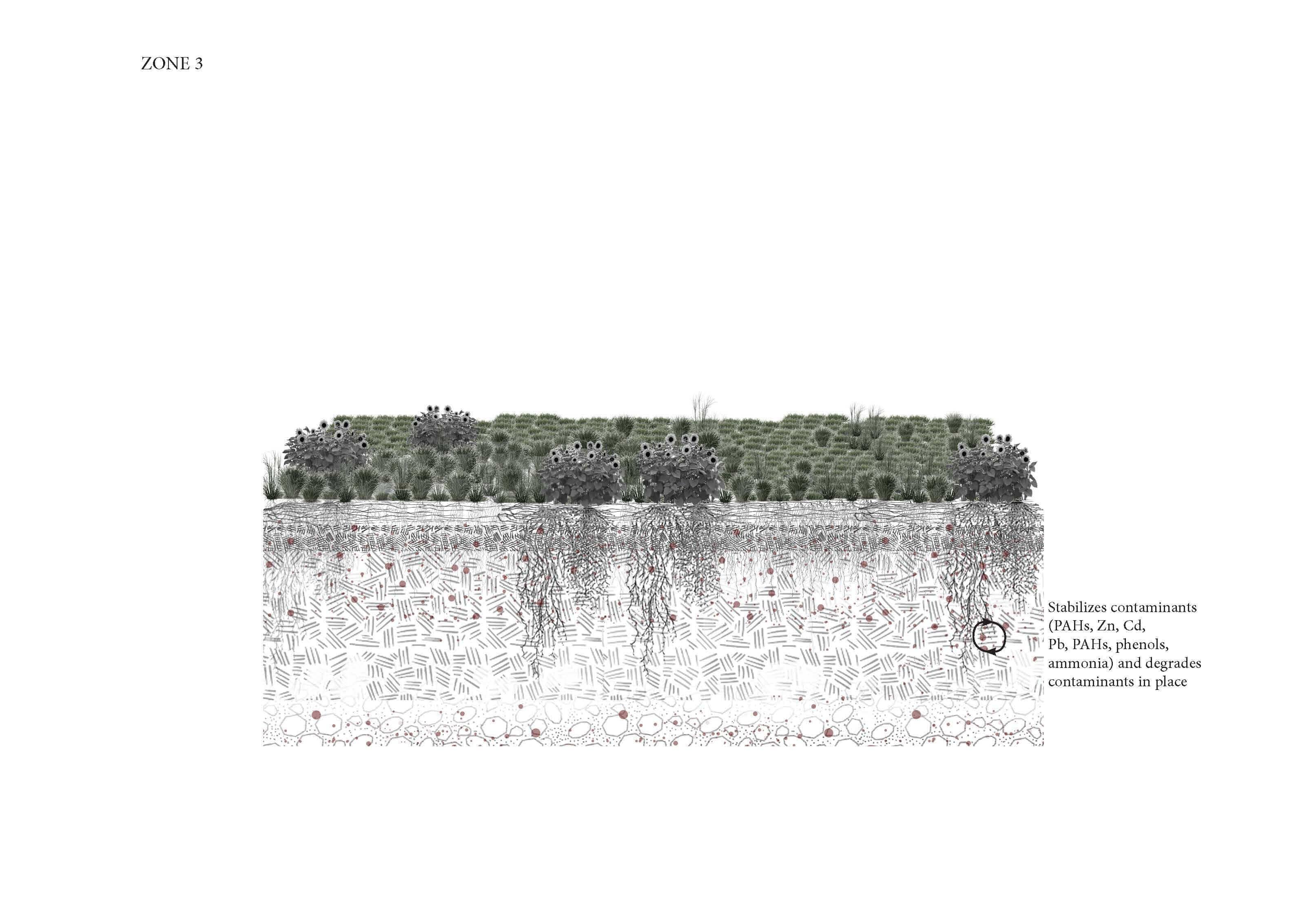
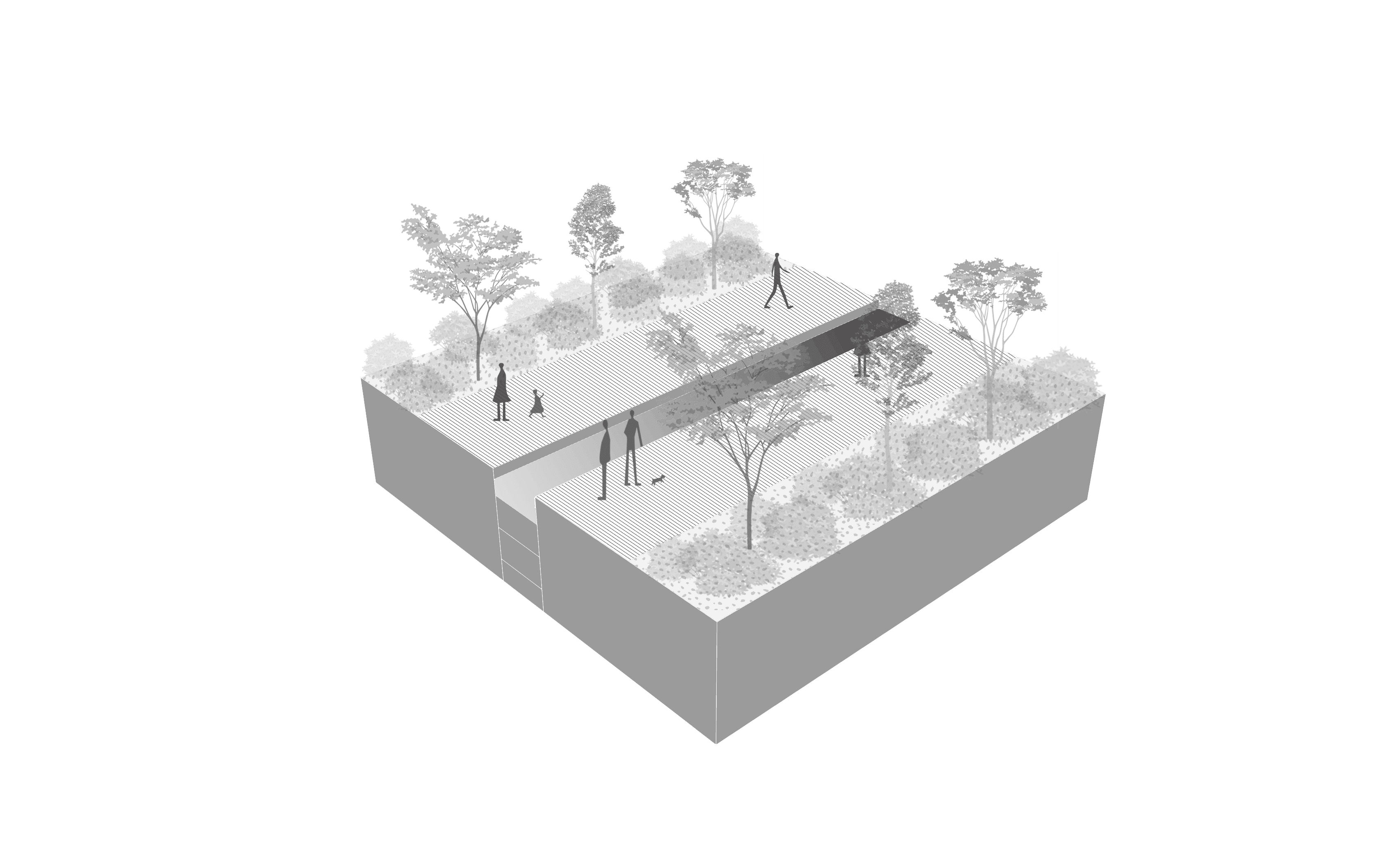
Phytoremediation zone 3 scheme
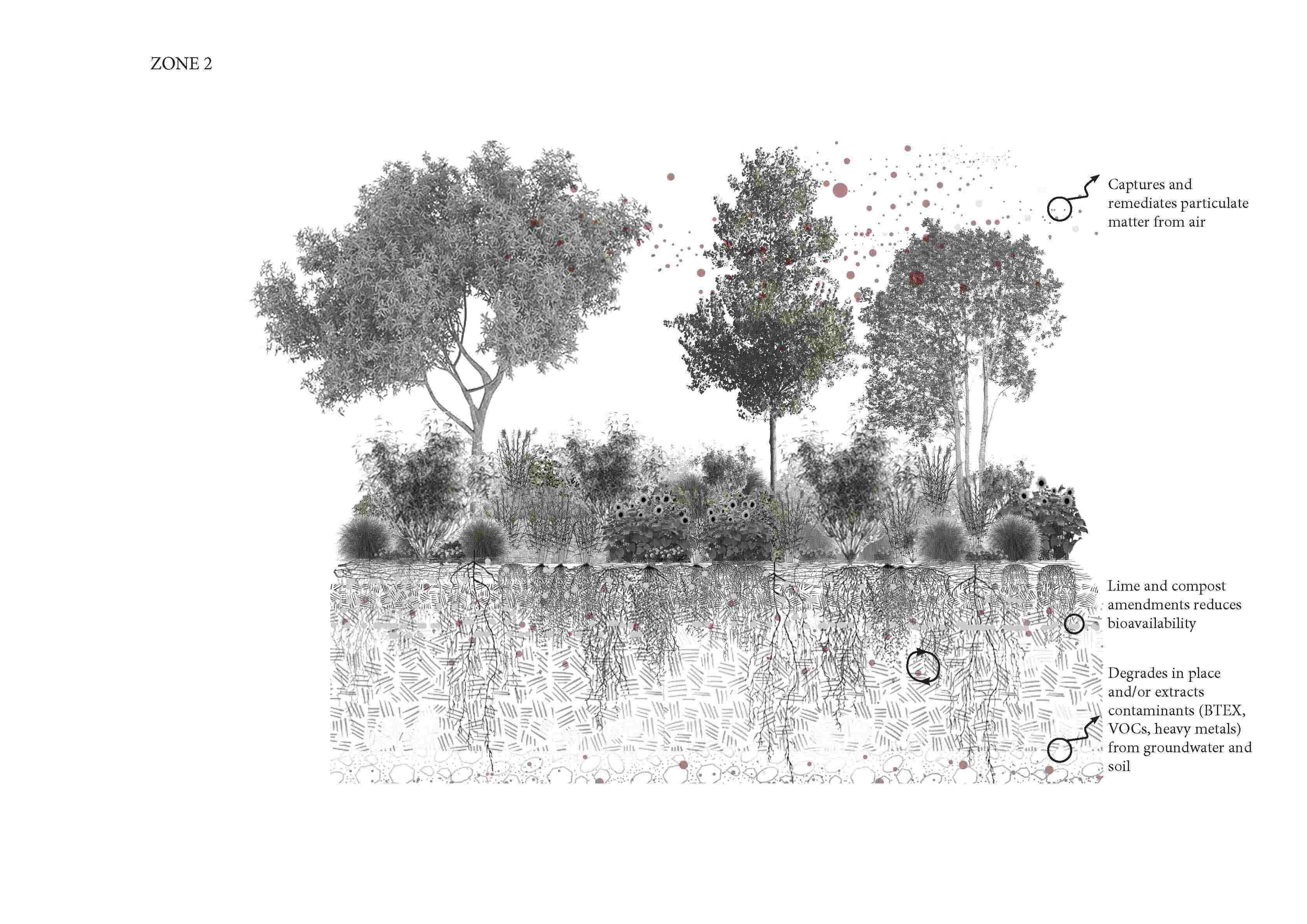
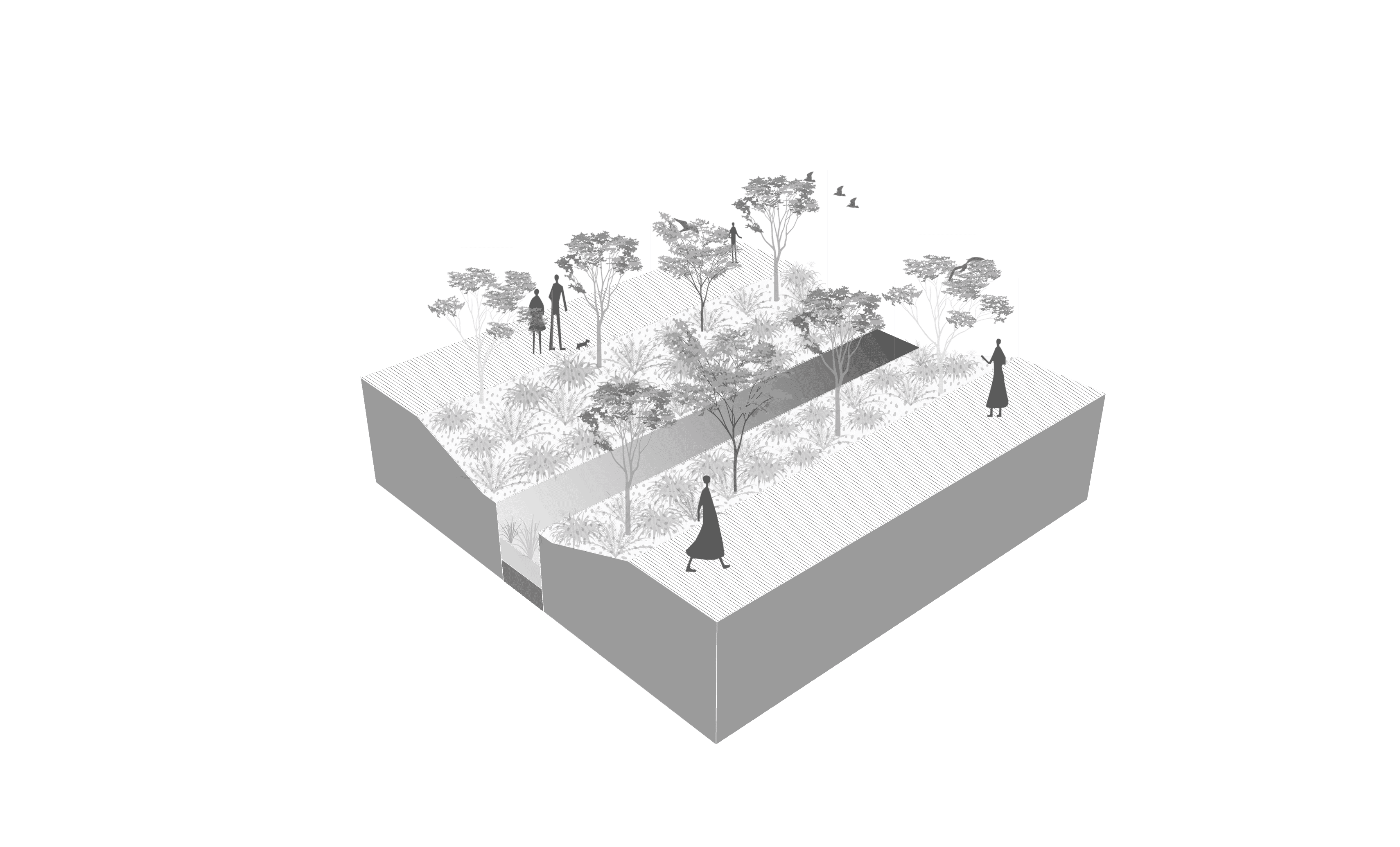
Phytoremediation zone 2 scheme
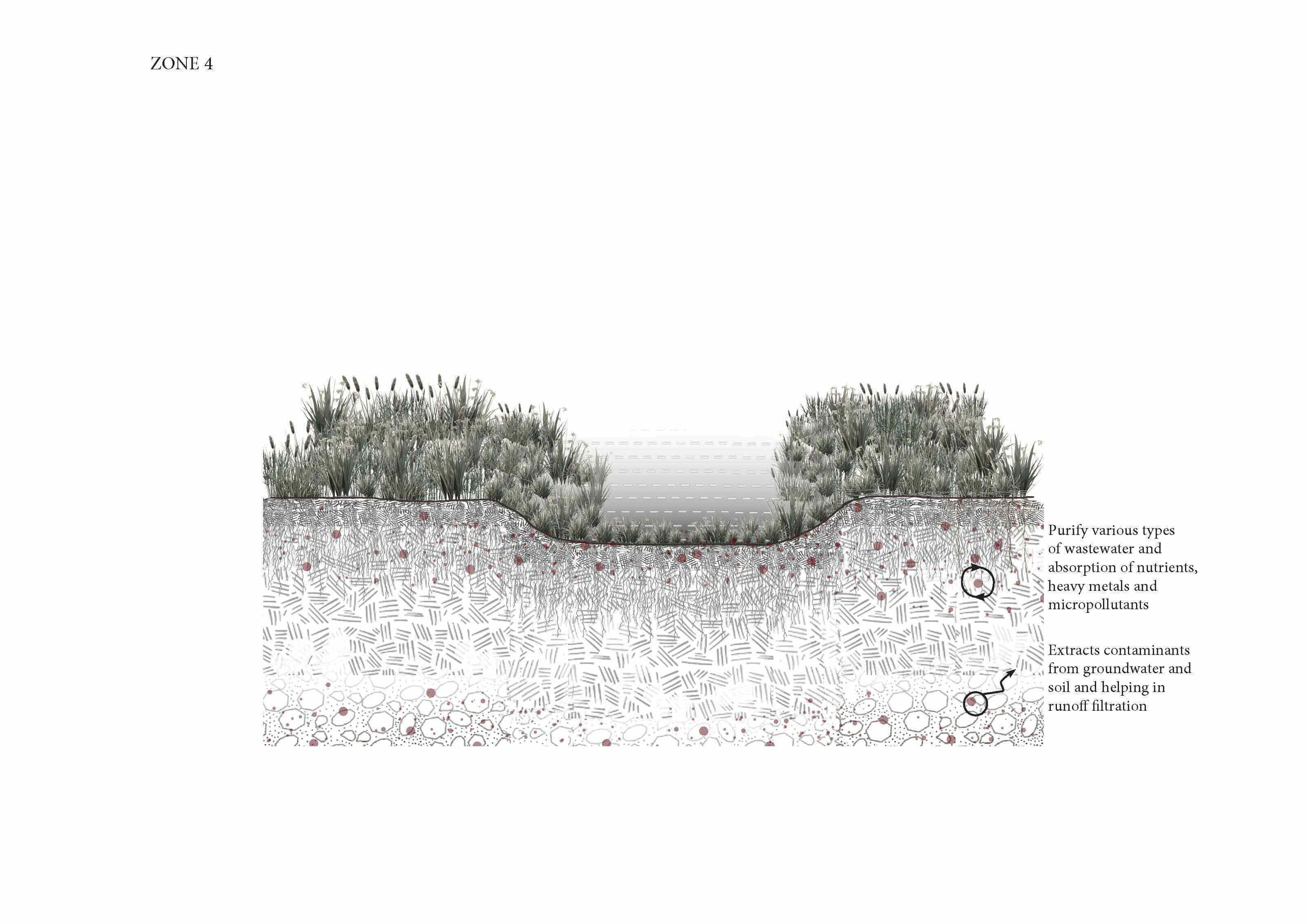
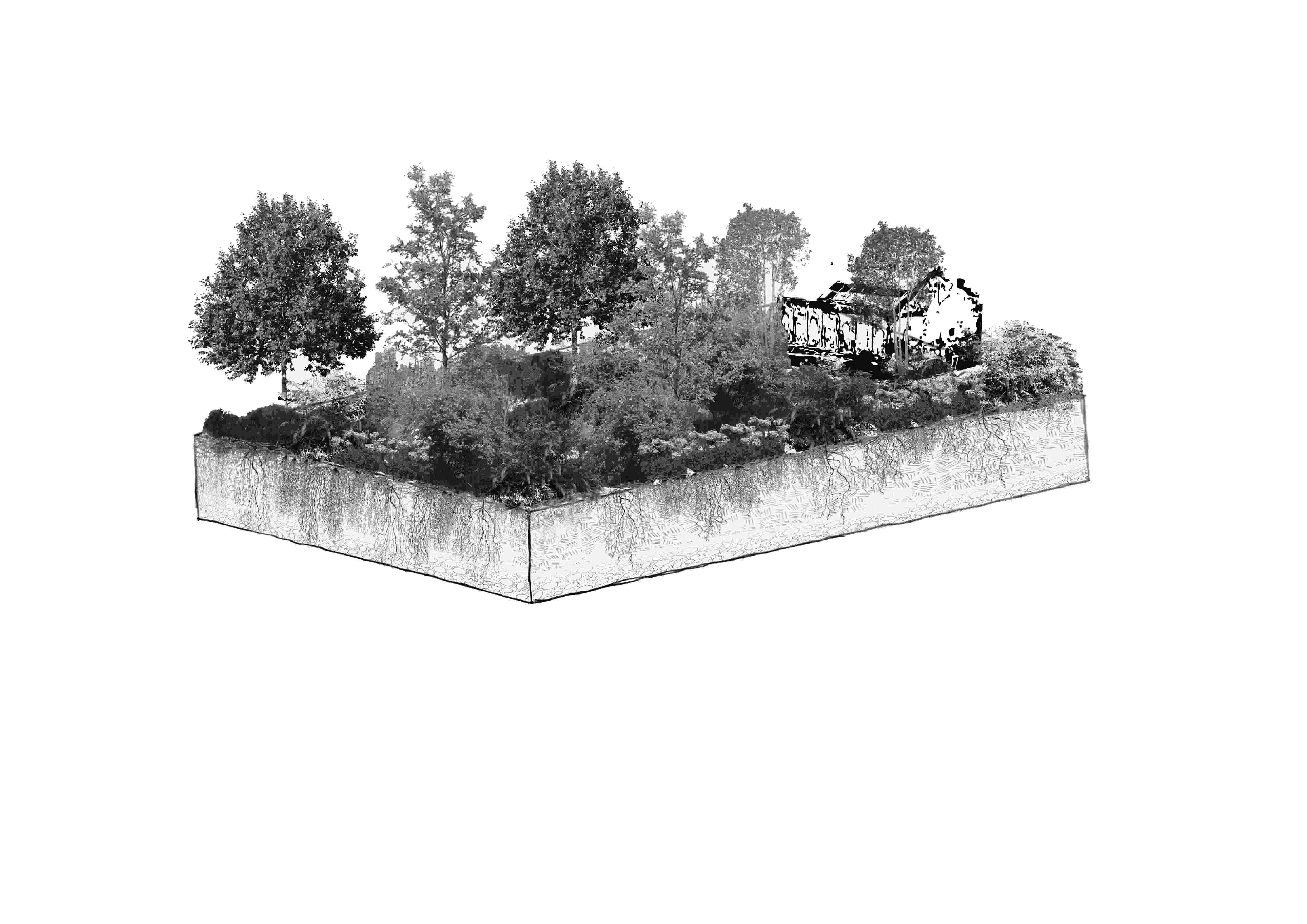
Phytoremediation zone 4 scheme
Phytoremedation Planting

Phytoremediation planting forms a foundational layer of the proposal. The site is divided into four remediation zones based on contamination mapping, each responding to different pollutant intensities and soil conditions — stabilising heavy metals and hydrocarbons, extracting groundwater contaminants, and filtering runoff in lower, wetter areas. Species are selected for their remediation capacity, root depth, and dispersal, allowing the contaminated made ground to gradually transition into a functioning ecological substrate over time. Planting here functions as working environmental infrastructure rather than as a decorative treatment.

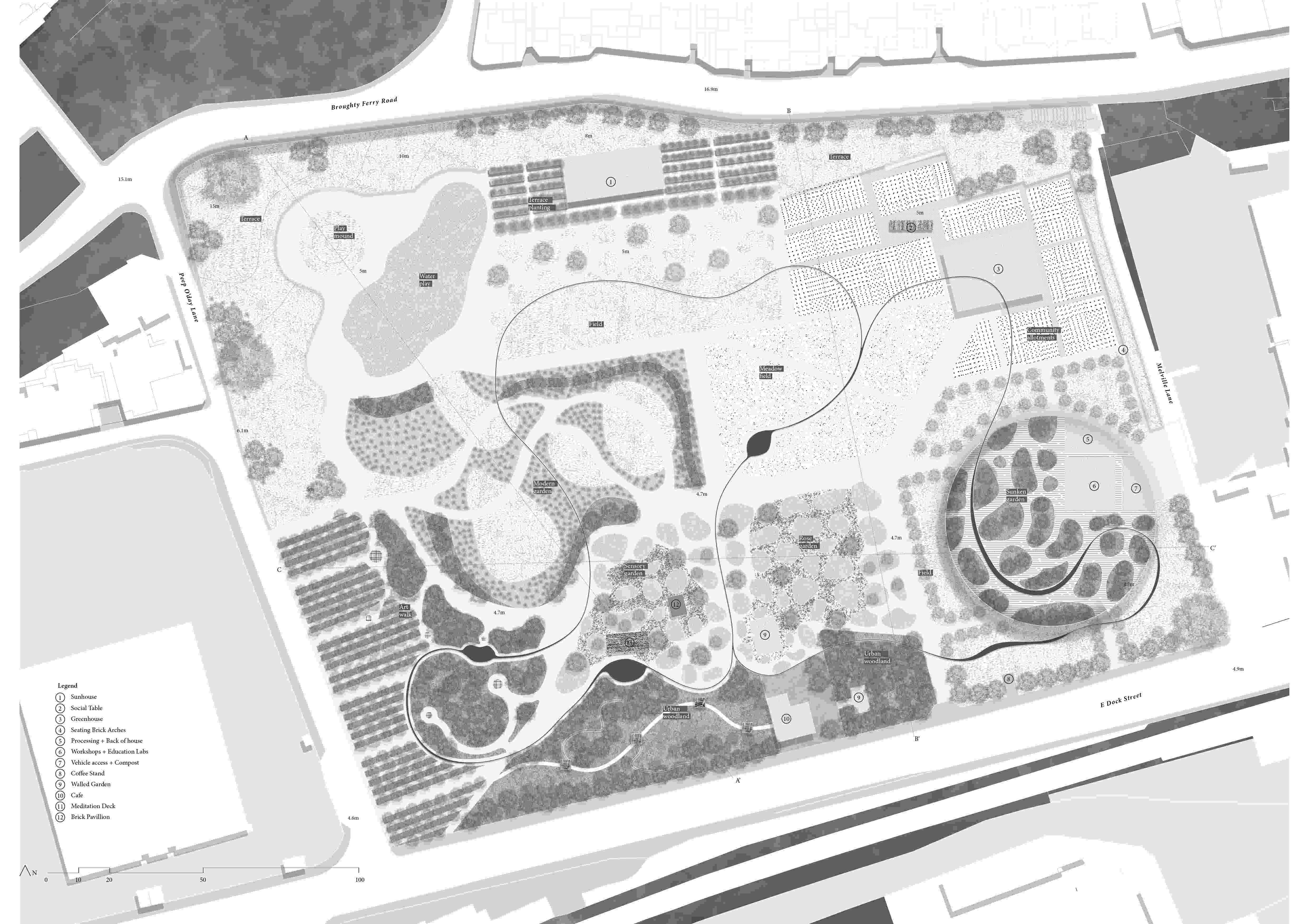
Spatial design masterplan (1:500)
The Garden After Eden Counterproposal

The proposal is designed as a sequence of interlinked zones, anchored by the sunken contemplative forest at the historic gasworks tank. By lowering the ground plane, this space creates a visual enclosure, and separation from surrounding roads, offering a quieter, inward landscape as the project's emotional core. 
Radiating outward, a series of contemplative spaces establishes the wider landscape character. Community allotments, greenhouse spaces, and social areas occupy the eastern edges, while sensory gardens, rose gardens, and art walks run along the central routes, encouraging slower circulation and varied sensory engagement. Toward the lower, wetter areas, urban woodland, meadow fields, retention ponds, and wetland systems form the site's blue-green ecological network. Social terraces, lawns, café spaces, and seating are embedded throughout, ensuring the project remains publicly inhabited rather than purely environmental. Rather than a single destination, the proposal is composed as a series of slower landscape systems working together across productive, sensory, reflective, social, and ecological conditions.

Section A
Section A
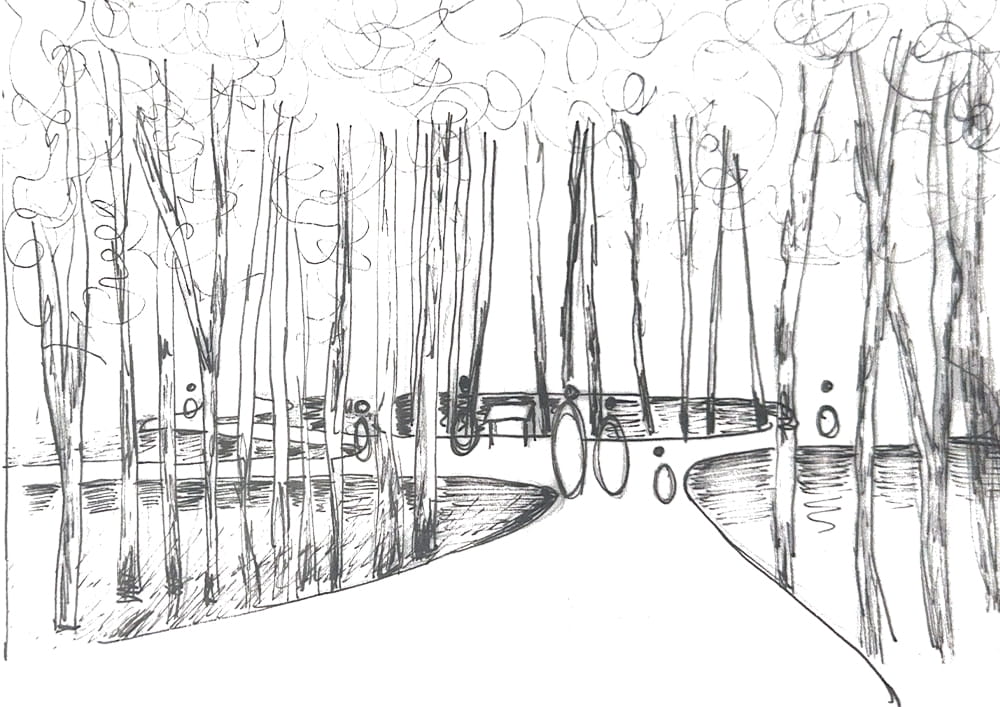
Urban woodland

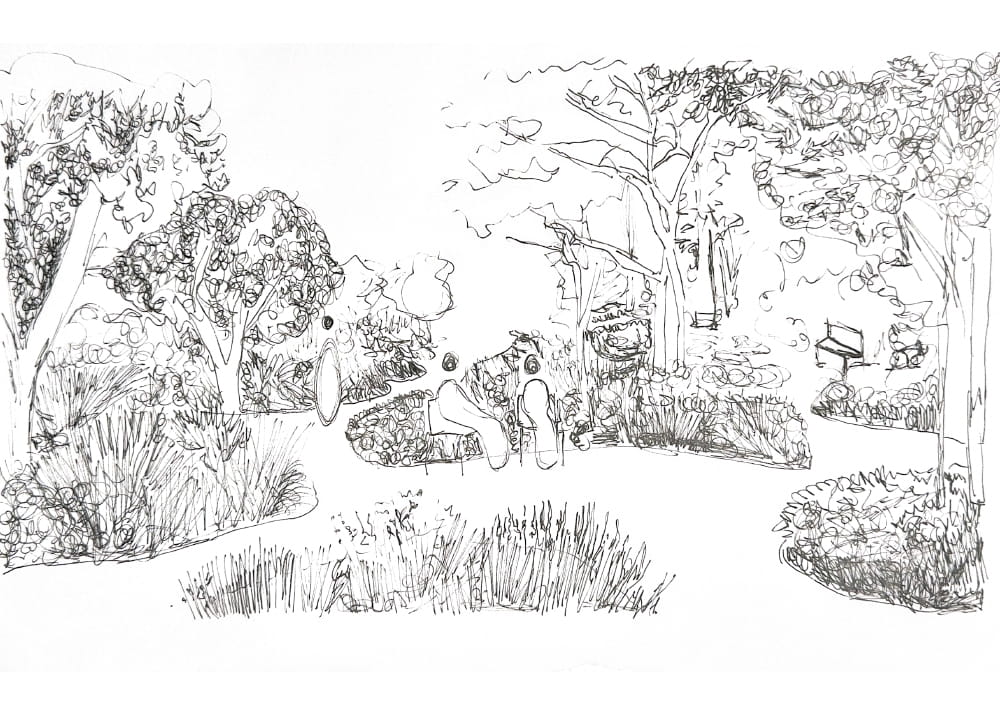
The urban woodland establishes a resilient ecological framework using Scottish native species like birch, willow, Scots pine, rowan, and alder — selected for their adaptability to Dundee’s climate and biodiversity. Spatially, it creates moments of enclosure and shade, softening the surrounding industrial character, contributing to the contemplative atmosphere.

Urban woodland sketch
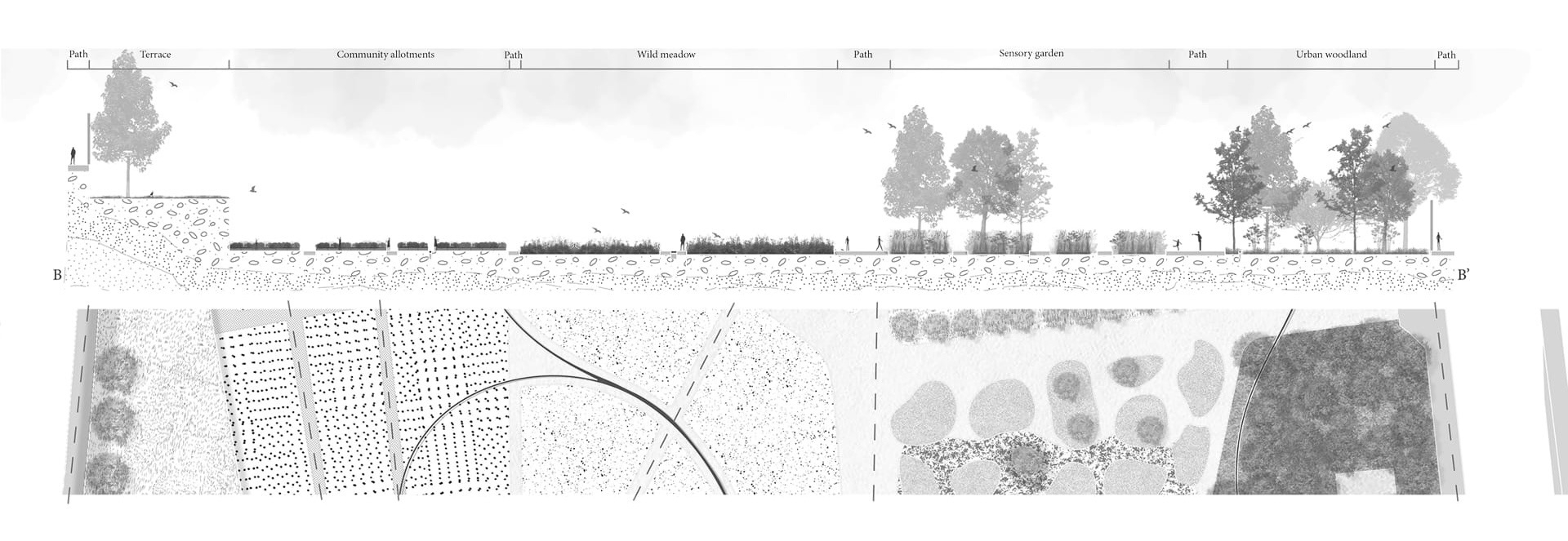
Section B
Section B
Sensory garden

The sensory garden engages visitors through touch, smell, sound, and seasonal change, encouraging slower movement and contemplation. Integrated seating supports rest and gathering within the planting.

Sensory garden
Sensory garden sketch
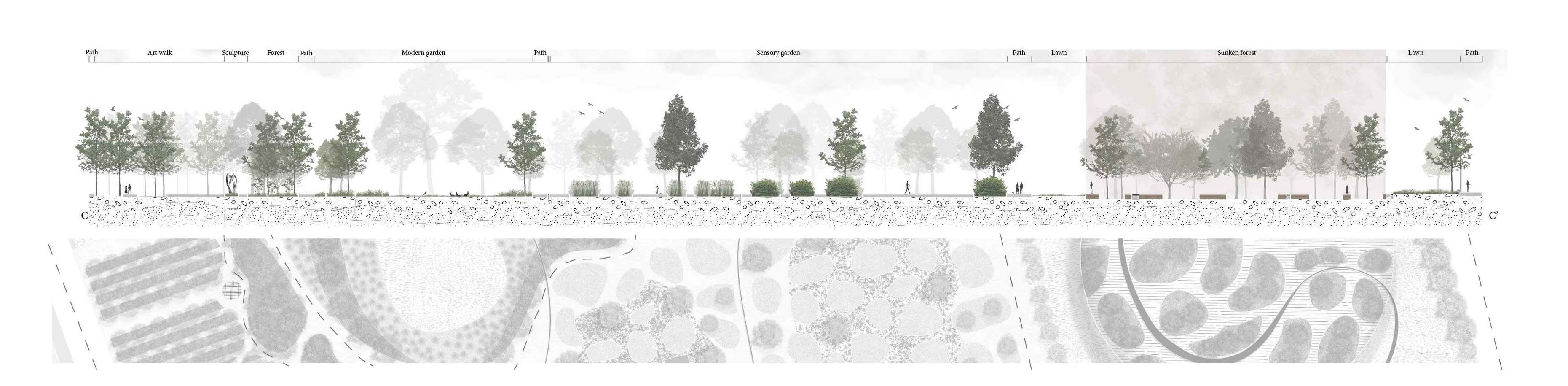
Section C
Section C
Sunken forest

The sunken forest reclaims the former historic structure as a contemplative space. Trees form a shaded canopy overhead, while timber deck pathways guide movement.

Sunken forest visual
Sunken forest sketch
Site Regeneration

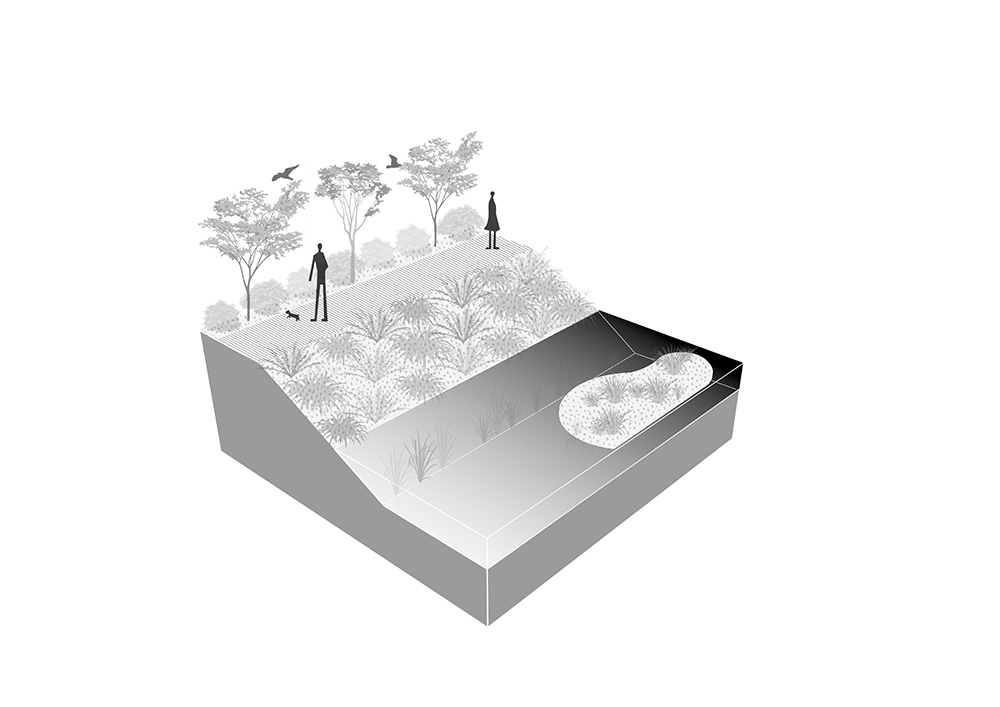
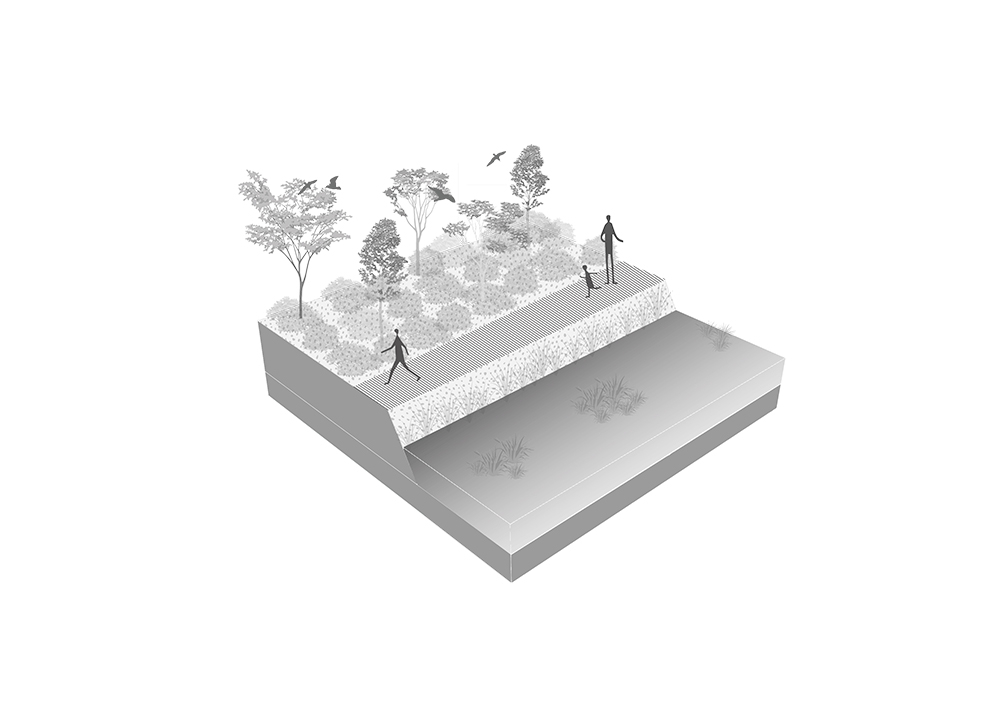
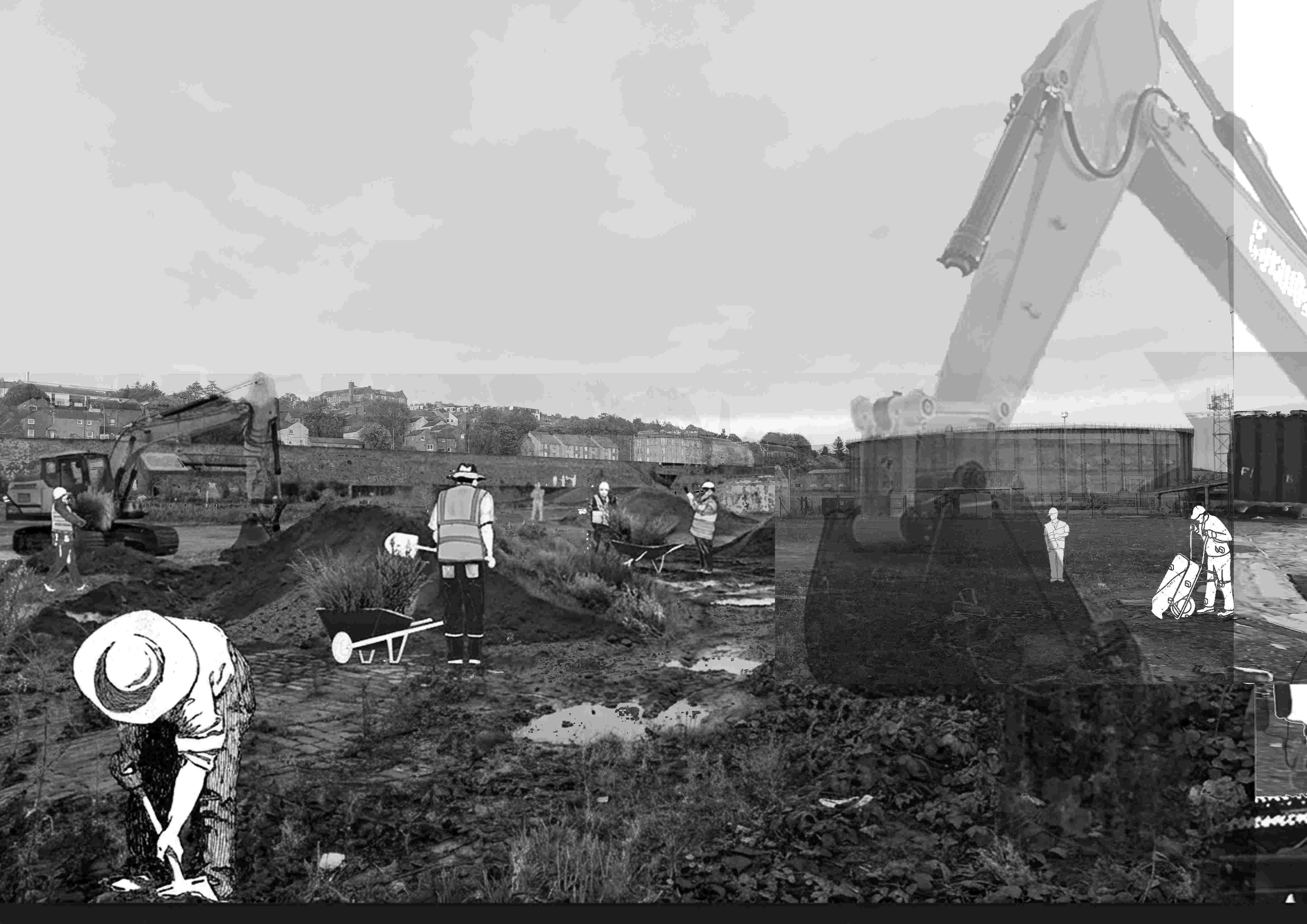
The aim is to retain the site's existing topography where possible to preserve its landscape character. However, further analysis revealed that some level changes and ground conditions were unsafe or difficult to reuse, making a more level ground plane necessary to improve accessibility and spatial continuity. Existing depressions are retained where they support water infrastructure, such as bioswales, a retention pond, and a wetland basin. 

Regrading also became an opportunity to redistribute materials already present on site. Excavated material is reused in selective topographic interventions, such as the proposed play mound, creating moments of elevation and spatial variation. Through this process, construction becomes a form of landscape repair with existing soils, vegetation, and site materials reshaped and integrated into the ecological framework.

Site regeneration visual