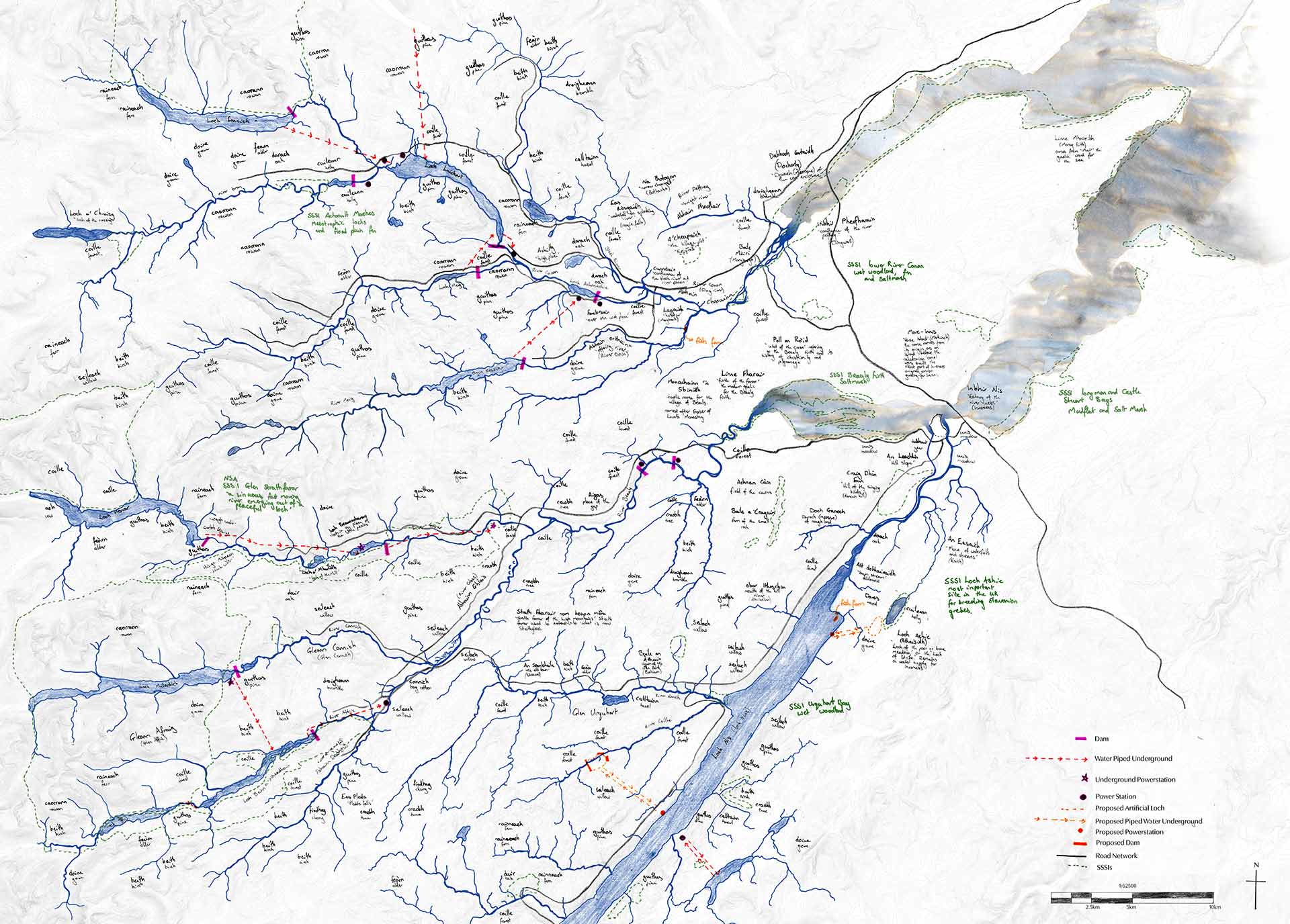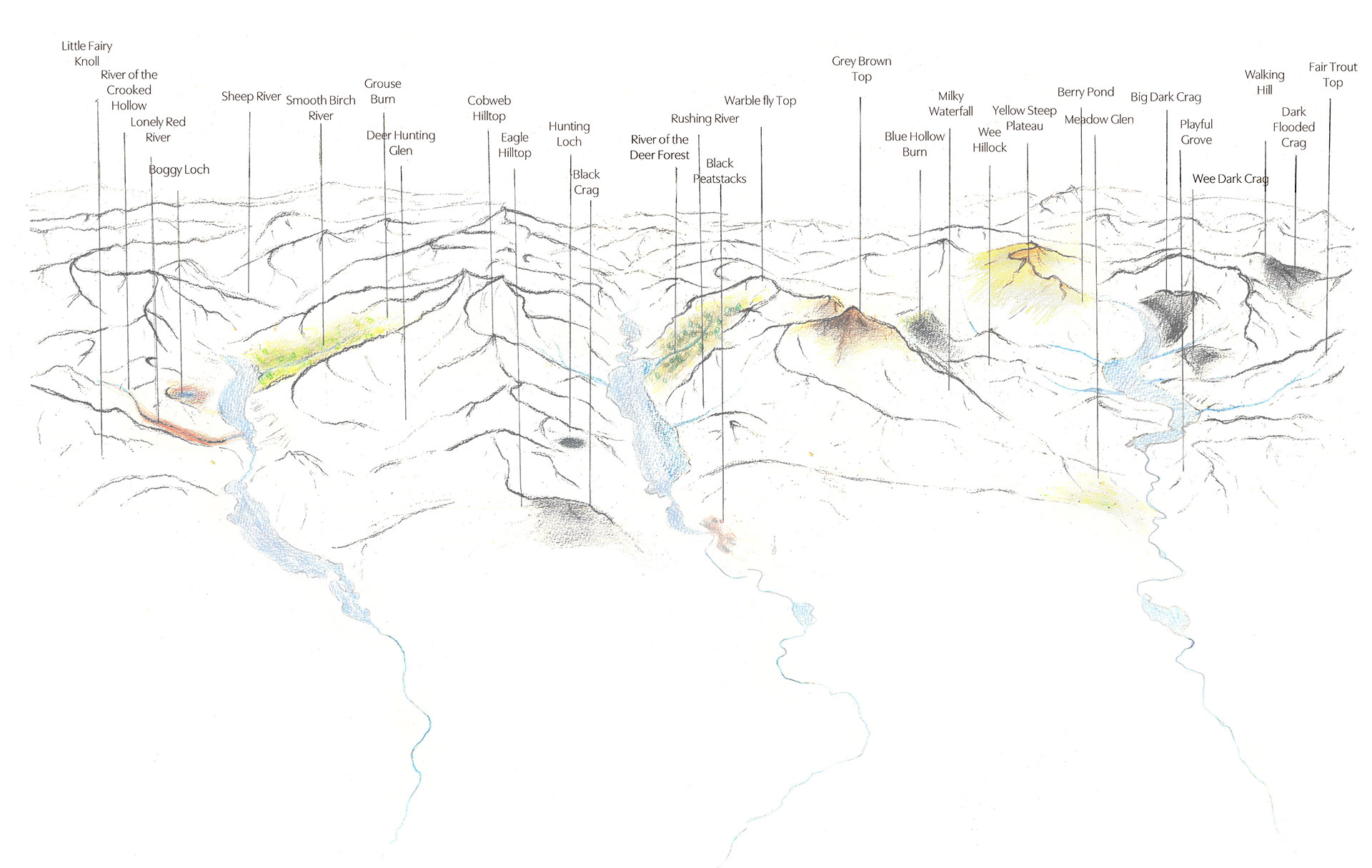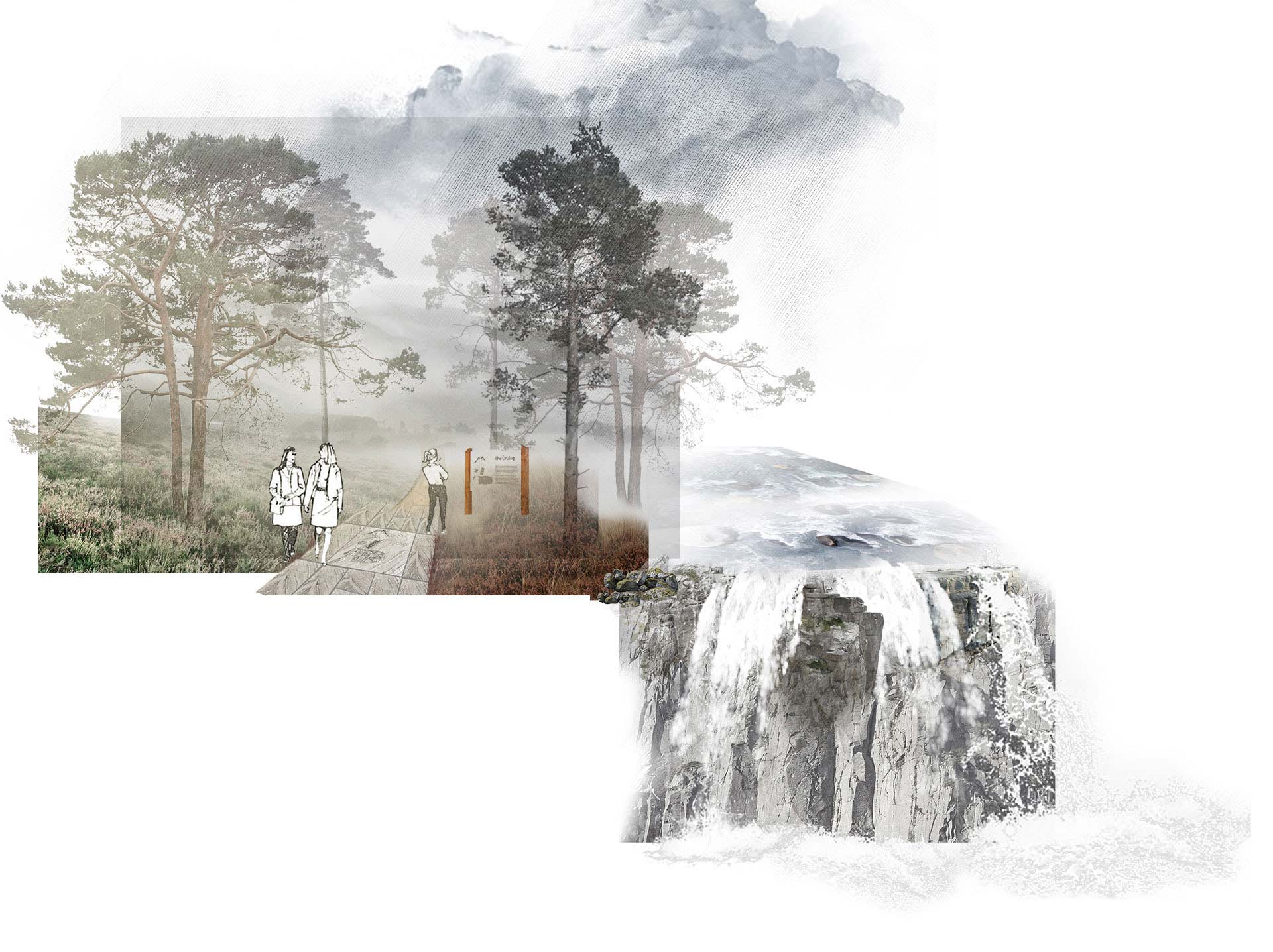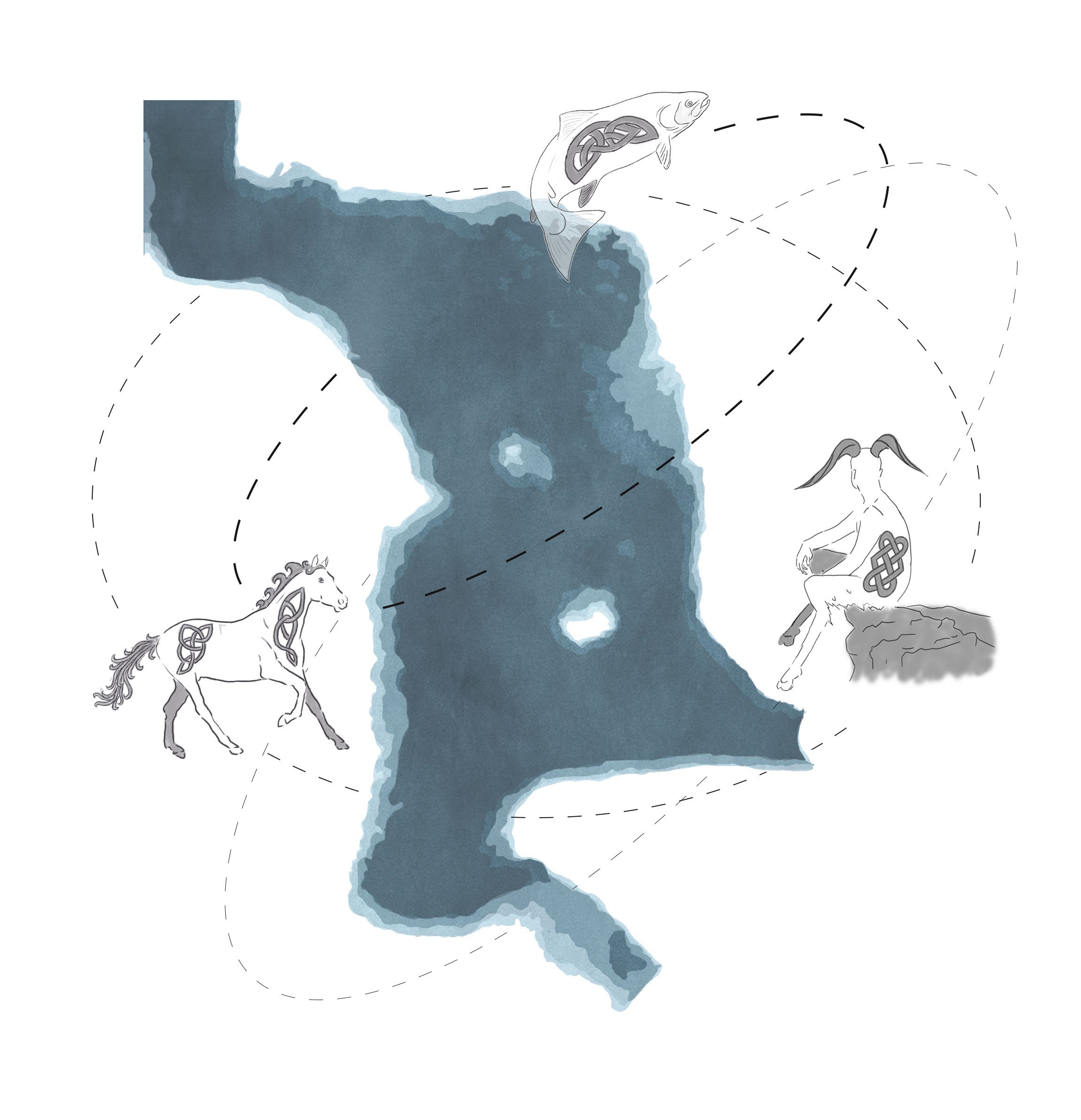
Tùsan Linne Mhoireibh, meaning Origins of the Moray Firth in Gaelic, works with the Highlands strong sense of culture and historical connections which are intertwined through the water system running through the landscape. Proposing a new future in the form of a framework of ‘Hydro-ecological Commons’ which aims to return agency to both human and non-human inhabitants of the landscape and promote wider landscape change.
Bruno Latour refers to what he calls ‘missing masses’, anything from people to non-human life- to inanimate objects which he argues have been ignored socially, politically or philosophically despite their presence in everyday lives. This project proposes that the hydrological system is a ‘missing mass’ that despite the heavy presence of water in this landscape which runs through and connects the whole network of glens and straths down to the firth, the system has been constrained and commodified by private ownership of land and the hydro-electric scheme which has removed any agency over the landscape.
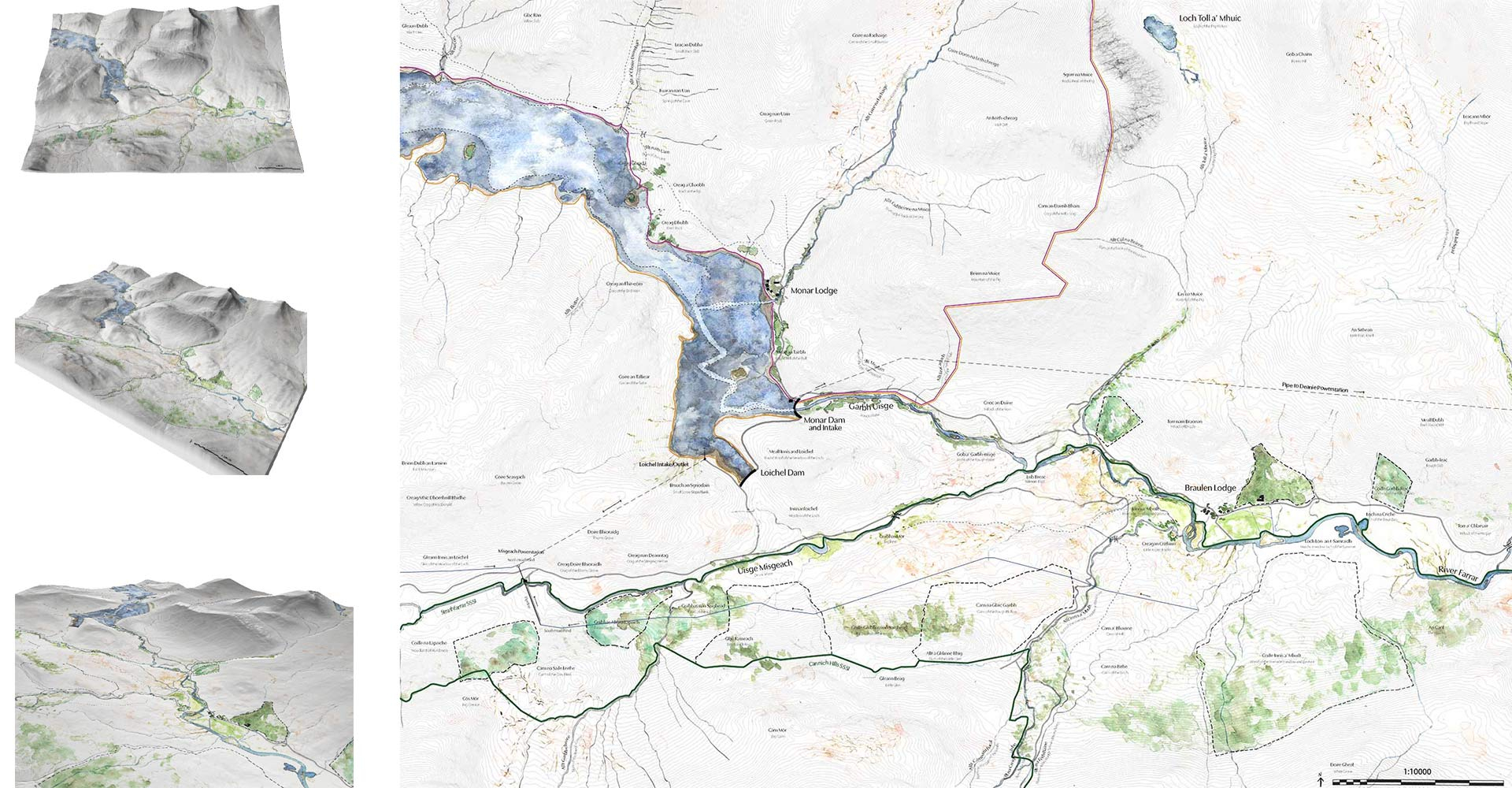
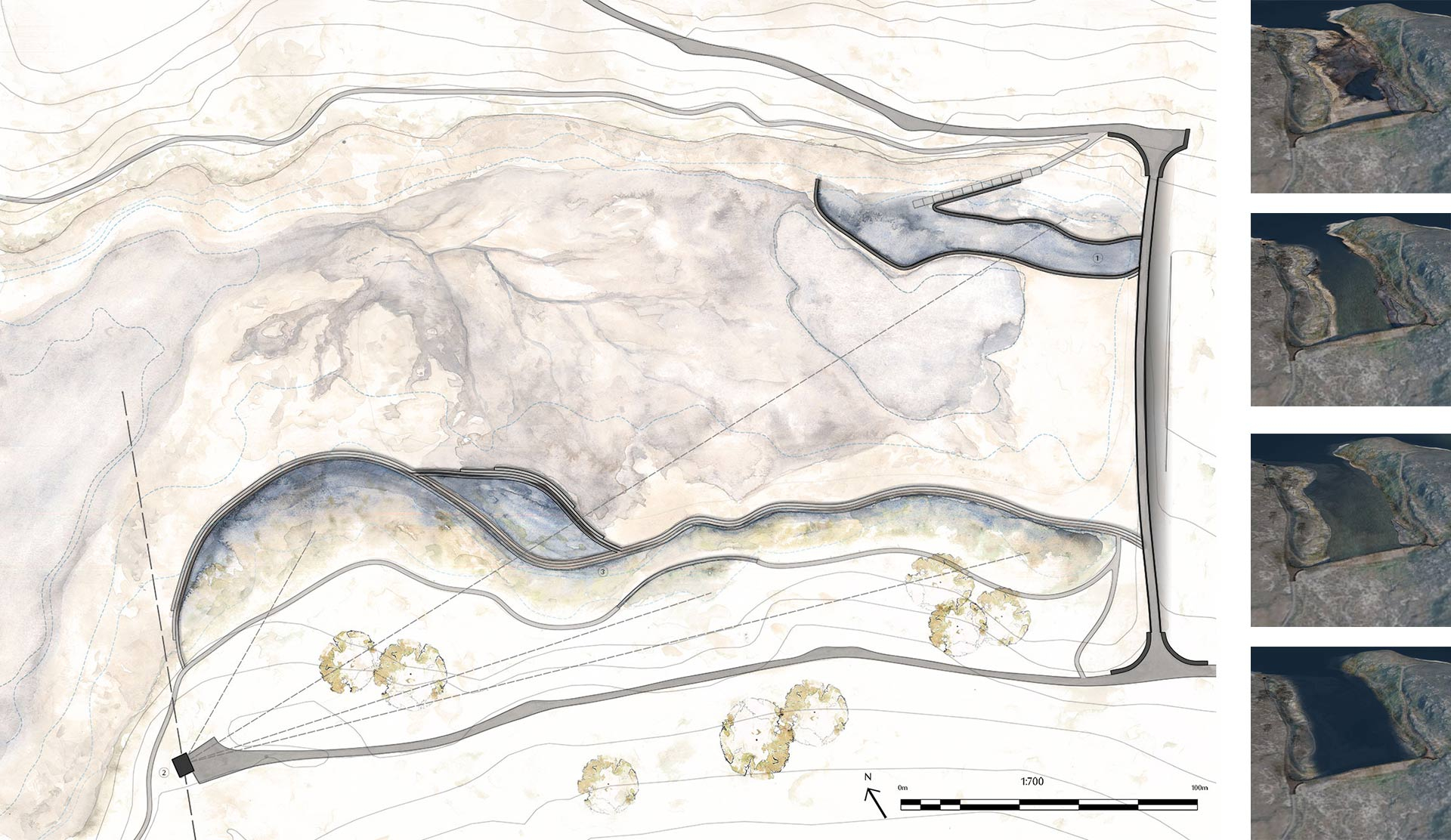
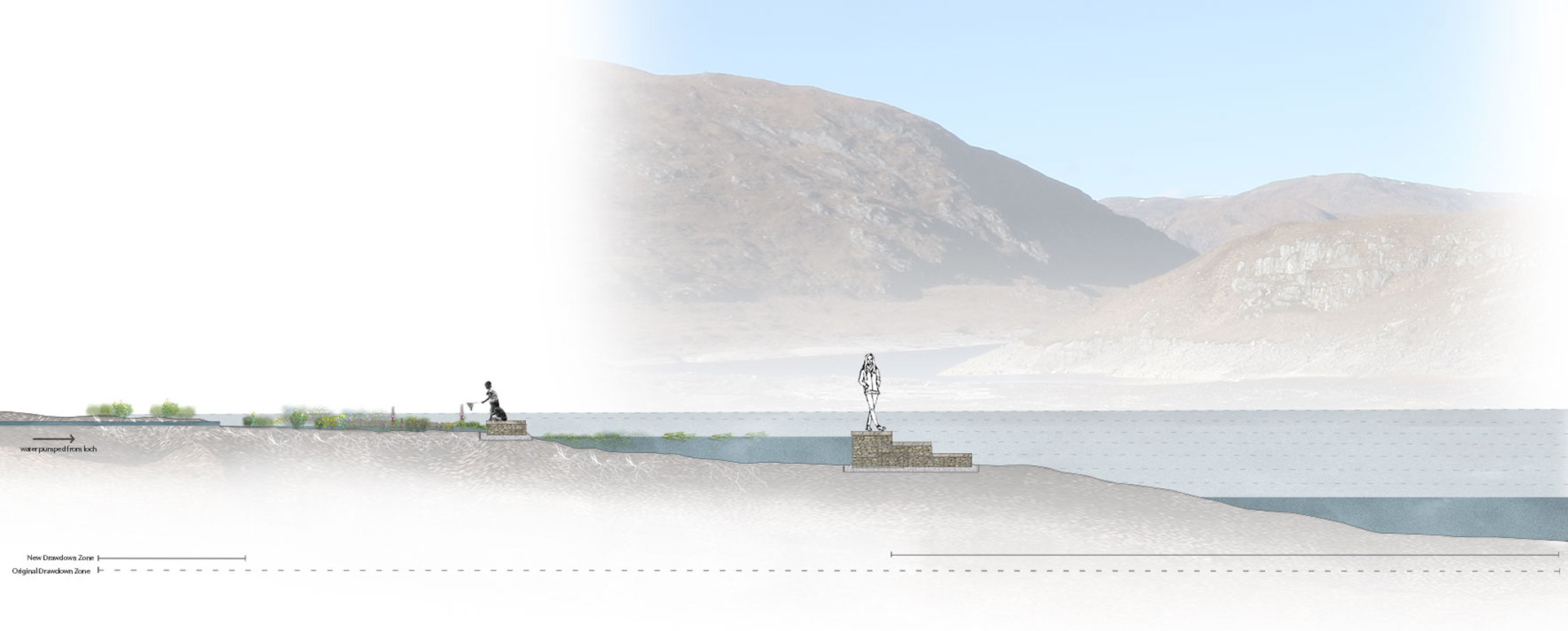
This project moves from watershed scale down to exploring how a Hydro-ecological common would manifest in Strathfarrar- in the upper part of the Beauly Firth catchment, a landscape which community’s connection to the landscape has been cut off over and over again in the last few centuries. Working with local heritage and water management to build a positive and meaningful future.