Project description

Jökulhlaup Oasis: A Self-regeneration System Interact with Jökulhlaup

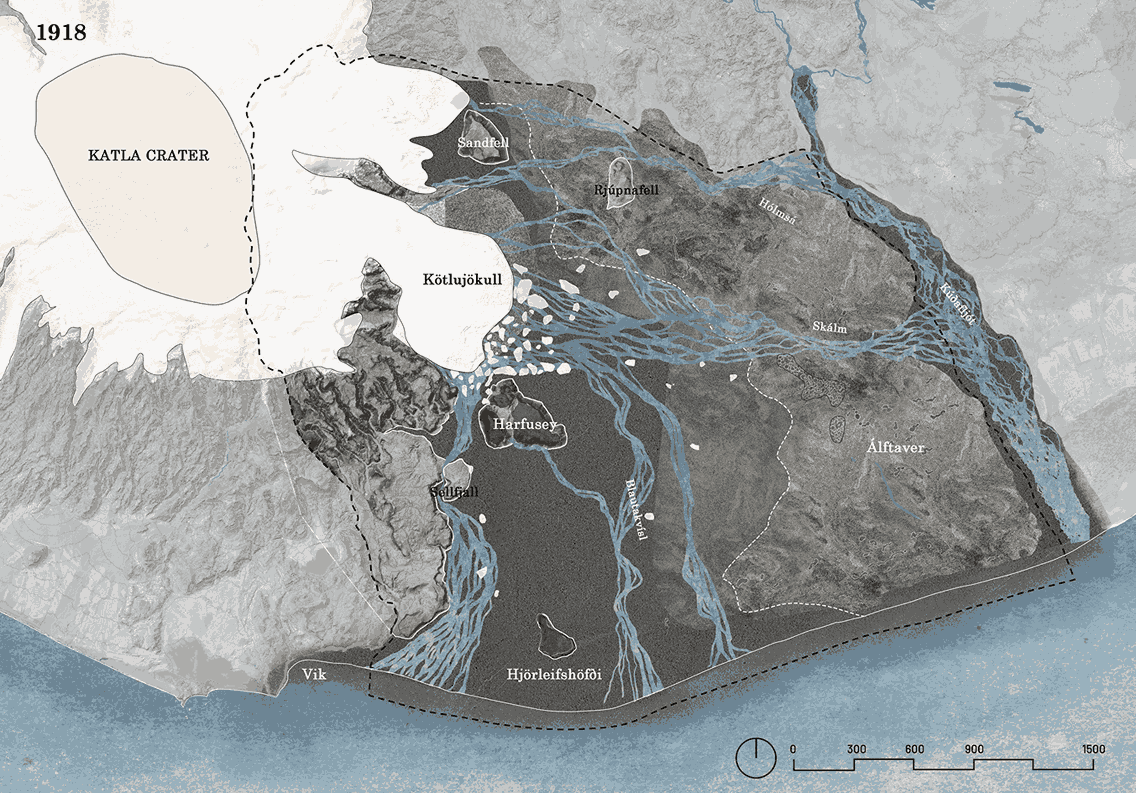
Iceland’s glacial outwash plains are among the most dynamic and geologically active landscapes on Earth. Formed through a combination of volcanic activity and glacial flooding (Jökulhlaup), these plains are constantly reshaped by natural forces that erode, deposit, and redistribute sediment across vast barren expanses.

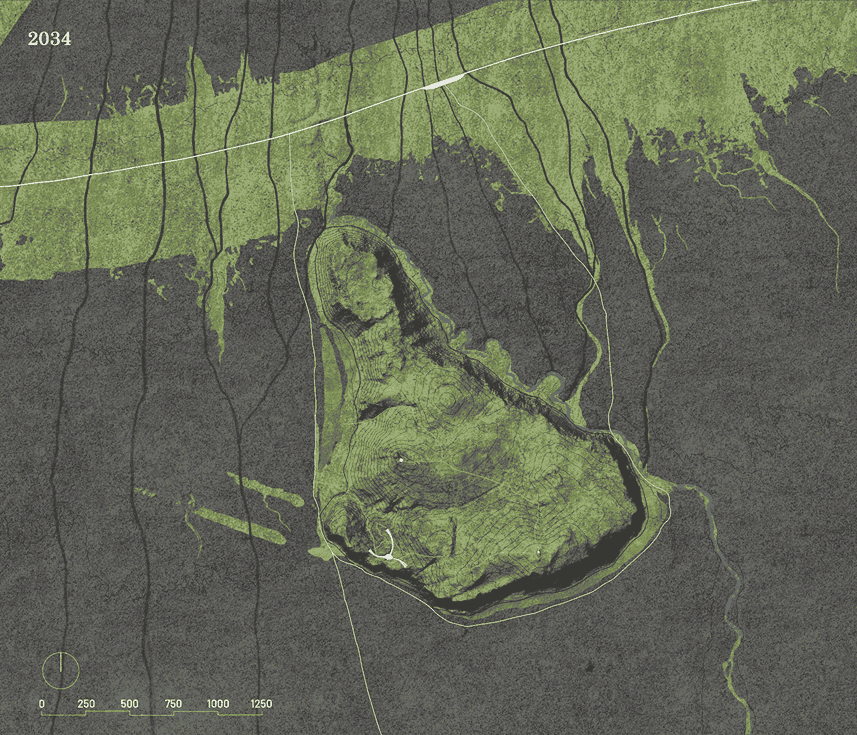
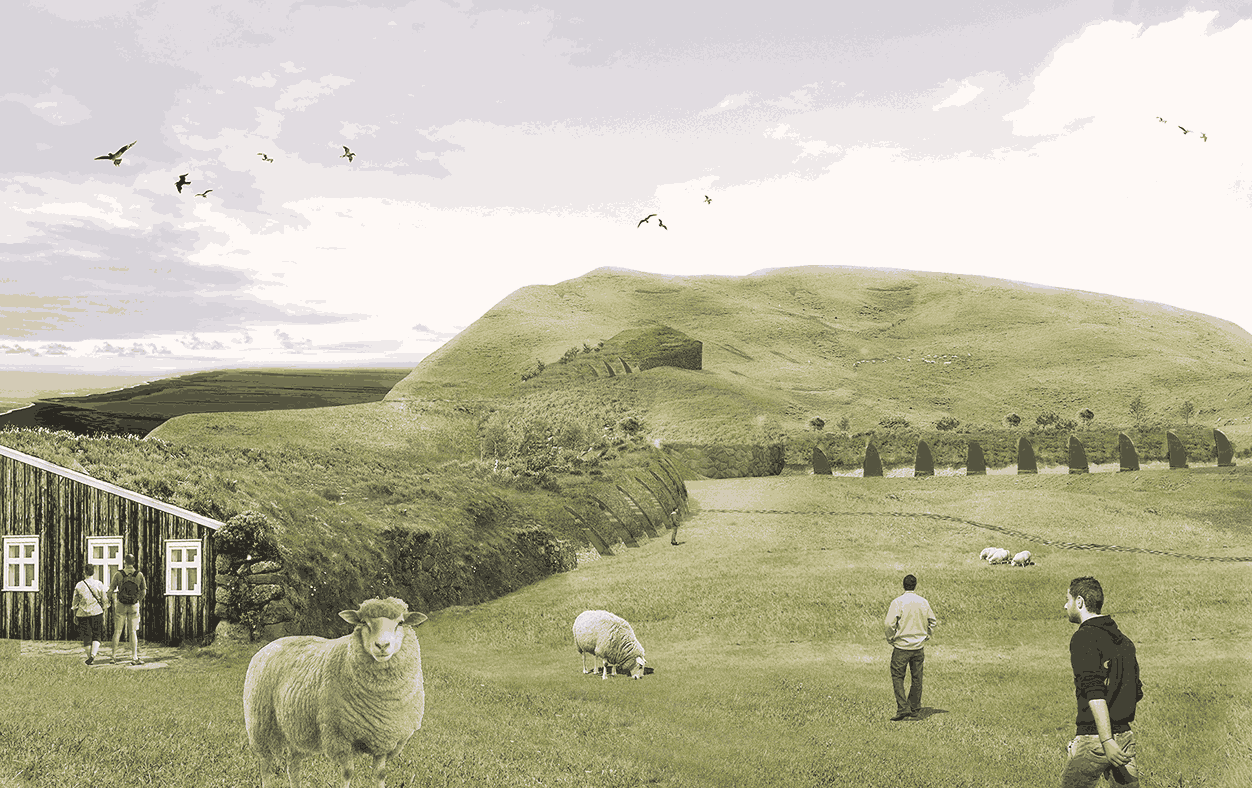
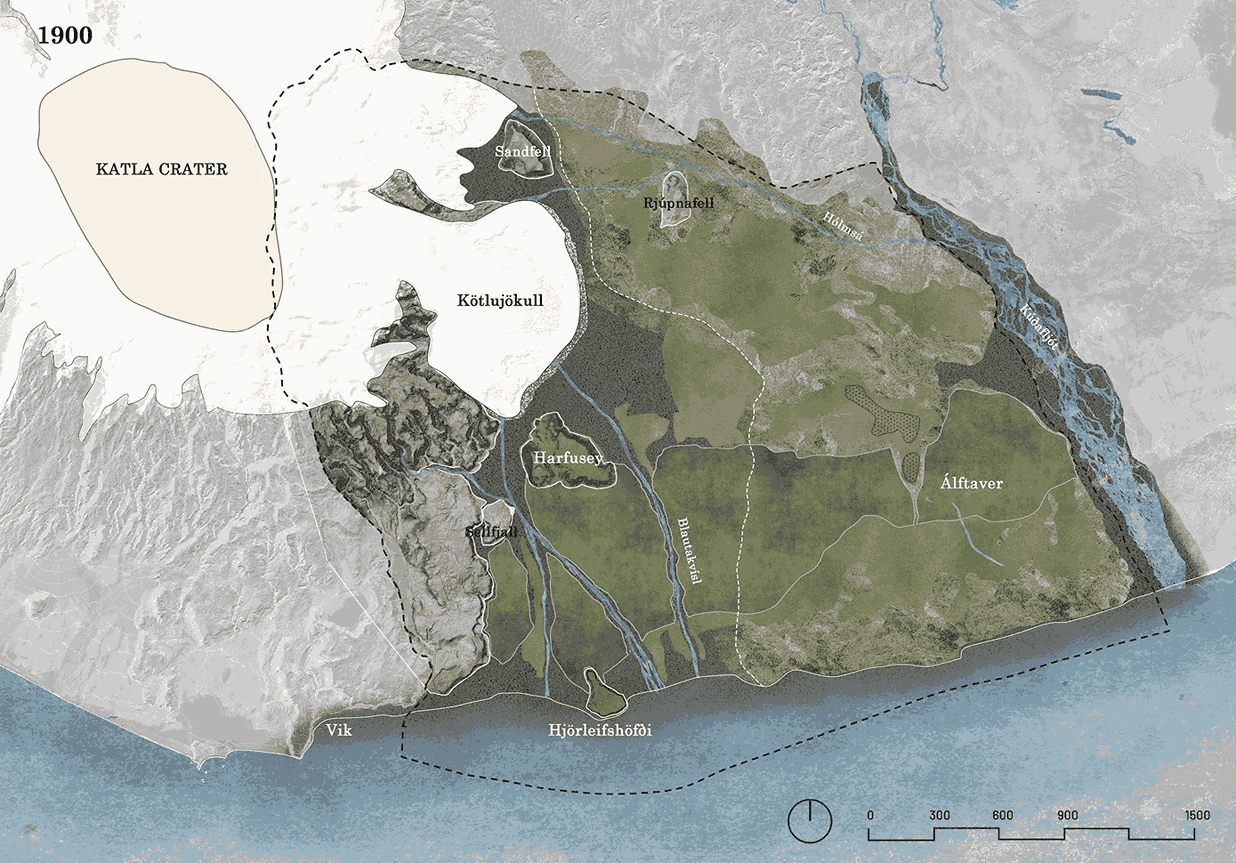
This project focuses on Mýrdalssandur— a southern Icelandic outwash plain characterized by its high sediment loads, volcanic ash deposits, and heightened sensitivity to environmental change. At the edge of this unstable plain stands Hjörleifshöfði, a solitary volcanic promontory formed by early eruptions. While the surrounding land is shaped by frequent floods and sediment flows, this mountain offers a contrasting sense of stability and memory. Its elevated, resilient structure becomes a symbolic and spatial anchor for the project.

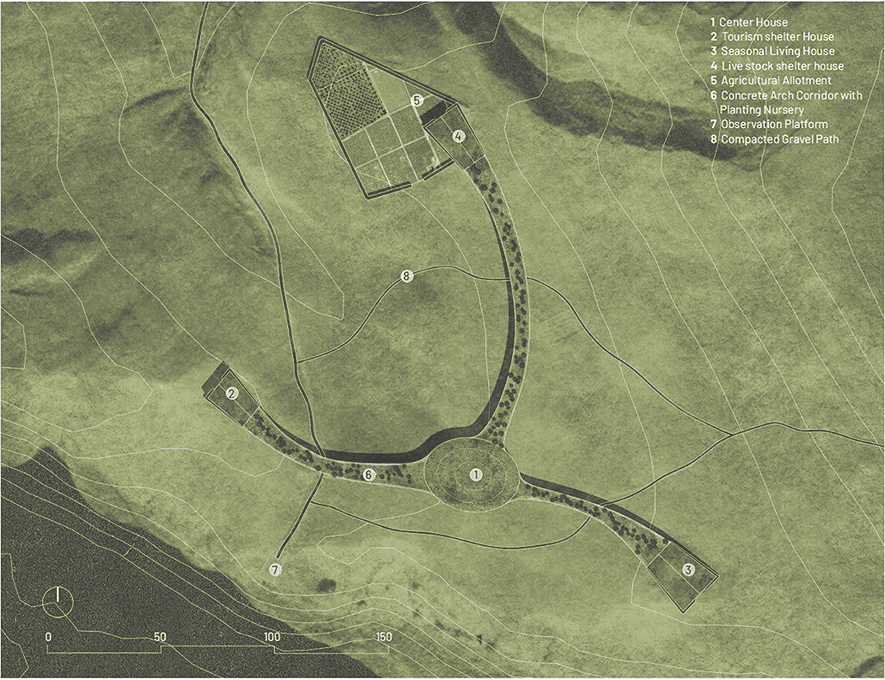
Titled Jökulhlaup Oasis, the design frames Hjörleifshöfði as an ecological and cultural refuge within an otherwise impermanent landscape. Rather than resist the destructive potential of Jökulhlaups, the project embraces them as catalysts for regeneration. By setting a time span for the focus of two Jökulhlaups, the project envisions a new model of human habitation: one that accepts volatility as part of daily life. It integrates adaptive architecture, immersive observation platforms, and seasonal shelters, allowing people to live with, witness, and learn from the rhythms of the land. Jökulhlaup Oasis offers a narrative of resilience—an interplay of memory, disturbance, and renewal—where landscape, ecology, and culture evolve together.
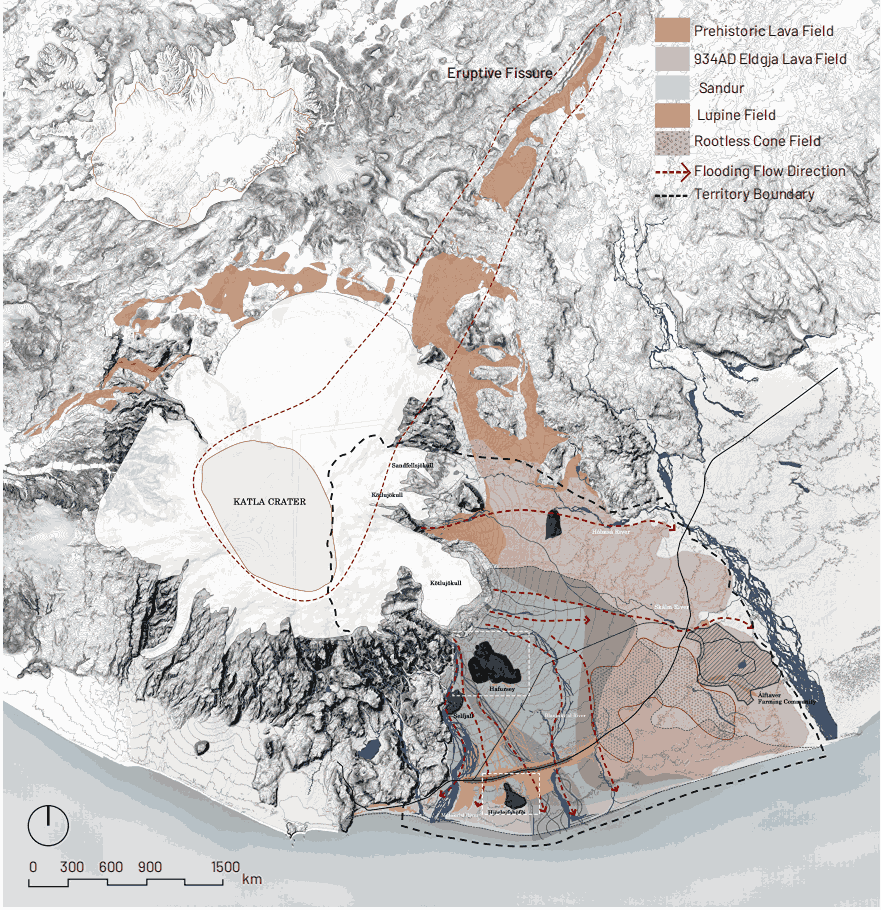
Katla Volcanic System

Katla Volcano is the most powerful active volcano in Iceland. Mýrdalssandur outwash plain was formed by the outburst floods released mainly from the Kötlujökull outlet glacier following eruptions of the Katla volcano. The lava erupted from the Katla eruptive fissure flows southward to form the Eldgjá Lava Field. The mountains to the west and the boundary of the lava field constrain the area of the Jökulhlaup, thereby limiting the size of the Mýrdalssandur outwash plain. 

katla
Hjörleifshöfði Oasis
masterplan expand
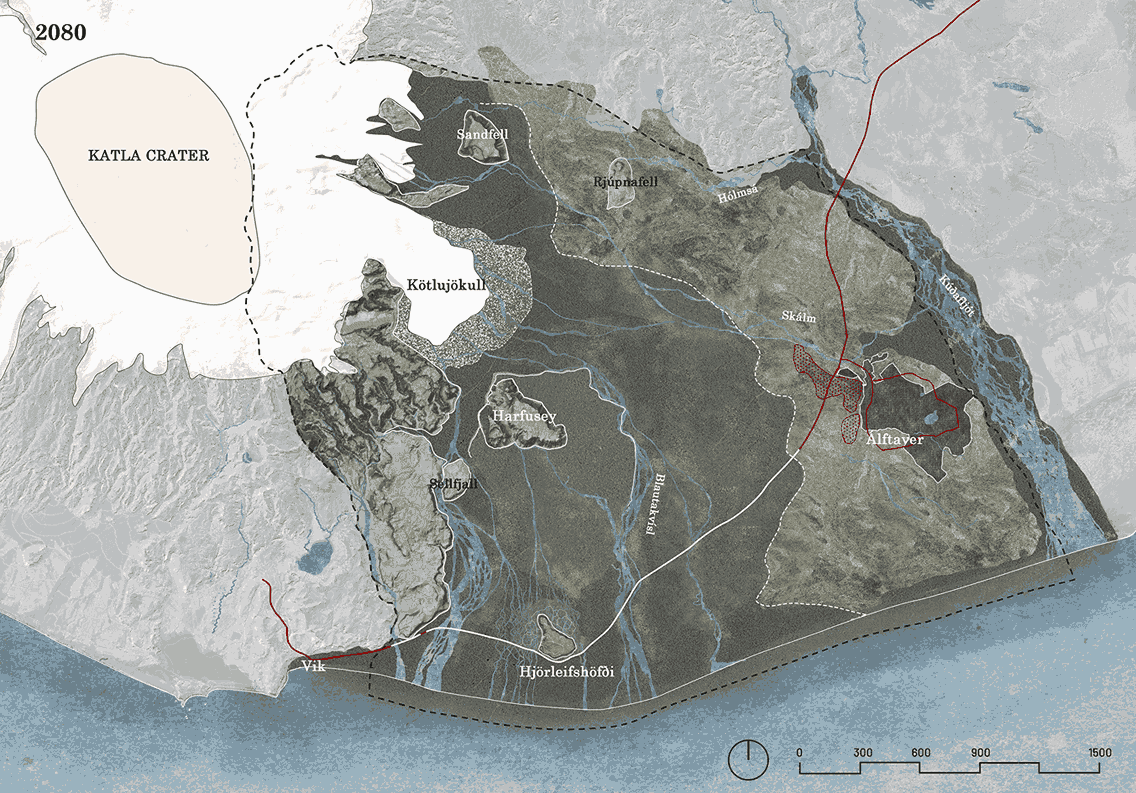
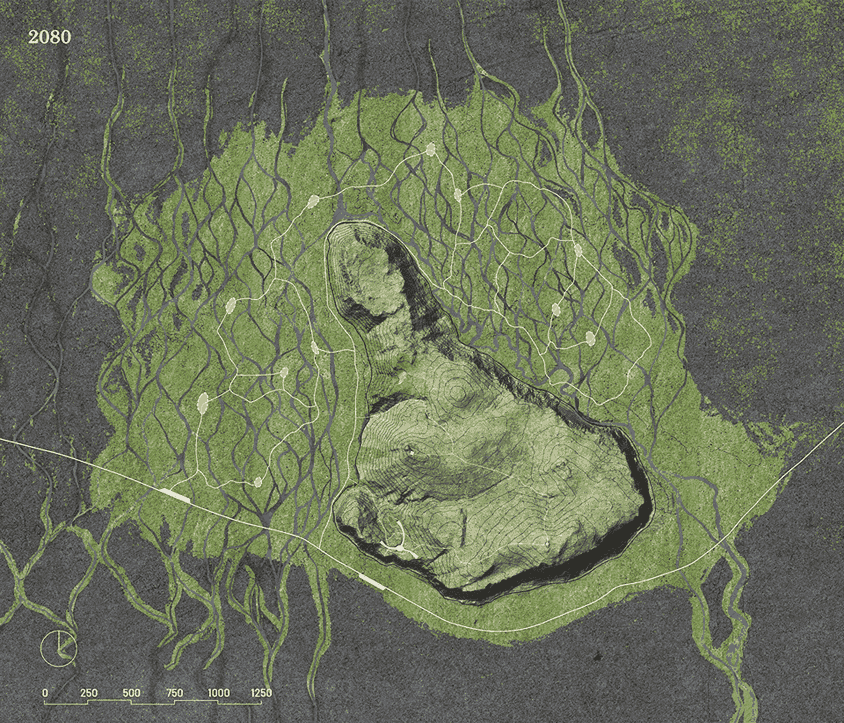
Hjörleifshöfði Oasis in 2080
Preparing Stage (2025-2035)

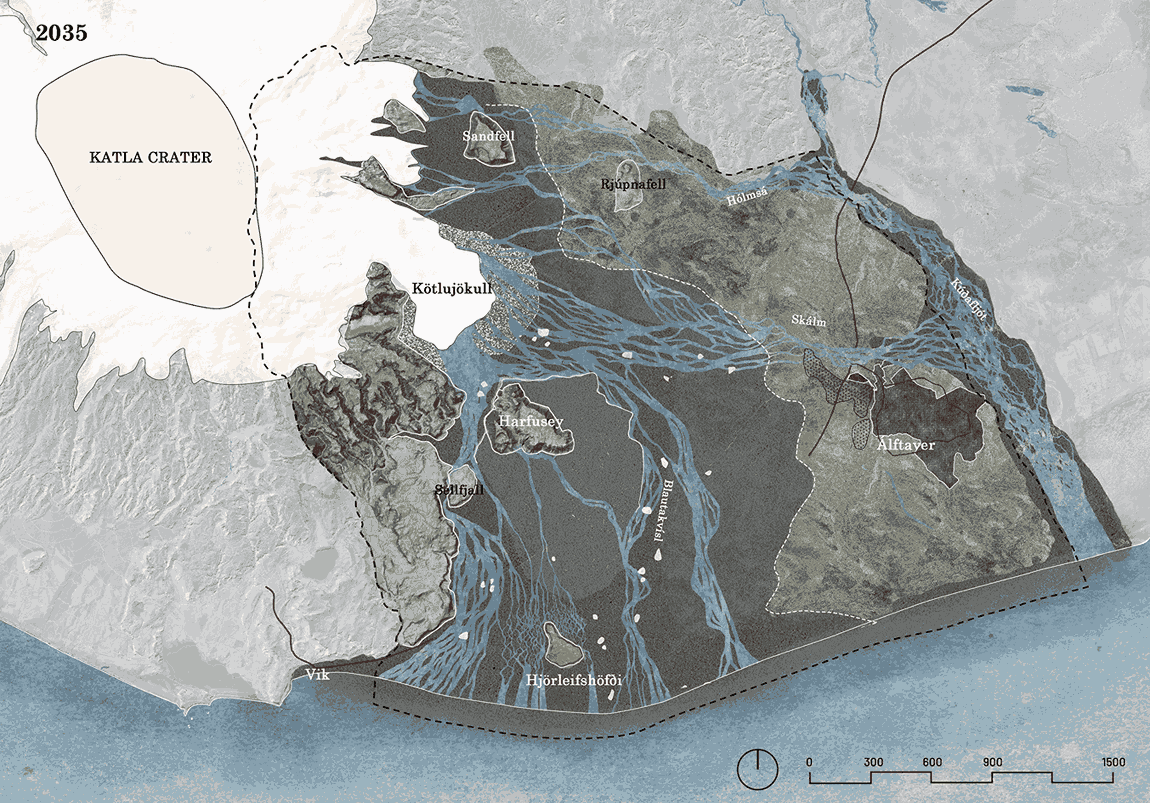
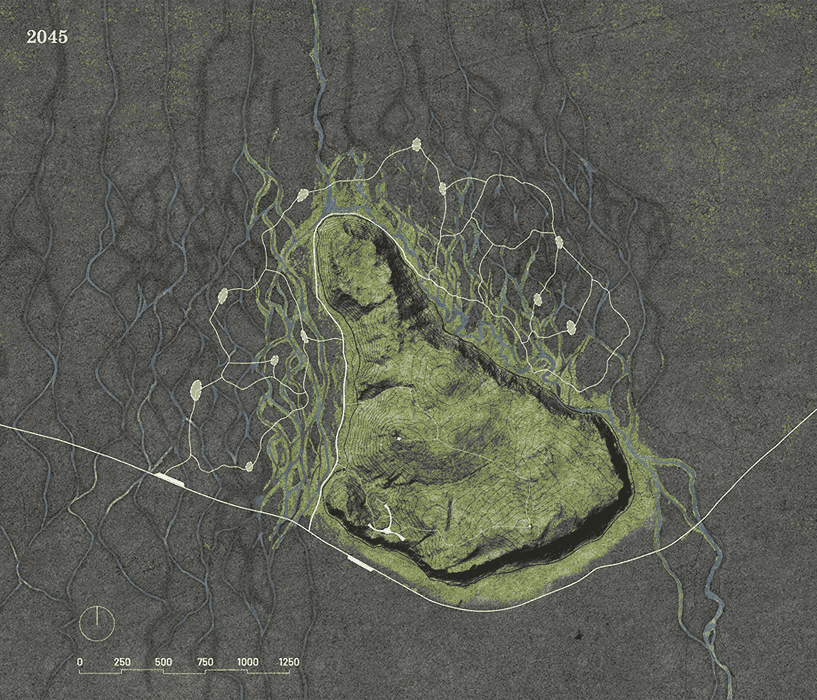
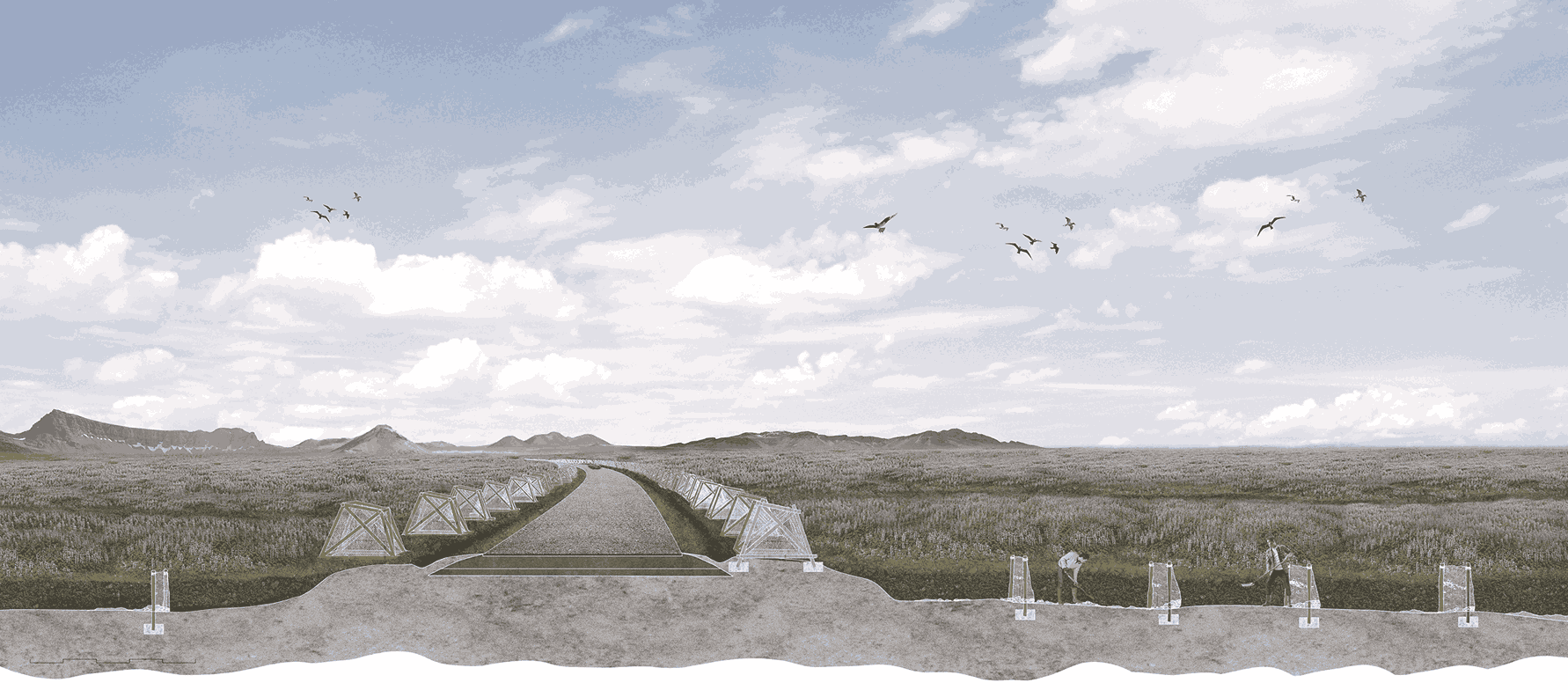
During the Preparing Stage (2025–2035), preliminary landform shaping and fragmented interventions are implemented in anticipation of the first Jökulhlaup in 2035. This flood event is treated as a design catalyst, setting the stage for the next phase. 


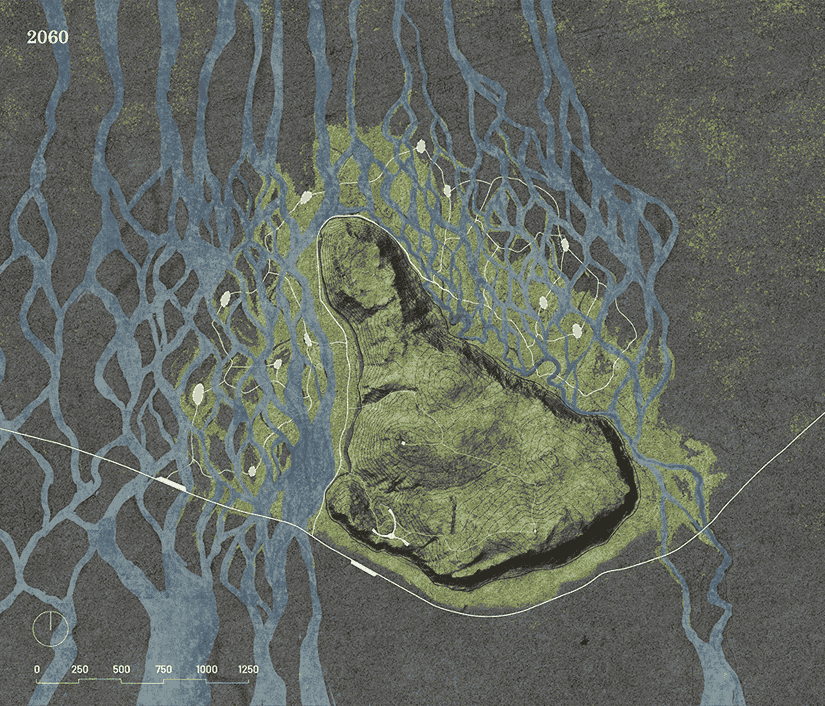
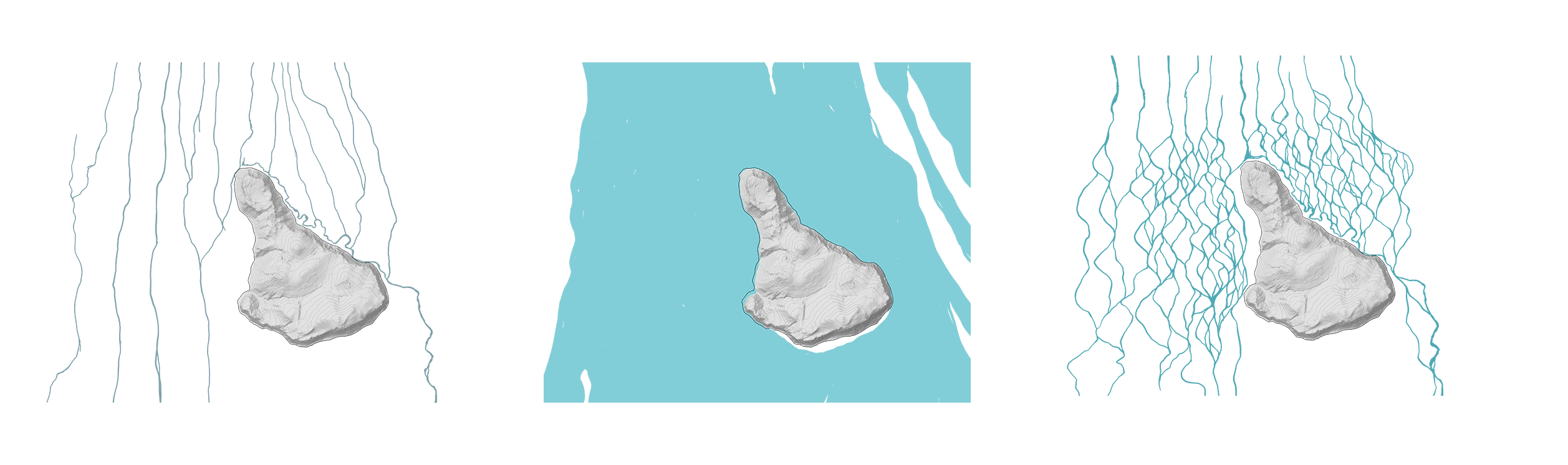
Process of River System Evolution

river evolution
Perspective 1 expand
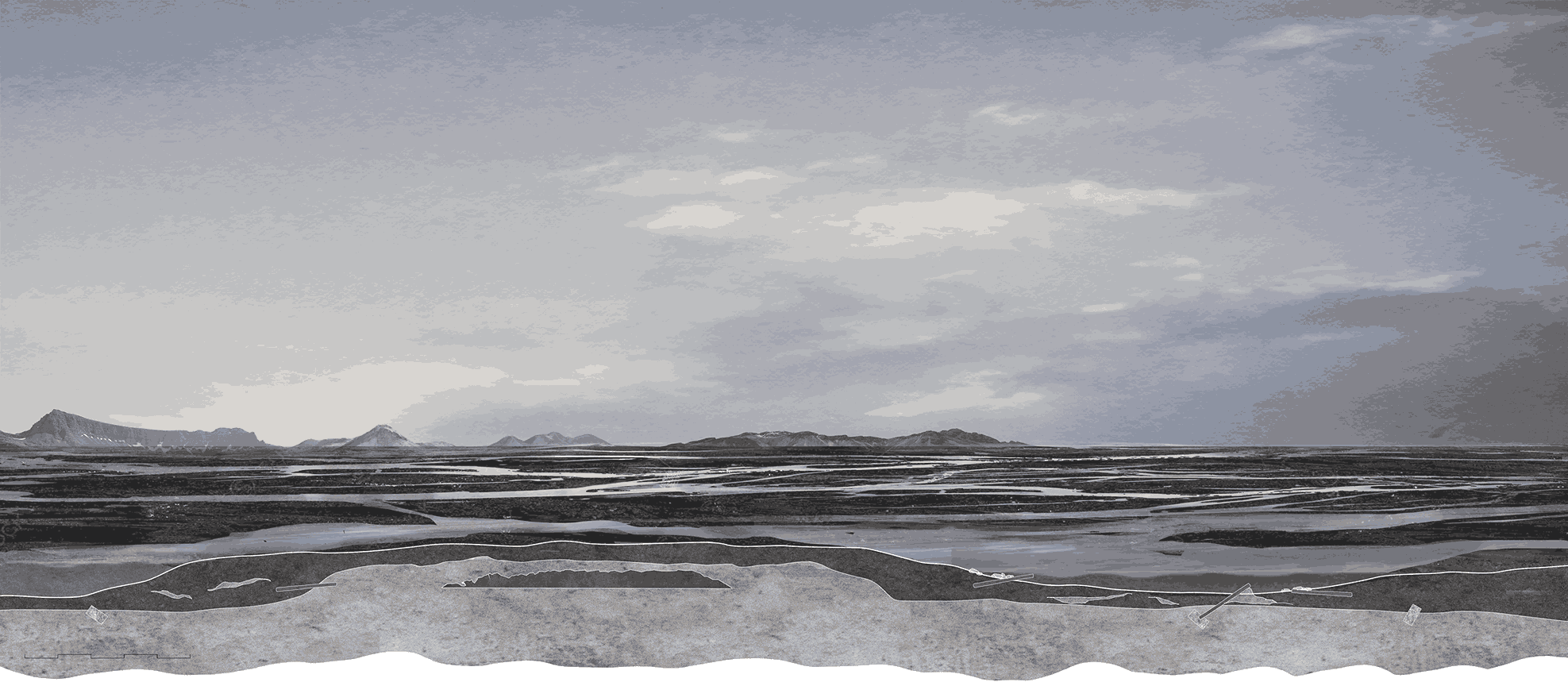
Artificial Water Channel Before First Jökulhlaup
Perspective 2 expand
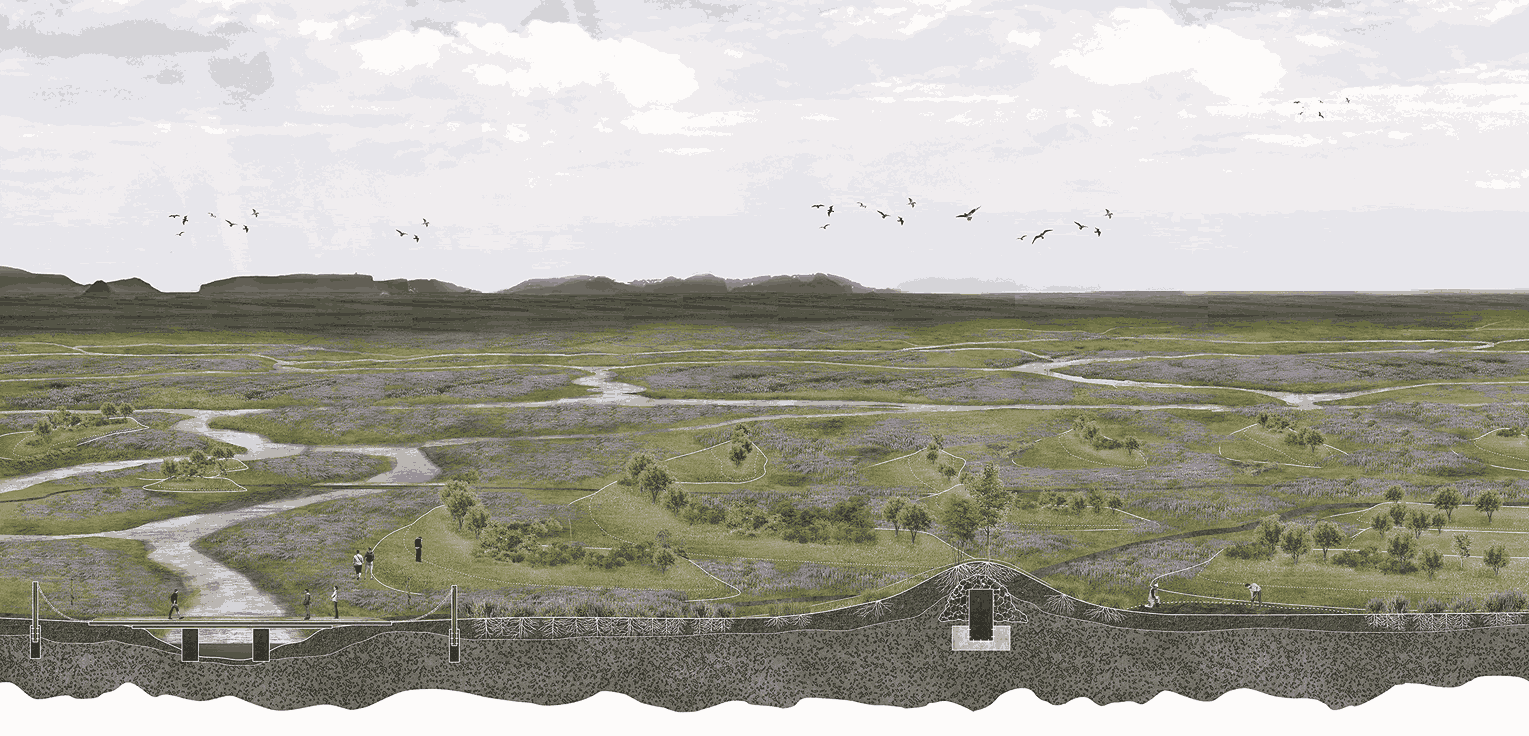
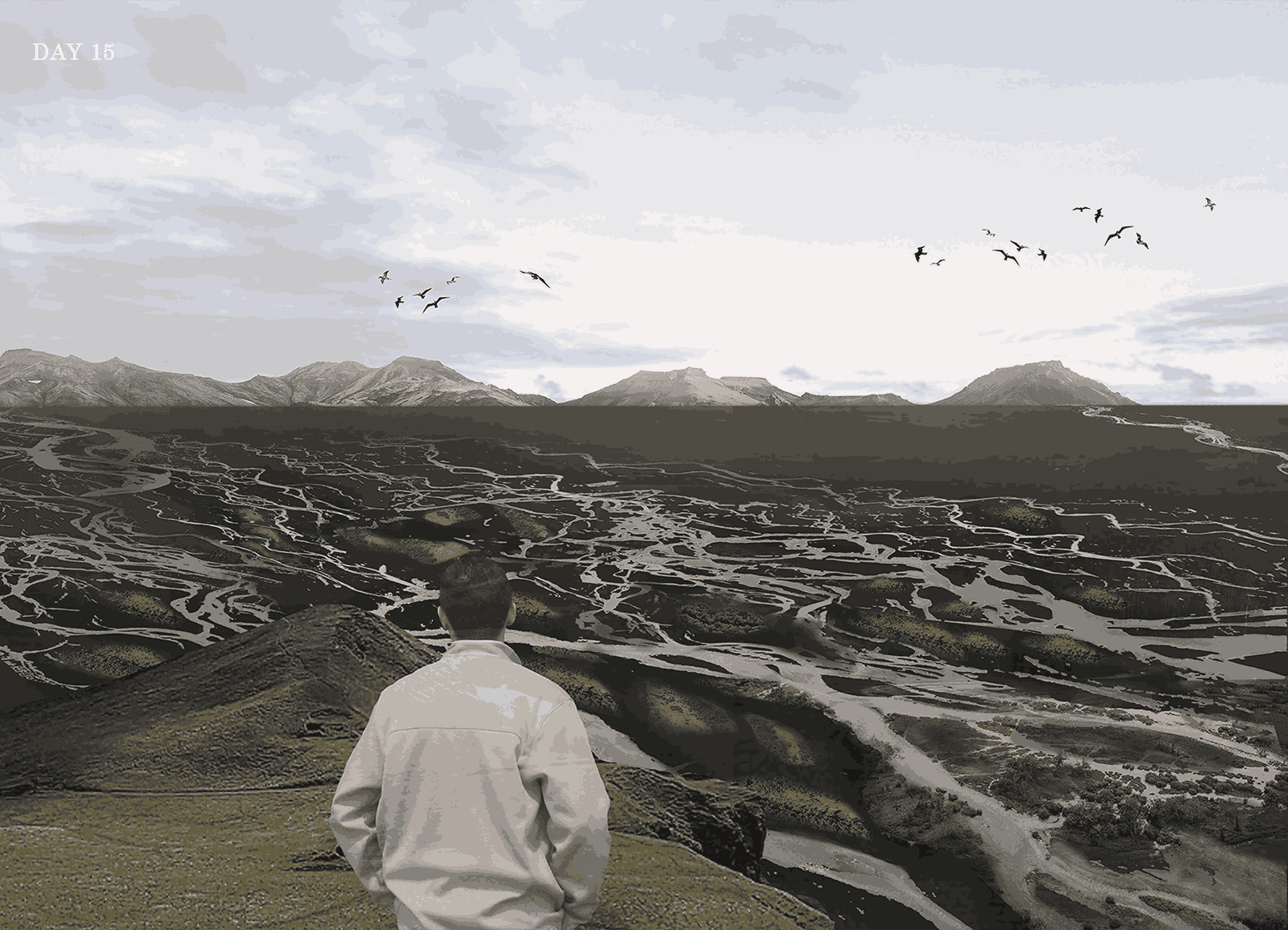
Braided Water System After First Jökulhlaup
Design Developing Stage (2035-2135)

The Design Developing Stage is the core design period, focusing on ecological strategies and the construction of various infrastructures. Around 2100, the design reaches a mature and stabilized state and will transition into the Theater Stage.

Alert expand
Alert Shelter Station in 2080
lighthouse
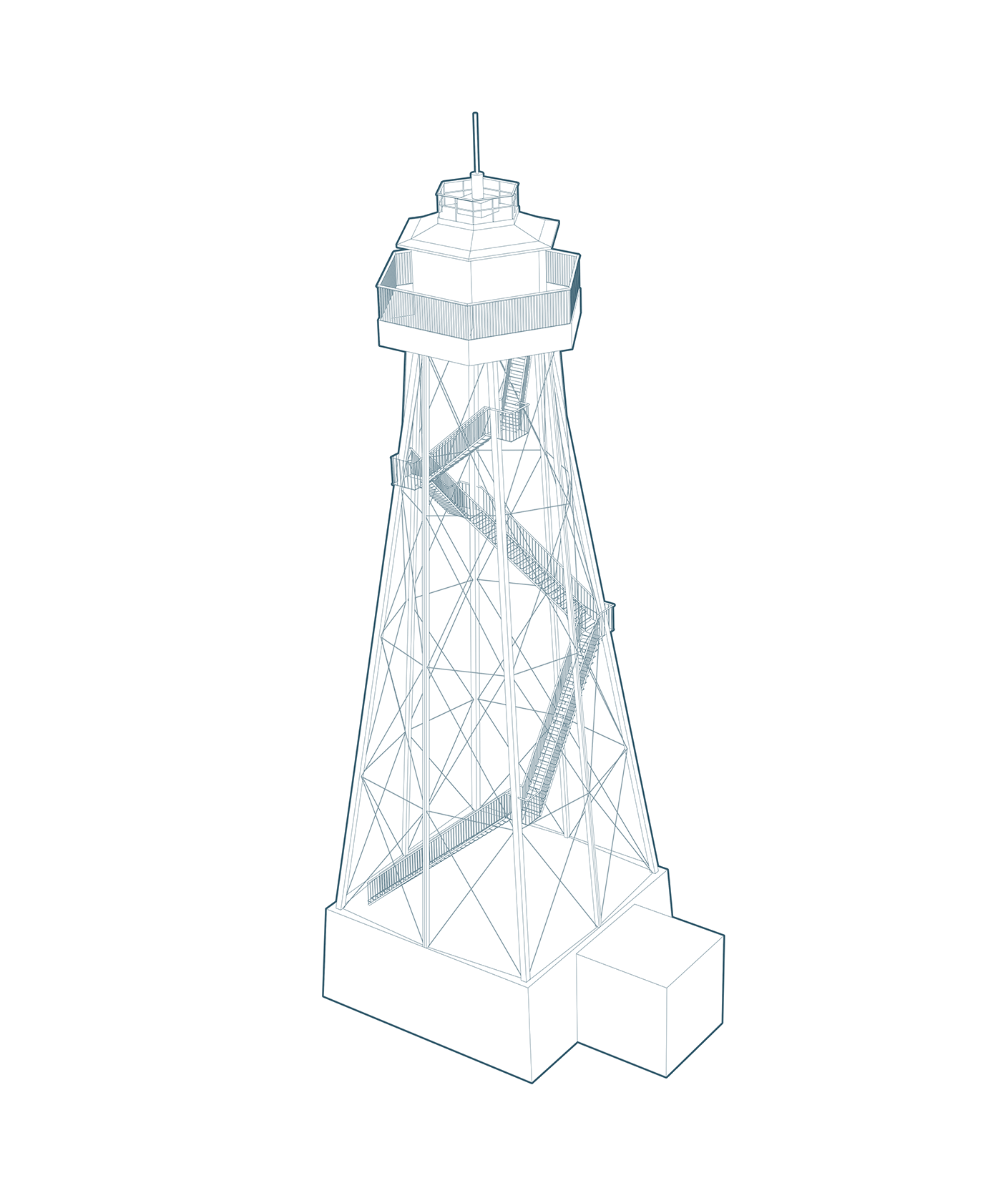
Observational and Alerting Lighthouse
before expand
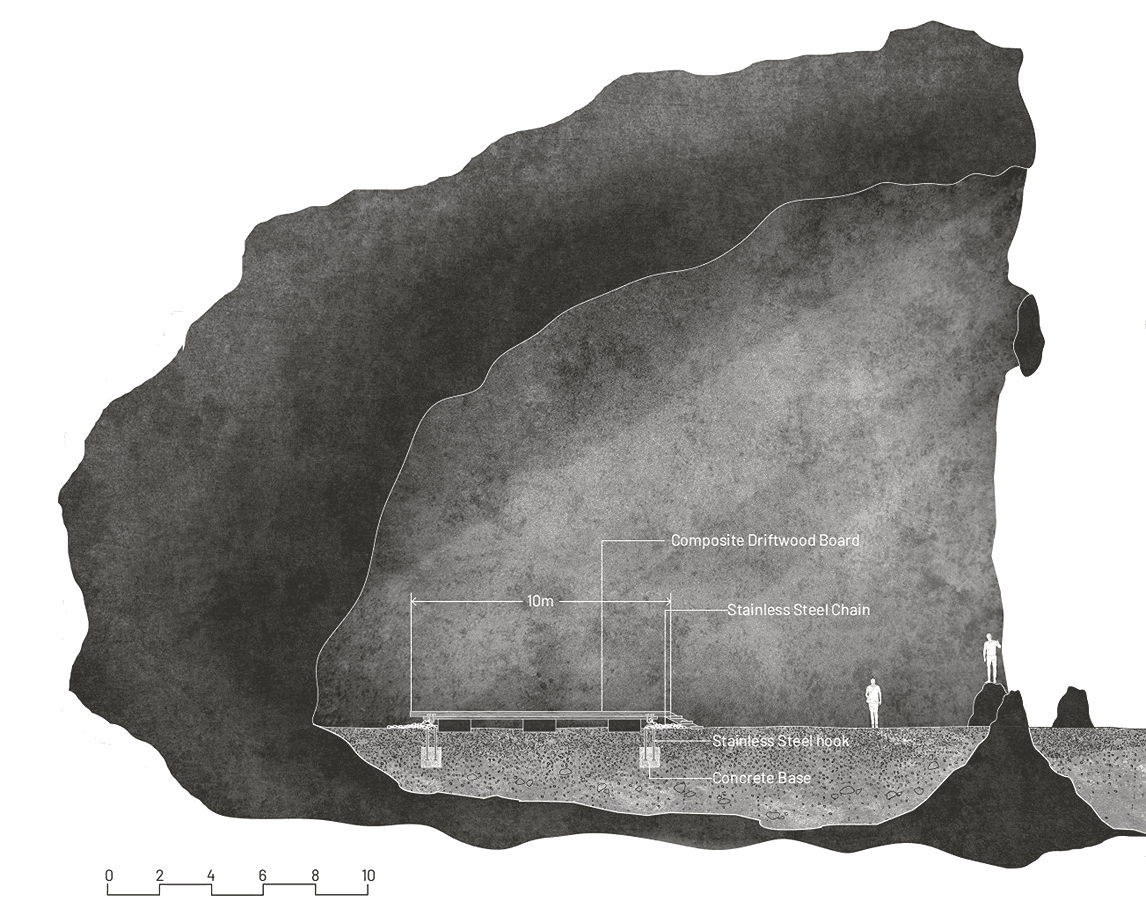
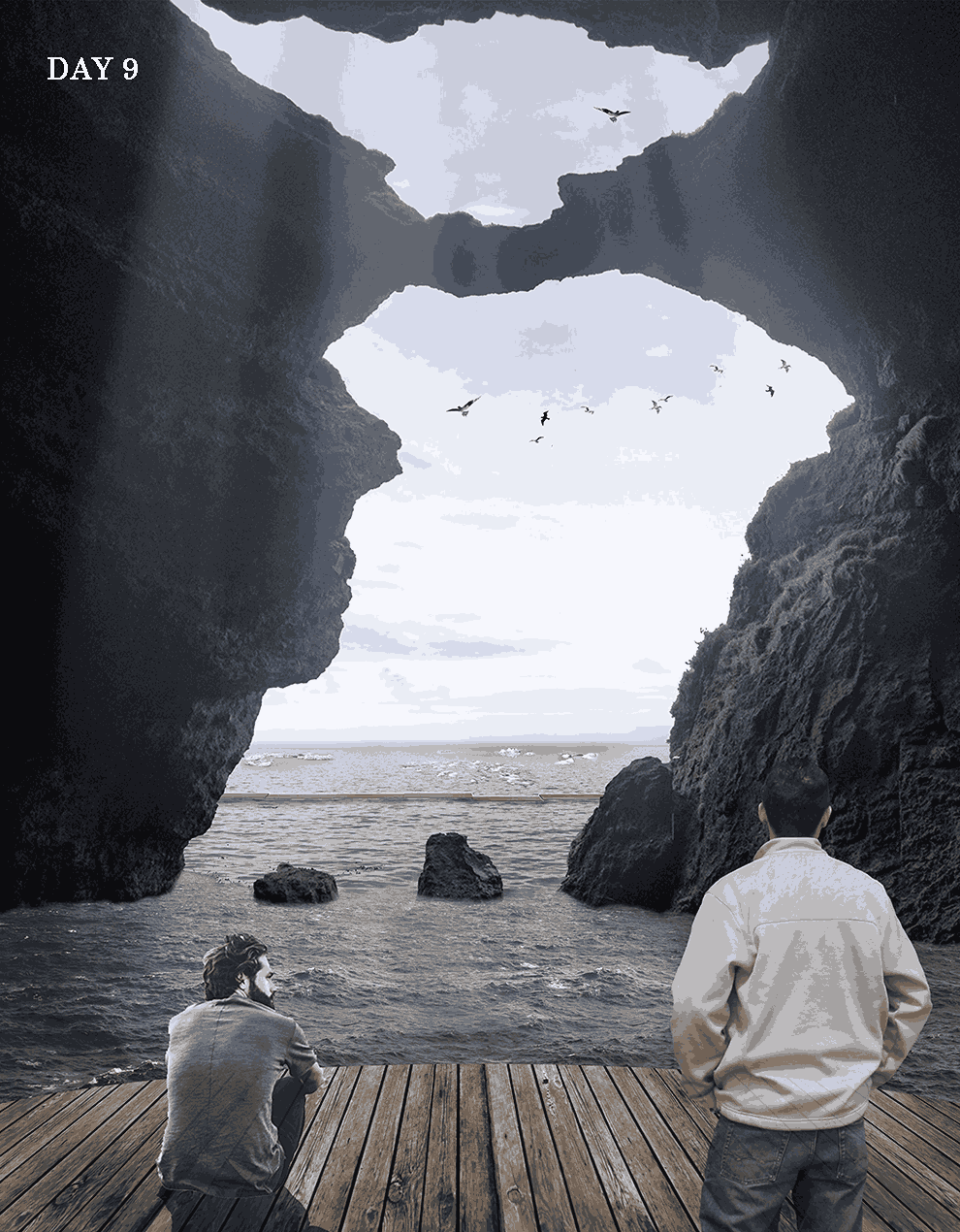
Yoda Cave (Gígjagjá) during normal condition
after expand
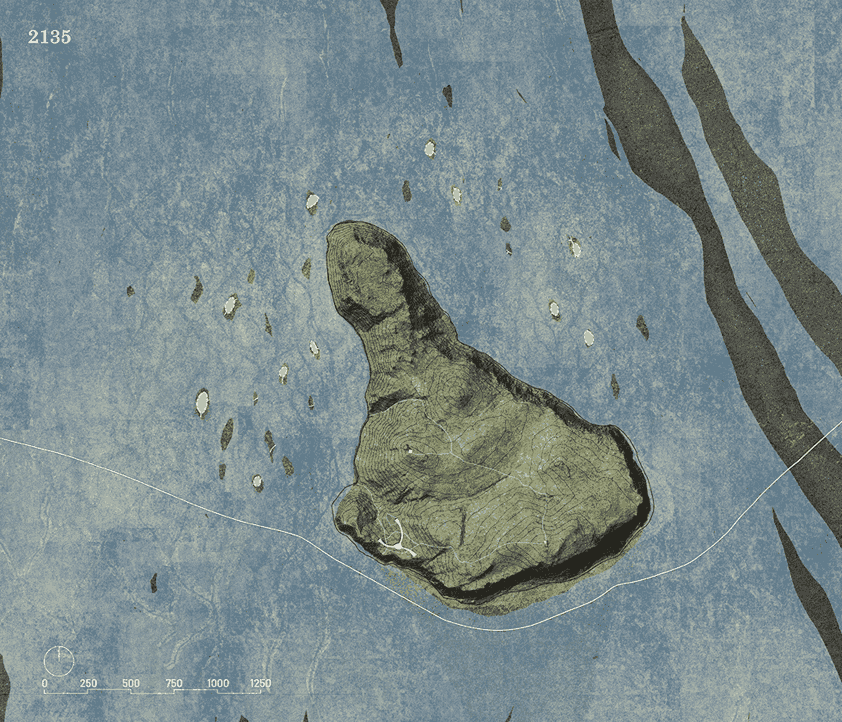
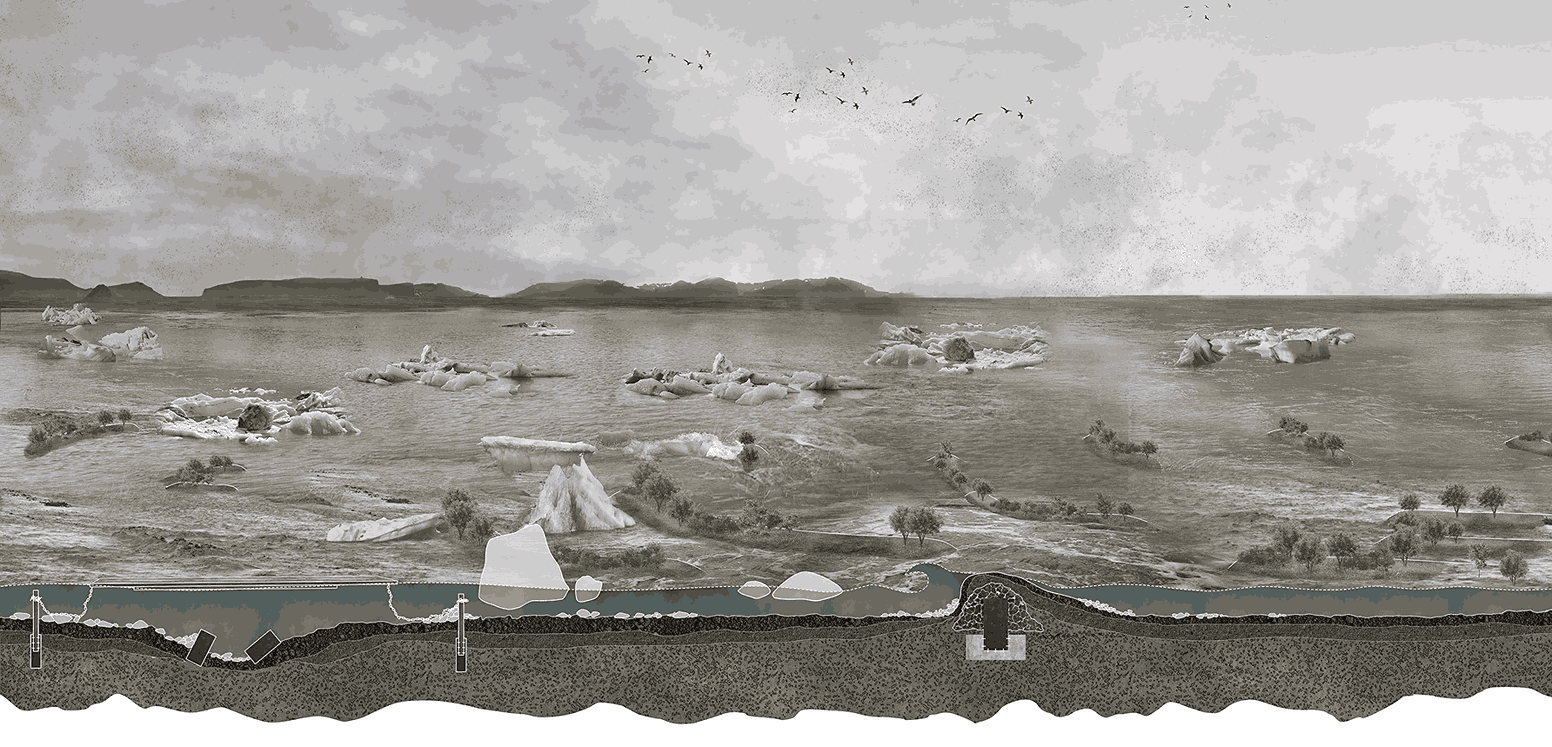
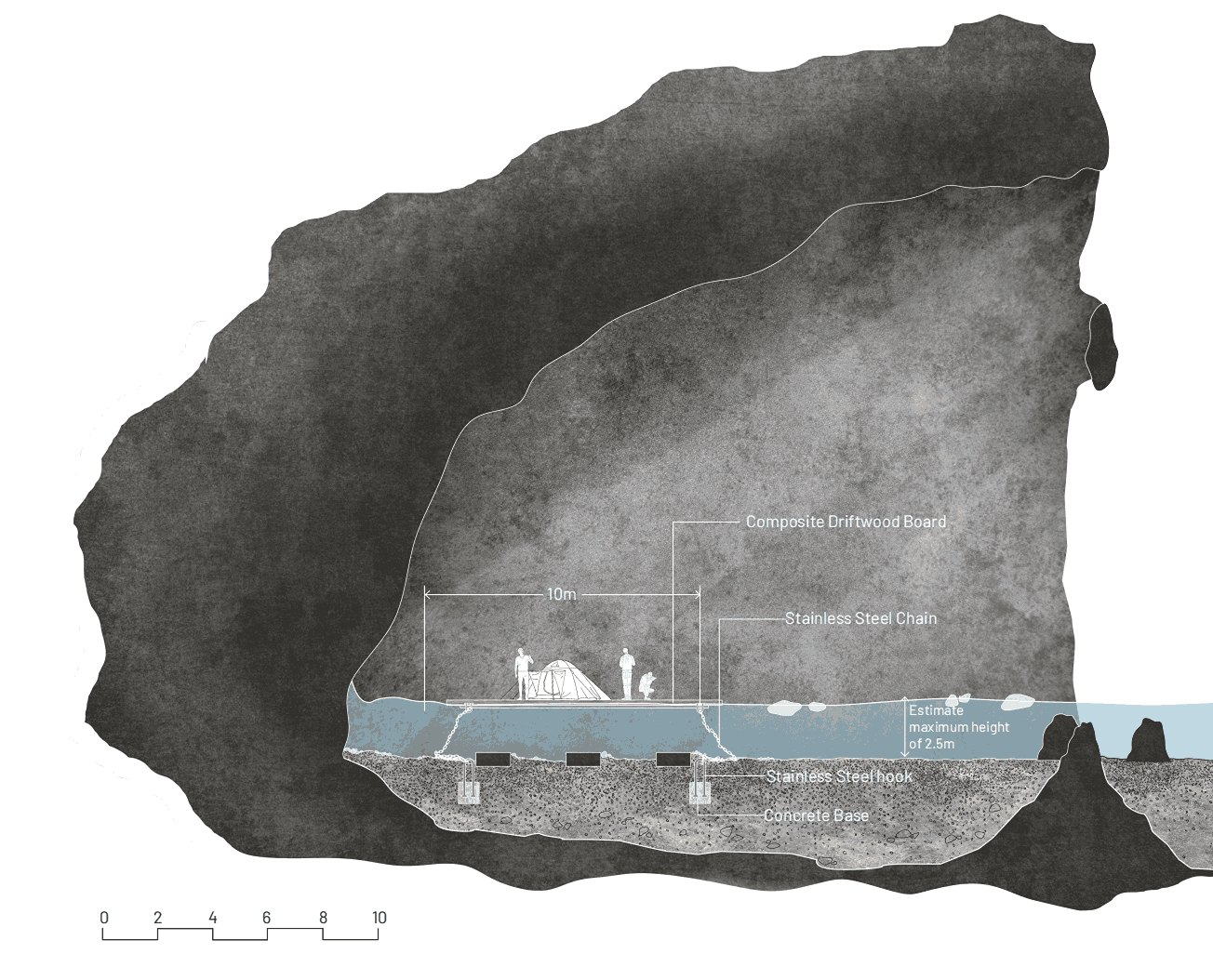
Yoda Cave (Gígjagjá) during second Jökulhlaup in 2135
Theater Stage (After 2135)

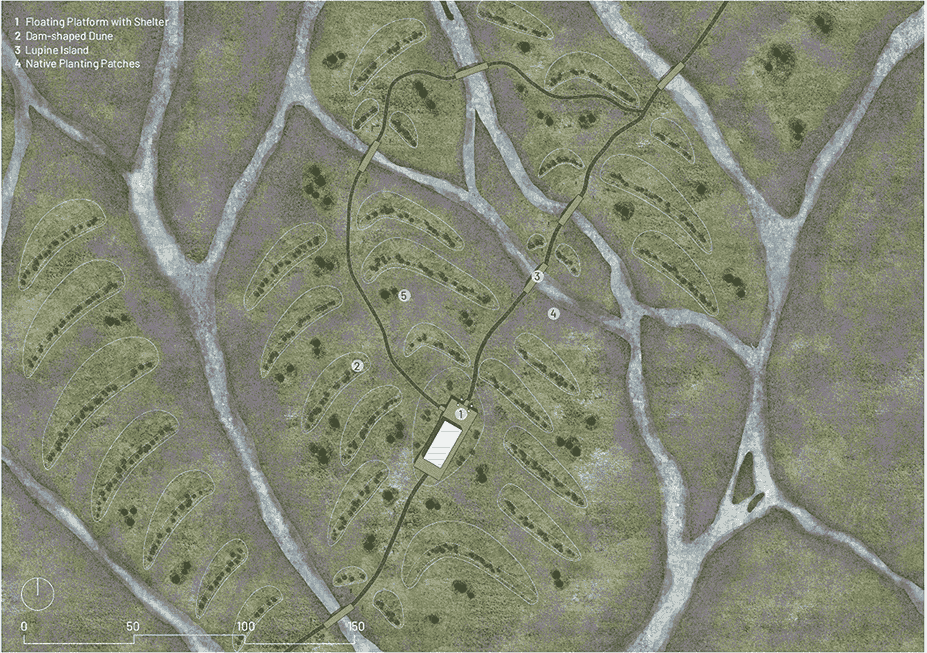
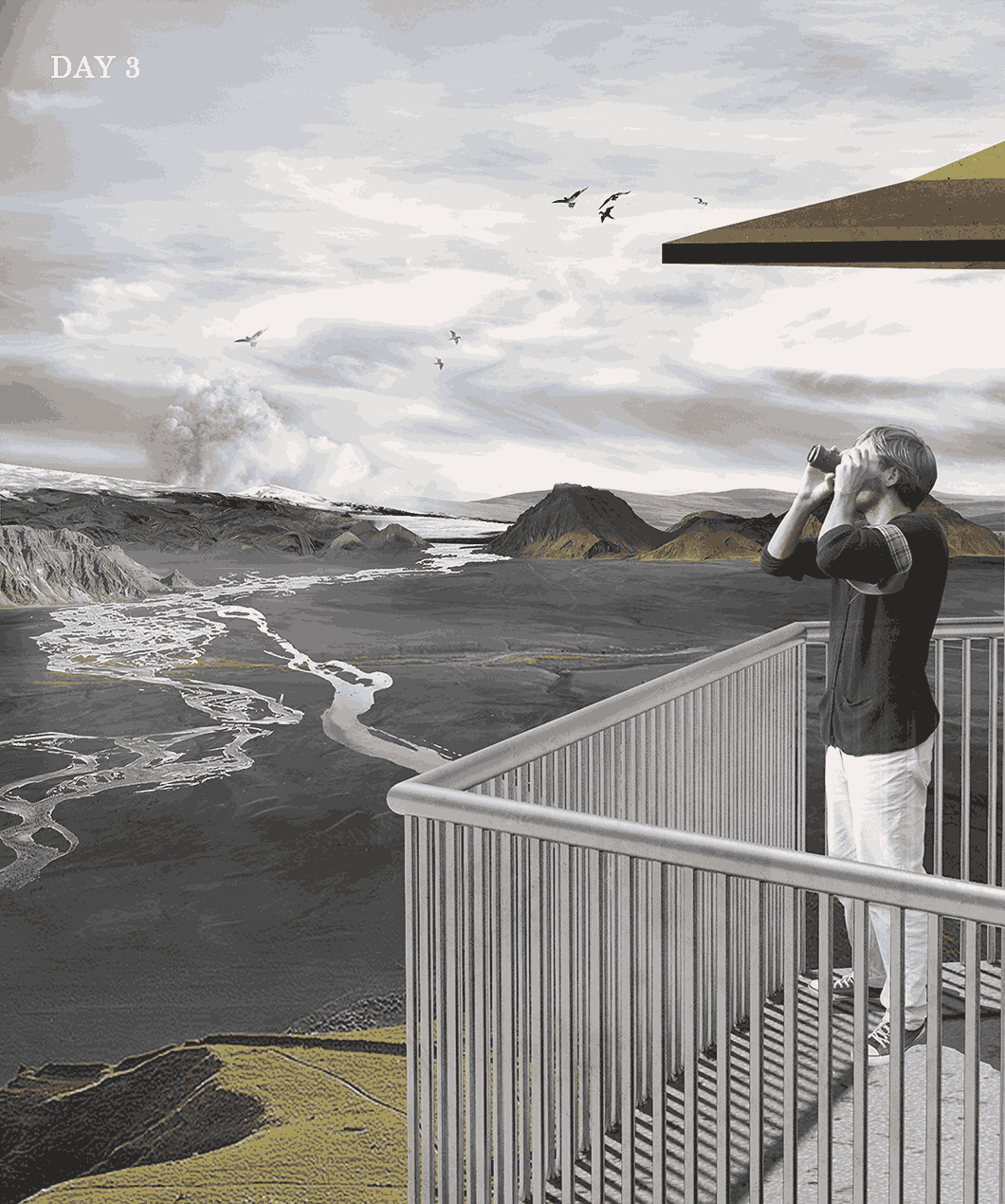
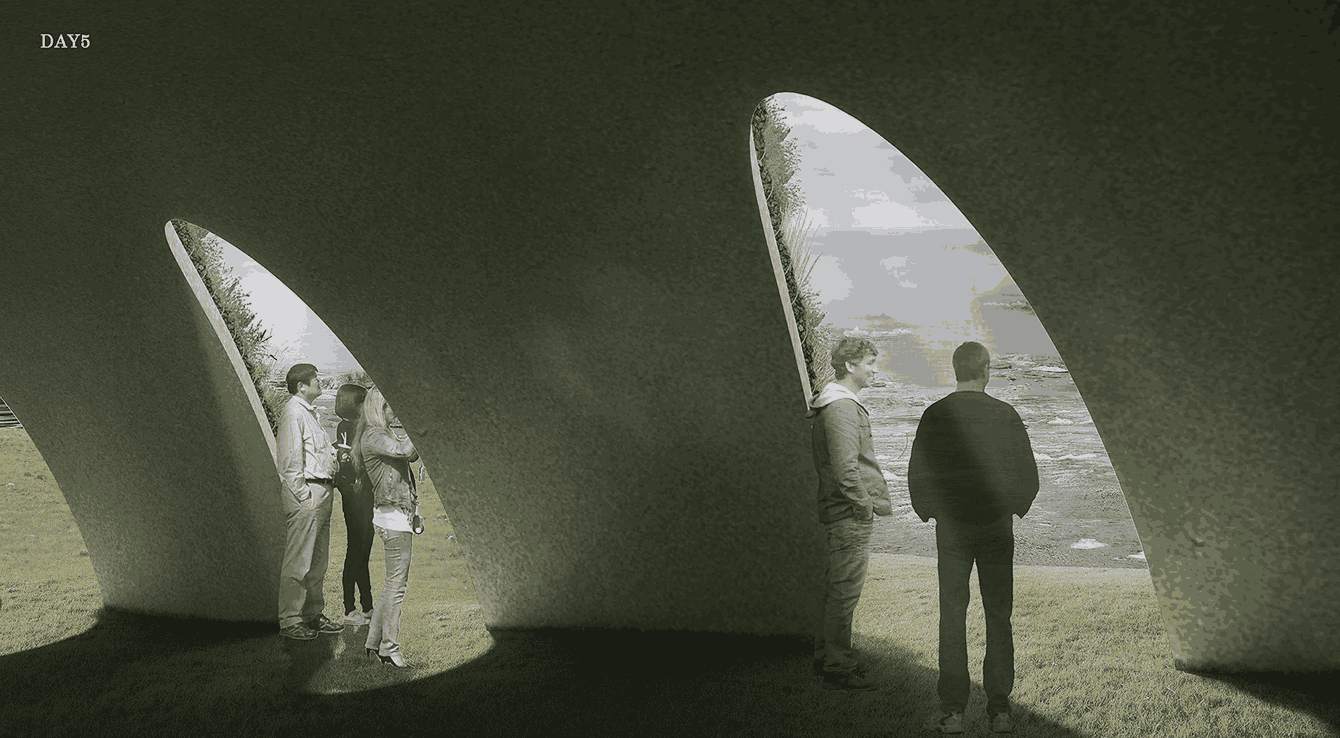
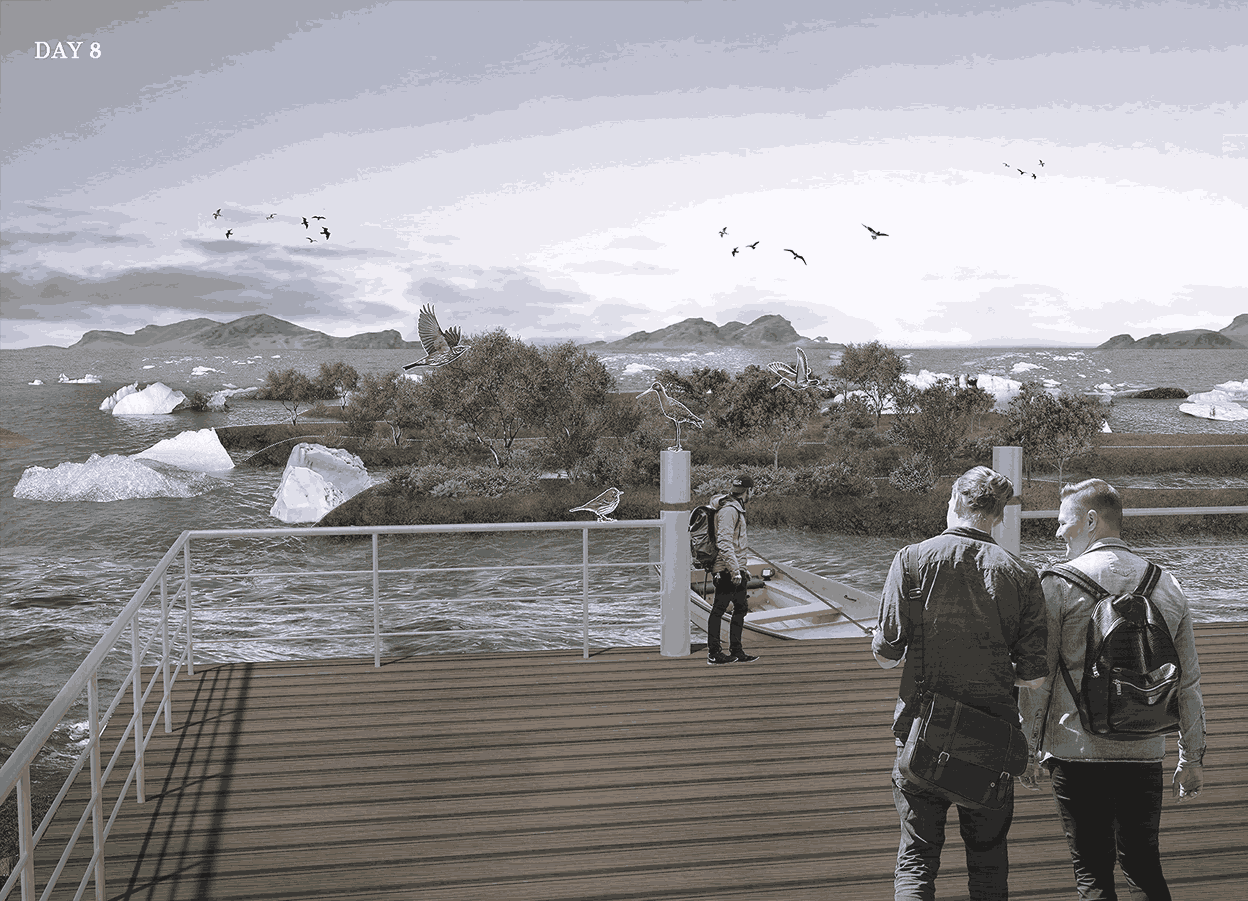
When the second Jökulhlaup occurs—predicted to take place in 2135—the design will enter its third phase: the Theater Stage. In this final phase, the full potential of the design is activated. The Jökulhlaup is transformed from a destructive ecological disaster into an immersive event that people can actively engage with and experience while creating refuges for wildlife. Let’s shift our perspective and begin this journey through the unfolding Jökulhlaup.

Skills & Experience
  • Adobe Suites
  • Auto Cad
  • 3D Modeling (Rhino/ Sketchup/ Revit)
  • QGIS/ ArcGIS
  • Lumion/ Enscape