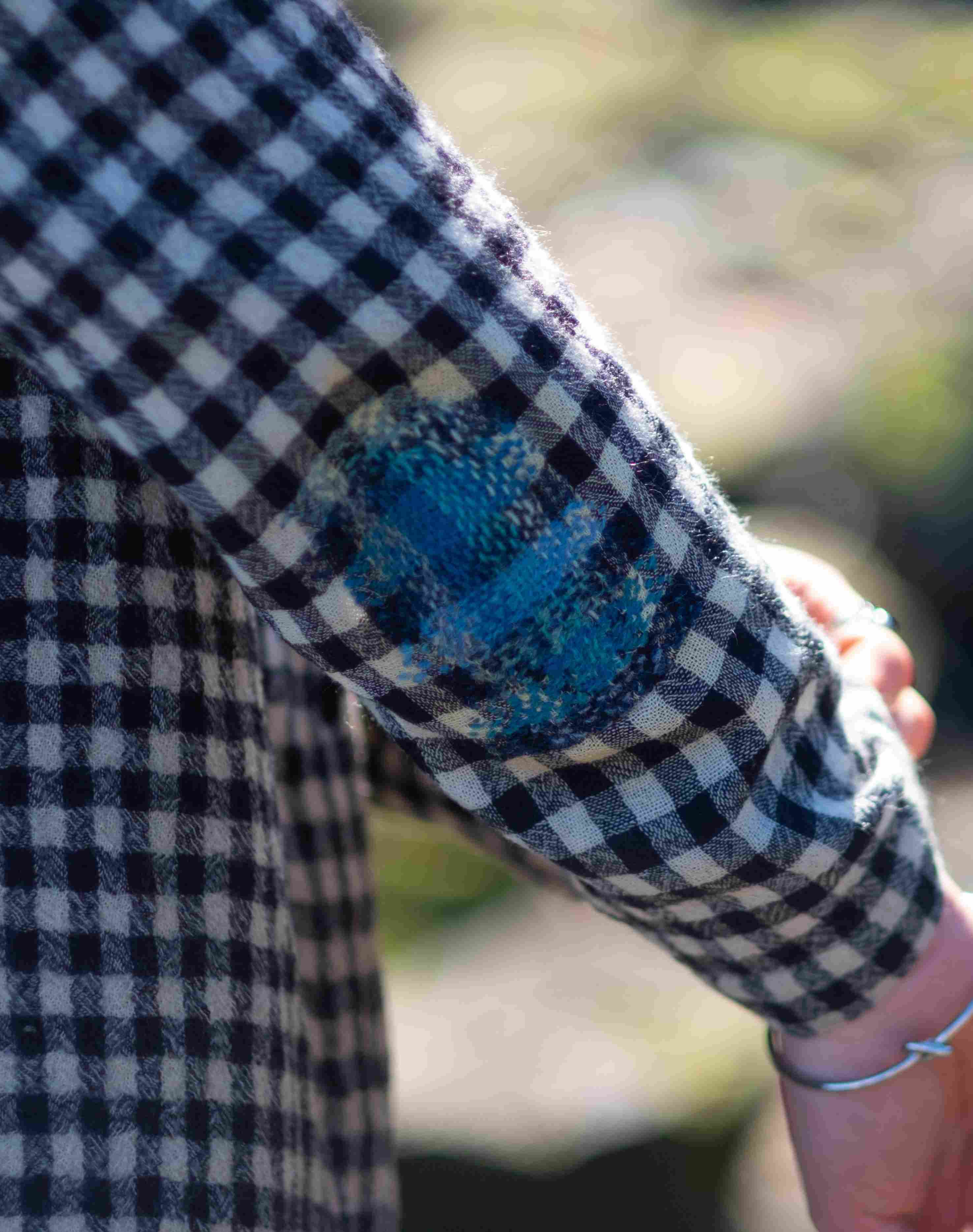
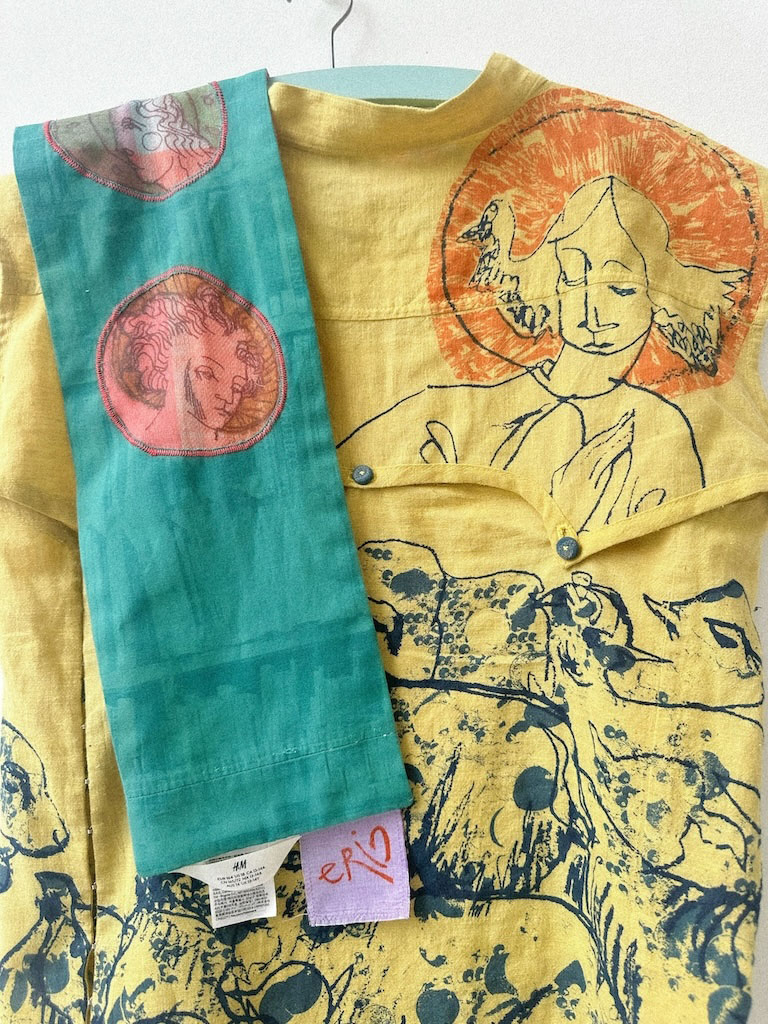
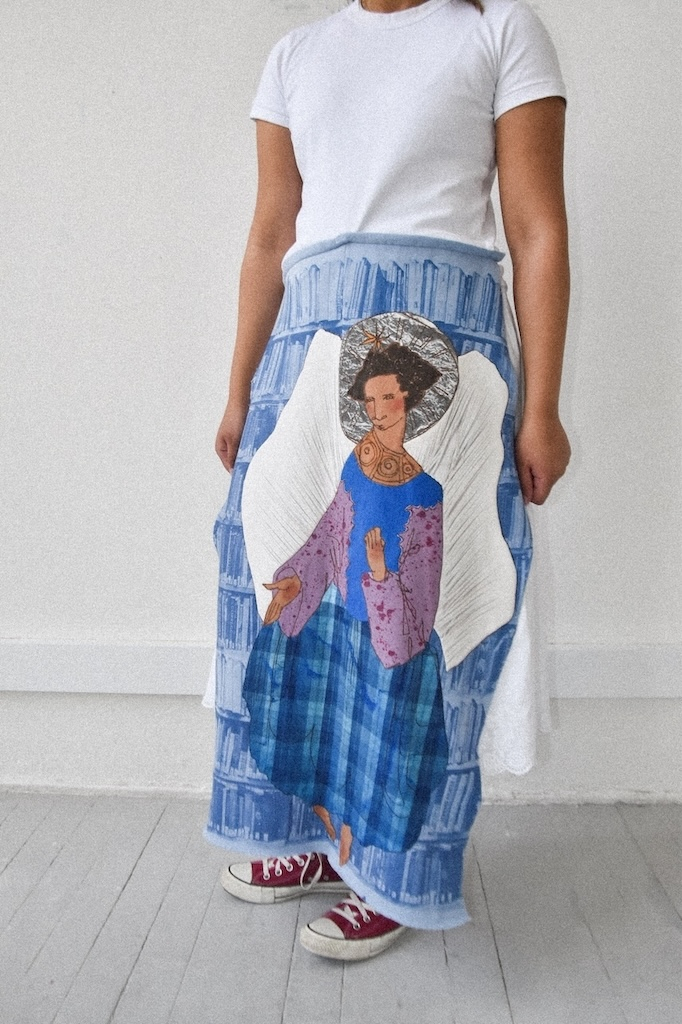
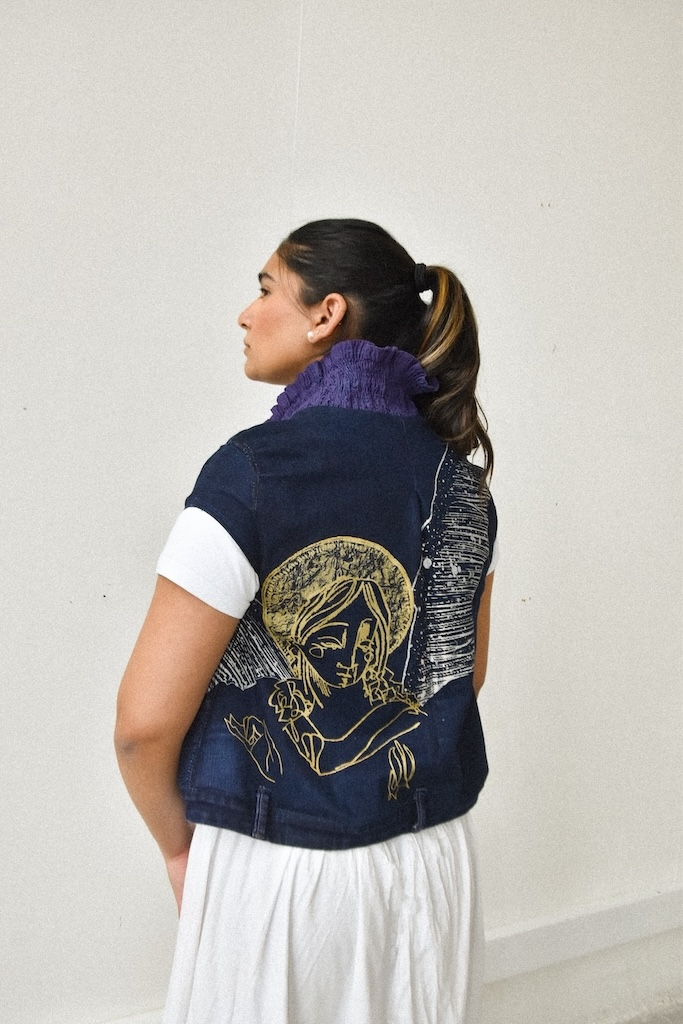
This collection uses exclusively 2nd garments which the charity shop couldn’t sell. My decision to use 2nd hand garments is in response to the UK’s reliance on textile sorting facilities which send our unwanted garments to the global south, where others buy our waste. It is a system in which we are content in resigning responsibility or care over the waste we generate and maintains a system of Neocolonialism. In an effort to use some of the vast amounts of unwanted clothing, I opted not to have choice in the textile rag bags, so in working with slightly uninspiring materials, inspiration instead came from drawing stained glass windows in churches. The church along with other public learning spaces, became a calming and creatively charging place to be and draw in which felt in contrast to the textiles I work with and the fashion industry they are a product of. The gravitas of religious imagery I drew from, the richness of colour, light and the bling/wealth of cathedrals is what adds value to the valueless textiles.


Erin Kingsley
Project description
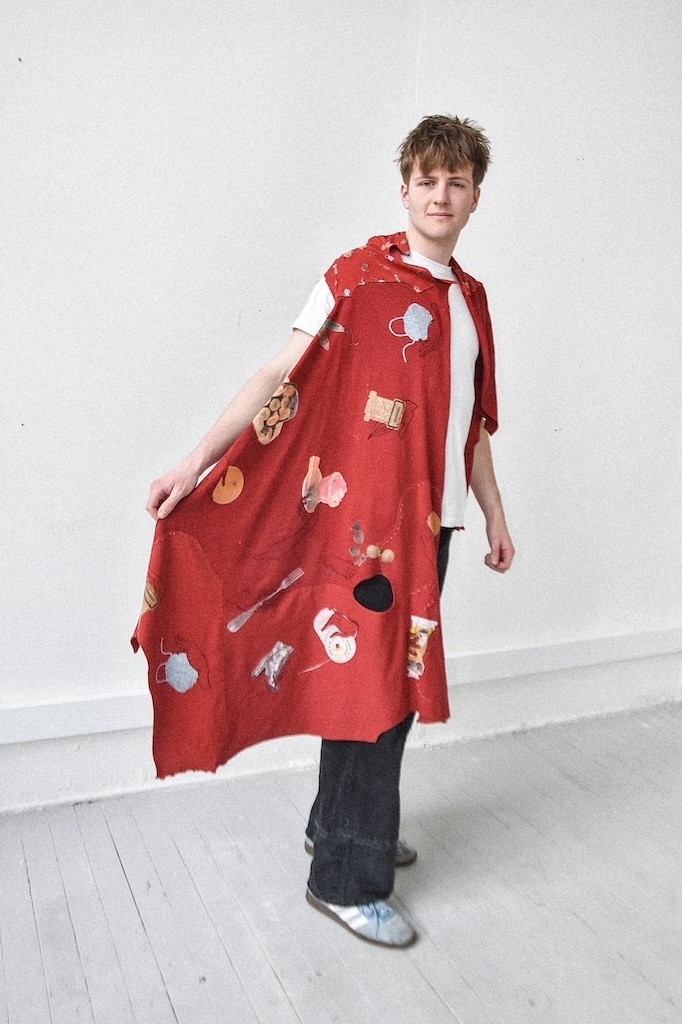
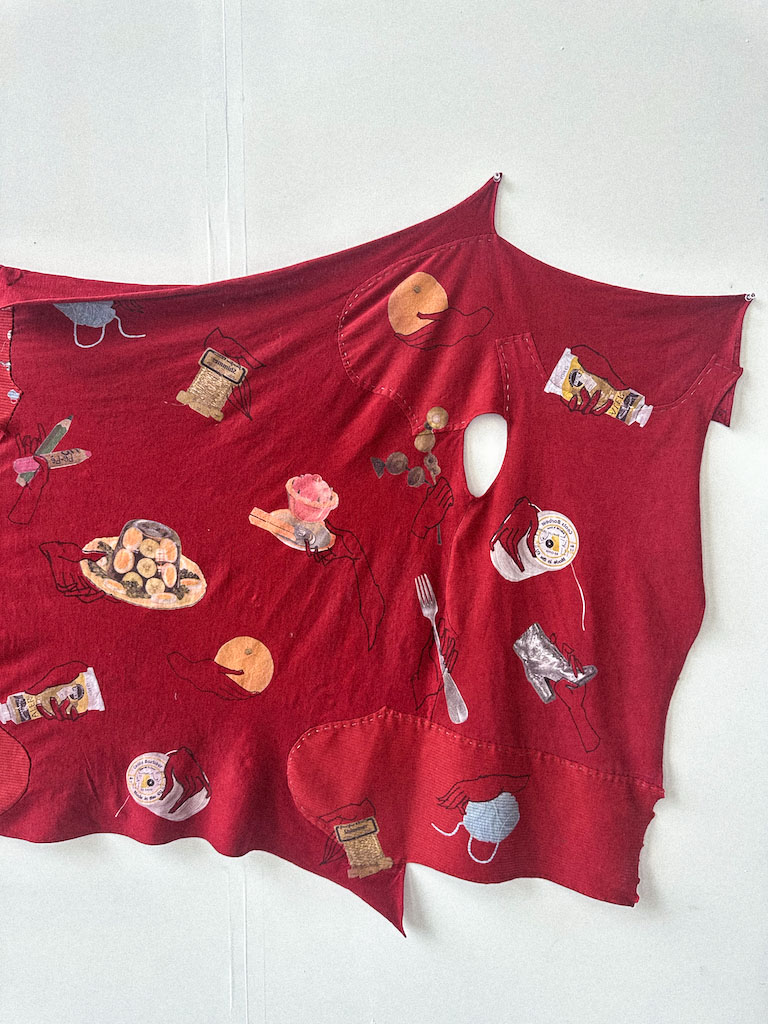
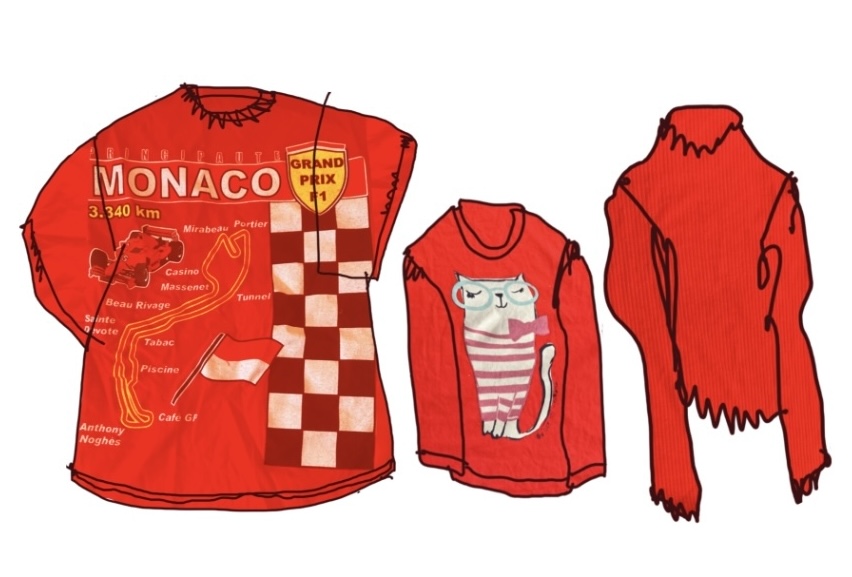
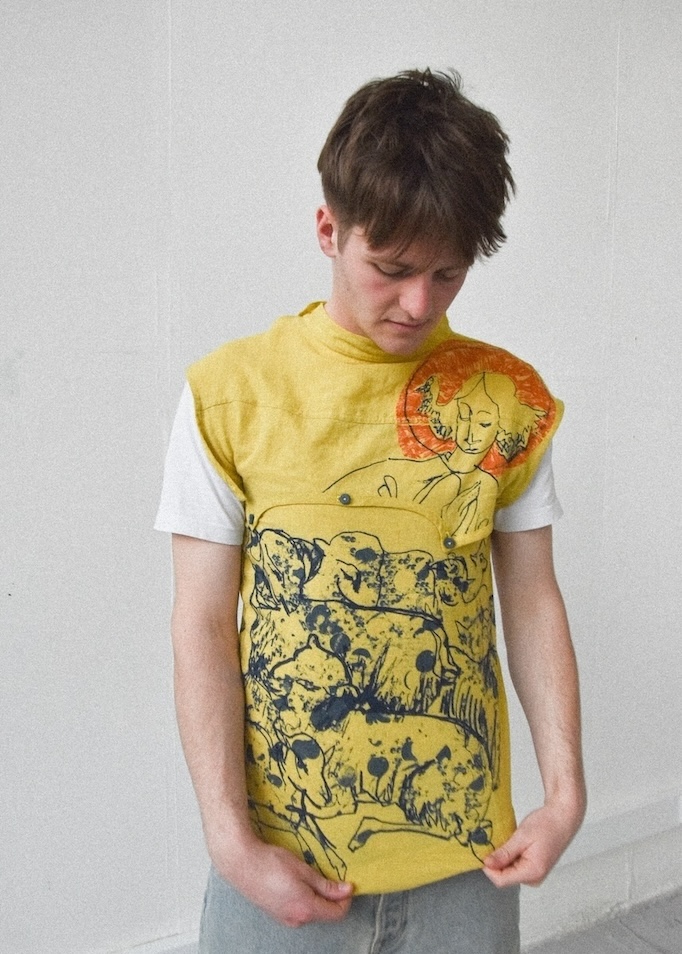
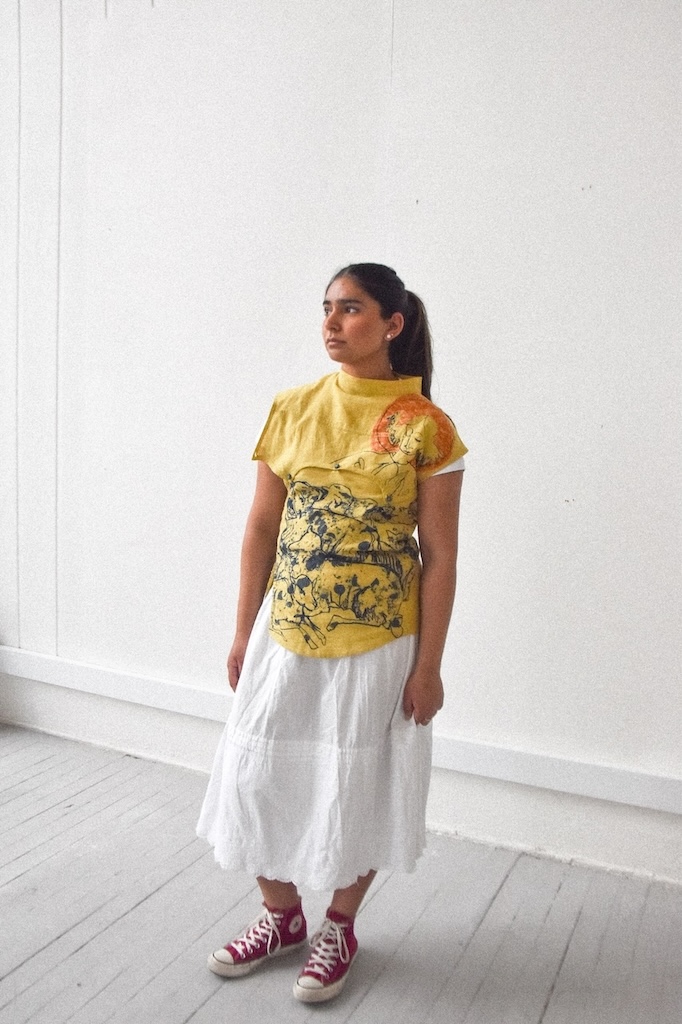
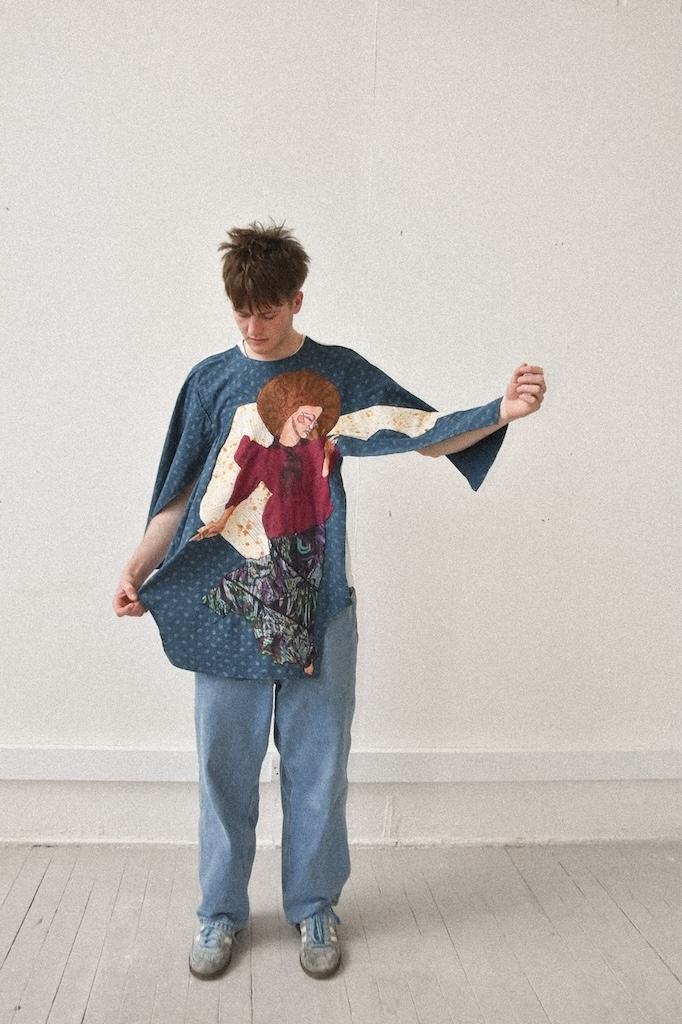
3 t-shirt cloth
Patchworking garment panels together is a useful way of grouping commonly occurring garments to create a large, versatile piece of cloth which can be worn as is in different iterations or cut anew from to make another garment
made from:
Sol’s t-shirt 100% cotton
unknown brand 100% cotton
TU clothing 95% cotton, 5% elastane


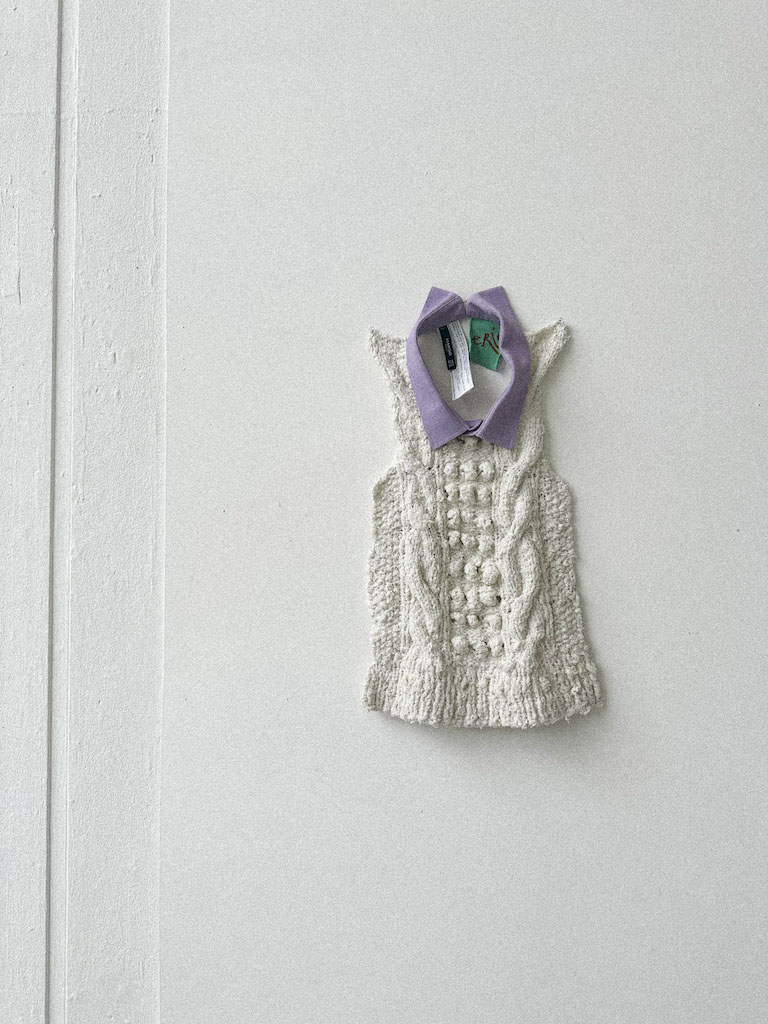
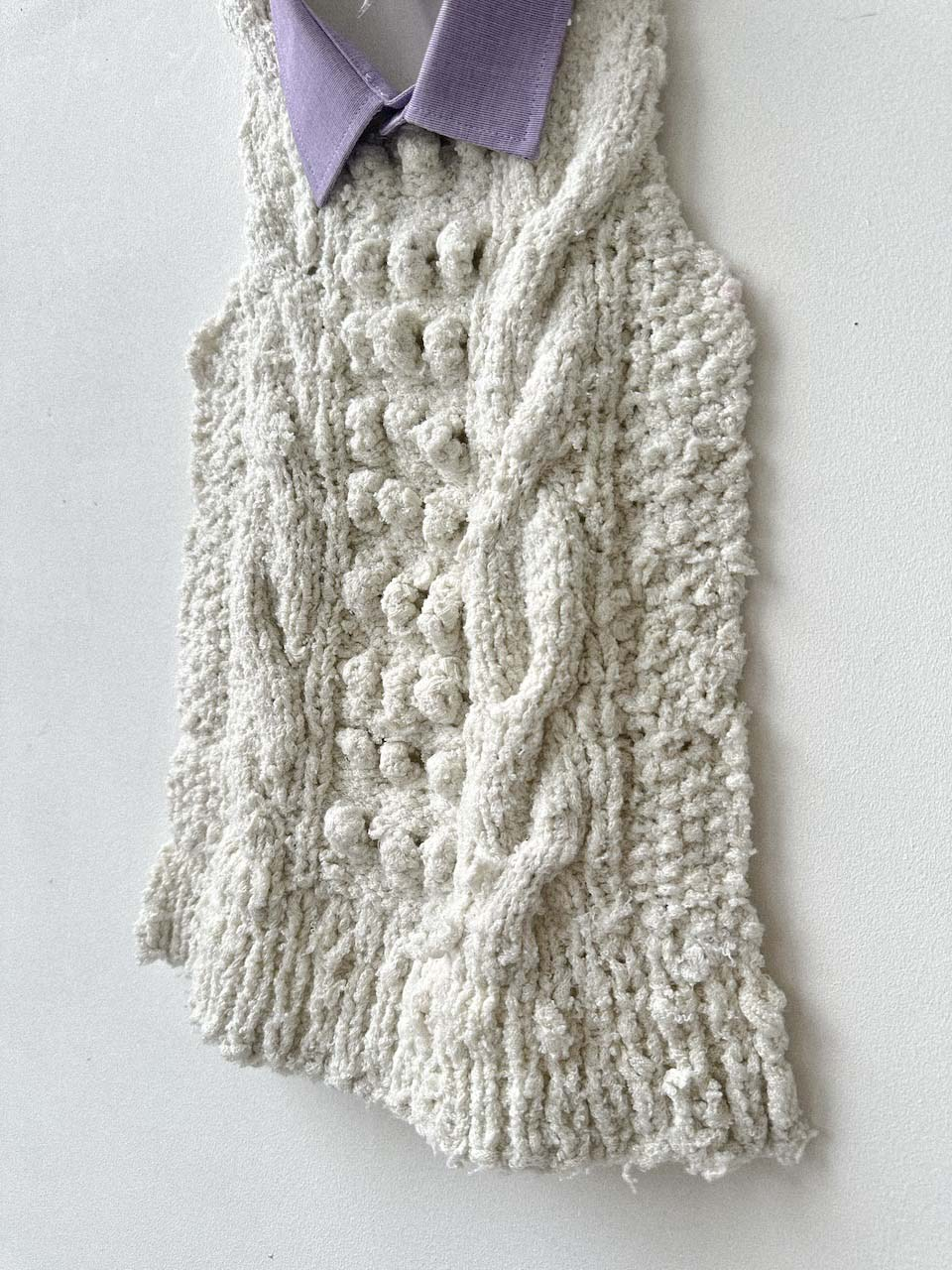
reknitted tank
This garment is a parody of fast fashion cost cutting which often exploits our associations of garment and fibre. Here what appears to be a woollen jumper is infact plastic and what appears to be a shirt underneath is merely a cost cutting trick where the shirt body is not produced.
made from:
MANGO jumper 75% polyester, 20% polyester 5% wool
F&F shirt 65% polyester, 35% cotton
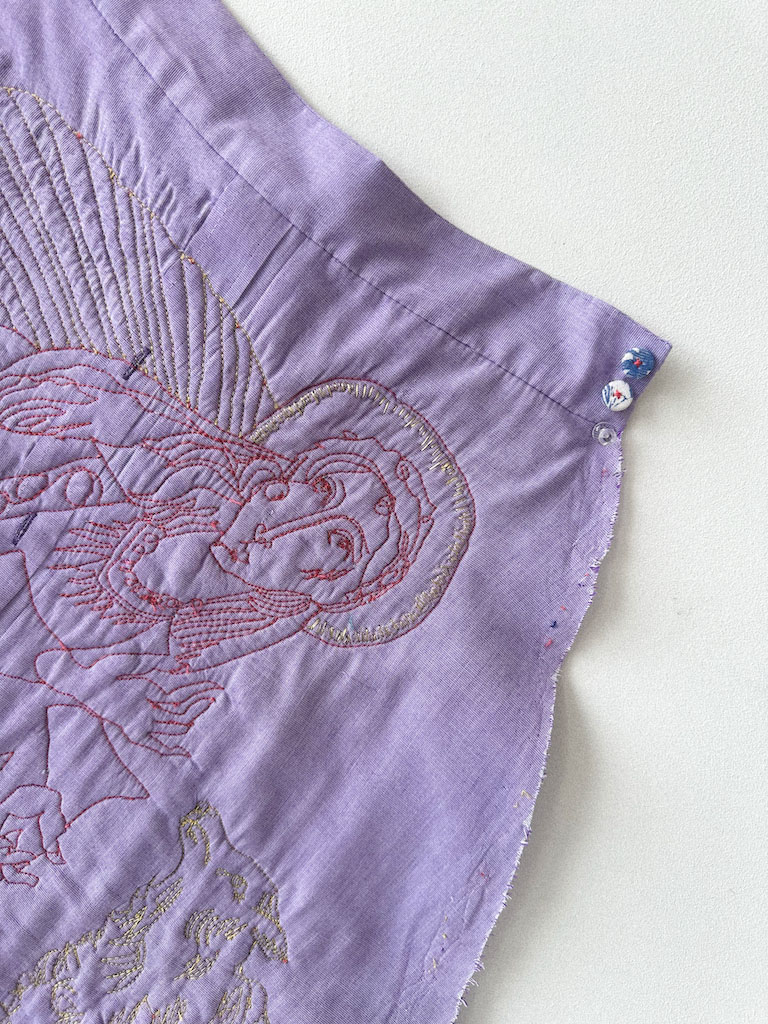
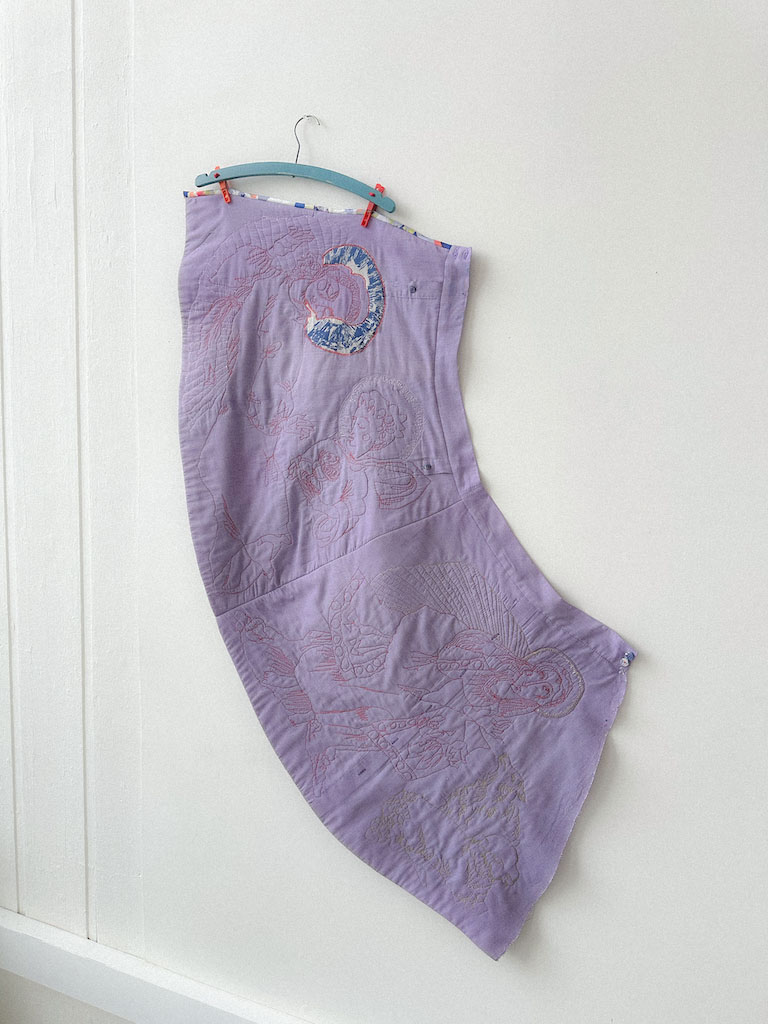
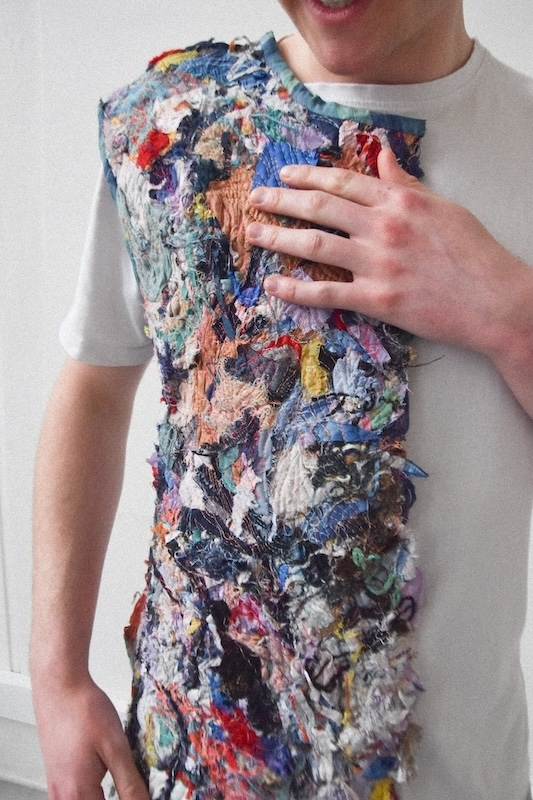
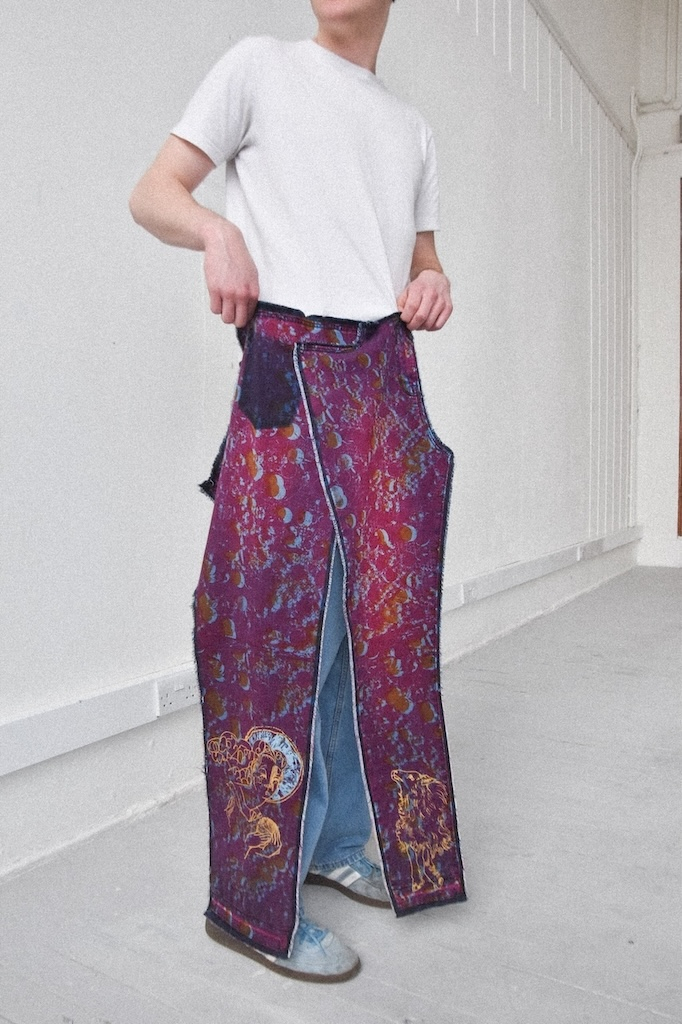
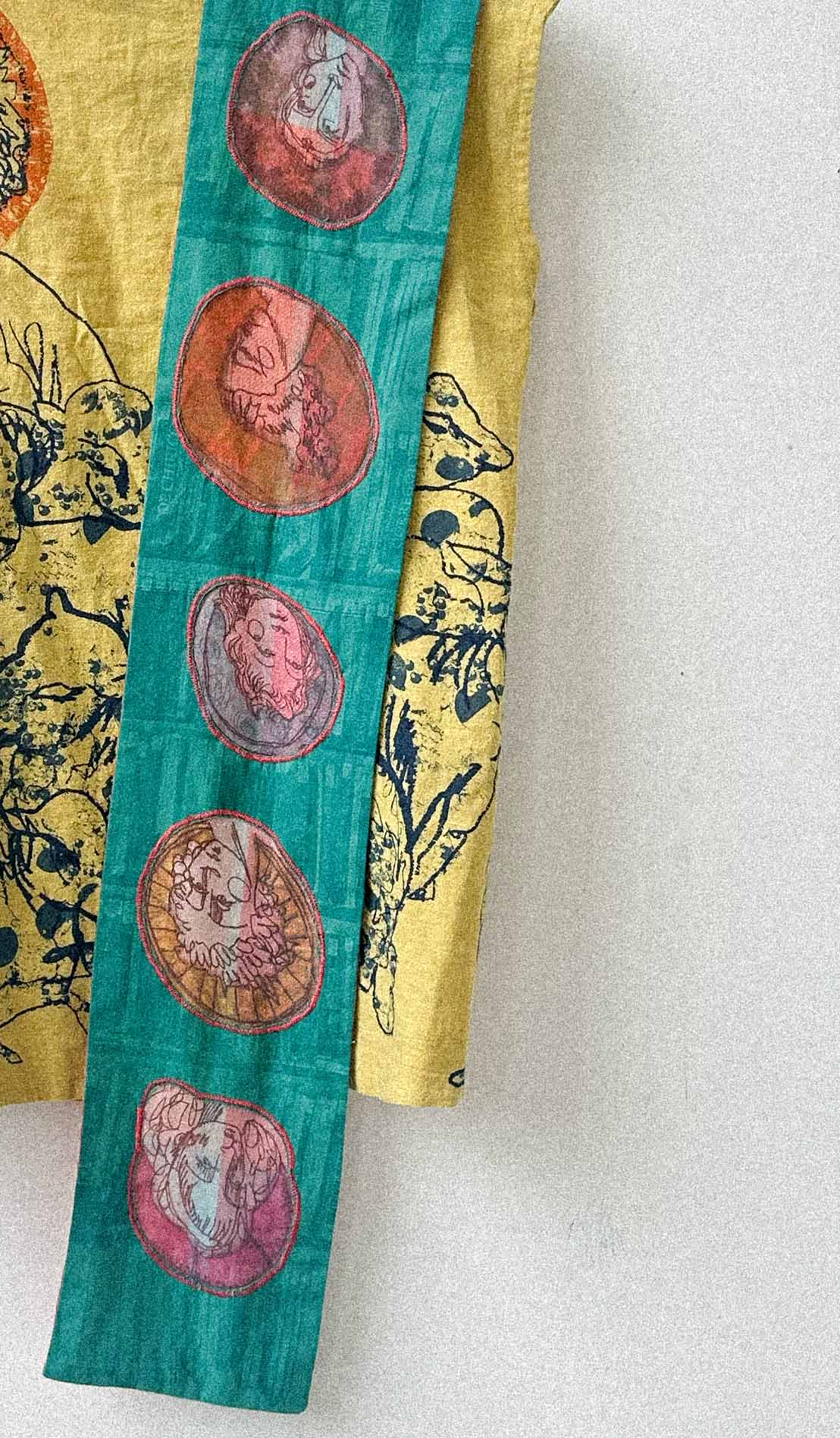
quilted shirt skirt
Quilting is a useful way to use large amounts of 2nd hand material where a grading system can be used to save material qualities like colour or fibre to be outward facing, whilst plastic, damaged fabrics -of which so much exists- can find a use as quilting wadding.
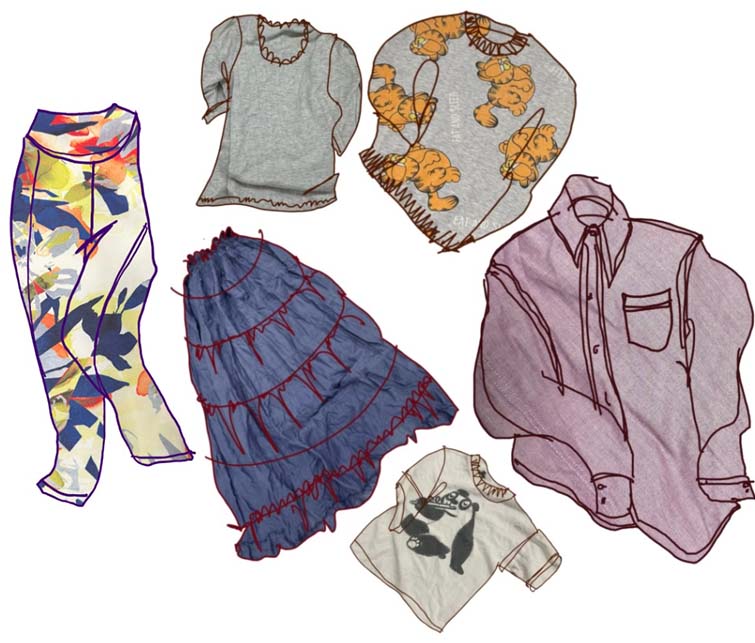
made from: outer - F&F shirt 65% polyester, 35% cotton. wadding - M&S vest 52% viscose, 48% polyester, H&M sweatshirt 75% cotton, 20% polyester. lining - stradivarius skirt 100% cotton. binding - Head leggings unknown synthetic. appliqué - zara t-shirt 100% cotton

Erin Kingsley
Related student work