Project description

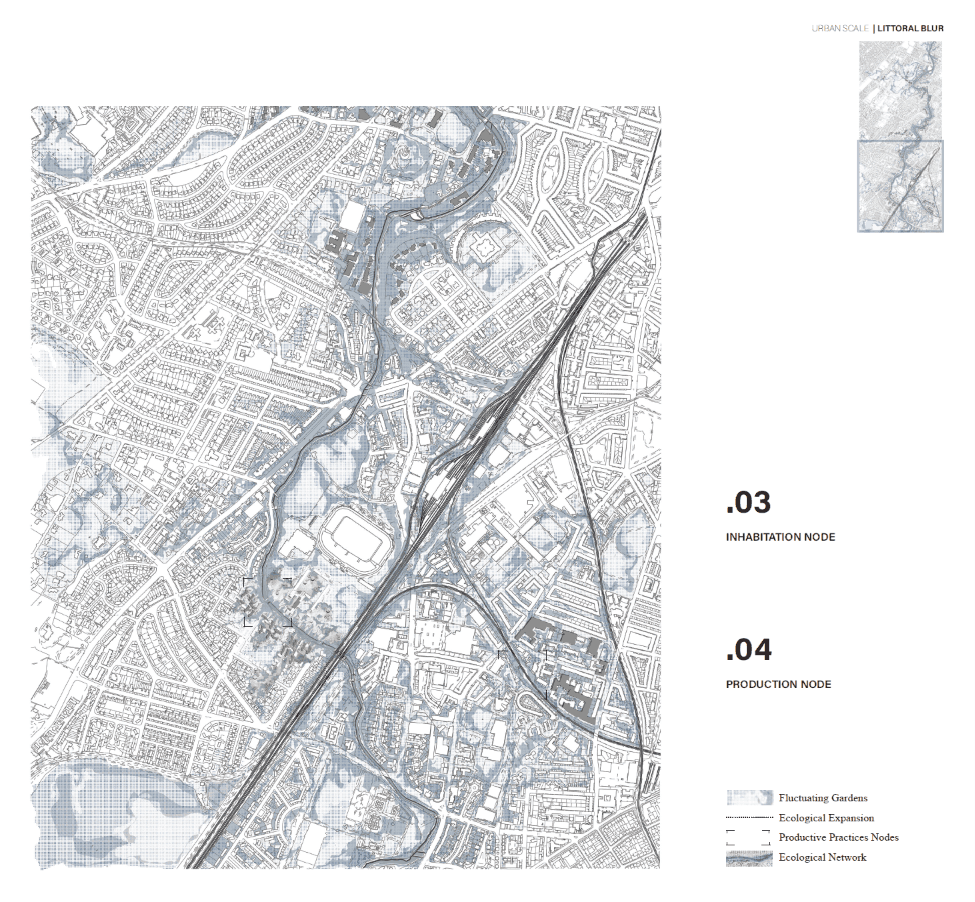
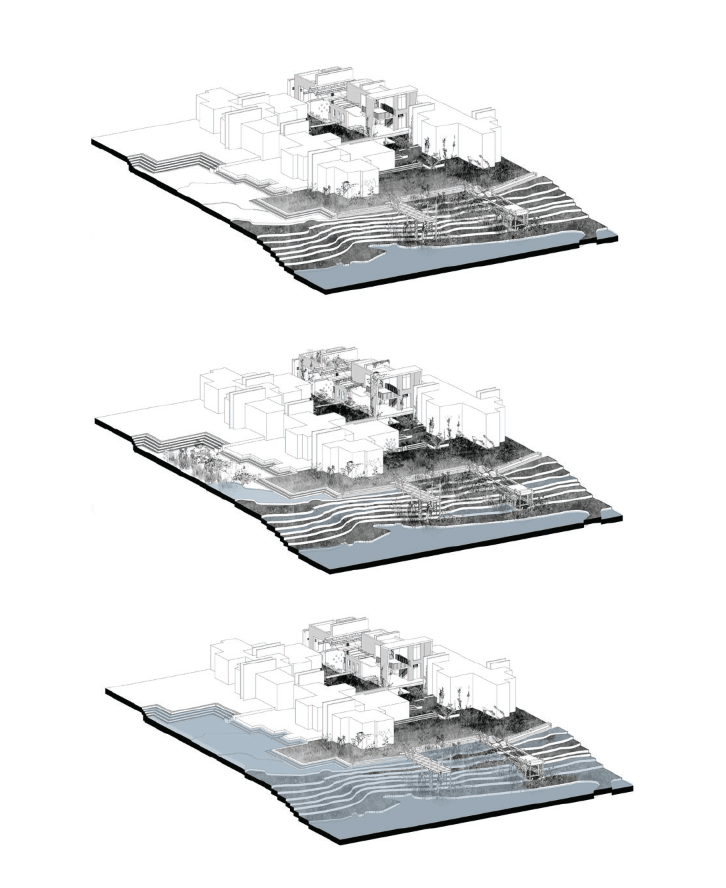
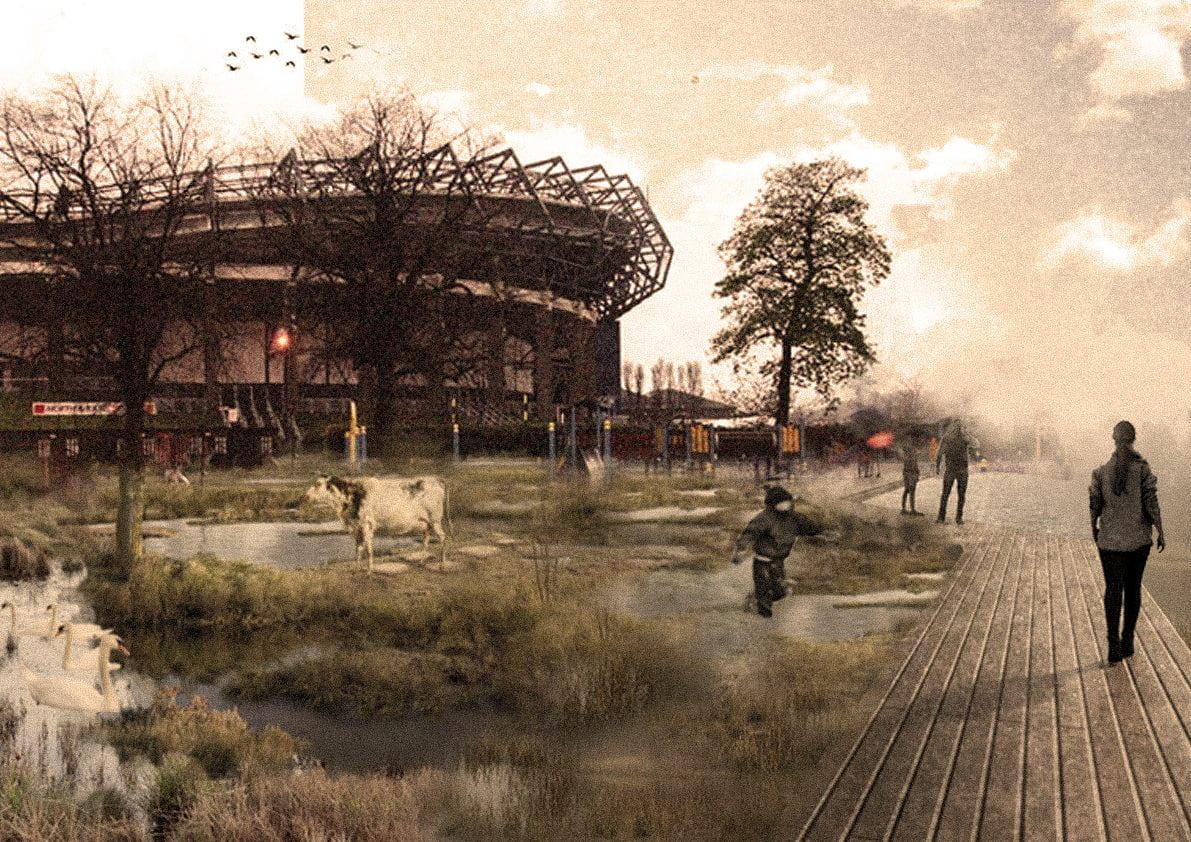
New Balgreen imagines a fluctuating littoral urbanism emerging from the latent ecological memories of the lost Corstorphine Loch. The flood of April 2000 is understood as a moment in which the ground revealed its capacity to remember, exposing a hydrological condition that had not been entirely erased. This event becomes the basis for imagining a new form of urban inhabitation in which fluctuation is not suppressed, but spatially manifested through the cyclical return of water.

The project proposes a network of living houses, floodable plazas, productive landscapes and communal gardens embedded within the Balgreen floodplain. As water fluctuates, spaces shift between human and non-human inhabitation, allowing ecological processes to occupy the ground and become part of the everyday life of the community. Domestic cultivation extends beyond the individual house into interconnected communal grounds, where production, exchange and collective practices are shared. Through silt accumulation, water collection and the expansion of littoral and grassland ecologies, the architecture operates as an extension of the productive landscape from Metropolitan scale down to Mobiliario and body scale.

New Balgreen establishes a shared territory in which human occupation and embedded ecologies continuously negotiate space. The project imagines the city as a fluctuating landscape, where the traces of what has been lost are not reconstructed, but allowed to return through the behaviour of the ground, the movement of water and the collective inhabitation of the littoral.

- “Perhaps the future of our cities begins when we rediscover the embedded ecologies that have always been alive within the landscape.”
NV4 | An anti-cartography for Edinburgh's Littoral
Matter in Flux: Ground as a Fluctuating Material

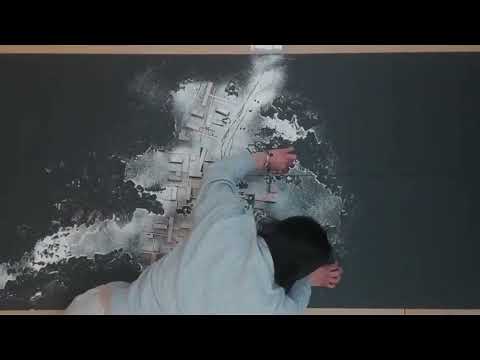
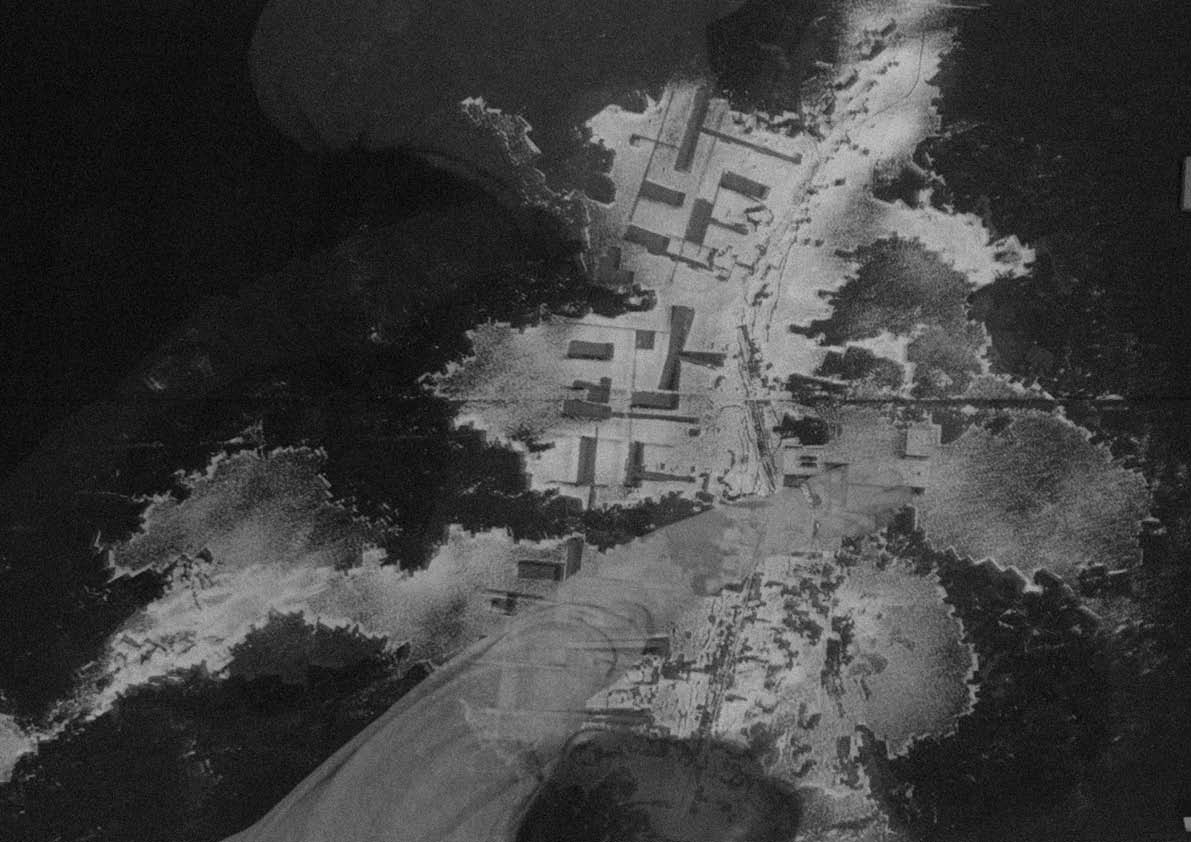
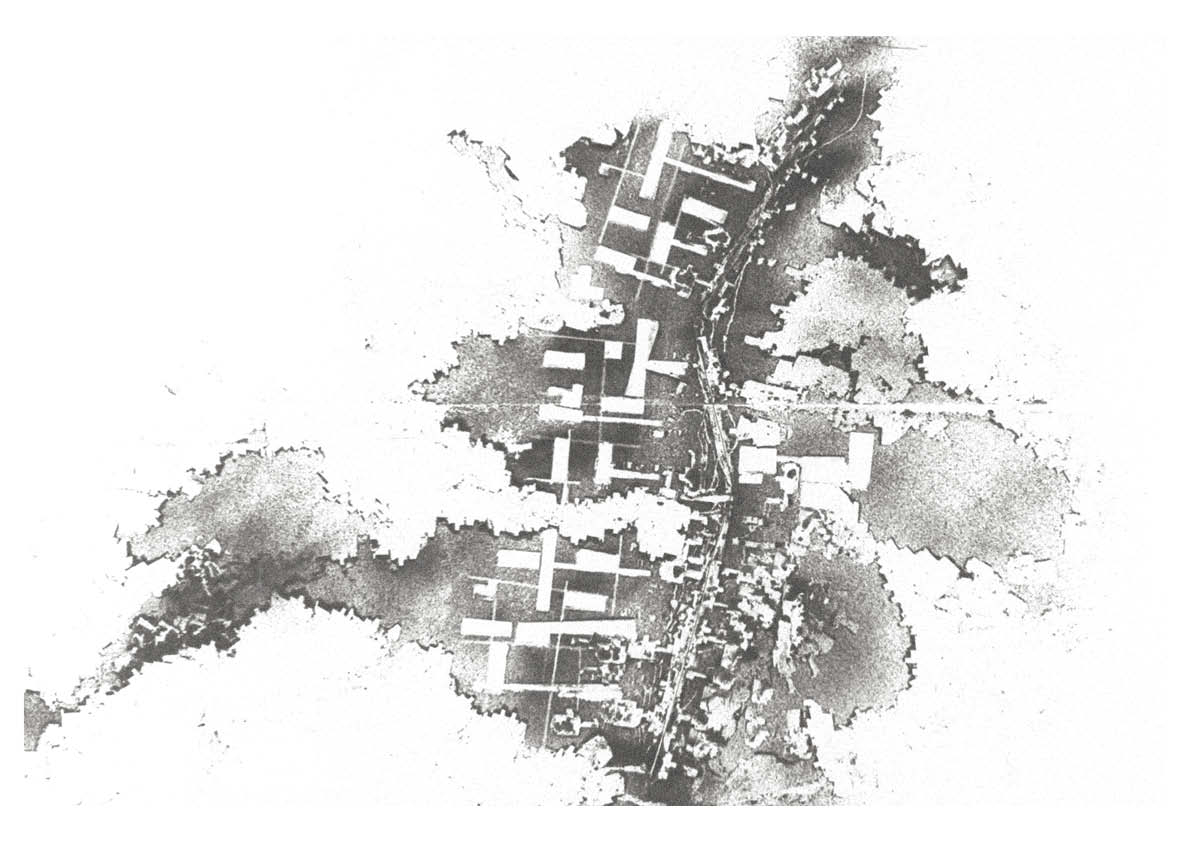
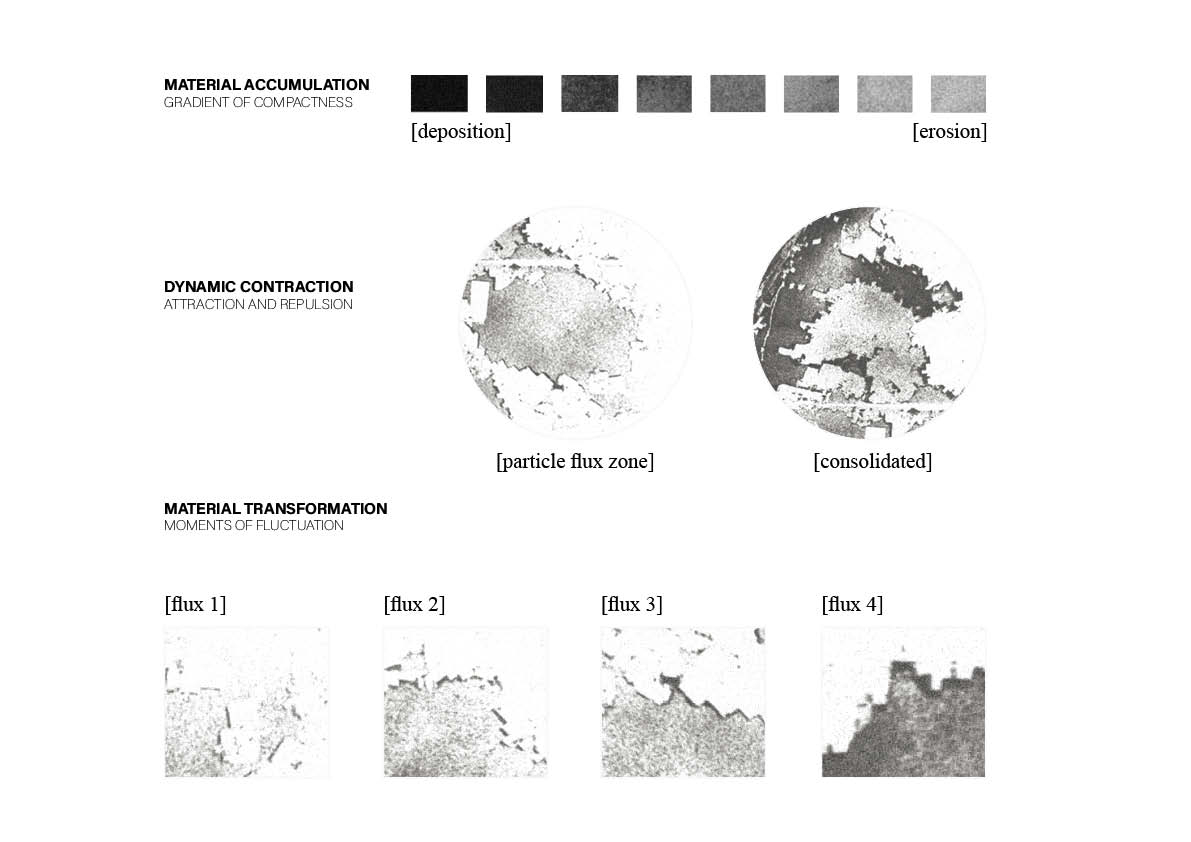
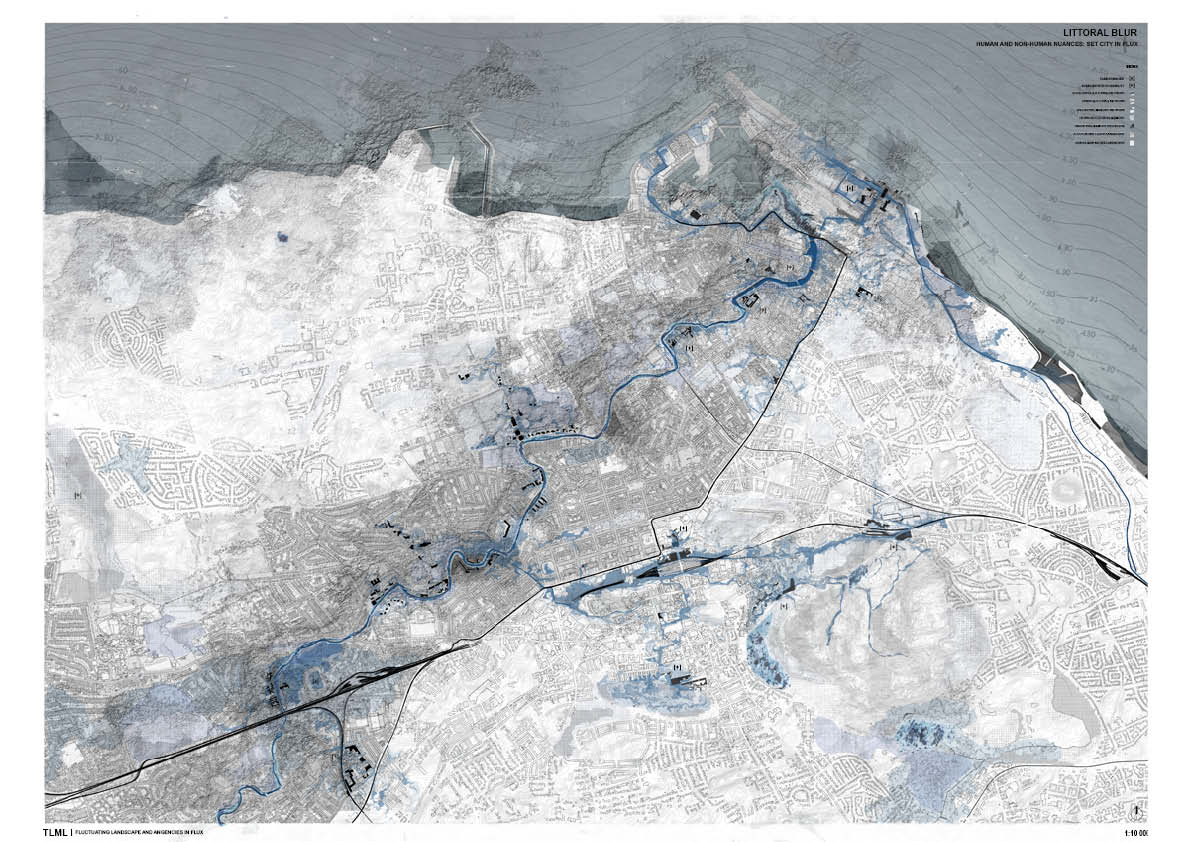
Flour is an living ground, it is a non-static representation of the Littoral Landscape. It occupies territory between solid and fluid, accumulates in piles [solid], dispersed by movement [active] and sculpted by wind or re-organized by dynamics in interaction [adaptive].

Littorality is revealed by the jagged, non-linear edges where the flour [fluctuating tides] meets the black surface, illustrating an unstable boundary in constant erosion and deposition. It shows areas where flour is thick [deposition] and areas where it is thin or absent [erosion]. This non-static drawing model is a littoral environment where the “fluctuating ground” is constantly being built up and torn down.

Fluctuating Landscape: The Riparian Gardens

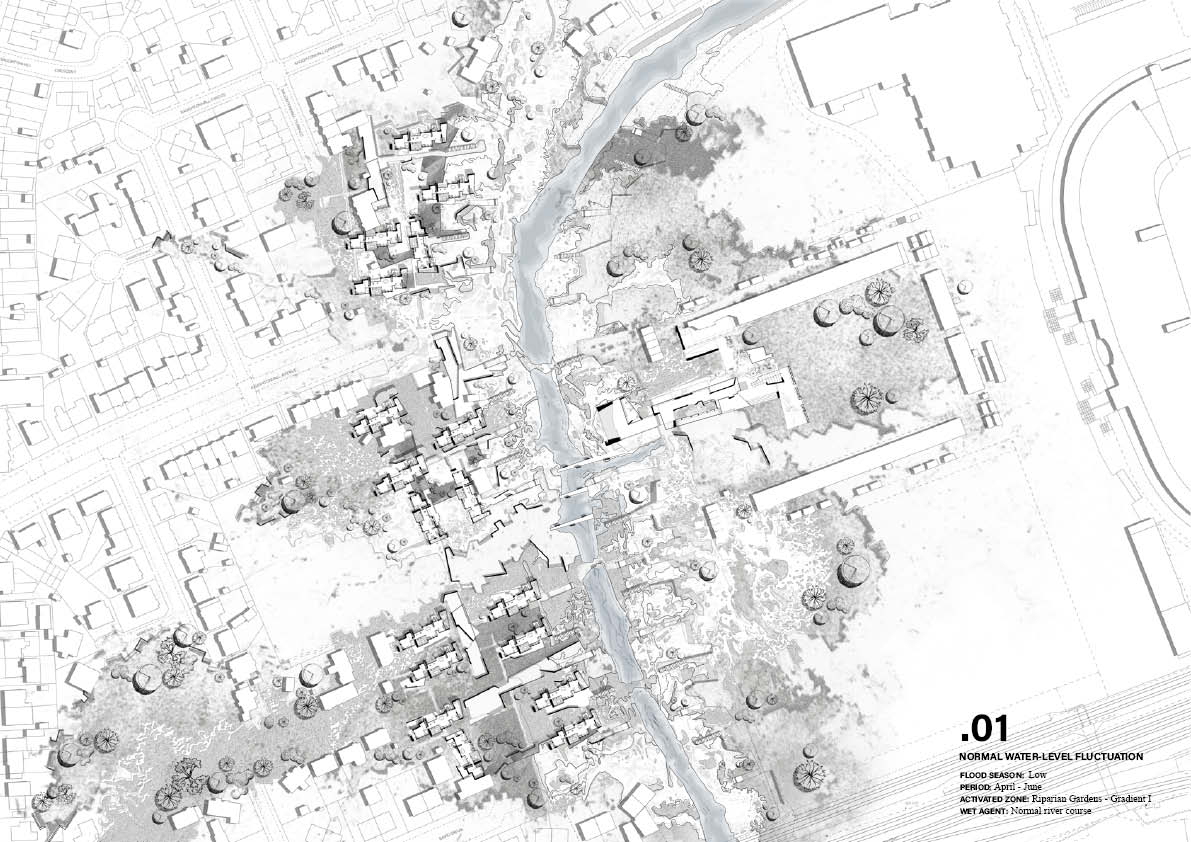
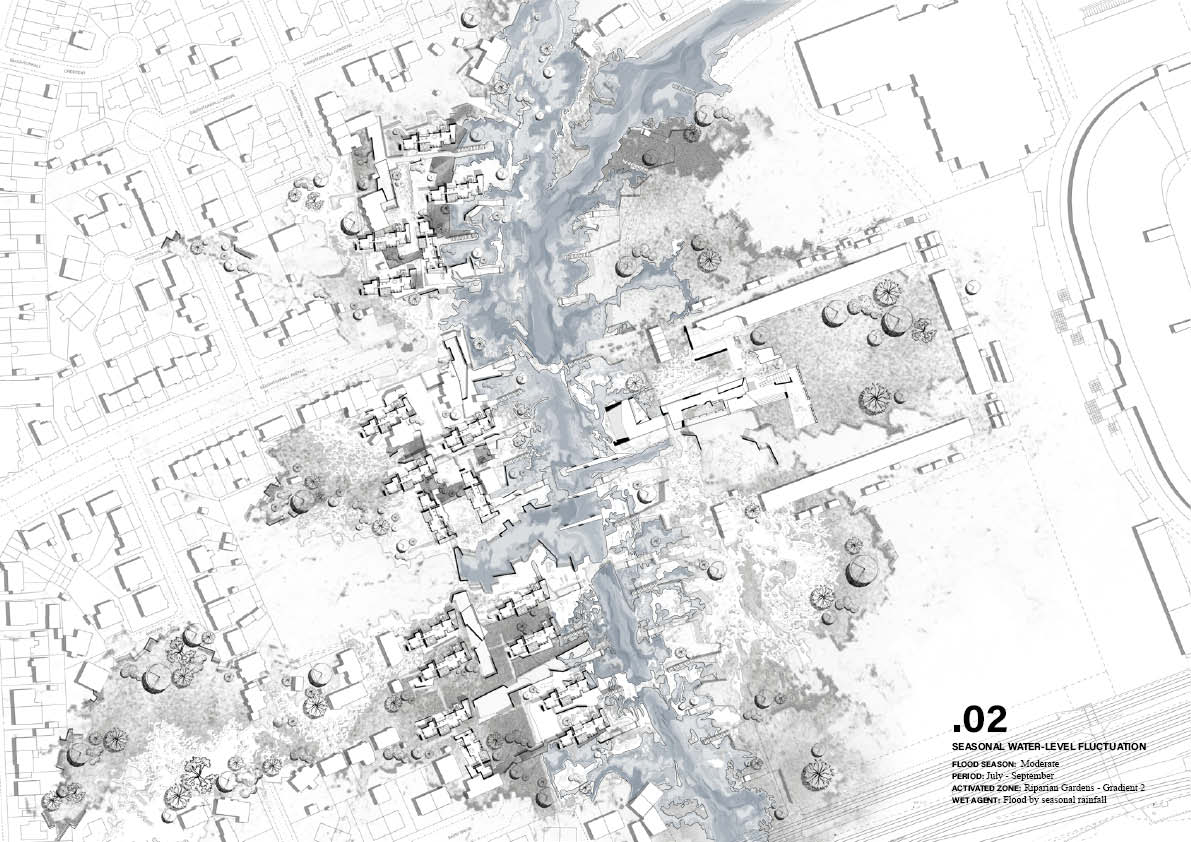
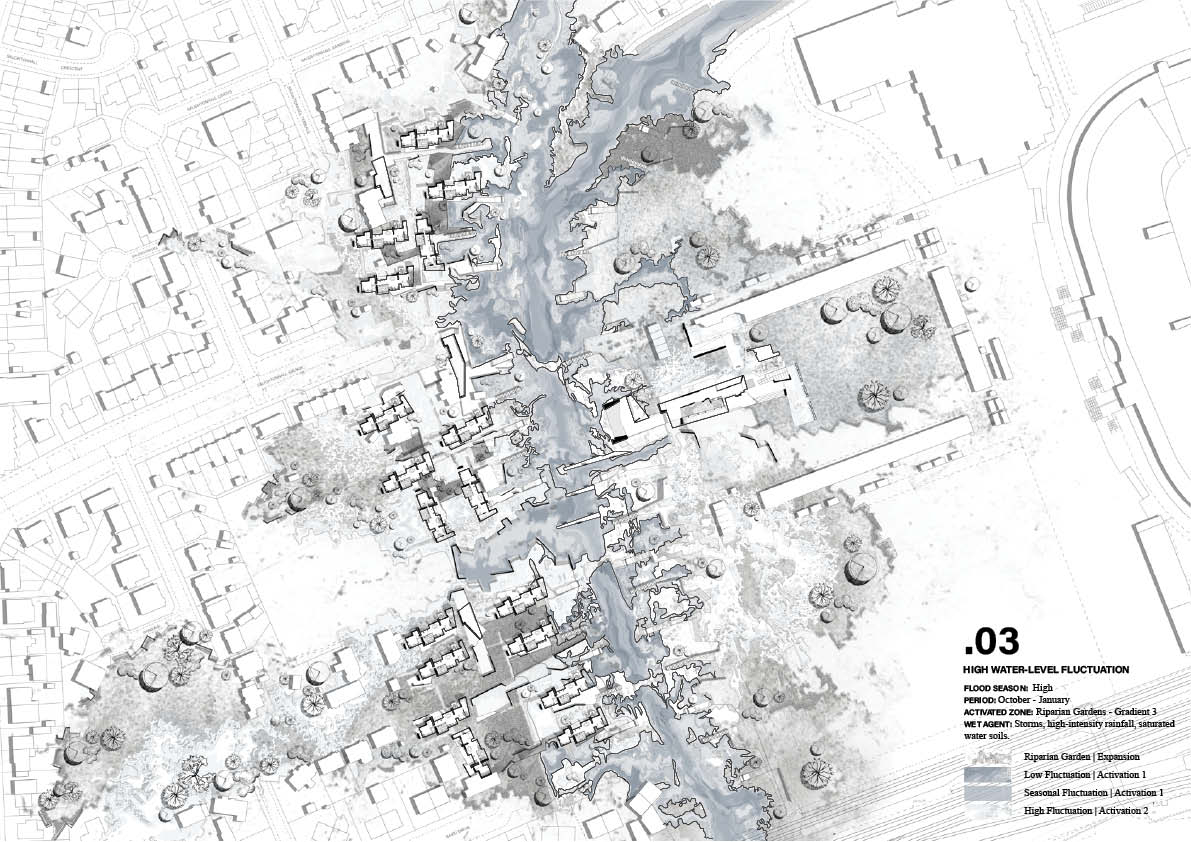
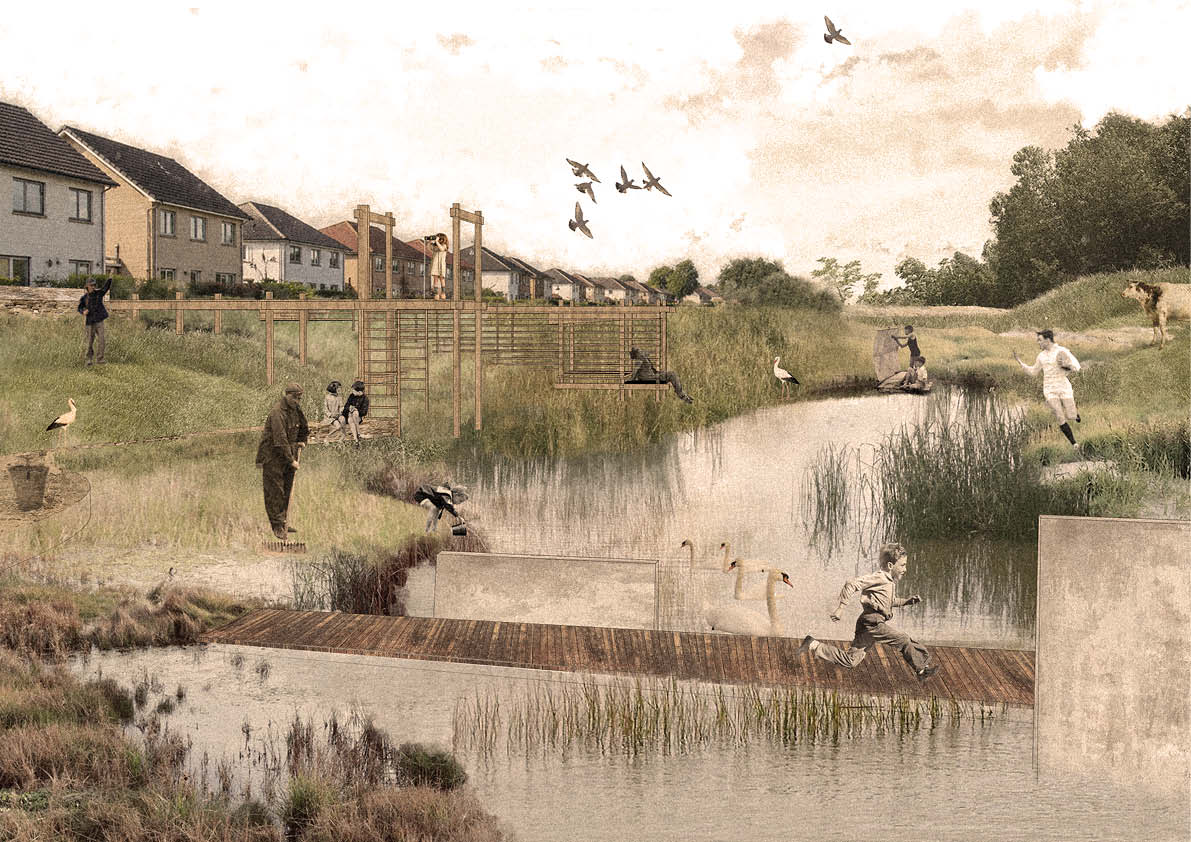
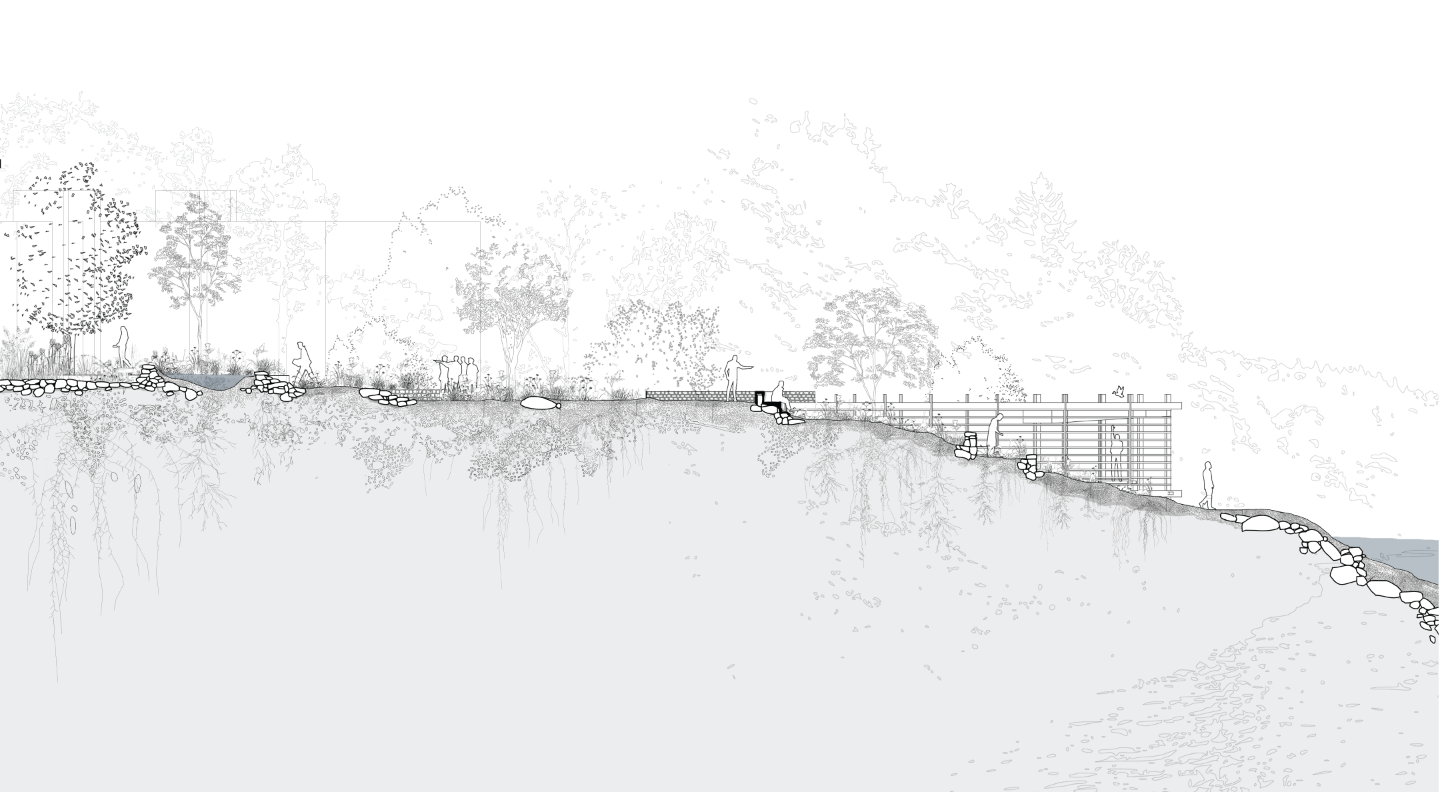
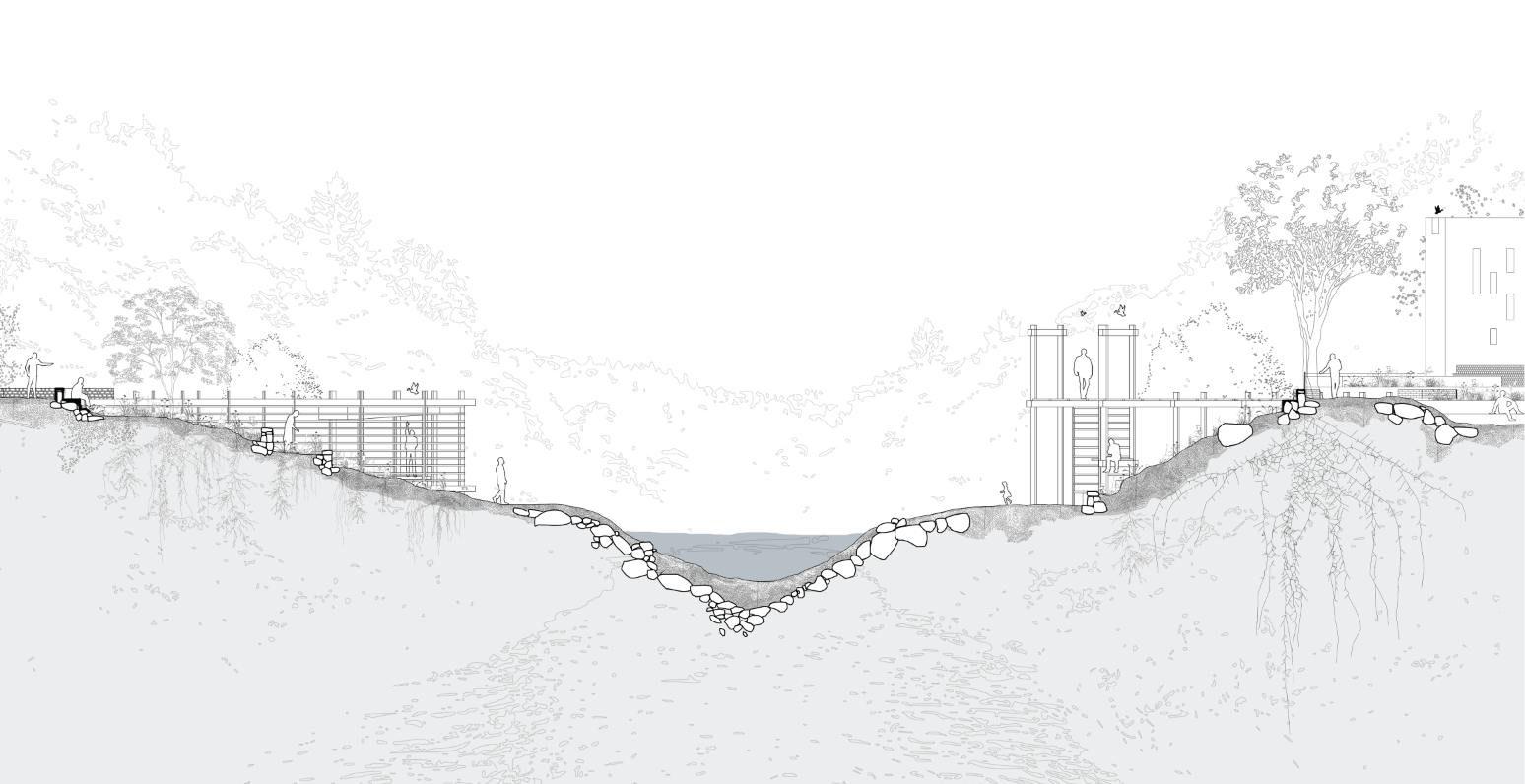
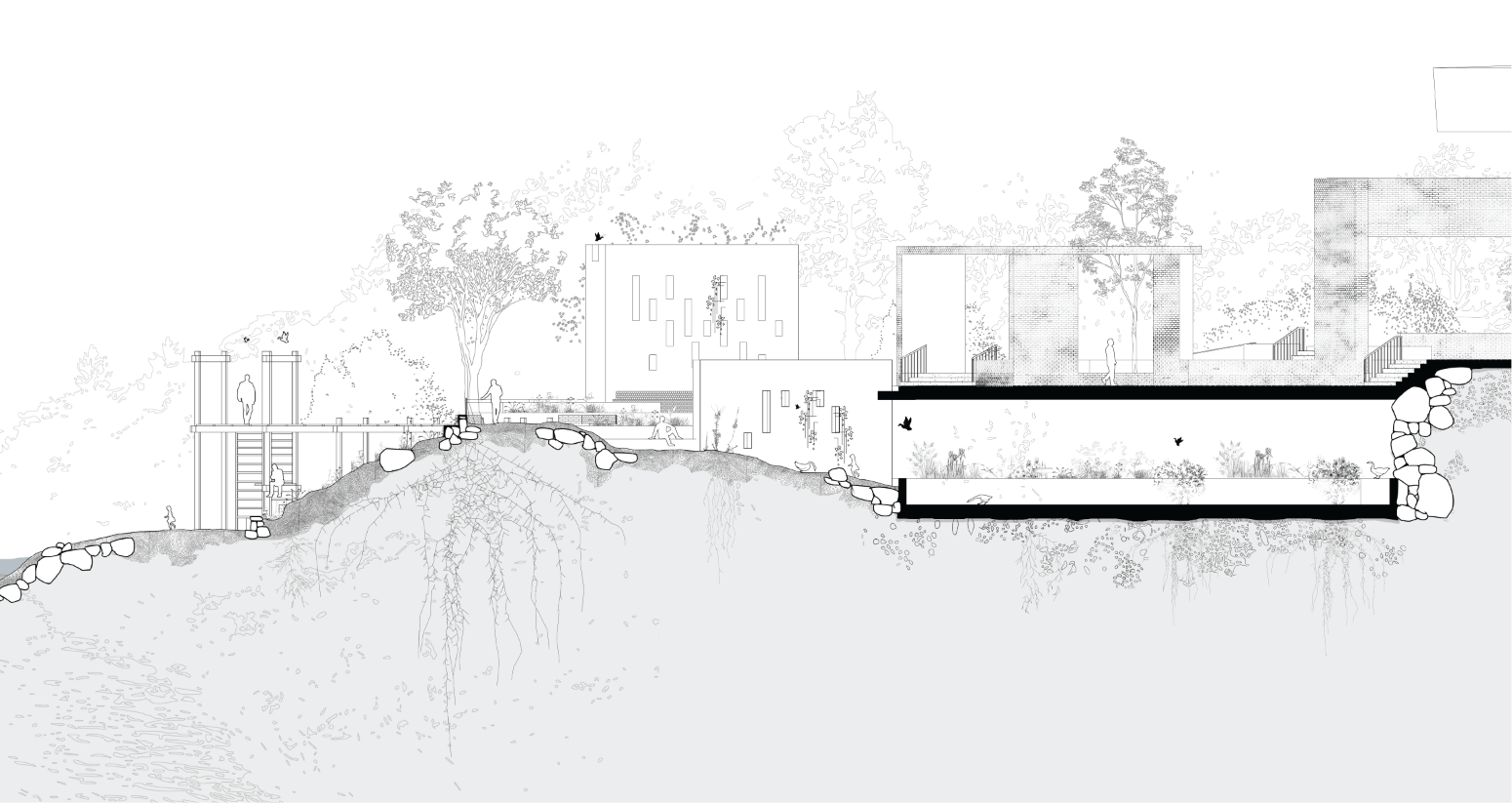
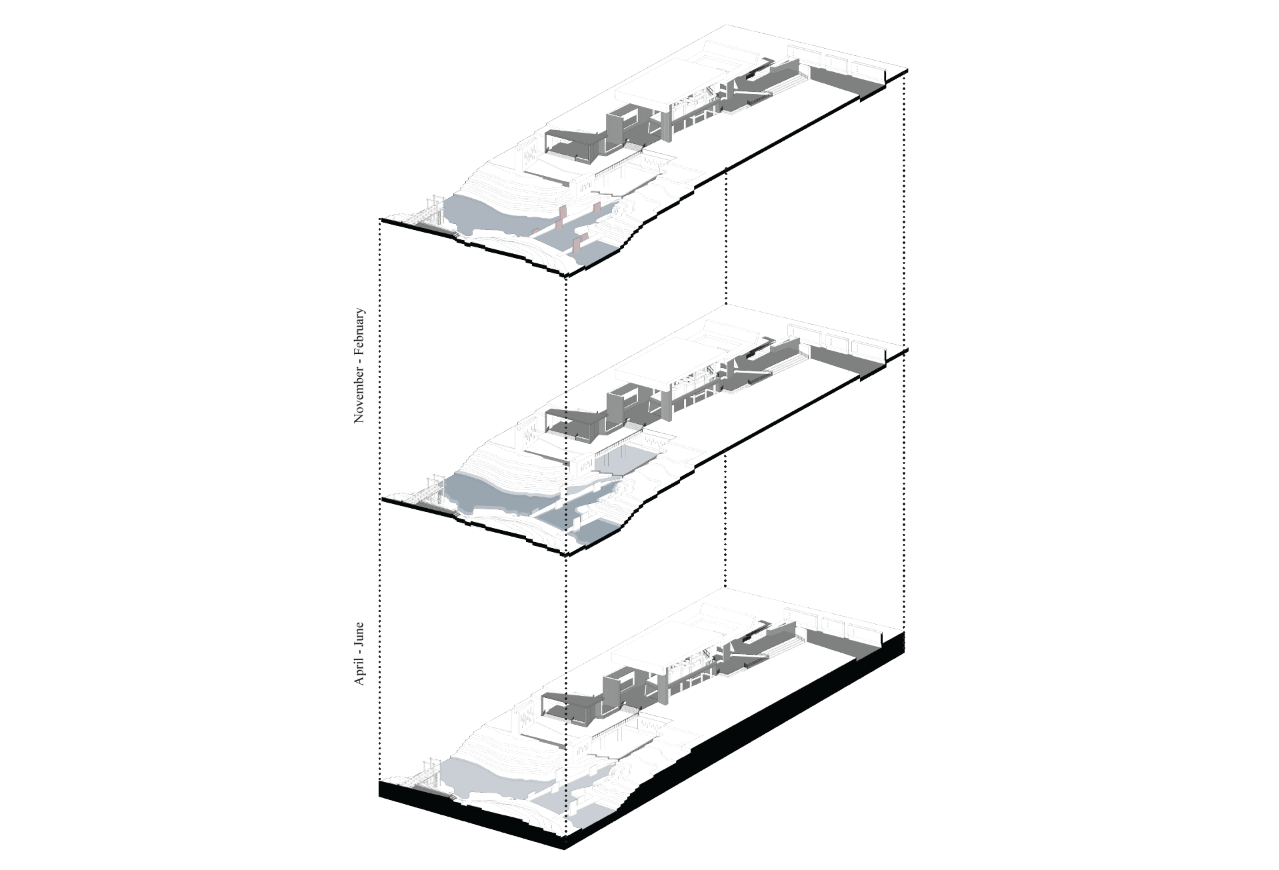
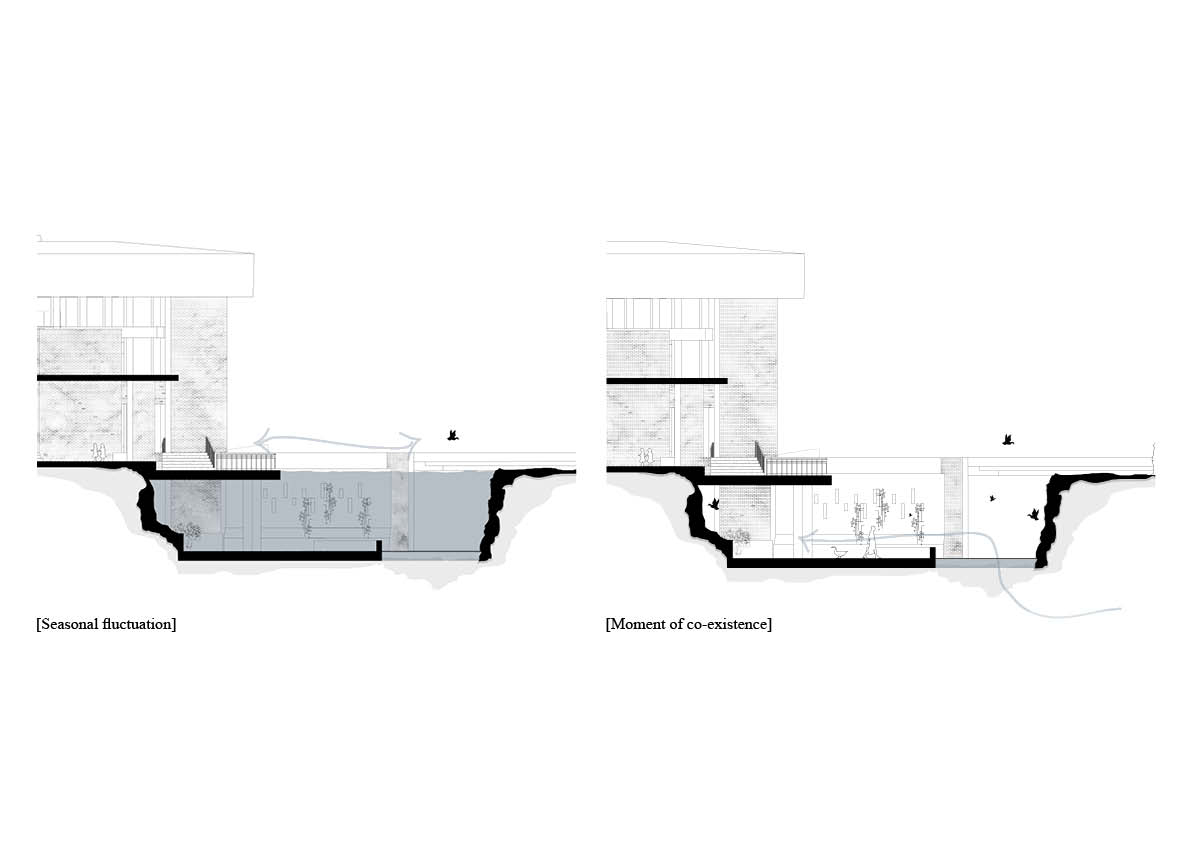
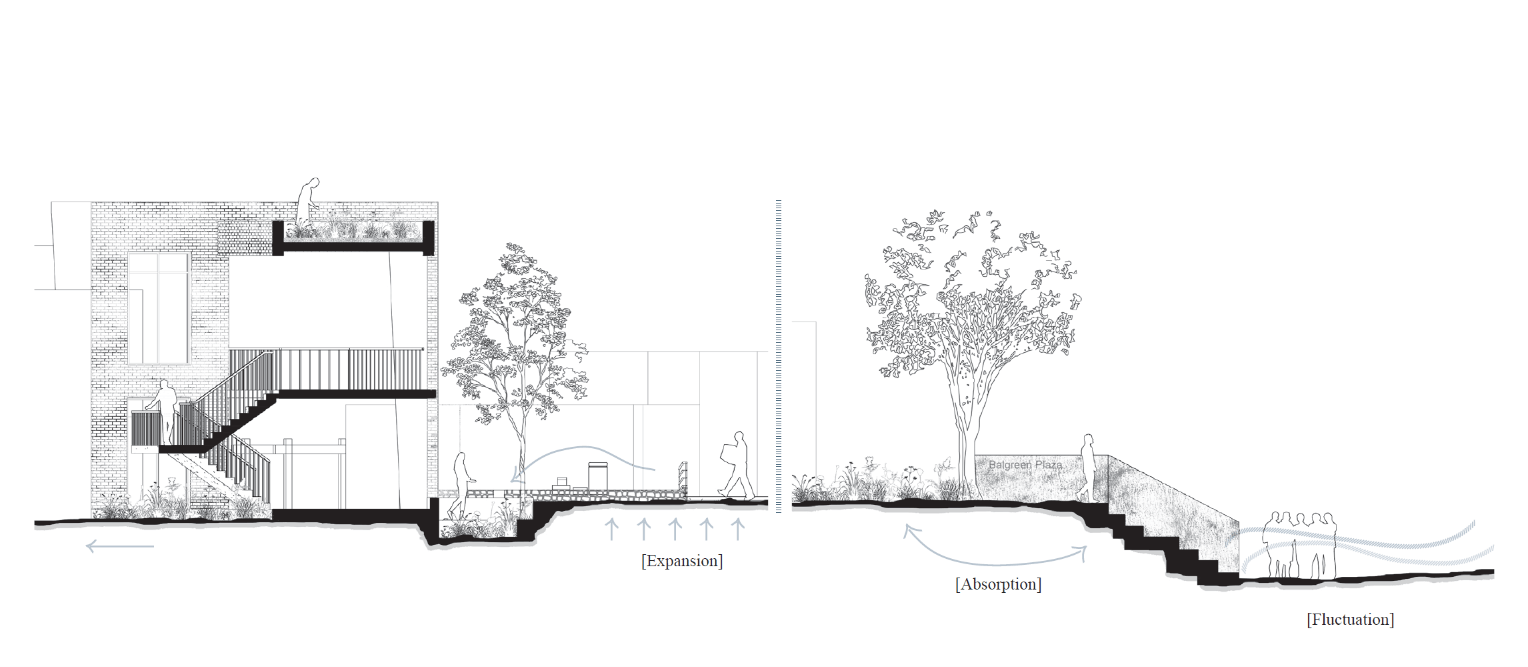
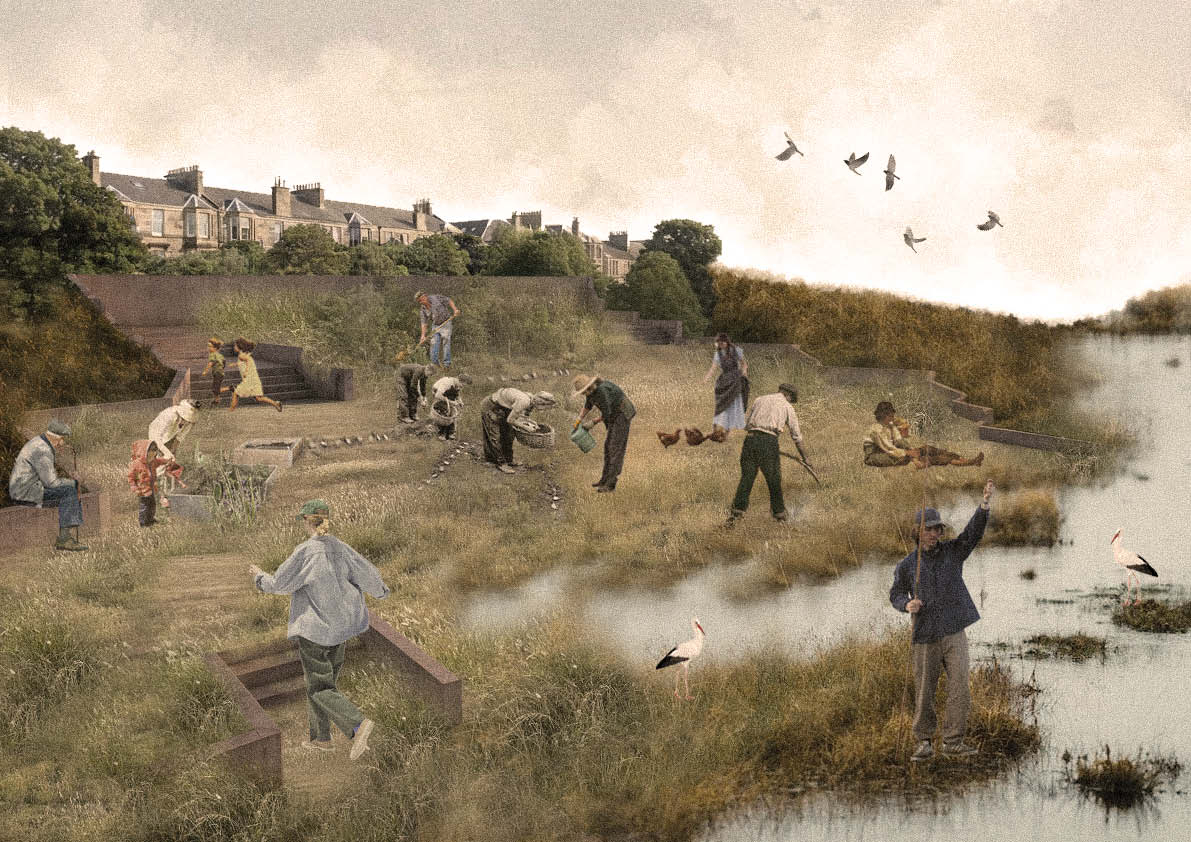
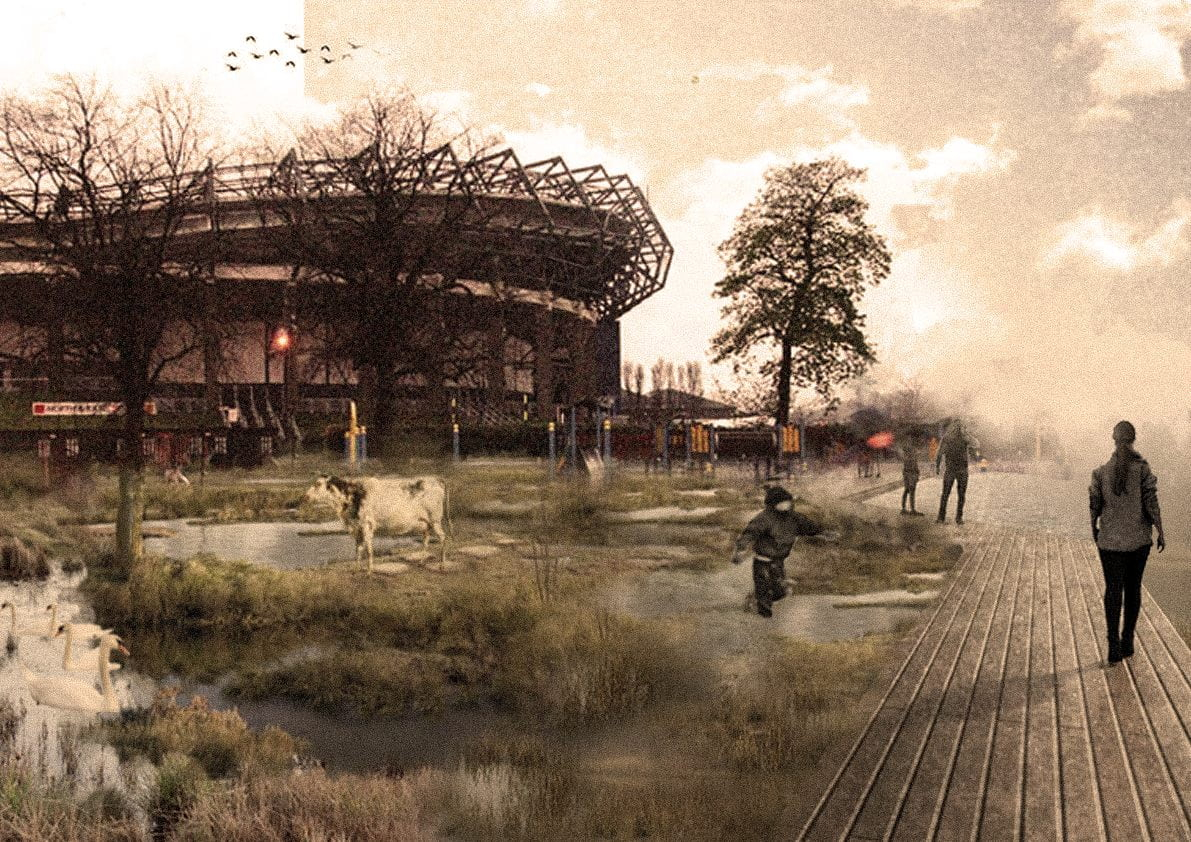
The Riparian Gardens are conceived as a dynamic landscape that responds to the natural fluctuations of the floodplain. They work with seasonal flooding and are organised into gradients that responds to a degrees of inundation, creating distinct ecological conditions that support non-human inhabitation throughout the year. During drier months, the gardens provide accessible ecological and recreational spaces that support biodiversity and community use. As water levels rise during flood seasons, these spaces become active retention landscapes, filtering sediments, and creating temporary aquatic habitats. This seasonal transformation enables the floodplain to function as a living system, where ecological processes and public space evolve together in response to the river’s natural cycles. 

The fluctuations of the littoral becomes an active spatial condition, allowing Balgreen’s Urban Fabric to extend into a shared territory where human and non-human life coexist. In the new Littoral in Flux, life no longer unfolds on a fixed ground. The metropolitan territory has become a fluctuating condition—an environment continuously shaped by accumulation, erosion, exposure, and disappearance. The city is no longer understood as a permanent object, but as a living field of changing relationships.

Dog Rose Perch in the Balgreen Floodplain
The Littoral in Flux_FABB
The City in Flux: New Balgreen

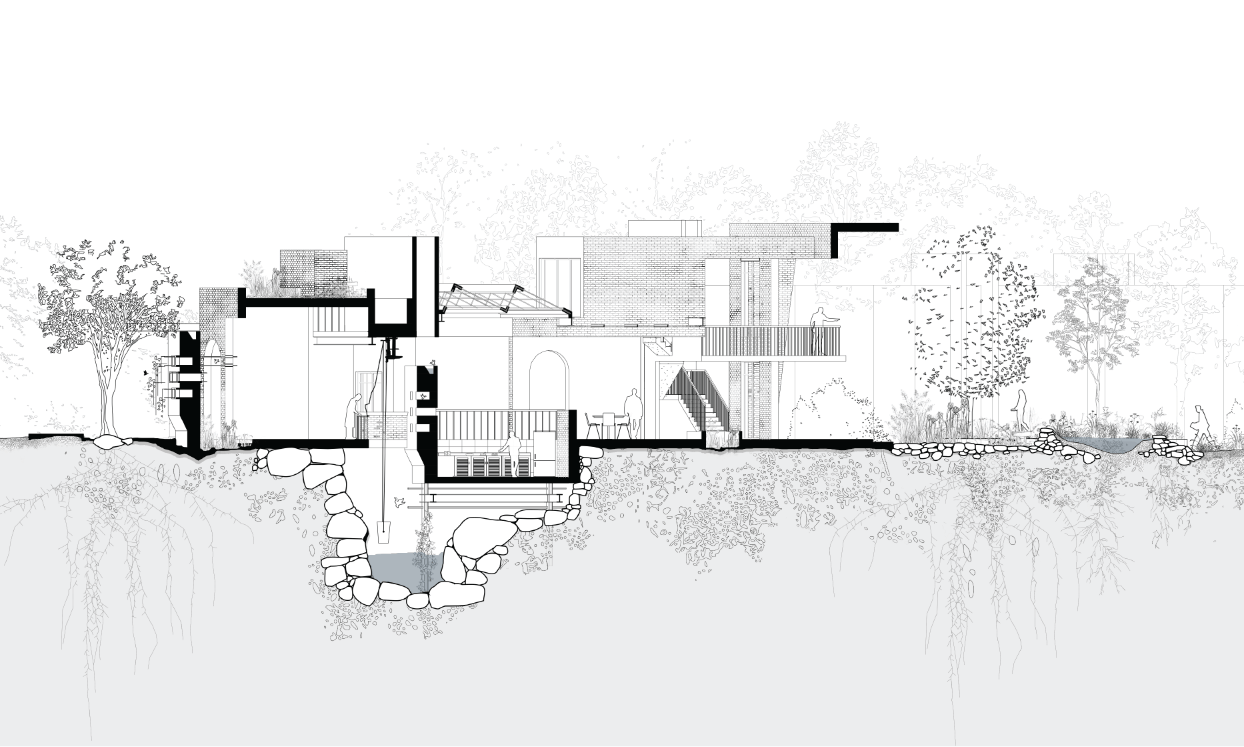
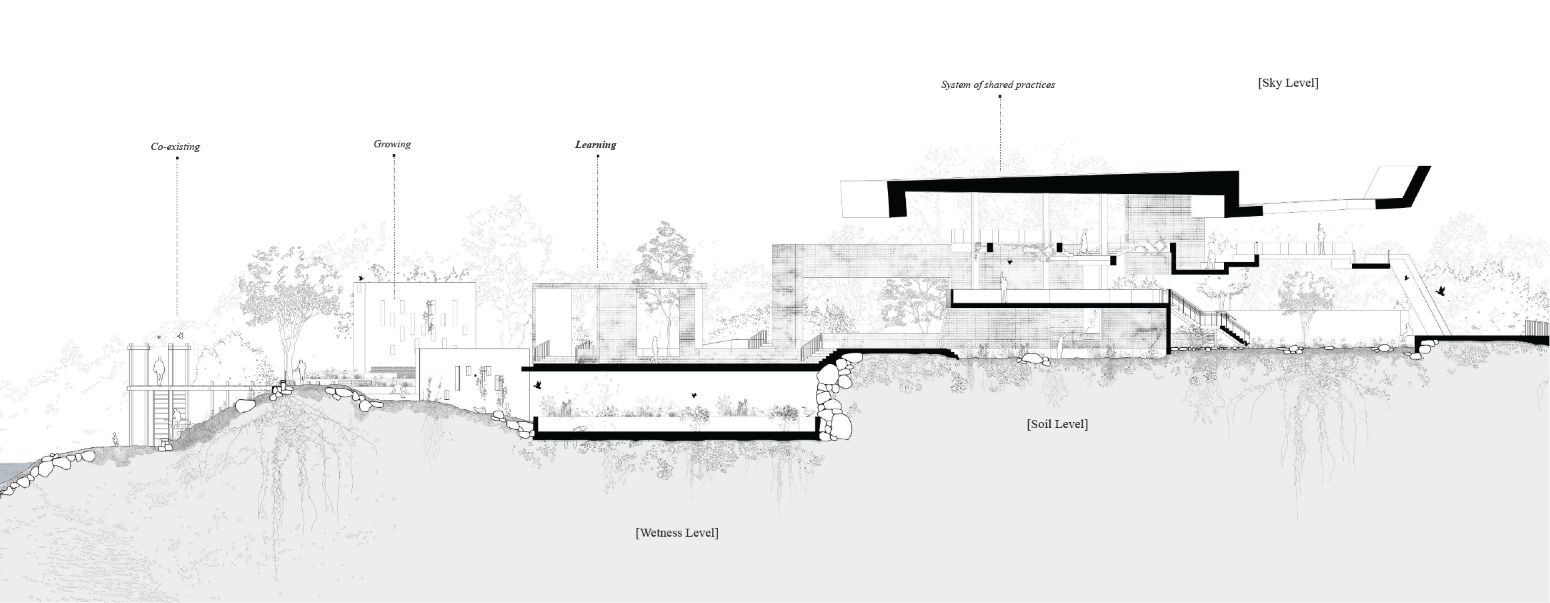
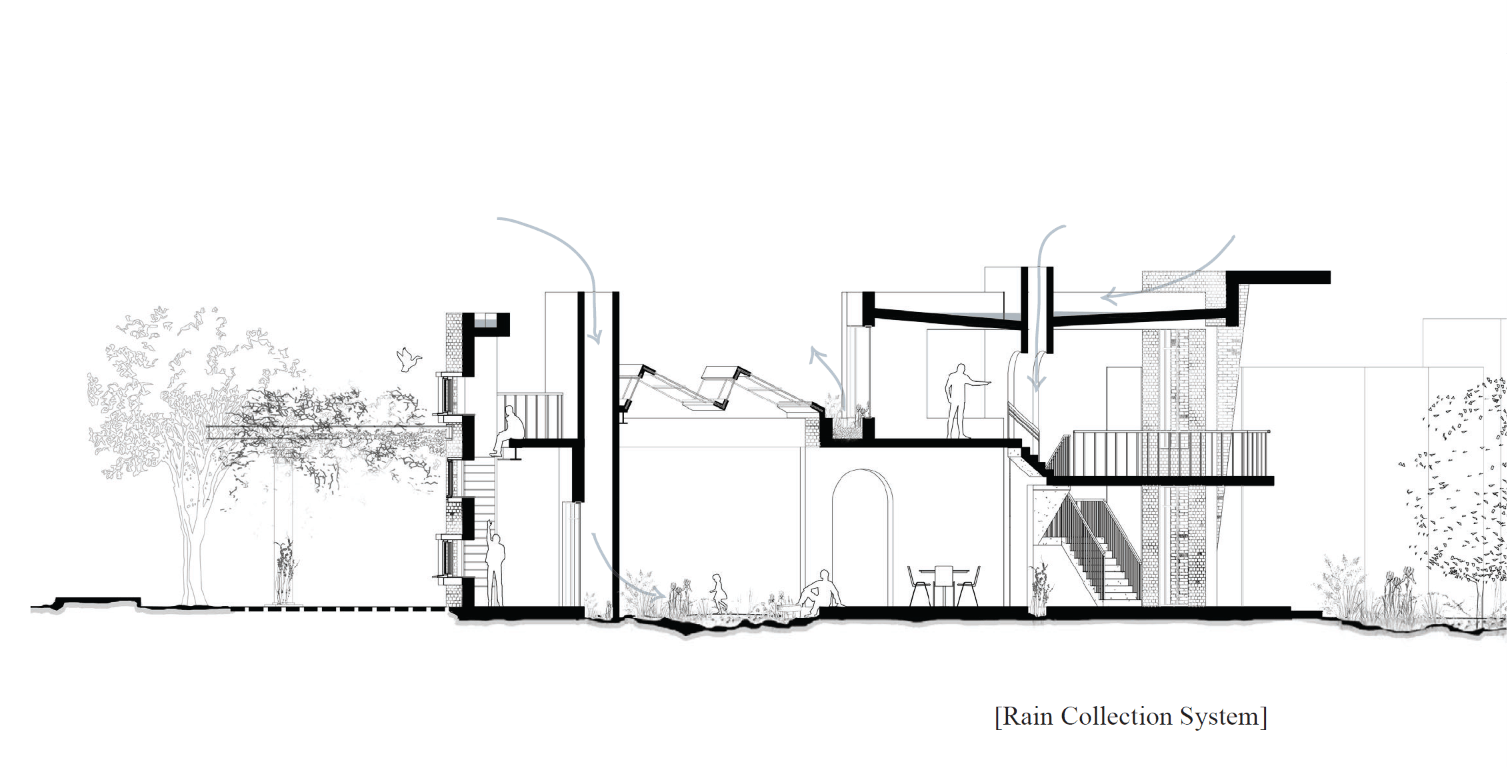
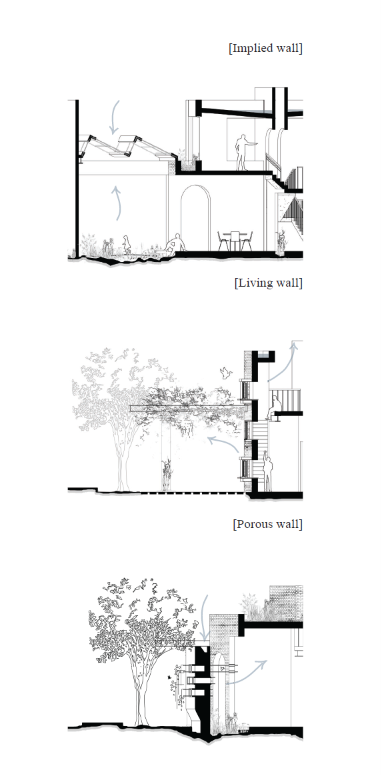
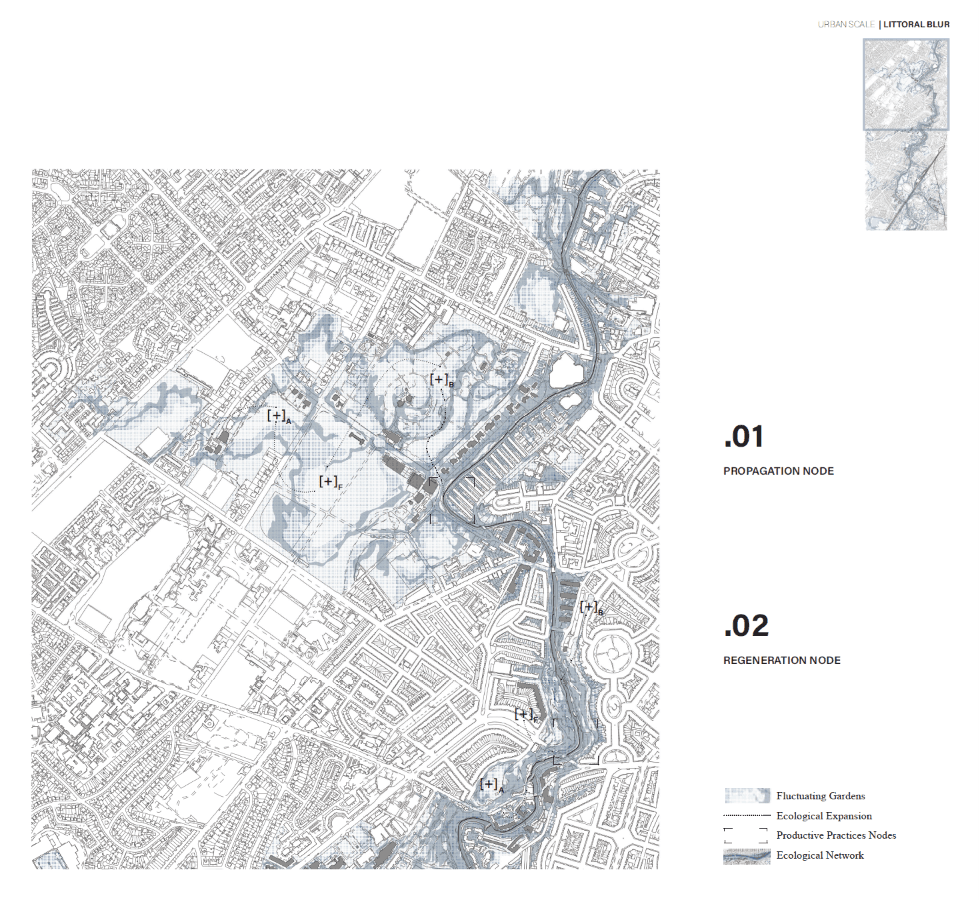
Embedded within the riparian gardens, the three FABBs establish a continuous ecological network across the fluctuating littoral. The Living Basin receives and records the movement of water, the Littoral Pavilion cultivates ecological stewardship through shared practices, and the Living Ecotone extends these relationships into everyday inhabitation. Together, they redefine architecture as an interface between people and the living ground, allowing the embedded ecologies of the littoral to expand, coexist and become part of the city's ecological future. At the scale of Mobiliario inhabitation, the Dog Rose Perch continues this ecological network, acting as a living framework that propagates riparian vegetation, supports non-human habitats and extends the fluctuating littoral into the gardens of the city.

Architecture as interface.-

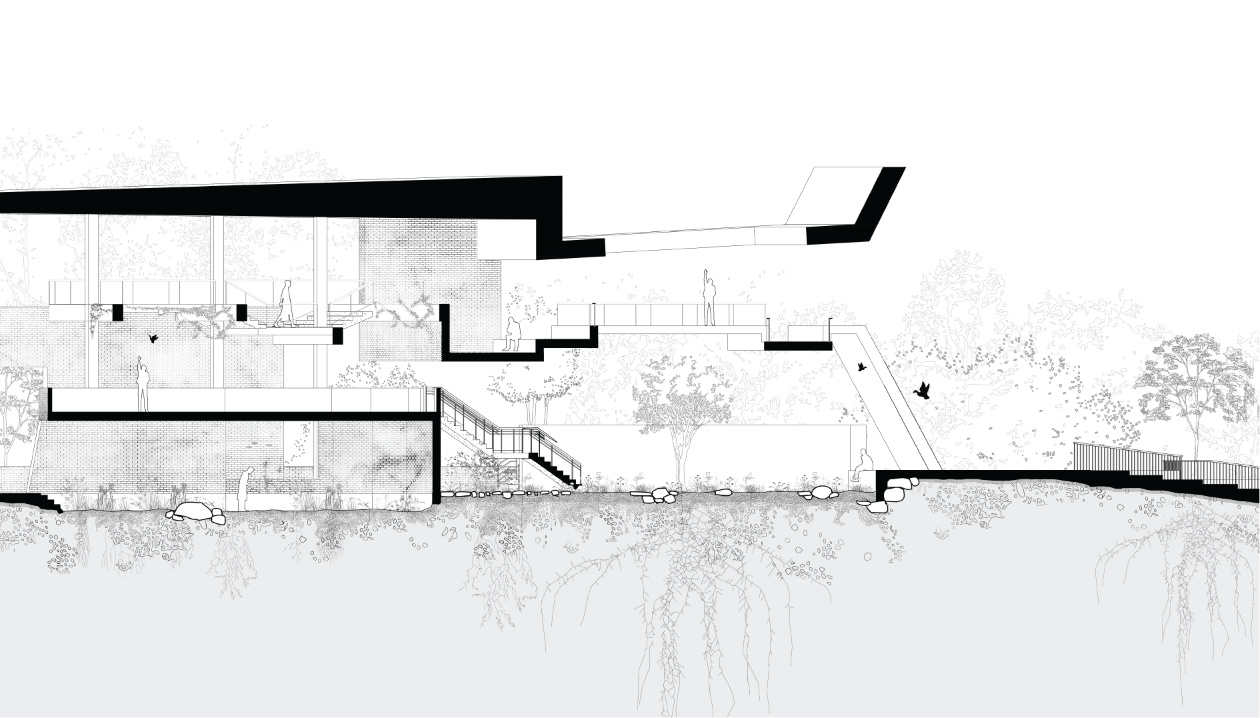
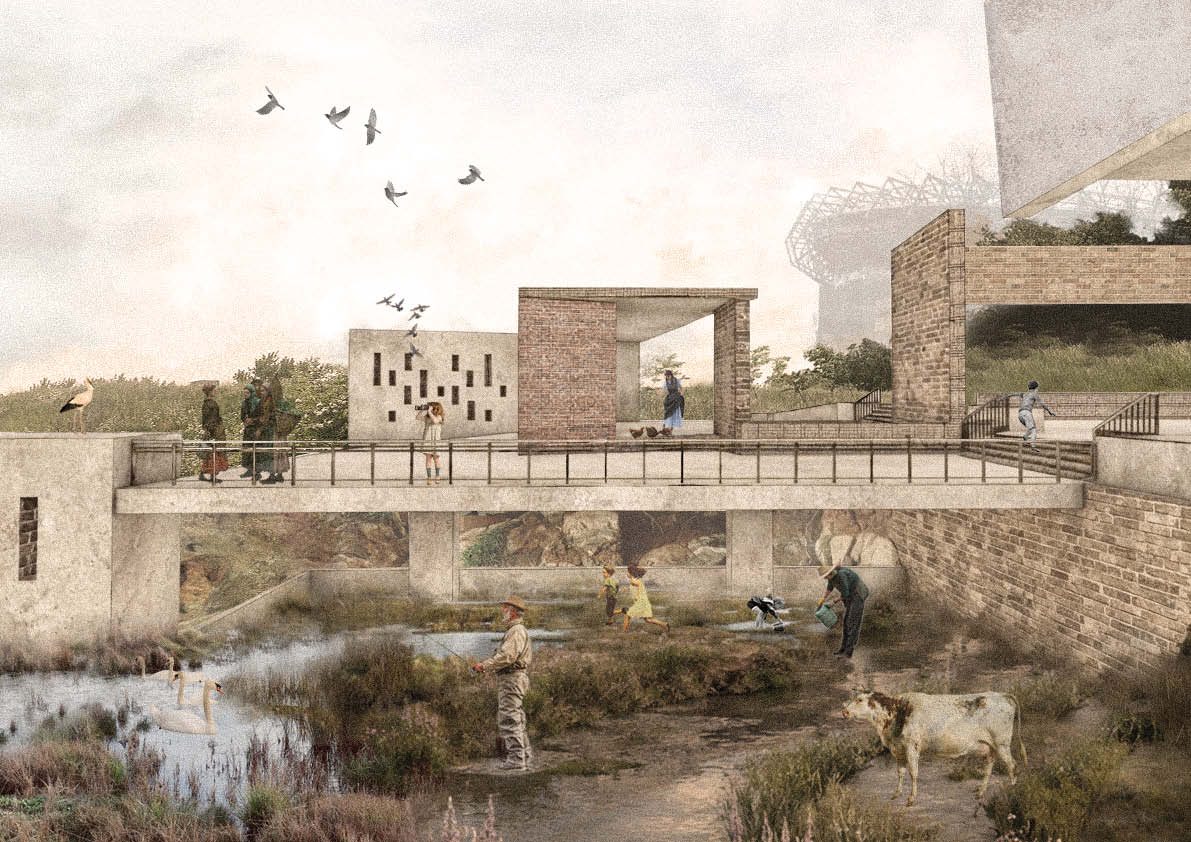
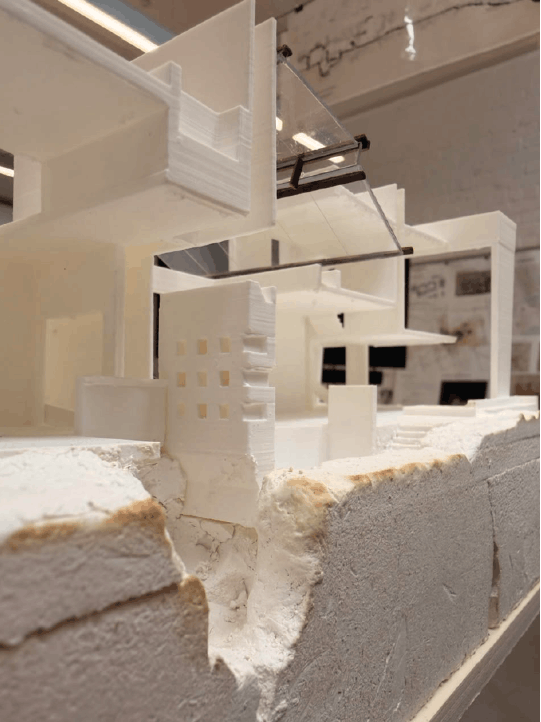
Embedded within the riparian gardens, The Littoral Pavilion acts as a multi-scalar communal device where learning, cultivation and ecological stewardship emerge through direct engagement with the seasonal rhythms of the floodplain.

As the waters fluctuate, the pavilion remains a constant point of encounter, revealing a cosmology of ecologies in which water, soil, air, vegetation and human inhabitation exist as interconnected systems. It encourages a reciprocal relationship with the littoral, allowing its living processes to be understood, cultivated and collectively inhabited.

The Littoral Pavilion_Capricci

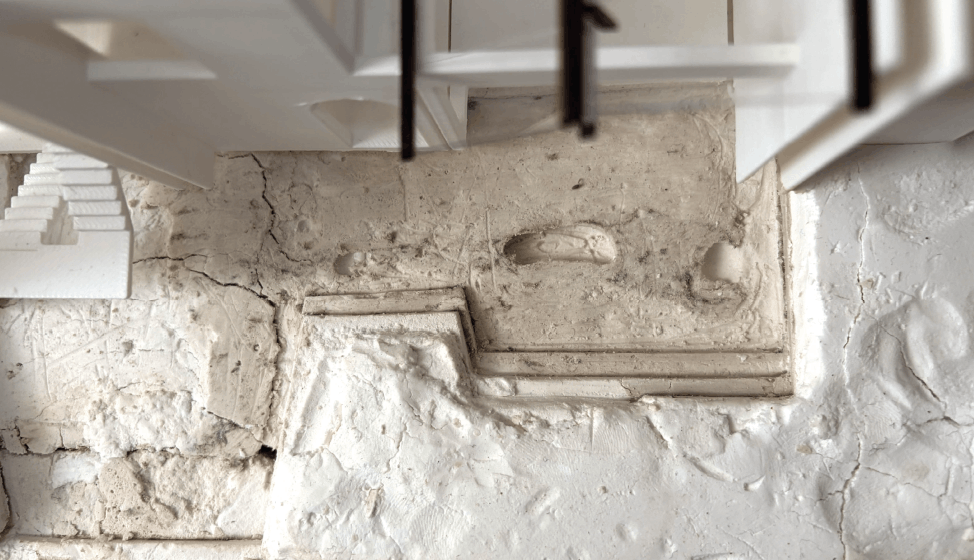
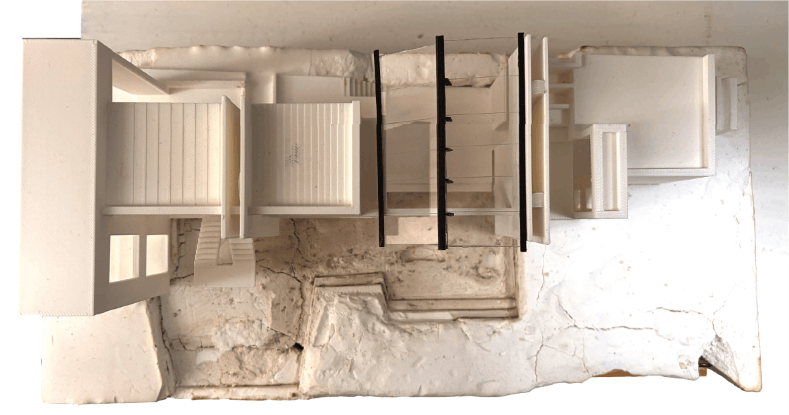
Edges Becoming Littoral — Moments of Reciprocity between Ground, Water and Inhabitation

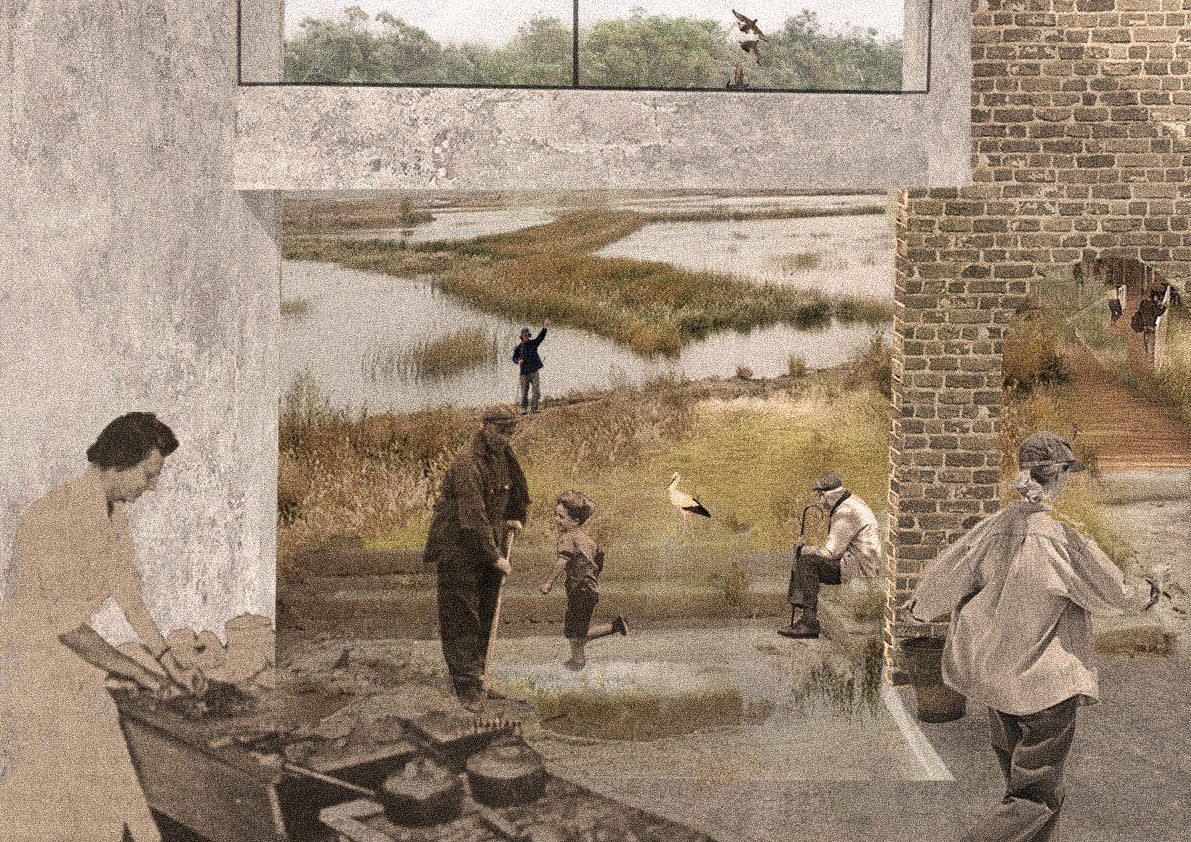
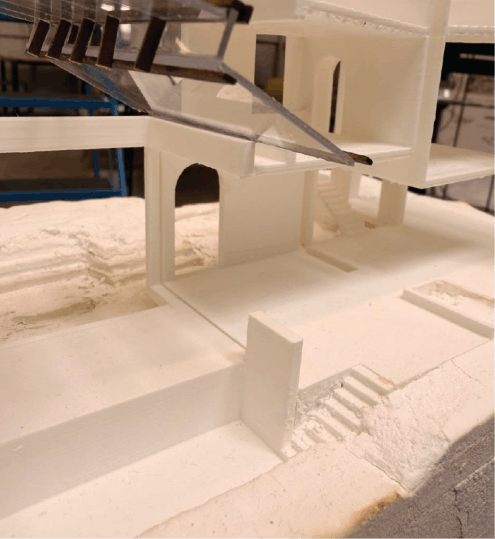
Embedded within the geopoetic traces of the flour methodology, the prototype reveals architecture as an interface where the fluctuating ground, seasonal water and inhabitation continually reshape one another. The remains of the former urban fabric persist as productive gardens and ecological thresholds, transforming memory into a living landscape of reciprocity.